The Inner Child, by Cristian Girotto

Fell down this rabbit hole today and wanted to share, for no good reason. I love Girotto’s work, and this particular exercise is intriguing.

“Without bothering Jung and its “Puer aeternus” or Pascoli with its “Little Boy”, we can certainly agree that, somewhere inside each of us, there’s a young core, instinctive, creative but also innocent and naïve. What would happen if this intimate essence would be completely revealed?”

2fb781f924552113ea69734e52fc1faa


Have a look at the full exhibition and enjoy as much as I did.

Young children and babies are, with some unfortunate exceptions, almost universally cute and appealing. According to Jeffrey Kurland, associate professor of biological anthropology and human development, “we are inherently attracted to a specific set of characteristics, including large, symmetrical heads, large eyes, small mouths, and small noses.” But why do almost all humans find this particular set of features so appealing? Kurland’s answer: Evolution. Click through for the full article.

Whatever the case, those features have been admirably co-opted and sugar-coated by the ultimate wizards of cuteness, the Disney corporation; feast your eyes on this:

Rapunzel-rapunzel-and-flynn-25319317-1876-1080


I was talking to the Goodwoman of the House the other day and mentioned that Rapunzel was probably the most archetypically attractive princess they’ve ever constructed; comparing her features to Girotto’s manipulation above, it’s easy to see why. Once again, “large, symmetrical head, perpetually large Bambi eyes, small mouth, and small nose,” combined with other unmistakable traits usually associated with youth and beauty. In essence, she has all the cuteness of a baby blended with the body of a youthful goddess… how could she not be universally lovable, unless you have an allergy to saccharine?

The Old Wolf has spoken.

Axel Erlandson, the true “shepherd of the trees.”

Treebeard would have split his bark with envy.

Axel Erlandsen

Erlandson sitting on a natural chair crafted out of trees.

Swedish-American farmer Axel Erlandson had a way of coaxing trees to do the most astonishing things, was highly secretive about his methods, and took his secrets to the grave. His trees were originally exhibited at his Tree Circus, and many were moved to Gilroy Gardens where they can be seen today.

Twolegtree

The “two-leg tree”

Needle_n_thread

Needle-and-thread tree

DCF 1.0

The Basket Tree

Cubetree

The Cube Tree

circus-tree-002

Hook and Eye

shaped-tree-006

Another Cube Tree

shaped-tree-011

Squared Circle

shaped-tree-010

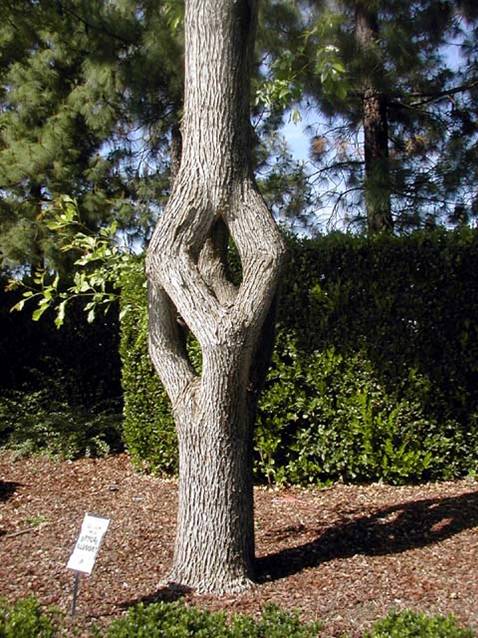
Knot

It’s a shame these techniques were lost.  It would have been wonderful had Erlandson been able to pass his work down to the next generation. But as long as his trees live, others will be able to marvel at his skill.

The Old Wolf has spoken.

The Original Penn Station, New York City

J3Qa8Yt


New York, circa 1911, the original Pennsylvania Station lived for only half a century, ultimate succumbing to declining train ridership and the pressure to build upward.


09670u


Another view from Gimbels department store, circa 1910.


1-2-3A2-25-ExplorePAHistory-a0b3e3-a_349

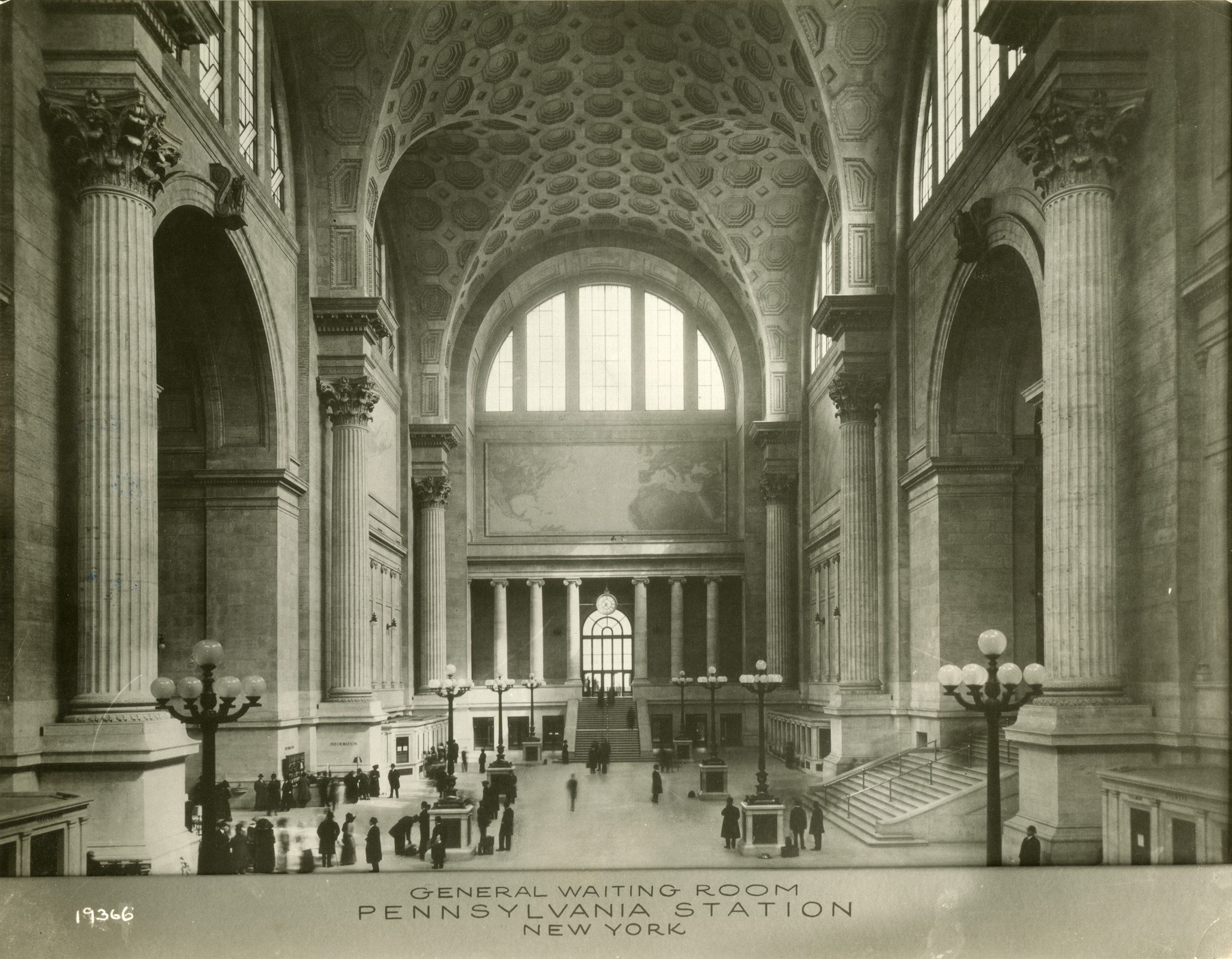
The general waiting room

800px-Penn_Station_tracks-Cervin-Robinson-April-1962


1962, the year before its demise.

Fondly remembered, sadly missed.

The Old Wolf has spoken.

Hackers around the world

Holy Mother of Mogg!

I don’t use my Hotmail account very often, but I keep it around for a few odd reasons. I just saw a post at reddit and thought I’d better check my own account.

Hackers

And that’s only the last few days!

Folks wonder why their email accounts get hacked; with this kind of assault, if you don’t have a strong password, it’s very likely your email account will be taken over by some random hqiz-eater and used for sending out spam or malware.

Takeaway: Use Strong Passwords! In some ways it may be like keeping honest people honest, but for the average user, it’s usually the best form of prevention. As for the bottom-feeding scumbags, by the sacred skull of Mogg’s grandfather, may the universe reward them according to their works.

The Old Wolf has spoken.

Being a Mormon misfit: And why that’s totally OK

I had to share this. The Savior came for all of us… but most especially for the misfits, the outcasts, the downtrodden, the unloved, and the hurting. The whole need not a physician, but those who are ill. My thanks to the author for such a comforting perspective.

Kayla Scofield's avatarall our lemmony things

When I went to school in Idaho I loved a certain spot in the Rexburg temple in the waiting area of the baptistry. Each time I went there I sat right there–in that same spot– just because of a certain picture.

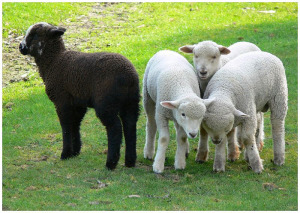
It was a painting of the Savior holding a little black sheep, right beside the pew in the back. I would stare at it and think about everything that it meant to me. Essentially, it seemed that I was actually the one in the Savior’s arms in that picture.

The misfit. 

black

And if you’re reading this and you’re a misfit too–perfect. I’m glad there’s two of us. Or three. Or maybe even more than that. Either way, it’s good to know I’m not alone in the category of “Mormon misfits”. So welcome, friend.

How am I a misfit, you might ask? I simply don’t fit the conventional mold of…

View original post 1,296 more words

Freefall: Jerry Pournelle’s Review.

Flo Galaxy

Art: Mark Stanley. Background and color: The Old Wolf

I’ve mentioned Mark Stanley’s Freefall webcomic several times in this blog (just do a search, you’ll find the articles, but here’s one of my favorites).

I found a link to this article by Jerry Pournelle at the Freefall discussion forum, and was so impressed I felt I needed to share it. WARNING: If you decide to check out the strip before reading Pournelle’s review, start here. There is great value in working up to the current storyline climax, and not spoiling it. Unless, of course, you’re the kind who reads the last chapter of a mystery first, which is fine as well. Just saying.

I wrote this for another conference, but it occurs to me that while I have mentioned Freefall here before, it has been a while:

If you are not a fan of Freefall http://freefall.purr…100/fv00001.htm you ought to be.  Alas, it really will involve some time because it is a serial story, and the current panels are shocking — that is, they have a total surprise that I do not think many readers saw coming. I did not. And you should not see them before reading the rest of the story leading up to now.

The graphic novel — it has become as long as one — has as its premise that mankind has settled planets other than earth, and on one of them there is a population of a small number of humans and tens of millions of robots, all pretty well subject to Asimov’s three laws, only a lot of that is in my judgment better thought out than Isaac did.  The robots are highly intelligent and competent, but they are programmed to obey most human direct orders, and are very protective of humans.  This situation can be exploited by certain unscrupulous bureaucrats.

And into this mix comes Florence,  a Bowman’s Wolf, an artificially intelligent product of genetic manipulation, a genetic mixture of red wolf, dog and human genes with programming for artificial intelligence, born of a dog (St. Bernard) who was not her biological mother, and developing opposable thumbs, human speech, and the ability to walk on her hind legs although she runs much faster on all four legs. She wears clothes and has normal human modesty, and grew up in a household of humans, first as a pet then as — well, as an intelligent dog, then as a sibling. In theory she is the property of the human family. She has most of the powers of a real wolf and an IQ I would estimate at 140 or so.  She is a graduate engineer.

Also living on this planet is a single member of an alien species brought there as a stowaway from another planet — he is not artificially intelligent, he is intelligent, but he has nothing of the ethics and mores of a human and no human companionship. He is of a race of scavengers, and had thousands of siblings but he is probably the only survivor, and that because he stowed away on the human ship. He owns two robots and as owner he can give them direct orders.  One is a general purpose robot who likes him, and the other is his space ship which he managed to acquire as scrap and sort of get it running — but the ship considers him a danger to humans and hates him and would like to kill him but has been forbidden to do that.  It belongs to Sam.  Sam wears an environment suit which makes him appear sort of humanoid, but under that suit he is not humanoid at all.

All this happens in the first couple of dozen panels.  Sam acquires the Bowman’s wolf as his ship’s engineer. He does so by devious means, but she considers herself bound as a crew officer to be respectful to and obey the captain.  Only sometimes that would be disastrous and she’s pretty clever about playing logic games.

There are now two thousand four-panel pages of story, all relevant to the story line although some are not obviously so.  We are now reaching a climax, I think, and certainly the story has taken a surprising turn.  Meanwhile we have met many fascinating characters, including robot police who have to deal with humans, a veterinarian who sort of falls in love with Florence the AI wolf, a child who wonders if Florence and the vet will marry prompting Florence to be amused that the kid thinks all mammals have the same number of chromosomes, scheming officials who try to prompt a robotic war so they can get rich on scrap, and a great number of antics in which Sam acts quite morally for him == he is a scavenger, after all == but which drive the human authorities nuts. Especially since Sam is a very skilled thief, pickpocket, and jail breaker.

If you never heard of this you should try it: it may not be everyone’s cup of tea, but it’s the best of this kind of thing I know of. It is a combination of comedy of manners and some broad farce, and it mixes those elements well. It starts black and white but acquires better art and color at a couple of hundred pages (again four panels to a page).  It is now up to a couple of thousand and it will take you a bit of time to get from the beginning to where we are now, but I liked every episode I read.  I urge you NOT to skip ahead, and particularly don’t look at the current pages at all; catch up to them from the beginning. It will be worth it in my judgment.  The story is well developed and very logically constructed.  I’d like to see it win a Hugo.  It’s really good.

Recommended.

Be aware that the Freefall time line is mind-shatteringly slow. Day One begins on March 30, 1998; as of today, Florence has spent approximately three weeks on the planet’s surface. And for those of us who want to find out how the story ends, the three updates per week can be painful… but I’ve been hooked for over 10 years, and by Mogg’s tufted tail I am not giving up.

fc01829

If you don’t take my recommendation, take Pournelle’s… and enjoy.

The Old Wolf has spoken.

The Mission Inn at Riverside

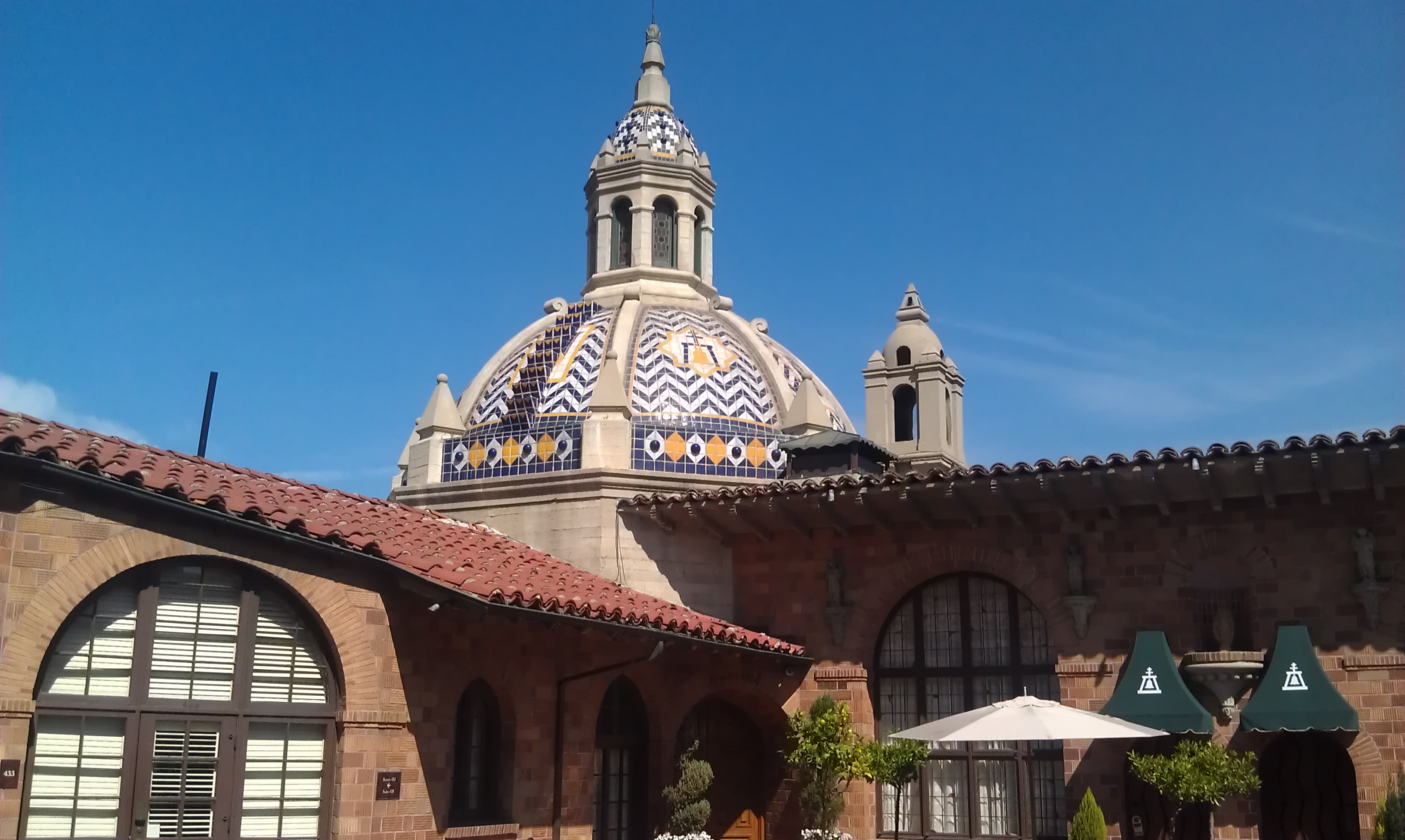
Just got back from a little junket to California to see an aunt who’s almost 100, and some other friends and relatives as well. One of the things we saw while we were in Riverside, where one of my cousins graciously put us up (and put up with us) for a few days was the Mission Inn, an amazing hotel which made me think of my earlier visits to the Hotel Del in Coronado.

This enterprise began as an adobe cottage called the “Glenwood Hotel,” built by civil engineer Christopher Columbus Miller in 1876, and like the Winchester Mystery House (but a lot more sanely) has just continued to grow. We only saw a fraction of it, but what I saw was impressive. There are multiple wings with multiple flavors – Spanish, Oriental, etc.

Here are a few photos:

IMAG3087

Special chair built for President Howard Taft for a conference. Taft’s portrait hangs in the background. He later is said to have remarked “I’m big,but I’m not that big.”

IMAG3088

The Steinway Centennial Grand Piano. This piano was crafted as the company’s gift to the USA for the 1876 Centennial celebration. During a national tour, it was somehow “misplaced” – how one misplaces a grand piano is beyond me – but was rediscovered to be the one and only when it was undergoing restoration in the 1980s. Exactly how and when it came to the Mission Inn is unknown, but at the time of its disappearance the hotel was still a simple adobe cottage.
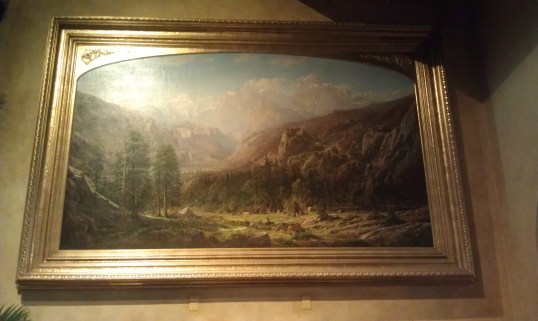
IMAG3090

Herculean painting of the California Alps.

IMAG3091

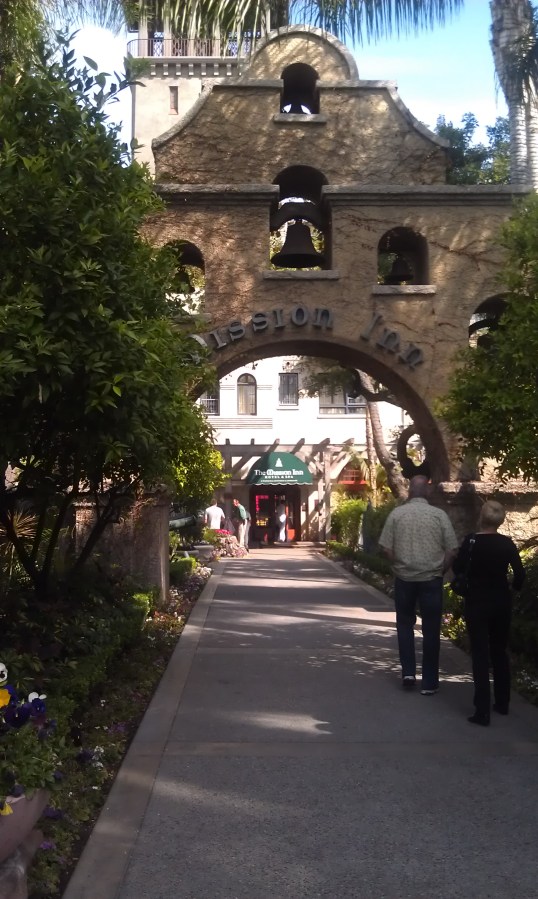
Campanero, or bell wall, built in 1903 and modeled after the belfry at Mission San Gabriel. Stairs on the right used to lead to the rooftop gardens of the original adobe building, which was later demolished in 1948 to make room for a swimming pool.

IMAG3092

Another view of the campanero.

IMAG3093

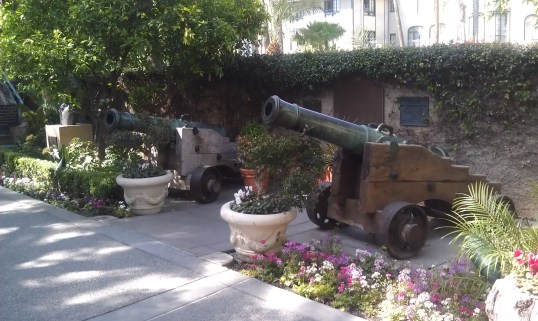
Restored cannon

IMAG3095

The Nanjing bell, an imperial temple bell from the Manchu Temple in Nanjing, China. 3500 lbs, cast between 1875 and 1908. More information is readable on the plaque.
IMAG3096

The other side of the campanero.

IMAG3097

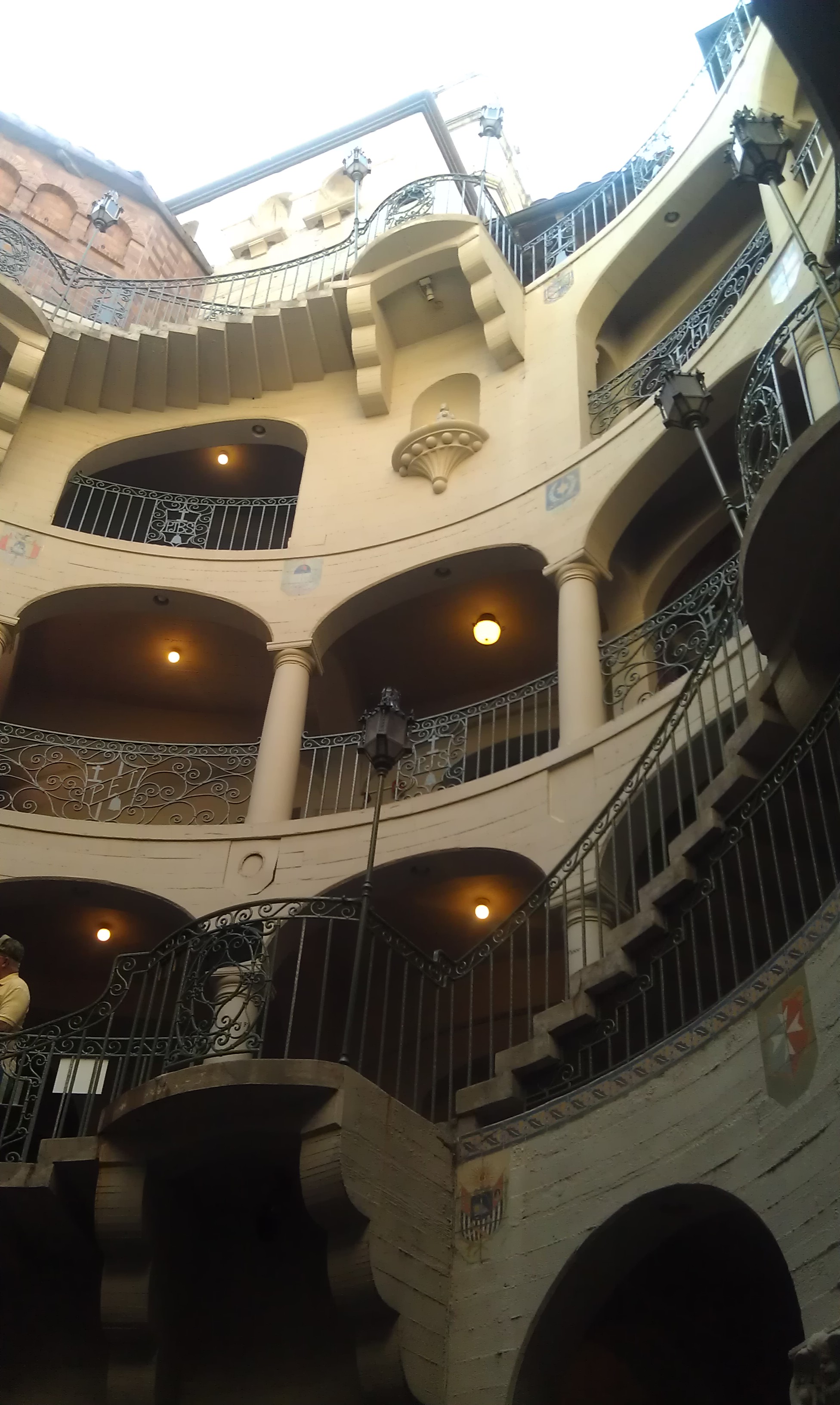
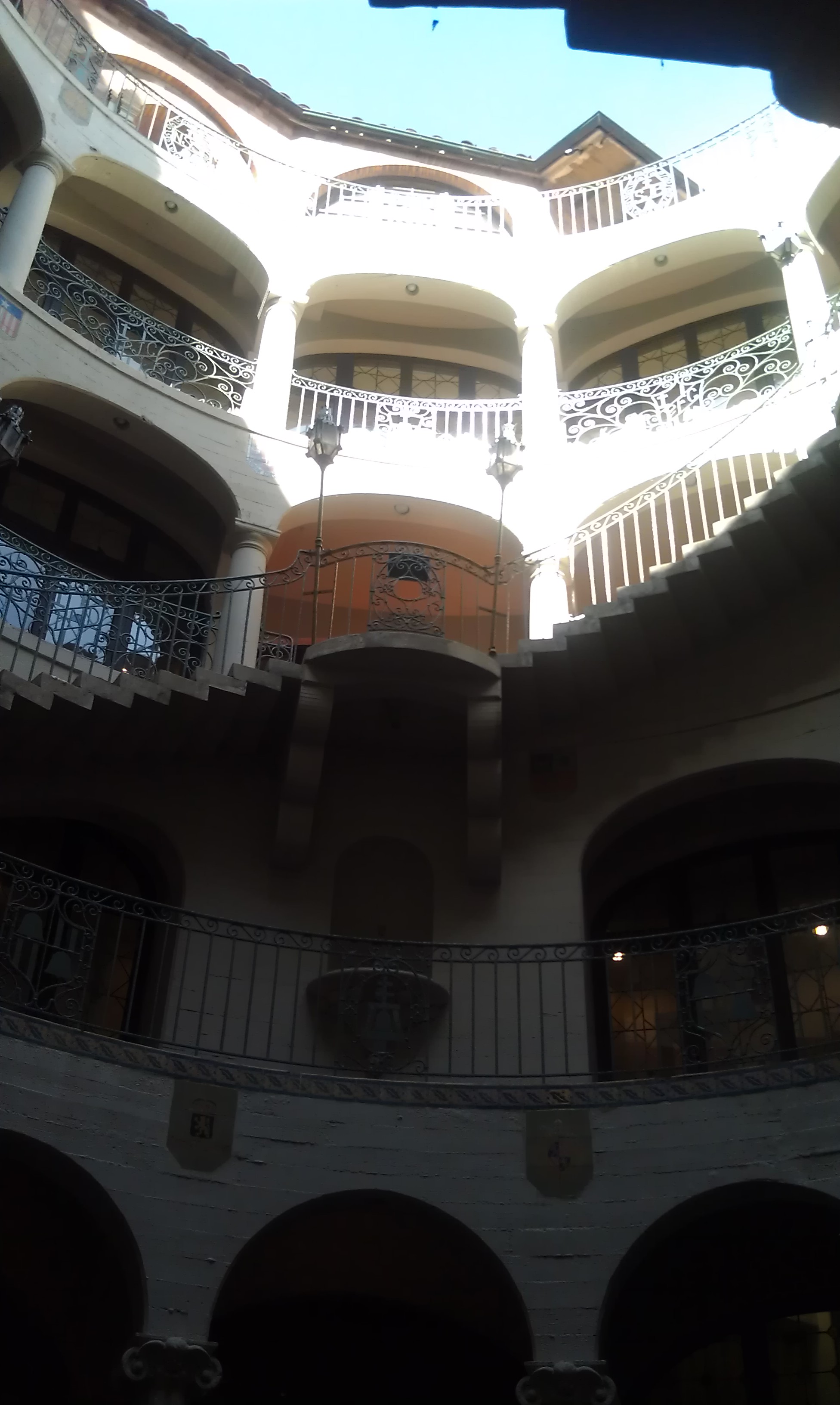
The internal rotunda. Normally accessible only by guided tour, we happened to be present when someone came out and we slipped in.

IMAG3098

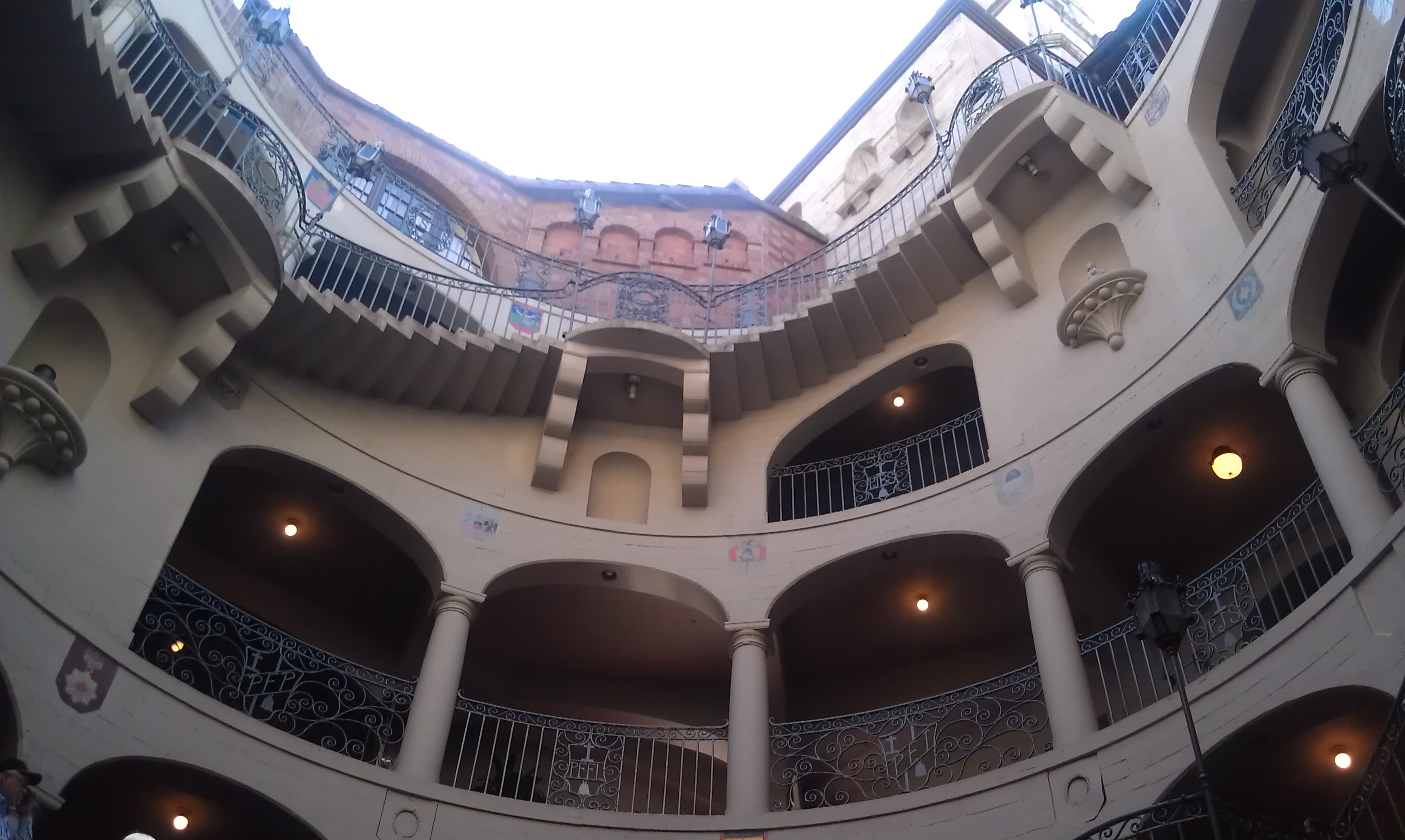
The rotunda, looking up. The stairs are structurally out of code, and are usable only by tours. There is a wonderful old elevator that ascends to each floor.

IMAG3099

Tiled fountain at the bottom of the rotunda.

IMAG3100

The goodwoman of the house, taking a photo of me as I take one of her.

IMAG3101

The sky.

IMAG3102

Another view of the rotunda.

IMAG3103

An iron spiral fire escape in the bowels of the hotel.
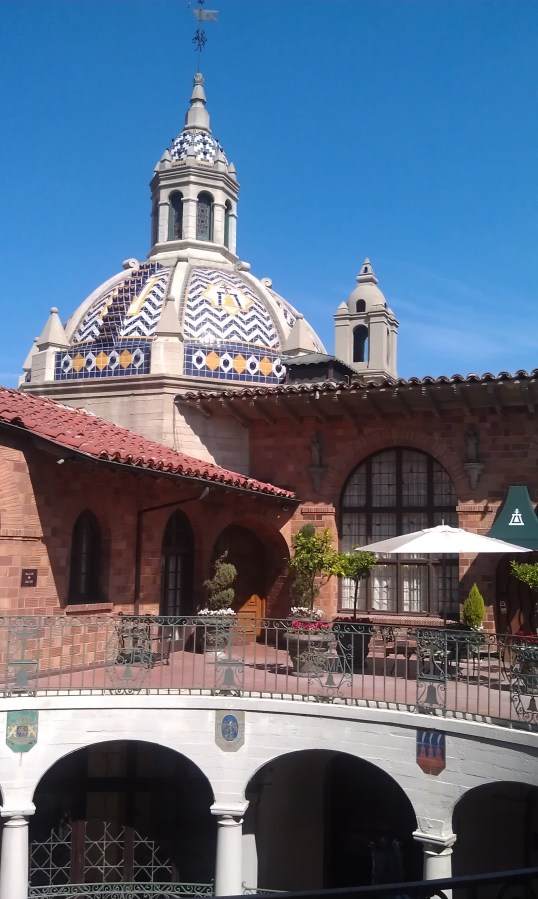
IMAG3104

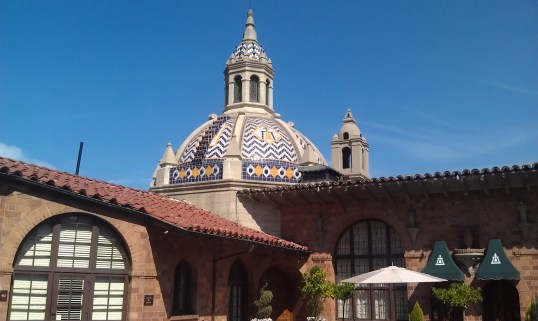
Tiled dome visible from the top level of the rotunda.
IMAG3105

Another view

IMAG3106

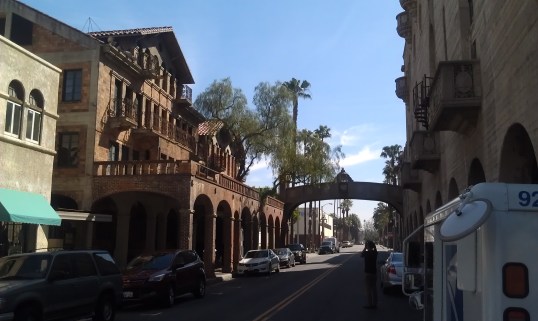
This old building on the left is also part of the Inn’s property, but has yet to be restored.

There’s so much more… I’d love to stay there some time, if I could only win the lottery or something. In the meantime, it’s nice to just stroll the grounds and the lobby.

The Old Wolf has spoken.
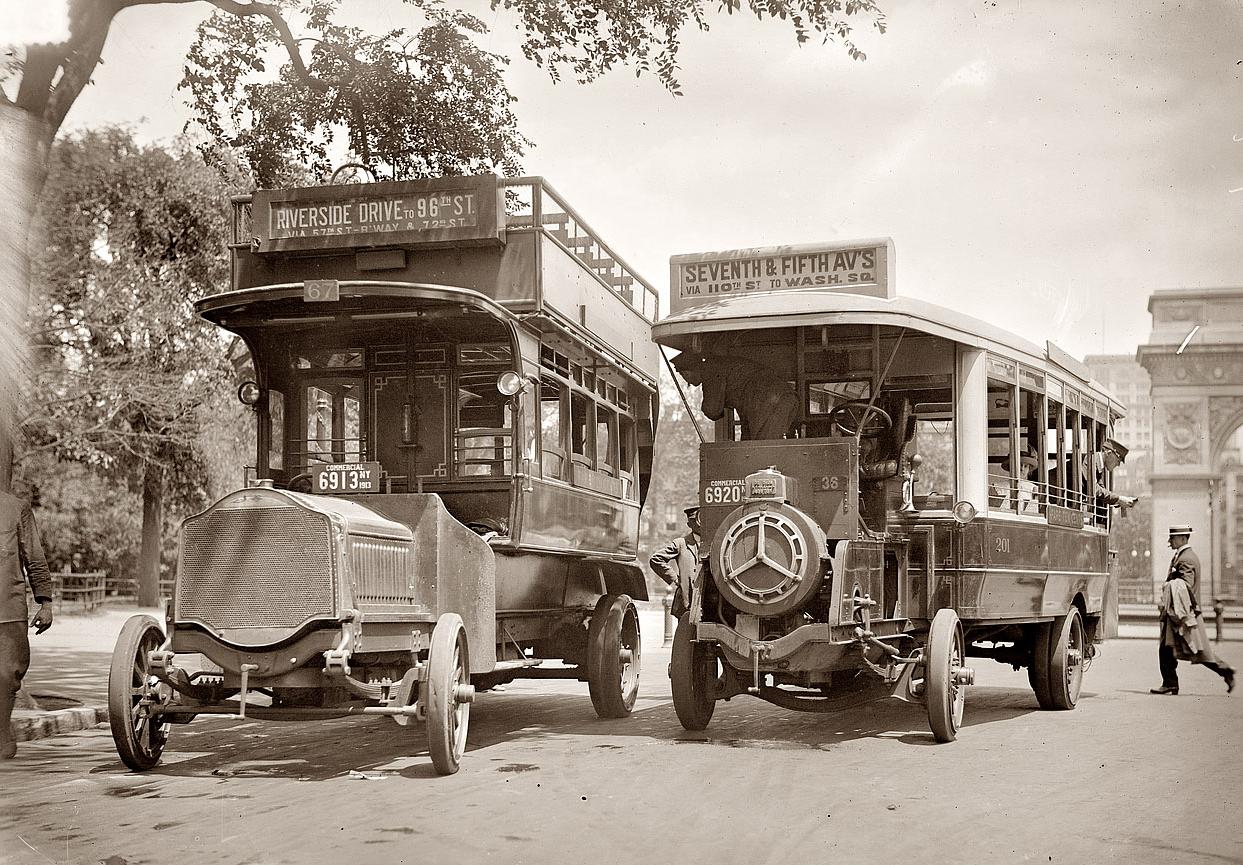
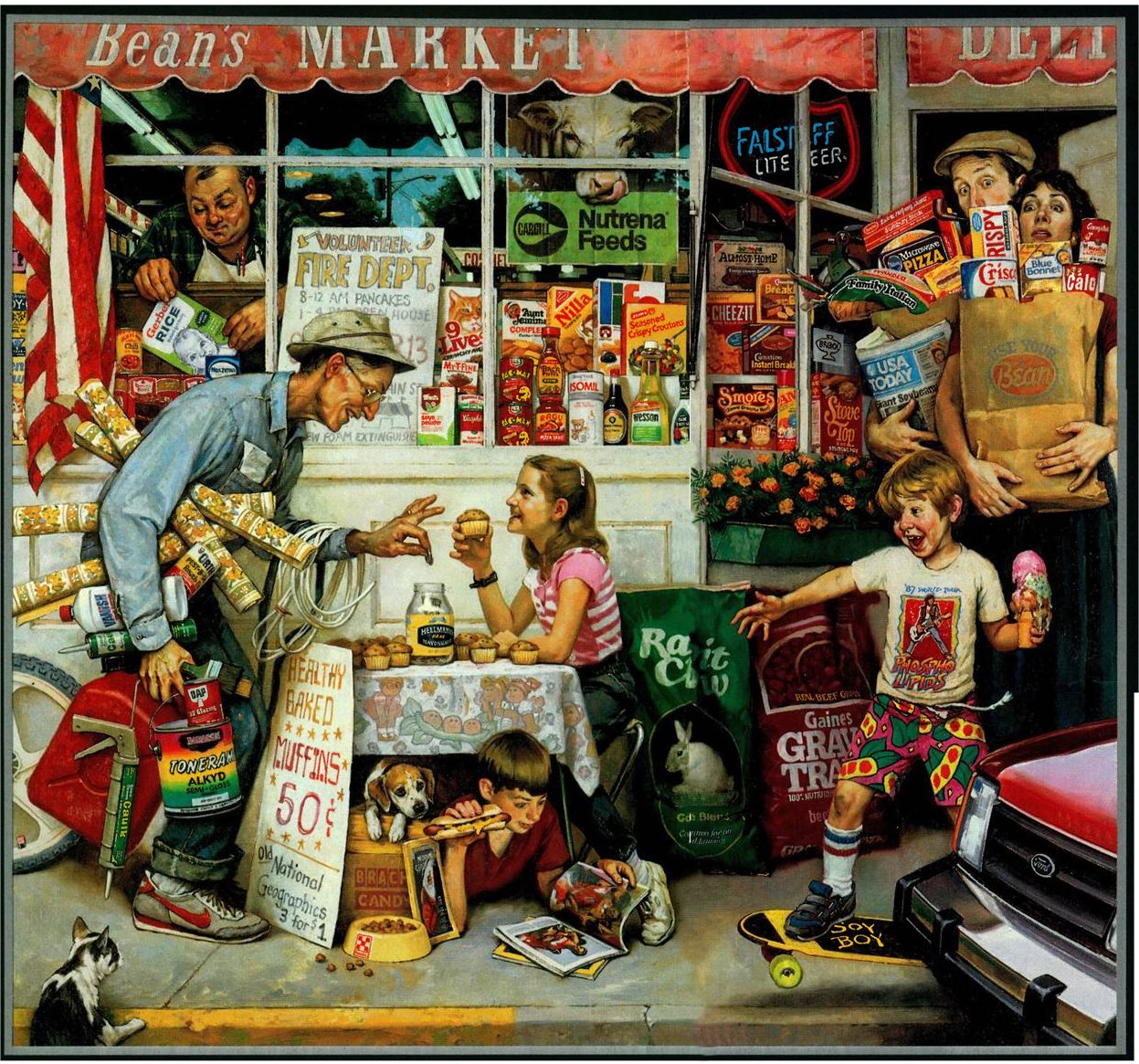
James Gurney: The Soy Bean

Soy Painting

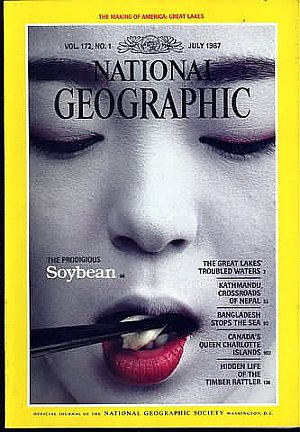
This lovely painting by James Gurney appeared in the July, 1987 edition of the National Geographic, long one of my favorite magazines since early childhood. I’ve had multiple collections of hard copy editions, gathered over the years and then given away when moving (they’re heavy!) and then gathered again. I recently scored a complete set on DVD that included everything up through the 90’s – it still runs on my XP virtual machine – so I was able to get rid of all but the few special editions I wanted to keep.

backissues

Gurney managed to get dozens of things based on soy into his painting; about the only thing I haven’t spotted is nattōThe photo of the painting came with the following caption:

Invisible ingredient in countless products, the soybean plays an amazingly pervasive role in everyday life. Artist James Gurney included more than 60 soybean-related products in this painting, done in the style of Norman Rockwell. He not only called on neighbors and friends for models, but also portrayed himself and his wife emerging from the store, startled by a skateboarding boy carrying a cone of tofu “ice cream”; the boy’s shorts-like the tablecloth-bear a bean-pod motif.

The bags the couple carry, the store-window and sidewalk displays are replete with items that have a soybean connection

Cardboard, glues, and animal and human foods are commonplace soybean products. The sidewalk customer’s caulking, paint, wallpaper, gasoline, and the muffin he buys all owe a debt to soy-as does the bicycle tire.

The beer sign reflects the use of soy meal in the brewing process. The fire extinguisher uses soy protein in its foam. And pre-1981 National Geographics were printed on soy-lecithin-lubricated presses. The car symbolizes an experimental one built with soybean plastic by Henry Ford. The artist’s final tribute: He used soy-based paint.

There’s a lot of conflicting information out there regarding the health benefits or detriments of soy; it’s hard to know who’s right at this point in time, but I’ll keep enjoying my tofu and other fermented soy products.

In the meantime, I thought I’d share this delightful and intriguing work of art.

The Old Wolf has spoken.

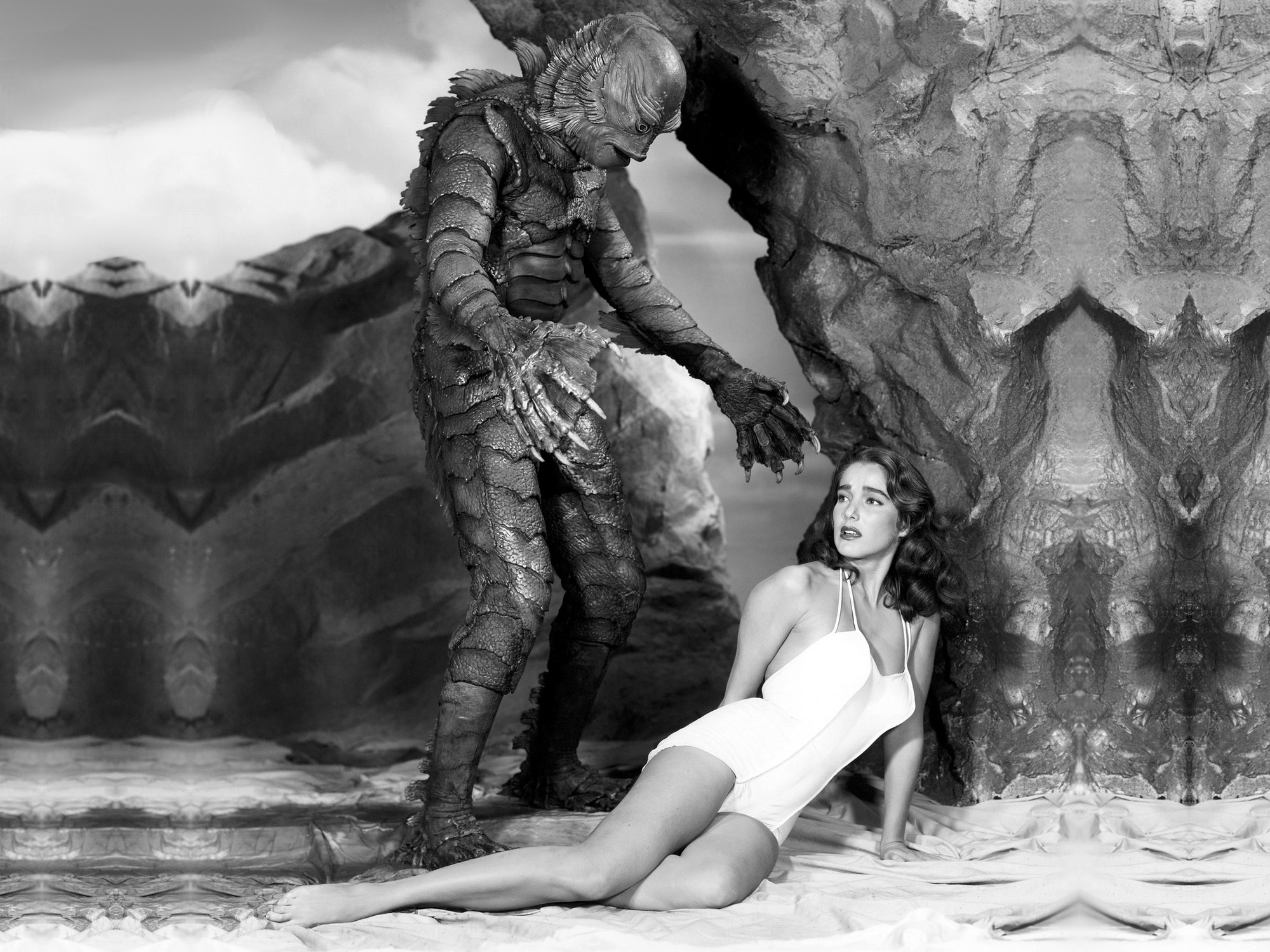
1954: Creature from the Black Lagoon

t2kIcF3


High-resolution production still. Notice the cloning to make the image wider. Trivia: redditor /u/Artikunu chimed in to say, “Fun fact: my great grandfather is the creator of the Creature From the Black Lagoon’s mask and costume. The mask was a treasured family heirloom, until one of my relatives sold it. It was worth around $75,000.”

I love photos like this. At one point I had a beautiful production still of Margaret Hamilton as the wicked witch of the west, autographed to me and procured for me by my father. Sadly, it was purloined about 25 years ago by one of the young men I used to serve as a Webelos den leader; I was never able to recover it. On the other hand, I have a number of great production stills of my dad in various rôles, so I’ve got that going for me, which is nice.

Light Test


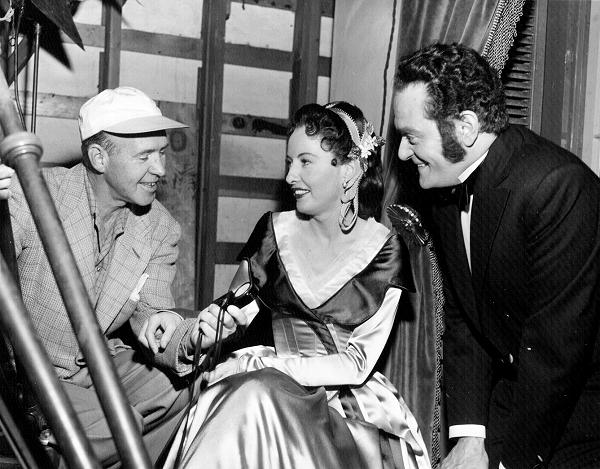
Dad with Barbara Stanwyck and a lighting technician: “Man with a Cloak,” 1951.

The Old Wolf has spoken.