This advertisement for Maxell media displays four very common tape formats from the 70s: clockwise from top, studio tape [1], 8-track tape, reel-to-reel tape, and cassette. Digital storage has, for all intents and purposes, obsoleted all of these. That said, some companies still offer tape backup solutions for companies which are looking for certain advantages.
For the most part, however, this is a forgotten technology among the young people of today, an entire generation of whom have never lived in a time when the Internet didn’t exist.
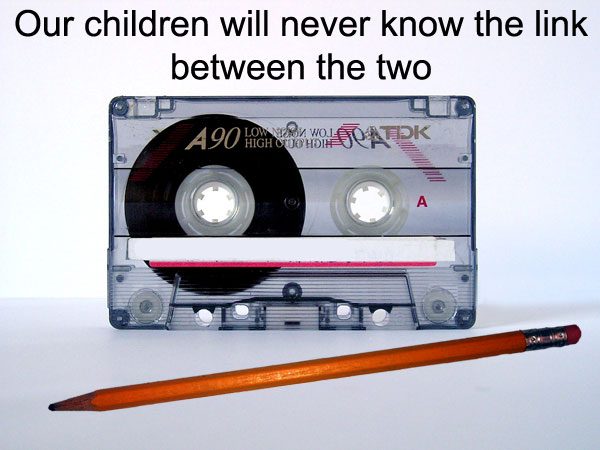
If you’re one of those youngsters and wonder, that pencil would come in really handy if you ever encountered a cassete that looked like this:
… which would happen with more frequency than you might wish, if your player was on the fritz.
Having grown up in the 50’s and 60’s, reel-to-reel was all I knew as a child; when the Tinico tape recorder[2] was introduced, I coveted one of these with a white-hot passion. It was one of the few things I begged for as a kid that I never got.
You can see this one in action, playing a speech by John F. Kennedy, at YouTube.
What I did get much later, as an adult, was the smallest Sony Walkman ever produced. It was designed to be exactly the size of a tape cassette in its case when closed – the lid would slide down about half an inch to accomodate a cassette:
Walkman, closed
‘
Walkman, open.
Size comparison
I still have mine in a drawer – time has taken its toll and it no longer works, but I got a lot of use out of it and it’s still fun to hold. It was manufactured, I think, as more of a novelty than a truly useful device, because the ultra-miniaturization of all the components meant elevated fragility as well.
It’s interesting to have some historical perspective on audio and computer media. As usual, it makes me wonder with insatiable curiosity what my granddaughters will have seen by the time they are my age.
The Old Wolf has spoken.
[1] I had originally called this computer tape; thanks to Salvador Virgen for pointing out that it was indeed something else, which I verified with an image search.
[2] The referenced article compares the Tinico recorder with a Soviet copy. I remember a joke my mother telling me back in the 60’s, which she in turn heard from a Russian emigrée friend of hers; it concerned a Soviet diplomat being given a tour of a technology display, and at every stop the Russian would say, “Oh, da – Russians invented that.” Finally he was handed an audio cassette, and he said, “Oh, da! Russians invented that! What is it?”
This picture is nearly 100 years old, and is titled “Car wreck on Tlalpan Road, 1916.” The exact location of the crash is not indicated, but for different reasons (and based on more photos) we conclude that it is on the current road between Huipulco and INER.
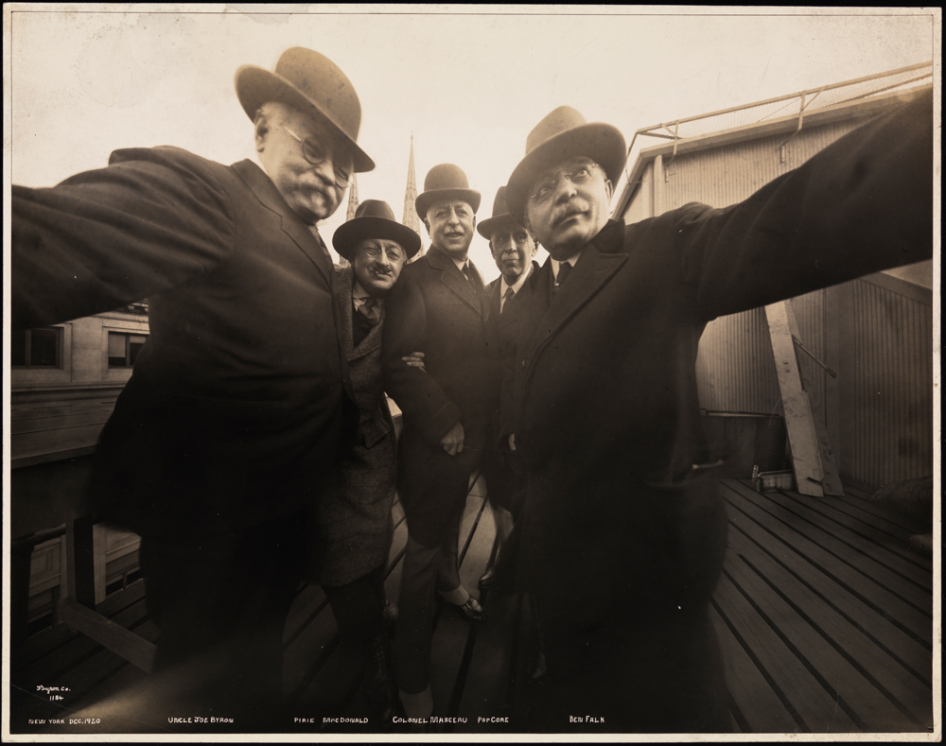
One of the earliest selfies, taken by principals of the Byron Company, in 1920.
Byron Company: Uncle Joe Byron, Pirie MacDonald, Colonel Marceau, Pop Core, Ben Falk-New York, 1920. Museum of the City of New York.
How the photo was taken:
Byron Company, Side view of Byron Co. photographers posing together for a photograph on the roof of Marceau’s Studio, 1920. Museum of the City of New York
I previously wrote two articles, here and here, about the efforts of France (and Québec, since we’re on the subject) to keep their language unspotted. Many Gallic purists will point at the magna carta of La Pléiade, “Défense et illustration de la langue française,” as reason enough to fight against the encroachment of other, less worthy tongues into the only true language; in view of the recent flap over English as the language of America the Beautiful, really nothing more than a tempest in a teapot promulgated by the intellectually challenged and those devoid of any sense of humanism, I present here a dictionary of terms which must be avoided and their acceptable English alternatives.
The Xenophobe’s Dictionary List of Words for Folks who Don’t Like Outlanders.
Ketchup (from k’ē chap, Chinese for “tomato sauce”): Tomato paste with vinegar and onions and other stuff what makes it a vegetable for school lunches.
Kangaroo (from Australian aboriginal): Big Jumping Rat that makes fine eating.
Cola (from West African languages (Temne kola, Mandinka kolo): That brown drink what goes good with rum.
Coca-Cola (From from Quechua cuca and “cola” above): Something from that liberal-ass un-American company what right-thinking ‘Murcans won’t touch with a 10-foot pole. Even “Big K” has better stuff.
Jukebox (possibly from Wolof and Bambara dzug through Gullah + box): Record-player thingy what you put quarters in.
Candy (from Arabic قندي qandī, sugared): Dayum, you mean mah lemon-heads wuz invented by the A-rabs? Sumbitch, I’ll just have to switch to chawin’ terbacky. Say, Clem, gimme a chaw.
Tobacco (From Taino, a Caribbean language. Said to refer either to a roll of tobacco leaves or to the tabago, a kind of Y-shaped pipe for sniffing tobacco smoke also known as snuff, with the leaves themselves being referred to as cohiba): Stuff you roll up and stick in your mouth and then set on fire. [1]
…..
Well, you get the idea. In fact, purging our English language of all foreign influence would be an exercise in futility, for even Old English was liberally infused with Latin as the result of a 400-year Roman occupation, as well as being a combination of dialects prevalent in the area, including the languages of the Celts, the Angles, the Saxons, and the Jutes. There is no “pure English,” and if you tried to take away all the foreign influences our language has not only survived but reveled in over two thousand years, we’d be reduced to speaking in grunts and belches. Oh wait, a lot of people haven’t got much farther than that anyway.
The Old Wolf has spoken.
[1] Thanx and a tip of the hat [2] to Bob Newhart
[2] Thanx and a tip of the hat to Bill Holman
I recently posted about my experience watching two of my friends become American citizens. Now comes the Superbowl with its spate of commercials, one of which has generated some sentiment that absolutely should not exist in this country.
It’s a simple concept. People of various nationalities singing “America the Beautiful” in their own language. But for sheer ignorance, have a look at some of the Twitter comments recently posted about this commercial:
The Coca-Cola Co. Should apologize for the ridiculous #SuperBowl commercial #AmericaTheBeautiful should ONLY be in one language #English
Really glad I drink @Pepsi and not @CocaCola because that commercial was just AWFUL next time #ENGLISH please! #SB48 #SuperBowl
If you want to come to this country fine we welcome you BUT your going to sing America The Beautiful in #ENGLISH & drink #PEPSI #SUPERBOWL
I don’t think a commercial that sings in other than #English is a good idea #SuperBowl am not gonna buy ur product anymore
WTF? @CocaCola has America the Beautiful being sung in different languages in a #SuperBowl commercial? We speak ENGLISH here, IDIOTS.”
The xenophobia and ignorant racist vitriol being spewed out onto the Internet breaks my heart. Yet these people seem to have no problem driving down Via Verde Avenue in their Prius to go eat Pizza with their Swedish girlfriend… the intellectual and spiritual disconnect is very difficult for me to get my head around.
Some statistics would probably not be amiss here. The 2010 census reports:
Of that total, 16.4% are of hispanic or latino ancestry. That’s close to two out of every 10. Moreover, have a look at the 15 largest ancestries of these oh-s0-proud Americans:
It wouldn’t be surprising if the real names of some of these uneducated and small-spirited bloggers were Jorgensen, DeSalvo, O’Shaunessy, Kang, or Graumann. If they’re taking pride in being called Jones, they may well have forgotten their Welsh ancestry.
Kris Kristofferson has Swedish ancestry. The Governator is from Austria. Rocky Marciano was Italian. Bruce Willis was born in Idar-Oberstein, West Germany. Walter Cronkite had Dutch ancestry. Robert Zemeckis had Lithuanian ancestors. Gene Simmons was born in Israel. My own grandparents came from Tuscany and Calabria. America the beautiful, the open, the welcoming, the free – it has always been and will always be a melting pot of cultures, races, languages and ideologies. We must never forget the words of Emma Lazarus:
Not like the brazen giant of Greek fame, With conquering limbs astride from land to land; Here at our sea-washed, sunset gates shall stand A mighty woman with a torch, whose flame Is the imprisoned lightning, and her name Mother of Exiles. From her beacon-hand Glows world-wide welcome; her mild eyes command The air-bridged harbor that twin cities frame. “Keep, ancient lands, your storied pomp!” cries she With silent lips. “Give me your tired, your poor, Your huddled masses yearning to breathe free, The wretched refuse of your teeming shore. Send these, the homeless, tempest-tost to me, I lift my lamp beside the golden door!”
“The New Colossus,” 1883
As our nation grows in population and we deal with issues of unemployment and the social well-being of our citizens, the issue of immigration must of necessity be dealt with in a rational and humane way, giving priority to those who enter our country through legal and approved channels – but we must never become a nation where ugly and brutal nationalism is allowed to become a vehicle for the demonization of any race, creed or culture. Our national language is English, and those immigrants who have been most successful are the ones who have assimilated rapidly, learned the language and the culture of their adopted home, and mainstreamed themselves and their children. But remembering and honoring their cultural heritage is also a big part of who they are, and how they interact with and contribute to the nation.
If you’re going to insist on English only, you must by rights exclude yourself from ever eating at Acquerello in San Francisco (in fact, you must refer to it as Saint Francis, and no one will know what the hqiz you are talking about) or Piccolo Angolo in New York; you are prohibited from ever driving a Porsche or a Mercedes-Benz; you may never refer to a shiatsu massage or a reiki treatment; you can’t drink vodka; taboo is taboo; you can never again use ketchup; and heaven help you if you want to eat fondue.
For the love of whatever you hold sacred, fight racism, exclusionism, nationalism and xenophobia with every fiber of your being. Every American citizen in this country is entitled to the same respect and status – remember, in the end, – with the exception of Native Americans who were here long before the Mayflower – we all got here on a boat one way or another.
People can be so bloody dishonest it makes my brains hurt. This comment showed up on my post regarding combating elder fraud:
I don’t know if it’s just me or if everybody else encountering problems with your blog.
It looks like some of the text on your content are running off the screen. Can someone else please provide feedback and let me know if this iis happening to them too? This may be a issue with my browser because I’ve had this happen previously. Manyy thanks
Looks legitimate and reasonable, except for the lousy spelling, but I know a lot of bad spellers and bad typists.
What was the dead giveaway was the user name: “Miracle Dr. Oz garcinia cambogia dosage,” and the link to a spammy review website promoting this worthless garbage, which then links to an even spammier order page. Dr. Oz should be ashamed of himself; he’s the health world’s “Mr. Popiel,” hawking anything and everything to the drooling viewers of late-night cable stations and internet infomercials.
As for this comment… into the spam can it goes. I won’t be increasing your SEO rankings, thank you, and what I would like to say to people who do this sort of thing – not to mention those who hawk worthless snake oil to the gullible masses – is not fit for a family-friendly blog.
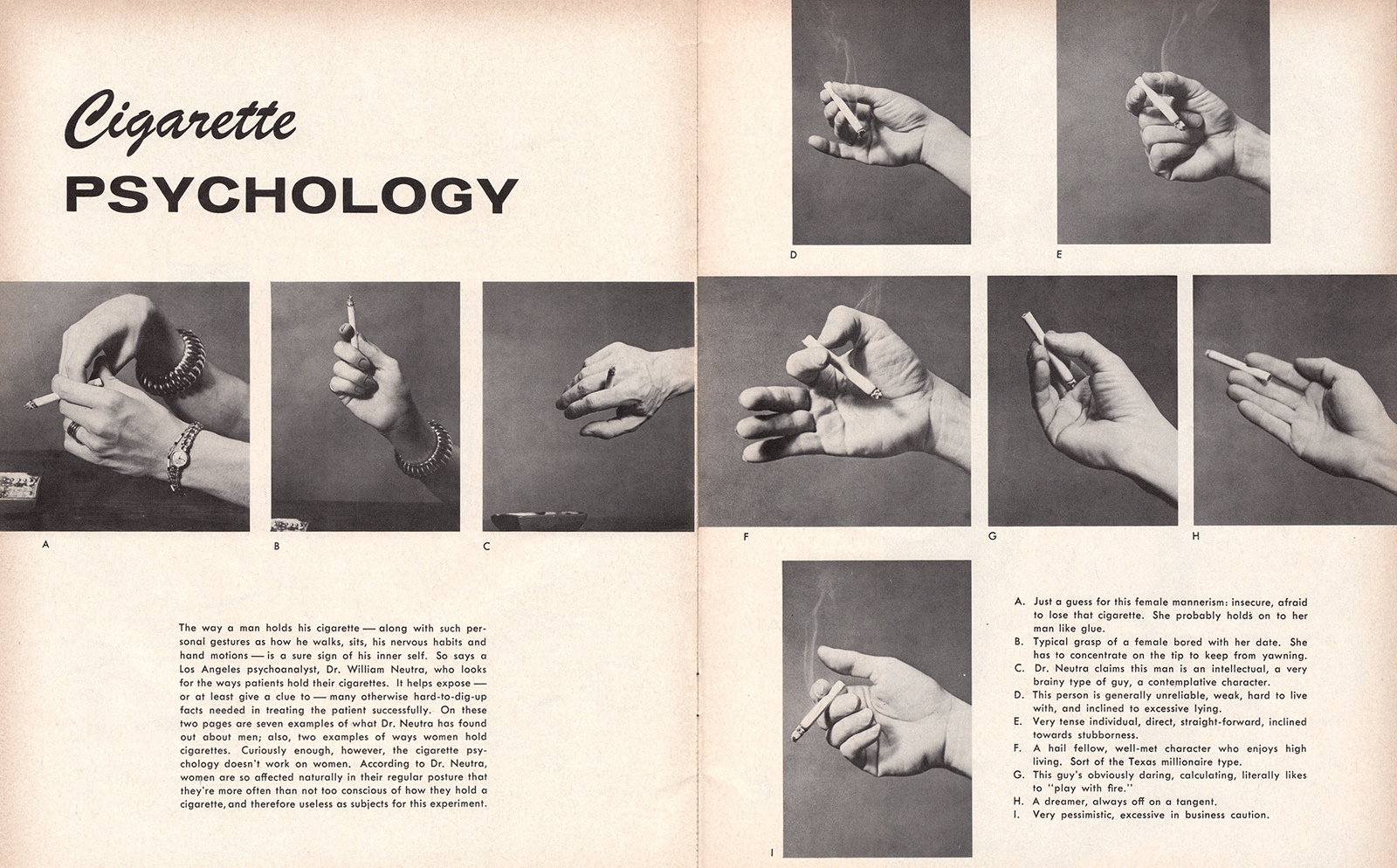
Anyone who has ever smoked or still does, knows that a big part of the habit is the ritual – to mention a few, opening the packs, tamping the cigarette down, the lighting with match or lighter, how you inhale, blowing smoke rings, flicking the ashes, having coffee at the same time, and – of course – how you hold that death stick.
This image from a 1959 issue of Caper magazine shows Dr. William Neutra’s analysis of personality, based on how people hold their death sticks. Neutra was a Los Angeles psychoanalyst, which of course explains a lot.
Click the image for a full-size version.
You wanna buy some death sticks?
Back in the 50’s, nonsense of this kind bought a lot of Cadillacs for a lot of psychiatrists, but people were eating it up, so it got published.
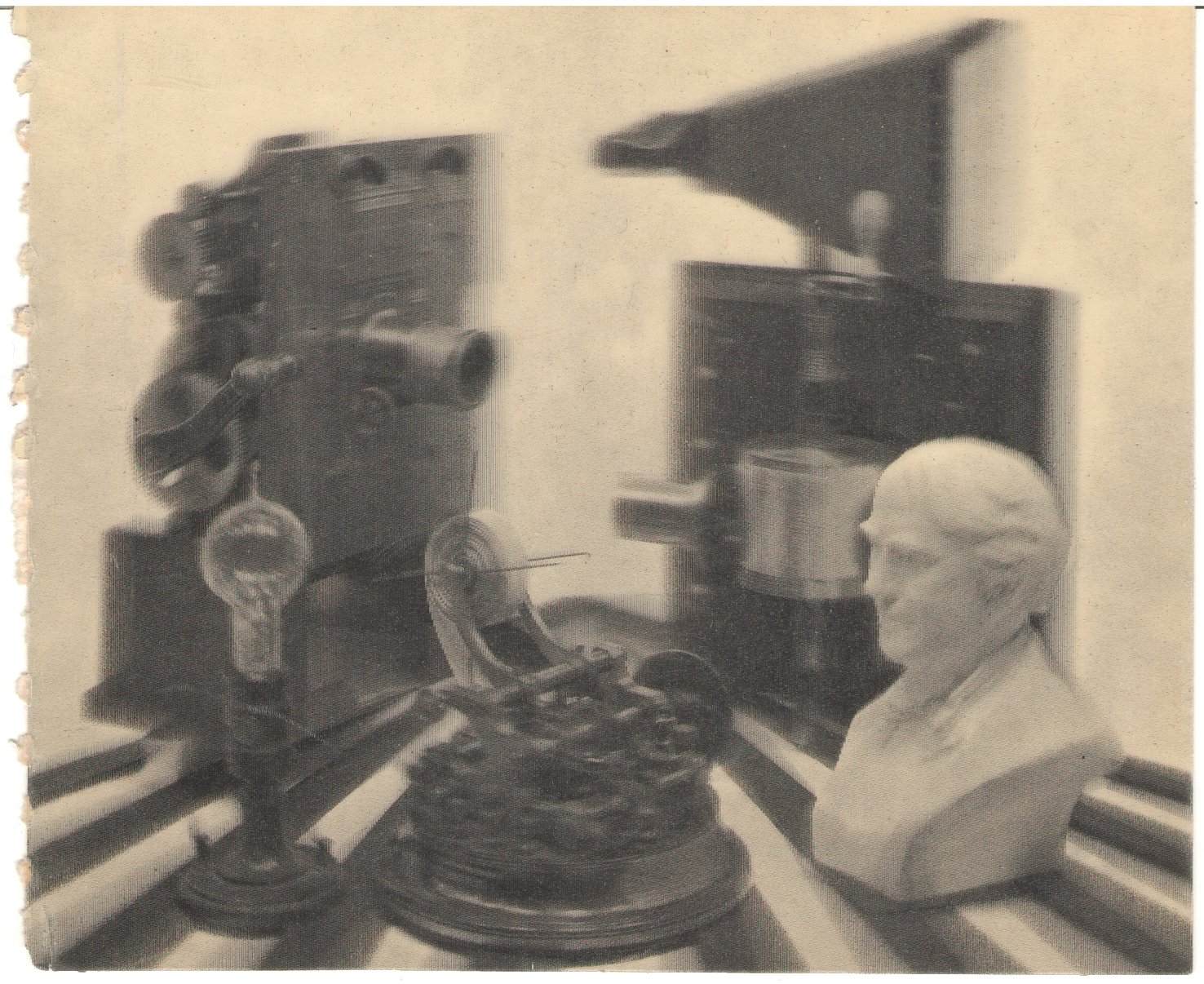
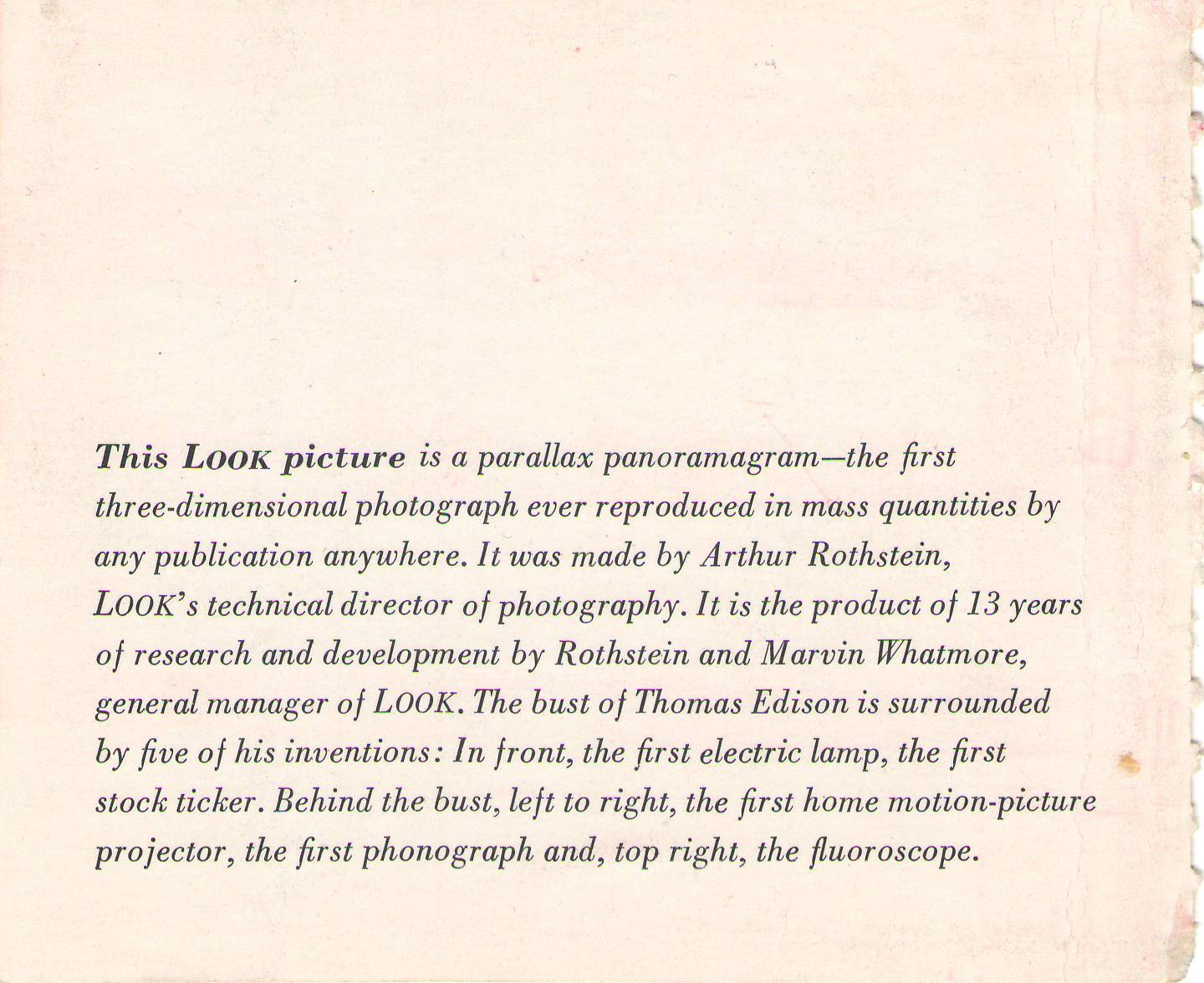
The magazines LIFE and LOOK were regular guests in our home, along with the New Yorker, the Saturday Evening Post, and a few other esoteric offerings. At one point in the 1960s, LOOK began including small postcard-sized attachments in the back of their magazine – mass produced parallax panoramagrams, or 3D pictures; the one you see below was the first.
The principle was very similar to the “wiggle pictures” one still occasionally sees today on toys and games – I remember being delighted with the little ones I found in Cracker Jack boxes in the 50s (before their prizes went to hell in a handbasket); the idea is to present a different image to the eyes as the ridged surface is rotated and refracts the underlying picture differently. In this case, however, the image is engineered to present a slightly different parallax to each eye at the same time.
TIME magazine had the following writeup about this innovation:
“A LOOK FIRST: 3-D PHOTO,” proclaimed the message on the cover. The Parallax Panoramagram “may mark the beginning of a new era in graphic-arts,” said the press release. As it turned out, Look’sfirst ran almost last in the magazine. On page 105, just short of the back cover, persevering readers found a stiff, postcard-size appendage, attached in the manner of a subscription renewal card. On the card was a black and white picture that showed a bust of Thomas Alva Edison surround ed by some half-dozen of his inventions. What made most readers stop and look twice was the picture’s distinct illusion of depth.
Look’s stunt, the result of 13 years’ research, constitutes the latest effort to translate the real world of three dimensions into the picture world of two. Artists have employed trompe I’oeil three-dimensional techniques for centuries. But true success for photographers awaited the invention of the stereopticon camera in the 19th century, which took two pictures of the same subject through lenses that were separated like a pair of human eyes. When the viewer saw each picture separately, through separate lenses, his brain automatically supplied the missing dimension of depth.
The Look process is almost identical. A specially designed camera takes pictures through a transparent screen that is serrated to break up the image into hair-thin vertical slices. The camera is then moved slightly to the right or left, as other, sliced-up pictures are taken on the same negative.
The process is laborious, costly and slow, and not yet adaptable to highspeed printing. Merely to pose the static picture in last week’s Look took two full days of work with a one-ton, cubical camera as complicated as an electronic computer. Five additional weeks were required to engrave the photograph, print it some 7,000,000 times on a sheet-fed offset press and then pour on and properly shape the clear plastic film that covers the picture with what amounts to a collection of lenses. The plastic lenses are so arranged that the viewer’s left eye sees one of the serrated pictures, the right eye sees the other (see diagram).
Look and its partners in the enterprise, Eastman Kodak Co. and Harris-Intertype Corp., which built the equipment that adds the plastic lens coat, have high hopes of commercial success. Cowles Magazines & Broadcasting, Inc., Look’s parent company, plans to establish a separate corporation, to be called Visual Panographics Inc., to sell its 3-D process to greeting-card manufacturers, display-art companies and anyone else willing to pay the price in money and time for an unspectacled illusion of depth. TIME Magazine
A much more detailed treatment of these images can be found over at Tattered and Lost.
An interesting bit of history, this was. It was impressive enough to me that I’ve had it in my files for over half a century.
A brief history of the Gaelic languages: Middle Irish spread into Scotland and the Isle of Man about 1000 years ago and has since developed into Scottish Gaelic, Manx and Modern Irish, though all are somewhat mutually intelligible (like Spanish and Catalan).
In the Republic of Ireland, Irish is a compulsory subject for 14 year’s of education up until college/university. While 41% of Irish people ticked Yesto the question Can you speak Irish? on the 2011 census, the reality is that only 4.4% use it outside the education system on a regular basis. This 41% figure is a reflection of Irish people’s aspirations for the language rather than ability. I would guess that no more than 10% of the population could actually hold a conversation in Irish, if even.
The situation in Scotland is worrying as they don’t have the huge popular and political backing like Irish does. And Manx died out as a native language 40 years ago but it’s seeing a recent revival with Manx-medium education.
Although the map states that 41% of Irish people surveyed claim they can speak Irish, the number of those who speak it fluently and daily is much smaller, with most of that 41% remembering not more than “cúpla focail” (a few words) of the torment they were required to endure in secondary school. But there is still a fierce pride around the language in some circles, even among the diaspora, which is true of the other Gaelic languages as well – witness the ongoing “Deireadh Seachtaine Gaeilge” (Irish Weekend) held yearly in San Francisco, and the ongoing work by Foras na Gaeilge, among others.
Even Cornish, which died “officially” in 1676 with the death of Chesten Marchant, has witnessed a revival, and Agan Tavas exists as a support organization for language learners; Breton continues to live, and its percentage of pupils in bilingual education has been growing. albeit slowly.
The map above does not address Welsh, (a Brythonic cousin to the Goidelic family) which has historically maintained the strongest foothold within the English-speaking world, but even this bastion of individuality is weakening somewhat:
The above map shows the changing percentage of those who claim to speak Welsh over the period of 10 years.
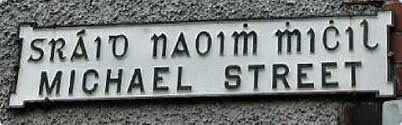
Throughout the Celtic world, street signs are one of the places where local languages are most visible:
And naturally, if you want to place a new sign, you need the text translated. But woe to the government worker who orders a sign without knowing what the hqiz they are doing:
The Welsh text on the sign above reads, “I am not in the office at the moment. Please send any work to be translated.” This was obviously an auto-response by a translator on vacation, but the ragskull handling the matter spoke no Welsh, and assumed that this was the desired translation. Oops.
Languages and dialects die almost every day. The Celtic family continues to struggle, particularly given the onslaught of English, indisputably the most popular international language. But the pride of Celtic language speakers will ensure that the death of these beautiful and historically rich tongues will not come until a day far in the future.



 ‘
‘









 Playing in the World Game