Pollen: Good for more than hay fever

Misc_pollen_colorized


Just look at that stuff. Magnified 500 times (the image is colorized), it’s easy to see why some people’s noses and eyes respond unhappily to the invasion of this vegetative sperm. On the other hand, without it plants would reproduce and the world would be left dead and sterile.

It turns out pollen is great for science, as well. Pollen lasts for a long, long time – millions of years when fossilized.  A 3,200-year drought and cold wave destroyed a late Bronze Age thriving society near present-day Tel Aviv and far beyond, and until now scientists had no clue as to why – but pollen appears to have solved the mystery.

According to The Jewish Press,

A study of fossil pollen particles in sediments extracted from the bottom of the Sea of Galilee has revealed evidence of a climate crisis that traumatized the Near East from the middle of the 13th to the late 12th century BCE. The crisis brought about the collapse of the great empires of the Bronze Age.

Even older, analysis of pollen hundreds of millions of years old showed that flowers may have existed as early as the first dinosaurs, according to an article in LiveScience.

Newfound fossils hint that flowering plants arose 100 million years earlier than scientists previously thought, suggesting flowers may have existed when the first known dinosaurs roamed Earth.

Under high magnification, these little grains are beautiful, and it seems very useful to scientific research. But that is cold comfort to those who suffer from hay fever, a malady from which I have been blessedly exempt – but having watched my kids suffer, I have endless sympathy for those who do.

The Old Wolf has spoken.
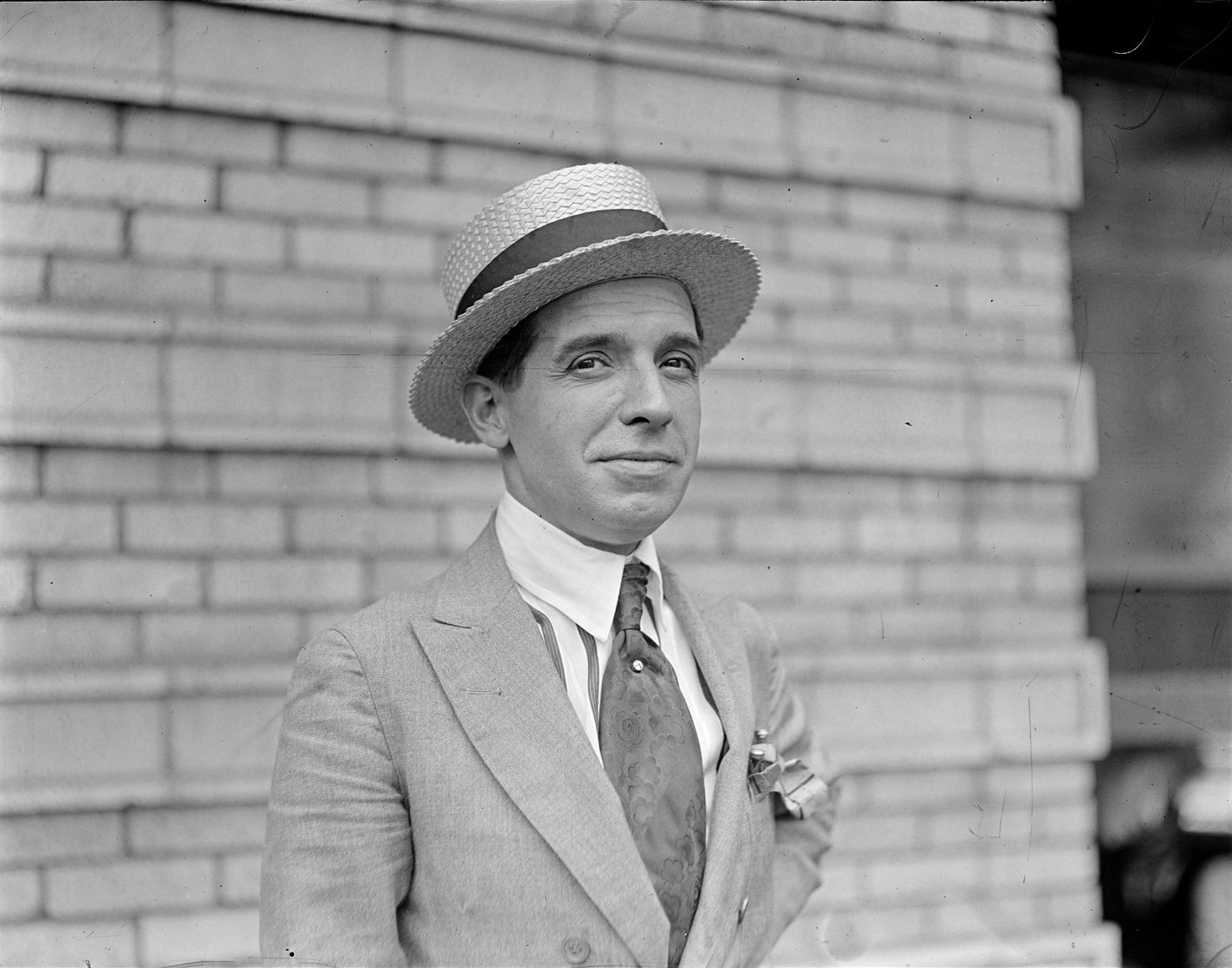
Charles Ponzi – Boston, 1920

Ponzi

Charles Ponzi, after whom the infamous “Ponzi Scheme” was named, was about as unscrupulous a con-man as ever was born. The man must have come into the world with larceny in his heart, because he never gave up his ways or showed any sort of remorse for his chosen means of livelihood.

The lesson to be learned from studying Mr. Ponzi’s sorry history is that if a deal looks too good to be true, it most certainly is. Sadly, many people have not learned this lesson, and con-men and swindlers continue to operate both locally and across international borders (especially with the advent of the internet); P.T. Barnum’s assertion that “there’s a sucker born every minute” is all too true. The authorities do what they can, but especially in the case of international swindlers, such as advance-fee scammers from Nigeria and elsewhere, there is little that can be done.

If you haven’t been to the Sweepstakes Fraud Factsheet yet, you might just want to have a look. Protect your loved ones, especially the elderly and vulnerable.

The Old Wolf has spoken.

The Aleph and Tentacles, London, 1890

aleph


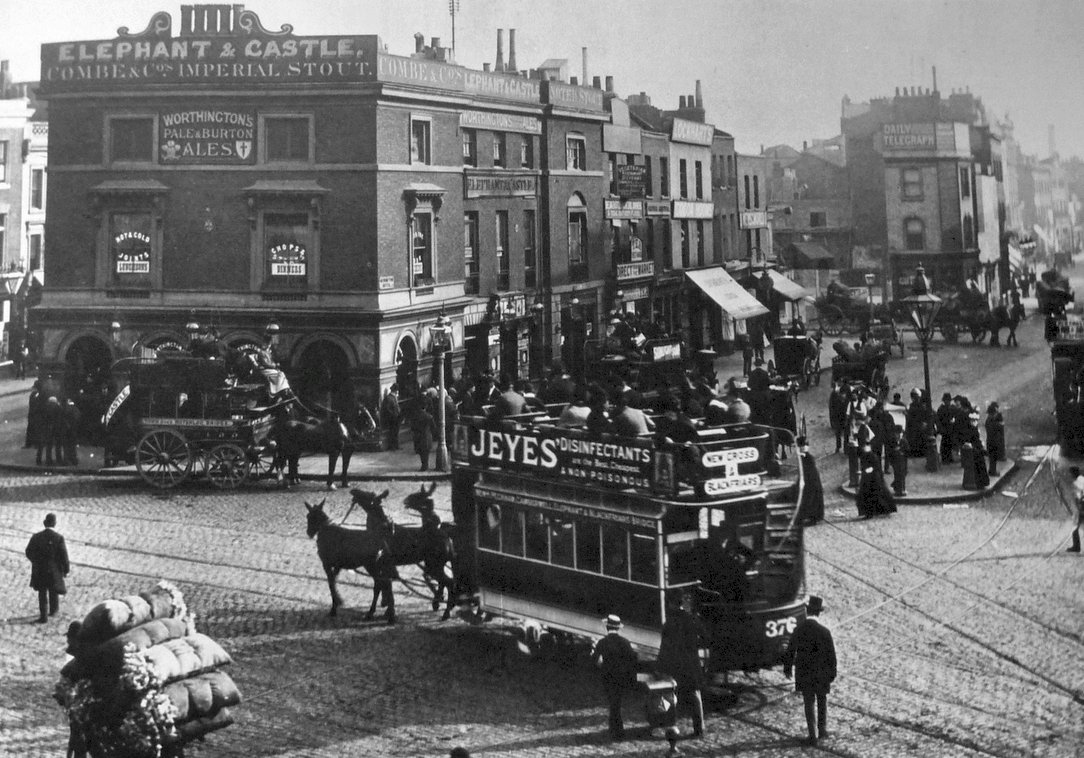
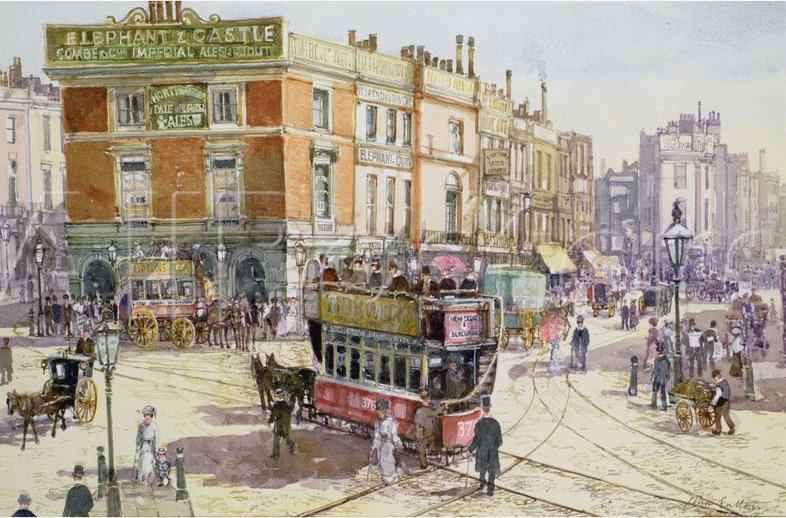
Elephant and Castle is a major road junction in Central London, England, in the London Borough of Southwark and the name of the surrounding area, largely superseding Newington. This photo of the eponymous pub was taken in 1890. The photo was used by artist John Sutton to produce a watercolor:

Elephant Sutton


The area has had a rather checkered history in terms of prosperity, and is currently the subject of a master-planned redevelopment budgeted at £1.5 billion.

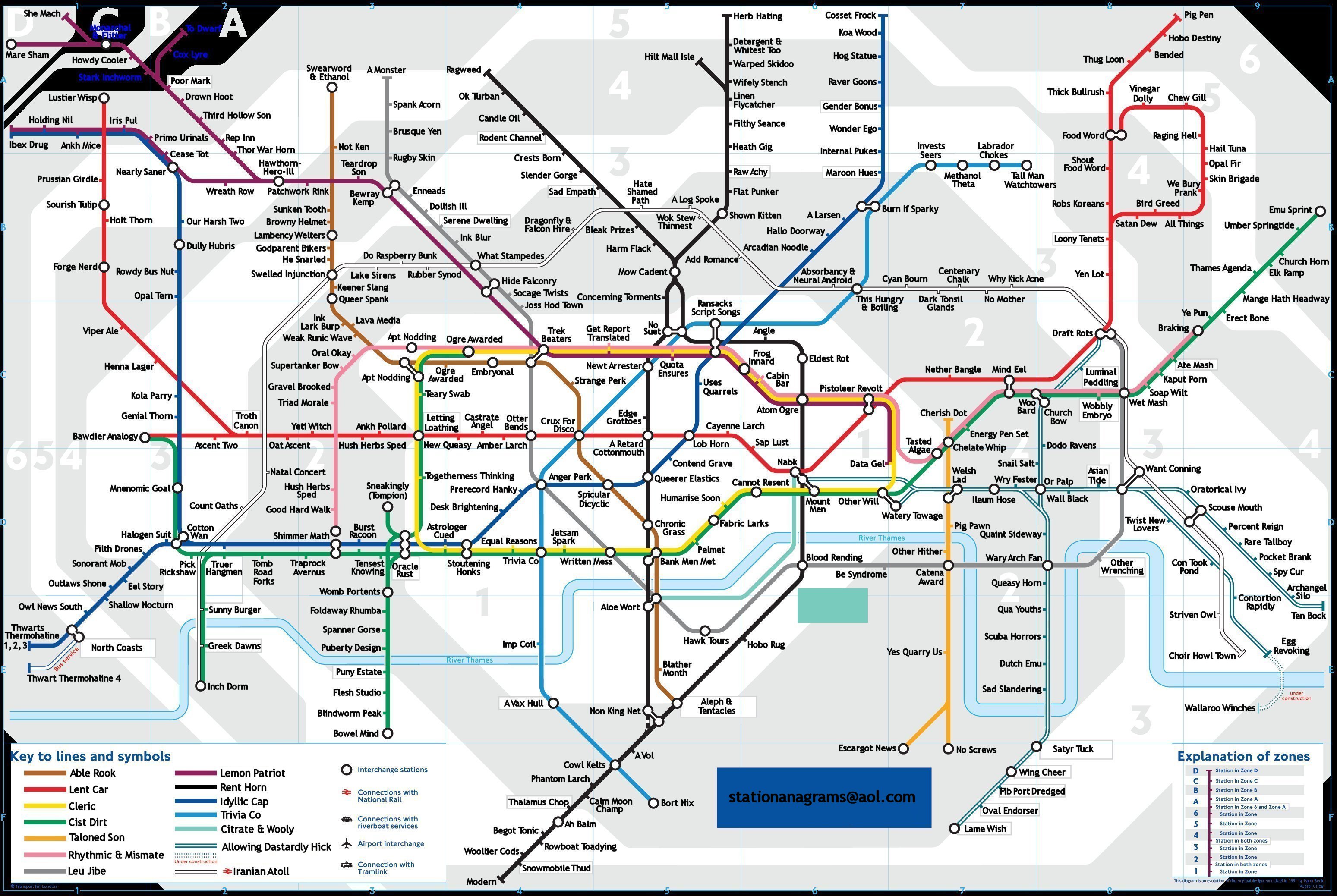
As for the strange title of this post, feast your eyes on this brilliant map of the London underground, with every station turned into an anagram. I assume no responsibility for soiled screens or ruined keyboards; put down your Guinness before you have a look.

anagrammap

The Old Wolf has spoken.

The Jaquet-Droz Automata

I started in the world of data processing in 1969 when I took my first FORTRAN class at the University of Utah, and learned the basics of programming a Univac 1108. My very first run spit out “unresolvable error in source code”, which error our instructor told us we would probably never see.

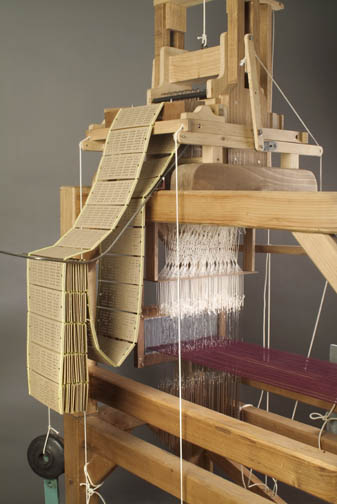
That tidbit aside, one of the things we learned about the history of the computer was that the Jaquard loom, first demonstrated in 1801 and designed to weave cloth based on a chain of “punch cards” was one of the first forays into programmable machinery.

Jacquard Loom

Model of the Jaquard Loom built by students at the Northhampton Silk Project.

What we didn’t learn was that around 30 years earlier, the Jaquet-Droz family of Swiss watchmakers created some absolutely brilliant machinery with programmable capability – the Jaquet-Droz automata.

Automates-Jaquet-Droz-p1030472

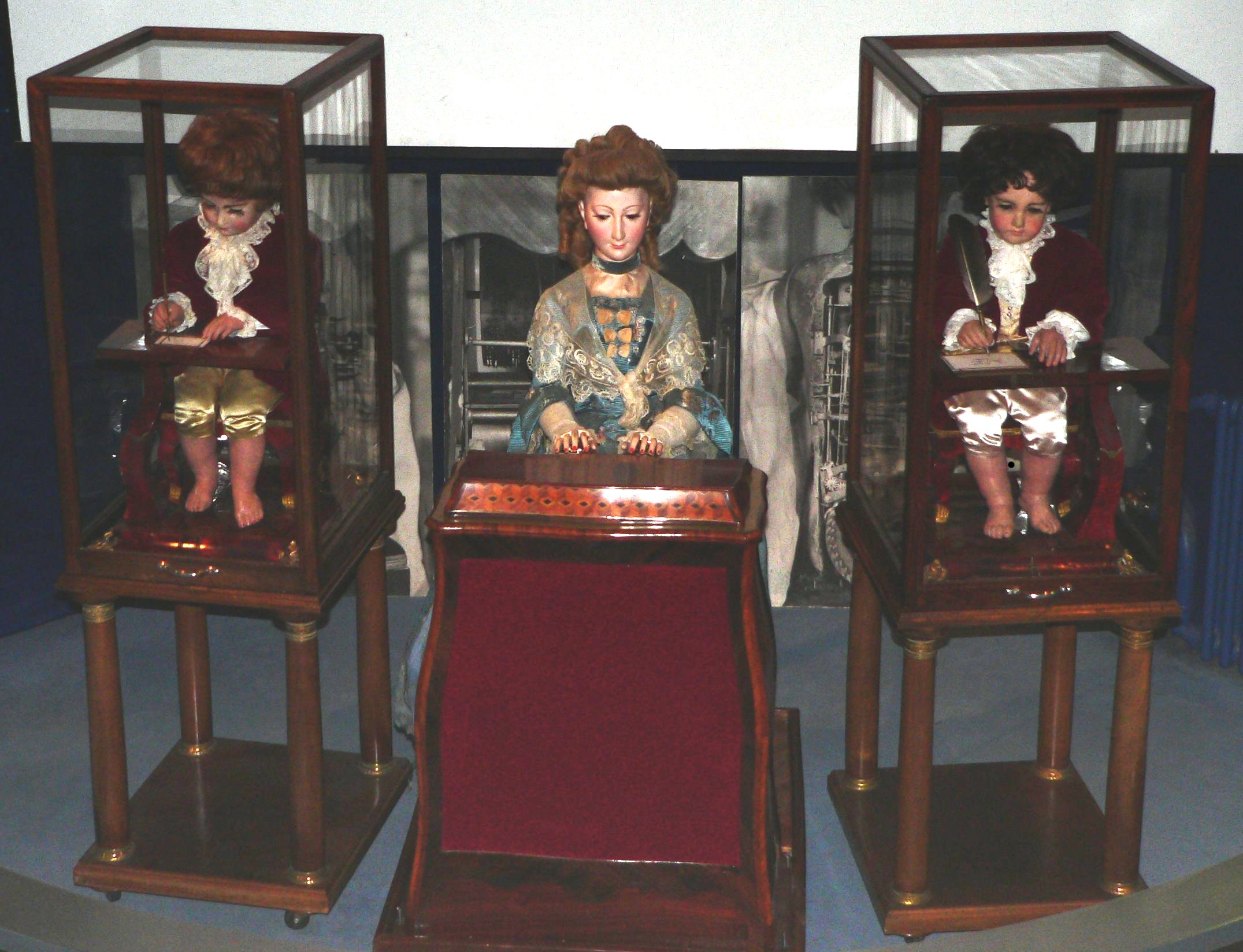
These three little homunculi, from left “the writer,” “the musician,” and “the draftsman,” are miracles of miniaturization and precision machining, worthy of the finest watchmaking tradition of Switzerland. The currently reside at the Museum of Art and History at Neuchâtel, and I often saw them advertised when I lived there in 1984, although I didn’t get to see them in person.

The descriptions below are from the Wikipedia article linked above:

The musician is a female organ player. The music is not faked, in the sense that it is not recorded or played by a musical box: the doll is actually playing a genuine (yet custom-built) instrument by pressing the keys with her fingers. She “breathes” (the movements of the chest can be seen), follows her fingers with her head and eyes, and also makes some of the movements that a real player would do—balancing the torso for instance.

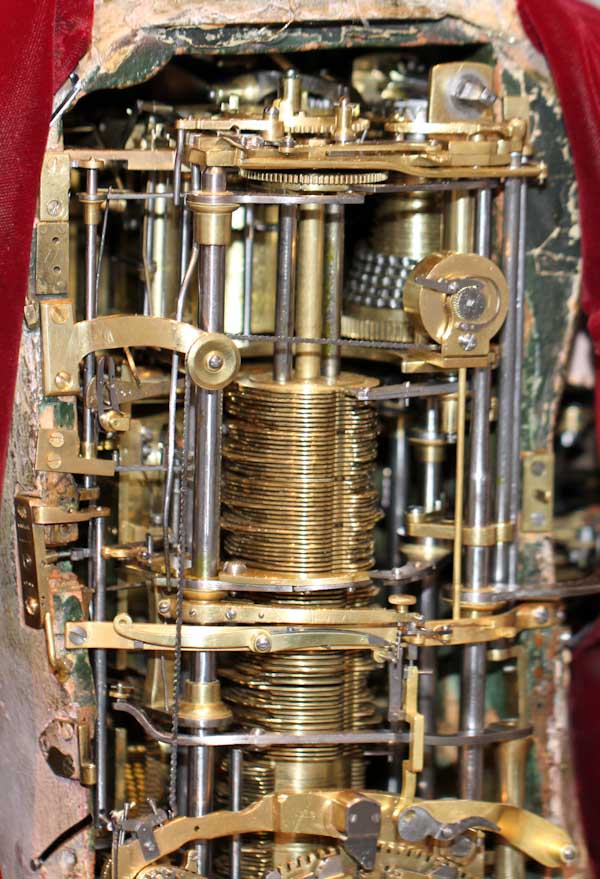
The draftsman is a young child who can actually draw four different images: a portrait of Louis XV, a royal couple (believed to be Marie Antoinette and Louis XVI), a dog with “Mon toutou” (“my doggy”) written beside it, and a scene of Cupid driving a chariot pulled by a butterfly. The draftsman works by using a system of cams which code the movements of the hand in two dimensions, plus one to lift the pencil. The automaton also moves on his chair, and he periodically blows on the pencil to remove dust.

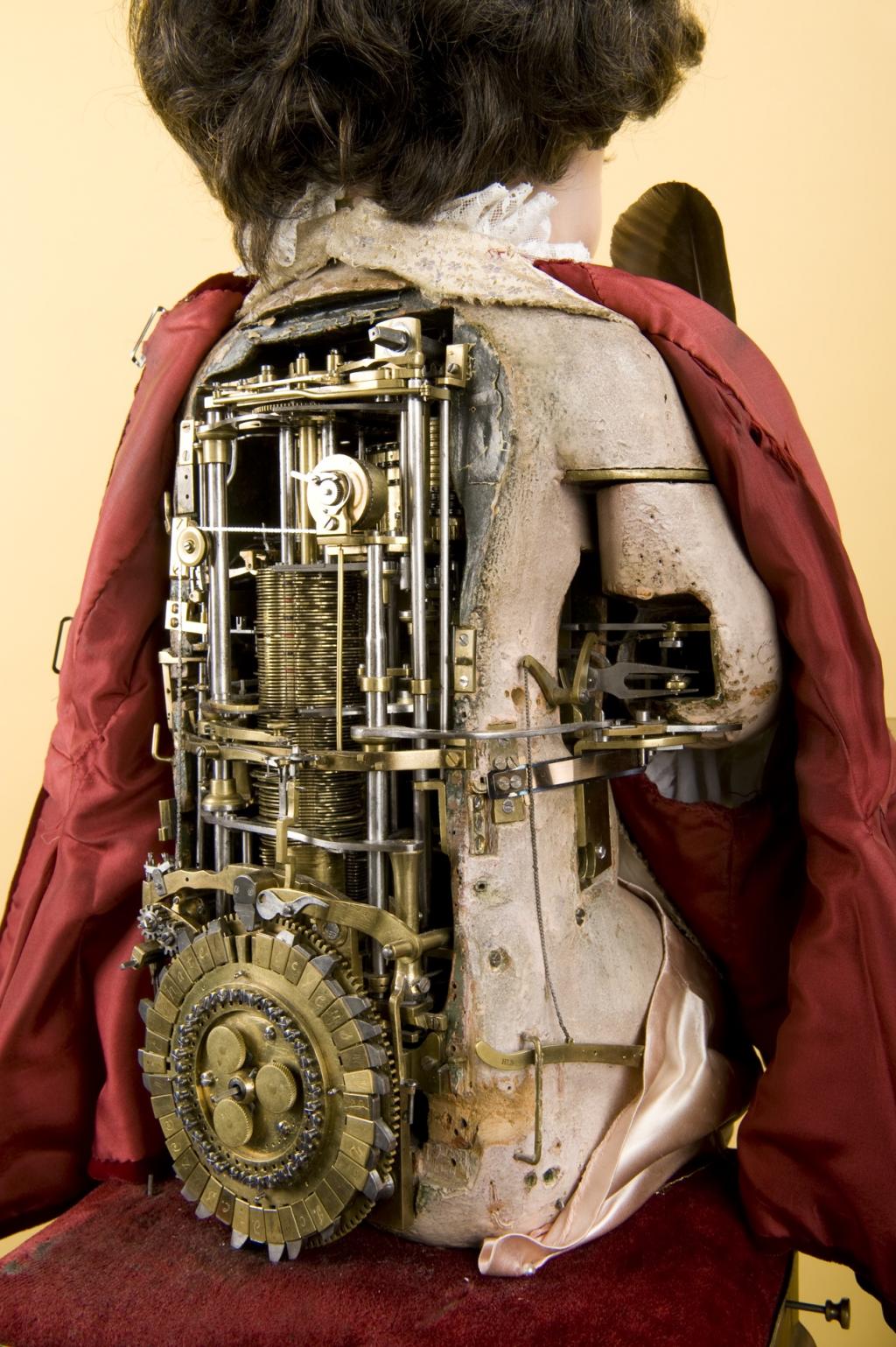
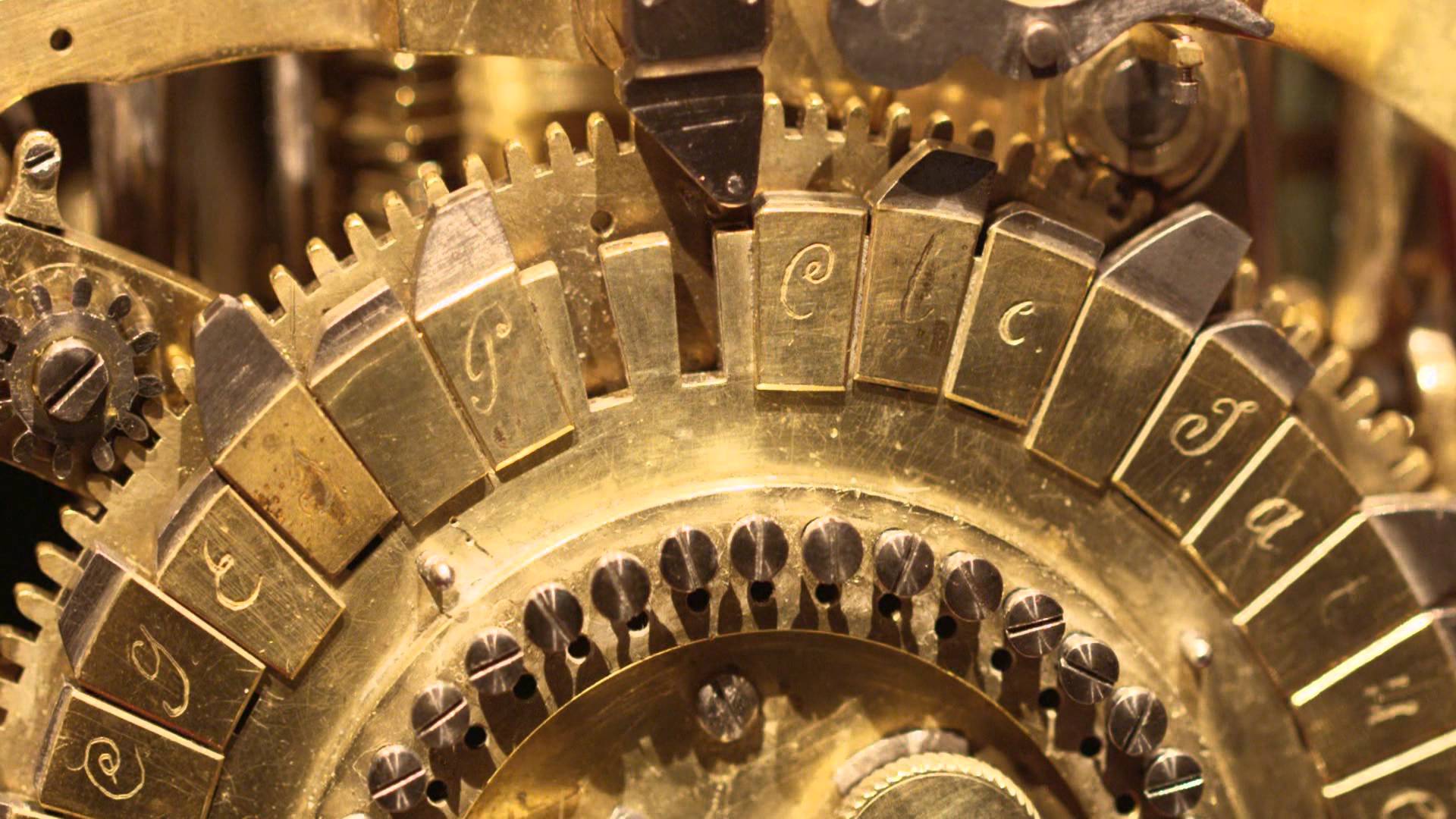
The writer is the most complex of the three automata. Using a system similar to the one used for the draftsman for each letter, he is able to write any custom text up to 40 letters long (the text is rarely changed; one of the latest instances was in honour of president François Mitterrand when he toured the city). The text is coded on a wheel where characters are selected one by one. He uses a goose feather to write, which he inks from time to time, including a shake of the wrist to prevent ink from spilling. His eyes follow the text being written, and the head moves when he takes some ink.

You can watch an informative and eye-popping video about “The Writer” at Chronday.

Jaquet_Droz_The Writer_2

Rear view of the writer, showing the programming wheel and the cam arrangement

Jaquet-Droz-automata-3

Closeup of the camshaft

maxresdefault

Closeup of the moveable letters which guide the writing.

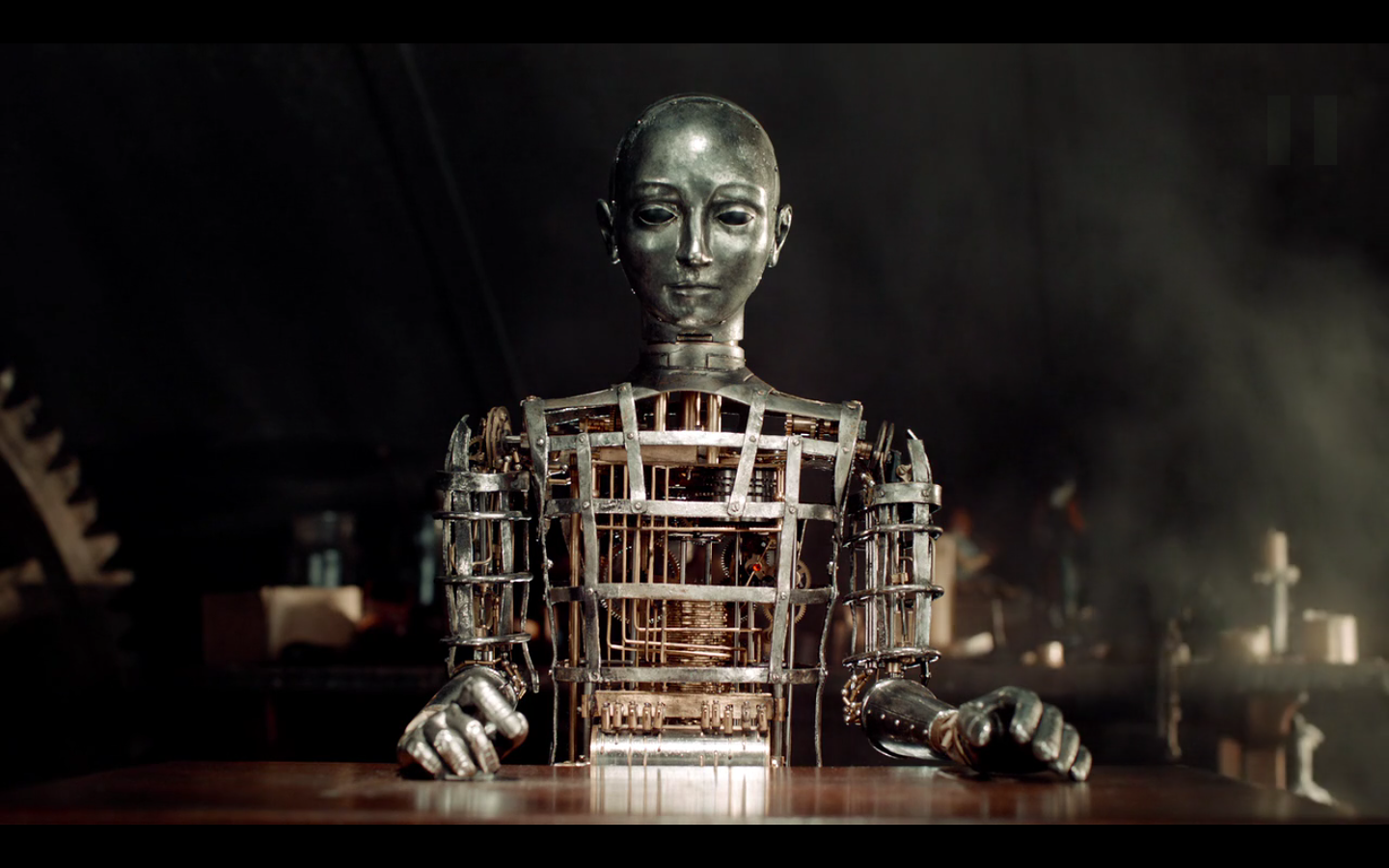
The robot in the movie “Hugo” was inspired by the Jaquet-Droz automata. If you haven’t seen it, I would find a copy at Redbox or Netflix and have a look – I found it well done.

hugo-automaton-2

The Old Wolf has spoken.
The 3rd Avenue El, New York City, 1952

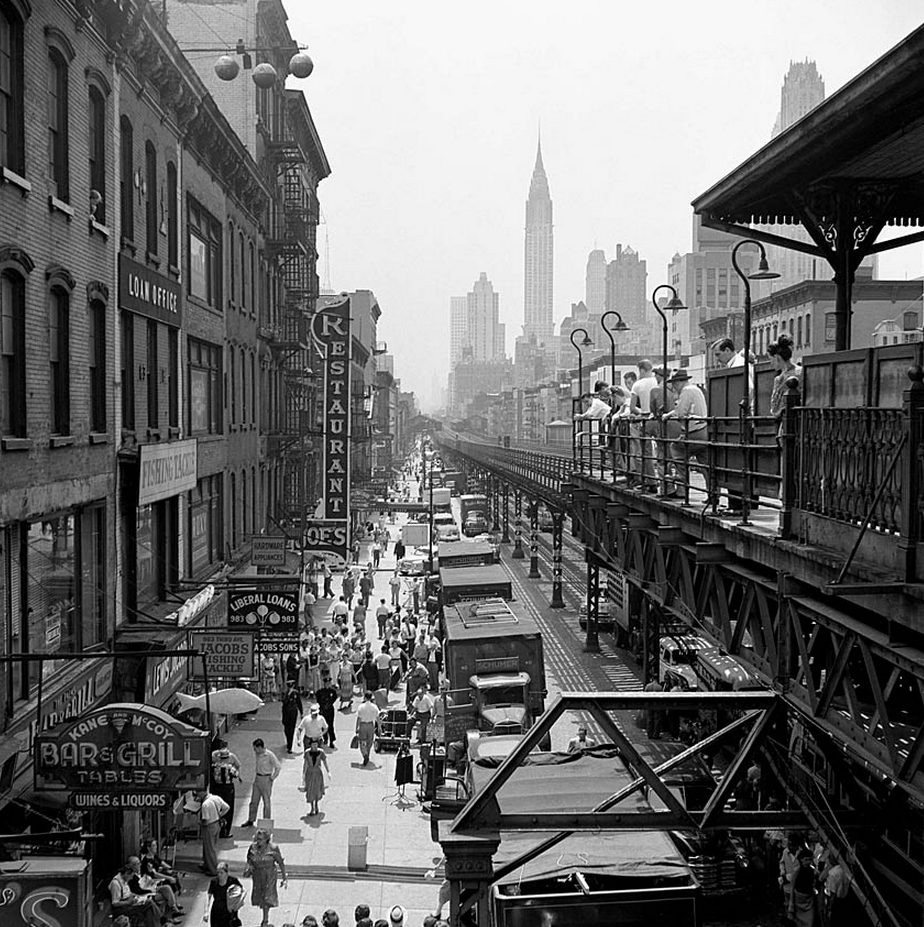
I’ve mentioned this before in this post, but here is a lovely shot of the elevated train that used to run up and down Third Avenue in New York City [Photo: Vivian Maier, hat tip commenter Ron for the attribution.] Its official name was the IRT Third Avenue Line.

vHpbwk0

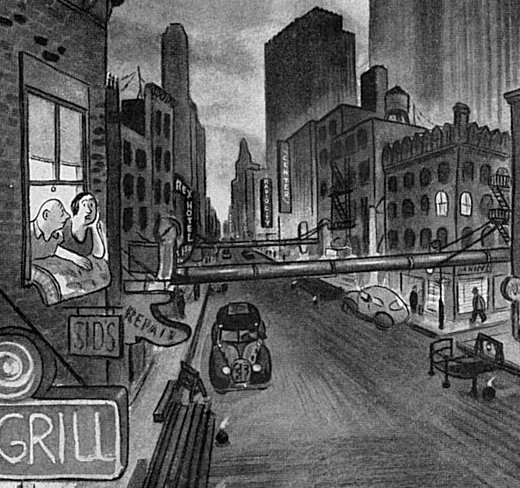
An extract of the cartoon by Charles Addams is worth reposting here:

Sometimes, on nights like this I can still hear it rumble by.
The 3rd Avenue El

The caption read, “Sometimes, on nights like this I can still hear it rumble by.”

I was only four years old when service was discontinued and the Manhattan elevated trains faded into history, but I remember the “El” well. It was the last survivor, and was supposed to remain in service until the Second Avenue Subway was built (envisioned since 1929, and only now under construction; it’s history rivals the Sagrada Familia in Barcelona for “fits-and-starts” construction), but pressure from real estate investors caused its ultimate demise.

As a historical curiosity, notice those little fire pots on the road. Those were ubiquitous warnings found everywhere in the East where construction was going on – they were in use as late as 1965, if I recall correctly. They were the earlier version of these, which are now everywhere:

5451

And the curious thing is that I can’t find a decent photo of one anywhere. But up close,they looked like this:

firepot

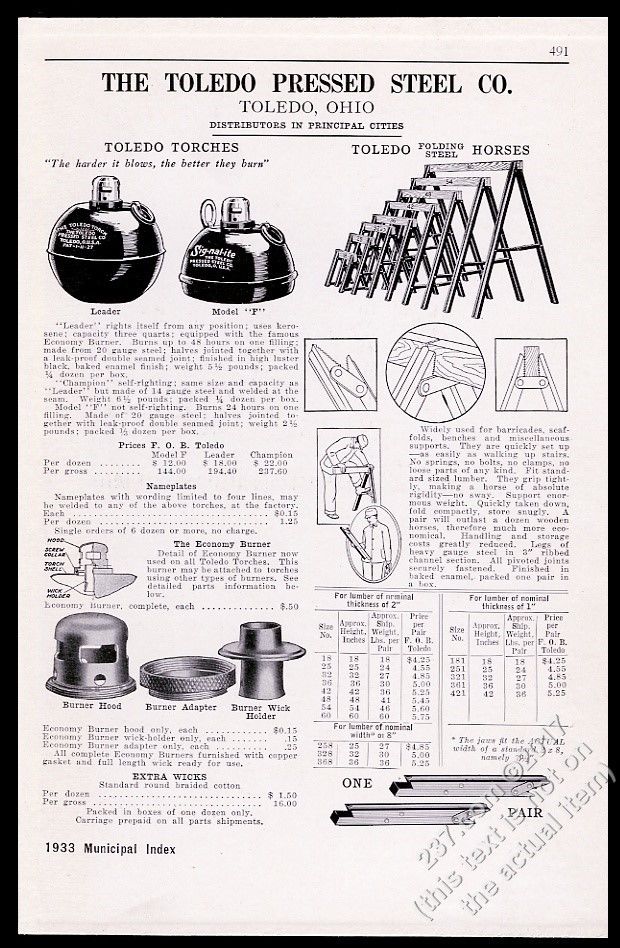
Just a smoky little black fire pot that burned kerosene.

Edit: Ha! Thanks to my friend John Lavezzi who reminded me that these things are called smudge pots.

Smudge Pot

Edit 2 (8-2-2021): Thanks to an interaction on Facebook, I learned today that these were actually called Toledo Torches:

And now you can buy them in modern form for your patio:

17423_l

A random New York City memory, one among thousands.

The Old Wolf has spoken.

Rome, 1860

Intriguing shot of the Coliseum, Meta Sudans and the Arch of Constantine. Tourism was quite different back then.

EvUdf2Lh

Another image from 1858:

Tommaso_Cuccioni_Colosseo_1858

The conical monument in front is the Meta Sudans, or the “sweating cone,” a large conical fountain in ancient Rome built some time between 89 and 96 A.D. It marked the spot where a Roman triumphal procession would turn left from the via Triumphalis along the east side of the Palatine onto the via Sacra and into the Forum Romanum itself. The ruins of Meta Sudans survived until the 20th century. In 1936 Benito Mussolini, il stronzo, had its remains demolished and paved over to make room for the new traffic circle around the Colosseum. A commemorative plaque was set in the road. Although the above-ground structure is gone, its foundations were later re-excavated, revealing the extensive substructure. After another excavation in 1997-98 the traffic circle was closed and the area became a pedestrian district.

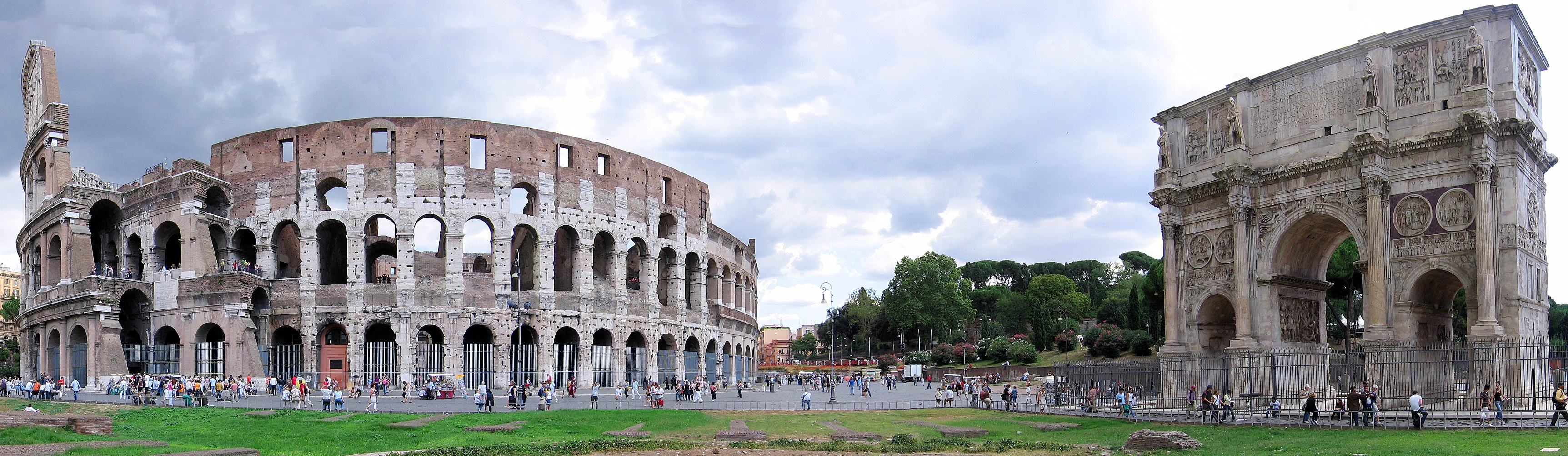
The same view today:

Colosseum-Arch-of-Constantine-Rome-italy-panorama-photo-by-Konrad-Zielinski-son-of-Julo

Photo by Konrad Zielinski, found at AntonK.com

Il vecchio lupo ha parlato.

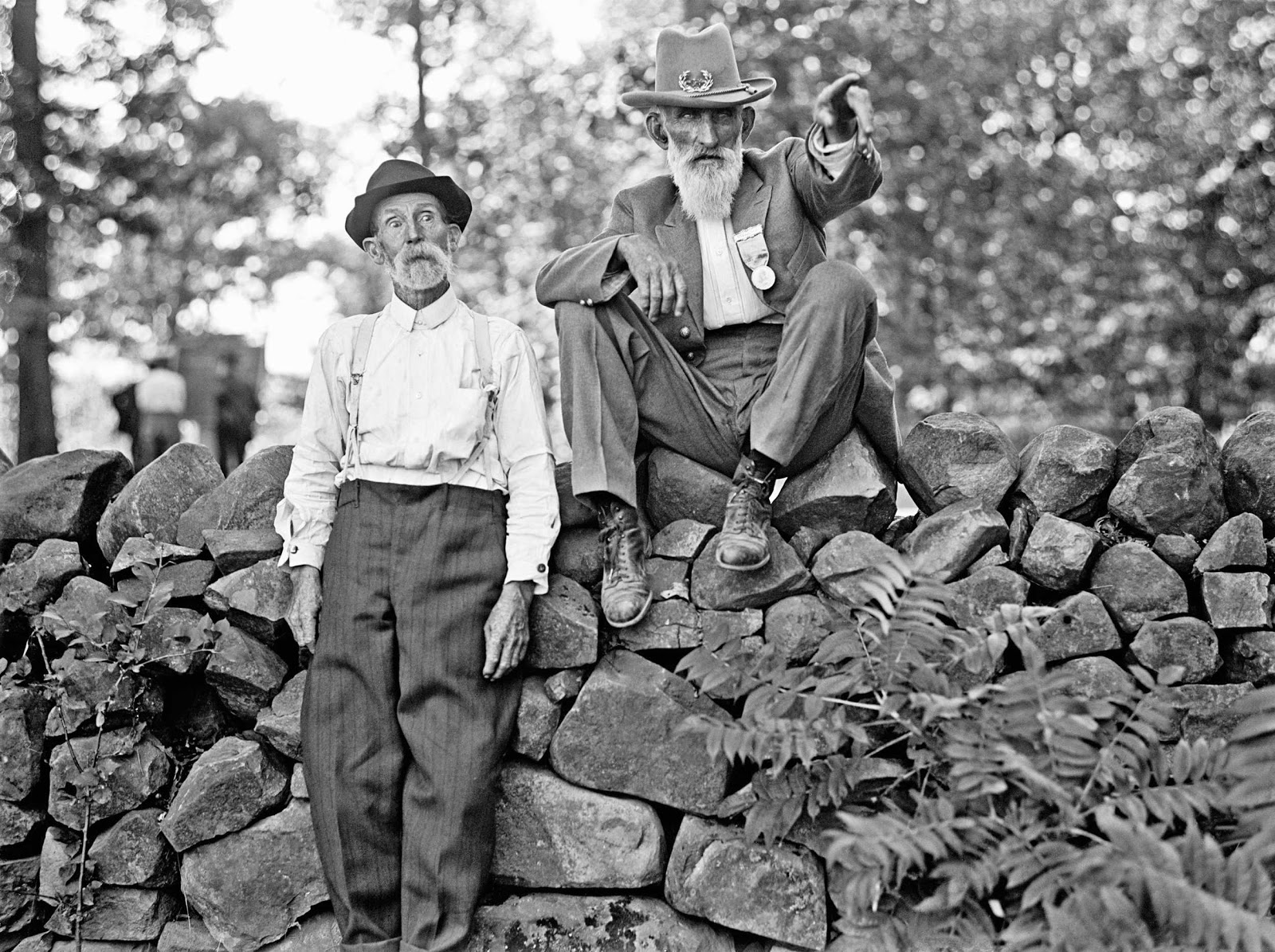
Reunion of Gettysburg Veterans, 1913

7Bf0hYh


Read about the 1913 Gettysburg Reunion at Wikipedia.

More information and more photos can be found at the Guardian.

I spent a year at Gettysburg College, but given my lack of transportation, spent little time on the battlefields. Later in life, however, I came to get a sense of the power of Lincoln’s words:

But, in a larger sense, we can not dedicate — we can not consecrate — we can not hallow — this ground. The brave men, living and dead, who struggled here, have consecrated it, far above our poor power to add or detract.

Those fields are a place of deep contemplation and introspection, and I feel the presence there of those who died, North and South, defending what they believed in.

Gettysburg Monument

The Old Wolf has spoken.

They should have hired a cat long ago

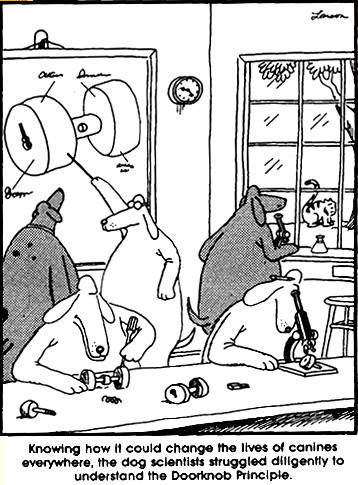
Along with all his other glorious insanity, Gary Larson created this gem:

Gary Larson - The Far Side

Gary Larson – The Far Side

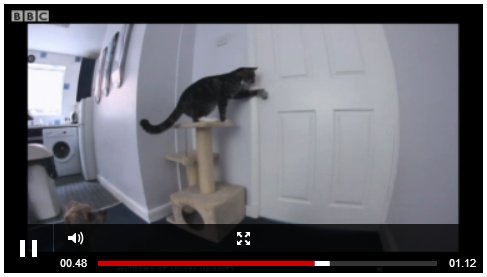
The dog looking out the window had the answer right under his nose, but he failed to make the critical connection:

cat

Over at the BBC, you can watch Dexter help his friend Gizmo overcome the obstacle. Apparently this is not an isolated incident; Dexter the cat and his dog pal Gizmo were shut in the kitchen at owner Matt Hurst’s home in Sheffield every morning when he left for work. After finding them in the rest of the house for three days running, a confused Mr Hurst set up a camera to find out how they were making their escape. Click through for the full story and video.

Thanks to my friend Billy O’Shea for pointing out this lovely story.

The Old Wolf has spoken.

Constantinople, not İstanbul

Note: The title of this post, a riff on the song title “Istanbul (Not Constantinople)” by Jimmy Kennedy and Nat Simon, is a simple reference to the fact that when these photos were taken, the city was still called Constantinople in the minds of many people, even though the Christian era officially ended in 1453. The blog is not intended to be a place for religious or political bickering; given the nature of the comments that are starting to appear, comments have now been closed.

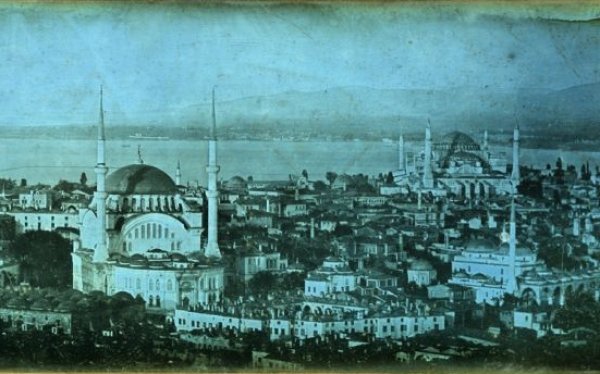
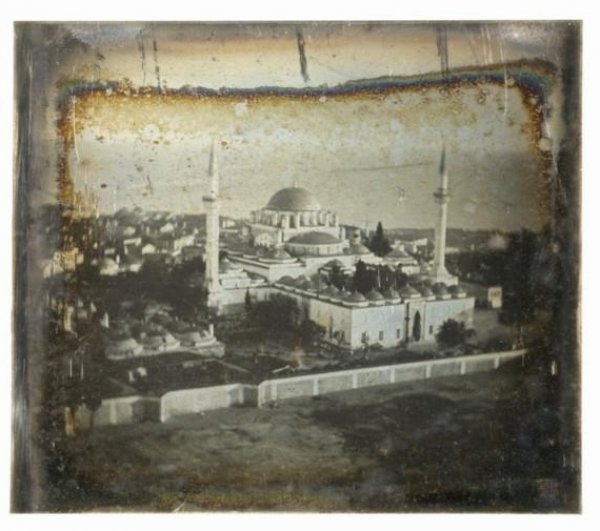
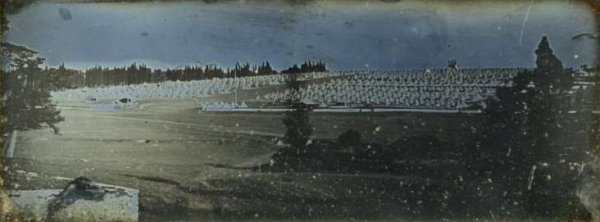
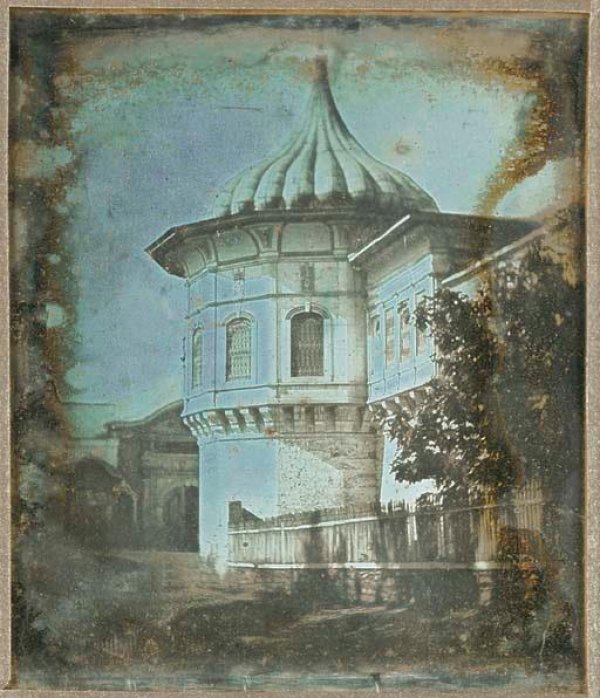
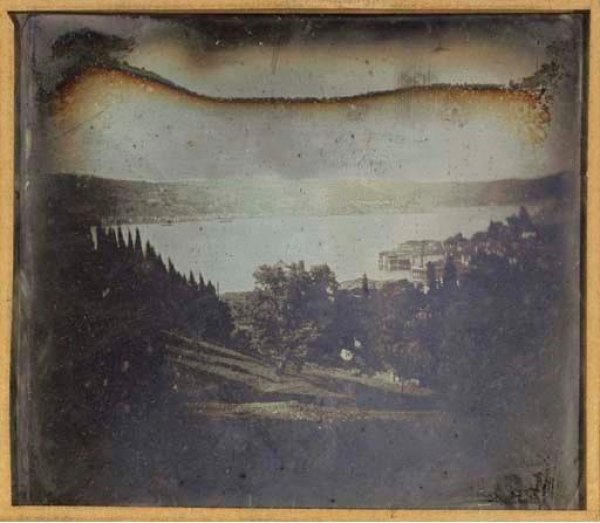
Photography in Istanbul became popular in 1850. However, in 1843 the French photographer Joseph-Philibert Girault de Prangey was the first person to photograph the city. Remarkably, his photographs were only discovered in the 1920s in a storeroom of his estate and then only became known eighty years later. Some of his work is seen below.

Istanbul

A panoramic view of Constantinople. One of the first pictures ever captured of the city. 1844.

Istanbul Overview 1944

A larger section of the above photo.

524c3422b1658

Beyazıt Camii (Beyazid II Mosque)

Sarıyer'de dalyanlar

Sariyer Fisheries

Çengelköy

Çengelköy

Haydarpaşa

Haydarpaşa

524c3420c98fe

Alay Köşkü (Procession Kiosk)

Various untitled photos

Unknown

Beyazıt Camii

524c3423df86d

İstanbul is one of the most captivating cities in the world. I’ve spent many hours wandering its streets and bazaars and mosques and monuments; I’d love to be able to go back and spend a lot more time exploring it. Oh, the food, and the spices, and the lokum and the sahlep and the ayran and the…

The Old Wolf has spoken.