Those Facebook “Sponsored” posts

Ad-blockers and FB Purity or Social Fixer are pretty much “de rigueur” these days if you want any sort of a sane experience on Facebook. Sadly, those conveniences don’t exist for the mobile platform. And since I pretty much use my phone for everything for the most part, I’m assailed with a news feed that is about 10% things I want to see from my friends, family, and groups I like, and the rest is ads (mostly scams), promoted posts (mostly clickbait), and groups that I have no interest in (Facebook’s insane, desperate bid for more engagement – meaning more clicks and eyeballs on advertisements.)

I’ve had one or two good experiences buying things from FB ads, but I’ve been badly stung by Chinese scammers, and so I’ve sworn those transactions off. Facebook does an abominable job vetting their advertisers, and they’ll take money from anyone who has two coppers to rub togrther. Combine that with the facts that far too many Chinese businesses have all the ethics of a starving honey badger and the CCP encourages businesses to take advantage of America, and Facebook’s advertising landscape becomes worse than the lawless Old West.

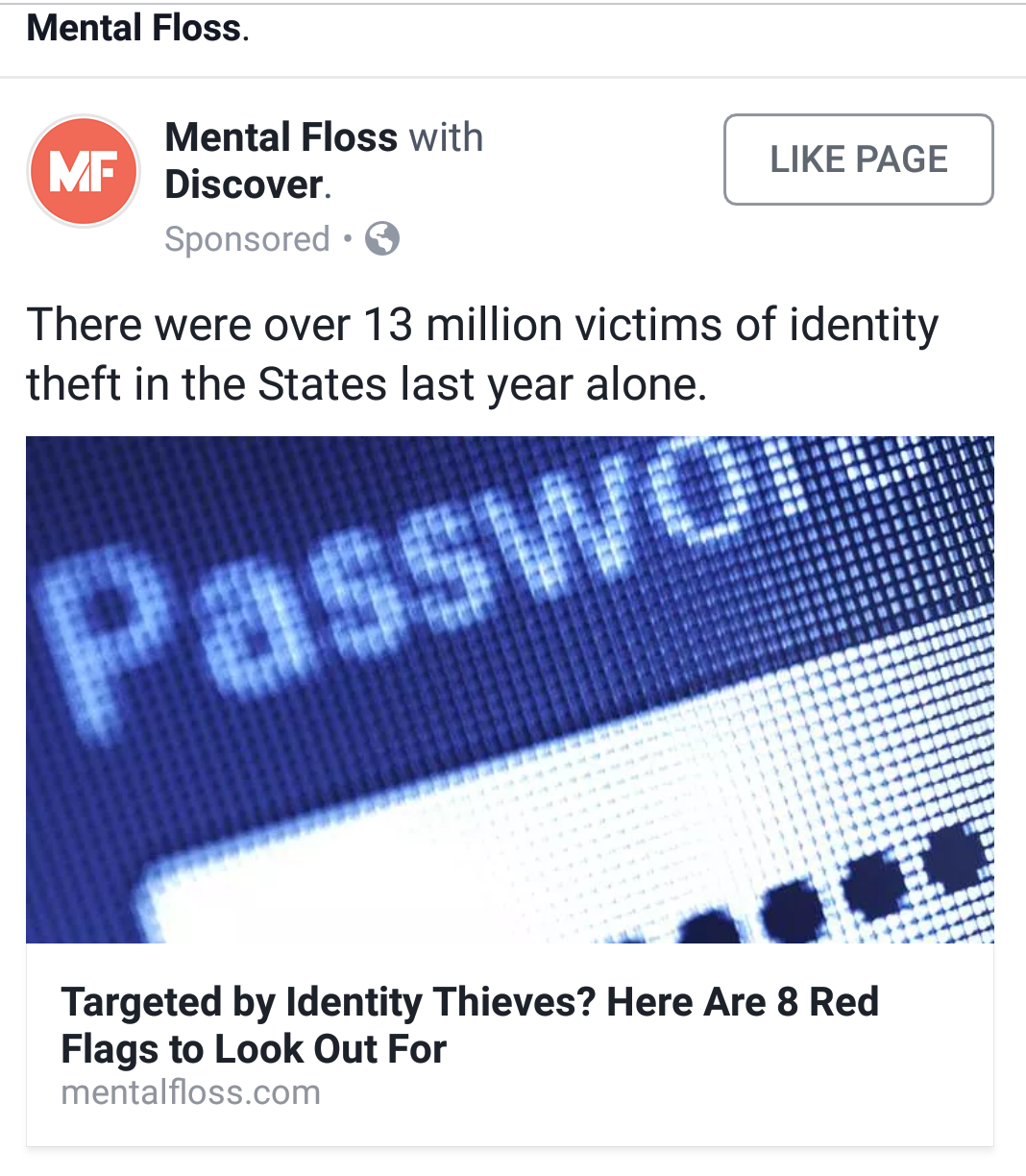
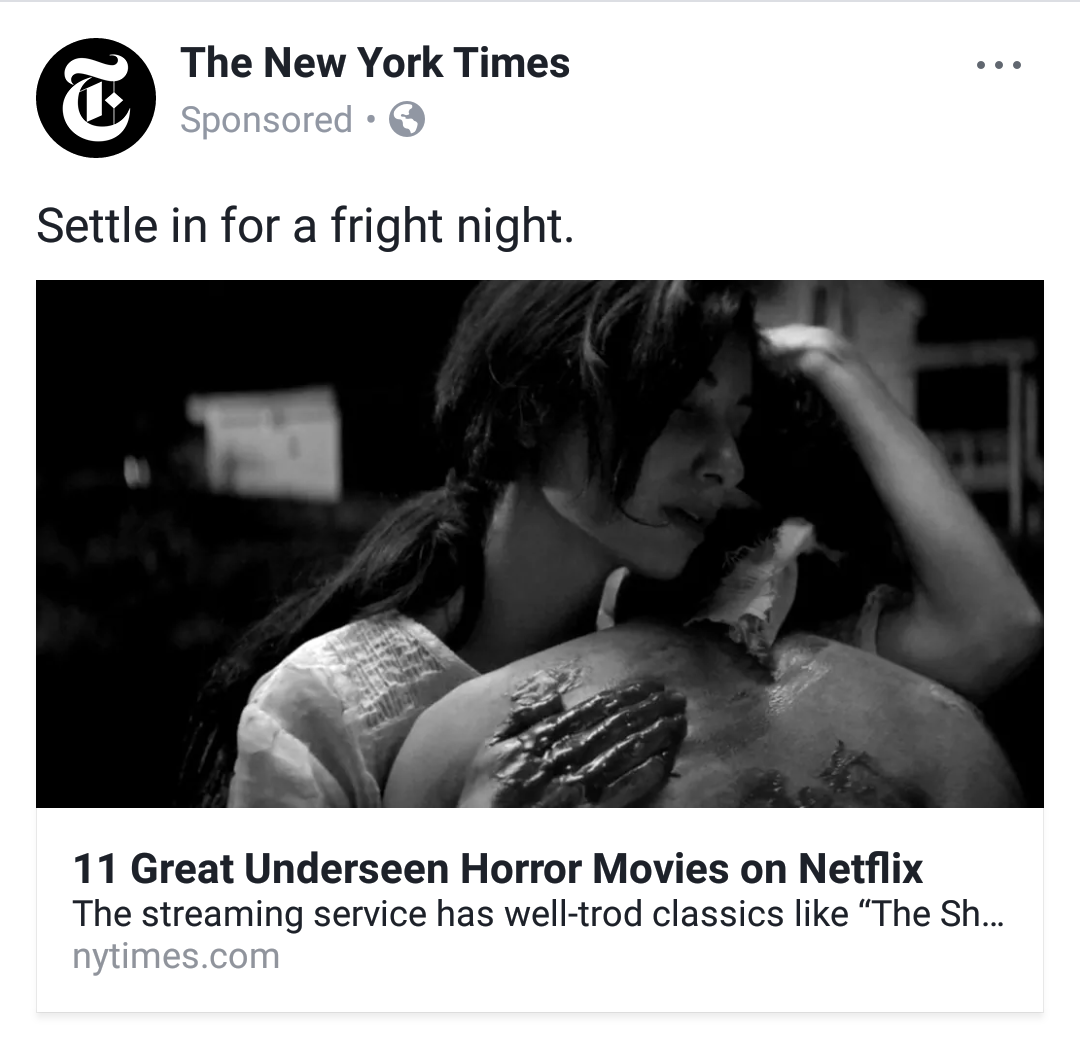
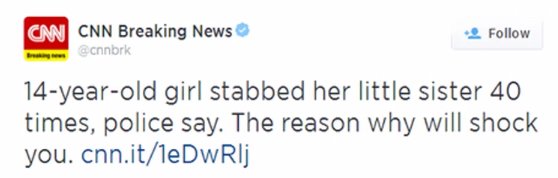
But leaving the outright criminal scams aside, far too many of Facebook’s promoted posts are designed to serve up as many advertisements as possible. Look at a few examples that I’ve scraped off of Facebook just in the last two days:

Notice first of all that the entity making the post is simply linking to another website, usually one dedicated to serving advertisements and scraping information from visitors. If there’s no direct relationship between the poster and the link site, then these entities are simply functioning as affiliate marketers.

Make no mistake, some of these websites provide some interesting information and visiting them can be very entertaining, but if you do happen to click through to these websites out of curiosity, you will find one or two things that make your experience there a lot less than fun, if you’re trying to find out the story behind the ad.

Many of these sites are broken up into 50 or 60 different sub-page, so that every time you click on “next” you get a whole new crop of ads to look at. The ones that aren’t like this will have you scrolling and scrolling and scrolling until the heat death of the universe, with an advertisement inbetween each factoid. And most annoyingly, many of these lists don’t even contain anything about the image or story that got you to click in the first place, or else the hook is much less intriguing than they make it out to be.

Clickbait has been with us for a couple of decades at least. The term was coined in December 2006 by Jay Geiger in a blog post, and refers to treating internet users as prey, lured into clicking nonsensical content for the purpose of getting eyeballs on advertisements. Sadly, Facebook is one of the largest disseminators of clickbait, and recently they have taken to displaying more and more TikTok reels which, instead of being informative or entertaining, are simply more advertising.

So some might ask, in the voice of Tevye, “If it’s so annoying, why do you stay on Facebook?” Well, I stay because Facebook is my Internet home, where many of my family and friends from all over the world are found, and it’s the most convenient way of keeping in touch with them until something better comes along. Like Anatevka, it’s not much… but it’s better than nothing. That said, if there ever happens to be a better platform that doesn’t treat its user base as product to be sold, I’ll be “off like a jug handle.”

The Old Wolf has spoken.
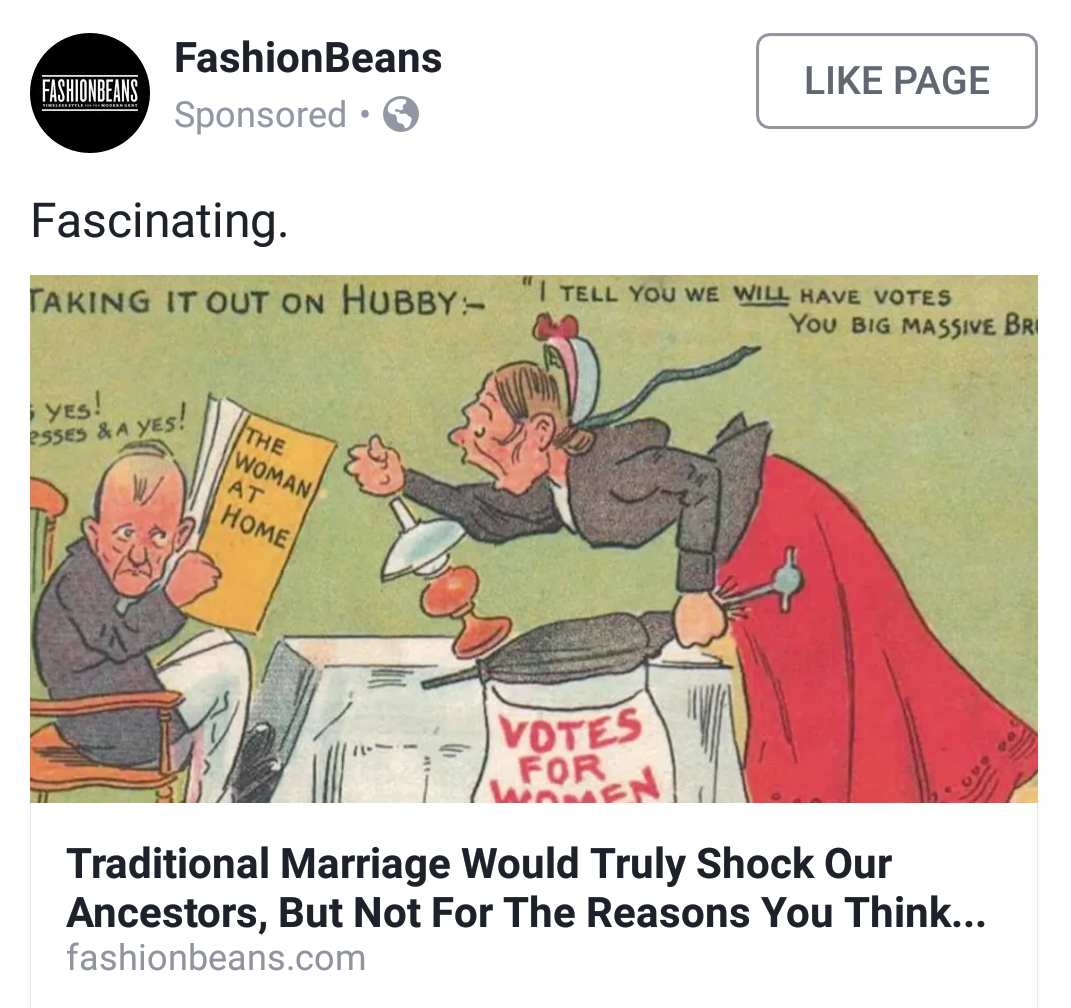
Facebook clickbait – it must work.

On my mobile device, since FB Purity doesn’t work on handhelds, I have to scroll through a lot of real garbage – often every other post is “sponsored.”

Here’s a sample of things I’ve seen just in the last few days.

Screenshot_2017-10-17-12-39-47Screenshot_2017-10-17-12-40-25Screenshot_2017-10-17-12-41-05Screenshot_2017-10-17-12-41-27Screenshot_2017-10-17-12-43-51Screenshot_2017-10-17-12-45-00Screenshot_2017-10-17-12-47-44Screenshot_2017-10-17-17-00-29Screenshot_2017-10-18-09-54-44Screenshot_2017-10-18-09-59-10Screenshot_2017-10-21-03-57-48

Obviously clickbait works, or companies wouldn’t do it – but it’s so annoying to see all these hackneyed “you won’t belive” and “this will shock you” attention-grabbers. The other part, of course, is that most of these articles are relatively valueless anyway, either [bad] opinion pieces or poorly-compiled lists.

It makes browsing Facebook on a mobile a less-than-fulfilling experience. I wish FB Purity were available for my Android, it really cleans things up on the desktop version.

The Old Wolf has spoken.

Marketing by terror

I’ve mentioned Android webjacking before, but here’s another example. Things like this are not usually “viruses” on your handheld device, but rather malicious code embedded in a legitimate website by unscrupulous advertisers.

screenshot_2017-02-16-11-04-16


First, this exploit makes your phone buzz like a hornet that’s just been pinched in a vise, and locks your browser. No going back. Second, vulgar sites? No, actually this popped up when I was trying to leave a comment at retailcomic.com. I trust the site not to hide exploits like this on purpose.


screenshot_2017-02-16-11-04-35

The claims on these “warnings,” along with being written in questionable English, are absolute lies: “If the problem can not be resolved immediately , the viruses will spy your phone, and destroy your SIM card, delete all your contacts.”

Now I’m just following the trail to see who’s behind this.

screenshot_2017-02-16-11-04-49

Looks like someone is hawking an app (surprise, surprise):

screenshot_2017-02-16-11-05-09

A comment at the app’s site complained, and the developer responded; notice the salutation “Dear,” usually seen on Nigerian scam emails but certainly a red flag that the app developer is not a native English speaker.


Screenshot_2017-02-16-11-05-51.png

Despite the apology and denial of malicious intent, I would be very suspicious of apps that are advertised in this way.

Be careful out there.

The Old Wolf has spoken.

Income by deception: they’re not even trying any more.

Have a look at a few screenshots from my Android a couple of days ago:


screenshot_2017-02-14-12-28-22

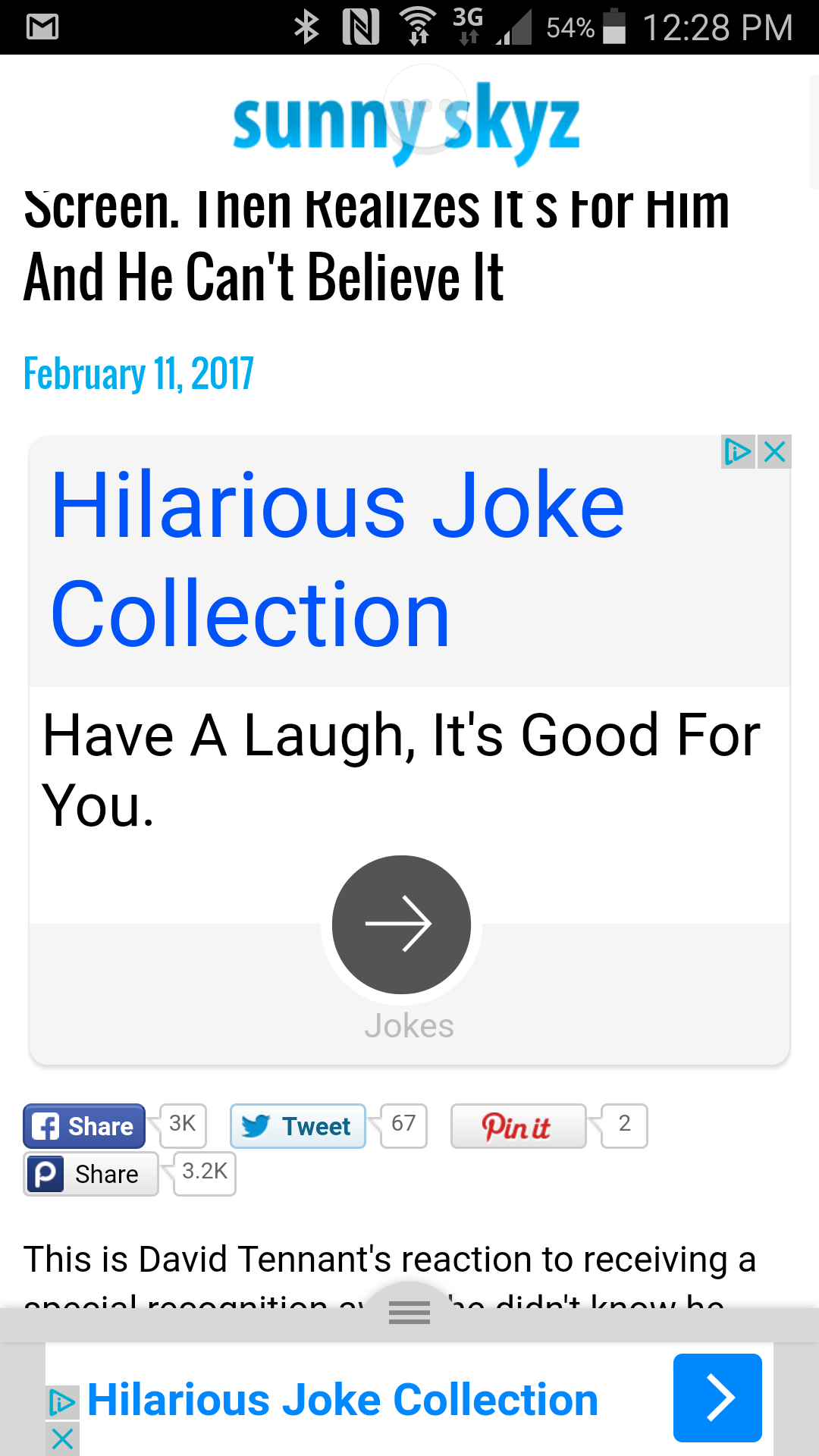
Hilarious joke collection. OK, I’m always up for a new laugh or two. But beware: popup ads like this are rarely honest or ethical, and often sleazy and deceptive. Let’s see:

screenshot_2017-02-14-12-30-26

Starting to smell a rat, but let’s just go down to the next level:

screenshot_2017-02-14-05-59-17

Well, the joke’s on me – and anyone who clicks these links. This transcends the concept of clickbait, which usually offers some kind of content in order to get people to the pages where ads are displayed. Now they’re eliminating the middleman altogether.

And people wonder why fake news gets such traction.

The Old Wolf has spoken.
Scientific American, Don’t Do This

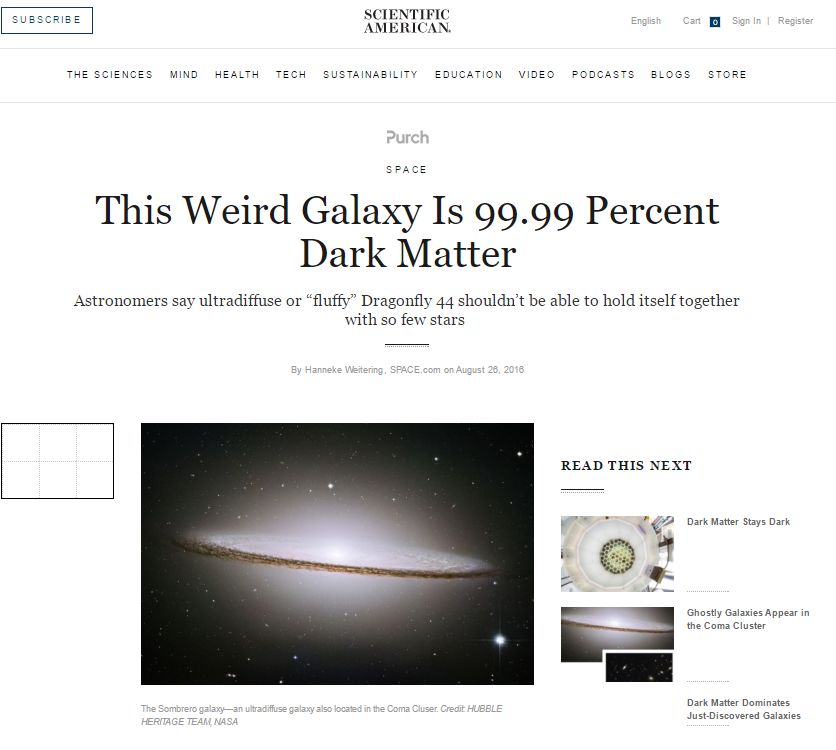
Recently saw this article on SA’s website about the Dragonfly Galaxy, a mysterious, diffuse star cluster that appears to be made predominantly of dark matter.

scientific

The problem is that the picture on the article is not the Dragonfly galaxy, but rather the Sombrero galaxy. Yes, the caption says this – but clearly Sombrero cuts a much more impressive figure than Dragonfly (seen below.)

dragonfly44-1200x840

There’s nowhere on SA’s website to give feedback, so I’m obliged to post it here, in the hopes that someone who cares might just possibly see it.

This is called “clickbait,” and even if it’s a very small example, it should be above the standards of this publication. So please, editors and webmasters – have a bit more integrity than this.

The Old Wolf has spoken.

How can you tell when an advertiser is lying?

Answer: His lips are moving.

Let’s look at this ad that appeared on my Facebook feed (Android). The first one seems to indicate that US comsumers are urged to stop using WiFi after some sort of revelation by Donald Trump.

But click on the ad (which I never do, unless I’m following some sort of jiggery-pokery down the rabbit hole) and you end up with an advertorial (read: advertising thinly disguised to look like a news article) for YesBackup, a cloud backup service.

If you’re confident in your product’s abilities, Mr. or Ms. CEO, you shouldn’t resort to outright lies, trickery, and deception to get customers. Even the use of Advertorials (sometimes called “farticles” or “fake articles”) alone is enough to make your integrity suspect. Now this may be the the work of an affiliate marketer, that doesn’t really excuse the company – they are, after all, responsible for all of their advertising whether in-house or contracted out.

The takeaway: Be very careful clicking “sponsored ads” – the vast majority of them are going to be deceptive at best and outright scams at worst.

The Old Wolf has spoken.

The Catacomb Saints: How many clickbait titles can you come up with?

From Wikipedia:

Catacomb saints are ancient Roman corpses that were exhumed from the catacombs of Rome, given fictitious names and sent abroad as relics of saints from the 16th century to the 19th century. They were typically lavishly decorated with gold and precious stones.

There’s no question the subject is of some interest to scholars and historians – I’ve seen a few of these in my peregrinations around the world.

5e6e225a-ba61-4cb1-a06e-1391ed1123f8

“Though selling the relics would have been considered simony, enterprising church officials still managed to raise funds while countering the iconoclasm by charging for transportation, decoration, induction and blessing.”

And keeping in mind that fundraising was foremost among church leaders then as now, it’s not surprising that so much effort was put into the preservation and illumination of these relics. Some of the bodies may have been of early Christian martyrs, but none were of any particular religious significance. Dressing them up and giving them the name of a saint, however, was the 16th-century equivalent of The National Enquirer or Buzzfeed.

These relics have been around for a long time, but when the Internet discovers something, it’s often presented as a “stunning new find” or some other silliness – anything to get eyeballs on ads, as you can see below.

Let’s look at the kinds of headlines one sees with a simple search for “Rome jeweled skeletons:”

  • These Skeletons Were Found In Roman Catacombs And You’ll Never Believe What They’re Wearing
  • Unbelievable Skeletons Unearthed From the Catacombs Of Rome
  • Meet the Fantastically Bejeweled Skeletons of Catholicism’s Forgotten Martyrs
  • Beauty from the crypt: Europe’s jeweled skeletons
  • 19 Bejeweled Skeletons That’ll Blow Your Mind
  • Incredible skeletal remains of Catholic saints still dripping in gems and jewellery discovered by ‘Indiana Bones’ explorer
  • Beauty Beyond the Grave: The Story Behind Europe’s Bejeweled Skeletons
  • Secrets of the Catholic Church: Unbelievable Jeweled Skeletons Discovered in the Catacombs of Rome
  • The ghastly glory of Europe’s jewel-encrusted relics
  • THE JEWEL-ENCRUSTED SKELETONS OF ROMAN MARTYRS
  • The Catacomb Saints – So-Called Saint Skeletons Dressed in Jewel-Encrusted Gold and Silver
  • Skeletons Unearthed From The Catacombs Of Rome Have Jeweled Beards
  • Bones with Bling: The Amazing Jewelled Skeletons of Europe

As mentioned above, many of the referenced articles try to make it appear as though these relics were just recently discovered.

Click through for a collection of these images.

PS: if you do this, screw you. (Text like this often appears when you copy and paste from a website):

Read more: http://www.dailymail.co.uk/news/article-2413688/Incredible-skeletal-remains-Catholic-saints-dripping-gems-jewellery-dug-Indiana-Bones-explorer.html#ixzz3cyd8uT2J
Follow us: @MailOnline on Twitter | DailyMail on Facebook

This is the 21st century equivalent of blinking text. It’s annoying, no soul in their right mind would ever incorporate it into a cross-post, and it’s a waste of everyone’s time.

The Old Wolf has spoken.
Clickbait: Deconstructed.

This delightful Epic News video by Peter and Chris (two Irish gentlemen with sharp wit) deconstructs the nature of clickbait to make it easy to recognize. The video is irreverent and lowbrow, but spot on and hilarious. Watch at your own risk.

For those who want the executive summary:

You usually see a highly-sensational title that completely misrepresents and oversells whatever content there may or may not be.

Take a headline like “19 Reasons Why Young Marlon Brando Will Ruin You For The Rest of the Day.”

What do these headlines even mean?

What follows is a summary of how to generate successful clickbait:

  • Don’t waste your time generating original content.
  • Spend your day lurking on link aggregator sites such as reddit and repackaging other people’s stuff to get maximum shares on social media.
  • Add a ridiculous claim about something that will happen provided you CLICK

1) Take a simple video of a homeless man playing a tin whistle for his dog.

This homeless man’s music (will change your life) / (will restore your faith in humanity) / (will make your jaw drop) / (will shock you)

2) If possible crowbar in gender, race, or social issues to make it more provocative:

This blind homeless man’s amazing music for his terminally-ill (gay) dog will restore your faith in humanity.

3) Remove as much descriptive information as possible from your headline to create what the industry calls “a curiosity gap.” Replace it with Hyperbole. If the reader can tell what the story is about at a glance, you’ve FAILED!

Wow! A Blind, Homeless man Befriended an Old Adorable Lost Dog, and What Happened Next Will Restore Your Faith in Humanity.

4) If possible, turn it into a bogus list somehow. Use age and target demographics for greater impact.

16 reasons why only 90s Kids from England will Keep Calm and Carry On While Understanding Why This Blind Homeless Man and His Full-Blown Dog-AIDS-Infested Best Friend Will Restore your Faith in Humanity and Change Your Life (Forever).

5) Add a hashtag

#jenniferlawrence

If you need good examples of clickbait, toddle over to ClickHole, the Onion’s (semi)-parody website originally designed as a sharp stick in the eye to BuzzFeed and Upworthy, but now taking on all the media without discrimination.

As the presenters say, there’s a place for this kind of bulldust tabloid journalism, because enquiring minds want to know. The problem arises when so-called “real news” outlets try this stuff and are deadly serious about it.

cnn

Now I need to confess that I often scan media outlets and reddit and other sources for things I consider interesting or worthwhile or socially relevant, and share them with my social circles. However, I don’t think I’ve ever asked anyone to “like and share” anything. I’m not a like farmer, it’s a poor way to make money.

The Old Wolf Has Published a Blog Post Accessible from Almost Anywhere in the World, and Reading It Will Change Your Life Forever! #Monsanto