Coonabarabran: The world’s largest solar system drive

A post over on Facebook by a friend of mine in New South Wales reminded me that I wanted to spotlight this experience. I mentioned it in a Livejournal entry a few years back, but it deserves some exposure of its own. All photos are mine and ©2010-2012 Old Wolf Enterprises unless otherwise noted.

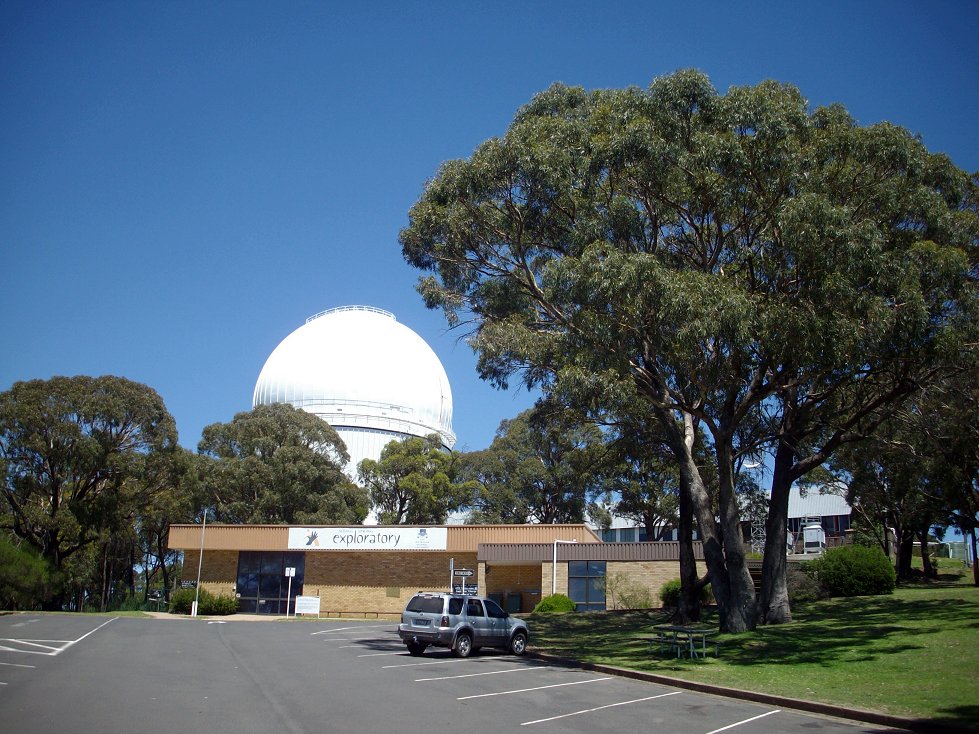
High in the Warrumbungle Mountains near Coonabarabran, NSW, sits the Siding Spring Observatory (SSO), Australia’s premier optical and infrared observatory.

Home of the Anglo-Australian Telescope, among others, this observatory is a delight to visit in and of itself.

Anglo-Australian Telescope
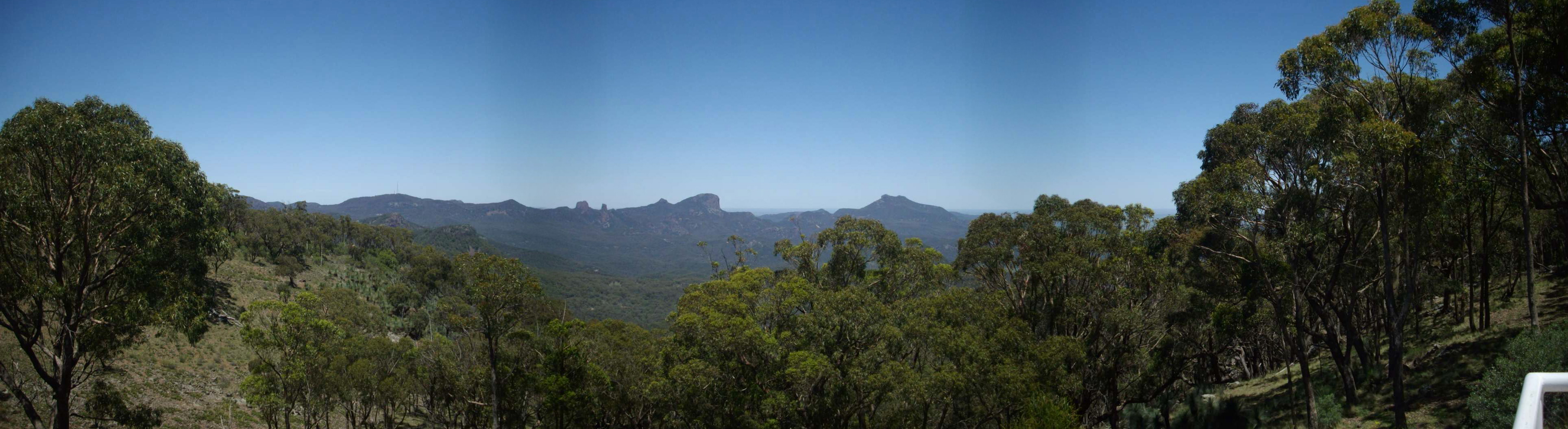
Panorama of the Warrumbungle Mountains from the Observatory

Central core cut from the telescope’s primary mirror before polishing and reflective coating was applied

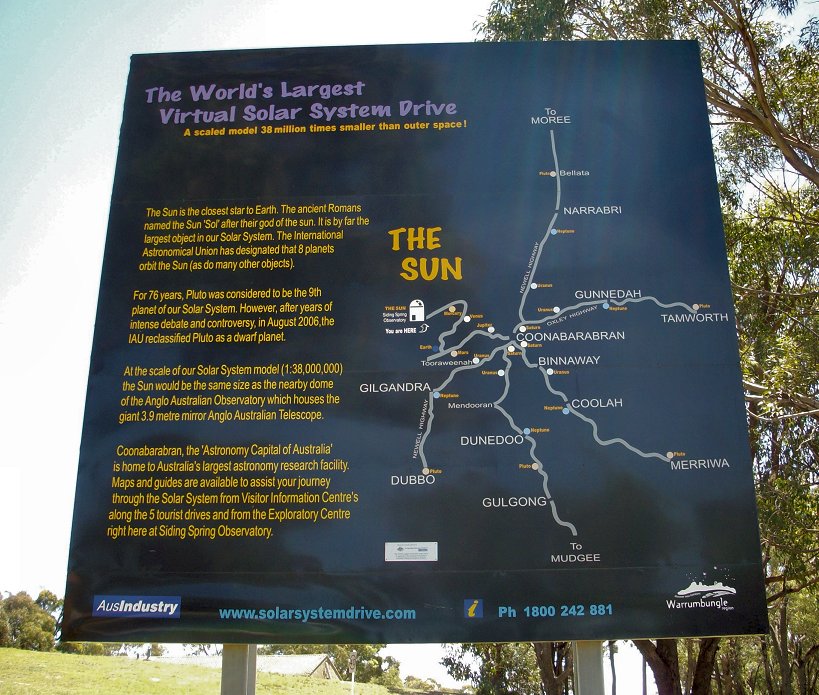
In addition, in an effort to boost tourism, the observatory created the world’s largest solar system drive. There are five beginning points,

  1. Dubbo
  2. 6km south of Birriwa (north of Gulgong)
  3. Merriwa
  4. Tamworth
  5. Bellata (south of Moree)

Route overview

All the drives end at the Siding Spring observatory; since I was at the observatory already and I have a friend in Dubbo whom I wanted to visit, I began here and did the drive backwards.

Here is the itinerary:

Object Location Distance (km) Time
The Sun Siding Spring Observatory 0 0
Mercury Observatory Road, west of Coonabarabran 1.2 1 min
Venus Observatory Road, west of Coonabarabran 1.9 2 mins
Earth Observatory Road, west of Coonabarabran 4.1 3 mins
Mars Timor Road, west of Coonabarabran 5.5 5 mins
Jupiter Timor Road, west of Coonabarabran 21.5 20 mins
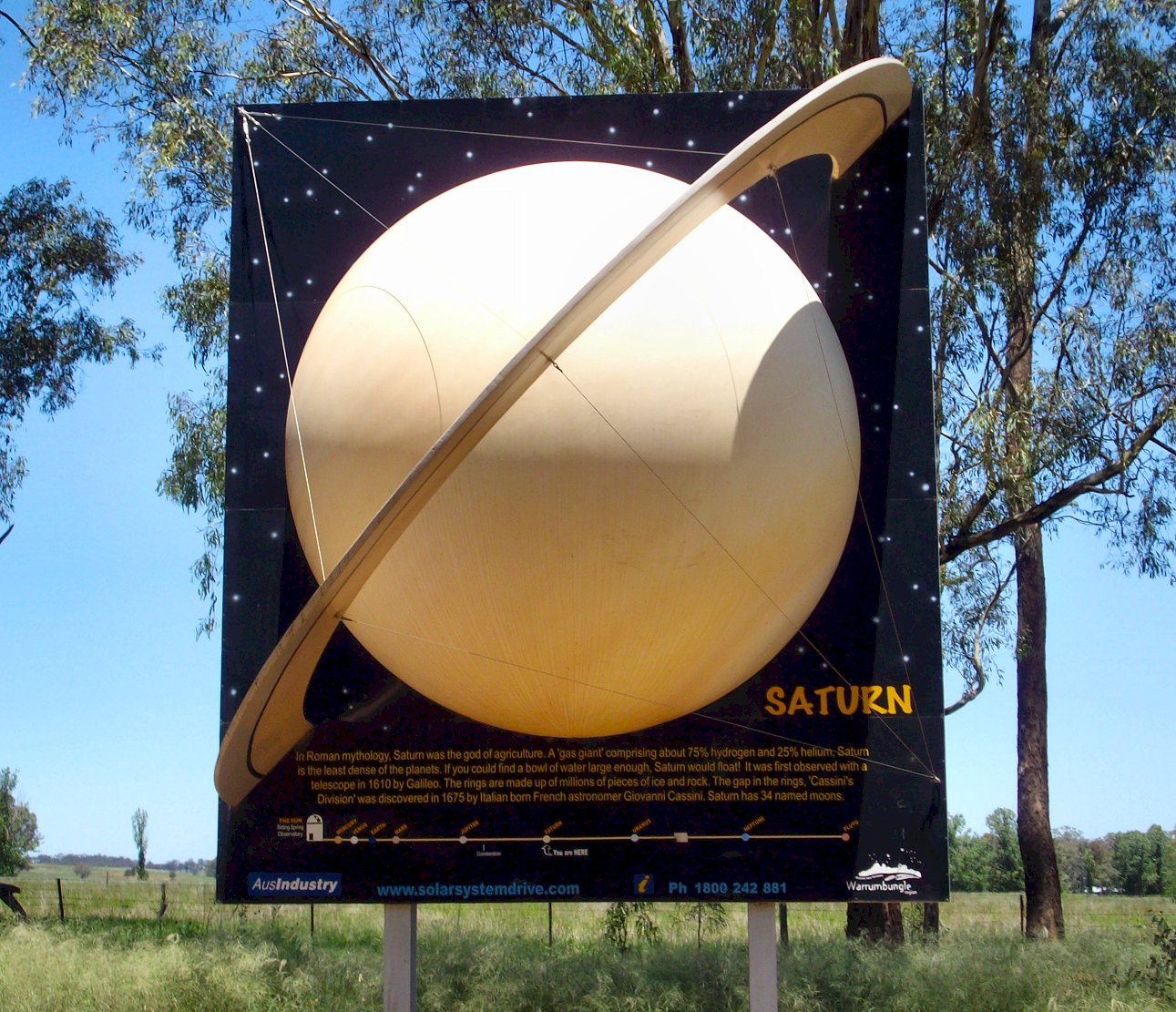
Saturn Camkeena Rest Area, Newell Hwy 40 40 mins
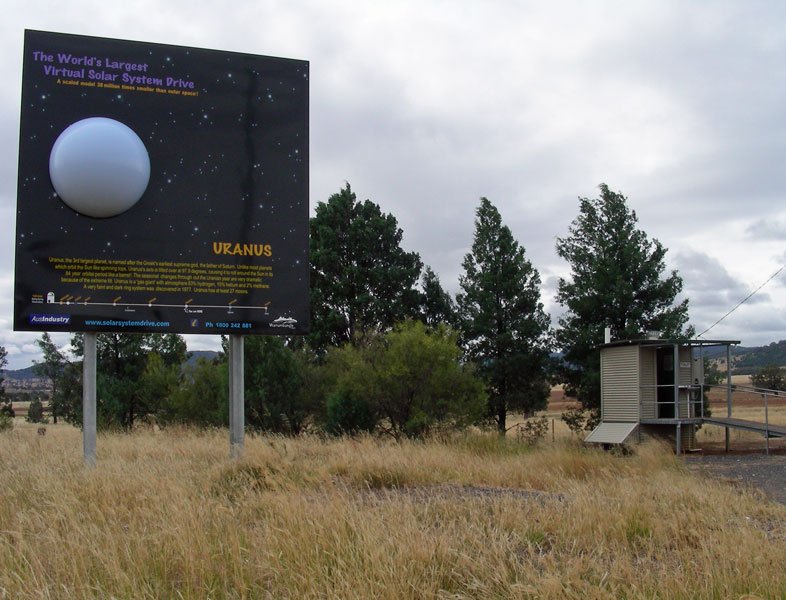
Uranus Tooraweenah Rest Area, Newell Hwy 79 70 mins
Neptune Gilgandra Cooee Heritage Centre, Newell Hwy 119 1.5 hours
Pluto Dubbo Visitor Centre, Newell Hwy 190 2.25 hours

The observatory dome, representing the sun at 1:38,000,000 scale. All other placards on the drive are accurate (in relative terms) with regard to distance and size. For reference, traveling in your car at 100km/hr along the Solar System Drive, you’d be “virtually” hurtling through space at a million kilometers per second – more than three times faster than the speed of light.

I missed Mars, this was taken by another traveler.
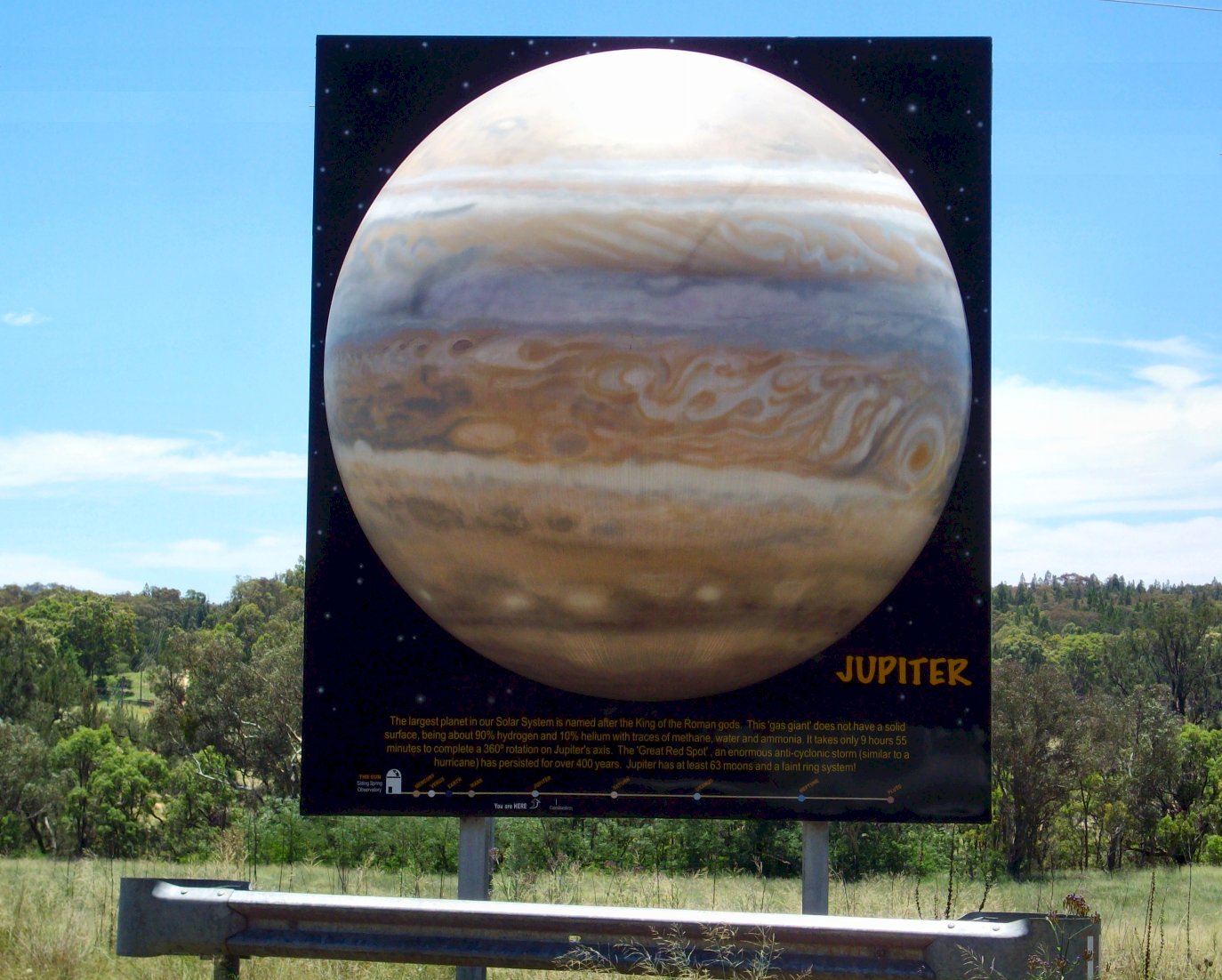
Missed Uranus and Neptune;  this image, along with the one below, was found at A Snail’s Eye View.

The drive ended at the Dubbo Visitor’s Center, at which a representation of Pluto is located. Please notice: Pluto.

It is a scientific fact that Pluto and its moon Charon were most likely Kuiper Belt objects captured by the sun, and probably did not coalesce out of the original accretion disk. But as far as I’m concerned,

This drive was one of the most enjoyable experiences I’ve had. I’d love to go back and do the other routes, just to see the scenery.

Australia for the win!

The Old Wolf has Spoken.
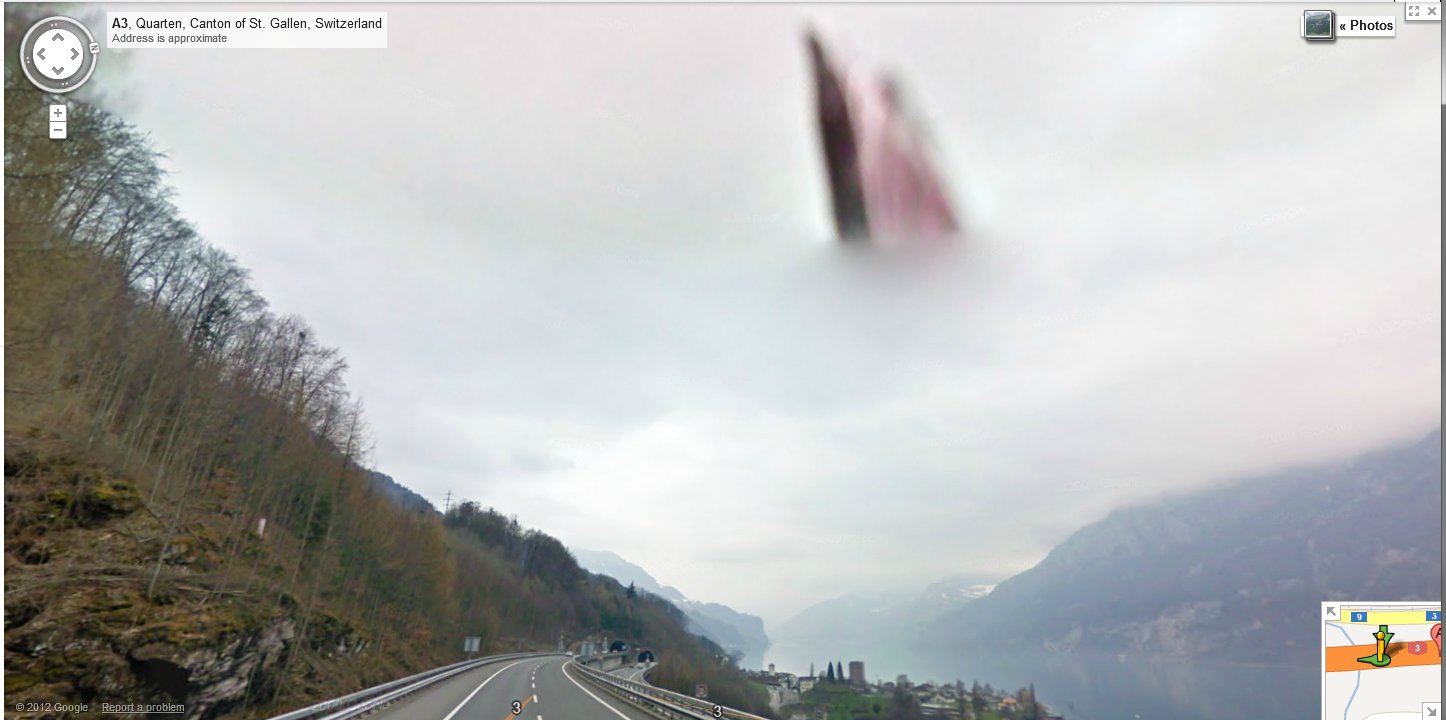
Jesus in the Southern Sky

Jesus I can see you in the southern sky
When the clouds aren’t out the sun is shining through.
Jesus do you feel me when our worlds collide
and if have nothing at least I still have you.

-Sleeping with Sirens, “Jesus in the Southern Sky”

Here’s an interesting little exercise for you.

  1. Go to Google Maps
  2. Type in 47.110579, 9.227568 and hit Enter
  3. Click on the green arrow and select “more,” and then “Street view”
  4. Using your mouse, turn around 180 degrees to face backwards, so you’re looking toward the tunnel.
  5. Drag the picture down to look up in the sky.

For all the world that looks like a ghostly pair of deities, or a prophet, or Jesus and Mary, or whatever you choose to see. As long as you’re on the upper road, you’ll be able to see those “figures” as you approach or move away from the mouth of the tunnel. Google around, and you’ll find as many chuckle-headed explanations out there as there are people on Facebook.

So what is it, really?

First off, here’s a screen shot of what you see from the point of entry:

As you approach the tunnel, the image remains fixed in the same place, although a bit distorted:

Look closely and you can see a demarcation zone in the trees in the form of a semicircle where the focus changes from sharp to fuzzy.

A bit closer, and the demarcation line is clearer.

Entering the tunnel, the semicircular zone becomes quite clear, and the “figures” are still visible against the tunnel’s roof.

Here’s a photo of one of the Google street view cars. It seems apparent to me that for some reason, on that day’s shooting, the camera was capturing a reflection of its own mast superstructure.

But that’s hardly as exciting an answer as “It’s God!”

The Old Wolf has spoken.


Charles Bukowski: So you want to be a writer

So you want to be a writer

if it doesn’t come bursting out of you
in spite of everything,
don’t do it.
unless it comes unasked out of your
heart and your mind and your mouth
and your gut,
don’t do it.
if you have to sit for hours
staring at your computer screen
or hunched over your
typewriter
searching for words,
don’t do it.
if you’re doing it for money or
fame,
don’t do it.
if you’re doing it because you want
women in your bed,
don’t do it.
if you have to sit there and
rewrite it again and again,
don’t do it.
if it’s hard work just thinking about doing it,
don’t do it.
if you’re trying to write like somebody
else,
forget about it.

if you have to wait for it to roar out of
you,
then wait patiently.
if it never does roar out of you,
do something else.

if you first have to read it to your wife
or your girlfriend or your boyfriend
or your parents or to anybody at all,
you’re not ready.

don’t be like so many writers,
don’t be like so many thousands of
people who call themselves writers,
don’t be dull and boring and
pretentious, don’t be consumed with self-
love.
the libraries of the world have
yawned themselves to
sleep
over your kind.
don’t add to that.
don’t do it.
unless it comes out of
your soul like a rocket,
unless being still would
drive you to madness or
suicide or murder,
don’t do it.
unless the sun inside you is
burning your gut,
don’t do it.

when it is truly time,
and if you have been chosen,
it will do it by
itself and it will keep on doing it
until you die or it dies in you.

there is no other way.

and there never was.

-Charles Bukowski (1920-1994)

Re-thinking chocolate

I’ve mentioned chocolate before. It’s one of my favorite things in all the world, and when I die, I’m probably going to the Cholesterol Kingdom.

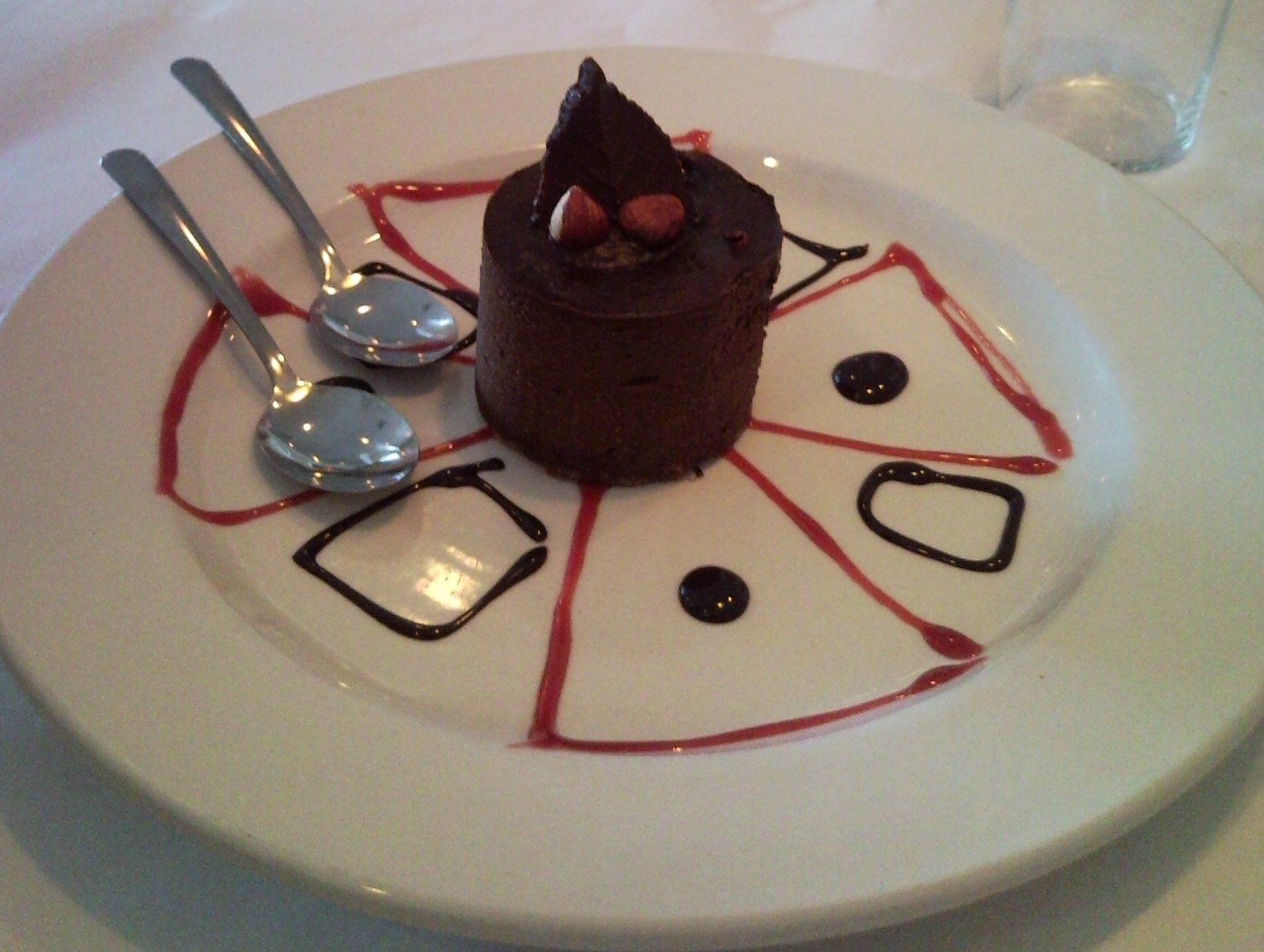
There’s Sachertorte from Vienna:

If you’re in Brazil, you can get death-star chocolates more deadly than the plasma bolts of a Sith lord:

(pause for culinary orgasm)

L’Italia in Harrisonburg, VA used to serve the most incredible chocolate marquese, sadly now discontinued:

and Piccolo Angolo in New York City, my favorite restaurant in all the whole wide world, offers up an amaretto tiramisu that stops your heart just to look at it.

Now that my heart rate has returned to normal, it’s time to point out that there is some disturbing news bubbling up to the surface about chocolate, one which I need to consider seriously. Most everyone knows about blood diamonds, but few people know about child-labor chocolate.

The Wikipedia article gives a general background, and this petition outlines some of the ongoing questions. Neither of these sources cover the entire issue, and I don’t advocate signing the petition just because it’s out there – but I have been prompted to do more research and see what the current situation really is. If I had to cut back my chocolate consumption to make sure I’m not being part of the problem, my body would probably thank me for it. But I’d sit in the middle of the floor and cry.

The Old Wolf has *burp* spoken.


Phenomenal reflexes, Squirrel Style

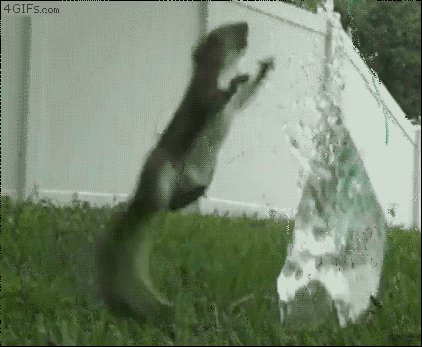
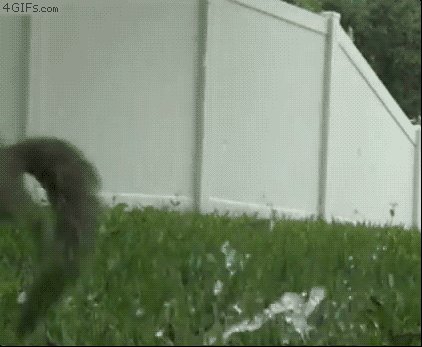
You may have seen this animated GIF file floating around the humor sites on the web.

Take it apart frame by frame, and you can see the little guy doesn’t even get wet.

♫ Can you move in a whirl like a humming bird’s wing
If you need to?
(Ooh, that’s fast!)
Can you bob, can you weave
Can you fake, and deceive when you need to? ♫
(-Bugsy Malone, “So You Wanna be a Boxer”)
The Old Wolf has Spoken.

Tiroler Volkskunstmuseum (Tyrolean Folk Art Museum)

Three images from this museum which I was privileged to visit whilst living in Austria, two rather strange and one lovely and evocative.

Vogel Selbsterkenntnis (The Bird of Self-Knowledge)

The text below this strange creature reads:

Zieeh sich ein yeydts selbst bey Der Nasn —
Waß Dich nit Prendt Thue auch nicht Plasn.

Or, in standard German,

Ziehe jedermann sich selbst an der Nase
Was Dich nicht brennt, tue auch nicht blasen

Translated into English:

Let everyone take themselves by their own nose
Don’t blow on what does not burn you.

This is an admonition to mind your own business, know yourself, and don’t involve yourself in things that do not concern you.

The Holy Trinity

An attempt by a Tyrolean artist to comprehend the doctrine of the Trinity as set forth in the Athanasian Creed. Tyrol is probably the most Catholic of all the regions of Austria, itself a predominantly Catholic nation.

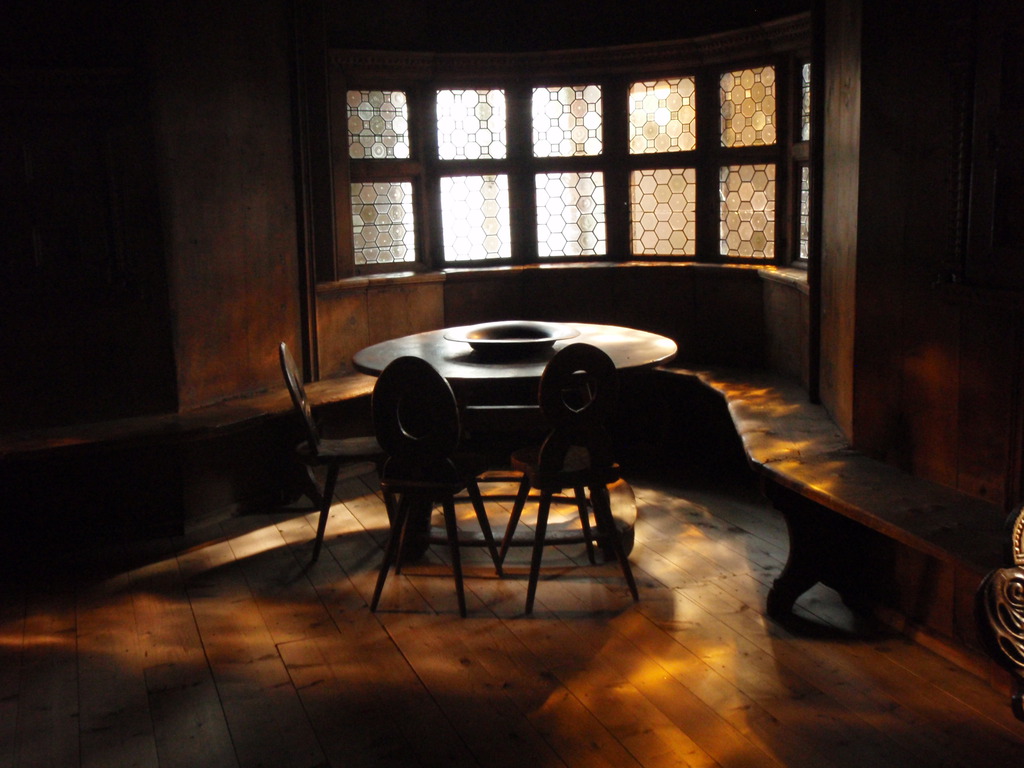
An old Tyrolian parlor.

I love the wood. Warm, old, polished, wood. My dream house would have rooms like this.

The Old Wolf has spoken.
The Noun Project

Recently happened across a video promoting The Noun Project, an effort to build a global visual language. While I love linguistic innovation and would love to see either Terran Standard or a Universal Translator à la Star Trek, based on the minimal penetration of experiments like Esperanto or even the linguistic behemoth English, I’m not certain a project like this will ever have more than a niche impact.

And I’ll tell you why.

First, let me re-iterate: It’s a lovely idea. I’m not dissing it for its own sake, nor am I wishing it failure.

To illustrate what the project is up against, let’s look at an example from one of my favorite Star Trek TNG episodes, “Darmok”.

Picard and Dathon at El-Adrel

Imagine a race of people who communicates solely by metaphor. The Tamarians were just such a race; their opening dialog with the Enterprise went like this:

“Rai and Jiri at Lungha. Rai of Lowani. Lowani under two moons. Jiri of Ubaya. Ubaya of crossed roads. At Lungha. Lungha, her sky grey.”

A headscratcher, to be sure. As the episode progresses, the Enterprise team learns in various ways that the Tamarians communicate solely via metaphor, as though “Juliet on her balcony” were being used to express the concept of love, or beauty, or desire. They realize, however, that content is valueless without context; anyone unfamiliar with Romeo and Juliet would have no idea what the metaphor referred to.

Even though Picard was able to speak to the Tamarians and deflect hostilities between the two races with the few phrases he had learned, there are some logical gaps in the premise. In Tamarian you can say,

  • Temba, his arms open: “Here, take this.”
  • Sokath, his eyes uncovered: “Understanding! He gets it!”
  • Mirab, with sails unfurled: “Let’s get out of here.”
  • The river Temarc, in winter!: “Hold your tongue!”

But how do you say something like “Move that lever to the second position from the top, and then tighten that nut one-quarter turn”? This glaring plot hole doesn’t detract from my enjoyment of the episode and the delightful linguistic idea, but it illustrates that context is everything.

Symbols like this are pretty straightforward:


But even these would have little meaning in a culture not familiar with chopsticks or the red cross. The meaning and the concept would have to be taught, and thus  would, in effect, be no more valuable as an ideograph than “อาหาร” or “食” or “manĝo”. The first thing that actually came to my mind when I saw these were a portable medkit from Duke Nukem 3D, and joss sticks. The first was close, the second, not even.

Then you get into the intricacies. What would you do with a symbol like this:

Is this a banana, or some really kinky ninja sex toy?

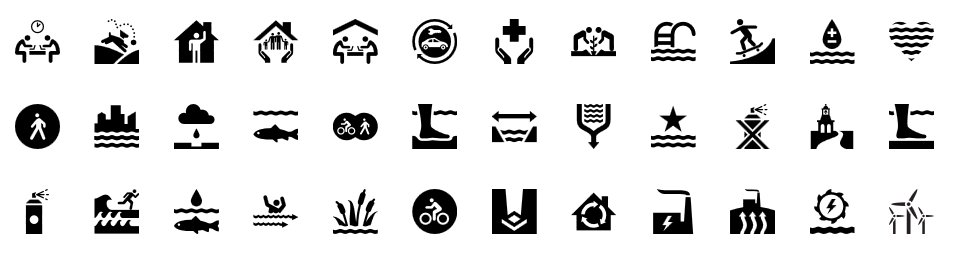
Presented with a bewildering array of nouns like this,

I find that my lifetime of experience in the fields of linguistics and translation give me only the barest hint of what some of these mean. Certainly, I could learn them, but each symbol would have to be learned in the same way that I am learning that “חלוץ” means “pioneer” in Hebrew or that “牛肉” means “beef” in Japanese. Both a context and a precise meaning would have to be provided.

Now, the visual hooks into things from our everyday world would indeed make the process somewhat easier.

This symbol will mean “wind farm” or “green energy” to a large part of the world’s population because they have become familiar with the idea of wind energy; in the same way, a Japanese person or advanced student of Japanese who is presented with a rare or unfamiliar character (such as 醤) will at least have a shot at guessing at the meaning because of the way Kanji are constructed – he or she will automatically recognize the bits and pieces that the character is made of, and be able to make an educated guess at its meaning. In the same way, I can read the following paragraph without much difficulty…

“Erat una fria morning de Octubre und ein low fox noyabat las benches der park. Algunos laborantes magrebinos collectabant der litter singing melanconic tunes. Aan el 200th floor des Euro Tower el Chef Inspector General del Service des Bizarre Dingen, Mr What, frapped sur the tabula y said: -Dit is kein blague. Appel rapid Cabillot!” (from Eurolingua Salad)

… but only because I have a working knowledge of Latin, English, French, German, Spanish, Catalan, Dutch, and a few others spoken in and around Europe. Without that background and context, it would be as impenetrable to me as Hungarian, of whose intricacies I am blissfully ignorant.

In the final analysis, the Noun Project is constructing another artificial language, one of many that have attracted fans and adherents but made little headway in facilitating communication across linguistic boundaries. Inherent in the project are some good ideas that will have value, but if a linguist such as myself can look at the lists of icons and say “Vaff?” I suspect that most people less steeped in the intricacies of signans and signatum will approach the idea with all the enthusiasm of a high school French student confronted with the passé surcomposé for the first time. Even French people don’t go nuts over all the glorious intricacies of the Gallic tongue.

Der viejo loup has parlat.

Disney Star Wars Fusion: 2008


With all they buzz about Disney’s acquisition of the Star Wars franchise and the announcement of 3 new films, I thought these figurines spotted here were of interest. Happy coincidence, prescience or insider knowledge? Who’s to say?

Goofy Binks

Darth Donald

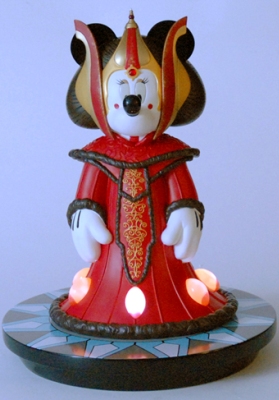
Minnie Amidala

Mickey Skywalker

I know there are a lot of people sweating bullets about what Episode 7 could look like. They point to Santa Clause II and John Carter of Mars as examples of Disney efforts gone horribly wrong. But beauty, they say, is in the eye of the beholder. I happened to love John Carter; it was full of good action, good effects, and a great pair of Barsooms.

I understand why Jar-Jar Binks and Anakin (as a boy and a teen) annoyed people. I get that folks were offended by the ching-chong ling-long trade federation representatives, or “badabing badaboom” Watto. But seriously, I can overlook all of that and look at episodes 1 to 3 through a different lens. In many ways, they were great films, with heart-stopping effects and some real background.

You might have cast a Haley Joel Osment type with real acting skills as young Anakin and gotten more sympathy, but Jake Lloyd was a real kid, and who’s to say Anakin wasn’t just like that? Many people found Hayden Christensen’s Anakin as petulant and whiny, but the more I watch the shows, the more I see that those qualities were critical to the development of the Vader character and that Christensen pulled it off admirably. Anakin/Vader was every bit the center of the Star Wars saga, much as Snape was truly the tragic hero in the Potter world. The heroes go around swashbuckling, getting the girl and saving the universe, but there’s nothing like a tormented villain with a good heart to give real meat to a drama.

So my heart is at peace. I look forward to episodes 7 to 9 with anticipation; after all, what Disney pulls off couldn’t possibly be any worse than Jar-Jar or the Ewoks, and I’ve already forgiven George Lucas for those, just because the entire vision was so awesome. And Disney, in collaboration with Pixar, has pulled off some epic wins. The results could be (pun intended) stellar.

The Old Wolf has spoken.

Fastelavn (the children’s carnival): Denmark, ca. 1930

This picture appears in numerous places around the net with the caption “Danish children trick-or-treating.” While the thought of children dressing up in scary costumes and going door to door begging for treats sounds every bit like Hallowe’en, the Danish tradition of Fastelavn (carnival), celebrated in February, has more in common with Mardi Gras. The Danish word means “the evening before the fast,” and represents the night before the beginning of of the Lenten season. The word ‘carnival’ stems from a Latin expression meaning “farewell to meat,” and originally was a period of celebration and feasting which preceded the six weeks of fasting and penance which marks the lead-up to Easter.

The children in the picture above are holding “raslebøsse”, or “rattle boxes” – small cans with a slotted top used to collect money. They go from house to house, calling “Fastelavn er mit navn” (my name is Fastelavn) and expect coins or candy; they also gorge themselves on “Fastelavn boller” or Lenten buns, which are cream filled sweet rolls covered with icing.

Danish children will also play “Slå katten af tønden” (beat the cat out of the barrel). A Pinata-like barrel decorated with black cats and stuffed with candy is hung, and costumed children are given a chance at breaking it. The child who first breaks the barrel and releases the candy is given the honorary title of “kattedronning” (queen of cats), while the child who knocks out the last piece of the barrel is dubbed “kattekongen” (king of cats).

While the barrel is now simply decorated, at one time it actually contained a black cat. Since these creatures were believed to harbor evil spirits, breaking the cat out of the barrel (whereupon the terrified creature would run off like a bat out of Hell), was said to banish evil to make way for spring.

Beating the cat out of the barrel, around 1866

Modern Fastelavn