Congressional Approval Ratings

Found over at Public Policy Polling, it appears that Congress is really not popular at all, especially when more people approve of cockroaches. The following chart, digested from the article, shows Congressional approval compared to some other things:

 Compared with Opponent Congress
North Korea 26 61
Meth Labs 21 60
Lobbyists 30 58
Communism 23 57
Fidel Castro 32 54
Gonorrhea 28 53
Ebola 25 53
Kardashians 36 49
Lindsey Lohan 41 45
Telemarketers 35 45
John Edwards 29 45
Playground Bullies 38 43
Cockroaches 45 43
Donald Trump 44 42
France 46 37
Genghis Khan 41 37
Traffic Jams 56 34
DC Pundits 37 34
Root Canals 56 32
Used Car Salesmen 57 32
Nickelback 39 32
Colonoscopies 58 31
Carnies 39 31
NFL Replacement Refs 56 29
Brussels Sprouts 69 23
Lice 67 19

Congress can take comfort in knowing that they are more popular than LiLo or North Korea, but that’s meagre comfort, given that they are less than 1/3 as popular as lice.

Think they’ll pay attention to this recent poll?

Nah.

The Old Wolf has spoken.

Meanwhile, in Australia

While Utah suffers under the effects of a temperature inversion, Australia is so bloody hot they ran out of colors for their heat map.

art-weather-620x349

Sorry, mates. One of my friends suggested opening a bunch of Aperture Science portals between places – I know a buddy in Sydney and a buddy in Fairbanks, Alaska who would really be down with some serious thermal exchange right about now.

Portal

(Yes, I know portals don’t float in midair like this. Buzz off.)

Short of that, finding one of Larry Niven’s transfer booths would be a good solution for a respite.

The Old Wolf has Spoken.

This is called “an inversion,” children

Our local news station gives us the following forecast:

ksl

And AccuWeather adds insult to injury with this one:

Accuweather

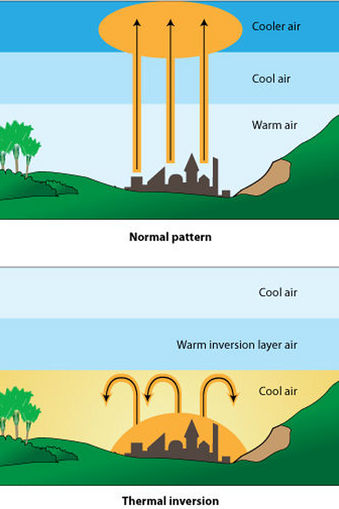
Folks, it’s nowhere near 31° today. In Payson, the current temperature is 14°, because we’re sitting under one of these:

web-322875

Image: The Deseret News

We live in a valley, and when a layer of warm air floats over, it caps the valley like a saucer on a bowl, trapping cold air (and ever-growing pollution) beneath it.

temperature_inversion_full_size_portrait

Image: waow.com

This is not uncommon in our area – we put up with it just about every year – but when it lasts a long time, it really sucks. People with respiratory issues are advised to stay inside, and it just keeps being cold, cold, cold.

The only thing that helps is a a low-pressure system which effectively “lifts the lid” and a good storm will scoop out the air, but we don’t look to get one of those until Thursday, and it will probably be a weak one.

Yuck.

On the upside, people at the ski resorts are enjoying divine weather, and many Utahns escape to the slopes as a respite for the cold hqiz below – which is good for the economy.

The “plastinated” models of the Sansevero Chapel

While living in Naples, Italy for 14 months or so back in 1970, I took the opportunity to visit the Sansevero chapel.  There on display are two intriguing anatomical models, which were represented at the time as being the earliest known examples of plastination, popularized by the Body Worlds exhibits.

From Wikipedia:

These “anatomical models” (macchine anatomiche) were thought to be examples of the process of “human metallization” (metallizzazione umana) as implemented by anatomist Giuseppe Salerno ca. 1760 from a commission by Raimondo di Sangro. The exhibit consists of a mature male and a pregnant woman. Their skeletons are encased in the hardened arteries and veins which are colored red and blue respectively. Previously, historians have surmised that the corpses could have been created by injecting the hardening substances directly into the veins of living subjects.[4] However, recent analysis shows no evidence of techniques involving injection. Analysis of the “blood vessels” indicate they are constructed of beeswax, iron wire, and silk.

Whatever the case, these models were amazingly detailed, and even the manufacture of them at the time would have been a master undertaking.

Naples - Sansevero Chapel - Raimondo de Sangro Female skeleton

The female model – Photo ©1970-2013 Old Wolf Enterprises

Naples - Sansevero Chapel - Raimondo de Sangro Male skeleton 2

The male model – Photo ©1970-2013 Old Wolf Enterprises

Naples - Sansevero Chapel - Raimondo de Sangro Male skeleton

Male model – Closeup – Photo ©1970-2013 Old Wolf Enterprises

macchina

Color photo of the female model from the official website of the Sansevero Chapel Museum.

If you’re ever in Naples, this museum is worth a visit – if only to see the Veiled Christ of Giuseppe Sanmartino, but if you do go, be sure to check out the anatomical machines – they’re brilliantly executed and would have taken forever to make.

The Old Wolf has spoken.


Life Insurance: Spam ‘n’ Scam

The Internet is a perfect place to steal people’s money legally. All you have to do is write something, post it, and the equivalent population of Belgium will take it as gospel truth. There’s a lot responsible for this phenomenon, but lack of education appears to be the primary culprit.

GlobeScam.jpgq

This appeared in my mailbox last night, typical of the kind of UCE (junk mail) that Comcast’s filters allow to slip through.

Warning: NEVER buy life insurance from Globe Life, this is not an endorsement!

I could smell the rotting fish almost before I opened my malibox this morning. Red flags:

  1. The fact that they’re spamming at all. Ethical companies don’t spam.
  2. The “marketer” or affiliate being paid to send out this putrescence is “Future Modern Logistic” which has no internet presence and a UPS Store PO Box for a mailing address
  3. The bait-and-switch tactic using a huge headline plus an asterisk[*] followed by lots of small print is immediately suspect.
  4. A quick search of “Globe Life Insurance” brings up page after page of consumer complaints.
  5. Using shills to promote the company, even if the writer couldn’t get a “C” on a third-grade composition. Have a look at this “endorsement” I found at nationwide-insurance.org – the website is a black-hat SEO spamdexing site which provides no useful content but rather spurious data and backlinks to other sites in an effort to boost their search ratings:

“Globe Life Insurance Scam-Our Honest Review

There are some insurance companies that do scam except is the globe life insurance scam legit? Globe life insurance corporation is a great company who offers a great insurance policy. When we are asked if we think they are one of the insurance scams our answer is no. They have great insurance deals and if you seem up insurance reviews you will notice their reviews are great. Plus you can go online and get free insurance quotes for life and health insurance. When you get an insurance quote make sure you select the right semester life insurance. Also they supply event insurance in case you want to connect to two. We also have a protective life insurance company scam you might want to check out”

Bad punctuation, horrid grammar, and it goes on for about 8 more paragraphs of the same kind of liquid dung. I mean, who in the name of Mogg’s holy grandmother would consider doing business with a company that descends to this kind of tactic? Perhaps the kind of people who believe the “Cash4Gold” infomercials…

The Internet is a huge place, and I don’t anticipate that a small voice like mine, crying in the wilderness, will have a large impact. But if one single person reads this and as a result, refrains from doing business with Globe Life or another disreputable company of the same caliber, it will have been worth the time.

The Old Wolf has spoken.


*Like this. By reading this blog post you are legally obligating yourself to send $50,000 per year to the blogger in perpetuity, and to eat nattō three times a day without complaining about how slimy it is.

The Petabyte

This video presents a visual representation of just how big a petabyte is [1]. Some of the data was taken from this infographic at Mozy.

But this information dates back to 2009, and now it’s 2013. That’s an eternity in the tech world. Places like BackBlaze [2] and JustCloud are already storing multiple petabytes of data, possibly into the exabyte range. In 2011, scientists estimated that the world’s data storage capacity was 295 exabytes, but again, that was two years ago.

To refresh your memory, the table below, taken from Wikipedia, gives a summary of multiples of bytes.

Multiples of bytes
SI decimal prefixes Binary
usage
IEC binary prefixes
Name
(Symbol)
Value Name
(Symbol)
Value
kilobyte (kB) 103 210 kibibyte (KiB) 210
megabyte (MB) 106 220 mebibyte (MiB) 220
gigabyte (GB) 109 230 gibibyte (GiB) 230
terabyte (TB) 1012 240 tebibyte (TiB) 240
petabyte (PB) 1015 250 pebibyte (PiB) 250
exabyte (EB) 1018 260 exbibyte (EiB) 260
zettabyte (ZB) 1021 270 zebibyte (ZiB) 270
yottabyte (YB) 1024 280 yobibyte (YiB) 280
See also: Multiples of bits · Orders of magnitude of data

With recent advances in data storage technology and the continuing juggernautical (I just made that word up) rush towards ever-smaller devices and ever-greater storage density, I wouldn’t be surprised if I were to see yottabyte drives before I shuffle off this mortal coil. My grandchildren will doubtless see the need for even larger data prefixes.

The Old Wolf has spoken.


[1] A petabyte is one quadrillion bytes of data (equivalent to one quadrillion alphabetic letters.)

[2] You can read an interesting article about what BackBlaze did to be able to keep adding 50 terabytes of data per day to its cloud storage, even in the midst of the hard drive shortage brought about by flooding in Thailand. The video below gives you an idea of the backbending and hoop-jumping that was necessary to keep the pipeline open.

Mars Curiosity Rover – JPL Mission Animation, 2011

Now that Curiosity is puttering around on the surface of our sister planet, and we know that everything went off without a hitch, this HD animation of the mission from launch to exploration seems even more incredible than it did before. Then, it was in the realm of hope and possibility. Now, it’s mind-boggling science.

The video also gives a good idea of some of the astonishing analysis capabilities that this little emissary has.

Hats off to every single individual who played a part in making this possible, from the scientists and engineers to the folks that swept the stairs at night.

Hall of Aeronautics – Paris, 1937

Palais de l'air

Hall of nationalized aeronautic industries with spiral bridge and Rhodoïd[1] orb at the Exposition Internationale des Arts et Techniques dans la Vie Moderne (International Exposition dedicated to Art and Technology in Modern Life), Paris, 1937. Audoul, Hartwig and Gérodais, architects – Aublet and Delaunay, designers.


der-palast-der-lufte-2

Postcard of the Hall of Aeronautics – Exterior

der-palast-der-lufte-3

Photo – Hall of Aeronautics – Exterior

Other pictures from the 1937 Expo:

Paris-1937Expo

Postcard of the 1937 Paris Expo. On the left, the National Socialist German pavilion (see below)

5-deutscher-pavillon-1937-paris

The German pavilion, 1937. Rather ominous in light of events shortly to come to pass.

3-exposition-paris-1937-3

A view of the Paris Expo by night.

The Old Wolf has spoken.


[1] Rhodoid is a brand name for a cellulose acetate product developed by French pharmaceutical/chemical group Rhône-Poulenc around 1917. The name comes from a combination of Rhône-Poulenc and celluloid. In 1937 this would still have been considered an innovation