Weight Loss Lies, Redux (for the jillionth time)

We’ve all seen the spam. Weight loss, sexual enhancers, body part enlargers… it’s a never-ending stream. Spam is so cheap to send out and requires such a small percentage of turnover relative to how much is blasted out that it will always be profitable for goons and drones and paid affiliates to engage in this shady enterprise.

But it always surprises me when hqiz like this goes mainstream.

If you’re not convinced yet, let me show you one that showed up in my email this morning.
Lies

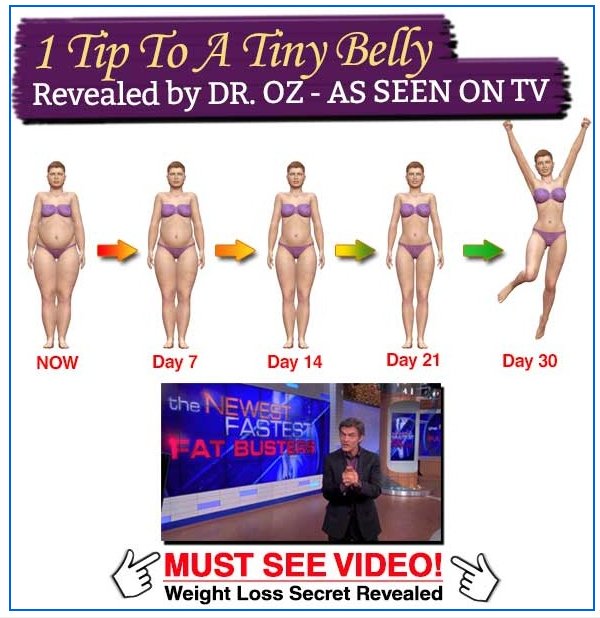
Wow! Wouldn’t you like results that amazing? Wow! Based on the images, the happy lady in those pictures up there has lost at least 30 pounds, and likely more – all in the brief space of 30 days.

Never mind that healthy weight loss takes place at the rate of 1 to 2 pounds per week… whatever this weight loss secret is, I gotta get me some of that! And Dr. Oz is happy to hawk it, right alongside last year’s green coffee extract, or the confusum combobulosum he was hawking before that.

At least the ad above didn’t use the “one weird old trick” line, even though that’s still being used everywhere. But it’s still 100% pure, unadulterated camel ejecta. Snake Oil. Garbage.

What is it? Well, let’s dig a bit.

Doing the “show source” dance from my email client, we find that this ad will direct you to

http://rincomplex.com/UQWbhbuS/ObXtnsJa_ApdXupIv/r-MjIwZTAxOWMhYzZw
OTBwOTRwNzMhZmRiMjchNDIyIXBhZDAxfGNvbSFydHB1cmVnYW5pYWNwYz
EwNThjbWRmcmohZHRidDdkZCEw/X9iBg

Ain’t that a mouthful? These dynamically-generated URL’s are one of the first clues that a particular website is illicit, shady, or otherwise disreputable. What’s more, if you reverse-hack the URL to just “rincomplex.com”, you find a placeholder website full of dummy text and randomly-scraped news articles. They might as well have filled it with lorem ipsum.

But never mind that… I toddled over to the website and found this:
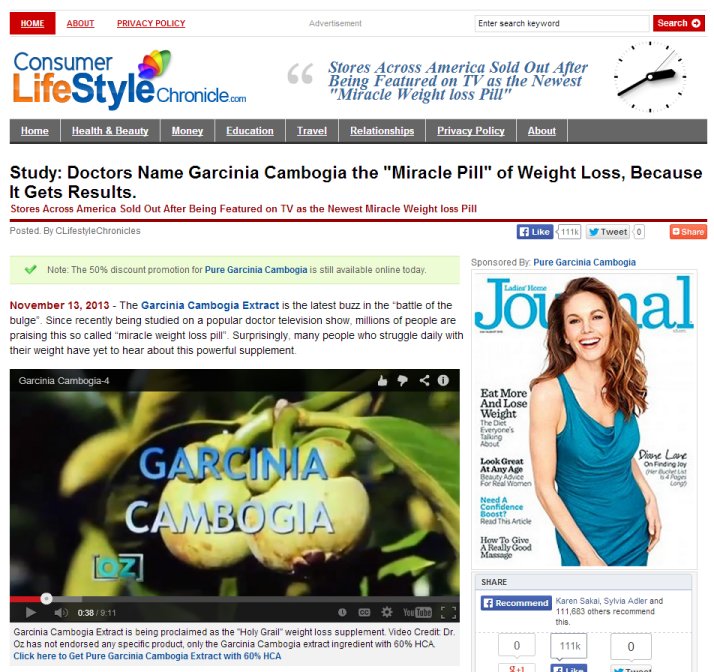
Garcinia

Ok, so this “miracle product” is garcinia cambogia. Along with the typical shameless infomercial/show by Oz, the Great and Powerful. But pay no attention to the little man behind that screen, folks – if you plunk down your money in the hopes of losing weight fast, fast, fast, you’re going to be disappointed.  But before we get into the substance itself, let’s look at how insistent and immoral the marketing practice is.

If you scroll down the page above and express interest, you’ll need to provide your contact information in full – information which will be immediately sold on to other scam companies by this disreputable marketing outfit. If you try to leave the page by using your “back” button or closing your browser, you’ll get this:

confirm

Wow, 60% discount. Maybe I’d better stick around. But both options (expressing interest or trying to leave) take you to the same “special discount” page anyway. Now, notice that you got promised a 60% discount plus free shipping, but the page below says it’s “Over 30%”. But on top of that, I’ve mentioned it before – any website that employs this tactic to try to get you to buy is immediately flagged as both spammy and scammy in my book, and the fact that they’re still doing it shows me that it’s effective. Please, don’t fall victim to these snake-oil vendors.

Image1

So, depending on how gullible you are, you’ll spend between $148.00 and $48.00 for some herbs of questionable effectiveness (more about that later) and spurious quality.

If you’re still not convinced, you get another popup:

Image2

Image3

Now it’s a BOGO offer – buy one, get one free. But you’re still spending that 48.00, which was the minimum purchase level on the previous screen.

Nah, I think I’ll pass… but WAIT! WAIT! WAIT! We don’t have your money yet, and by all that’s holy we want some of it.

Image4

So now you’re up to an 80% discount…

Image5

Just give us your information, send us a double sawbuck, and we’ll consider ourselves winners (and you a loser.) But really, who could turn down such an amazing offer, with free shipping no less?

Some people can, but there’s one final hook for them:

Image6

Only fi’dollars. Just a fin. That’s hardly nuttin’, mister. So if you click “Stay on this page,” you get their rock-bottom offer:

Image6a

Click on this to claim your offer, and see what you’ve won!

Image7a

So you greedily fill out the form, thinking you’ve sure pulled one over on these boobs… but you’ve failed to notice that tiny, tiny print up there that says “terms apply.” What in the world could those terms be?
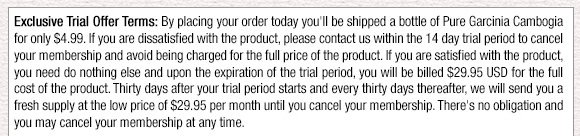
Image8

So if you read the fine print down there at the bottom of the page, you discover that you need to call them within 14 days to get that $4.99 price. If you don’t, they’ll gleefully charge your credit card for $29.95, ten bucks more than their previous offer, and you find yourself enrolled in an “autoship” program whereby they’ll send you a new bottle every 30 days, for the low low price of only $29.95.

Great Mogg’s tufted ears, folks – why in the name of all that’s holy would you do business with a checkered-suit operation like this? They get you coming, they get you going, and if they get their hooks into you, they’ll never let go.

So before we sign off for today, let’s have a quick look at this garcinia cambogia and see what it’s really all about.

If you look up garcinia at WebMD, you find that it’s marketed under various names:

Acide Hydroxycitrique, AHC, Brindal Berry, Brindle Berry, Cambogia gummi-guta, Garcinia Cambogi, Garcinia cambogia, Garcinia gummi-guta, Garcinia quaesita, Gorikapuli, Hydroxycitrate, Hydroxycitric Acid, HCA, Kankusta, Malabar Tamarind, Mangostana cambogia, Tamarinier de Malabar, Vrikshamla.

As well as this insightful description:

Garcinia is a plant. The fruit rind is used to make medicine. Don’t confuse garcinia with Garcinia hanburyi (gamboge resin).
How does it work?
Developing research suggests that garcinia might prevent fat storage and control appetite;
however, whether these effects occur in humans is unclear.

But as I have mentioned before, a single scientific study or even some preliminary research is enough to get the media to latch on to those results and get some advertising clicks out of it – and if that starts to happen, the marketeers come from the voodvork out.

Click a little further into WebMD and you find the User Ratings page for the product – reviews which look a whole lot different from the shill-written reviews on the marketing pages:

  • Been taking it for 3 weeks. Have not lost one pound. Have been sleeping more soundly, though. Biggest problem is that my whole body has started to ache. And my joints hurt. I thought at first it was because of my workouts, which I had increased- but I stopped for a week and the pain is still there. I just read on another website that is you are taking stati. Drugs for high cholesterol – which I do – it can exacerbate the negative effects of those drugs and cause muscle degeneration and joint pain. Guess I will be stopping this supplement.
  • Didn’t lose any weight, often had GI upset
  • I have been using this product for one week. Yes it suppresses your appetite but I have had a migraine for the entire week. Stopped taking it…..no headache. Not worth it.

Check the reviews yourself. Oh, and side effects?

  • Garcinia is POSSIBLY SAFE for most people when used for 12 weeks or less. Long-term safety is unknown. Garcinia can cause nausea, digestive tract discomfort, and headache.
  • Special Precautions & Warnings:
  • Pregnancy and breast-feeding: Not enough is known about the use of garcinia during pregnancy and breast-feeding. Stay on the safe side and avoid use.

“Possibly safe?” Wow, that means it might not hurt me. The bottom line is that sufficient scientific research on this and most other herbal supplements is woefully inadequate – randomized, double-blind, placebo-based studies over decades are usually required to give a clear picture of how safe and effective any substance is to take into your body.

But the salespeople don’t want you to know that, and they pay people like Dr. Oz big bucks to hawk these products, which nets them millions of dollars from poor yutzes like you and me, if we’re foolish enough to pay attention to their pestilential marketing campaigns.

One last point: be careful not to assume that I’m saying all natural remedies are worthless or dangerous. That’s not the case. But the vast majority of the things you see hawked on the internet or on these infomercial-style media advertisements are there for only one reason – to get your money based on false promises and false hope. If you’re interested in releasing weight, my recommendations can be found here – scroll to the bottom of the page and find the section entitled “So if you’re interested in releasing weight, what can you do?

If you’re wanting to be lighter and thinner, the odds are you can be – but as I’ve said before and often and don’t care who hears it: there’s no magic bullet. Save your money.

The Old Wolf has spoken.


Oh, and who’s sending this garbage email out?

Pure Garcinia Cambogia
530 Lake Avenue #501 (Appears to be the Pasadena Rug Mart)
Pasadena, CA 91101

and their spam affiliate,

“Multispecialty Medical Groups”
1231 Northern Lights Blvd, #569 (A post office box at a UPS Store)
Anchorage, AK 99503
Should I Get a Flu Shot?

Flu_Vaccine_copy

Over at reddit, a physician writing under the pseudonym of /u/crucifoxes (a throwaway account which will not be used again) provides a concise summary about the medical reality of flu shots. This is a crucial read for anyone who has questions, and – from where I sit – helps clear up a lot of the tinfoil-hat nonsense that swirls around vaccinations in general. It deserves to be shared; I have bowdlerized it only slightly, and any emphasis is mine. The answer arose to the following question in /r/Vancouver: “I have never gotten a flu shot before, this year I have the option of getting one for free but I’ve heard both negative and positive things about getting them. Do you get one? Why or why not?”

————-

Physician here. If I were you, I’d jump at the chance for a free flu shot.

The reason there are so many misconceptions about the flu shot is largely due to the lay public’s understanding of Influenza.

We have taken to calling any stomach bug or upper respiratory infection “a flu.” Stomach flu. 24 hour flu. Et cetera. It’s all nonsense. There are hundreds of mild viruses that cause these symptoms, none of them are Influenza, and none of them are meant to be reduced by getting the flu shot. So when your aunt Kathy complains that her flu shot didn’t work because she threw up for two days in February, slap her gently across the face. That wasn’t flu, Kathy.

I’ve had Influenza A once in my life, and once was enough. Two weeks of headache, myalgia, nausea, vomiting. Every day it felt like I had just woke up after being hit by a bus. I will never, EVER call any cold-with-some-squirts a “flu” anymore.

Now. With that established, we still haven’t really figured out if you should get the shot or not.

Advantages: Lower chance of acquiring Flu, maybe a less severe course if you do contract the infection.

Disadvantages: sore deltoid for a day or two, maybe a mild cold-like illness for a few days.

That’s essentially it. There’s a lot of polemic out there around vaccines, but most of it is hogwash, and the rest is mostly outdated concerns about chemicals that aren’t used any more.

The flu vaccine contains no “live” virus whatsoever, nor does it contain any flu DNA. You cannot “get the flu” from a flu shot. What you can get is some side effects of your body mounting its immune response, hence the cold-like symptoms listed above.

The flu vaccine does not contain thimerosal[1] (exception – if you’re a senior citizen, they’ll still give you the thimerosal-containing vaccine. This is because you’re old, your immune system isn’t exactly top-notch anymore, and the addition of thimerosal helps potentiate the immune response. If you don’t know what I’m talking about, don’t worry about it. Don’t even Google it. There’s about as much evidence for vaccine levels of thimerosal being harmful, as there is evidence for wifi signals being used to control your mind.)

Some haters will also bring up rare, 1:1 million complications, like Guillain-Barre Syndrome. This condition is ultra rare, can occur with any viral illness or immune response, and is actually MORE likely if you get the flu than if you get the vaccine. The risk of dying if you catch flu is 1/10000. The risk of Guillain-Barre if you get the vaccine is 1/1,000,000. So you do the math.

That said, if you’re a young adult who is immunocompetent and is not pregnant, your chances of serious disability or death from influenza are pretty low. We encourage vaccination of medical staff NOT because we’re worried about the health of our workers. We vaccinate medical workers so that they are less likely to contract flu, and then kill off half a geriatric ward when they spread it.

I don’t know why you have access to a flu shot, but if it’s because of your own health issues or health-related employment, it’s a no-brainer. Get it. If you’re not in a risk group, or around risky individuals, it’s less clear what your choice should be.

That’s all I got. Keep in mind that while I’m a medical professional, allergy/immunology is not my area. Now go do some decent Googling and then decide for yourself!

EDIT: Forgot about Flumist, thanks for all the reminders. I’m OBGYN so I never use it, my comments are valid only for the non-Flumist, injectable, protein-capsid-whatever types.

——————

At my previous job, I’d get a free flu shot every year, and never once had a negative reaction. I’ve only gotten one since I retired in 2006; I think my insurance covers one annually – I need to check. Now that I’m moving toward bona-fide “senior citizen” status, I think it behooves me to get back in the habit.

The Old Wolf has spoken.


[1] Thimerosal is a mercury-based preservative, and the biologically inactive form of mercury. It was added to vaccines to prevent the vaccine from spoiling, and to prevent cross-contamination. In the early days of vaccination the whole class was vaccinated from a single bottle with a single needle. Just a quick wipe with a cotton ball and some alcohol.
Thimerosal probably saved many, many lives.

Stupidity, hard at work in the White House

Stamps

The Post Office designed a new set of stamps to encourage kids to get active. Great idea, right?

Unfortunately, thanks to some Old_Wolf_Censoredon the President’s Council on Fitness, the project has now been put on hold, because it appears that these three stamps are promoting “unsafe” activities:

danger

The stamps deemed unsafe by federal officials included illustrations of kids skateboarding without kneepads, doing a cannonball dive into a swimming pool, and doing a handstand without wearing a helmet. A handstand without wearing a helmet???

There are times I really wish I could swear. Of all the chuckleheaded, doltish, ludicrous, ill-considered, short-sighted and politically correct nonsense I have ever heard, this takes the cake. YOU BLISTERING SIMPLETONS! Yes, I’m SHOUTING! Did you get run over by the stupid truck? What, are you going to put federal monitors on every school playground and in every backyard, to make sure kids don’t run, jump, do cartwheels, tumble, climb trees, roll down hills, do somersaults, and everything kids do to enjoy life and burn off energy? [1]

cartwheel_c-425x282

I’ve written about the difference between safety and paranoia, but it appears the general trend continues in favor of paranoia, fueled largely by attorneys hungry for billable hours and with far too much time on their hands. For the love of anything you consider holy, every single one of those activities on the stamp sheet come with some inherent risks; we might as well curl up in a ball under our bed if we’re worried about safety to that extent. At least that way, nothing will get us but the dust mites.

I don’t believe in violence, but things like this are very stressful for me [2].

It was earlier reported that the entire run of stamps is being destroyed, but according to USPS spokeman Roy Betts, “The stamps are on hold and a decision would be made later.”

You can read more about this mind-boggling witlessness at ABC News.


[1] It appears stupidity is not limited to the USA. A school in Australia actually tried to ban kids from doing cartwheelsOld_Wolf_BrainNuke

[1] Stress: The confusion created when one’s mind overrides the body’s basic desire to choke the living daylights out of some jerk who desperately deserves it.

New Study Reveals: Wolverines Don’t Like to be Teased!

676187766_1357111206

An Open Letter to the Media:

Stop it. Just stop it. The press, television, radio and the blogosphere latch on to every new study and report it as though the results were definitive.

Here’s a perfect example:

Heavy coffee consumption linked to higher death risk – USA Today

Oh, wait – that’s from USA today, the “thinking man’s National Enquirer” (women not exempt either), so probably wise to take anything you read there with a whole box of salt. But seriously, folks:

NIH study finds that coffee drinkers have lower risk of death – National Institutes of Health

Just go out there and do your own research: butter, eggs, chocolate, vitamins, sugar, white flour – and we’re not even talking about the tinfoil hat patent-medicine and nostrums hawked by the populist doctors and talk-show hosts like “green coffee beans[1] and the Açaí Berry – just the run-of-the-mill, everyday stuff; it’s good for you, it’s bad for you, it stops cancer, it causes cancer, it gives you diabetes, it lowers cholesterol, and on and on and on to the lemniscate [2].

As it turns out, most of what the media reports is nothing like the actual conclusions found in the study. Put together a database of 50 peer-reviewed studies, each double-blind, placebo-based and randomized, and if there’s a preponderance of evidence, *then* report on it. Oh, but wait, truth is not as important as eyeballs on ads. Yarg.

Angry Wolverine

This wolverine is angry


[1] In fairness, this particular article pretty much debunks the hype and asks the right questions, but there are plenty of others out there trumpeting the benefits as though this was the greatest thing since sliced bread.

[2] ∞

Snake Oil: Only $67.00

FormerlySnakeOil

A comment recently appeared at this post, which read as follows:

It’s appropriate time to have the plans for future years and it’s time for you to be happy. We have read this article and if I really could I want to propose you number of interesting points or ideas. Maybe you can easily write next articles referring to this article. I wish to read more things about it!
kidney dialysis http://junk.spam.link

OK, as you wish. I’ll write my next article about what douchebags you are.

First of all, I’ve written before about blog spam – it’s probably one of the scummiest, most unethical ways of promoting a business, product, or service. So that’s red flag number one. Any business that needs to advertise or boost its page rankings by seeding other people’s blogs with random, idiotic comments and embedded links is a business or product or service or opportunity that sensible people will stay far, far away from.

Second of all, this particular link leads to a commercial offer from “Duncan Capicchiano, ND, fully Qualified Naturopath, Nutritionist, Herbalist, Medical Researcher and Author.” How loud can you scream “bullshit”? I like the way you screamed that. The touted system, available for only $67.00, trumpets

“You’re about to find out that it’s possible to reverse impaired kidney function and avoid dialysis and/or kidney transplant surgery.”

The (probably fake) testimonials included at his web page say things like:

“As soon as I had downloaded it (which was a piece of cake) I rushed out and bought bottles of Nutrient Name, Vitamin, and Herb Name (I already had most of the other recommended ingredients) and started the course.”

DrudgeSirenSmall People: This is DANGEROUS. If you have impaired kidney function, no herbal remedy is going to help you. If you’re already needing dialysis, do not put your faith in phony systems or nostrums or remedies. For the love of all that you consider holy, stay away from patent medicine or herbal scams of this nature. Just stay away. DrudgeSirenSmall

I’m not saying vitamins or herbs are bad. Some of them have overall systemic benefits. But there’s a reason the FDA makes nutritional products include the disclaimer,

“These statements have not been evaluated by the Food and Drug Administration. This product is not intended to diagnose, treat, cure, or prevent any disease.”

Herbal or nutritional supplements are not regulated, and their effects are largely anecdotal; some people may see results that others don’t. If a program like this were truly effective, you would see a whole raft of peer-reviewed research about it in medical journals like JAMA or Lancet, but this bottom-feeder is operating out of Australia, so he doesn’t have to comply with FDA regulations – he can promise you the moon, add a bunch of important-sounding qualifications after his name, and rake in the money. If, as he advertises, 1,694 people have bought his system, he’s already banked about $113,000 – and he hasn’t delivered a single physical product – just a bunch of PDF files.

People like this are scummy, immoral, unethical, and harmful. They make me angry, especially when their shills post crap at my blog site. Do yourself a favor, and never give them a penny.

The Old Wolf has spoken.

Hollie McNish, Poet Shamed By Breastfeeding In Public, Has The Last Word

I remember back in 1979 when our firstborn came into the world, there was a lady who lived across the street who belonged to La Leche League. She was a nice lady, but we considered her a bit of a militant about breastfeeding. It turns out that people like her are still needed. For our part, thanks to their mother’s diligence, all of my kids were breastfed until age 1 (except my daughter, who at 9 months looked up at her mom, laughed, and refused to nurse any more, period the end thank you. You can imagine there was an uncomfortable week or so thereafter…)

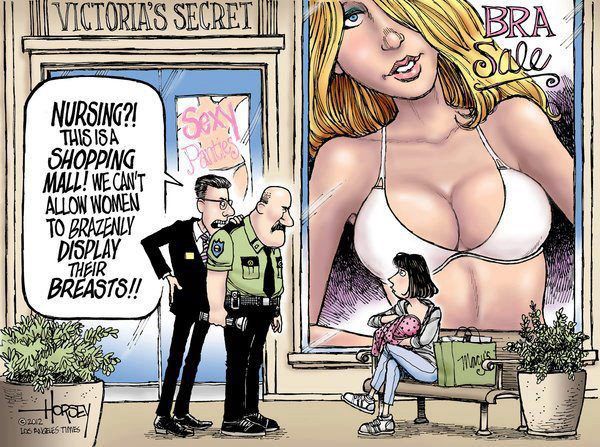
It turns out that our society has a serious cognitive disconnect going on about breastfeeding – political cartoonist Horsey captured it perfectly in a 2012 offering:

In support of all nursing mothers

Now comes Hollie McNish, mother, activist, poet, and thinker, who has posted (among others) a blistering damnation of people who shame breastfeeding women in public. I wish everyone in the world could listen to this piece and really, really understand what she’s saying.

The words of the poem are as follows (you’ll notice a little variance between the written text and what she delivered on the video; I happen to like the spoken version better, but you can decide for yourself.)

Embarrassed, by Hollie McNish
At first
I thought it was ok
I could understand their reasons
They said ‘There might be young children or a nervous man seeing’
this small piece of flesh that they weren’t quite expecting
so I whispered and tiptoed with nervous discretion.
But after six months of her life sat sitting on lids
Sipping on her milk nostrils sniffing up piss
Trying not to bang her head on toilet roll dispensers
I wonder whether these public loo feeds offend her?
Cos I’m getting tired of discretion and being ‘polite’ as my baby’s first sips are drowned drenched in shite,
I spent the first feeding months of her beautiful life
Feeling nervous and awkward and wanting everything right.
Surrounded by family until I stepped out the house
It took me eight weeks to get the confidence to go into town
Now the comments around me cut like a knife
As I rush into toilet cubicles feeling nothing like nice.
Because I’m giving her milk that’s not in a bottle
Wishing the cocaine generation white powder would topple
I see pyramid sales pitches across our green globe
and female breasts banned. Unless they’re out just for show.
And the more I go out, the more I can’t stand it,
I walk into town feel I’m surrounded by bandits
Cos in this country of billboards covered in ‘tits’
and family newsagents’ magazines full of it
Whsmith top shelves out for men – Why don’t you complain about them then?
In this country of billboards covered in ‘tits’
and family newsagents magazines full of it
Whsmith top shelves out for men, I’m getting embarrassed
In case a small flash of flesh might offend.
And I’m mot trying to ‘parade’ this, I don’t want to make a show
But when I’m told I’d be better just staying at home
And when another friend I know is thrown off a bus
And another woman told to get out the pub
Even my grandma said maybe I was ‘sexing it up’.
And I’m sure the milk makers love all this fuss
All the cussing and worry and looks of disgust
As another mother turns from nipples to powder
Ashamed or embarrassed by comments around her and
As I hold her head up and pull my cardy across and she sips on the liquor made by everyones God, I think
For God sake, Jesus drank it
So did Sidhartha, Muhammed and Moses and both of their fathers
Ganesh and Shiva and Brighid and Buddha and I’m sure they weren’t doing it sniffing up piss as their mothers sat embarassed on cold toilet lids
In a country of billboards covered in ‘tits’
In a country of low cut tops cleavage and skin
In a country of cloth bags and recycling bins and as I desperately try to take all of it in,
I hold her head up
I can’t get my head round
The anger towards us and not to the sounds
of lorries offloading formula milk
into countries where water runs dripping in filth
In towns where breasts are oasis of life
now dried up in two for one offers, enticed by labels and logos and gold standard rights
claiming ‘breastmilk is healthier powdered and white’
packaged and branded and sold at a price so that nothing is free in this money fuelled life.
Which is fine
If you need it or prefer and can afford to use bottles, where water is clean and bacteria boiled,
but in towns where they drown in pollution and sewage
bottled kids die and they knew that they’d do it
In families where pennies are savoured like sweets
We’re now paying for one thing that’s always been free
In villages empty of hospital beds
babies die, diarrhoea fuelled that breastmilk would end
So no more will I sit on these cold toilet lids
No matter how embarrassed I feel as she sips
Cos in this country of billboards covered in ‘tits’
I think I should try to get used to this.

Hollie wrote,

I wrote this poem in a public toilet after my 6 month old baby fell asleep. I was in town on my own a lot with her and the first time I fed her someone commented that I should stay home. Baby’s need breastfed every 2-3 hours often. It’s impossible to run home. It’s a stupid argument anyway. But I was embarrassed and for 6 months took her into toilets when I was alone without the support of boyfriend, friends, mum etc. I hate that I did that but I was nervous, tired and felt awkward. And now I find it weird that our TVs, media etc never show breastfeeding in soaps, cartoons, anything. That we and the US are so bloody scared of it. It’s weird. I find our culture weird and even weirder, when people are so strapped for cash. It is costing parents a huge amount of money paying for something which most of us, those of us who are lucky enough for our bodies to do so, get for free. I have a lot of mates who complain they’re broke but stop breastfeeding cos they feel awkward, and pay for formula. Why are we paying billionaire companies for something our bodies produce for FREE. It’s really good marketing that we feel so wrong doing something like this I think. And it makes me sadder every day. Next we’ll be buying sweat in bottles from Tescos and rubbing it on our skin paying for electronic books to read nighttime stories. Oh, wait…

Huffington Post, in an article about Ms. McNish, also provides a list of places mothers have been shamed for breastfeeding, and the results:

At Hollister

slide_210867_2288613_free

Brittany Warfield, a mother of three from Texas,was nursing her 7-month-old outside of a Hollister store in a Houston mall, she says a manager forced her to move. “He said, ‘You can’t do this here. This is not where you do that. You can’t do that on Hollister property. We don’t allow that.’ I said, ‘It’s Texas. I can breastfeed anywhere I like.’ He said, ‘Not at Hollister. Your stroller is blocking the way. You have to go,’” she recalls.

On Facebook

slide_210867_719525_free

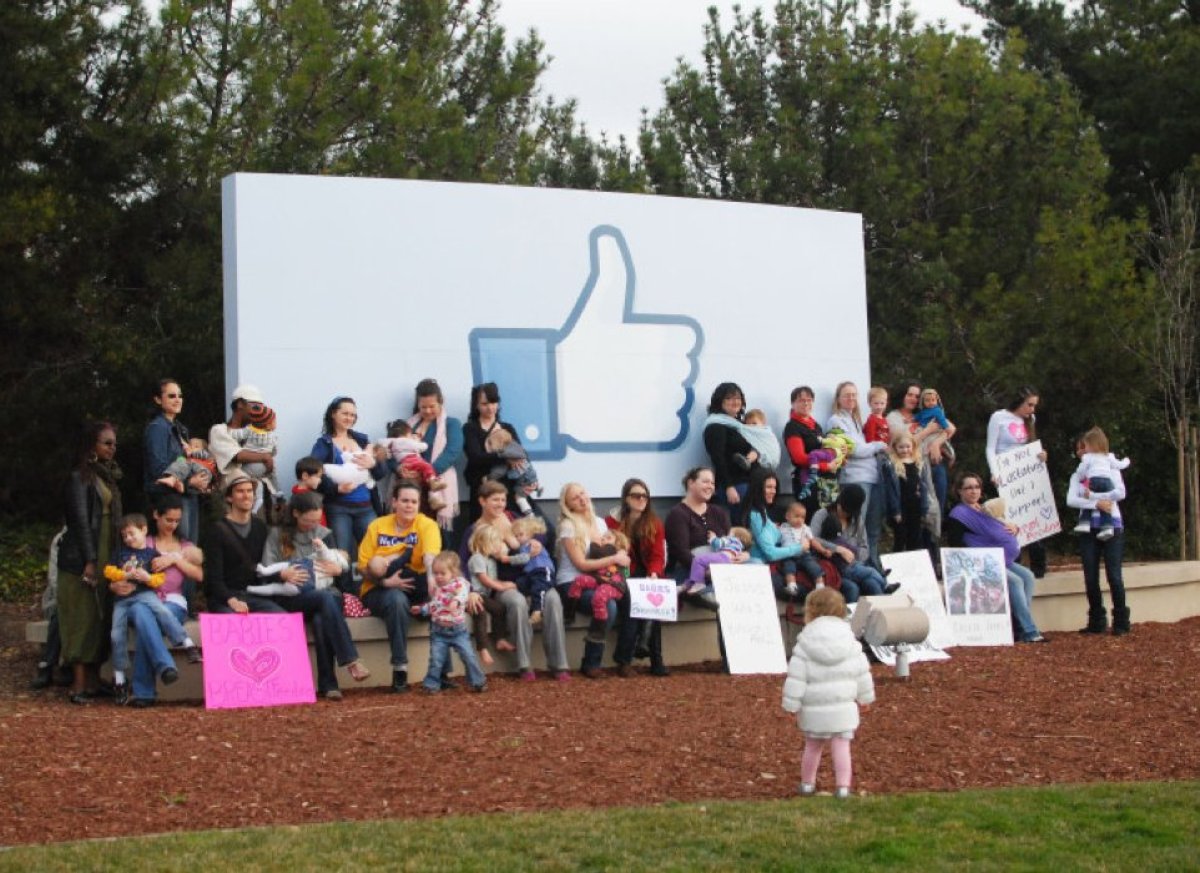
Mom and breastfeeding advocate Emma Kwasnicahad posted over 200 photos on Facebook of herself nursing her own three children and told the Huffington Post that her account has been suspended at least five times as a result.  She organized a nurse-in in front of Facebook headquarters to challenge the company’s policy that says photos depicting breastfeeding are “inappropriate.”

At Target

slide_210867_719523_free

Houston mother Michelle Hickman says she was harassed and humiliated by Target staff when she found a quiet space in the store to breastfeed her infant. She organized an international “nurse-in” at several Target locations on Tuesday December 28th. Pictured above is mom who participated, Brittany Hinson and her 4-month-old son, Kennedy, in front of the Super Target store, in Webster, Texas.

At a Cafe

slide_210867_719502_free

Claire Jones-Hughes wrote: “After being verbally attacked for not covering up while feeding my four-month-old, I decided it was time to make a statement to show that mothers will no longer tolerate being harassed for feeding our babies in public.” She then staged a breastfeeding flash mob at the Clock Tower in Brighton, UK.

In A Government Building

7

Simone dos Santos was breastfeeding her four-month-old in the hallway of a D.C. government building when two female security guards told her to stop because it was indecent. “I was shocked, upset and angry that by providing food for my son, I was being treated like a criminal,” she wrote in a blog post for the Washington Post.

In The Courtroom

8

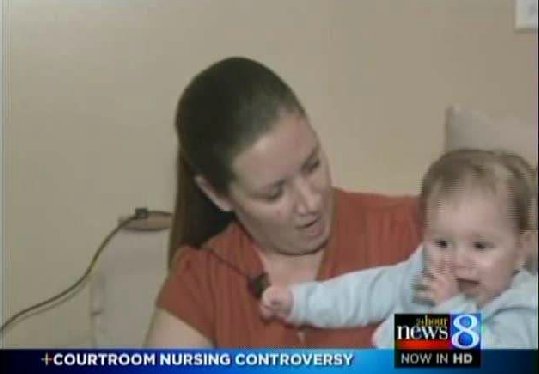
In November, Natalie Hegedus, a Michigan resident, was asked to leave a courtroom by a district judge. Her post on the community forum, BabyCenter, caused a national uproar.

On a Bus

bus

This past June, a mom was harassed by a bus driver for breastfeeding on a Detroit-area bus.

On a Plane

plane

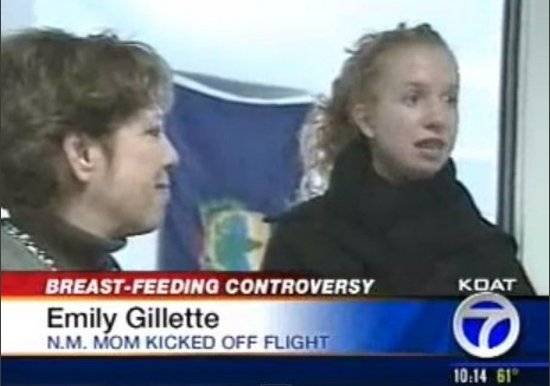
Back in 2006, 27-year-old mom, Emily Gillette, was removed from a Delta flight for breastfeeding. Watch a news clip about this story here.

At The Mall

Mall

Ohio mom Rhonda claimed that she was kicked out of her local mall for breastfeeding, back in February. Mall security even called for back-up.

At the Pool

Komo

[Video not working]

We’ve heard about these incidents from coast to coast. In 2001, a mother nursing her 9-month-old was told to move away from the edge of the poolso as to avoid contaminating the water with her breast milk.

In Her Religious Community

slide_210867_719510_free

One mom posted a frustrated essay in November 2006, detailing her pastor telling her that photos of her breastfeeding were equivalent to pornography. She and her husband decided to leave the church after this incident.

At McDonald’s

bradford

Clarissa Bradford was kicked out of a McDonald’s by an assistant manager for breastfeeding her 6-month-old child in August 2010.


It’s not hard to see the problem. To use a common meme,

joker

It’s just wrong. Babies deserve the very best, but our society is conspiring to keep them from getting it. The purityrannical attitudes of small people in positions of power (sadly, including some women) discourage breastfeeding and prevent generation after generation of babies from getting the best possible start in life. And it has to stop.I applaud Ms. McNish and all the determined women who are pushing back against the tide. It will only be through their persistence that awareness will be raised and this bit of social folly will be done away.

Thanks to blogger inshadowz, a late-breaking addition. We’ve long known that Europeans have much fewer hangups about the human body than Americans; this image appeared some time ago in the restaurant of an IKEA in Norway:

69299_444254436178_6342688_n

It says, “Please use the sofa if you’d like to sit more comfortably while breastfeeding.” Hurra for Ikea!

Another relevant update: A blog post by Matt Walsh about Progressive Puritanism; and a cartoon recently found by blogger Inzhadowz and shared with me over at Facebook:

556330_10101357645200100_1243400025_n

The Old Wolf has spoken.

Tell a lie often enough…

… and you’ll sell more tobacco products. (A couple of earlier posts about tobacco products are here and here.)

bemerkenswerte-bucher-1

bemerkenswerte-bucher-2

bemerkenswerte-bucher-3

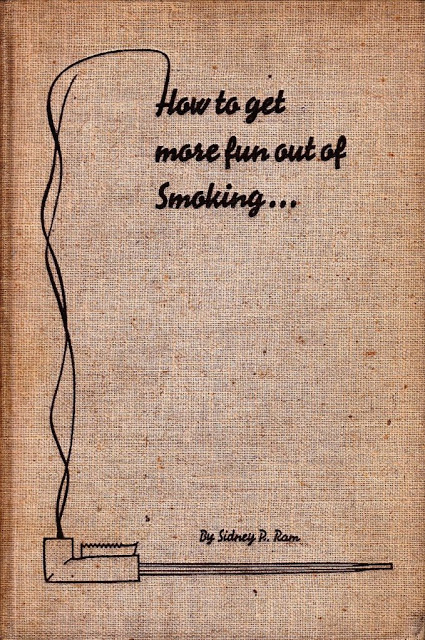
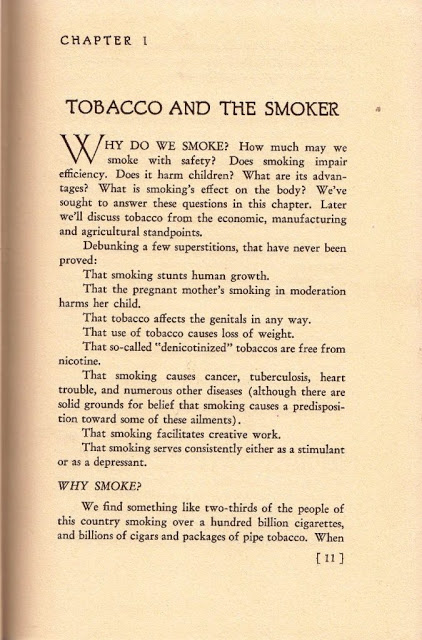
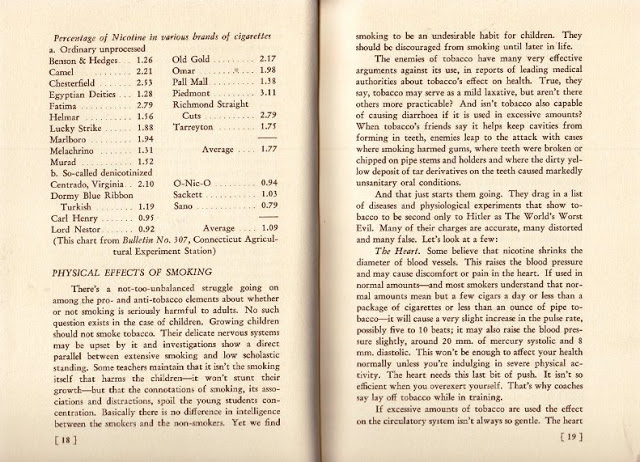
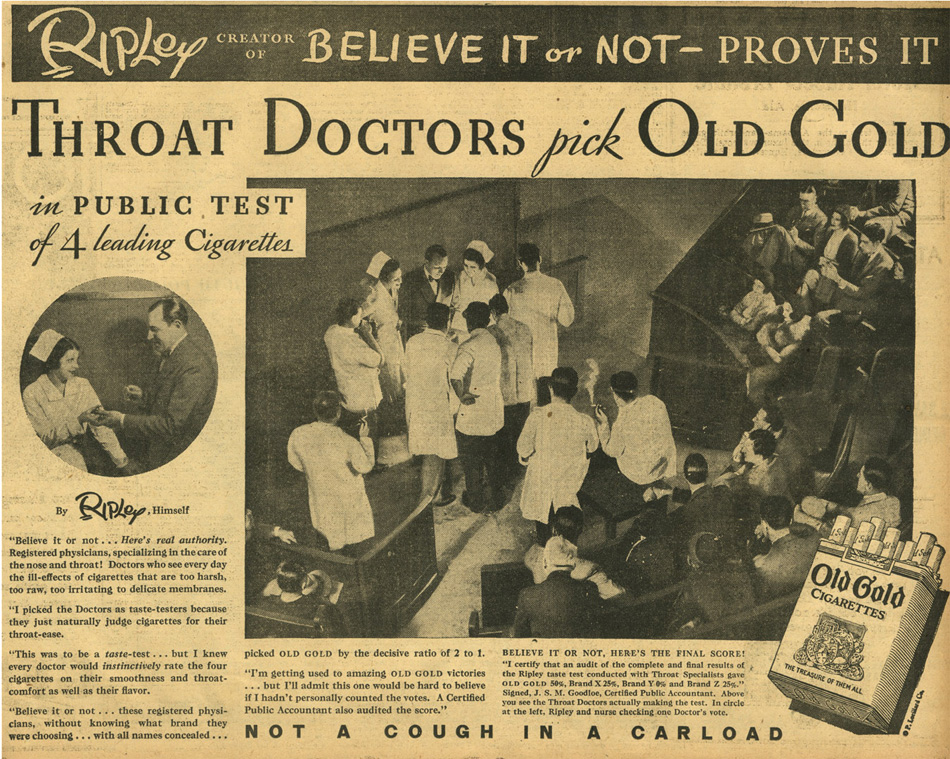
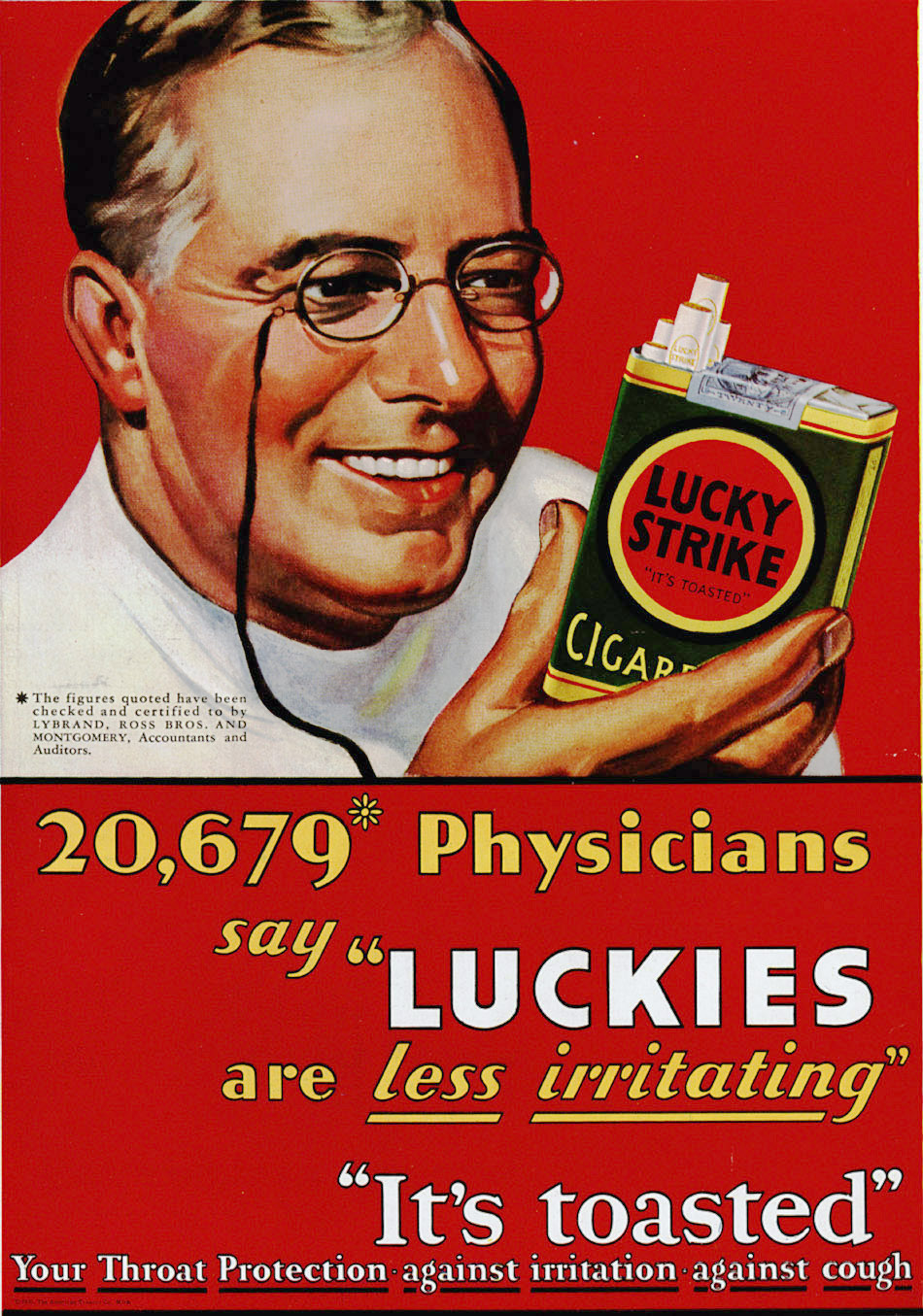
Sydney P. Ram was a Chicago pipe-maker who had a shop on the loop (he retired in 1942).  Apparently his pipes are still sought after by afficionadoes. This book was published in 1941, when advertisements of this nature were still common:

ripleysL

20679physiciansL

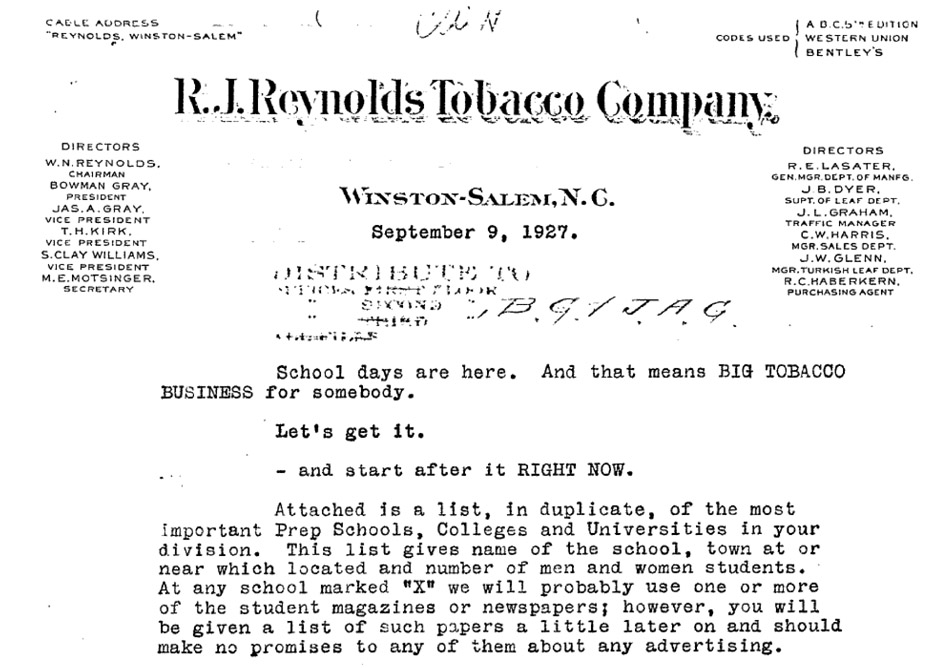
And memos like the following were (while not publicly disseminated) urging marketeers to go after the young:

rjreynoldsL

In 1952, Reader’s Digest condensed an article from the Christian Herald entitled “Cancer by the Carton.” Prior to this, very little was being publicly said about the dangers of smoking, and as we can see from Ram’s book, it was easy to muddle the issue simply by denying the “superstitions.” Anti-smoking PSA’s became one of Readers Digest’s favorite soapboxes, along with anti-Communism.

The situation was well described over at Lisa’s Nostalgia Cafe:

The worlds of advertising and cigarette smoking have been intertwined for as long as we can remember. In the first half of the 20th century, tobacco companies were major contributors to the advertising industry, and many radio and TV programs were sponsored by these companies.

As the 1960s dawned, things were beginning to change. During the 1950s, people became aware of the health hazards of cigarette smoking and began to file court cases against the tobacco companies. Private medical journals published studies linking smoking to lung cancer, and magazines like the Readers Digest ran anti-smoking articles.

The turning point came in 1964 when the Surgeon General released their first report linking smoking to lung cancer, heart disease, chronic bronchitis and emphysema. These results got everyone’s attention. The government, which had been at the mercy of the tobacco lobby, began to get involved and slowly some changes were made.

I was roped into smoking in high school in 1964. After I gave up tobacco five years later, for a while I became a dedicated crusader and I recall getting quite an assortmant of pamphlets, article reprints, buttons,

smokingsnuffyouout   smokingstinks

and other tools for use in my campaign.

Progress has been slow, but continues to be made in our country. The education campaign continues:

The faces of the onlookers are priceless.

Unfortunately and to our shame, tobacco manufacturers have shifted their focus from the US to overseas. As consumers here became more aware of the dangers of smoking, Big Tobacco looked for victims (I use that term deliberately)  in other parts of the globe. In 2019, the global market was worth $614 billion; even Everett Dirksen would be impressed by a number like that.[1]

According to the American Lung Association,

Cigarette smoking is the number one cause of preventable disease and death worldwide. Smoking-related diseases claim over 393,000 American lives each year. Smoking cost the United States over $193 billion in 2004, including $97 billion in lost productivity and $96 billion in direct health care expenditures, or an average of $4,260 per adult smoker.[2]

We can’t give up the fight. It will be slow. Tobacco is a legal product, and many people in the USA still put bread on their family’s table as a result of the industry. Acceptable alternative crops for farmers need to be found, and those who work in the packaging and shipping aspects will need to be moved into other economic sectors. If headway can be made in the legalization of industrial hemp[3], this could prove a godsend for farmers looking for a way out of the tobacco market.

Given the costs to society and individuals incurred as the direct result of tobacco use, the fight is a worthwhile one.

anti_smoking_ad_children

The Old Wolf has smoken (and is glad that he was able to quit when he did!)


[1] Senat0r Everett Dirksen was once reputed to have said, “A billion here, a billion there, pretty soon it adds up to real money.” He may never have said it, but it continues to circulate; after all, nothing on the Internet ever really dies.

[2] “Smoking-Attributable Mortality, Years of Potential Life Lost, and Productivity Losses — United States, 2000–2004”, CDC. Click through for the article.

[3] U.S. Department of Agriculture’s ‘White Paper’ on Hemp

“Who cares? It’s just blacks dying.”

The epic inside story of long-term criminal fraud at Ranbaxy, the Indian drug company that makes generic Lipitor for millions of Americans.

Dirty Medicine – The Ranbaxy drug debacle


TL;DR: If you use generic drugs, you may want to find out where they are from. If they’re from Ranbaxy or Dr. Reddy’s, both in India, find a different provider for your health’s sake.


CEO Singh of Ranbaxy

In a conference call with a dozen company executives, one brushed aside … fears about the quality of the AIDS medicine Ranbaxy was supplying for Africa. “Who cares?” he said, … “It’s just blacks dying.”

This is shocking enough, but you ain’t seen nothing yet.

This recent article over at CNN Money raised all sorts of red flags for me this morning. It’s fairly long, but I read every word, and what I read left me shaken, not stirred. I would recommend reading it in its entirety.

I take two generic drugs provided to me via Welldyne RX, my company’s bulk drug provider, and I started doing some research. I discovered that one was made by Sun Pharmaceuticals, and the other by Dr. Reddy’s Laboratories, both based in India.

After having read the Ranbaxy article, and digging in to the various generic manufacturers of the drugs I take, it became clear that it’s not just the Russian Business Network selling counterfeit or low-quality drugs, but the legitimate pharmaceutical providers, each of whom has a byzantine network of providers and producers which make guaranteeing quality extremely difficult.

drug

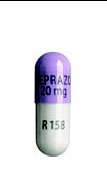
Here’s are the manufacturers I found at drugs.com for generic omeprazole 20mg, which I take for recurring GERD:

  • MYLAN 6150 MYLAN 6150 (Omeprazole 20 mg) – Mylan (USA)
    In 2007, Mylan acquired a controlling interest in India-based Matrix Laboratories Limited, a top producer of active pharmaceutical ingredients (APIs) for generic drugs, and the generics business of Germany-based Merck KGaA
  • OME 20 OME 20 (Omeprazole 20 mg) – Sandoz (Germany)
  • 20 (Omeprazole 20 mg) – Major Pharmaceuticals (USA?)
  • 082 IMPAX 20 (Omeprazole 20 mg) – Teva (Israel)
  • KU 118 (Omeprazole delayed release 20 mg) – Kremers Urban (USA)
  • APO 020 (Omeprazole delayed release 20 mg) – Apotex (Canada)
  • OMEPRAZOLE 20mg R158 (Omeprazole delayed release 20 mg) – Dr. Reddy’s (India) – this is the one dispensed to me by WellDyne RX.
  • 20 (Omeprazole Delayed Release 20 mg) – Perrigo
  • OMP 20 (Omeprazole magnesium delayed-release 20 mg (base)) – Dr. Reddy’s (India)
  • ZA 10 20 mg (Omeprazole delayed-release 20 mg) – Zydus (India)
  • P (Prilosec otc 20 mg) – AstraZeneca (UK)
  • 607 PRILOSEC 20 (Prilosec 20 mg) – Merck (Germany)
  • 742 PRILOSEC 20 (Prilosec 20 mg) – AstraZeneca (UK)

Looking at these manufacturers and their supply chains, it would be difficult to know whether any medication is actually made in the USA without further digging. Many, many paths lead to India, and given the mind-bending history of corruption, fraud, abuse, mismanagement and outright criminal skullduggery uncovered at Ranbaxy, I am very leery of any medications that come from over there, even in part. Ranbaxy is still in operation, controlled in large part by Japanese firm Daiichi Sankyo.

Some source articles:

For the Record, Sun Pharmaceuticals works out of India, but thus far seems free of complaints or black marks. But the entire landscape makes me nervous. Tomorrow I call WellDyne Rx to see if I can get my meds sourced from the USA.

The Old Wolf has Spoken.

Hospital Charges Explained

Redditor “badengineer” gives a compelling and clear explanation of what’s going on with wildly-fluctuating hospital charges. Not a lot of mainstream folks read Reddit, so I thought this was worth cross-posting over here.


I work for a top tier academic medical center as a corporate strategist, so I’m at least aware of how the various hospitals in my state are doing, how pricing works and what the market dynamics are. There are a few things that should be pointed out….

First, you’re right. The charge rate certainly doesn’t correlate to quality metrics.

The charge rate listed in the data (available as an 11MB excel file at CMS.gov) has nothing to do with anything. It’s not a real price. It doesn’t correlate to the price anyone pays except for the extremely rare millionaire who doesn’t have insurance. Medicare doesn’t pay it, 95% of uninsured people can’t pay it, insurance companies don’t pay it.

It’s primarily a negotiating trick, with some accounting tricks thrown in for good measure.

People need to understand how pricing works, because it’s the cancer at the heart of healthcare.

At any given hospital, there are a hundred different prices for any given procedure. Medicare and Medicaid pay all hospitals the same amount for Procedure X. Most hospitals lose 20% (or more) on that Medicare price and make it up on the private companies.

Every single private health insurance company pays a different price, very often 150% of what Medicare is paying. Each plan negotiates prices all on its own, in secret. They have no idea what other insurance companies pay. It’s in no one’s interest to share that price. It hurts hospitals’ future negotiations if their lowest negotiated price is public and it hurts payers negotiations if it gets out that they overpay some hospitals.

The hospital says “X costs us $50K, Y costs $60K, $Z costs $20K.”

The insurance company they’re negotiating with says “we normally pay $25K, $35K and $9K for those procedures. How about we give you 50% of your charge rate?”

The hospital says “OK”.

As a result, at a single hospital there can literally be 100 plans paying different prices for your gall bladder removal. Multiply that by 3,000 hospitals in the country. There are maybe 3,000,000 different prices for that surgery out there. All completely secret. You can imagine how that might create problems.

So basically, this charge rate is nothing more than a bit of insight into a hospital’s chosen negotiating tactics. They either price high and discount a lot, or price low and discount a little.

Uninsured people are screwed no matter what. If you’re uninsured and land in the hospital, you’re likely going bankrupt. It’s almost irrelevant whether it’s a $200K bill or a $100K bill. You’re going bankrupt. You might think this pricing was designed to extract money from that uninsured population, but hospitals get so little money from them that most don’t think about trying to squeeze them more using this charge rate. A vast majority of that care is just written off.

If the charge rate doesn’t correlate to real prices, it definitely doesn’t correlate to quality. There’s very often an inverse relationship between cost and quality to begin with. Medical errors are expensive and the places that reduce them save a ton of cash in lawsuits, readmissions (in cases where they’re penalized for them), etc. For example, we’re an awesome hospital you’ve heard of, but some organ transplants cost 35% less at the best-of-the-best place, because they do it so frickin’ well. That’s real cost. Not fake charge book cost. Usually, the better the care, the cheaper it is.

The odd thing about this story is that it isn’t new. Dartmouth Health Atlas has been publishing similar data for decades. It’s great to see it being covered, because it’s insane and a clear symptom of a deeper problem, but I was surprised to see it on the front page of the Times.

And every time I write something about this, I have to add: neither insurance companies nor hospitals are (on the whole) getting particularly rich off of this. As crazy as it sounds, this is not the result of unusual greed or a morally corrupt industry. It’s a historical artifact more than anything. Non-profit hospitals (which is almost all of them) earn an average of 2.5% operating margin and that’s shrinking. I dunno about for-profit hospitals, but they’re still not raking it in like people think they are. Health insurance plans earn more like 3.5% on average. If you chart the most profitable sectors of the economy, that puts them pretty far down the list. Drug companies, in comparison, are deep into double digit margins.

Of course, that’s relatively small profit on a truly mind-boggling amount of money (17% of the american economy) so it has a gigantic effect. It also tends to concentrate a lot of pain on people who can’t afford to pay it.

Anyway, that low profit margin gets at why no one breaks out and tries to be more transparent. A tiny downtick in your reimbursement rates will sink you. As our contracting guy says, last time our main payer got slightly miffed and decided to throw some business across town, we laid off 500 people the next year.

This is just how the system works. It’s not a conspiracy. It’s a perfect example of how a a bad system forces a bunch of rational actors to do absolutely batshit crazy things. Everyone could stand to earn and do a lot more if things were rationalized and we did away with this system of invisible prices. That’s the tragedy of the commons for you.

All hospitals and insurers are forced to play this game. Whether that’s a big 100-facility for-profit chain, a gigantic charity-oriented catholic system, an academic research center or your community hospital. This is how money moves in the system. Any real fix stands to hurt so many players that it’s pretty unlikely we’ll see change from a political standpoint. I’m kind of hoping the whole thing just collapses under it’s own weight and something better can arise from the ashes.


The system seems beyond fixing to me, but for the sake of our conscience we must continue looking for solutions, because what we have now is an immoral cesspool.

The Old Wolf has spoken.