This is either incredibly cool, or wrong on every possible level, depending on what you think of Harley-Davidson and scooters in general. More on the Topper from Wikipedia.
Since we’re on the subject of scooters:
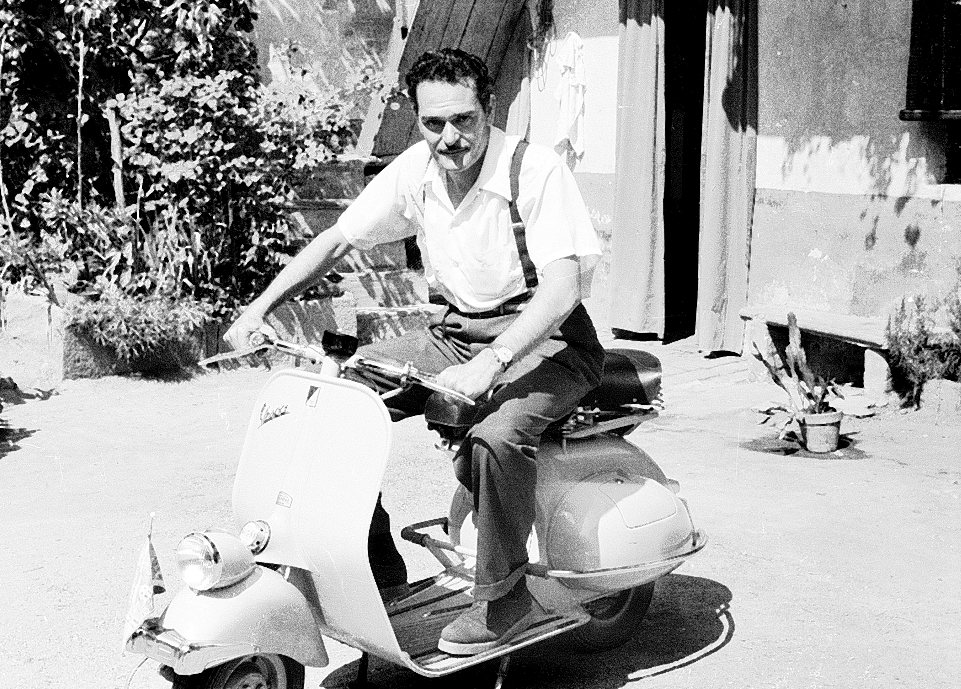
Actor Joe DeSantis on a Vespa in Calabria, 1953. The Italians have a saying: “o la moglie o la moto,” meaning that you can have a wife or a motorcycle, but not both.
Within my lifetime. That little girl looks like she’d be about my age; incredible that such things were possible.
Edit: When I first saw this picture, I was not aware of its origin. This beautiful picture by Gordon Parks is one of a series of 40 that will be on display at the High Museum of Art in Atlanta, Georgia, beginning 15 November, 2014.
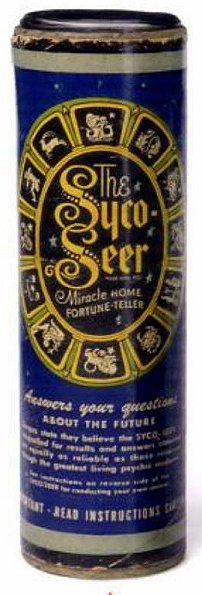
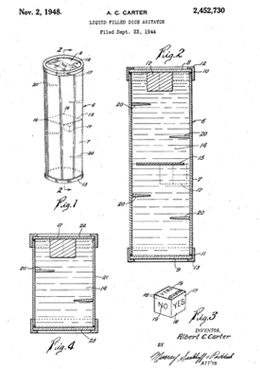
As a youngster I owned one of the ubiquitous Magic 8-Balls, and loved it. However, this novelty did not appear in its current form until 1950. Prior to that date, a number of precursors were on the market. Albert C. Carter invented the working guts, inspired by a “spirit writing” device used by his mother, Mary, a Cincinnati clairvoyant, and applied for a patent in 1944. Carter and his brother-in-law Abe Bookman formed Alabe (Al & Abe) Crafts along with store owner Max Levinson in 1946. The first device developed was called the Syco-Seer, a 7″ tube filled with dark liquid and divided into two compartments – each end held a die and a window, and each end would give different answers. The patent was assigned to Bookman and Levinson, but before the patent was granted in 1948, Carter died under somewhat mysterious circumstances – he lived a troubled life and lived his last years in flophouses, constantly broke; Bookman later said that he bought every idea Carter came up with, which kept him going until his death. “When he was sober, he was a genius,” Bookman said.
After Carter’s passing, Alabe Crafts made some improvements to the device, reducing it to a single-sided device, and sold it as Syco Slate: The Pocket Fortune Teller.
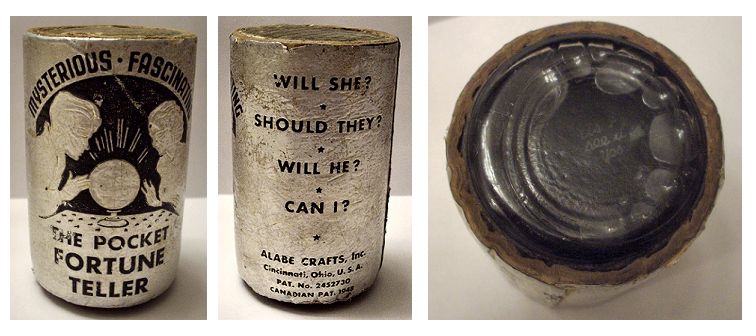
At some point it was marketed simply as The Pocket Fortune Teller, of one of which I happen to be the proud owner:
Later, Alabe changed the tube to a crystal ball; this did not help sales, but it did attract the attention of Brunswick Billiards, who produced promotional pieces in the form of a “Magic 8-Ball.” After Brunswick’s contract expired, the product continued to be marketed in that form, and is today sold by Mattel who move over a million units a year.
Q: Has the Old Wolf spoken? A: Signs point to Yes.
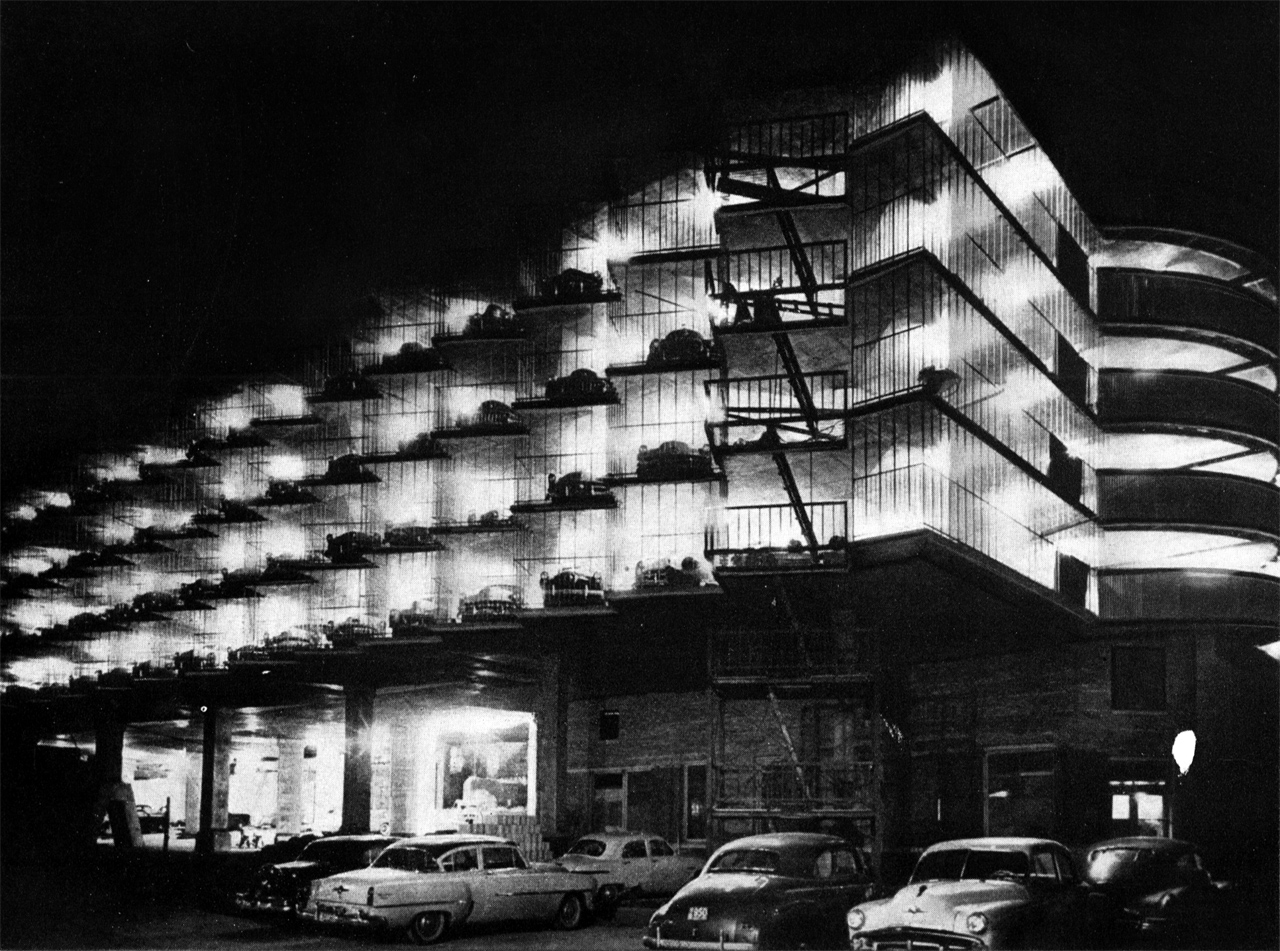
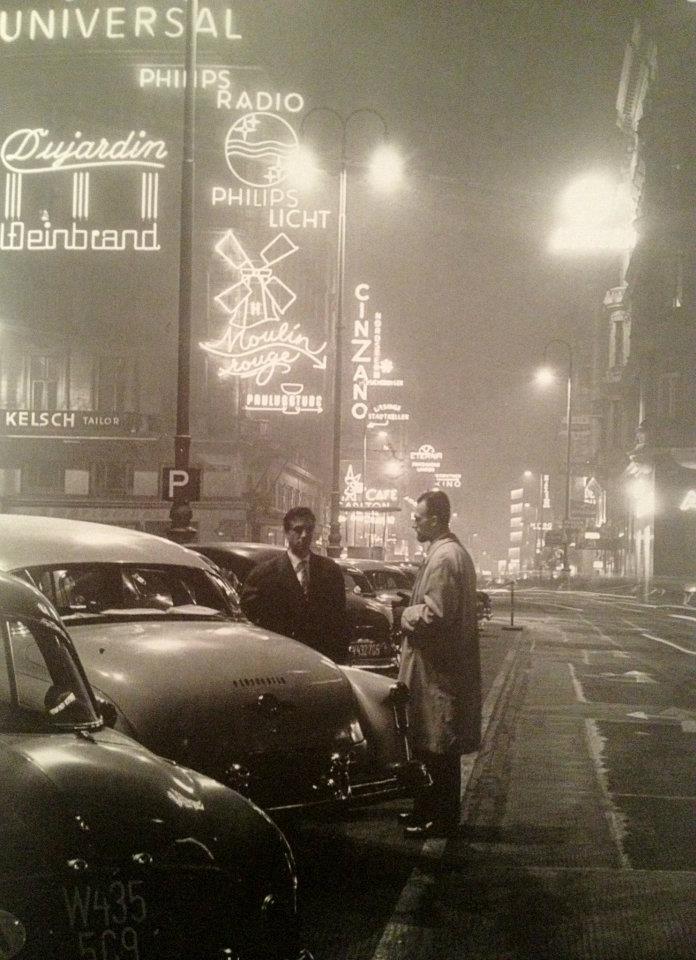
ZCMI (Zion’s Cooperative Mercantile Institute) self-parking garage at night, Salt Lake City, Utah. Image from Georges Blond: J’ai vu vivre l’Amerique, Librairie Arthéme Fayard, 1957
Capacity: 542 vehicles. Designed by L. G. Farrant
Both the garage and ZCMI, long a beloved and favorite department store, are now gone, but the store’s fabled cast-iron façade has been removed, renewed, and replaced several times as it remains a Salt Lake City landmark. Its first facelift took place when the ZCMI Center Mall was built in 1975.
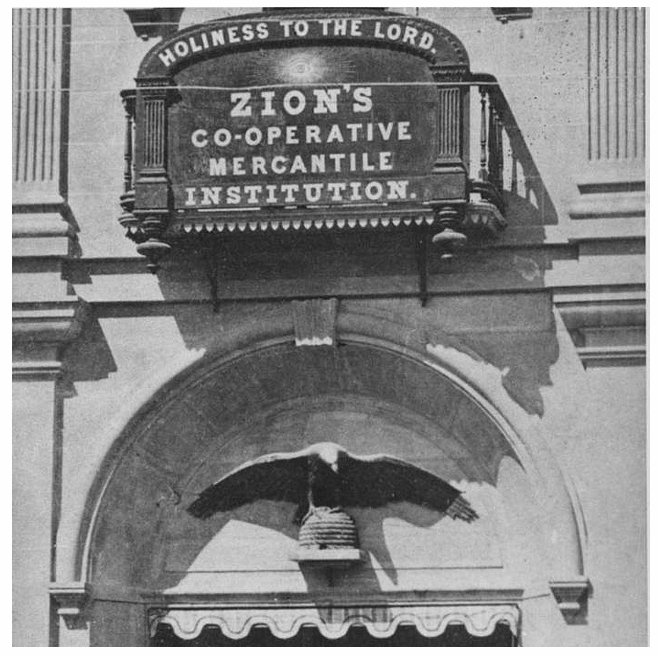
An early ZCMI marquee.
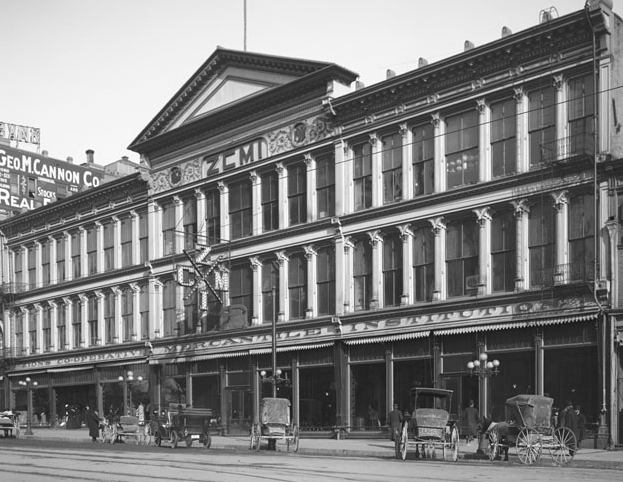
ZCMI, 1910
The ZCMI Center exterior, 1975-2007
ZCMI Center interior, looking west – 1970’s
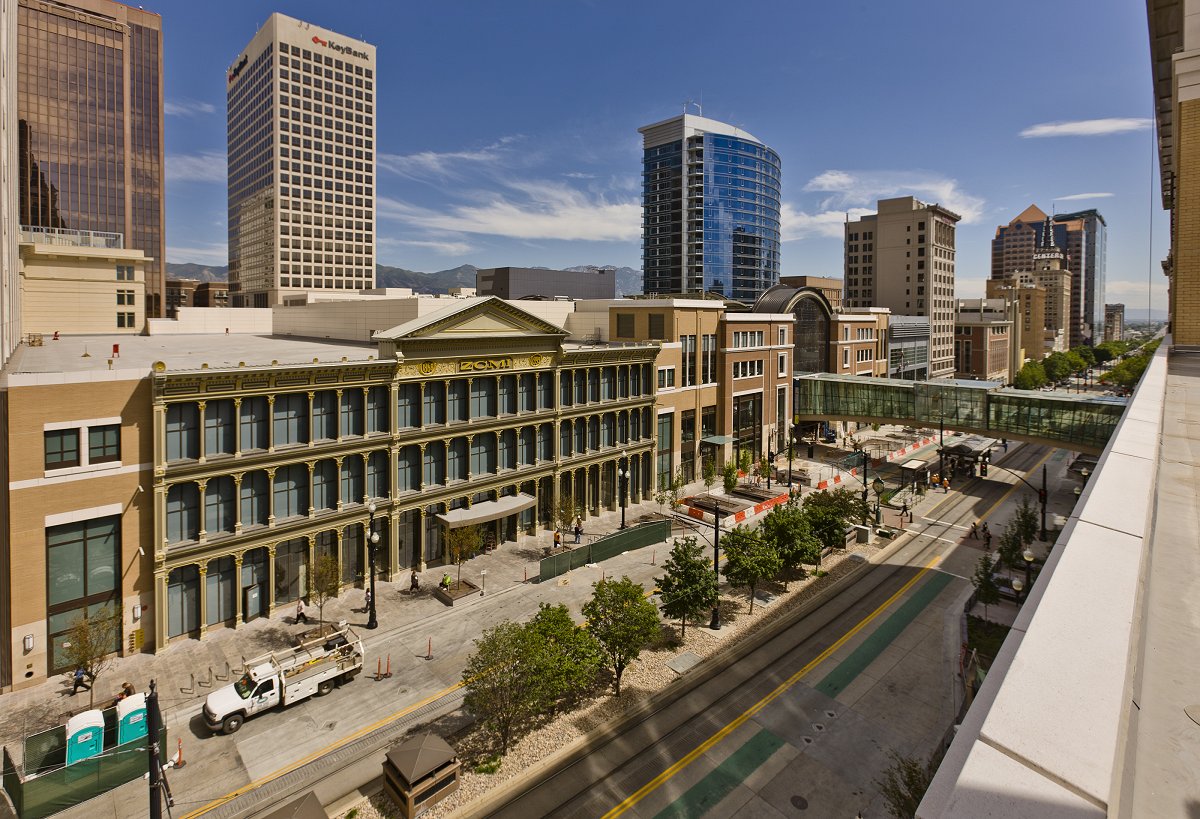
ZCMI was popular for good-quality merchandise at reasonable prices, paired with knowledgeable and competent sales help. Sadly, competing businesses in the area resulted in declining revenues, and the store was sold to May Stores (Now Macy’s, Inc.) It operated under the ZCMI name for two years before becoming Meier and Frank. in 2007, the ZCMI mall and the Crossroads Mall across the way were demolished as part of a 1.5 billion-dollar project co-sponsored by Salt Lake City and the Church of Jesus Christ of Latter-day Saints, which opened in March of 2012 as a multi-use center including retail, restaurants, business, entertainment and residential areas. City Creek itself, the original source of water for the 1947 Pioneers, was brought back to the surface and channeled through the development. The ZCMI façade was restored once more and now serves as a front for Macy’s.
ZCMI façade in its final completion stages, City Creek sky bridge behind.
Façade close-up
Façade detail
City Creek parking is now underground and includes capacity for 5,000 cars. You’ve come a long way, baby.
Besides Variety and the New Yorker (and a few other magazines,) National Geographic was a constant guest in our home.
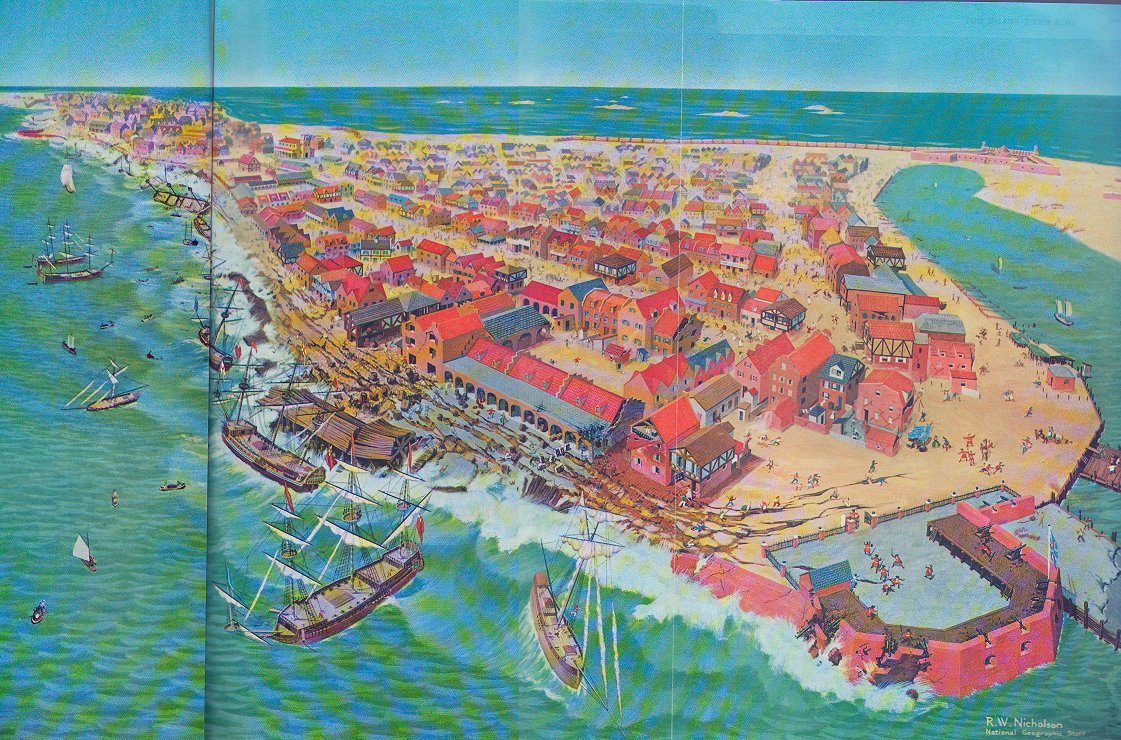
This is the first issue I ever remember reading, at what would have been the age of 9. The article about Port Royal particularly intrigued me. I was recently reminded of it again as a result of the Pirates of the Caribbean franchise, (Arr!) which made reference to the town several times (although most of the shots were taken on St. Vincent and not in Jamaica.)
Painting by Robert W. Nicholson. Click to enlarge.
Port Royal was a latter day Sodom and Gomorrah, and I remember reading this article over and over again, marveling at the force of nature that destroyed almost the entire peninsula, and in awe of the artifacts that were dredged up during excavations.
As the pink area on the map key above shows, not much of the then-existing Port Royal survived the devastating earthquake.
I used to have hundreds of Geo’s, but they’re heavy, and moving them was a pain. I have trimmed my collection down to the 30 or so which contained my favorite articles, but this one (another copy of which I recently acquired) I consider the foundation of my National Geographic experience. To this day it remains my periodical of choice.
Nedick’s was the Starbucks of the 50’s. Orange drink, doughnuts and hot dogs with a signature mustard relish. They were everywhere, even in little hole-in-the-wall joints down in the subways. I confess I like the fresh-squeezed places better down there, with the machines that would cut and squeeze oranges automatically, but Nedick’s is a treasured memory also.
Then there was Prexy’s. A local concern with just a few outlets in and around New York, they made hamburgers that were to die for. Little is known about the recipe that made them so good, but I remember eating there a number of times. Oh, those prices.
Prexy’s Matchbook
Prexy’s Logo from a China Plate
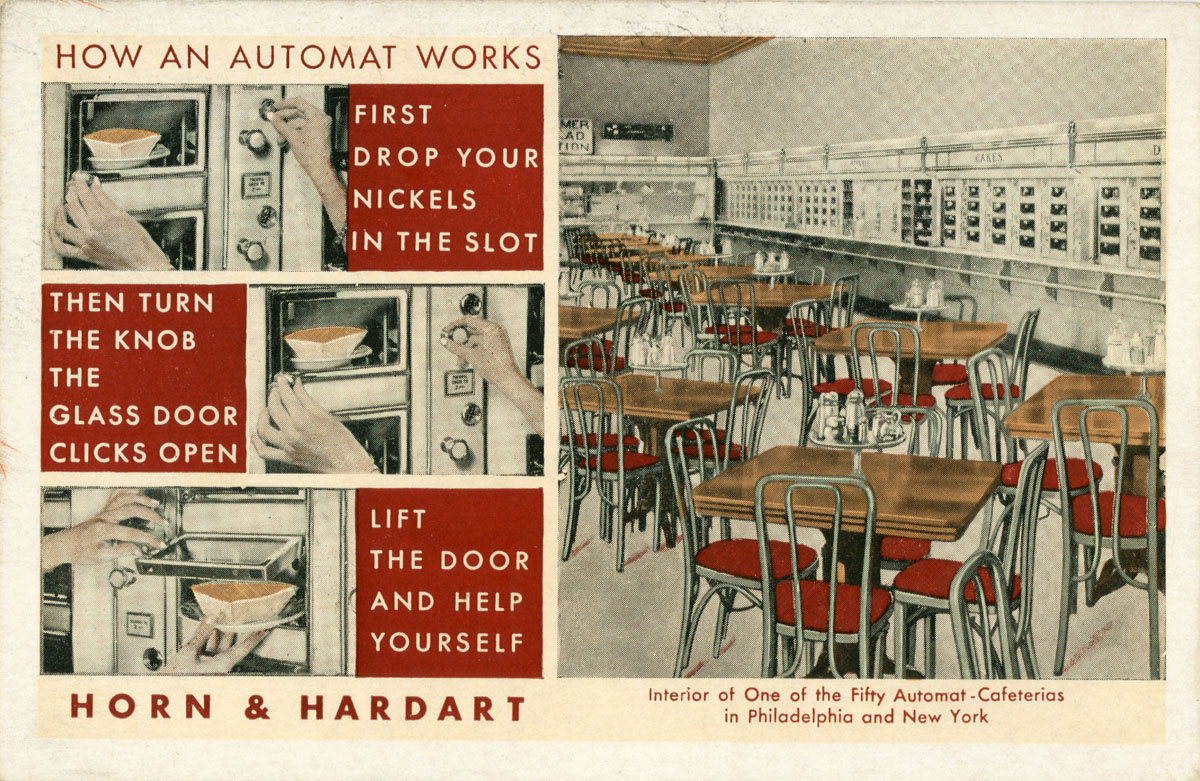
Last but not least, there was the Horn and Hardart Automat
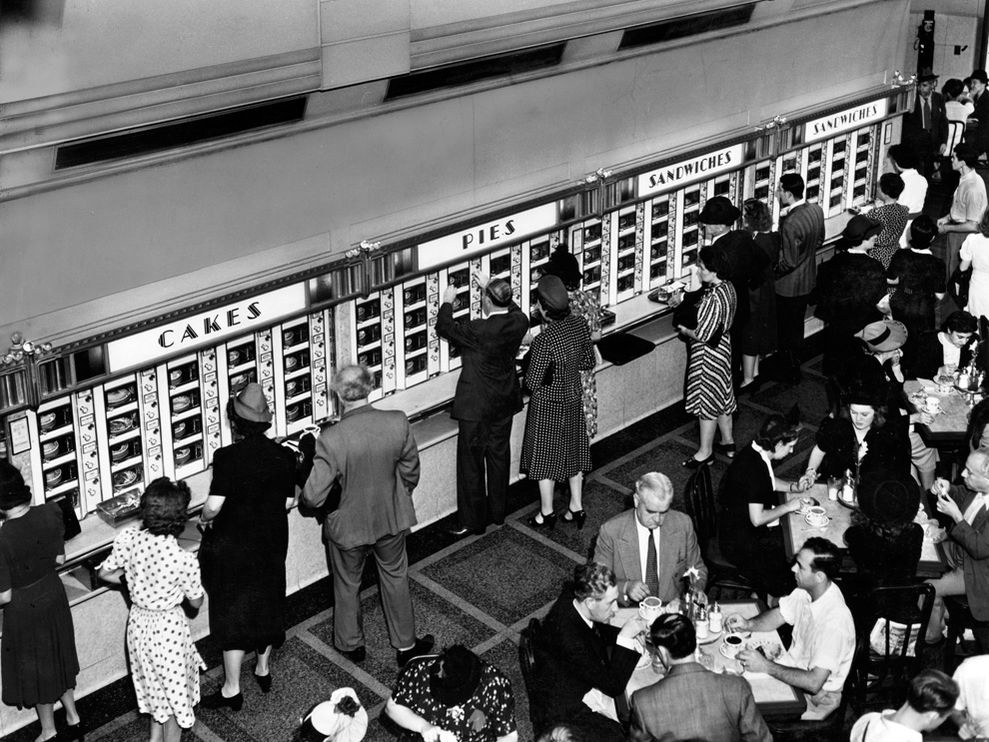
The Automat, 1942, by J. Baylor Roberts
For a kid in the 50’s, nothing was more fun than getting pie or drinks or that incredible macaroni and cheese at the Automat; you’d get your nickels at the booth from a nickel-thrower, ladies with rubber tips on their fingers who could fling out a dollar’s worth of nickels without blinking. I could stand there for hours watching the lazy susans rotate around when they were empty, only to reappear magically refilled with new offerings.
I scored a copy of this book which gives a fascinating history of the chain, including lots of recipes.
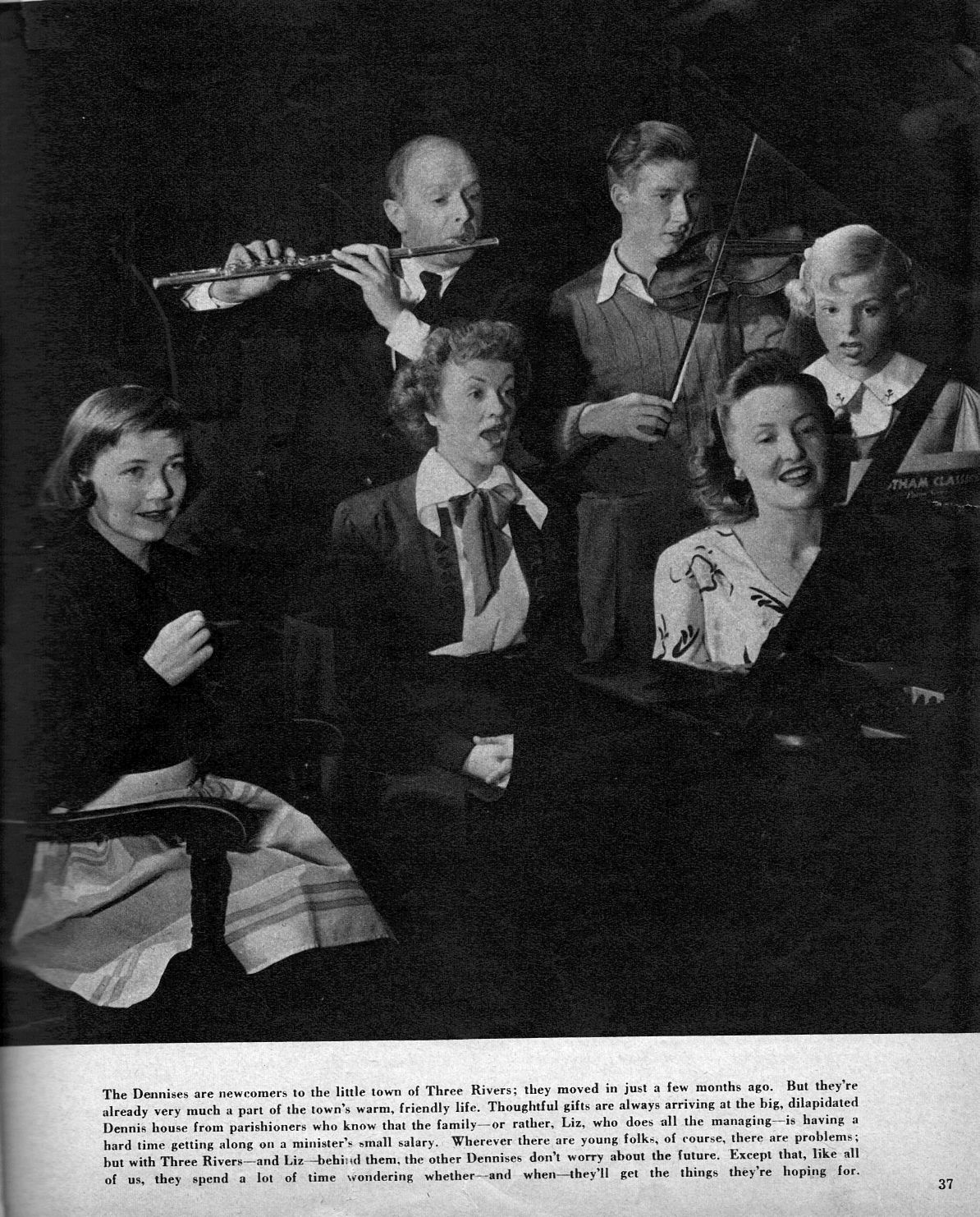
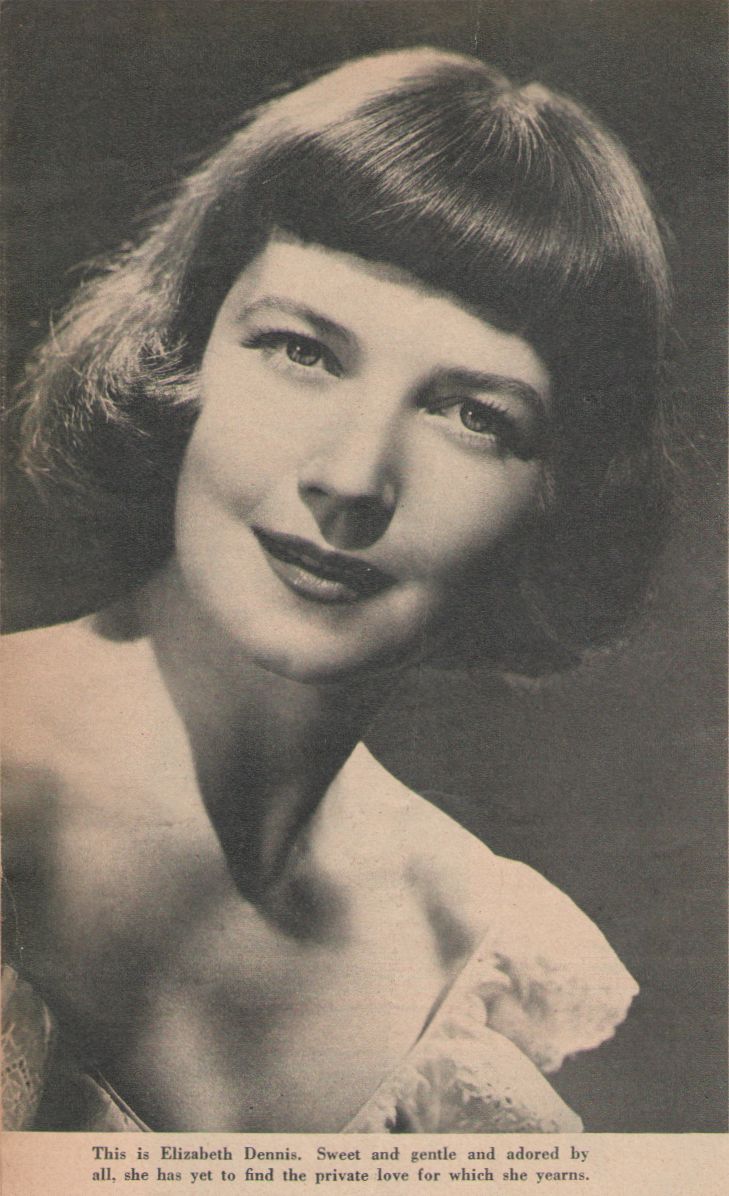
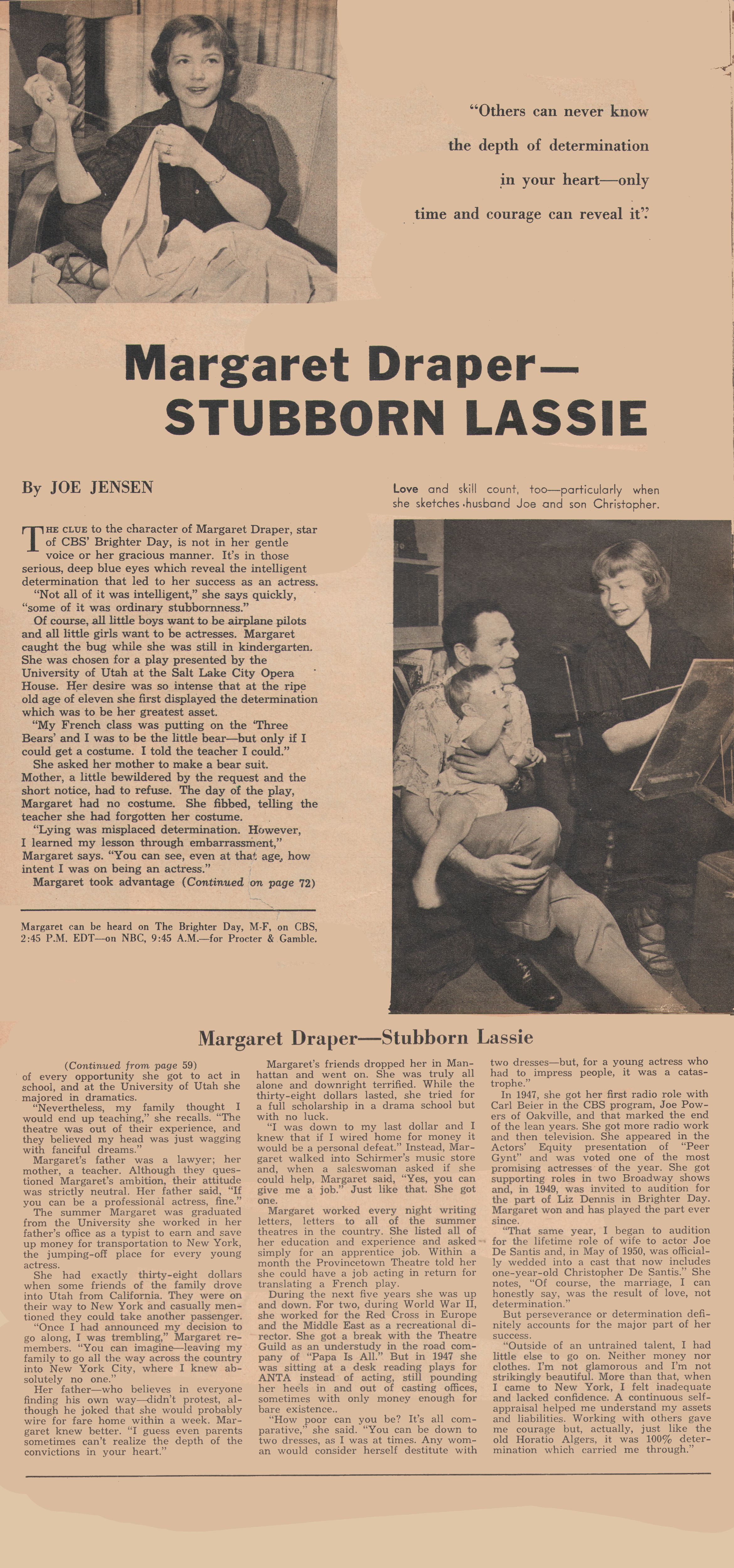
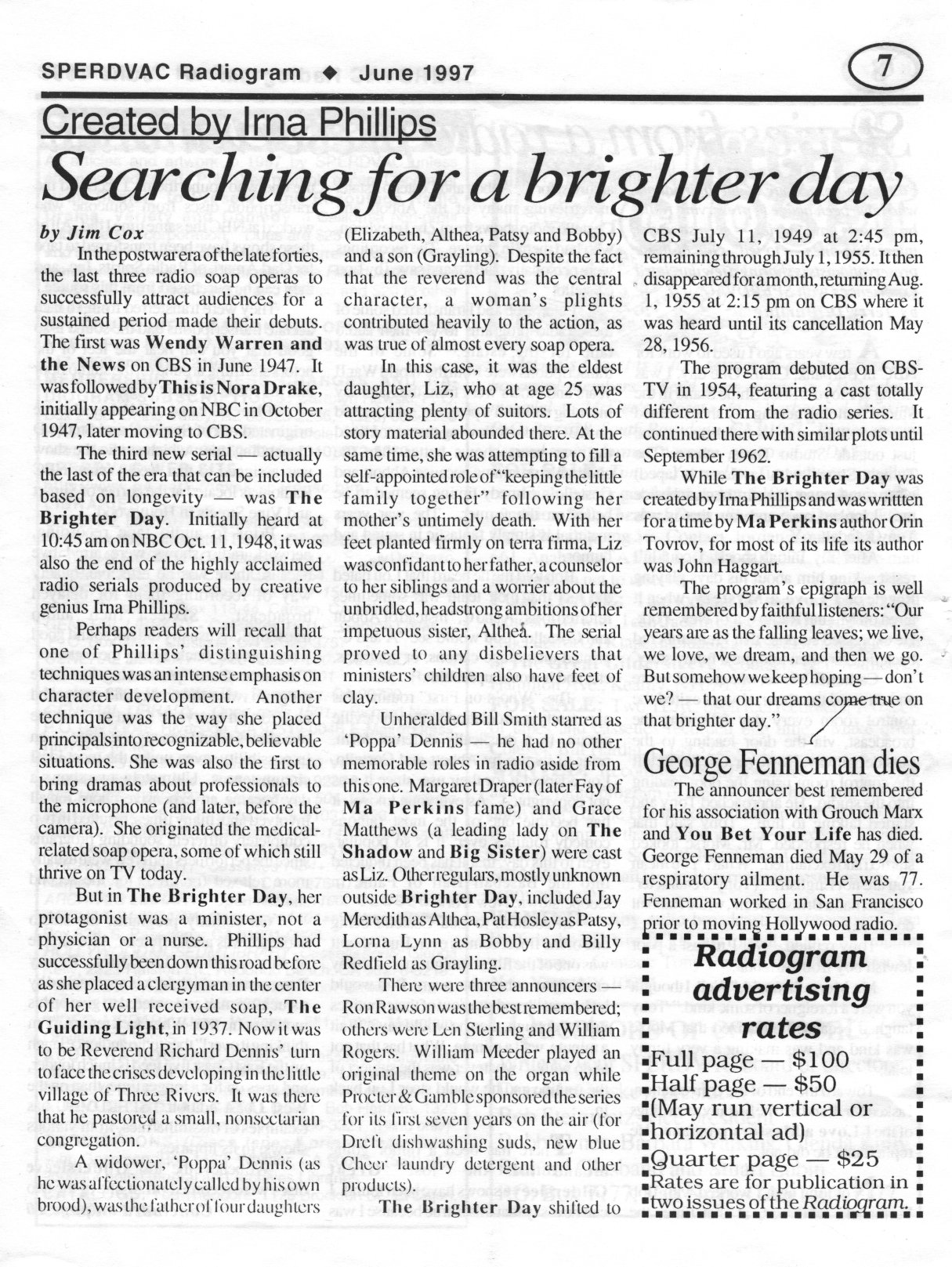
From 1948 to 1954, Margaret Draper played the part of Liz Dennis on The Brighter Day. It was one of her first significant breakout rôles, and led to a successful career in radio and later television, mostly in the advertising world.
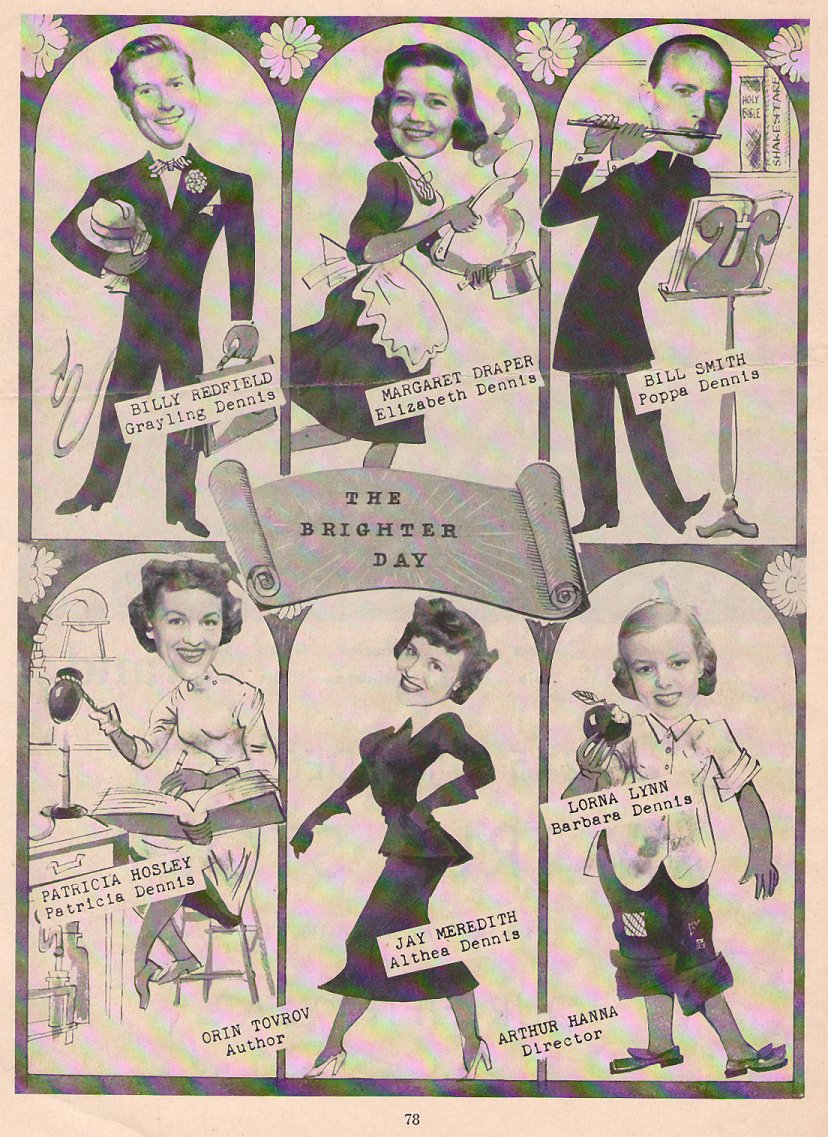
Radio-TV Mirror, May 1949 – Papa and Liz Dennis
Radio-TV Mirror, May 1949 – The Cast of the Brighter Day
Radio-TV Mirror, June 1950
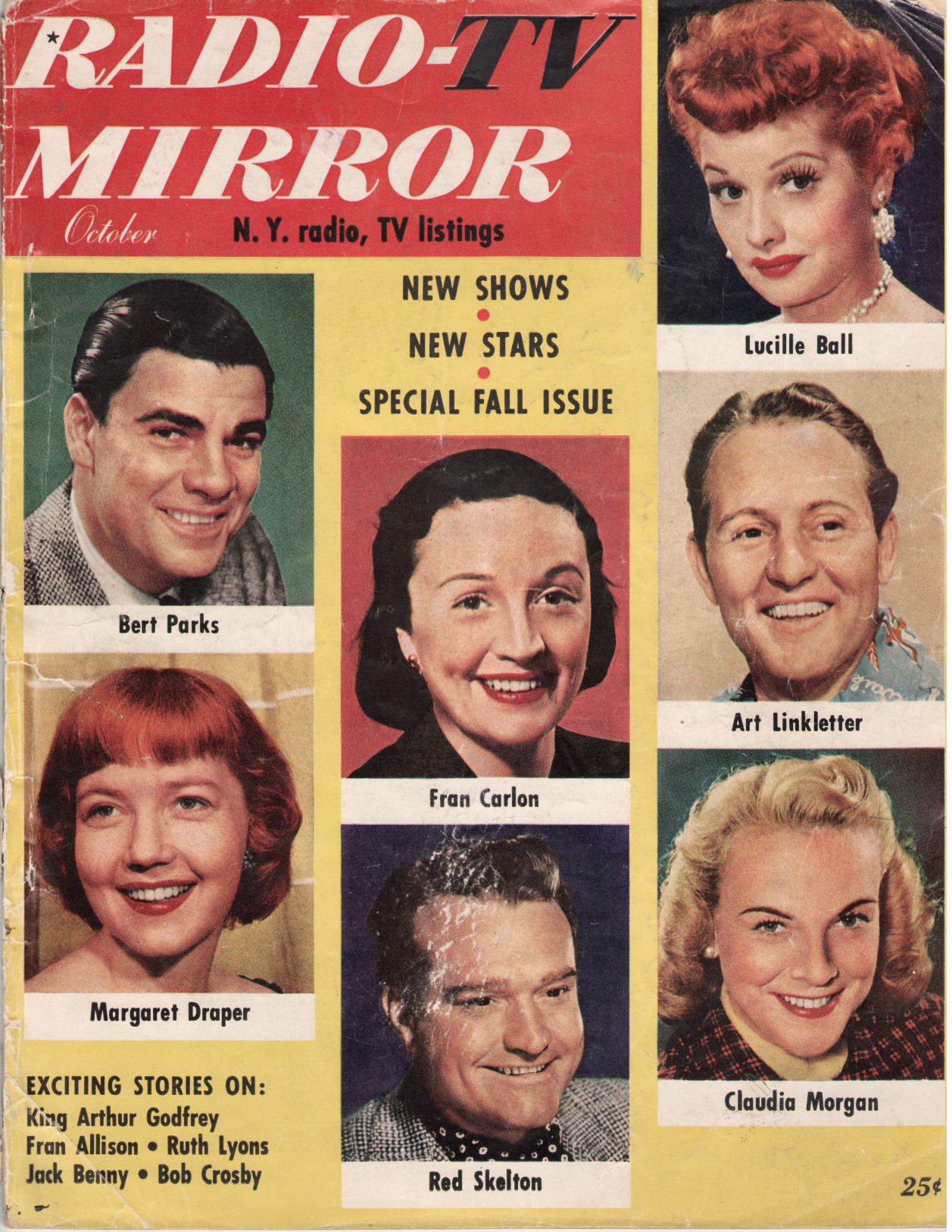
Radio-TV Mirror, October 1952
Radio-TV Mirror, October 1952
From Radio-TV Mirror, not certain which issue
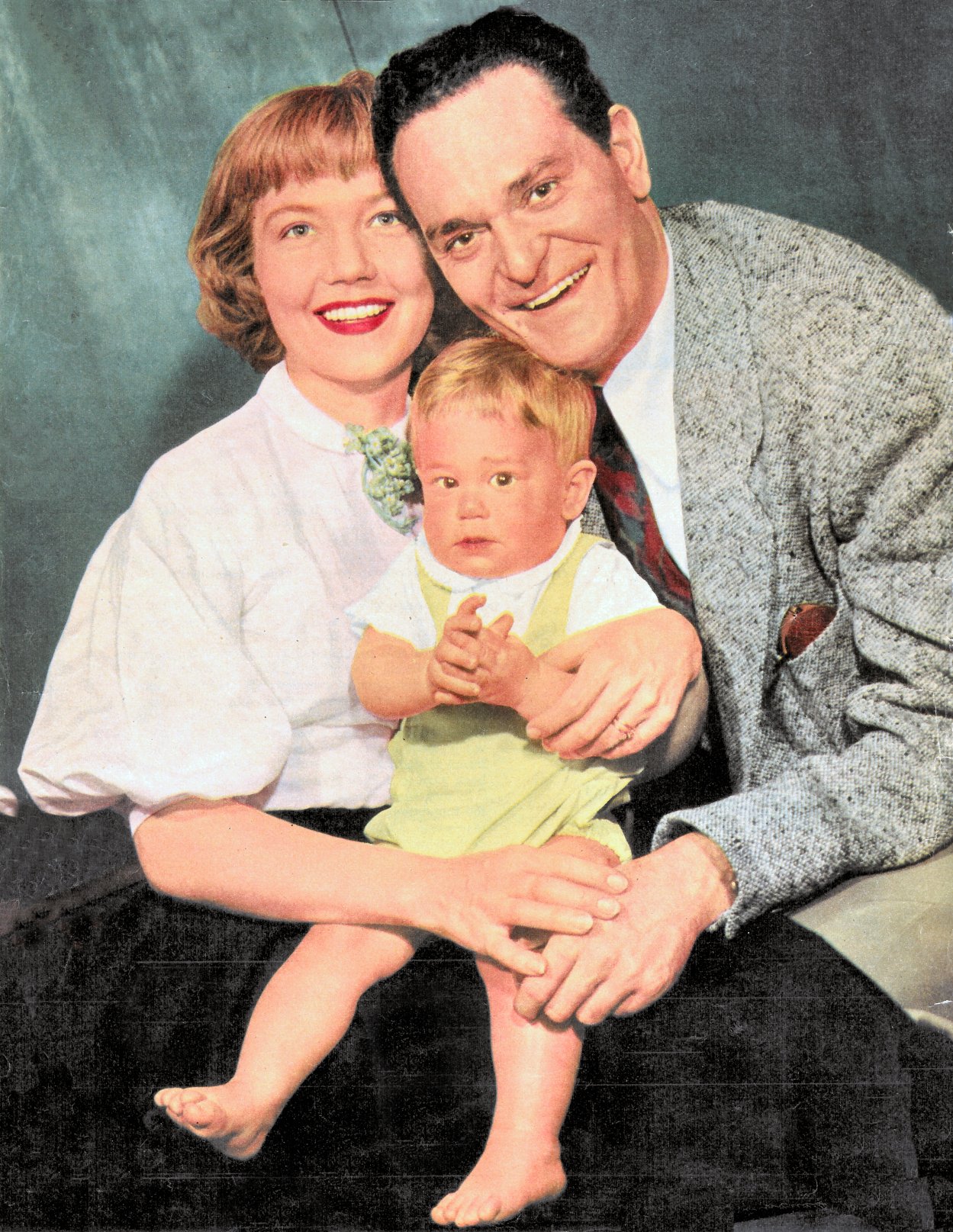
Margaret Draper, Joe DeSantis and their son
In 1999, the Friends of Old Time Radio convention featured a reunion of the Dennis girls, who with others put on a reader’s theatre featuring The Brighter Day, followed by a Q&A session.
Cast
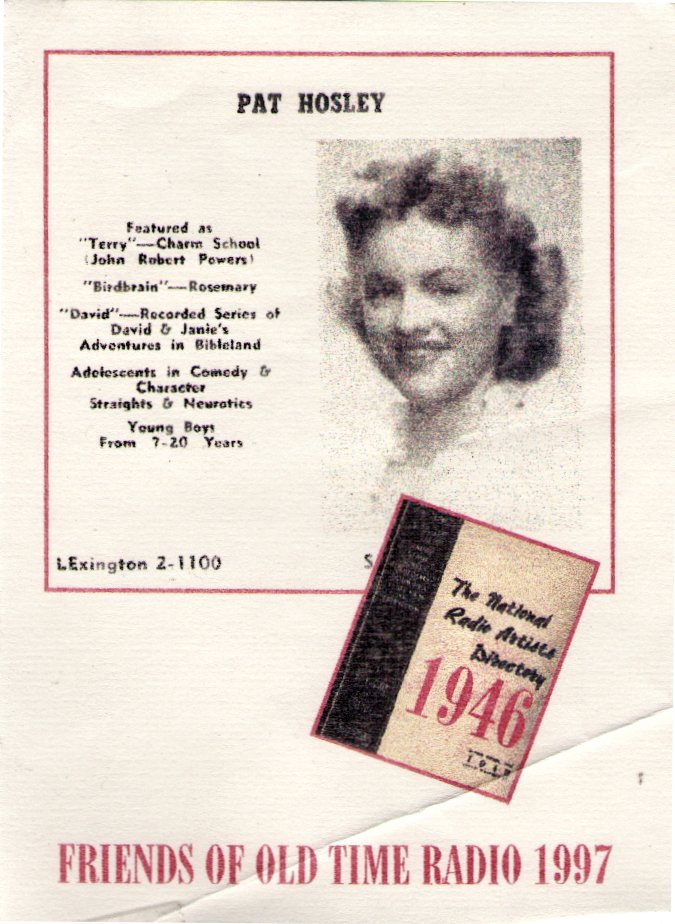
Patsy – Pat Hosley
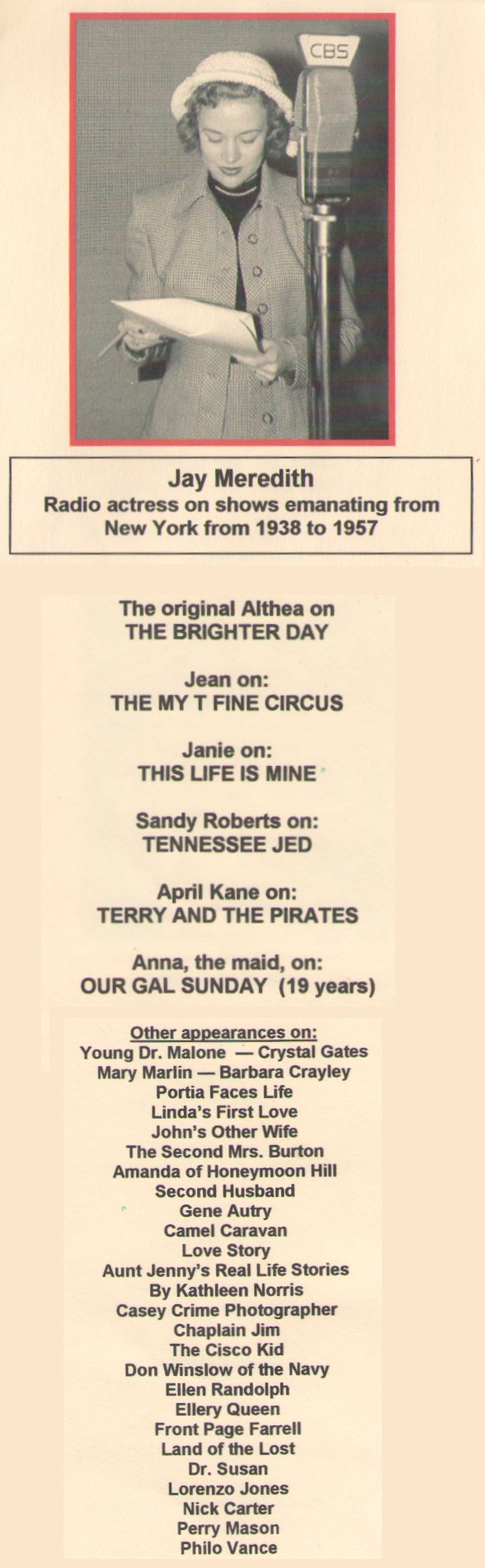
Althea – Jay Merideth
Liz – Margaret Draper
Papa – Leslie Pagan
Jerry – George Ansbrough
Narrator – Bill Owen
Sound Effects – Lynn Nadelle and Bart Curtis
Music – Ed Klute
Producer – David Segal
Director – Bill Nadell
Engineering – Bill Sudamack
The following two posters were displayed outside the convention room:
Pat Hosley
Jay Merideth
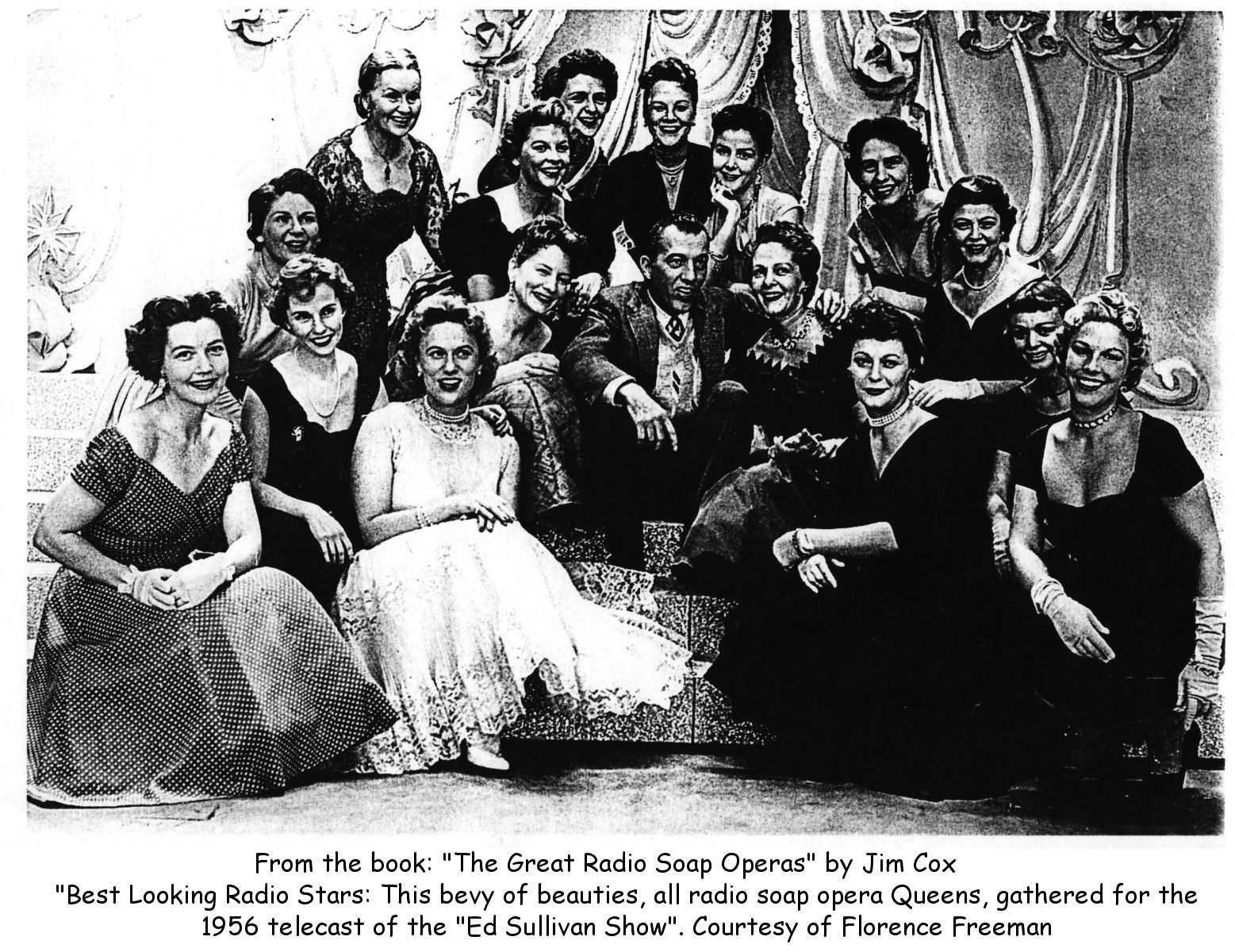
Radio stars at a “Ma Perkins” party. Brighter Day cast on the right.
Cast of The Brighter Day asks the audience to be kind.
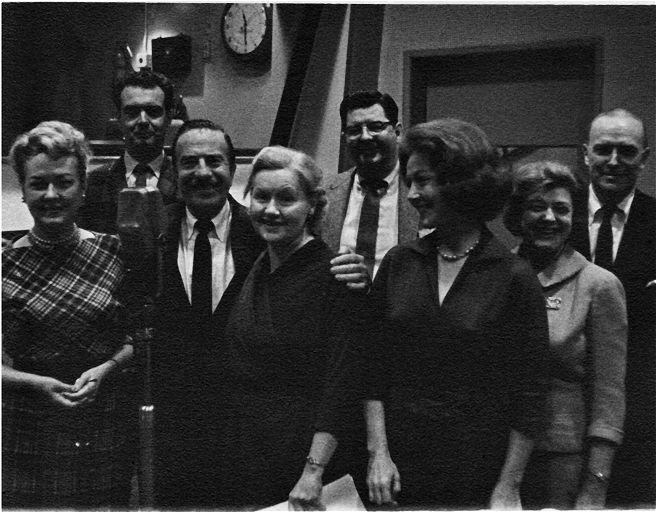
A later photo of the Brighter Day cast, looks like around 1960.
Margaret Draper, front row, Left.
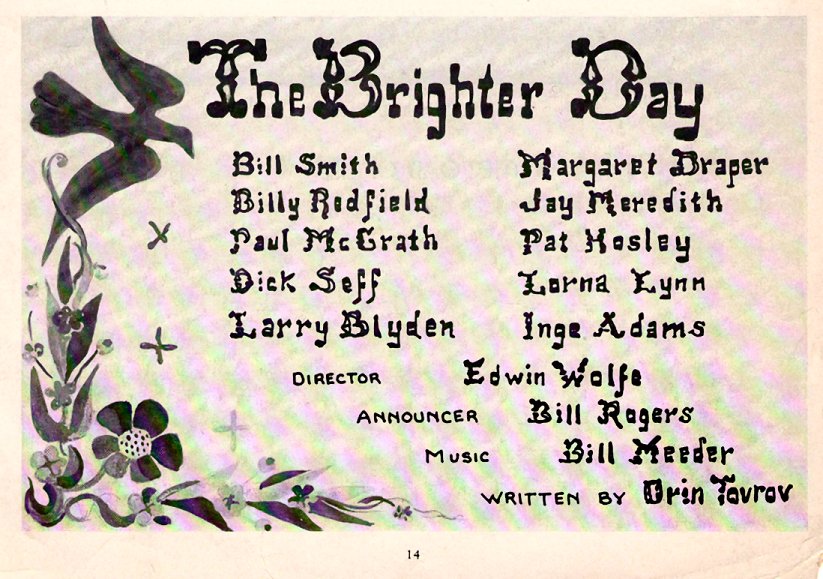
Trade magazine advert for Brighter Day
Trade magazine advert for Brighter Day
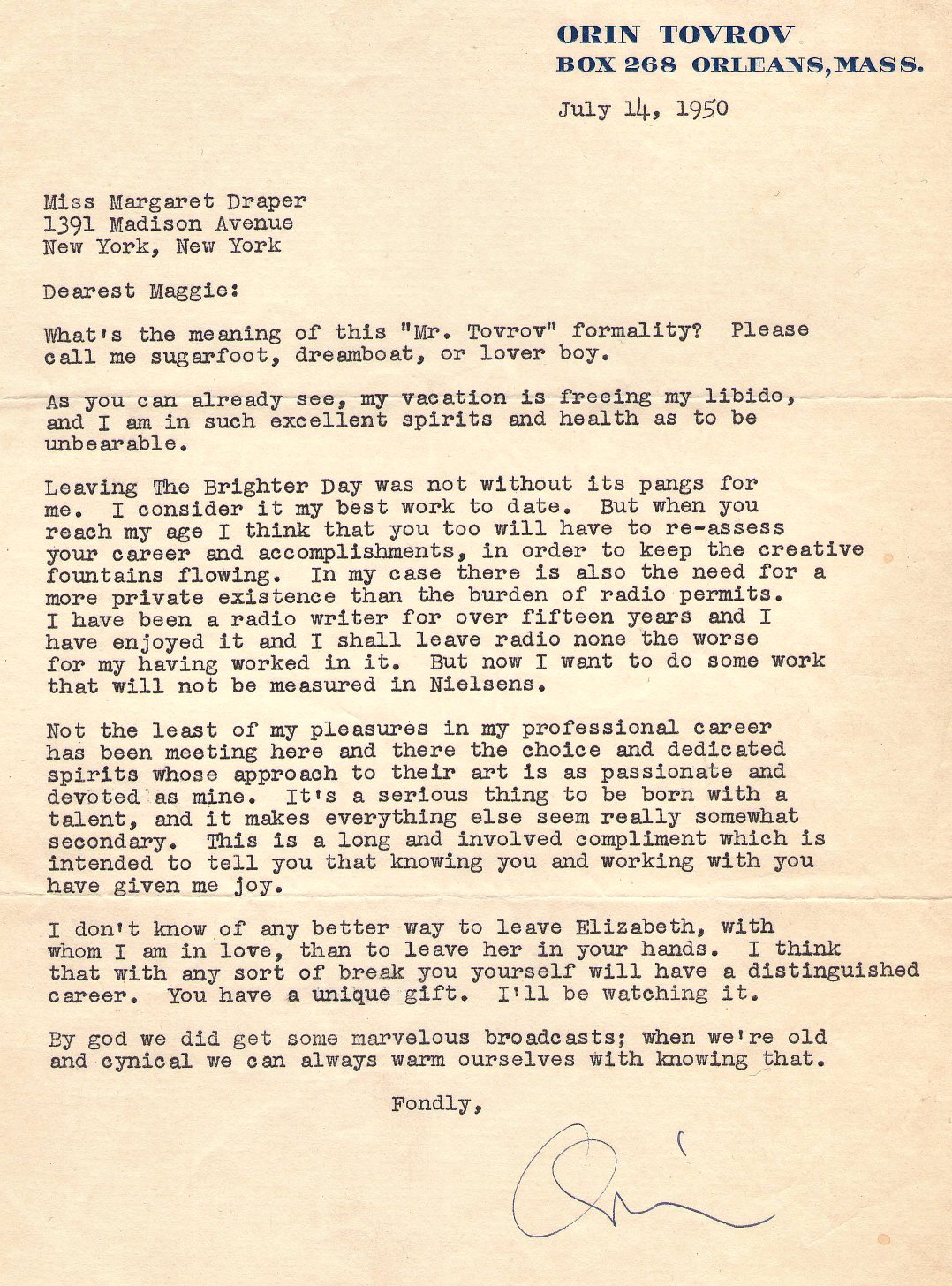
The writer of Brighter Day for many years, Orin Tovrov, had a special fondness for Margaret, and vice versa. Here’s a letter Orin wrote to Maggie on the occasion of his leaving Brighter Day in 1950:
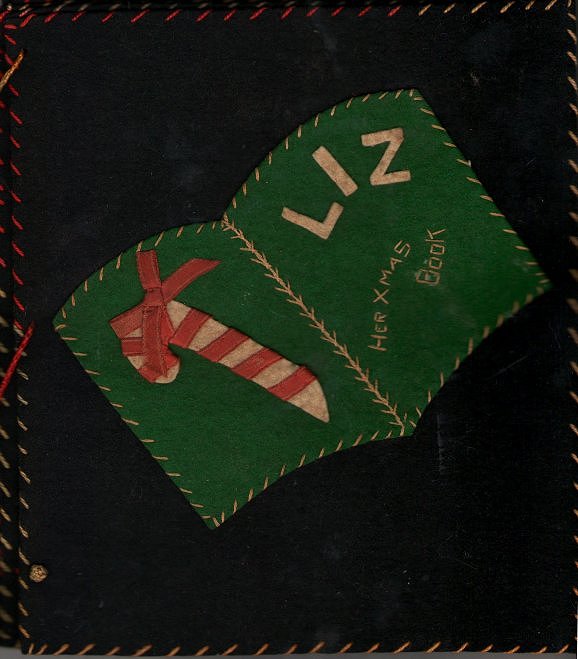
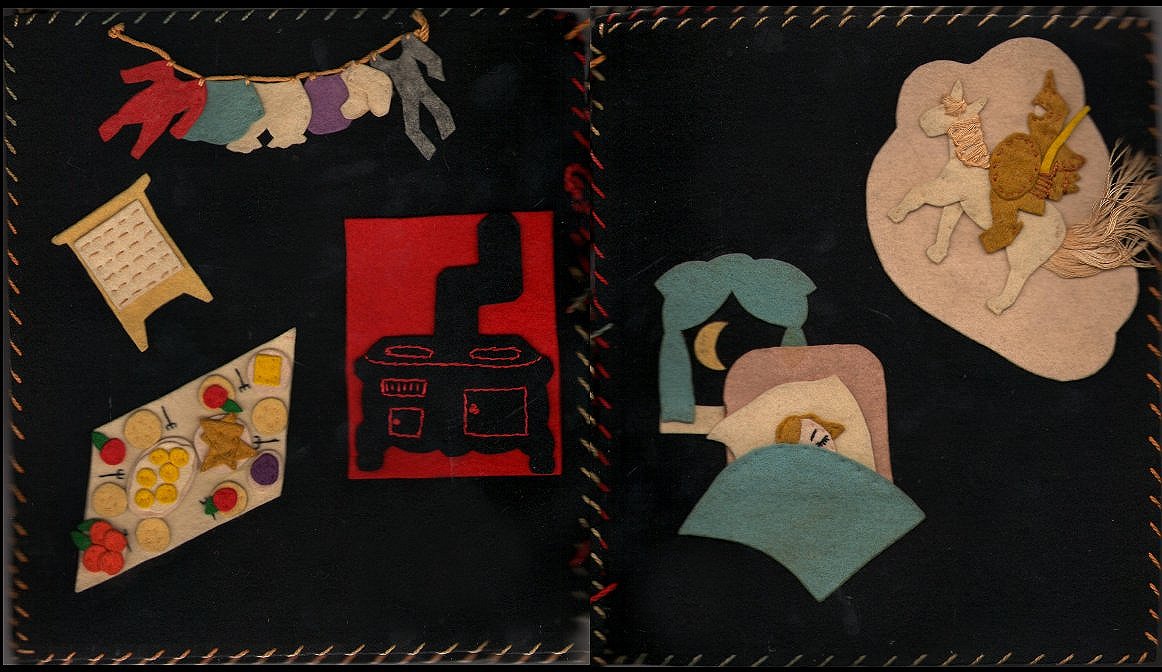
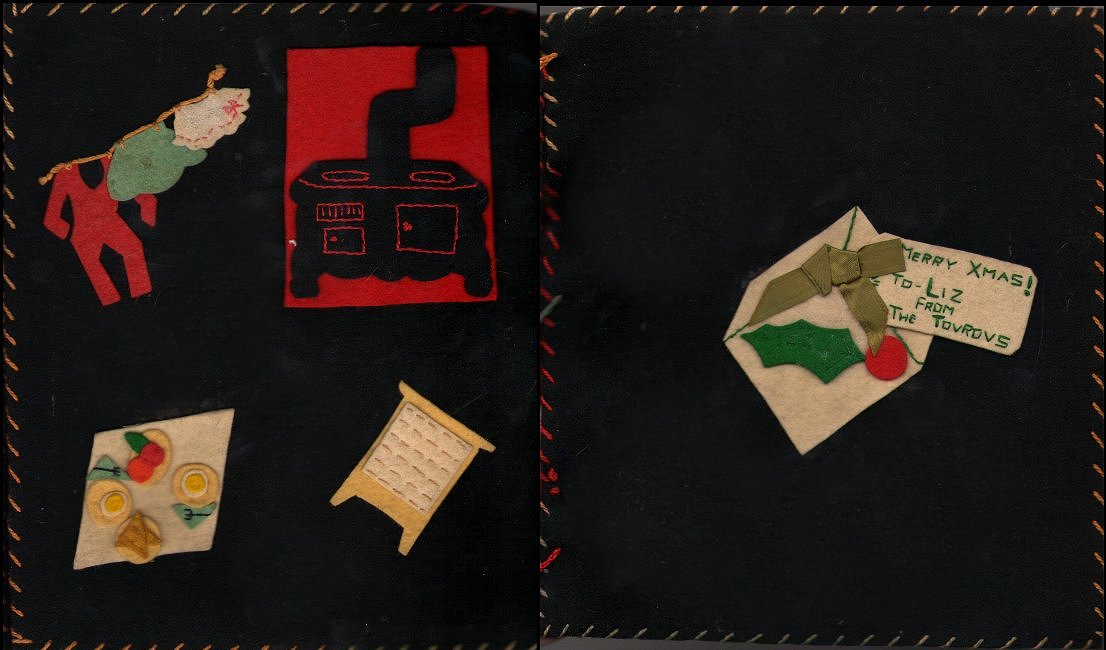
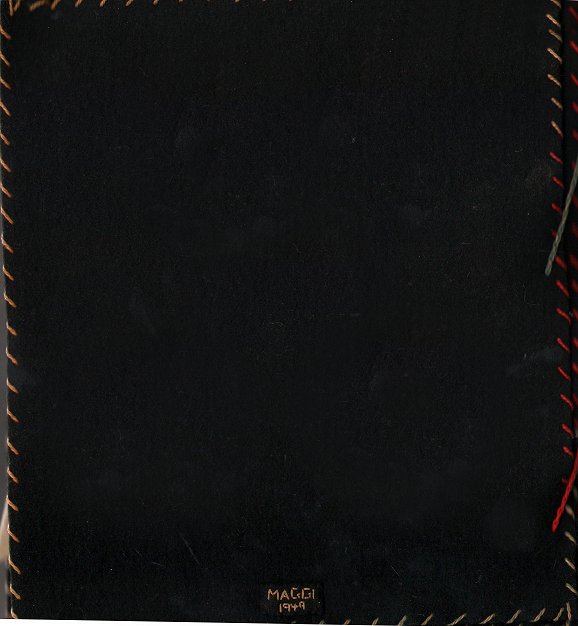
A very gracious letter. A further indication of the Tovrovs’ respect and appreciation for Margaret’s work as Liz Dennis is found in this beautiful felt book made for “Liz” at Christmas, 1949. It must have taken many hours to create. I loved this book as a child – I could look at it for hours, and it almost acted as a sort of “quiet book” if memory serves.
Front Cover
Attending Church (The missing piece is the Hymn Board; Daily Food and chores.
Liz dreams of her Knight in Shining Armor
Which one will it be? Finally married! Notice the reference to older sister Marcia, who had married and left the family before the show began. She never appeared on-air.
More home life; Christmas label
Back Cover
More about The Brighter Day can be seen in the following Links:
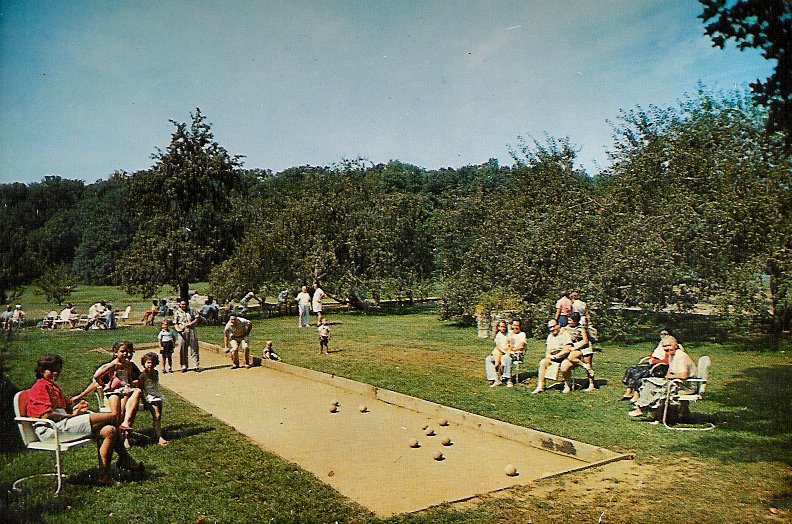
In the 1940’s, 1950’s and to some extent into the 1960’s, the Catskill mountains of New York were home to a conglomeration of hotels, bungalows and cabin communities that became known as the Borscht Belt. After my father’s first marriage dissolved, his ex-wife married a Frenchman, Andre Lavielle, and opened a resort in Patterson, NY modeled on the same idea and called it Le Robinson. Miriam was the descendant of Russian Jewish immigrants; it’s unclear whether the clientele came from the same Ashkenazi Jewish population of New York that made the Catskill resorts so popular, or whether they catered to an Italian clientele (the resort featured bocce courts), but the general idea was the same – a place to get away from the City and relax.
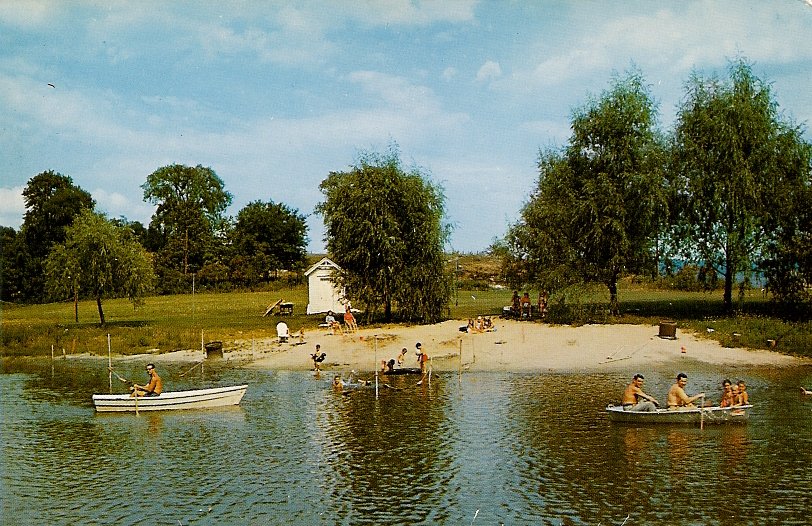
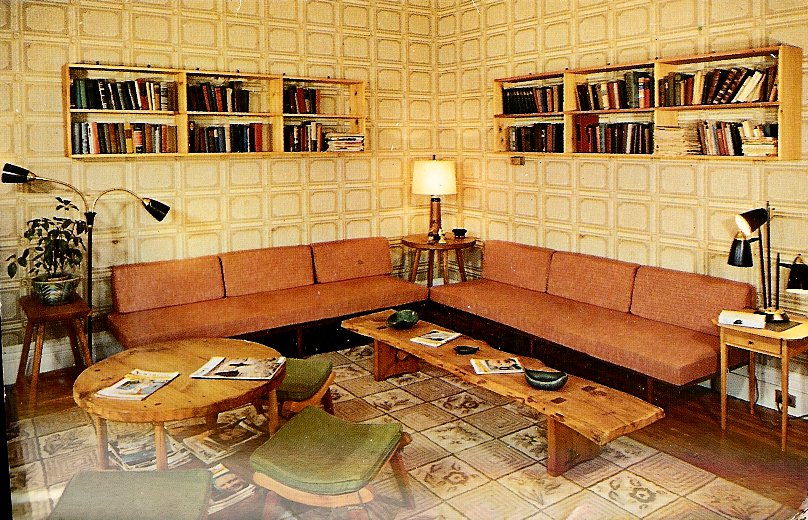
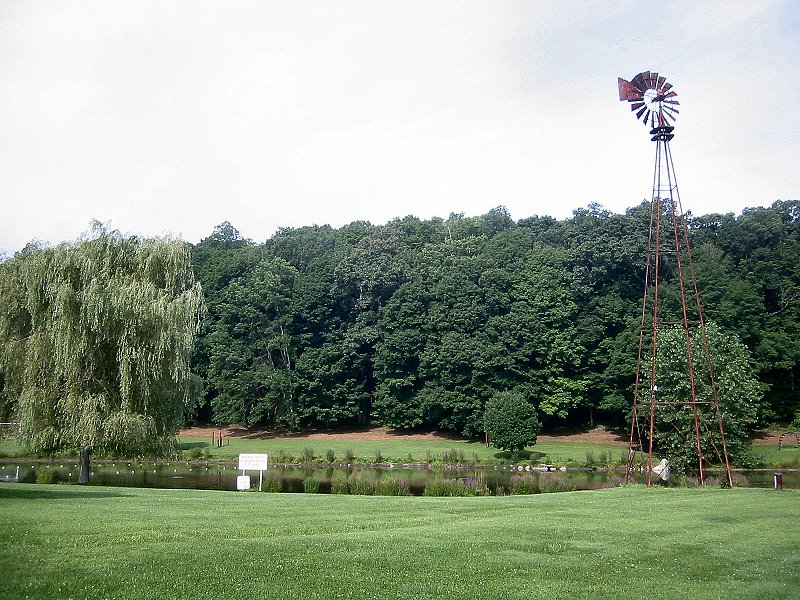
I still have memories of visiting the place; the library, table-top shuffleboard games (metal pucks lubricated by some sort of sand), the windmill, the boating pond, and sitting on the screened veranda while an early bug-zapper incinerated unwelcome guests.
Le Robinson farm was located on Maple Avenue [in Patterson, NY], and was the former home of Jacob Stahl, best known as the owner of the Putnam Cigar Factory and other buildings in the village of Patterson. The house was a four story frame structure that was built in the fall of 1896, and was a showplace in Patterson when it was built. The property had two or three owners after the death of the Stahl family, and in the late 1950s was owned by Miriam M. Lavielle and Andre Lavielle. The Lavielle’s operated the house as a French restaurant and boarding house known as Le Robinson. The house had room for 50 guests, and there were cottages located on the adjoining property.
Mrs. Lavielle was instrumental in the formation of Boys and Girls Scout programs in Patterson in the 1950s, and was a member of the HAGS social club that sponsored many activities that benefited community programs in Patterson. She was also a president of the Parent-Teachers Association. She was born in New York City in 1913, and died after a long illness at the age of 45 on August 5, 1959.
Andre Lavielle continued to run Le Robinson after the death of his wife, and resided in one of the cottages with his stepson. An early morning fire destroyed Le Robinson in February, 1960. The fire was discovered shortly after midnight, and had already spread through the wooden structure. The blaze could be seen for ten miles. The house was unoccupied. The Patterson Fire Department was summoned, and ran hoses to the nearby pond, but had trouble directing the water on the fire as high winds diverted the spray from the hoses. The winds sent sparks in the direction of the cottages, but they did not catch fire. Patterson Supervisor William Millar had a brush with death when he stepped on a live electrical wire that had fallen on the ground. He warned firemen and spectators away from the wire until power could be cut. The property was purchased byt the town of Patterson for use as a park.
Andre Lavielle also owned the Chez Andre Restaurant, located on NYS Route 22.
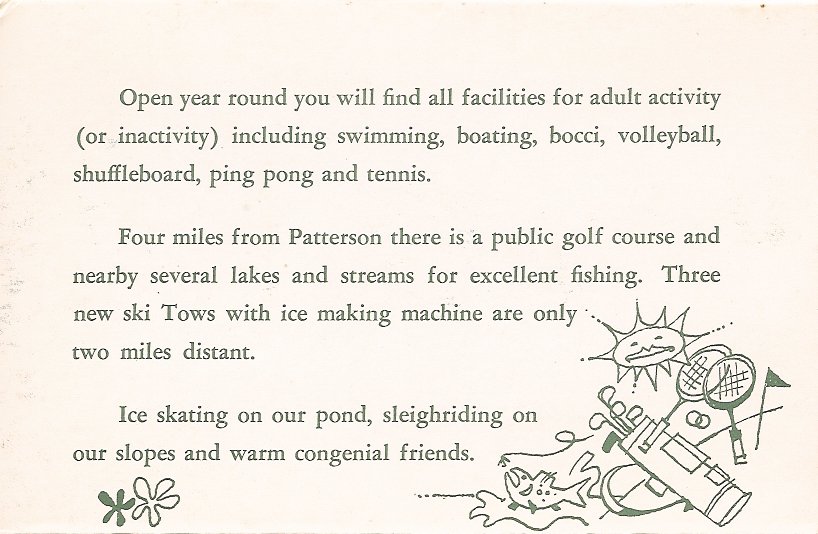
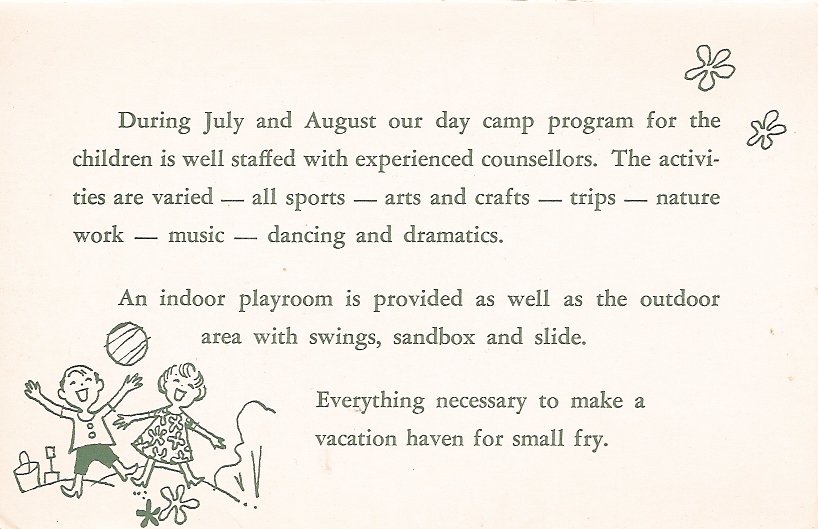
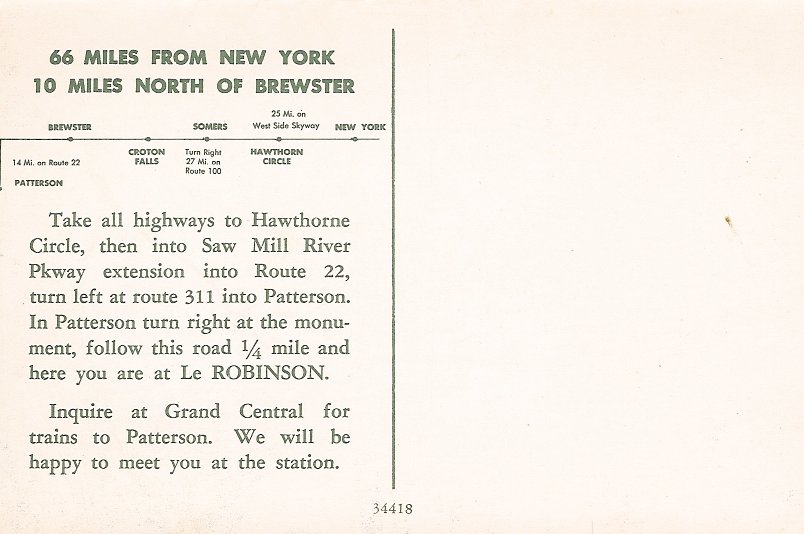
Among my father’s papers was this brochure, which gives an idea of what the resort looked like:
The Main House
From left: Louise and Walter Schloss, Unknown couple, Abe and Shirley Goldshlag
The boating pond with one of the beaches; in boat at left, Charles Martens who was a counselor there in 1957.
Lounge and Library
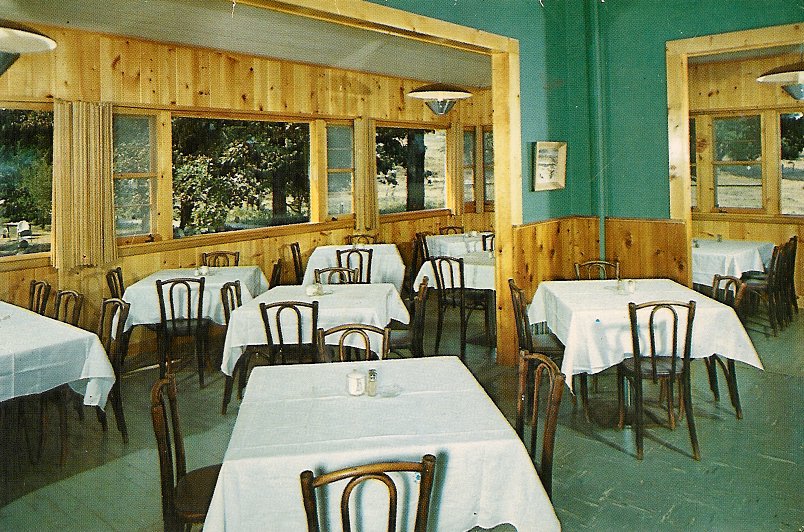
The Dining Area
Bocce Court
On the extreme right are Jane Moskowitz and next to her Andre’s mother Angele who was visiting from France. In the back you can see Al Seymann and Nat Rothenberg.
Brochure Cover
Today the property remains, but has been transformed into a memorial park for veterans. It has been well-cared for and is a pleasant and attractive place, still used by families in the neighborhood.























 Playing in the World Game