Chemical Warfare

I am deeply indebted to the twisted mind of Dru White, a former colleague of mine, for this bit of whimsy. If you enjoy it as much as I did, you have only yourself to blame.


Chemical Warfare

By Dru White

Of course you passed high school chemistry. Maybe you even made a through a college course or two. But a little knowledge is a dangerous thing–especially when it comes to chemical  equations. See if you can keep yourself and others alive for the next ten days. All it takes is a little knowledge of chemistry. Mark your choices, then check the answers to see if you know enough to survive.

DAY ONE:

You are at home cooking and suddenly a fire starts on the top of your stove. You are frightened and look for a quick way to douse the flames. There are three jars containing different chemical compounds on your cupboard. Which do you. toss onto the fire?

❑ A) NaHCO3                      ❑ B) CS2                             ❑ C) C7H3.

DAY TWO:

Some of your food keeps getting a bit of mold on it. You search for a compound that will help prevent the mold, but won’t hurt you when you eat the food. What is best to put on the food?

❑ A) As2O3                           ❑ B) C17H23NO3                 ❑ C) C3HsO2Na.

DAY THREE:

You have developed a bit of an infection. You really should take something for it before it gets any worse. What would you like to have?

❑ A) C9H11N2O4SR              ❑ B) C6H6Cl6                      ❑ C) C17H21NO4

DAY FOUR:

Your allergies have been acting up again, and you have a bad insect bite on your arm. You need some medication with a good compound to help that allergy, and an ointment with something to make that insect bite feel better. You want plenty of which compound in your medication?

❑ A) H2SO4                          ❑ B) C18H21ClN2                 ❑ C) C20H12

DAY FIVE:

When you ride the ferry across the bay you sometimes experience a little nausea. A drug with something to help you feel better would be nice. After all, nobody likes to feed the fish. Which will you take?

❑ A) CH2FCOONa              ❑ B) C17H19N2SCl               ❑ C) C19H26ON2

DAY SIX:

After examining one of your more careless patients, you conclude that this person has a case of gonorrhea. You go to your locked cupboard and find three possible forms of medication. Which do you choose to administer to the anxious sufferer?

❑ A) C6H8N2O2S                  ❑ B) C21H22N2O2                ❑ C) C10H14N2

DAY SEVEN:

You stop by the local fast food restaurant and pick up some french fries. They seem somewhat bland today, so you grab something from your laboratory shelf to sprinkle on them. Which did you grab?

❑ A) NaCN                          ❑ B) KCN                           ❑ C) NaCl

DAY EIGHT:

So you’re going to the beach for a little sun. To which kind of compound do you choose to expose your sensitive body so that you won’t get sunburned?

❑ A) HCl                              ❑ B) CH3COSH                  ❑ C) C6H4NH2COOC2H5

DAY NINE:

You are very concerned. The vet told you over the phone that it sounds as if Fido has parasites. There must be something fast and effective to make him more comfortable. What will it be?

❑ A) HCN                            ❑ B) C10H8O                       ❑ C) CCl3NO2

DAY TEN:

Well, doctor. Here it is your last day. A patient has a bleeding problem during an operation. What kind of compound do you wish to administer to make the blood coagulate better?

❑ A) Cl5H16N3SClAnCl2      ❑ B) C15H15N2CON(C2H5)2                    ❑ C) C6H5COONa

 END OF TEST


CHEMICAL WARFARE ANSWERS

Give yourself a point for each correct answer.

 DAY ONE:

(A)     Good choice. You got the fire out by smothering the flames with ordinary baking soda. It looks like you will make it to day two.

(B)     Sorry, but carbon disulfide is a highly flammable, poisonous solvent. I’m afraid you haven’t made it through the first day.

(C)     Whoops. Toluene is a flammable, poisonous hydrocarbon, originally from the balsam of Tolu. It is used as a solvent, and to make dyes and–ah, yes–even explosives.

 DAY TWO:

(A)     Arsenic trioxide will simply not fill the bill. However, this arsenic compound is great for exterminating insects and rodents.

(B)     Oh, my. If you picked this one you are in big trouble at mealtime. Hyoscyamine is a very poisonous alkaloid. No time to call the doctor.

(C)     Correct. Sodium propionate is one of your standard mold preventives.

 DAY THREE:

(A)     Congratulations. Penicillin has been the choice of many doctors for years now.

(B)     I don’t think you will see much improvement. This powerful and poisonous insecticide, benzene hexachloride, just doesn’t seem to do the trick.

(C)     Why not? Who knows, maybe a little cocaine will help your infection. (But I have my doubts.)

 DAY FOUR:

(A)     Ouch! And double ouch! I don’t think sulfuric acid will have the desired effect. Though it is good for making dyes, paint, and explosives, I’m afraid its corrorsive nature may not promote healing.

(B)     Good choice. Chlorcyclizine is an antihistamine for allergies and is also used in medication to sooth insect bites.

(C)     Benzopyrene, which comes from coal tar and cigarette smoke, has been found to cause cancer in laboratory animals. You struck out on this one.

 DAY FIVE:

(A)     Sorry, you’ll never squeak again. Sodium fluoroacetate is a powder used as a highly effective rodent poison.

(B)     Chlorpromazine is the correct choice. In addition to its use to control nausea, this compound is also used in medication to help treat certain mental disorders.

(C)     Wrong. Curarine is a toxic alkaloid made from a South American plant. Natives use the poison on the tips of their arrows.

 DAY SIX:

(A)     Good choice, doctor. Sulfanilamide is used to treat streptococcal infections.

(B)     Sorry, it looks like malpractice time. The strychnine you administered. seems to have cured your patient’s problem permanently.

(C)     Nice try, but nicotine is not commonly used to treat this type of disorder. In fact in this pure form it’s rather fatal.

 DAY SEVEN:

(A)     Negative. Though sodium cyanide is also a salt, it is highly poisonous one. I hope you have a valid will.

(B)     You couldn’t have done much worse. Potassium cyanide is an extremely poisonous compound. It is used for extracting gold, electroplating, and as an insecticide. But it just doesn’t go well with fries.

(C)     That’s correct. Common table salt is the best and safest choice.

 DAY EIGHT:

(A)     This will be the worst sunburn you’ve ever had. Hydrochloric acid can even be worse than the sun’s harmful rays.

(B)     Sorry. If you try putting this allover you, you won’t feel so comfortable, but you will probably have plenty of elbowroom on the sand. After all, tear gas (thioacetic acid) usually keeps crowds back quite well.

(C)     That’s right. Benzocaine is also used as a local anesthetic.

 DAY NINE:

(A)     Well, Fido is gone to that big pound in the sky. Hydrocyanide acid is used as a fumigant. This poisonous gas just doesn’t go well with pets.

(B)     Good choice. Betanaphthol is used in medicines as a parasiticide. Fido will thank you.

(C)     Goofed again. Call the pet cemetery. Chloropicrin is a poisonous gas used in chemical warfare. (And we though Fido was your best friend!)

 DAY TEN:

(A)     That’s right. Toluidine blue is used as a coagulant in medicine. Maybe you’ll even be able to collect your bill this time.

(B)     I don’t think lysergic acid diethylamide will stop the bleeding. All LSD does is cause psychedelic hallucinations.

(C)     Nope. Sodium benzoate is great for preserving food, but not so good for preserving patients.

 YOUR RATING:

8-10 Correct:   Excellent. You are a true expert in this field.

6-7 Correct:     Very good. You either know a lot or are very lucky.

4-5 Correct:     Good. You must be a high school chemistry teacher.

2-3 Correct:     Fair. The law of averages was on your side.

0-1 Correct:     Need help. Eat only all-natural foods.
The Old Wolf has spoken (and needs help).

Bricks of Wine

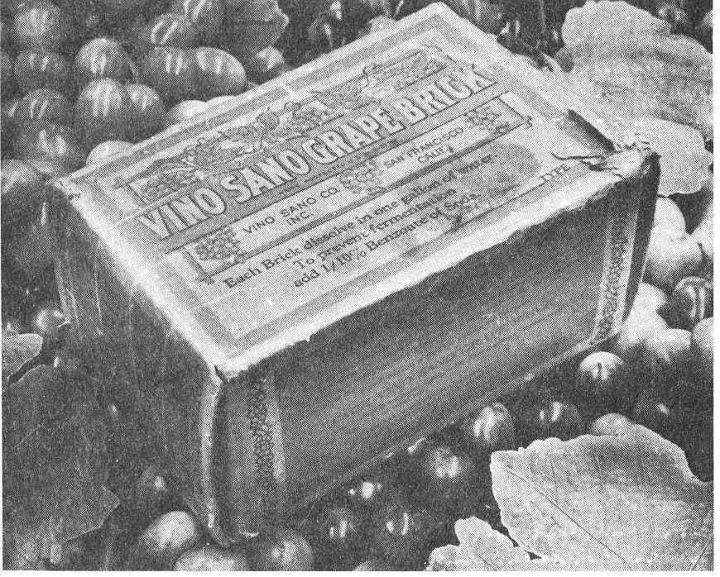
On the subject of “don’t do this,” a more humorous example is found during the Prohibition era.

Section 29 of the Volstead Act allowed 200 gallons of “non-intoxicating cider and fruit juice” to be made each year at home.  Initially “intoxicating” was defined as anything more than 0.5%,  but the Bureau of Internal Revenue soon struck that down and this effectively legalized home wine-making. Vintners increased their output drastically, and products like the above “grape brick” soon saw wide popularity.

The bricks came with a warning label that said, “After dissolving the brick in a gallon of water, do not place the liquid in a jug away in the cupboard for twenty days, because then it would turn into wine” or in the case of the brick pictured here, “To prevent fermentation, add 1/10% Benzoate of Soda.”

Remember that.

The Old Wolf has spoken.


Shelley Berman: Tenjewberrymud

Despite the fact that it has been widely copied and published on the net as an actual conversation from a hotel in Asia, and purportedly published in the Far East Economic Review, the dialogue below never actually took place in any hotel anywhere in the world. It is an intentionally composed humorous fiction and is entirely the creation of Shelley Berman, written as a chapter in his book, published as A HOTEL IS A PLACE, A HOTEL IS A FUNNY PLACE, and A HOTEL IS A VERY FUNNY PLACE, by Price/Stern/Sloan Publishers, Inc. Copyright © 1972, 1985. Any claim to the contrary is utterly baseless and erroneous. I post it here not only because it’s very funny, but because the true attribution (and the correct version) deserves more widespread exposure.


(Reading hints: You are on the phone. The other party is also in the hotel.)

Morny, rune sore-bees.

Oh sorry, I thought I dialed room service.

Rye. Rune sore-bees. Morny. Jewish to odor sunteen?

Yes, order something. This is room thirteen-oh-five. I want…

Okay, torino-fie. Yes plea?

I’d like some bacon and eggs.

Ow July then?

What?

Aches. Ow July then? Pry, boy, pooch…?

Oh, the eggs! How do I like them? Sorry. Scrambled, please.

Ow July thee baycome? Crease?

Crisp will be fine.

Okay. An Santos?

What?

Santos. July Santos?

Uh…I don’t know…I don’t think so.

No? Judo one toes?

Look. I really feel bad about this, but I just don’t know what judo-one-toes means. I’m sorry…

Toes! Toes! Why Jew Don Juan toes? Ow bow eenlish mopping we bother?

English muffin! I’ve got it! You were saying toast! Fine. An English muffin will be fine.

We bother?

No. Just put the bother on the side.

Wad?

I’m sorry. I meant butter. Butter on the side.

Copy?

I feel terrible about this but…

Copy. Copy, tea, mill…

Coffee!! Yes, coffee please. And that’s all.

One Minnie. Ass rune torino-fie, strangle-aches, crease baycome, tossy eenlish mopping we bother honey sigh, and copy. Rye?

Whatever you say.

Okay. Tenjewberrymud.

You’re welcome.

Hüsker Dü?

No, not the band. I didn’t even know there was a band named Hüsker Dü.

What I remember is the game, relentlessly promoted by K-Tel.

Back in 1974 or thereabouts, these K-Tel ads were a source of constant amusement; I used to joke that Hüsker Dü meant “up yours” in Sicilian.

I’m so glad that some of these gems were preserved for posterity. Isn’t that amazing!

The Old Wolf has spoken.

Lambeth Walk – Nazi Style

Reblogged from Frog Blog because it deserves to be seen.

In 1942, Charles A. Ridley of the British Ministry of Information made a short propaganda film, “Lambeth Walk – Nazi Style”, which edited footage of Hitler and German soldiers from Leni Riefenstahl’s classic Triumph of the Will to make it appear as if they were marching and dancing to the song “The Lambeth Walk”. A member of the Nazi Party achieved attention in 1939 by declaring “The Lambeth Walk” (which was becoming popular in Berlin) to be “Jewish mischief and animalistic hopping” as part of a speech on how the “revolution of private life” was one of the next big tasks of National Socialism in Germany. The film so enraged Joseph Goebbels that reportedly he ran out of the screening room kicking chairs and screaming profanities. The propaganda film was distributed uncredited to newsreel companies, who would supply their own narration. This version is from the Universal Newsreel company: “The cleverest anti-Nazi propaganda yet! You will howl with glee when you see and hear what our London newsreel friends have cooked up for Hitler and his goose-stepping armies. The ‘Nasties’ skip and sway in tune to the Lambeth Walk!”

“Laughter is the greatest weapon we have and we, as humans, use it the least.” – Mark Twain

Climate Change. Any questions?

This post is filed under “humor” rather than “go all foamy-mouthed and debate politics.” As a result, comments have been disabled for this post.

I happen to believe that mankind’s presence is affecting the climate; from where I sit, the science appears to back up my gut feeling.

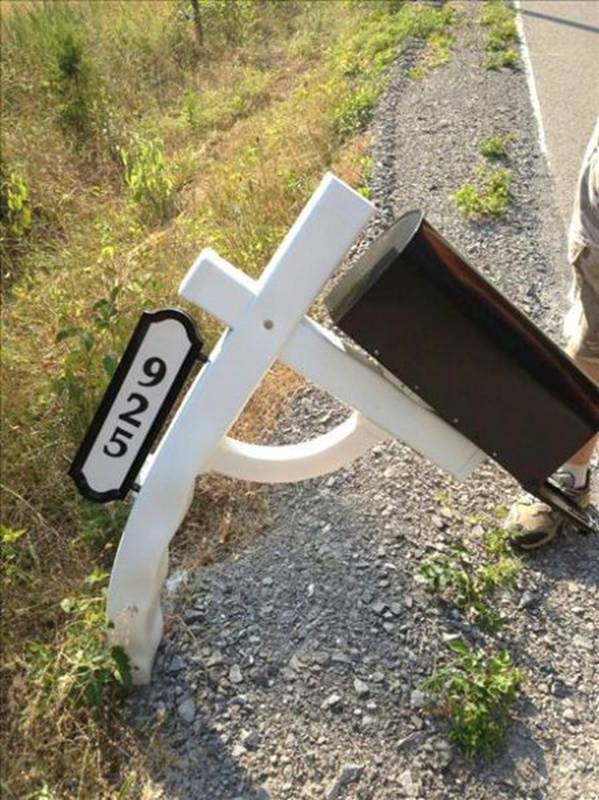
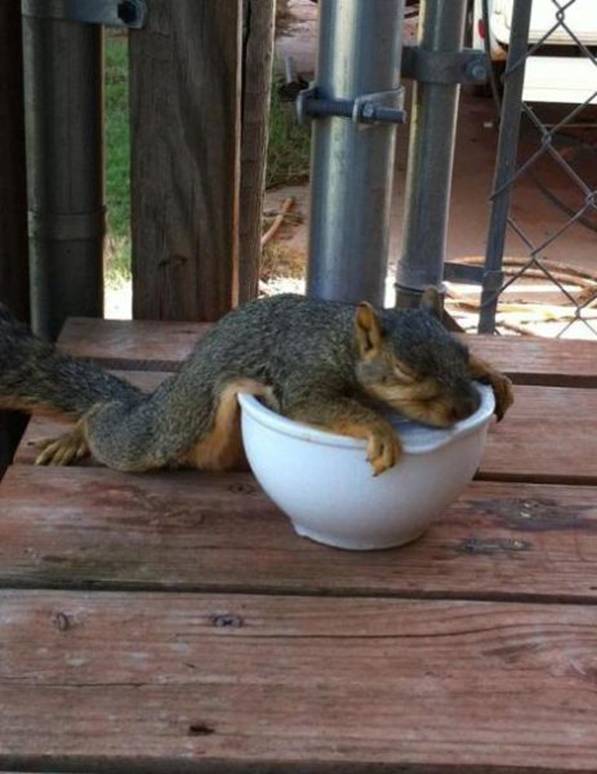
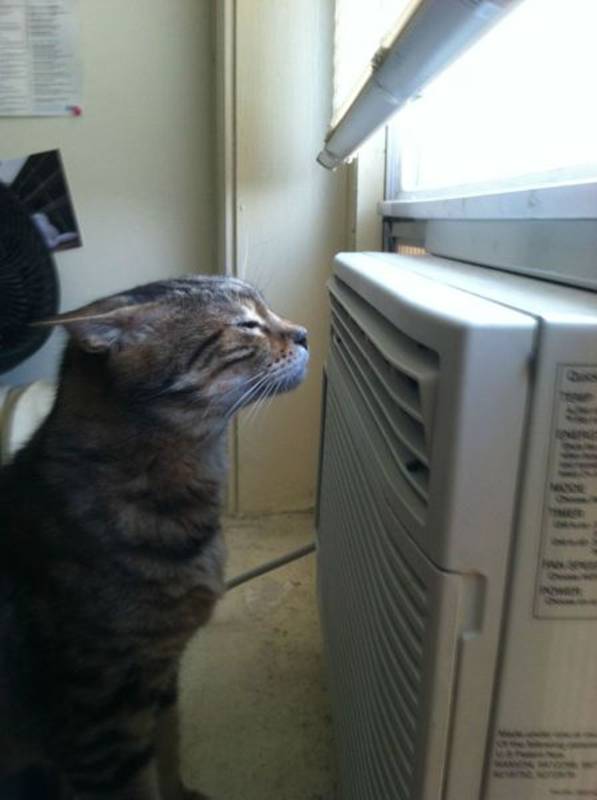
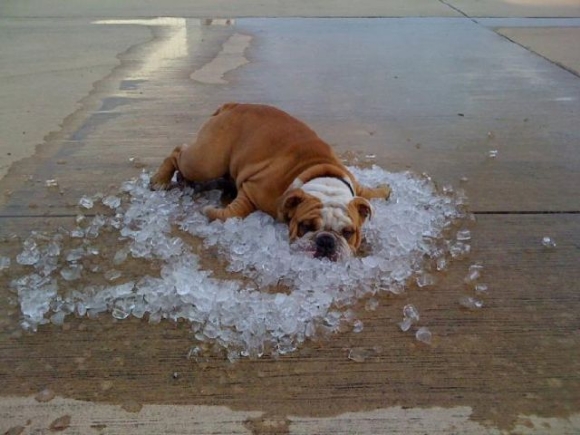
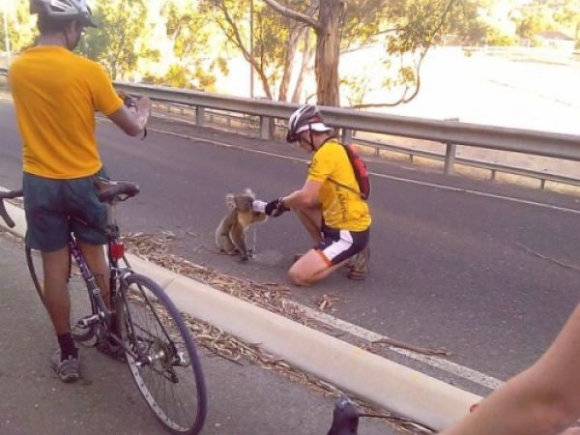
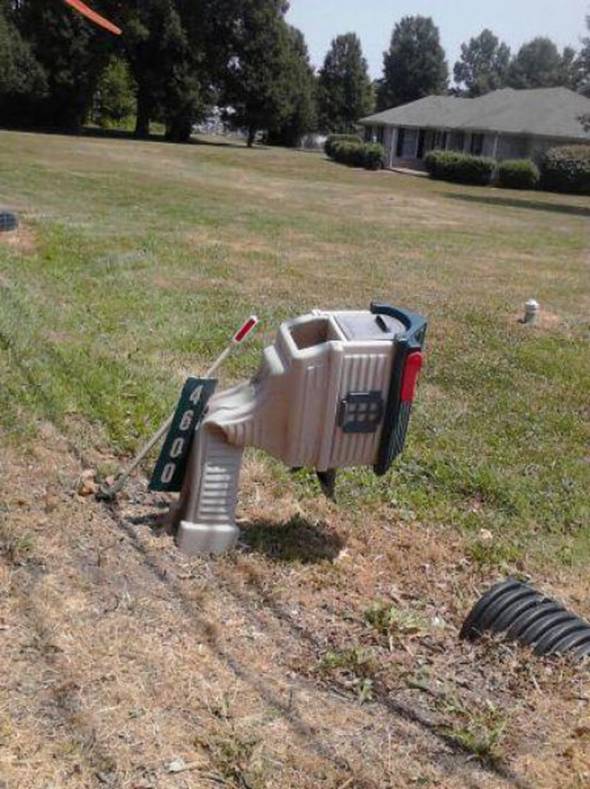
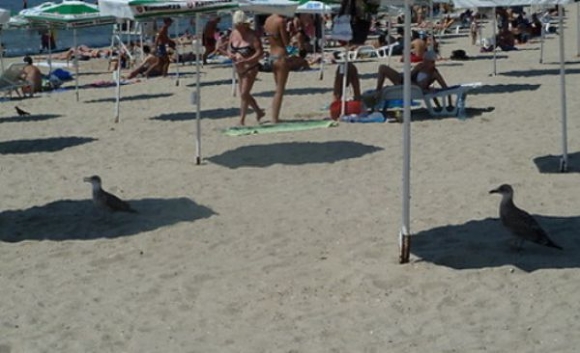
These pictures are gathered from all over and most likely do not belong to any given time period. Whatever  the case, it’s been hot this summer.

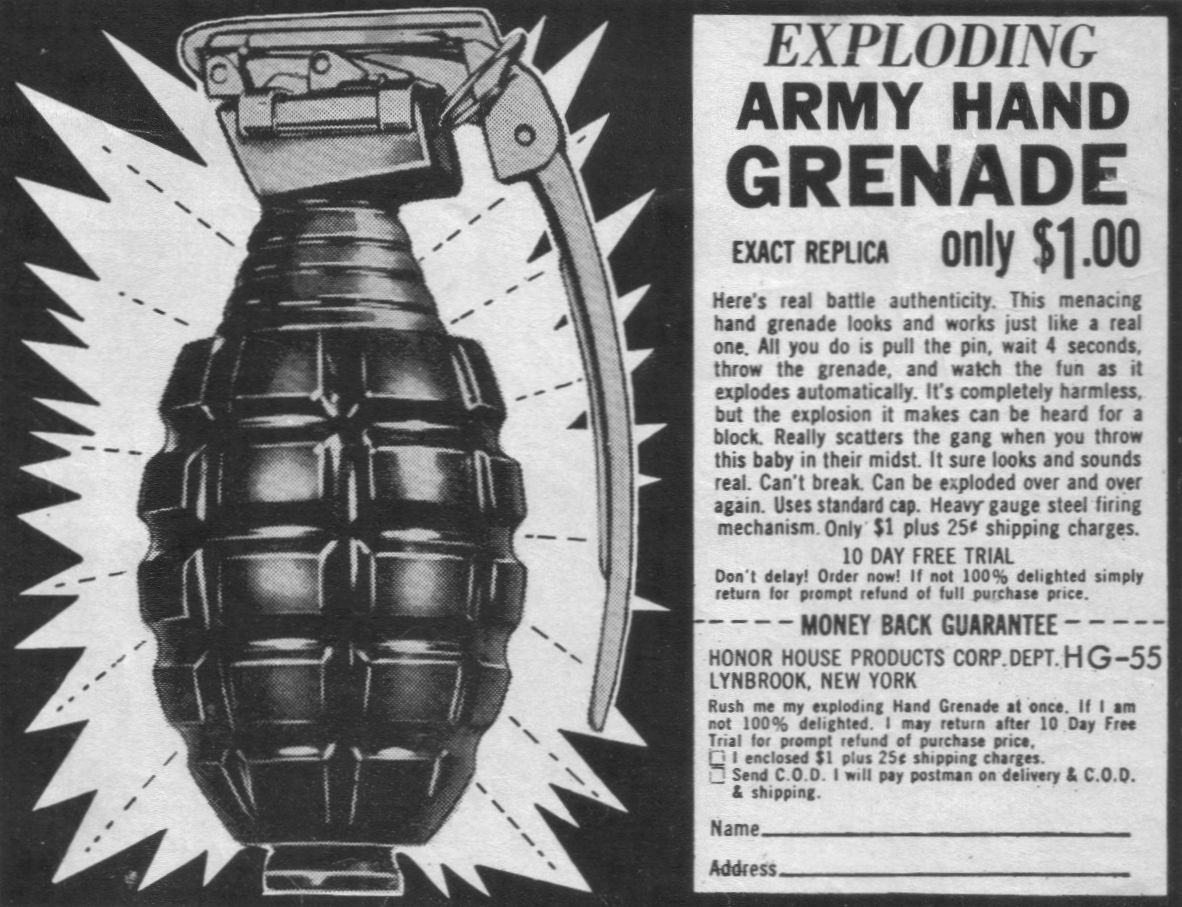
Exploding Hand Grenade – Exact Replica!

Had one of these when I was a kid, and I think I ordered it from Honor House. It was actually quite clever. Cap-loaded, you’d pull the pin and throw it, and the handle would come off and release a snapper which popped the cap. Wish I still had it. Have to make do with this:

Army surplus dummy training fuse, cast-iron grenade copy, routed base. Fun for the office – “Complaint Department – Please Take a Number.”

The Old Wolf has spoken.


The Proper Care of Floppies

Geek Alert: This is old humor, dating from when floppy disks looked like this:

The Proper Care of Floppies

1. Never leave diskettes in the disk drive, as data can leak out of the disk and corrode the inner mechanics of the drive. Diskettes should be rolled up and stored in pencil holders.

2. Diskettes should be cleaned and waxed once a week. Microscopic metal particles can be removed by waving a powerful magnet over the surface of the disk. Any stubborn metallic shavings can be removed with scouring powder and soap. When waxing diskettes, make sure application is even. This will allow the diskettes to spin faster, resulting in better access time.

3. Do not fold diskettes unless they do not fit in the drive. “Big” diskettes may be folded and used in “little” diskette drives.

4. Never insert a diskette into the drive upside down. The data can fall off the surface of the disk and jam the mechanics of the drive.

5. Diskettes cannot be backed up by running them through the Xerox machine. If your data is going to need to be backed up, simply insert two diskettes together into the drive. Whenever you update a document, the data will be recorded on both diskettes.

6. Diskettes should not be inserted or removed from the drive while the red light is flashing. Doing so could result in smeared or possibly unreadable text. Occasionally the red light continues to flash in what is known as a “hung” or “hooked” state. If your system is “hooking” you, you will probably need to insert a few coins before being allowed to access the disk drive.

7. If your diskette is full and you need more storage space, remove the disk from the disk drive and shake it vigorously for two minutes. This will pack the data enough (Data Compression) to allow for more storage. Be sure to cover all the openings with scotch tape to prevent loss of data.

8. Data access time can be greatly improved by cutting more holes into the disk jacket. This will provide more simultaneous access points to the disk.

9. Diskettes can be used as coasters for beverage glasses, provided that they have been properly waxed beforehand. Be sure to wipe the diskettes dry before inserting into drive. (see item #2 above)

10. Never use scissors and glue to manually edit documents. The data stored is much too small to be seen by the naked eye, and you may end up with data from some other document stuck in the middle of your document. Razor blades and scotch tape may be used, provided the user is equipped with an electron microscope.

11. Periodically spray diskettes with insecticide to prevent system bugs from spreading.


The Old Wolf has spoken