How to Fight Rogue Debt Collectors

gty_telephone_robocalls_nt_120215_wmain

Reblogged from CNN – you can see the original article here. Written by By Jen Haley on Feb. 29, 2008

Reposting this because it’s a good article, and people need to know what their options are. Despite signs of a recovery in our economy – by Mogg’s holy grandfather it took long enough – many of us are still struggling, and debt collectors can be vicious and relentless.

Personal story: 15 years ago or so, I had my identity stolen. A lost insurance card that had my SS Number on it was picked up by a druggie in Florida, who promptly had ID made for himself in my name and started charging rent, phone bills, ambulance rides and all sorts of things, never intending to pay… and then the bill collectors started coming after me. It literally took four years to get the mess cleaned up: police reports, working with the three major credit reporting bureaus, fraud locks on my accounts, and almost daily calls from bill collectors who didn’t care what I was saying. I explained endlessly that I did not owe these debts, that I was the victim of fraud – one lady said, “I understand that the debt is not yours, but I’ll discharge it if you pay 50¢ on the dollar…” I wanted to slap her silly.

So if you find yourself in a bind, this article will help you understand what debt collectors can do, what they can’t, and how to fend off the unscrupulous ones.


Rogue debt collectors — how to fight them

By Jen Haley
CNN

(CNN) — If you’ve faced a financial catastrophe — an illness or job layoff — and you’ve fallen behind on some bills, you’re well aware that debt collectors are eager to collect those payments.

But some collectors go over the line, threatening to have the person arrested, making improper bank withdrawals, intimidating people and making harassing phone calls.

In one case a collector threatened to call a woman’s place of work “until she lost her job,” according to the National Consumer Law Center.

In another case, a collector threatened to send the police to the person’s workplace to arrest them, said Joe Ridout of Consumer Action.

The Better Business Bureau received a complaint about a debt collector contacting someone’s grandmother four-to-five times a day, using threats like, “if she dies, then her life insurance can pay this debt off.”

John Fugate, a Texas consumer attorney relates a story about a rogue debt collector. The debt collector told the “9-year-old child of my college friend, who is the victim of identity theft, that they were going to take her mommy away forever.”

Complaints about debt collection agencies are on the rise. The Federal Trade Commission said they received more complaints against debt collectors than against any other industry for at least the past three years. And for the past five years, complaints are up about 43 percent according to the Better Business Bureau.

Some of the most common complaints from consumers include collectors using vulgar language, trying to collect more than they’re owed, sharing the consumer’s debt information with friends and family or trying to collect extra fees, like late fees or court costs.

That’s not to say all debt collectors are resorting to these illegal tactics. ACA International is one of the largest credit and collection industry trade groups and it maintains a code of ethics that prohibits this kind of behavior.

And ethical debt collectors are necessary. According to a study cited by the company, the collection industry saved the average American household $351 in 2005. That is how much money households would have spent if businesses were forced to raise prices to cover bad debt. The bottom line here is that if you owe money, you should make every effort to pay off the debt.

Here’s some expert advice on how to fight back against unethical collectors. The Fair Debt Collection Practices Act requires that debt collectors treat you fairly. This doesn’t mean you won’t have to pay your legitimate debt. But here are some basic rights:

  • A debt collector cannot call you before 8 a.m. or after 9 p.m., unless you agree.
  • You cannot be contacted at work if the collector knows your employer disapproves.
  • If you don’t want to hear from a debt collector, write a letter telling them to stop. By law, they have to. Remember, the debt won’t go away and you can still be sued.
  • The debt collector can contact your attorney — if you have one. If not, your friends and family can be asked about how to get in touch with you.
  • A debt collector can’t misrepresent the amount of your debt.
  • A debt collector also cannot use profane or threatening language
  • Debt collectors can’t say that they will put a lien on your property or file a lawsuit unless the agency really means to do that and it’s legal.
  • Collectors can’t legally claim federal benefits, such as Social Security or your retirement accounts, like your IRA or 401(k).

Once you’re contacted by phone, you have the right to get a notice that outlines your debt, whom you owe money to, and what action to take if you don’t owe the money. Keep in mind that a debt collector can collect a debt owed by an ex-spouse. If the debt was incurred while you married, you are still liable for the debt after a divorce even divorce papers state the spouse is responsible for the debt.

If you’ve been contacted by a debt collector, but you don’t think you owe a debt, you must write a return letter stating that the debt is not yours within 30 days. Once a collector receives your letter, they should send you proof of the debt, such as a copy of the bill. Don’t be coerced into paying a debt you don’t owe. If you do pay just to get rid of the debt collectors, it’s an admission of guilt, and it will have a negative impact on your credit score.

Keep in mind that some debt has an expiration date. There is a limit to how long collectors can legally collect your debt. Generally this limit – called the statue of limitations – can range from three to 15 years according Ridout. Check with your state’s attorney general’s office to find out the limit in your state. You can find out who to contact at http://www.naag.org.

Sometimes debt collectors will try to collect on this old debt called zombie debt because it never goes away. Make sure you don’t accept a new credit offer from a creditor you never repaid. Once that creditor renews your credit relationship, the clock starts ticking all over again on your state’s statute of limitations.

If you think you’ve been treated unfairly by a debt collector, take action. File a complaint with the Federal Trade Commission at 877-FTC-HELP or go to http://www.ftc.gov. You should also contact your state attorney general’s office.

You also have the right to sue a debt collector in state or federal court within a year of the date the law is violated. A victory will allow you to recover money for the damages you suffered plus an additional amount up to $1,000. A group may also sue a collector and for damages up to $500,000, or one percent of the collector’s net worth, whichever is less.

And the federal government plays by slightly different rules. In 1996, Congress passed the Debt Collection Improvement Act which allows the government to take a portion of federal retirement, federal salary and Social Security benefit checks to cover non-tax debts owed to the government.

There are some debts that you can’t get rid of. If you don’t pay your federal student loans for example, debt collectors can garnish your Social Security wages and prevent you from renewing any state licenses according to Mark Kantrowitz of Finaid.org. Debt collectors can even dip into your tax refund. Other debts like past-due child support and federal tax liens tend to stick with you.


The Old Wolf has spoken.

The most peaceful monument I’ve ever seen

Cemeteries are peaceful places. For campaign managers, they are an abundant source of additional votes for their candidate:


26 - AddamsDowdForAlderman

Artist: Charles Addams

For genealogists, they are a rich source of family data:

William Draper Senior Tombstone - Incorrect Birthdate

Although one must be careful. This gentleman, my GGG-Grandfather, was actually born in 1774; whoever had the stone made obviously thought, “Ooh, wouldn’t it be cool if we said he was born in the year of independence!” And so it was written, and so it was done. Still, graveyards have given me much information and many leads that I otherwise would not have had.

(A parenthetical plug here for FindAGrave.com, a virtual cemetery containing millions of online memorials.)

Having spent many, many hours haunting various cemeteries in my home town and during my travels around the country, I came to appreciate them as places of peace and contemplation, and sometimes great poignancy.

Monument

This one, located in the Salt Lake City cemetery, makes me mist up every time I see it.

People or their families choose to create memorials in many different ways – just Google the images section for “unusual grave markers” for a selection. Some are bizarre, others frightfully clever.

Today on reddit, I saw another monument posted; it captured my heart immediately.

8fK4lye

Posted by /u/551100, this is the grave marker of Alfred Schnittke. Explained by /u/Rentiak:

“It’s a musical staff with a semibreve (the center bar) indicating a rest or pause in the music. The fermata (the half circle + dot at the top) indicates to hold the note (in this case the rest) as long as desired. The note should then be performed fortississimo (the three f’s at the bottom), meaning it should be performed extremely loudly/strongly.

So it’s an extremely loud/strong rest to be held as long as desired.”

Now that is resting in peace.

The Old Wolf has spoken.
The Cats of Sydney Harbor Bridge

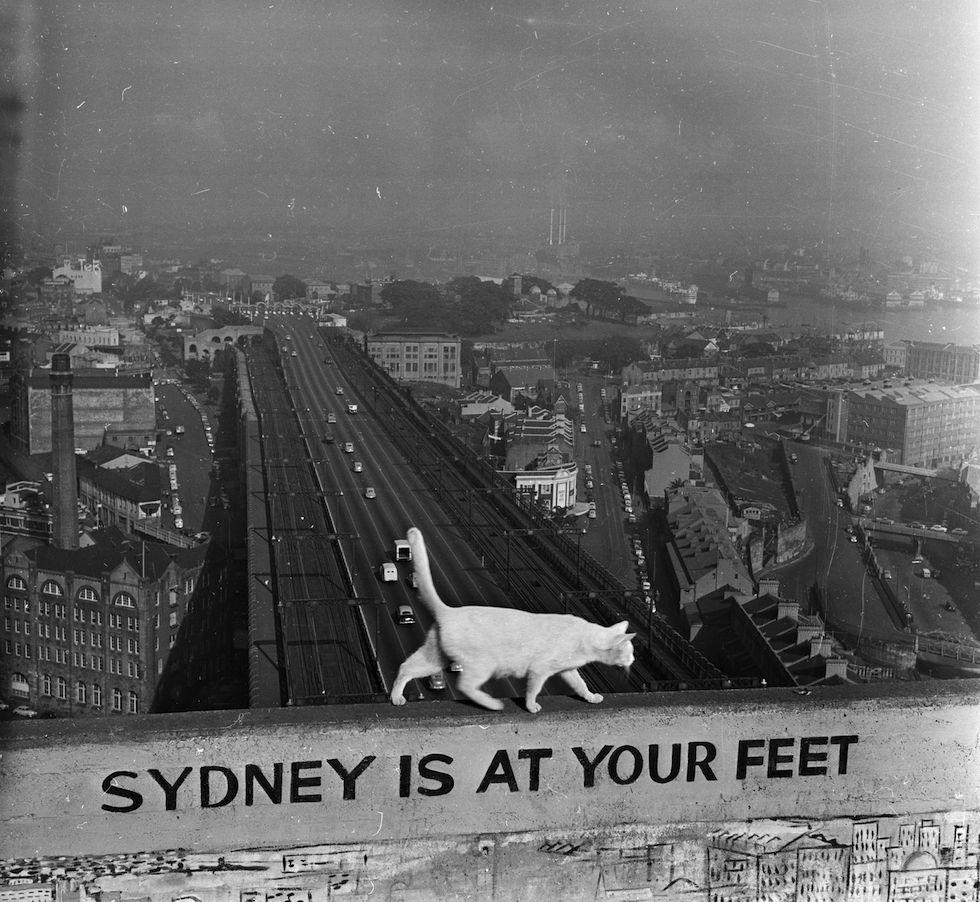
I happened across this picture on reddit today and wondered about the backstory:

QZwnh08

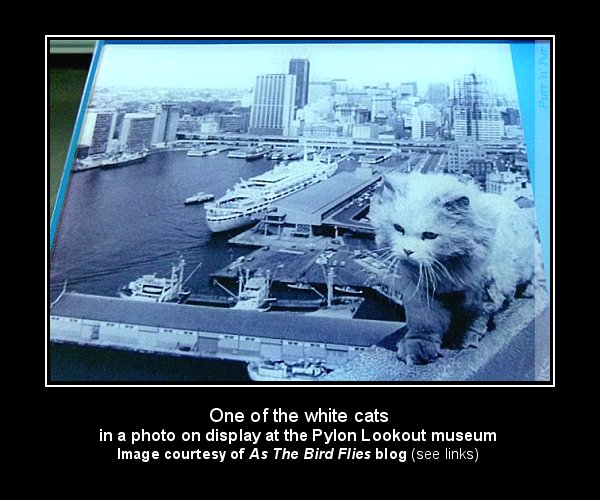
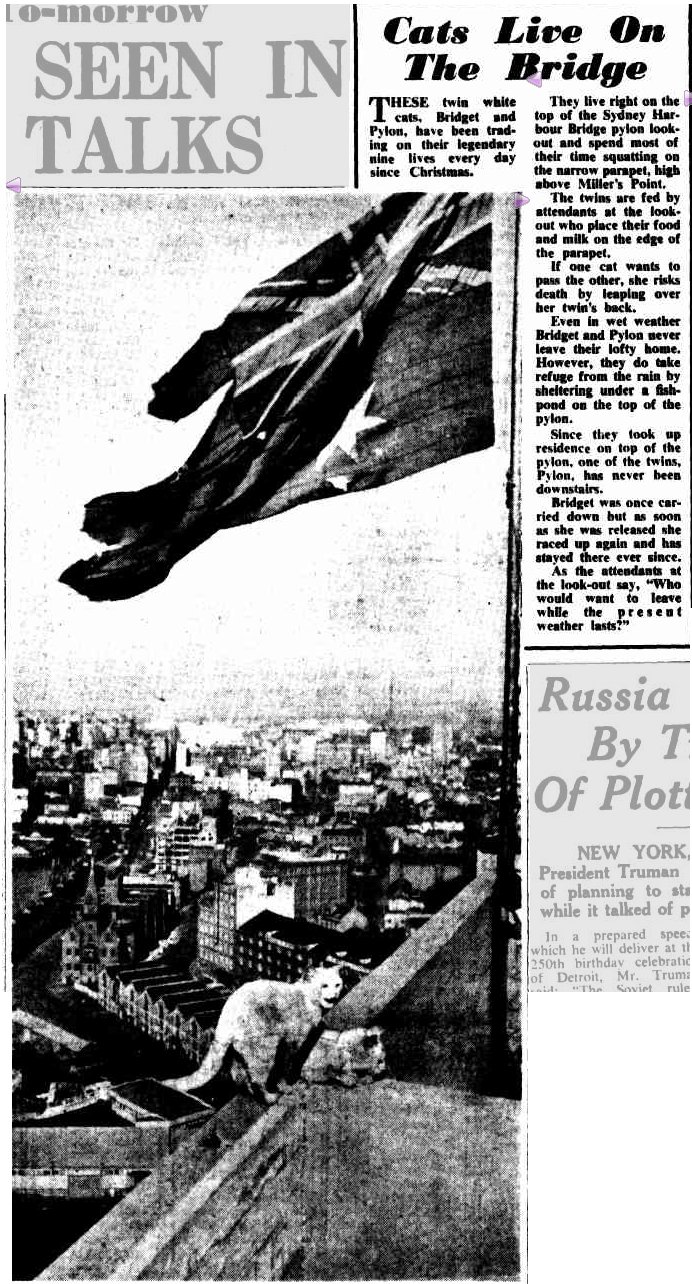
The post intimated that this cat was named George. A little digging intimates that it’s not impossible, but that there were several cats who lived on or around the bridge, some of which never came down. I find that a bit hard to believe, but you can judge for yourself.

28sydney-hb06

28sydney-hb03

28sydney-hb04

28sydney-hb05

These images were found at Purr-n-Fur – there’s an article there with more information on the cats.

cats

From the The Sunday Herald, 29 July 1951

Related: Below, an image of the bridge under construction in 1930

bridge

Rabbi, is there a proper blessing for the Czar?

There’s no question in my mind that websites like Yahoo! Answers, FixYa and other such social answer sites are generally not worth the powder to blow them to Hell with. The blind leading the blind is what comes most frequently to mind.

But occasionally one finds an exception.

Listening today to the soundtrack to Fiddler on the Roof, this particular question happened to strike me, and I started wondering… Is there?

hqdefault

From Rabbi Andy Vogel:

Everybody loves this scene from “Fiddler on the Roof”: The townspeople acknowledge that in Judaism, there exists a blessing for everything, and then they wonder, ‘Rabbi, is there a proper blessing for the Czar?’ He thinks for a moment, then, comes up with the answer: ‘May God bless and keep the Czar… far away from us!’ The line is an oldie, but what a goodie.

But then, just a few weeks ago, I found the actual blessing for the Czar. . . .found. . .an old machzor, a High Holy Day prayer book, published in 1895 in Petrokov (today Poland, but until 1919, part of the Russian Empire). I thumbed through it, and saw that it contains the full Hebrew text of the High Holy Day prayers, and includes a Yiddish commentary and translation on every page. What a find! And then, turning to the Torah service, on page 97 of the Rosh Hashanah volume, I saw it, the prayer for the Czar, beautifully composed:

“May the One who gives power to kings, and sovereignty to princes; may the One who is the Ruler of rulers… bless and keep, guard and aid, exalt and raise the Czar Nicholas Alexanderovich, and his widowed mother, Czarina Marie Feodorovna [here, my knowledge of the Russian monarchy is a little weak], and his wife the royal Czarina Alexandra Feodorovna, and their heir, Grigory… May God save them from all harm and pain, and may all their enemies fall before them. And may the Merciful One put in the heart of the Czar compassion and good deeds for the People of Israel…” 

Mazel tov, Rabbi!

The Old Wolf has spoken.

Playgrounds

3c9922b389bdfd7bcd57fb6bc3e4ca68

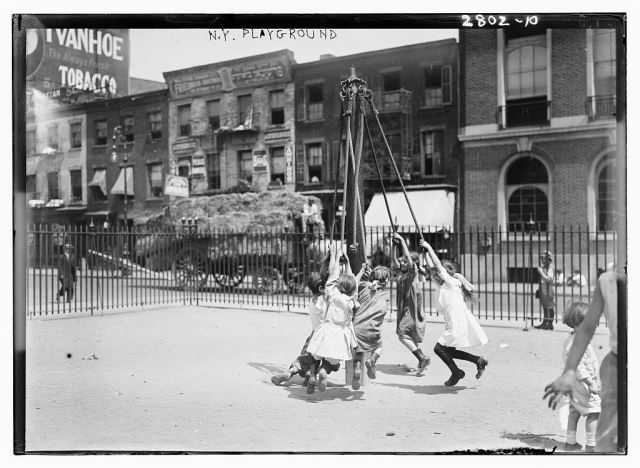
“A Safe Place to Play,” says the caption. That’s what the playgrounds I remember used to look like.

giantstridenyc

Awesome rope swing

Old-Playground-Equipment

Don’t forget the merry-go-round, that could fling you off with great force.

nyu-playground-4

Look at this beautiful old slide from the NYU playground project.

Swings

And, of course, the swings.

vintage-playground-swing-bloomsbury1

Wow. We never had anything like this. And still, somehow, we survived. There was the occasional bump and bruise. Someone would show up at school with a broken arm, and everyone would ooh and aah over the cast, as happened to my own son after he fell off a jungle gym. It happens. We didn’t even think of calling a lawyer.

Even as late as the 1980’s, playgrounds could be awesome:

a-very-awesome-playground

Sadly, even looking at pictures like this is enough to give tort attorneys an orgasm thinking about all the billable hours they could earn, which is why modern playgrounds look like this:

crappy-no-fun-play-equipment

Safe and boring.

Thanks, legal profession.

The Old Wolf has spoken.

Lost and Found

I love old science fiction. I recall stories that I’ve read and loved, and enjoy going back to them again on occasion to refresh my memory. Now and then, however, one of them gets lost.

A recent example was “The Coppersmith,” by Lester Del Rey, published in “Unknown” in 1939. I first read it in 1968, if I’m not mistaken, in the collection of a housemaster during my senior year in prep school. Then I moved on and time moved on; until the advent of the Internet, I had no way of tracking this lovely story down again, but a few years ago I was able to find it in a collection of Del Rey stories and rejoiced to renew my acquaintance with an old friend.

Another story was more elusive. I have no idea when I first read it, but all I remembered was that it was about aliens who came to earth looking for refuge, and they needed salt to reproduce. The word for salt was “shreeprill,” and the ones who broke the communication barriers down were the wives (and children) of the negotiators. I hunted high and low, wide and deep, without result – for decades, until yesterday.

Finally a hit. The story was called “Subcommittee” by Zenna Henderson, and was collected in an anthology called “The Everything Box.” I looked online, and found a number of copies, but they are fairly rare: most of them are selling for around $25.00.

ZHenderson1953

Zenna Henderson in 1953

I had told my wife about my hunt for this story, and she also remembered having read it. When I reported to her the results of my successful find, she replied, “Oh, Zenna! I love her writing.” She asked me what book it was in. I told her. She dug into her collection and in 10 seconds pulled out the very edition that I was looking for. And I sat down astonied… for years, the story was sitting on our bookshelves, right under my nose.

How pleasant it was to re-read this delightful tale, along with the other ones in the collection. I must have had it at one point in my life, because all of them seemed mightiliy familiar.

Only one or two left that I can think of which I still need to locate. I’m not sure if I ever will, because I think they were in French, in a collection I found at a flea market in Austria in 1975¹. But even if I can never find those, I’m well content. The Internet has triumphed again.

The Old Wolf has spoken.

—————————–

¹ One of the stories I’m still hunting for is similar to “The Conqueror” by Mark Clifton. It deals with a peculiar strain of coffee which had the odd result of making people think rationally. When some of it gets introduced into congress or parliament or somewhere, the first “victim” stands up and shouts “It’s all balls!”, whereupon in short order the entire body proceeds to stop bickering and pass a raft of laws designed to raise the living conditions of everyone. Wish I could find that one again.

What ever happened to the Skyhopper? It was actually called the SoloTrek.

Edit 1/22/2016: The thing I was looking for was not called the Skyhopper, but rather the SoloTrek. My memory was the problem. Apparently the company that was trying to develop it abandoned the project. I am surprised I was not able to find an image of it with multiple searches until today.

Trek

As a result, the entire article below is now moot, but I’m leaving it up as a monument to my faulty memory.


The Internet remembers everything. Everything. Even things that people desperately want it to forget. as witnessed in the Streisand Effect.

So if I go hunting for something I remember seeing years ago, I expect it to be there, in some way, shape, or form… even if only as a relic, an artifact.

And when I can’t find it, I find it… disturbing, to say the least.

The dream of the one-man helicopter has never been fully realized, although a lot of people have spent a lot of money on the idea. I remember years ago one outfit was working on one. There were pictures, videos of the thing being tested in tethered mode, solicitations for investment, the works – all very professional.

It may have failed. It may have been a ponzi scheme. Anything could have happened. But there should be some remnant of its existence on the net, but… nothing.

I’ve searched for skyhopper, one-man helicopters, personal helicopters, two-fan hovercraft, and fifty other permutations.

Blank.

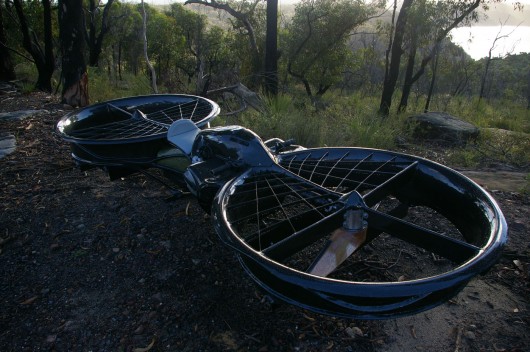
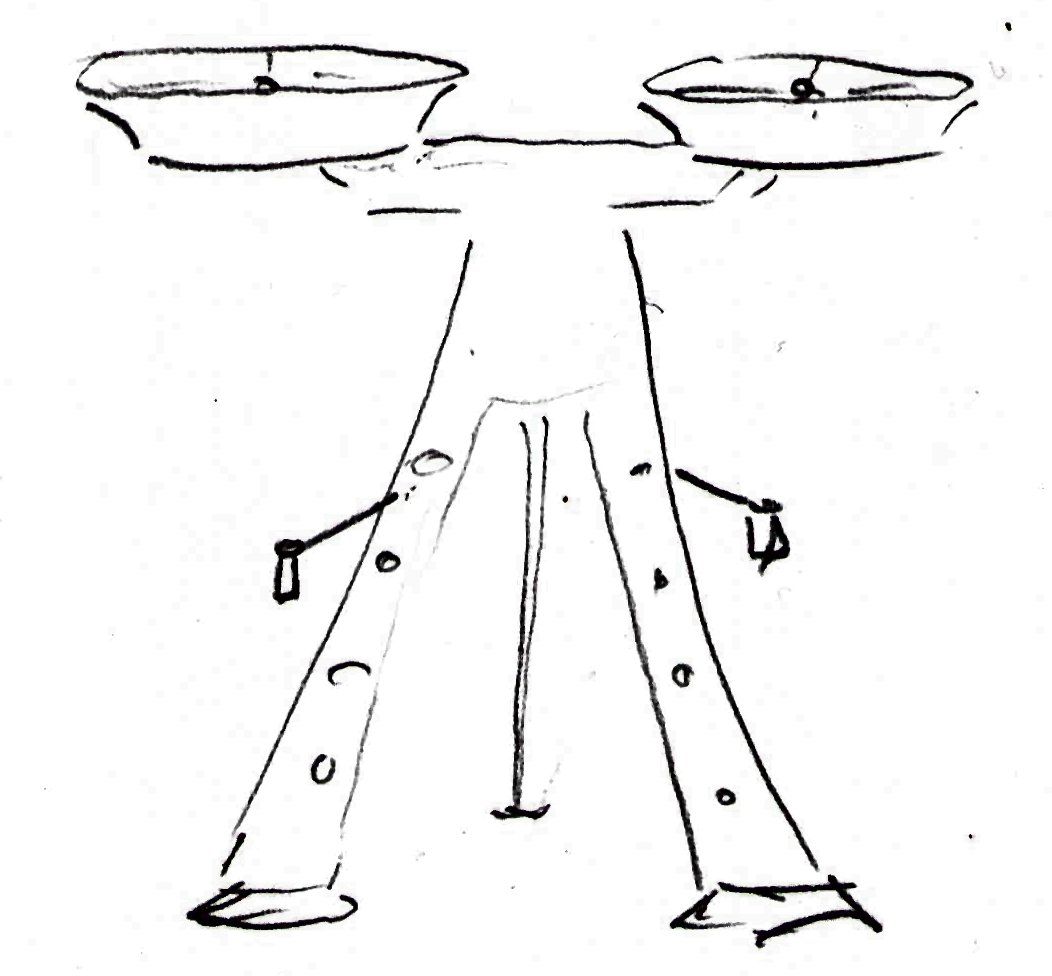
I remember it used two of these things:

hoverbike-9

… attached to a sort of one-man tripod. Now I can’t draw worth hqiz, but the basic idea was this:

Skyhopper

Edit: I couldn’t remember the name, but my memory of the basic structure was fairly accurate.

The pilot would stand on the two platforms, hold on to the controllers, and off he’d go.

I’m almost 100% certain the thing was called the “skyhopper,” but that term has now been co-opted by something from the Star Wars universe. It’s as if any reference to this invention has been carefully and deliberately scrubbed from the internet.

That makes no sense at all… even failed inventions leave traces. And I know that i’m not experiencing a false memory – I was intrigued by the pictures and the concept when I first saw it, and followed it closely until it became clear that no further progress was being made.

Now, I put no stock in conspiracy theories[1], but the absence of any reference to this thing goes against everything I have come to understand about the persistence of information on the internet. It’s just strange.

The Old Wolf has spoken.


[1] What’s really happening, of course, is that the Air Force saw this idea, classified it, killed the inventor, scrubbed all references from the internet, and is now developing the idea secretly at Area 51, aided by the Erich von Däniken foundation.

Old_Wolf_Thpt

L.S./M.F.T (Like Strike Means a Facebook Touch-up)

In the last couple of days, two individuals have written about experiments that they conducted at Facebook.

Mat Honan, at Wired, wrote about what happened to his Facebook feed when he “liked” absolutely everything he saw for two days.

Facebook_like_thumb

At the same time, Elan Morgan was conducting a similar experiment… by not liking anything at all, and when she saw Honan’s post, was inspired to write about her experience.

Facebook

Before you go on, I recommend you read both articles in their entirety. There are some good thoughts in each, addressing more than the facebook issue. I will quote this, from Schmutzie’s blog post:

The first thing I noticed was how difficult it was to not like things on Facebook. As I scrolled through updates, my finger instinctively gravitated towards the Like button on hundreds of posts and comments. It has become a gut-level, Pavlovian response. I saw updates I liked or wanted others to know I liked, and I found myself almost unconsciously clicking my approval.

The Like is the wordless nod of support in a loud room. It’s the easiest of yesses, I-agrees, and me-toos. I actually felt pangs of guilt over not liking some updates, as though the absence of my particular Like would translate as a disapproval or a withholding of affection. I felt as though my ability to communicate had been somehow hobbled. The Like function has saved me so much comment-typing over the years that I likely could have written a very quippy, War-and-Peace-length novel by now.

I have experienced much the same thing myself. Clicking that “like” button has become addictive, similar to the upvote/downvote arrows over at reddit. Both these articles made me think over the nature of my participation at Facebook.

A side note: my feed is full of other things, of course – lots of promotion from people running businesses, lots of politics, and – it goes without saying – lots of kittens and Pinterest shares. But, it is worth mentioning, no advertisements – I use FB Purity, which cleans up my Facebook feed in a way that makes it tolerable to use and much less noisy and chaotic. Social Fixer accomplishes the same thing. If you’re not using one of these, I highly recommend checking them out.

As for myself, I use Facebook to share things that are important to me; ideas, feelings, issues that I feel deserve attention, and to keep in touch with those people in my life who help me move forward. The “like” button has been a quick way of exchanging “strokes,” a concept introduced by transactional analysis and defined as “a unit of recognition.” As people, we need these strokes. Those who don’t get them on a regular basis end up feeling alone and isolated; even those who are introverted by nature and prefer solitude to social interaction need this kind of recognition and contrive to get it in other ways that serve them best, including self-stroking.¹

Mr. Honan noticed that by liking everything, he disovered that

“My News Feed took on an entirely new character in a surprisingly short amount of time. After checking in and liking a bunch of stuff over the course of an hour, there were no human beings in my feed anymore. It became about brands and messaging, rather than humans with messages.”

Contrariwise, Schmutzie (Elan Morgan’s alternate pseudonym) discovered that refusing to like anything and posting meaningful comments instead resulted in the exact opposite:

“Now that I am commenting more on Facebook and not clicking Like on anything at all, my feed has relaxed and become more conversational. It’s like all the shouty attention-getters were ushered out of the room as soon as I stopped incidentally asking for those kinds of updates by using the Like function. I have not seen a single repugnant image of animal torture, been exposed to much political wingnuttery, or continued to drown under the influx of über-cuteness that liking kitten posters can bring on. (I can’t quit the kittens.)”

Yeah, I enjoy the kittens, too. But what a contrast! By not using the “Like” button, one effectively short-circuits Facebooks ad-targeting algorithm and allows a more human environment to prevail.

I can’t tell you how much I like this concept… but I’m not going to click the button.

The Old Wolf has spoken.


¹That’s not what I meant and you know it. Get your mind out of the gutter.

Big boys play with big toys

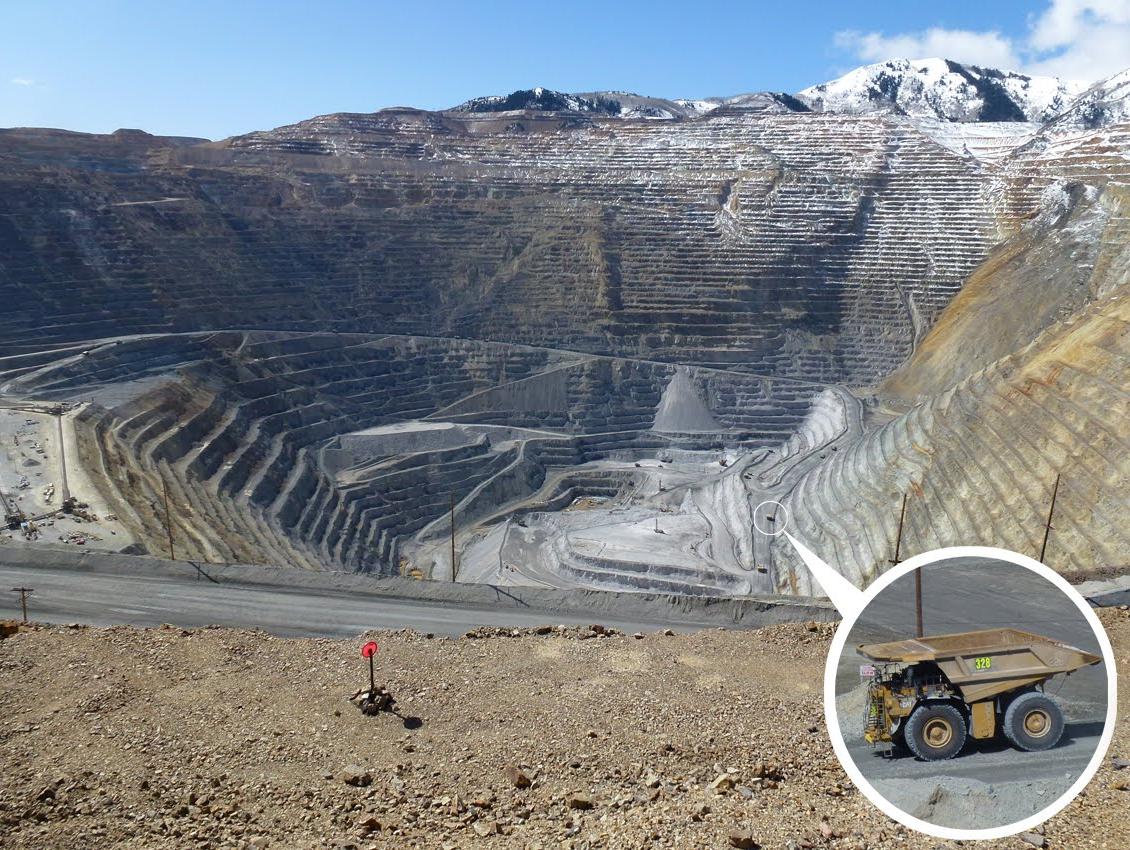
Saw these posted over at reddit the other day and since I live just down the road from where these big boys are used, I thought I’d share it. In fact, one of the men in my neighborhood drives one of these trucks. The comparison with the school bus next to it is pretty mind-bending.

PRkxHPn

Here’s an image of the Kenecott open-pit copper mine where these devices are in use; the inset shows one of the loaders and its relative size to the pit.

GhbhBVR

Next up is a time-lapse video showing the reconstruction of an access road that was wiped out during the massive slide of April 10, 2013 – in fact, four of these monster trucks were buried in the debris, but have since been recovered.

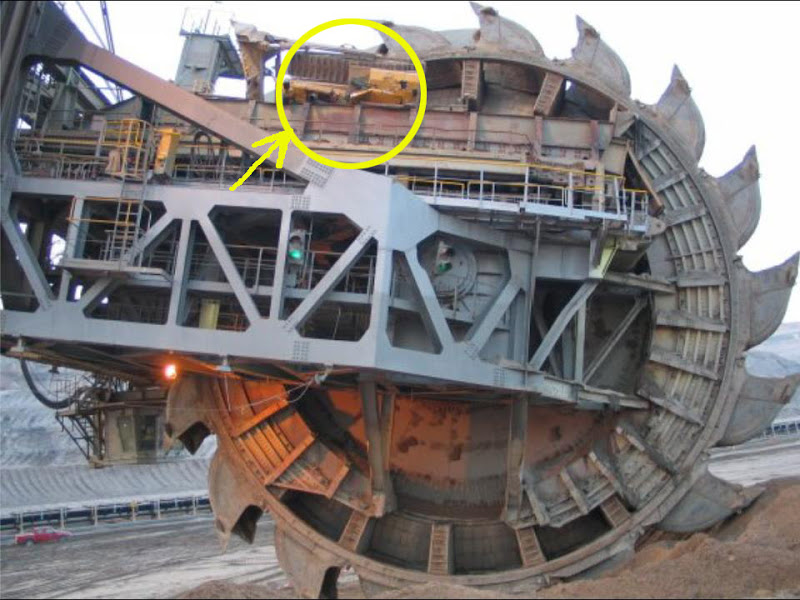
Of course, even these humonstrous machines are dwarfed by the Bagger 288, the largest movable machine ever created by man – built in 1978 in Germany by Krupp.

bagger 288

This beast was designed for coal mining, and it chews up everything – including the occasional stray bulldozer.

298574512_ecb3f7b06f_o

For more eye-popping images of this device, head over to Dark Roasted Blend.