No Bearla (No English)

Anyone who knows me at all probably knows that I have this love of Ireland and its language, Gailge.
Button1

Speak Irish to me or I’ll break your face

One day in New York, around 1969, I stopped to use the phone in a pub, and while there I struck up a conversation with the bartender. The conversation turned to languages, and when I told him that I enjoyed learning them he said to me, ” Well, don’t learn Gaelic “. This ominous warning piqued my curiosity, and that very day I went and found a copy of Teach Yourself Irish by Myles Dillon and Donncha Ó Cróinin. Unfortunately this volume was old in methodology and in orthography – it used a lot of words that had even more silent letters than today’s version uses, after a spelling reform. As a result, pronunciation was a problem; it would take a native speaker to help me understand that Dún Laoghaire, for instance, is pronounced Doon Leery.

So I set the book aside until about 1990, when I discovered an Irish course in my local library system, Cúrsa Gaeilge by the Linguaphone Institute. With the help of this “Rosetta Stone”, unfortunately out of print, I began making progress. Since then I have discovered numerous excellent courses both in print and on the net. If you’re interested in learning Irish, I would recommend Learning Irish by Michael Ó Siadhail; the new Teach Yourself Irish; Pimsleur Irish; or Buntús Cainte. Rosetta Stone announced their first-level Irish course in 2008.

I have been enchanted by this intriguing language and its intriguing speakers. In 1998 I fulfilled a lifetime dream to visit Ireland with my family, and spent a week in Abbeyville Cottage in Cill Mocheallog (Kilmallock).
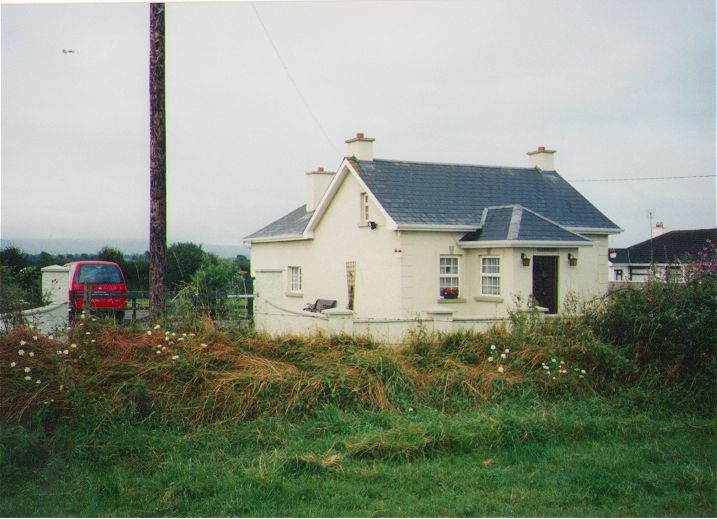
Abbeyville Cottage

We explored the Dingle peninsula and stopped in the Gaeltacht (Irish-speaking) area of Baile an Fhirtéaraigh (Ballyferriter); nearly fell off the cliffs of Moher; saw Waterford crystal being made; experienced a medieval dinner at Bunratty Castle near Limerick as well as St. John’s Castle in the same town; explored the rock of Cashel; went horseback riding in a brisk Irish rain; attended church meetings in Tralee; kissed the Blarney stone and dined at the Deanery in Cork… I’m afraid all it did was whet my appetite for more. The reality far exceeded the expectation; fortunately I was able to make another trip back in 2001, to attend a translator’s conference in Trá Lí, but it’s still not enough. I’m greedy. I want to go back.

CliffsOfMoher1a

Cliffs of Moher

Ireland2

Irish Street Signs

A blessing on this lovely land and its equally lovely people.

No Bearla

Filmmaker and native Irish speaker Manchán Magan made a documentary in which he traveled through Ireland only speaking Irish, just to see how far he could get. People demanded he switch to English; shopkeepers told him to get lost; officials refused to help him; and people on the street ignored him. But he kept at it and found willing speakers here and there. (From The Week.) His video gives you a delightful glimpse into the struggles of the Irish-speaking community to keep their language alive.

The following two videos by Dough Productions are entertaining and full of pathos. To this day, Irish continues the Sysiphean task of defending itself against the onslaught of English. Whether the language will survive this century remains to be seen; I feel as though having learned a bit of it, I’m doing my part – however small – to stem the tide.

My Name is Yu Ming – Follow the adventures of Yu Ming, a young Chinese shopkeeper in a dead-end job, who moves to Ireland to start life anew… only to find out that the “old language” is no longer in use!

Fluent Dysphasia – Pity poor Michael Murphy!  After a night of celebrating with a friend, he wakes up with a hangover and a problem:  He no longer speaks or understands English, and can only speak Irish!  How will he solve this difficult challenge?

Tá an Sean-fhaolchú labhartha.
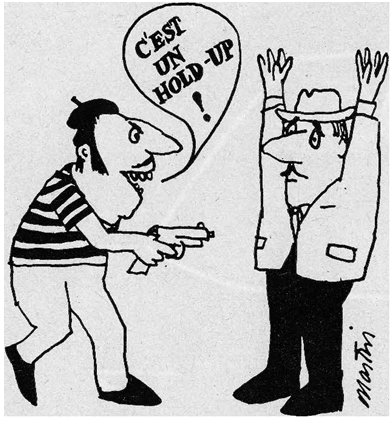
Faites-vous du remue-méninges?

From Vie Moderne, date unknown

(This article is in French. The title translates as “Do you brainstorm?”)

Pursuant to my previous post, I provide here a list of French terms for the broadcast industry which are recommended to replace their English counterparts. I’d be curious to know how well they have done in exterminating these heathen terms from their vocabulary over there, or if they still have people using English terminology on a regular basis.


Une liste de nouveaux termes et expressions destinés à remplacer les mots étrangers fréquemment employés dans le domaine de l’audiovisuel et de la publicité a été publiée au Journal Officiel, le 18 février dernier.

Ces néologismes seront obligatoirement utilisés à compter d’un délai de trois mois suivant la publication de cet arrêté dans les décrets, circulaires, diplômes, instructions émanant des ministres et des fonction­naires de l’Etat placés sous leur autorité.

Un délai plus long, six mois, est accordé pour l’utilisation de ces néologismes dans les correspondances “et documents des ad­ministrations; dans la rédaction des con­trats et marchés avec l’Etat; dans les édi­tions ou rééditions des ouvrages de renseignement, de formation ou de recher­che utilisés dans les établissements dépen­dant de l’Etat, soumis à son contrôle ou bénéficiant de son concours financier.

Voici ci-dessous une liste partielle de ces mots nouveaux choisis parmi les termes les plus souvent utilisés (les lettres « A » ou « P » Indiquent le domaine dont relèvent ces mots: Audiovisuel ou Publicité)

Achat groupe (n.m.) – Package. (A)
Achat d’un ensemble de programmes à un même vendeur.

Aguiche (n.f.) – Teaser. (P)
Phase initiale d’une campagne publicitaire se présentant sous forme d’énigme destinée à inciter et à maintenir l’attention du public.

Amplificateur de sonorisation – (n.m.) Public address amplifier. (A)

Baladeur (n.m.) – « Walkman ». (A)
La terme « walkman », qui est une mar­que déposée, ne doit pas être utilisé.

Bande vidéo (n.f.) – Video-tape. (A)

Bande vidéo promotionnelle (n. f.) Video clip. (P)
Court programme réalisé à l’aide de moyens techniques perfectionnés, pour mettre en valeur un sujet donné.

Base de campagne (n.f.) – Copy platform. (P)
Ensemble de réflexions qui permet de passer à la réalisation d’une campagne publicitaire.

Cabiliste (n.m.) – Cableman. (A)

Cadreur (n.m.) – Cameramen. (A)

Carton publicitaire (n.m.) – Display. (P)

Ciné-parc (n.m.) – Drive-in cinema. (A)

Commanditaire (n.m.) Sponsor. (P)
Personne physique ou morale qui sou­tient l’organisation d’une manifestation, financièrement ou au moyen de presta­tions de services, afin d’obtenir la con­trepartie des effets publicitaires.

Commanditer (v.tr.) – To sponsor. (P)

Crayonné (n.m.) – Simple lay-out, rough lay­out, rough. (P)

Débordement (n.m.) – Overlap. (P)

Distribution artistique (n.f.) – 1. Casting; 2. Cast. (A)

Document (n.m.) – Artwork. (P)

Embargo (n.m.) . Release. (A)
Délai à respecter avant de diffuser une information ou un programme .

Evanouissement (n.m.) – Fading. (A)
Diminution momentanée de la puissance d’une onde radio-électrique au point de réception, pouvant aller jusqu’à sa disparition totale.

Fondu (n.m.) – Fade out. (A)

Gros plan (n.m) – Close-up. (A)
Journalisme électronique (n.m.) – Electronic news gathering (E.N.G.). (A

Maquette (n.f.) – Advanced lay-out. (P)

Média (n.m.) – Media.
Note: Le pluriel est médias.

Médialogie (n.f) Etude des médias

Médialogue (n.f.) Spécialiste en médialogie.

Parrainage (n.m.) : Sponsoring. (P)

Présentoir (n.m.) – Merchandiser. (P)

Prêt-à-monter (n.m.) – Kit. (A)

Publicitaire (n.m. ou adj.) – Advertising person. (P)

Publipostage (n.m.) – Mailing. (P)

Remue-méninges (n.m.) – Brain-storming. (P)

Retour en arrière (n.m.) – Flash-back. (A)

Radiocassette (n.f.) – Radiorecorder. (A)

Régisseur de distribution (n.m.) – Casting director. (A)

Sonorisation (n.f.) – Public address. (A)

Sonal (n.m.) – Jingle. (A)
Message ou élément de message diffusé sur les médias audiovisuels, généralement fondé sur un thème musical répétitif et destiné à provoquer un réflexe de reconnaissance.

Souche (n.f.) . Master. (A)
Bande magnétique originale de montage

Suramplificateur (n.m.) – Booster. (A)
Amplificateur de puissance supplémen­taire, notamment pour un véhicule automobile.

Stylicien -ne (n.m. ou f.) – Designer (P)

Stylique (n.f.) – Design. (P)

Styliste (n.m. ou 1.) – Stylist. (P)
Il peut être à la fois, ensemblier, ac­cessoiriste et costumier.

Télévision à péage (n.f) – Pay-T.V. (A)

Test aveugle (n.m.) – Blind test. (P)
Test de comparaison entre deux ou plusieurs produits anonymement présentés.

Test d’évaluation (n.m.) – Copy testing (P)
Procédure destinée à déterminer les réac­tions d’une clientèle visée face à un message ou à une série de messages publicitaires.

Test du lendemain (n.m.) – Day after recall. (P)
Mesure de l’impact d’un message publicitaire vingt-quatre heures après sa diffusion.

Travail da terrain (n.m.) – Field work. (P)

Le big flap over franglais (ca. 1974)

Extracted from a Life magazine comment column. Given Pompidou’s term of office, this would have been pre-1974.

Le big flap over franglais

Holdup

The French worry about three things: their food, their livers and their language. The current language flap–there’s always a current language flap–is (as usual since World War II) about the creeping American­ization of the mother tongue. This has resulted in the hybrid speech the French call franglais. Early this year President Pompidou, seeking “a way for us to distinguish ourselves from the U.S.,” authorized a slew of com­mittees to draw up a master list of gov­ernment-approved Americanisms. Unapproved words are henceforth forbidden to any government official in any decree, circular, instruction, letter or other document, including a lunch order for un sandwich. The de­cree contained not one word of fran­glais, which was what we Americans call a tour de force.

In Paris recently, curious to see how the Battle of Franglais was going out­side the government, I called my friends the Duponts (the Bridges).

“Come at l’heure du cocktail (cocktail time),” they told me. “We can’t go out. It’s hard to find un baby­sitter. ”

“Fine,” I said. “O.K.,” they said.

Passing a café (French) where the customers were crowded around les flippers (the pinball machines), I reached their home in un building (apartment house) de grand standing (not a tall but a luxury building). Le building was between un drugstore (oriental bazaar more than a drug­store) and un pressing (the cleaners). Nearby, les bulldozers were tearing up the street for un parking (parking lot).

I rang the bell. My friend Brigitte greeted me in un teeshirt, un sweater and un blue-jean.

“It’s le style hippie,” she said.

I

stepped into le hall, which led into le living (specifically, a living room and dining area combined), which led into une kitchenette. There was also a bedroom. Sounds of le rock were emanating from le pick-up (phono­graph). There were some glasses on le bar and un shaker. Brigitte was working on a photo album.

“Passez-moi le Scotch,” she asked. I passed her a bottle and a glass. “Non, non, ma chere. Le Scotch Tape. That’s le whiskey (Scotch).”

Her husband, un reporter for a French paper, arrived and took off son duffel-coat. He greeted me with un shake-hand. “Sorry I’m late,” he said, “but I was delayed by un flash (ur­gent bulletin). Then my car wouldn’t work properly. Trouble with le start­er (the choke). Tomorrow I’m to do une interview of une cover girl (mod­el) who has beaucoup de sex-appeal.”

A few friends dropped by.

“Have you read le best seller, Love Story?” one asked, conversationally.

“It was also a best seller in the U.S.,” I pointed out. “Actually, I’m a fan of French cuisine.”

“It’s terrible,” said the French­man. “I hardly had time for un sand­wich for le lunch. Le snack bar and le self-service (cafeteria) were both crowded. And so expensive. Un vrai hold-up (what a gyp)! I would have preferred un bifteck et des frites (beefsteak and French fries) or du rosbif (roast beef). I had only des toasts for breakfast.”

“I am in les public relations for la Générale Motors,” said one of the guests. “Part of le management. I used to be in le marketing but I would have preferred un job in l’engineering.”

“What do you do in your spare time?” I asked, sinking fast.

“J’adore faire du shopping for les gadgets. It’s really mon hobby.”

Another guest volunteered that he liked sports. “Le week-end, then I have time to watch un match de foot. I like le golf and le basket (basketball), but especially le foot (football, that is, soccer in France). Some players really know how to shoot (kick) the ball. It’s not du bluff. Occasionally, I like un cinema underground (avant-­garde movie).”

“Enjoy a vacation lately?” I stammered.

“Skiing is impossible at this time of year,” he said, sipping his drink. “Too many people waiting to go up les ski­lifts. Then in the evening if you enjoy le dancing, you’re too tired to ski.”

Feeling dazed, I left à l‘anglaise, which to a Frenchman means to take English leave but which in English means to take French leave.

by Marie-Claude Wrenn

Ms. Wrenn is une free-lance of French extraction. 


Le vieux loup à parlé (in some language or other).

Pimsleur Approach: Still at it

Every now and then something goes squirrely on a website that I’m viewing, so I fire up my other browsers to see if it’s a coding issue. Firefox and Chrome both have Adblock Plus installed, so I never see affiliate marketing or sponsored ads, but Internet Explorer is not so endowed. This morning I encountered this:

Shocking Linguistic Video

I have blogged in detail about pimsleurapproach.com (I recommend the original article), but their deceptive advertising campaign continues, so I felt moved to put up another warning.

Note: The same caveat applies here – I’m not talking about the Pimsleur method, currently owned by Simon and Schuster, which I happen to think is quite effective for obtaining some basic proficiency in a language; I’m talking about affiliate marketers like this outfit, whose slick website and deceptive marketing campaigns trick countless consumers into buying products they don’t want and never ordered.

Red Flags – if you see any of these marketing techniques, run the other way without looking back. Commercial concerns that use them have fewer scruples than a hungry weasel in a hen house.

  1. Attention grabbers. The words “shocking” or “one weird trick,” or other similar things.
  2. Limited availability” – People find objects and opportunities more attractive to the degree that they are scarce, rare, or dwindling in availability.
  3. As seen on Oprah/PBS/Forbes/CNN, etc. – People are more willing to follow the directions or recommendations of a communicator to whom they attribute relevant authority or expertise
  4. Large print / Small print – The Pimsleur Approach advertises 8 lessons for $9.95, with a 30-day money-back guarantee. What many people don’t see is their small-print, gray-type footnote box and “key facts” popup, which say that one month after your initial order, you will receive a new course every 60 days (always with a 30-day money-back guarantee), for which you will cheerfully pay $264.00. Most of the abundant complaints found at boards like Ripoff Report come from people who didn’t read the fine print, unauthorized charges to their credit cards, rude and aggressive customer service agents who threaten your credit rating, and difficulty obtaining a refund because of the way that the company times their shipments.
  5. Browser Hijacking – If you get on to a page and click your “back” button, you may get one of these:


PimsleurPopup

This tactic screams “unethical.” Next to blinking text on a website (which you notice you almost never see any more) it’s one of the most hated advertising techniques out there, along with popups and popunders. If you see it, the company is saying to your face, “we don’t give a rat’s south-40 about you, we just want your money.”

There’s nothing wrong with the Pimsleur Method and the courses published by Simon and Schuster. I’ve used several of them successfully as a springboard into further study, and they can be fun and enjoyable, especially if you’re on the road. Many libraries have multiple copies which you can check out for free, and if you want the courses, go directly to Pimsleur’s website, or to Amazon where you can find many of these courses at a substantial discount. Just stay away from pimsleurapproach.com, unless you want to deal with a company whose principal goal is to separate you from your money at any cost.

The Old Wolf has spoken.

Learn a new language. But do it right.

Learning another language can come in quite handy.

(Despite the intro, this one has the best resolution. The commercial itself starts at 0:09)

But be sure not to skimp on your effort.

Naturally, you want to make sure you maintain your image. It would never do to be caught speaking English if you’re a Québecois…

(Thanks to SackOfRabidWeasels for reminding me of this one)

Lastly, this one has nothing to do with learning a language, but it’s in Norwegian, and funnier than all getout, so I’m sharing it anyway.

The Old Wolf has spoken.

Der Rise und Fall of German Publications in the USA (und some odder schtuff too).

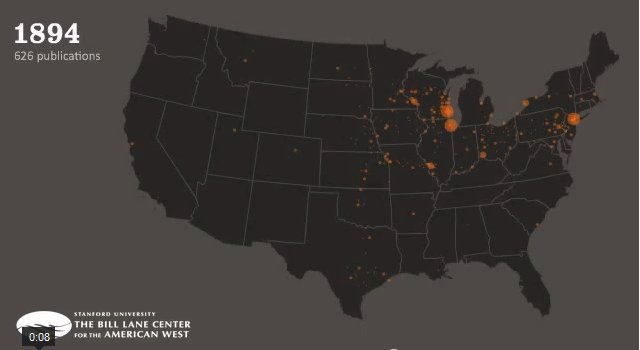
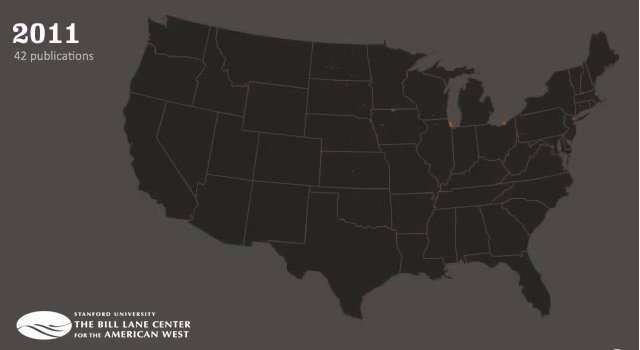
According to the Bill Lane Center for the American West at Stanford University, the first German-language publication appeared in the USA in 1732. This number fluctuated at levels under 10 until 1797, when the Pennsylvania Dutch population began to increase, peaking at 626 German-language newspapers available in 1894. Other than Pennsylvania, the largest German populations were centered around New York, Chicago and Milwaukee.

German1

I was born and raised in New York, and spent 9 years living in the heart of Yorkville, Manhattan’s German enclave in the 50’s.

l
136790

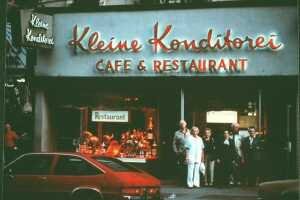
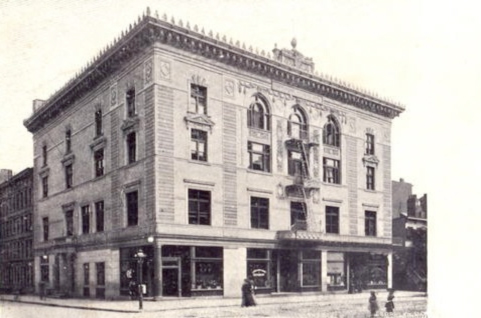
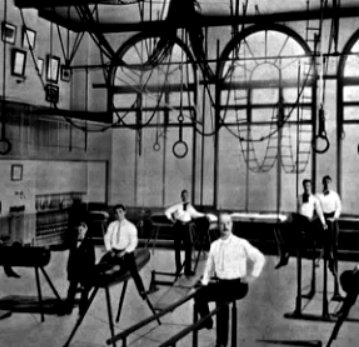
I often remember my mother speaking of Kleine Konditorei, although I have no memory of  ever going there, but there was a Turnverein (gym club) right across the street from our apartment where I went for some gymnastics classes.

turn

The Manhatten Turn Verein building on the corner of 85th and Lexington.

Turn2

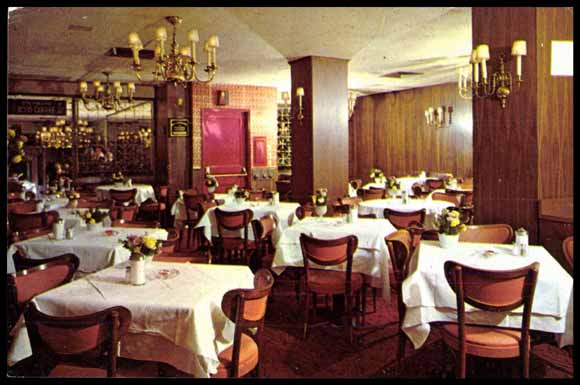
I’m not certain if this is the New York location, but the interior looked a lot like this – I remember the rings hanging from the ceiling everywhere.

street

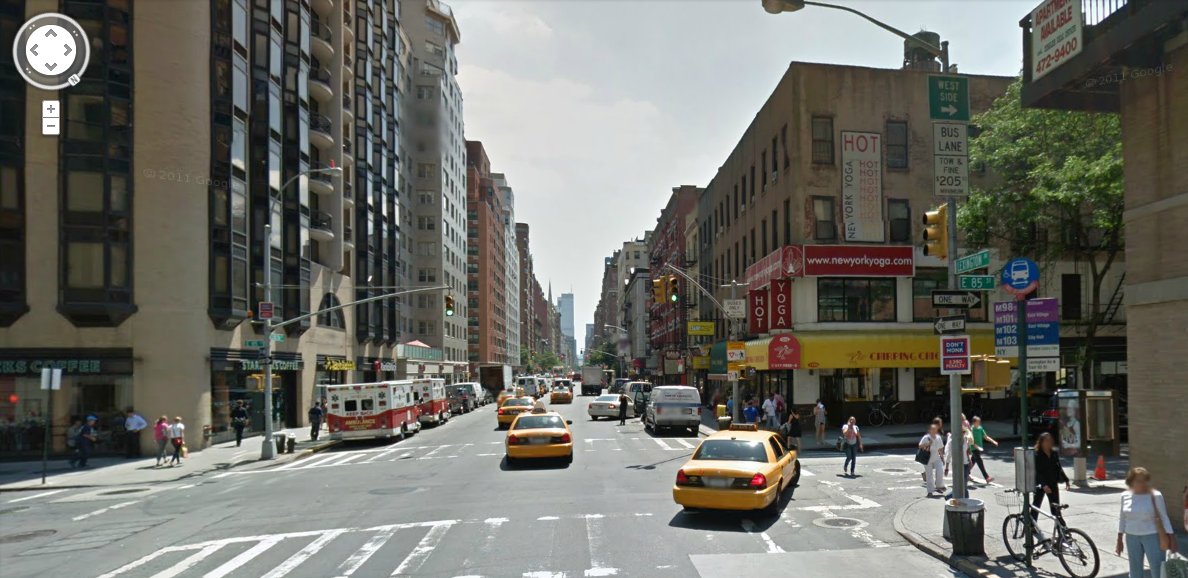
Street view showing my apartment building on the right (my bedroom window is just to the left of the word “Hot”) and the former location of the Turn Verein on the left.

A video recounting the history of the Turn Verein in the United States

There were also several German shops that I recall, including a deliciously stinky cheese shop. Sadly, rising rents and changing immigration laws tolled the death knell for Germantown, and little is left besides the Schaller and Weber grocery and the Heidelberg restaurant.

Aside from a small, anomalous tick upward in 1945 (not surprising, given world events), the number of German publications declined steadily; in 2011, only 42 publications remained, and surprisingly do not even show up on the 2011 map in the Pennsylvania region.

German2

An animated version of the data created by Dan Chang, Krissy Clark, Yuankai Ge, Geoff McGhee, Yinfeng Qin and Jason Wang shows the rise and fall over time.

http://youtu.be/R-HsTm5ELz0

Edit: As a result of a discussion at a historical New York Facebook page, I gathered up some links that are relevant to the history of the German community in NYC:

https://youtu.be/RJgZCmW2mOghttps://www.6sqft.com/germantown-uncovering-the-german…/

https://www.6sqft.com/kleindeutschland-the-history-of…/

(I still have a book of matches from the Kleine Konditorei).

This website is gone, but it was captured by the Wayback machine – it’s a lovely addition to the history of the area:

https://web.archive.org/…//www.uppereast.com/germantown

A video of memories of 86th street, some modern and some vintage. (Some of the pictures are kind of fuzzy, but it’s a nice look back.)

Der alte Wolf hat gesprochen.

Heads or Tails

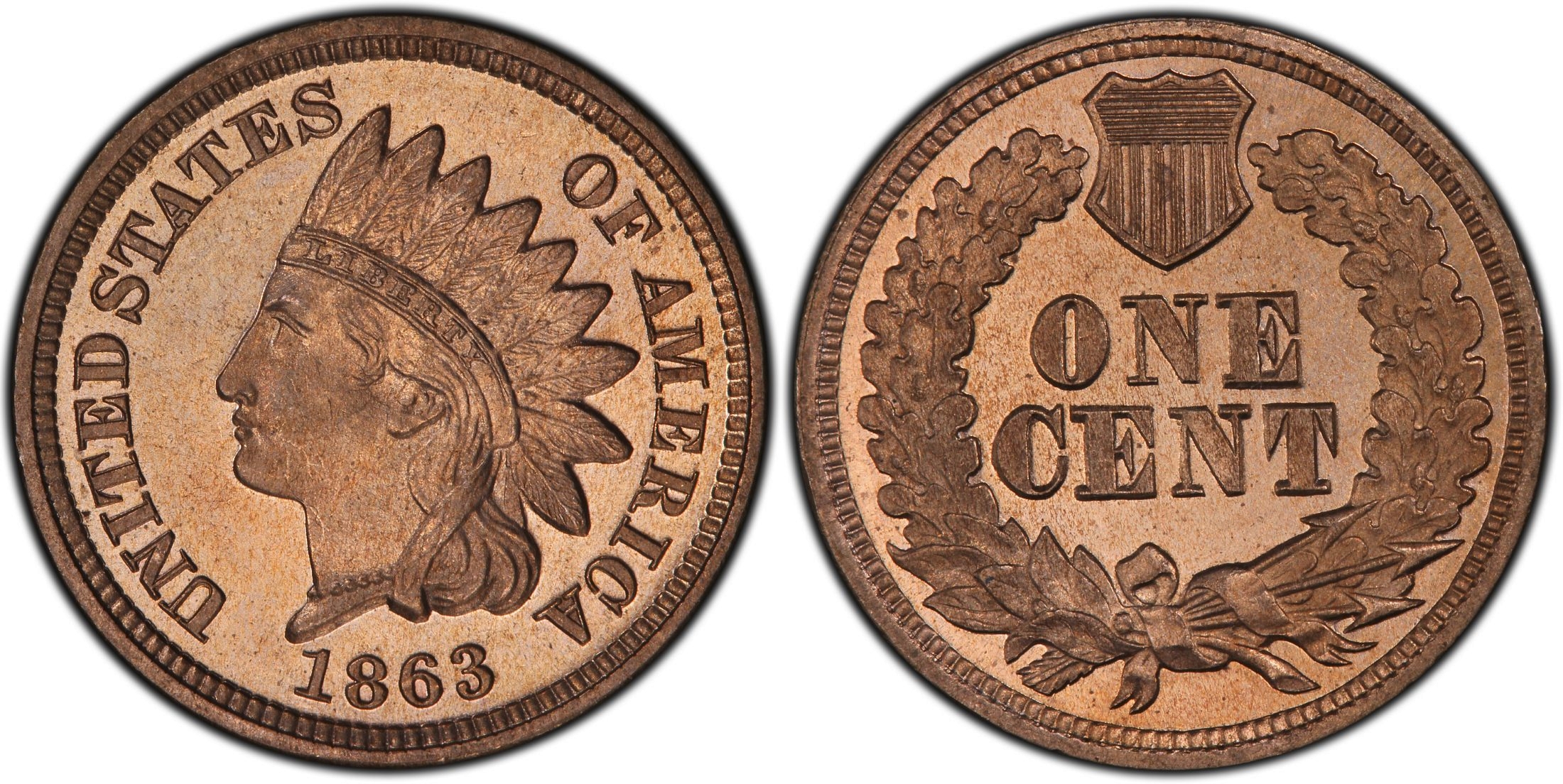
Heads or Tails in Different Languages

If you spot something that’s wrong, or a better version, or can add some history, or have a different language to add, feel free to leave comments!

1863-Indian-Cent

Catalan

cara o creu (face or cross)

Chinese (Taiwan):

Chiang chung‑cheng huo meihua (Chiang Kai‑shek or flower)

Czech:

hlava nebo orel (head or eagle)

Danish:

plat eller krone (flat or crown)
Note: My Danish contact has been hunting down the origin of this phrase. It appears no one really knows why “plat” is the word for “heads”.

Dutch:

kop of munt (head or mintage)
kop of let(‑ter) (head or letter)
kruis of munt (cross or mintage)

English:

heads or tails

Finnish:

kruuna tai klaava (crown or shackle)

French:

pile ou face (back or face)

German:

Adler oder Enzian (eagle or gentian) ‑ Austrian variety
Kopf oder Adler (head or eagle)
Kopf oder Schrift (head or writing)
Kopf oder Wappen (head or coat of arms)
Kopf oder Zahl (head or number)
Zahl oder Ähre (number or ear-of-corn) [1950’s]

Hebrew:

עץ או פלה (etz o pali – tree or Palestine)
tur o yas (tower or writing)

Italian:

testa o croce (head or cross)

Malay:

Kepala atau bunga (Head or flower)

Norwegian:

mynt eller kron(‑e) (mintage or crown)

Polish:

orzeł czy reszka (eagle or grate)

Portuguese:

cara ou coroa (face or crown)
cara ou cruz (face or cross)

Russian:

orjel ili reshka (eagle or grate)

Serbian, Croatian, Bosnian:

pismo ili glava (letter or head)
tura ili jazija (tower or letter)

Slovenian:

glava ali napis (head or writing)

Spanish

aguila o sol (eagle or sun)
sol o aguila (sun or eagle) (Mexico)
cara o ceca (face or mintage)
cara o cruz (face or cross)
cara o escudo (face or shield)
cara o sello (face or seal) (Ecuador)

Swedish:

gubbe eller pil (old man or arrow)
krona eller klave (crown or shackle)

Turkish:

yazı mı tura mı  (inscription or tower)

“I like to learn new words”

… said a Facebook acquaintance of mine.

Well then, you came to the right place; here are some of my favorites. (Most of these are Sniglets.)

ACCORDIONATED (ah kor’ de on ay tid) adj. Being able to drive and refold a road map at the same time.

AQUADEXTROUS (ak wa deks’ trus) adj. Possessing the ability to turn the bathtub faucet on and off with your toes.

AQUALIBRIUM (ak wa lib’ re um) n. The point where the stream of drinking fountain water is at its perfect height, thus relieving the drinker from (a) having to suck the nozzle, or (b) squirting himself in the eye.

ARACHNOLEPTIC FIT (n.) The frantic dance performed just after you’ve accidentally walked through a spider web.

BEELZEBUG (n.) Satan in the form of a mosquito that gets into your bedroom at 3 in the morning and cannot be cast out.

BOZONE (n.) The substance surrounding stupid people that stops bright ideas from penetrating.  The bozone layer, unfortunately, shows little sign of breaking down in the near future.

BURGACIDE (burg’ uh side) n. When a hamburger can’t take any more torture and hurls itself through the grill into the coals.

BUZZACKS (buz’ aks) n. People in phone marts who walk around picking up display phones and listening for dial tones even when they know the phones are not connected.

CARPERPETUATION (kar’ pur pet u a shun) n. The act, when vacuuming, of running over a string or a piece of lint at least a dozen times, reaching over and picking it up, examining it, then putting it back down to give the vacuum one more chance.

CASHTRATION (n.) The act of buying a house, which renders the subject financially impotent for an indefinite period.

CATERPALLOR (n.) The color you turn after finding half a grub in the fruit you’re eating.

DECAFLON (n.) The grueling event of getting through the day consuming only things that are good for you.

DIMP (dimp) n. A person who insults you in a cheap department store by asking, “Do you work here?”

DISCONFECT (dis kon fekt’) v. To sterilize the piece of candy you dropped on the floor by blowing on it, somehow assuming this will ‘remove’ all the germs.

DOPELAR EFFECT (n.) The tendency of stupid ideas to seem smarter when you come at them rapidly.

ECNALUBMA (ek na lub’ ma) n. A rescue vehicle which can only be seen in the rearview mirror.[1]

EIFFELITES (eye’ ful eyetz) n. Gangly people sitting in front of you at the movies who, no matter what direction you lean in, follow suit.

ELBONICS (el bon’ iks) n. The actions of two people maneuvering for one armrest in a movie theater.

ELECELLERATION (el a cel er ay’ shun) n. The mistaken notion that the more you press an elevator button the faster it will arrive.

EXTRATERRESTAURANT (n.) An eating place where you feel you’ve been abducted and experimented upon.  Also known as an ET‑ry.

FRUST (frust) n. The small line of debris that refuses to be swept onto the dust pan and keeps backing a person across the room until he finally decides to give up and sweep it under the rug.

GRANTARTICA (n.) The cold, isolated place where art companies dwell without funding.

HEMAGLOBE (n.) The bloody state of the world.

HOOVERGROOVER (hoo’ ver groo ver) n. One who has a neurotic compulsion to leave parallel vacuum tracks in the carpet.

IGNORANUS: (n.) (ig nor an’ us) Someone who is not only stupid but also an asshole.

INTAXICATION (n.) Euphoria at getting a tax refund, which lasts until you realize it was your money to start with.

KINSTIRPATION (n.) A painful inability to move relatives who come to visit.

LACTOMANGULATION (lak’ to man gyu lay’ shun) n. Manhandling the “open here” spout on a milk container so badly that one has to resort to the ‘illegal’ side.

LULLABUOY (n.) An idea that keeps floating into your head and prevents you from drifting off to sleep.

NEONPHANCY (ne on’ fan see) n. A fluorescent light bulb struggling to come to life.

PEPPIER (pehp ee ay’) n. The waiter at a fancy restaurant whose sole purpose seems to be walking around asking diners if they want ground pepper.

PETONIC (peh ton’ ik) adj. One who is embarrassed to undress in front of a household pet.

PHONESIA (fo nee’ zhuh) n. The affliction of dialing a phone number and forgetting whom you were calling just as they answer.

PUPKUS (pup’ kus) n. The moist residue left on a window after a dog presses its nose to it.

TELECRASTINATION (tel e kras tin ay’ shun) n. The act of always letting the phone ring at least twice before you pick it up, even when you’re only six inches away.

The Old Wolf has spoken.


[1] The first time I read this word I had just broken three ribs. It came across my desk as part of a LISTSERV message, and it was the first time in my life that I could neither stop laughing and crying at the same time.

The Meaning of Liff

I first saw this gem in hardback in a shop in Oslo, and figured it would be online.

The Meaning of Liff by Douglas Adams and John Lloyd.

Not only the words are delightful, but the fact that they are so in touch with all these little scraps of life that hardly anyone ever talks about… There’s an expanded version also, but it doesn’t appear to have made it online yet.

A few examples:

LINDISFARNE (adj.)
Descriptive of the pleasant smell of an empty biscuit tin.

MALIBU (n.)
The height by which the top of a wave exceeds the height to which you have rolled up your trousers.

YEPPOON (n.)
One of the hat-hanging corks which Australians wear for making Qantas commercials.

The Old Wolf has spoken.