Pompeii: The Movie

Pompeii was an interesting movie. I can see why the critics trashed it; the acting was not spectacular and there was way too much overblown drama and not much more than a sappy, derivative plot. That said: I lived in Naples for around 18 months, right under the shadow of Vesuvio. I spent many hours wandering the byways of both Pompeii and Herculaneum, trying to imagine what life was like there, and what the catastrophe must have been like. Seeing those ash-cast sculptures that used to be real, live people in the museum is terribly haunting; the CG representation of the eruption and its (possible) effects on the city was chilling in the extreme, because however it looked, it would have been terrifying.

Pompeii - December 1970 - 14

 Ash cast of a victim.

Pompeii - December 1970 - 10

 Pompeii – Temple plaza

Jun 1971 - Herculanium - Vesuvius.jpg

 Herculaneum and Vesuvius in the background. Herculaneum was buried more deeply and by hotter ash than Pompeii, hence has a different feel about it. Much has been learned since I was there in the 70s – at the time, it was thought that Herculaneum was buried by hot mud flows rather than ashfall, but this appears not to be the case.

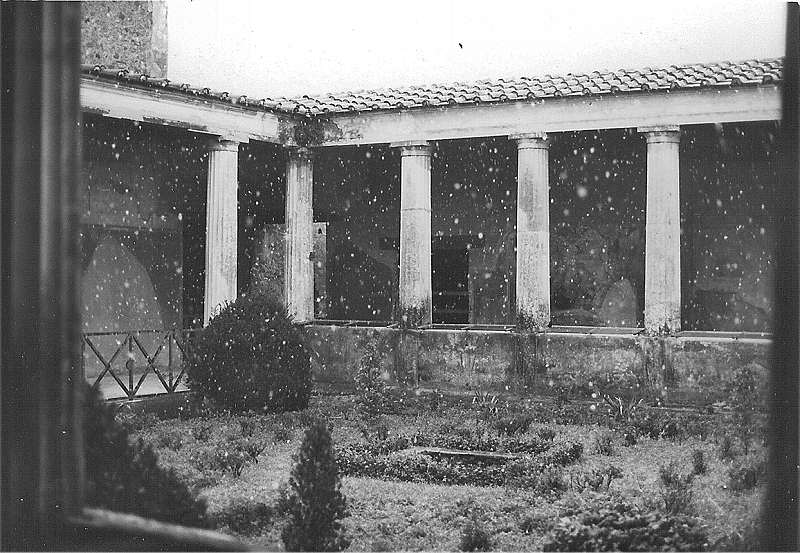
Pompeii - Snow 1

A very rare day of snow in a Pompeiian courtyard. 1970

tour_img-110394-48

The ruins of Pompeii with suburbs of modern-day Naples between it and Vesuvius. It is to be noted that if the mountain ever decides to get its rocks off again, the result could be more catastrophic than the eruption of 79 AD.

In the plus column: Jared Harris, with whom I fell in love as David Robert Jones and Moriarty; he’s always a pleasure to watch. I thought the development of the relationship between Milo and Atticus was one of the more satisfying parts of the film; I’d give it 4 stars out of 10 overall.

The Old Wolf has spoken.

You don’t need people’s opinions on fact.

On May 6th, the government released the National Climate Assessment, 1250 pages long and authored by over 250 people.

iceberg

What kinds of people? Government-paid alarmists and corrupt scientists, right? A secret cabal of people who are raising a false alarm to discredit… well, you’ve heard all the counter-arguments, not one of which is worth the powder to blow it to Hell with.

Let’s look at some of what went in to this report: [1]

  • Users and stakeholders were engaged from the very beginning. Everybody could contribute: NGOs, farmer, industry, Native American nations. Many thousands of people consider this as their personal report and have embraced it.
  • The team included former Bush White House officials with climate science expertise who also functioned as lead authors.
  • There were reps from the petroleum and mining industries, economists, agronomists, fisheries experts, and city planners. There were experts that dealt first-hand with the aftermaths of Katrina and Sandy and the droughts and fires and power shortages and the spread of disease in the West.
  • Notice of every meeting was pre-published in the Federal Register, and anyone, any citizen or group at all, was welcomed to come and comment.
  • There was a several-month open review, during which anyone was welcomed to raise concerns or criticisms, and comments were abundant.
  • The report was reviewed by the National Academy of Sciences, which is firmly non-partisan.
  • Comments from all of these sources were incorporated to make the report better.
  • There was a public, traceable account for every key finding, so that anyone can look back and see how the finding was arrived at, what the studies were that it was based on, and, it is even possible to follow the account back to the original data for those studies.
  • The conclusions in the report represent a consensus of all of the authors and advisors.  The final vote to approve was unanimous.
  • The report is a product of not just NASA, but a consortium of 13 federal agencies called the US Global Change Research Program. NASA contributed substantially, but so did others, including NOAA/Department of Commerce, the Department of Energy, Department of the Interior, the Environmental Protection Agency, Department of Transportation, Health and Human Services, the Smithsonian, USAID, the Department of Agriculture, the National Science Foundation, the Department of Defense, and the Department of State. It was a combined effort of many, many people from both private and public sectors.

With all of these sources, with all of this transparency, with the wide diversity of contributors and opportunities for public input – not a restricted subset, but anyone could give input, I trust the results of this report implicitly. The results are incontrovertible. This is not just Al Gore grandstanding for political gain (although I think “An Inconvenient Truth” was right on the money, regardless of its underlying motivation) – this is science. And it works.

The Gallup Poll revealed that 1 in 4 Americans doubt the veracity of climate change. However, what the public thinks of established fact is irrelevant. Some people have such an overwhelming need to be right that they ignore indisputable facts. [2] But in the end, this opposition, despite how well-funded it is and for whatever reason, will fade. There may still be over 400 people in the world who believe the earth is flat, but what they believe changes nothing.
If you have any questions, visit the website. Explore it. Understand it. And do what you can to hold back the tide, even if the trend may be irreversible.
The Old Wolf has spoken.

[1] Source: A well-placed official who contributed heavily to the work involved, whom I trust implicitly.

[2] A story from a redditor, /u/RamsesThePigeon:

The year I was in third grade was one of the best and worst of my entire educational experience, and both of those extremes were because of the teacher I had. She was beloved by most of her students – the female ones especially – but had a habit of being passive-aggressive and saccharine towards more difficult pupils. She’d find (or invent) reasons to ignore difficult questions, offer vague threats about impending punishments, or make small efforts to turn classmates against one another. She was not an especially likeable educator, and she became a truly reprehensible one when she insisted that Jupiter was bigger than the sun.

At first, it seemed like a misunderstanding. Our class had just entered into an astronomy unit, and one of our activities was to construct a scale model of the solar system. The reference image we used came from a picture book, and in it, the sun had been reduced in size. The teacher had not noticed this fact, and was therefore operating under the mistaken assumption that Jupiter was our largest celestial neighbor.

Well, I knew better, and I tried to correct her. She replied to me with a tone of aloof dismissal, stating quite clearly that I was wrong. “That’s okay, though,” she said. “After all, you’re in school to learn new things.” Then she smiled sweetly, and I returned to my seat feeling thoroughly confused and frustrated. In the weeks that followed, I engaged in an all-out war against my teacher’s pseudo-science. My father, having heard everything from me, sent me to school with one of his college textbooks, hoping to turn the tide of the battle. My teacher refused to even look at it. “Class,” she said, rolling her eyes, “who can tell Max what the biggest object in the solar system is?”

My face was burning with anger and shame as every other student shouted “JUPITER!”

Things only escalated from there. I refused to back down, despite having been labeled as the class dunce. Each time the topic came up, I tried to offer my evidence… and each time, I was steadfastly opposed by everyone within earshot. Finally, after over a month of torment, our astronomy unit culminated in a field trip to the local planetarium. The show was a breathtaking adventure through our galaxy and the universe beyond, and it left me feeling infinitesimally small… yet strangely empowered. As the lights came up, our guide to the cosmos asked if there were any questions.

“Which is bigger,” I shouted, jumping to my feet, “Jupiter or the sun?!” My entire class sighed in frustration, my teacher barked at me to sit down, and the astronomer looked thoroughly confused.

“The sun, of course,” he scoffed.

A hush fell over the room. After a moment of utter silence, a girl named Melissa spoke up in a condescending tone. “Well, sir, we have a chart that says Jupiter is bigger.” The astronomer looked at her. He looked at my teacher. Then he looked at me with an expression of sympathy.

“Little girl,” he said, returning his attention to Melissa, “if you look at the picture again, you’ll see that the sun is being shown at a fraction of its actual size. Otherwise, it wouldn’t fit on the page.” His gaze moved to his next victim, who had slumped down in her chair so as to be almost as small as her students. “Your teacher should have told you that.”

Upon returning to our classroom, all the students crowded around our reference book. Sure enough, a tiny block of text explained that the sun had been scaled down in the illustration. I declared my triumph, having finally been vindicated. Nobody apologized, my teacher found new reasons to punish me, and I was treated with no small amount of scorn, but I didn’t care. From that day forward, I knew to never be afraid of asking questions, nor of standing up for facts in favor of fiction.

From that day forward – at least until it was taken away – I proudly wore my homemade dunce cap with a smug grin.

This was a teacher. Someone who should have known this bit of close-to-home science knowledge as surely as she knew 2 gozinta 4 two times. But somehow she was ignorant of this fact and clung to it tenaciously, at the expense of humiliating a dissenting student and indoctrinating an entire class with a blatant falsehood.


Axel Erlandson, the true “shepherd of the trees.”

Treebeard would have split his bark with envy.

Axel Erlandsen

Erlandson sitting on a natural chair crafted out of trees.

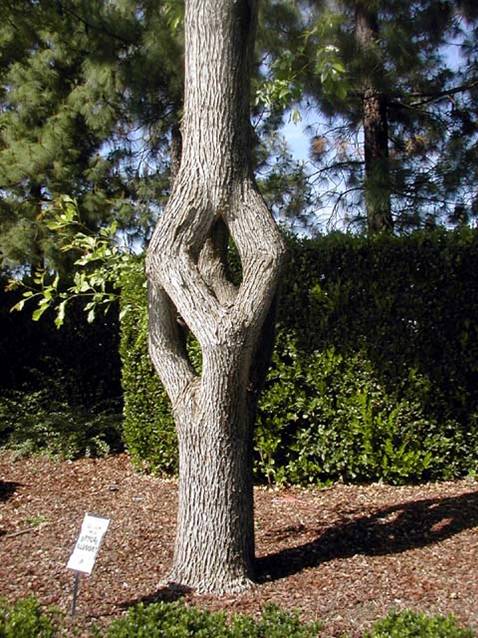
Swedish-American farmer Axel Erlandson had a way of coaxing trees to do the most astonishing things, was highly secretive about his methods, and took his secrets to the grave. His trees were originally exhibited at his Tree Circus, and many were moved to Gilroy Gardens where they can be seen today.

Twolegtree

The “two-leg tree”

Needle_n_thread

Needle-and-thread tree

DCF 1.0

The Basket Tree

Cubetree

The Cube Tree

circus-tree-002

Hook and Eye

shaped-tree-006

Another Cube Tree

shaped-tree-011

Squared Circle

shaped-tree-010

Knot

It’s a shame these techniques were lost.  It would have been wonderful had Erlandson been able to pass his work down to the next generation. But as long as his trees live, others will be able to marvel at his skill.

The Old Wolf has spoken.

Think of this the next time you gas up.

I was led to this sad video by AmazonWatch via one of my friends, found on his blog “Chevron Shills.”

Because Marina Aguinda Lucitante was singing about Texaco, I had to ask him what the relationship between Chevron and Texaco was, and he kindly explained that Chevron purchased Texaco in 2000. He wrote to me,

“When they purchased Texaco’s assets, they also took on its liabilities. They were warned from the get-go that this would make them responsible for the catastrophe in Ecuador, but they didn’t care. So, although it was technically Texaco that destroyed the rain forest, Chevron still has plenty of blood on its hands, because its army of lawyers and its PR team have fought tooth and nail to prevent Chevron having to perform the kind of cleanup or make the type of reparations that could/would have prevented the many cancer deaths which have occurred over the last few decades.”

When we stick that nozzle in our car, we don’t think about the human carnage left in the wake of oil companies. It’s difficult, too, because our entire  world runs on fossil fuels, despite small advances being made in various places. One can’t curl up in a cave and not be part of society. But spreading awareness and promoting alternate energy sources wherever possible can be done.

I now live in a small community whose power is provided by natural gas – still a non-renewable resource, but less polluting than coal. But when I lived in Salt Lake, I took full advantage of their Blue Skies program which allowed consumers to pay a small surcharge, guaranteeing that their energy would be purchased from wind power.

I purchased a Prius to keep my gasoline usage down, and although there are numerous analyses that show the net carbon footprint is not significantly less because of the costs and impact from manufacture and disposal of the battery technology, I still feel that over the 7 years that I’ve owned it, my gas consumption has been significantly less than it otherwise might have been.

While an eGallon is significantly cheaper than gasoline, even in the most expensive states, fully-electric vehicles still have issues, since that electricity has to come from largely fossil sources at the moment, but we can’t let that stop us from continuing to push for renewable and non-polluting energy sources.

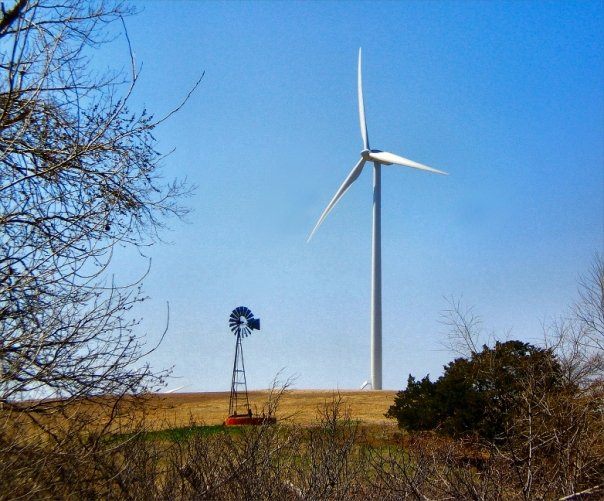
Windmills, then and now Somewhere in the Great Uni
Image ©2009-2014 Old Wolf Enterprises


Wind power? I’m a big fan.

The Old Wolf has spoken.

The Cricket Chorus: Reality trumps the Internet Once Again

I can’t count the number of times I’ve seen this story pop up on various social media and fora:

“Someone Recorded Crickets then Slowed Down the Track, And It Sounds Like Humans Singing”

For myself, I had doubts about this the first time I heard it – I found several tracks of crickets singing, slowed them down to various speeds, and they sounded like… drunken crickets singing. The shared articles usually include the sentence,

“Though it sounds like human voices, everything you hear in the recording is the crickets themselves.”

artworks-000062856541-r9c5kg-t200x200

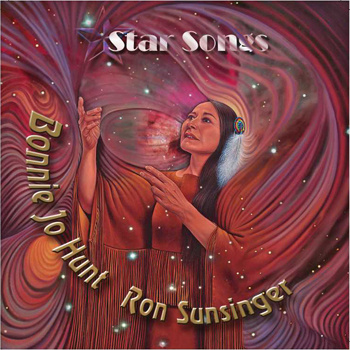
Well, as lovely as it sounds, it just ain’t so. It’s actually a multi-track recording, consisting of crickets and the beautiful operatic voice of Bonnie Jo Hunt.

a0102500696_2

You can read the full story at ScienceBlogs. Edit: This matter is not at all clear. I suggest that you read all the comments at the ScienceBlogs article and come to your own conclusion. A commenter named Thibaut refutes the claims made there and provides some of his own experimental results, but other comments back up the claims of the ScienceBlogs author and provide additional information as to the origin of the viral track. For myself, until I see further confirmation that crickets can be made to sound like a human chorus through audio manipulation, I remain unconvinced.

The Old Wolf has spoken.

When the earth decides to let go.

On March 14, 2010, rain-sodden ground on a hillside to the west of Maierato in Calabria, Italy, had had enough of fighting with gravity, and slid into the valley below. The slide was captured by an amateur photographer amid the cries of people to Run! Run! and various oaths to “Madonna santissima!” The video is truly chilling – we don’t expect good old terra firma to let go like that under our feet – it’s like a river of earth.

Fortunately for the village, the hillside was undeveloped except for agriculture; still, there was a lot of damage to the neighboring village.

10_02 Italy 1

Maierato before the slide.

Maerato2

After.

If you have Google Earth, just do a search for Maierato, Calabria, Italy – being able to see the elevation and move around the area gives you a good idea of the lay of the land.

For no reason, here’s another video of an epic landslide captured in France:

And one more:

This is the 1993 Pentai Ramis landslide in Malaysia. The landslide took place in an abandoned open cast tin mine close to the coast. This area of Malaysia is well known for its tin mining industry. The video footage shows the rapid collapse of the working face closest the sea, allowing complete flooding of the mine and forming a new cove measuring approximately 0.5 km2 (0.19 sq mi). Although the video quality is poor, the impact of watching this much earth move is powerful – it just keeps going, until the ocean floods in.

The Old Wolf has spoken.

An Autumn hike

I’m out of shape.

Old_Wolf_Cry

It’s been over three years since I was approaching marathon distance on my hikes in the Uintahs – life took a couple of hairpin turns for me and that put a bit of a kink in that goal, but lately I’ve been doing more walking and it’s my intention to get back into the habit.

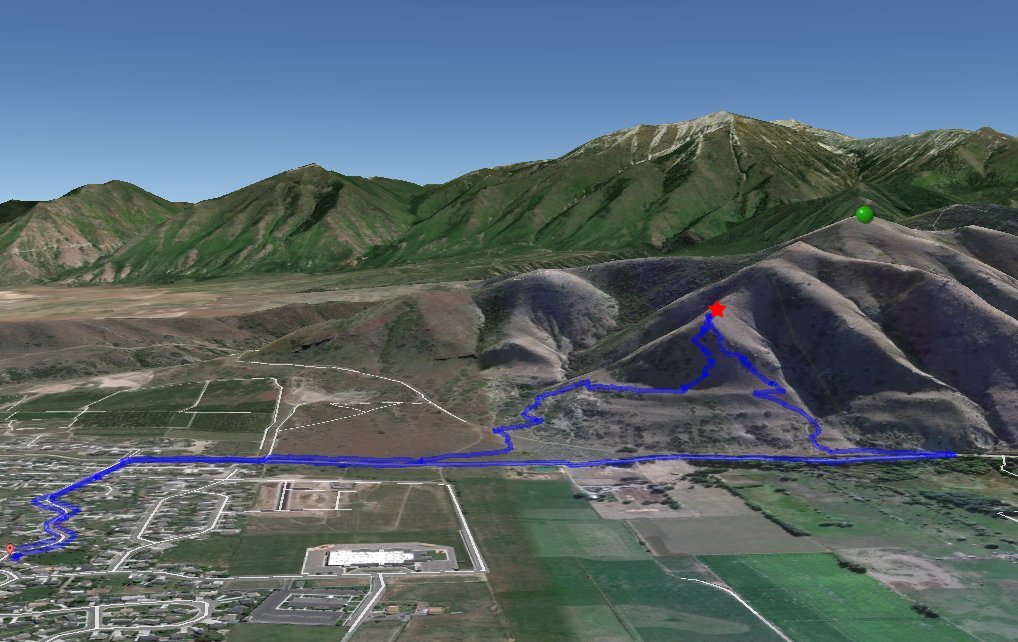
Yesterday I took a walk up the side of the hill toward Mollie’s Nipple (the green ball below) which I attained in July of 2011 via a different, longer route (up the back ridge); I only made it up the side about 1,000 feet before my energy ran out, but it was a good climb just the same.

walk

3.48 miles

Followed the canal until I found a place to cross and headed up the face of the hill. By the time I got up there, the sun had crested the mountains and the slope up to the next level was warm and bathed in sunlight, so I stuck around a while enjoying the warmth before heading back down. Next time I go this route I think I’ll go up the shoulder instead of the face, it may be a bit easier.

Some shots from the  trek:

IMAG2780

The Payson temple framed by wildflowers.

184440_1000

Comparison shot of the temple location taken in July of 2011

IMAG2787

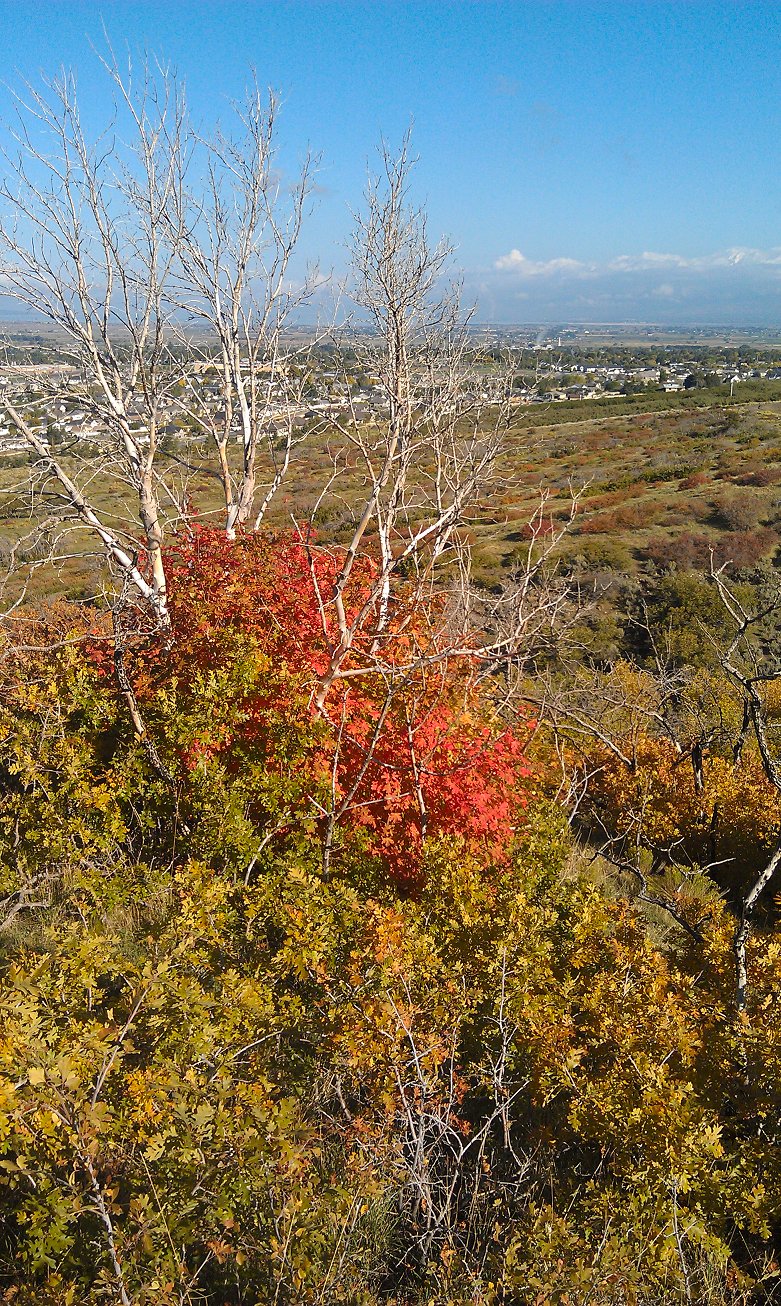
Skeletons. A fire came over the ridge in 2008 and threatened homes in the valley; there are still reminders everywhere. It will take decades for the mountain to recover.

IMAG2788

A patch of color

IMAG2790

A sage field

IMAG2789

Another kind of skeleton

 IMAG2778

Sunrise over Spring Lake

It’s sad in a way to see the summer coming to an end, but Autumn in Utah can be a beautiful season.

The Old Wolf has spoken.

The Maine Adventure

I’ve been out of town for a week and have not had regular computer access. But  here’s a preview of some things to come.

1374311_10151862475603851_1546537165_n


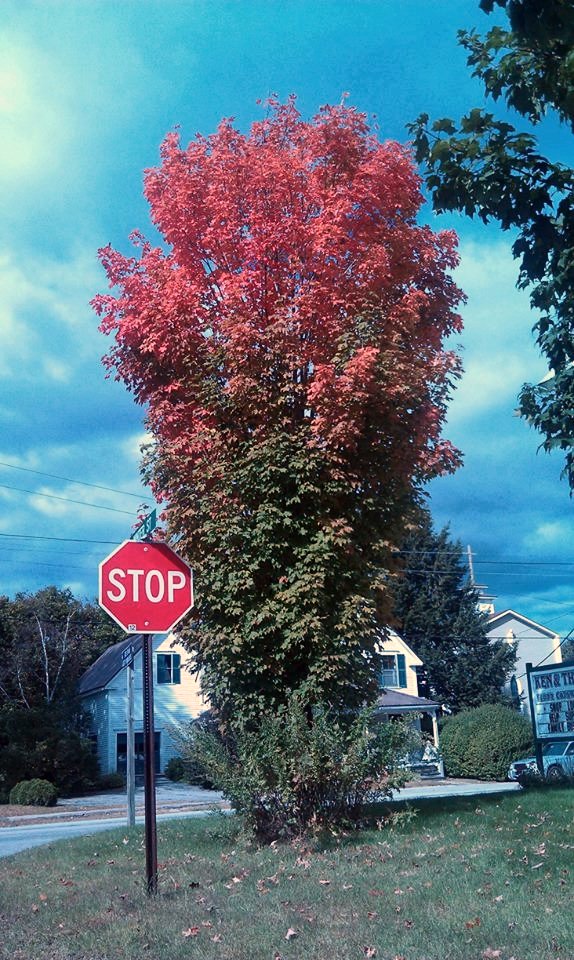
On fire from the top down. Color was at its peak in the north and west, but just beginning to show in the south and east; still got to see some beautiful displays, though. More to come soon.

The Old Wolf has spoken.