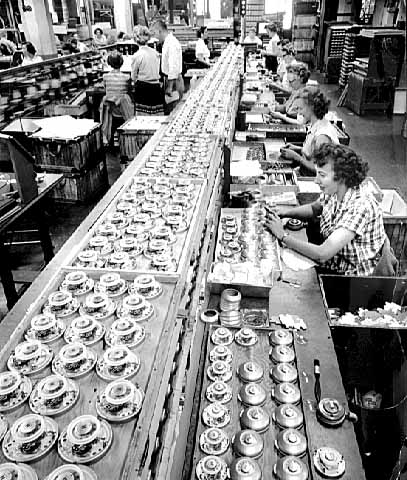
Honeywell Round Thermostats ready for final checkout and packaging, Golden Valley. Found at the Minnesota Historical Society
Honeywell Round Thermostats ready for final checkout and packaging, Golden Valley. Found at the Minnesota Historical Society

The desk upon which my computer sits doesn’t have casters, but it’s from exactly the same era – red formica top and all, and has a set of matching red vinyl chairs. I love retro stuff like this. If my wife’s younger son ever gets out here with a truck or something, it’s his. Until then, I get to enjoy it.
The Old Wolf has spoken.

This is either incredibly cool, or wrong on every possible level, depending on what you think of Harley-Davidson and scooters in general. More on the Topper from Wikipedia.
Since we’re on the subject of scooters:

Actor Joe DeSantis on a Vespa in Calabria, 1953. The Italians have a saying: “o la moglie o la moto,” meaning that you can have a wife or a motorcycle, but not both.
The Old Wolf has spoken.

As a youngster I owned one of the ubiquitous Magic 8-Balls, and loved it. However, this novelty did not appear in its current form until 1950. Prior to that date, a number of precursors were on the market. Albert C. Carter invented the working guts, inspired by a “spirit writing” device used by his mother, Mary, a Cincinnati clairvoyant, and applied for a patent in 1944. Carter and his brother-in-law Abe Bookman formed Alabe (Al & Abe) Crafts along with store owner Max Levinson in 1946. The first device developed was called the Syco-Seer, a 7″ tube filled with dark liquid and divided into two compartments – each end held a die and a window, and each end would give different answers. The patent was assigned to Bookman and Levinson, but before the patent was granted in 1948, Carter died under somewhat mysterious circumstances – he lived a troubled life and lived his last years in flophouses, constantly broke; Bookman later said that he bought every idea Carter came up with, which kept him going until his death. “When he was sober, he was a genius,” Bookman said.

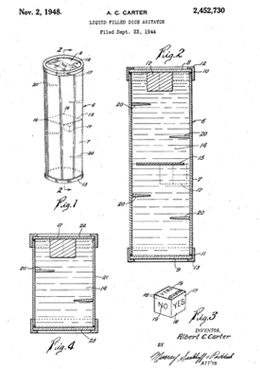
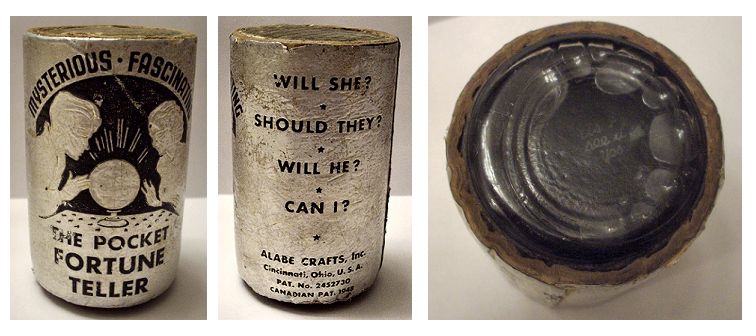
After Carter’s passing, Alabe Crafts made some improvements to the device, reducing it to a single-sided device, and sold it as Syco Slate: The Pocket Fortune Teller.

At some point it was marketed simply as The Pocket Fortune Teller, of one of which I happen to be the proud owner:
Later, Alabe changed the tube to a crystal ball; this did not help sales, but it did attract the attention of Brunswick Billiards, who produced promotional pieces in the form of a “Magic 8-Ball.” After Brunswick’s contract expired, the product continued to be marketed in that form, and is today sold by Mattel who move over a million units a year.
Q: Has the Old Wolf spoken?
A: Signs point to Yes.
External links:
Magic 8 Ball at Wikipedia
Patent Plaques: Magic 8 Ball
Timeless Toys: Classic Toys and the Playmakers Who Created Them
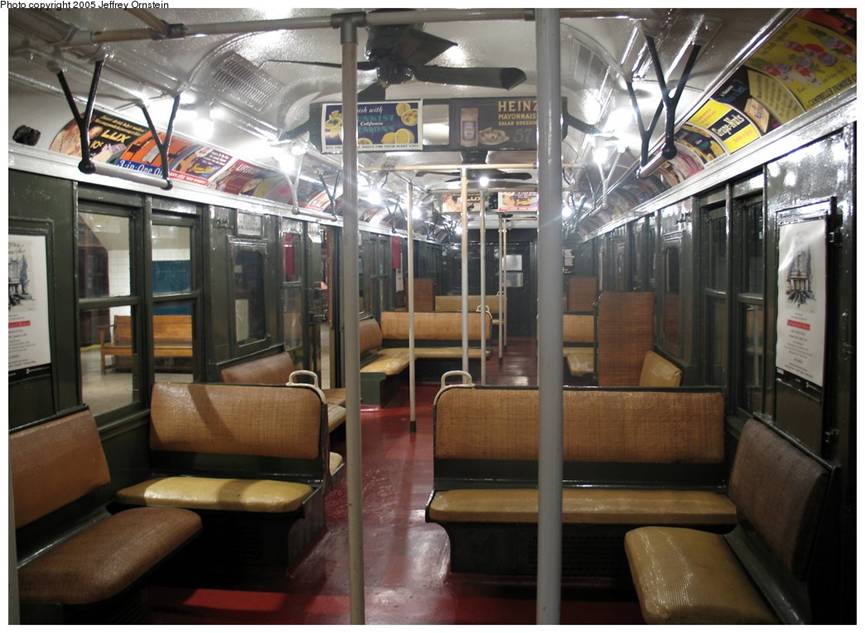
Those rattan-woven seats… I saw a picture of this subway car and had a flashback – as a child, I always thought they looked like corn on the cob. The fans on the ceiling… in the days before air conditioning, those subways could be stifling. And when the trains went over a dead spot in the 3rd rail and the lights went out, the little emergency lights in the ceiling would come on.

These were everywhere – Chiclets and Dentyne and gum, oh my – a piece for a penny. You’d put in your coin, slide the lever, and press it down to vend your prize, or just put your penny in the appropriate slot and turn the dial.

Two lines only: BMT and IRT. IND came later. When you’d get to 42nd Street, red and green light bulbs in the ceiling of the stations would guide you to the correct line, with blue ones for the cross town shuttle. Hole-in-the wall vendors: The Wizard’s Shop that sold magic; fresh-squeezed orange or papaya juice, all sorts of wonderful things.

Such elegant mosaic work in so many of the stations.
The Old Wolf has spoken.
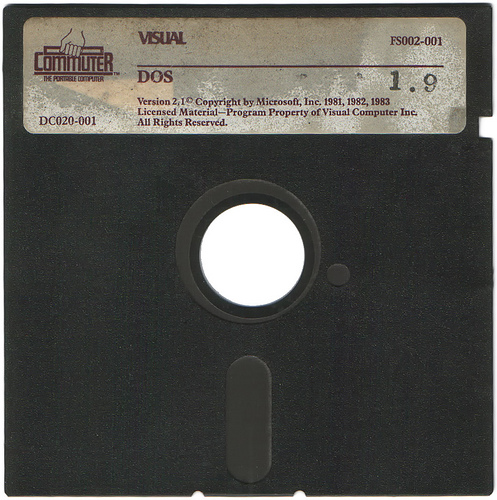
Geek Alert: This is old humor, dating from when floppy disks looked like this:
1. Never leave diskettes in the disk drive, as data can leak out of the disk and corrode the inner mechanics of the drive. Diskettes should be rolled up and stored in pencil holders.
2. Diskettes should be cleaned and waxed once a week. Microscopic metal particles can be removed by waving a powerful magnet over the surface of the disk. Any stubborn metallic shavings can be removed with scouring powder and soap. When waxing diskettes, make sure application is even. This will allow the diskettes to spin faster, resulting in better access time.
3. Do not fold diskettes unless they do not fit in the drive. “Big” diskettes may be folded and used in “little” diskette drives.
4. Never insert a diskette into the drive upside down. The data can fall off the surface of the disk and jam the mechanics of the drive.
5. Diskettes cannot be backed up by running them through the Xerox machine. If your data is going to need to be backed up, simply insert two diskettes together into the drive. Whenever you update a document, the data will be recorded on both diskettes.
6. Diskettes should not be inserted or removed from the drive while the red light is flashing. Doing so could result in smeared or possibly unreadable text. Occasionally the red light continues to flash in what is known as a “hung” or “hooked” state. If your system is “hooking” you, you will probably need to insert a few coins before being allowed to access the disk drive.
7. If your diskette is full and you need more storage space, remove the disk from the disk drive and shake it vigorously for two minutes. This will pack the data enough (Data Compression) to allow for more storage. Be sure to cover all the openings with scotch tape to prevent loss of data.
8. Data access time can be greatly improved by cutting more holes into the disk jacket. This will provide more simultaneous access points to the disk.
9. Diskettes can be used as coasters for beverage glasses, provided that they have been properly waxed beforehand. Be sure to wipe the diskettes dry before inserting into drive. (see item #2 above)
10. Never use scissors and glue to manually edit documents. The data stored is much too small to be seen by the naked eye, and you may end up with data from some other document stuck in the middle of your document. Razor blades and scotch tape may be used, provided the user is equipped with an electron microscope.
11. Periodically spray diskettes with insecticide to prevent system bugs from spreading.
The Old Wolf has spoken
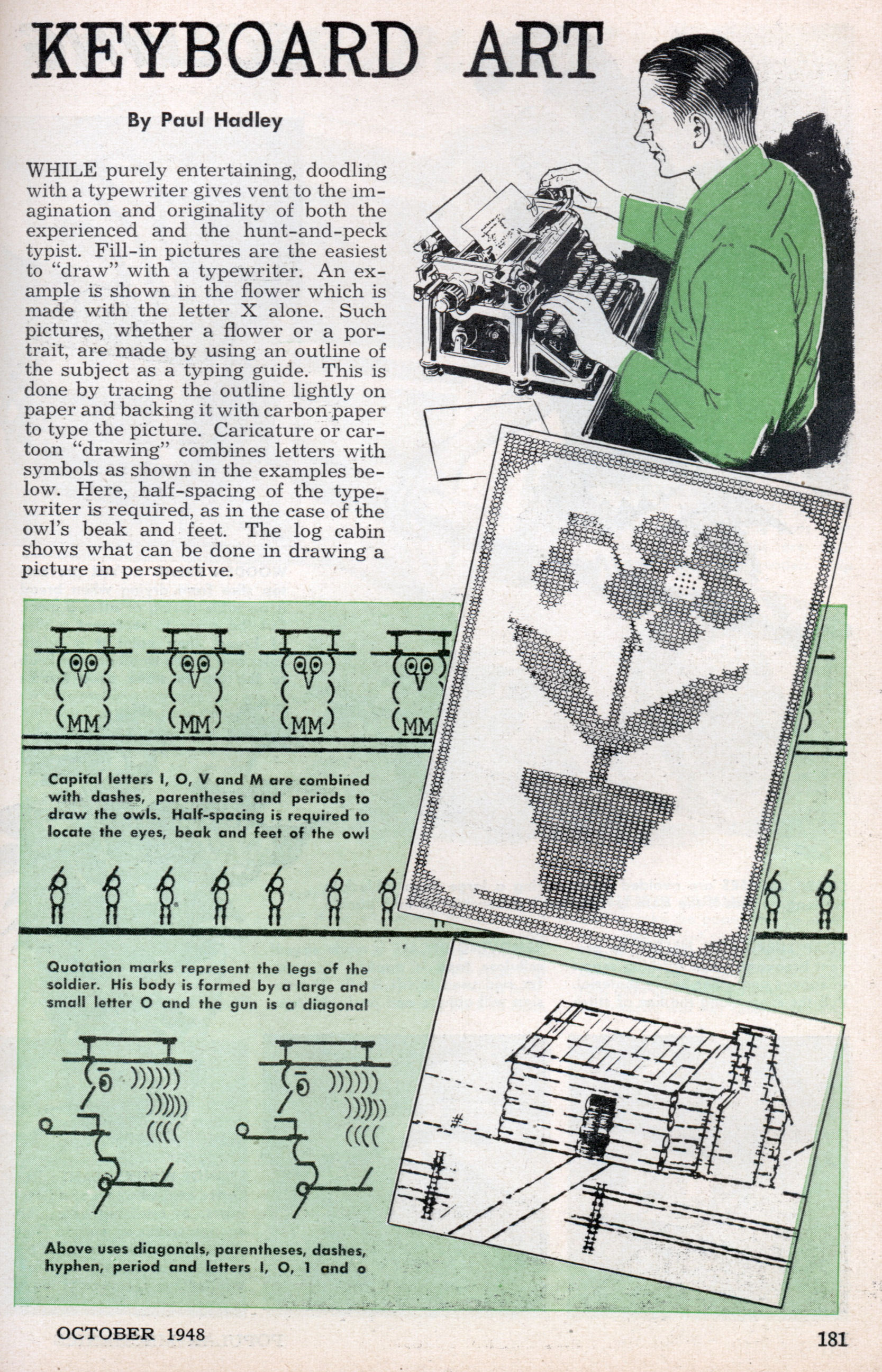
Found at Modern Mechanix

We all chuckled when Marty got ready to do a riff in front of this giant speaker… I think everyone knew what was going to happen.
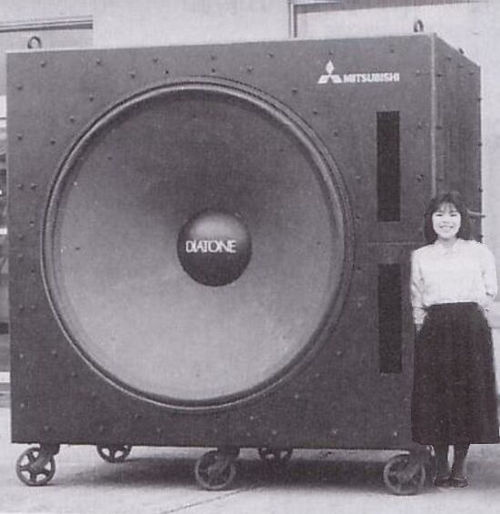
This one – a Diatone speaker from Mitsubishi – was even larger. Diatone was a loudspeaker division of Mitsubishi Electric. The first ones were built in Spring of 1945 for the Japanese radio station NHK; the division closed in 1999.
A wonderful series of French postcards (no, not that kind, you deviants) from 1898 depict what life would be like 102 years in the future. Some of them are straight out of Jules Verne (particularly their notions of aerodynamics… what’s holding some of those things up in the air is beyond me) but others hit surprisingly close to the mark, allowing for the fact that everything is cast in terms of 1898 technology. Here are some selected images – click each one for full-size.

A torpedo plane

Motorcycle policemen
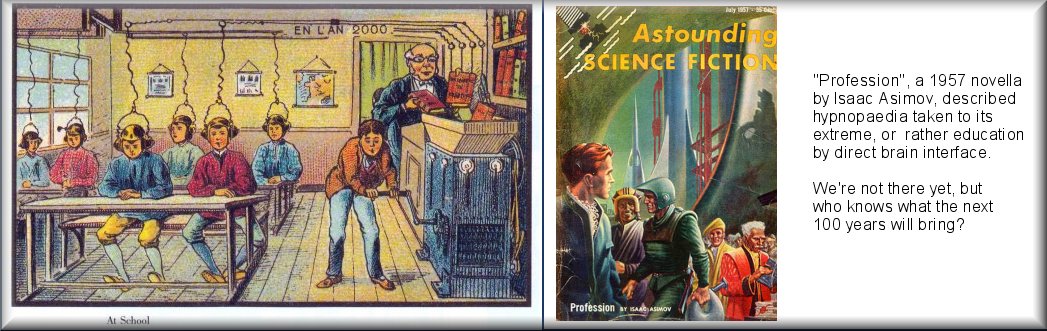
Schooling

A house on the road
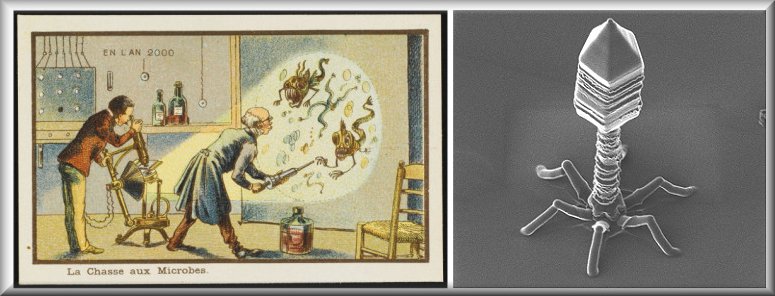
On the hunt for microbes. The image on the right is a electron micrograph of the T4 bacteriophage virus, which for all the world looks like a Lunar Excursion Module.
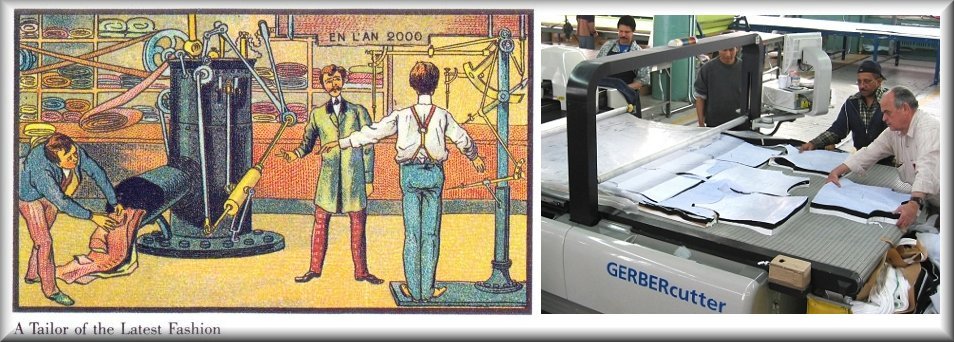
We’re not quite to the stage of computerised tailors, but we’re getting close. I’m still waiting for replicators.
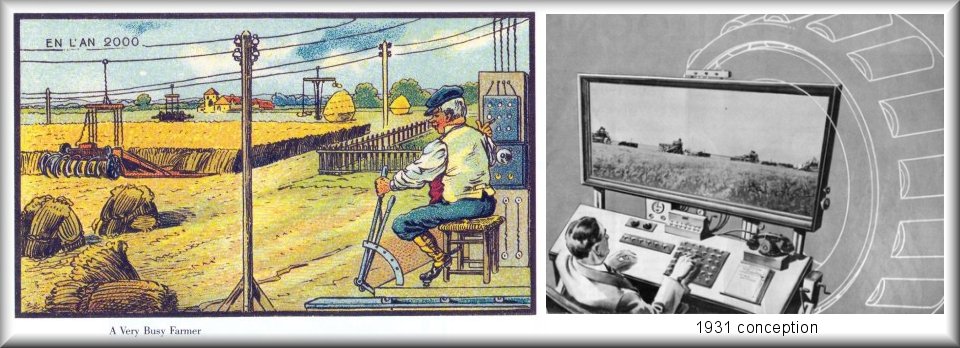
Remote-control farming. The image on the right shows what could be a very reasonable control panel with large LED display for directing the operation of GPS-controlled combines, planters, and whatnot – and this at a time when only a few farms had electricity.
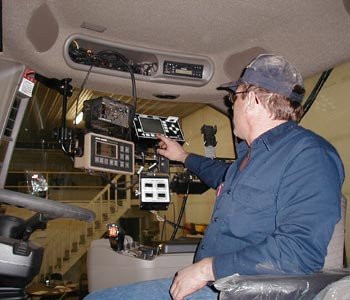
Modern farmer in his GPS-controlled tractor. The technology is there – making something like this practical should not take more than a decade if people were to put some development effort into it.

Electric train concept on the left, Maglev train demo in China on the right.
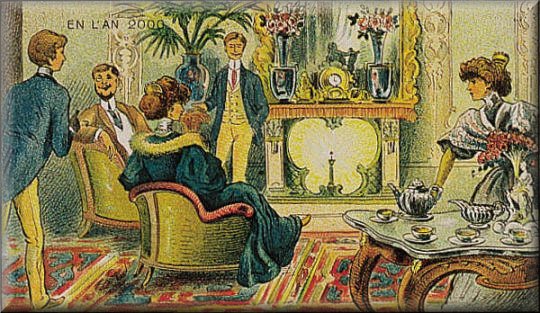
Heating with Radium. While the concept is novel, the use of radium in industry was fraught with tragedy; obviously direct radioactivity is not a practical heat source.
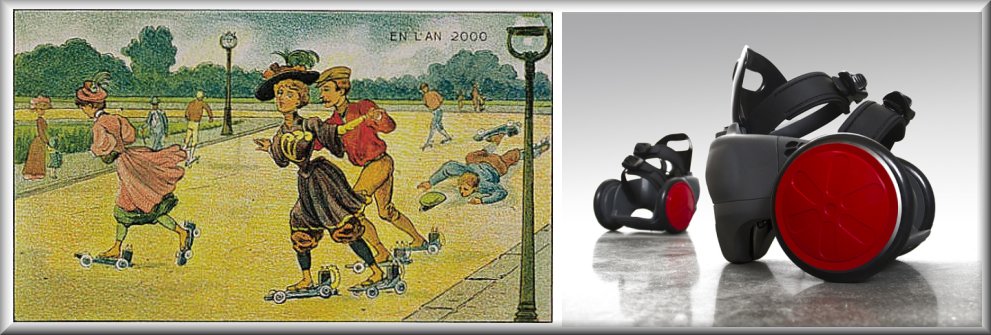
Motorized skates. On the right, spnKiX – see the KickStarter campaign here.
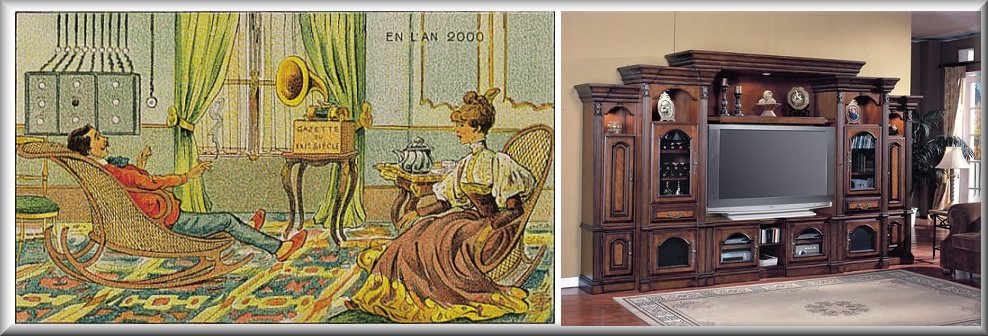
Electricity for entertainment. The comfortable domestic scene at left, listening to the 21st-century Gazette on a wax recorder, pales in comparison to today’s hypnogourds. And there’s still nothing on worth watching. Except “Fringe.”
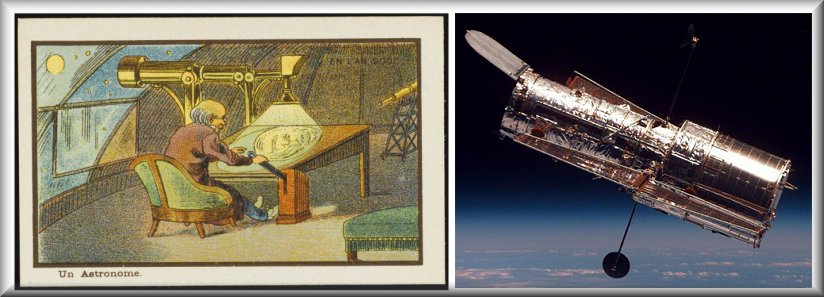
An astronomer viewing the heavens from the comfort of his desk. The Hubble space telescope surpassed all imaginings.

I insert this one because despite the imagined advances in technology, a commensurate advance in social awareness didn’t seem part of the program. The natives look like they were drawn by Jean de Brunhoff (if you’ve ever read “Le voyage de Babar.”
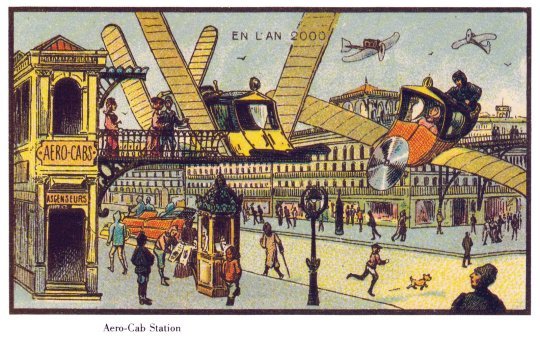
We have a problem with perspective as well as aerodynamics here. The cab on the right is about to take its wing off and crash in flames. Apparently, putting wings on something will allow you to be able to counteract the force of gravity. Also, I chuckled when I noticed that the cab driver still sits outside the passenger compartment, as cabriolet drivers did in the 19th century.

Caption on the left: “An Airbus”. Compare this with the massive Airbus beluga on the right.
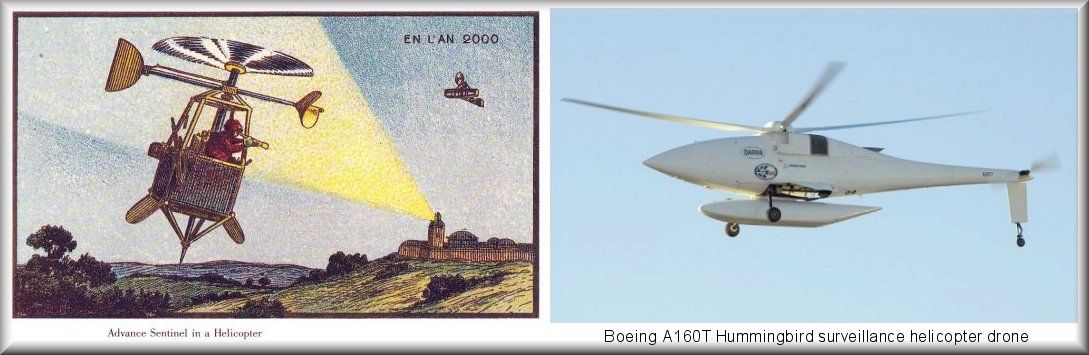
Advance Sentinel in a helicopter; modern helicopter drone.
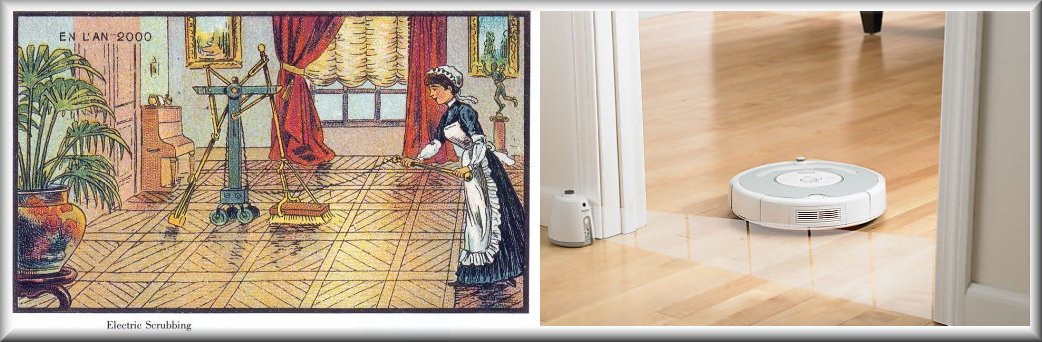
As silly as the Roomba seems, especially when you watch a cat riding one around, it shows that what the mind can concieve, the mind can achieve.
So the question now arises, what will life be like in 2102? We don’t know what we don’t know, and many of the advances we’ve seen in our own lifetimes could not have even been dreamed of in 1898. If we can keep from blowing ourselves up or melting ourselves down, the next century promises to be terribly exciting in terms of technology, given the exponential rate of increase. But if a descendant of mine 100 years from now sits at his or her thought-directed device and inscribes a 3-D blog entry in a bio-electronic storage medium that they are still waiting for that flying car, I’m going to be pissed.
The Old Wolf has spoken.
Or, “Oh for simpler days.”
When I was 8, I had a big brother for a very brief time. He was 14, and awesome in the 1950’s “Homer Price” sort of way. He built his own ham radio equipment, had all the soldering tools and an oscilloscope, and had a cool slingshot, and did really neat things at Hallowe’en, and I worshiped him. I regret sincerely that that particular domestic situation didn’t last.
But it was thinking about radios that got me going.

This image appeared over at Teresa Burritt’s Frog Blog, and I got all misty. I remember looking at all of brother’s electronic bits and pieces, and was fascinated by the pretty stripes on the resistors – at 8, I would not have been able to grasp the concepts of resistance, nor appreciate the mnemonic power of “Bad Boys Rape Our Good Girls But Violet Gives Willingly”. Then a career got in the way, and then technology exploded by several orders of magnitude, and now I’d be about as useful repairing a circuit board as an Australopithecus with a Rolls-Royce jet engine.
But there’s something about going back to basics.
When my son was 12 or thereabouts, a “build your own radio” project happened. I don’t’ recall if he asked me, or I did it just to show him how it was done, or it was some scout thing or other – but a radio got built out of some junk, and it worked.

This was pretty much the design. A toilet paper roll, some copper wire, a headset, a germanium diode, and some assorted junk from around the house, and we were able to listen to KSL and some other local AM stations. I don’t even know if ours had a condenser on it, and I couldn’t tell you why it would be needed or not – I’m still that ignorant.
Life is full of choices, and every choice has prices and benefits. There are so many things on my bucket list, I don’t know if I’ll ever get to all of them. But understanding enough about electronics to be able to do repair work on my little Conn Theaterette organ is one of them.

This one’s not mine, but it looks just the same. All component parts, tubes, you name it. With the spec sheets and my trusty voltmeter, I should be able to keep the thing in top running condition… if I only understood the basics. Which I don’t. Not having studied my Agrippa. Hey, Macarena! Wait, there goes the ADD thing again…
But the point is, I could still learn. Nowadays, circuit boards and electronic parts are so cheap to manufacture that nobody bothers to repair things any more – you just throw it away, and buy a new one. But the principles on which they are built are no different. This voltage in, that voltage out – watts, ohms, condensers, capacitors – they’re all still there, just tiny. And, there are things out there to help.
While things like this are still to be had on eBay,
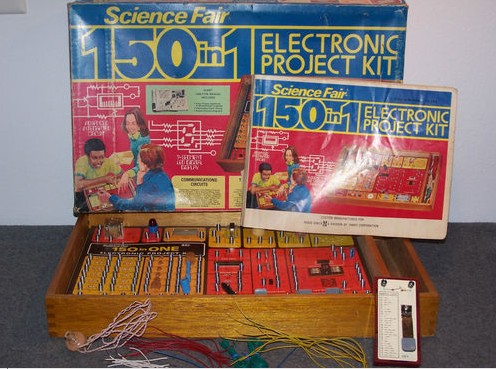
I think a kit like this would be a good place to start,
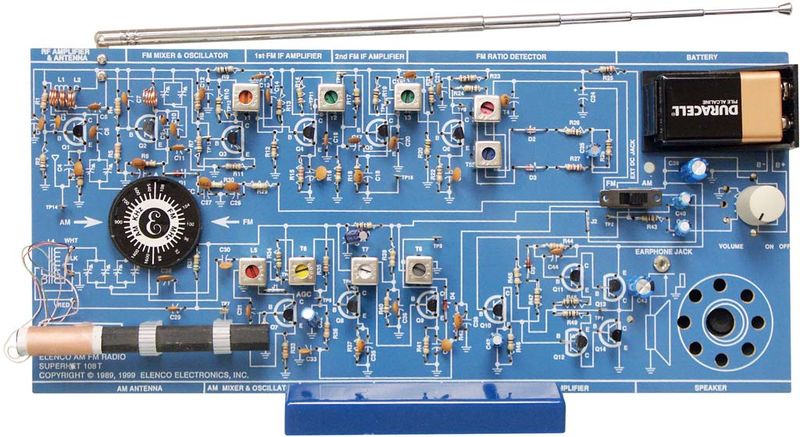
along with something like this:

And the parts are out there. With audiophiles becoming more and more numerous, the manufacture of vintage tubes has experienced a resurgence. Folks like me may never be able to tell the difference, but there are people who swear by component sound over microcircuitry, just like some folks will never give up their vinyl.
So hope is not lost. I’ve got too much on my plate now to think about it, but this blog entry will be a good reminder for me when things calm down a little.
The Old Wolf has spoken.
 Playing in the World Game