I have always loved optical illusions. One of my first introductions to a famous one was the 1965 “three-pronged poiuyt” from MAD magazine (otherwise called a “blivet”):
But there are many others. The one below is one of my all-time favorites – it contains both the words “optical” and “illusion”, depending on where you look.
The spatial-perception phenomenon is exquisitely illustrated among the geometric shapes below – what you see depends on whether you are looking at the blocks, or at the spaces between them.
The next one makes my head hurt. Try counting the black dots:
This one is uncanny. Stare at the “+” for a while, and watch the dots gradually vanish.
Similarly, if you stare at any point in the image below, the entire thing will gently fade away.
The wheels below are not moving. Really.
The following one is a mindbender. Stare at the spinning dancer for a while – she’ll switch from clockwise to counterclockwise at random. Some people can shift their perception of her at will, but I’ve never found the knack.
If you’re having trouble, the gif file below has been tweaked to let you switch back and forth with less difficulty. Look at the image on the left, and the silhouette will rotate clockwise. Look at the one on the right, and she’ll change directions for you.
Edit: Here’s one that’s similar, but a bit easier to manipulate. Kind of uncanny.
And on that note, here’s the “flashed face distortion,” which is pretty darn creepy – but it’s a real thing.
The famous drawing “All is Vanity” by Charles Allen Gilbert below has long been one of my favorites:
This modern one is less of an illusion than a perceptual challenge – how long did it take you to find the face among the coffee beans?
With technology come new challenges. Squares A and B are exactly the same color, RGB 120, 120, 120 or HTML #40B09C. Cross my heart.
This animated GIF file is less of an illusion than an interesting phenomenon, but I thought I’d add it here. Watching the waves move is captivating.
The image below is not a .gif file. Watching it makes me woozy.
Last one. Click on the spinner below to get a full-size image. Watch the center for about 15 seconds, and then look at the palm of your hand. Try not to faint.
There is no end of illusions on the Internet, but these are some of the ones that I find the most intriguing. Our minds do very strange things – in the book Perceptual Development: Visual, Auditory and Speech Perception in Infancy
By Alan M. Slater, the famous prism-glasses experiment is mentioned – contrary to conventional wisdom, the subjects may not have “inverted” their world, but a form of adaptation was certainly noted.
used to fly with United. A lot. This was back in the days when their on-time record was #1, and not in the crapper; before they broke guitars; when I had earned Premier Executive status and was upgraded on a regular basis; and when even coach flyers were treated like valuable customers. I remember flying as an unaccompanied minor in the 50’s and being very well taken care of by the flight attendants.
Sigh.
Those days are gone forever, I fear me.
But some memories will linger forever, and come roaring back in an instant, and that’s where Marcel Proust comes in. In Remembrance of Things Past, Proust was instantly transported back to a childhood memory by the taste of a madeleine[1] soaked in tea, an experience which was charmingly riffed on in Pixar’s “Ratatouille”, when Anton Ego’s heart suddenly grew three sizes, spurred by a sudden recollection of a comforting childhood gastronomic memory.
(Brilliantly played by Peter O’Toole)
The senses of taste and smell (inextricably related) are some of the most long-lasting and evocative in terms of memory. I’d be willing to bet almost all of us have had the experience of smelling or tasting something, and instantly being taken back in memory to the time and place where that smell or taste was experienced.
The Goodwoman of the House is a practical soul, and knows how to squeeze a penny so hard that Lincoln begs for mercy:
Some time ago, she bought a large bottle of hand soap to refill our pump dispensers at the sink. It happened to be almond scented. One whiff of that, and I was whisked aboard a United Airlines 777 headed for Frankfurt, because it’s the same scent as what one found in the jetliner lavatories. At the same time, my ears would fill with the strains of Gershwin, because United used Rhapsody in Blue as their theme music for almost the entire ten years when I was traveling around the world extensively.
This is the underpass between United’s terminals B and C at O’Hare Airport in Chicago. The psychedelic flashing Neon lights, the tinkling interpretation of Gershwin, and the repetitive nasal voice intoning “The moving walkway is ending… please look down” all come back when I wash my hands, and by the same token I can’t ever hear Rhapsody in Blue without thinking of United. It’s a curse, I suppose, but not the worst one I could have been afflicted with since I’m quite fond of Gershwin.
But I won’t fly United again until they get their act together; I’m not holding my breath.
The Old Wolf has Spoken.
1 If you’re interested in learning how to make Proust’s famous Madeleine’s, visit Cooking with the Old Wolf.
A post in Teresa Burritt’s Frog Blog (now sadly defunct) got me thinking about telephone operators.
Before the days of the internet, one of the earliest glurges I encountered – don’t ask me where – was “Information Please,” a heartwarming story of a telephone operator who befriended a young boy. Snopes.com has been unable to confirm or refute this story, so it remains out there as a tale one somehow wishes might be true.
In the days when Ma Bell had a virtual monopoly on the world of telecommunications, I am certain that this is just the image that AT&T would have liked to sear into the consciousness of every one of us. As it turns out, they tried.
The sentiment of the ad is so close to that of the story that I wonder if “Information Please” wasn’t going the rounds of the cork-board and water cooler network long before it showed up in the fax and internet world. What makes the ad of particular interest to me is the fact that the model is my mother, Margaret Draper.[1]
Before anyone gets the idea that life at home was like being raised by the Sally of the story, remember that the theatre is all about illusion. For most of my young life, Mom was single and trying to run a career as an actress, which meant that a lot of times I came home to a nanny or an empty house. There was, however, a telephone there – and in New York City, something called Artist’s Service. If Mom was away and I needed to contact her, I could dial SChuyler 4-5700 and be greeted by a pleasant voice who would get a message to her, or give me one that she had left. I only remember one individual’s name – Bill Butler – but I do remember that the folks there were invariably kind to a lonely young child, and it was nice to have a human on the other end of the line who cared. (Parenthetically, when I was really bored I could dial “MERMAID” – otherwise known as MElrose 2-6243 – and listen to “At the tone, the time will be… nine… forty-three… and ten seconds. *beep*” And yes, I did it more than once, for long spells of time.)
The Telephony Museum reports that “the first operators were boys, who turned out to be impatient and rude when dealing with phone customers. Their rudeness made them extinct within only a few years, replaced by females who were, ‘calm and gracious.'” In a nice summary of the history of telephone operators, the IEEE Global History Network reports that “the first female telephone operator was Emma McNutt, who was hired in New York City by a manager who happened to be a neighbor and who thought Emma was a “nice girl.” Little is known about Emma’s career, although she was in the vanguard of women who established telephone operator work as an almost exclusively female job.” Correspondingly, with the exception of Bill, every operator I ever dealt with in the 50’s and 60’s was female. However, that changed once again in the early 70’s, when AT&T responded to certain class-action lawsuits brought by both women and men, and in 1972 Rick Wehmhoefer became the first male operator in the Bell System.
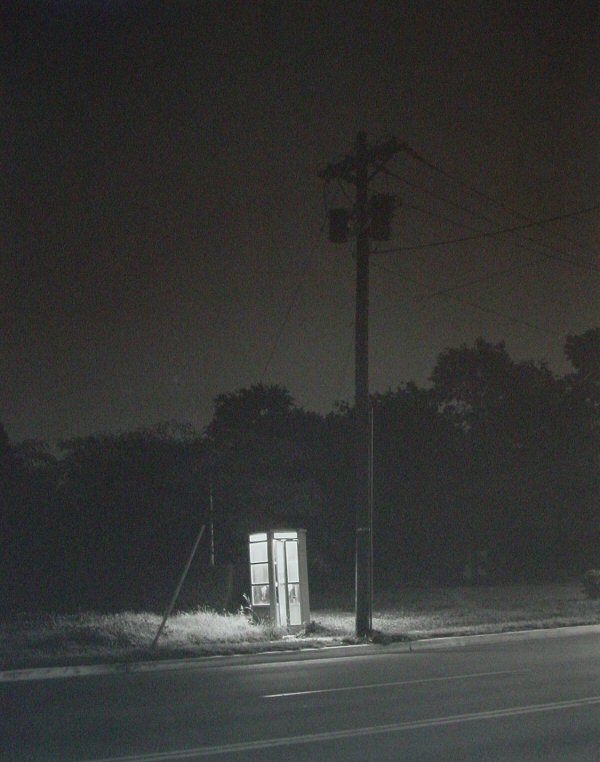
Most of my contact with operators in the 1960’s took place when making collect calls home from the Cheshire Spa, a local greasy spoon in Cheshire, Connecticut just across from the Academy campus on Main Street.
The Spa was in the far-right space, currently occupied by Grand A Pizza.
It was run by Pete Karavites, had pinball machines and a couple of dark phone booths in the back, and a persistent schoolboy rumor that all sorts of unsavory business went on in the back rooms.
I can still remember the “ding” sounds as I dropped coins into the old rotary-dial phones, or asking the operator to place a station-to-station collect call for me. When my mom picked up, the operator would say, “I have a collect call to anyone from so-and-so, will you accept the charges?”
Which reminds me of an amusing and true anecdote from my family’s history: At one point, my mother’s youngest brother was in the navy, and apparently he found himself for some reason in Tonopah, Nevada. Needing to call home, he placed a collect call in the above manner to his mother in Salt Lake. The operator announced, “I have a collect call from your son in Tonopah, Nevada, will you accept the charges?” Grandmother promptly replied, “I have no son in Tonopah, Nevada,” and hung up. My uncle Delbert was not deterred, and tried again, instructing the operator to make it a person-to-person call, more expensive but more explicit. This time, it was “I have a collect call for Frances Draper from Delbert Draper in Tonopah, Nevada, will you accept the charges?” Grandmother, exasperated, is said to have responded, “I know no Delbert Draper in Tonopah, Nevada,” and hung up again. How the story ended was never told me, but I chuckle at Granny’s inability to put two and two together.
In the 1980’s and later, before the wide advent of cell phones, the pressures of competition resulted in operators who seemed largely concerned with getting their average response time down to 5 seconds or less. Dealing with them was about as pleasant as going in for a colonoscopy. But clearly, it was not always that way – once again, from the IEEE site, “In the 1880s and 1890s women telephone operators often served the same small group of customers every day. This created an intimacy between client and customer as customers grew to recognize operators’ voices and know them as people. In many areas, operators could be counted on to have all sorts of information at hand, such as the names and addresses of local customers, the latest news, weather, and sports results, the correct time of day, and even gossip.” It seems that given the long history of telephony an the size of our country, a situation like one reported in “Information Please” is more likely than not, particularly in a smaller rural area.
Sadly, those days are gone forever. With most people abandoning land lines for cellular networks where operators are virtually unknown, finding a friendly voice to talk to for no good reason would be about as likely as finding an attorney with a conscience. [2] As a result, while I never met a “Sally,” I’m grateful to have experienced a time when you could dial “O” for operator, and find a human being on the other end of the line.
1 As an added bit of interest, Bill Gold of the Washington Post wrote the following article about this advertisement:
The District Line
by Bill Gold (The Washington Post – January 11, 1964)
Phone Company Adds Some New Lines
THE FIRST advertisement that hits your eye as you open the new issue of Life centers your attention on the face of a woman who is wearing a telephone headset. The woman has an appealing face. It’s not the Hollywood painted doll type of appeal, and you can see character in that face. Intelligence and understanding, too. There are a few lines in the brow, and just a hint of advancing years around the eyes and mouth. But it’s a good face, and the reader learns from the text that this is the face of a Bell System telephone operator who is always “close by if you need her, no matter what the hour.” It’s very comforting, very effective. But it’s disturbing, too. There’s something different here. This isn’t the bright-eyed girl of 19 we’re used to seeing in telephone ads. This isn’t the peaches-and-cream wholesome beauty to whom we’re accustomed; it’s a mature woman. And in the few seconds during which the reader studies her, he comes to the realization that one of the world’s largest corporations has made a deliberate change in its advertising policy. I was intrigued by my discovery, and immediately put in a phone call to a company spokesman. My questions were bucked along to headquarters in New York, and the answers came back promptly and frankly: the Bell System has indeed made a basic change in its advertising policy. Instead of the idealized beauties of the past, we’re now going to see more believable models. They’ll be “more realistic,” closer to the average, more readily identifiable with living, breathing human beings. Attractive young people are fun to have around, and they’re often useful, too. But any large company must also have its dedicated old-timers – the folks who know the importance of dependable service and who can give training and guidance to the youngsters who are just coming into the employe pipeline. So the Bell System has concluded that a more mature face in its ads will more truly depict the “average” employe. And because the emphasis in its ads will now shift from idealization to realism, the company hopes that the ads will be more believable, and therefore more effective. This promises to be a fascinating experiment, and it may have far-reaching consequences. Imagine the impact among professional models and advertising agencies. Think of the changes that may take place in TV commercials, in advertising generally, and in salesmanship itself, for that matter. Will the public be as mature as this new breed of model? Will people respond to this kind of soft-keyed approach? We’ll have to wait and see.
Dan Piraro is a funny man, and an intelligent one. He falls squarely on the liberal side of the political spectrum, and while I don’t always agree with his philosophies, I love his daily Bizarro strips. Recently he published this one…
… which points out the dangers inherent in Genetically Modified Organisms, commonly labelled “Frankenfoods.”
I’ve always been nervous about eating things whose genes have been tweaked – for example, corn that produces its own pesticide – because the deleterious effects of such things might not show up for generations. But Mr. Piraro then took a public journey of self-education which I found most enlightening. After he published this cartoon, he received a veritable Niagara Falls (slowly I turn!) of information from his readership, and apparently it was sufficient to get him to do a thorough examination of the issue within the boundaries of the time he could carve out of his life.
His summary of the experience is recorded over at his blog – and it’s well worth the read. The executive summary:
Peer-reviewed science is generally reliable, although there are always some nuts among the berries.
Humans have been genetically modifying foods for a long time (through natural breeding and selection processes) without giving us all third eyes.
Everyone hates Monsanto – but not always for the right reasons.
Do your own research, because the issue is not at all clear-cut.
As a matter of fact, I’d recommend you work backward to the original post of the cartoon, and then read his following posts: Schooled!, More GMO, and his conclusions. And then go read some more.
I appreciate the effort that Mr. Piraro has gone to in presenting his findings to his readership – the links contained in his blog posts are a good place to start a serious study of the issue.
If you’re ever hankering for a movie that will make you feel good, and give you hope for humanity, see if you can find a copy of Saving Grace somewhere. It took me years to find an old VHS copy which I have now ripped to DVD, but it was worth the hunt.
Edit: Now, thanks to the Internet, the film in its entirety (with ads, sadly, but better than nothing) is available at YouTube here.
Cardinal Bellini (Tom Conti) has been elected Pope, but he has a problem – he hates his job. All day it’s “Yes, your Holiness, ” “No, your Holiness,” and a schedule filled with meaningless bureaucracy and ceremonial visits. When he inadvertently locks himself out of the Vatican in gardening clothes, with no money and no identification, it’s the beginning of a charming adventure that helps him get back in touch with the people he was called to serve.
The story is heartwarming, and Conti and his supporting cast are brilliant throughout. This is not a multi-million-dollar production, but it easily remains my favorite movie of all time, just edging out “The Princess Bride” by a hair.
“What do the high-level depositors get… a sainthood?”
“Isabella, I will help your village find a priest.”
Pope in mufti.
It’s a great shame that the studios will copy a dog like “Batwoman” to DVD, but leave a treasure like this languishing in a vault somewhere.
Wish I could get the attention of someone at Columbia and have this properly remastered and burned to DVD.
This sig appeared on someone’s emails back around 1992, and I used for a long time.
O=c=O O=c=O O=c=O O=c=O O=c=O O=c=O O=c=O O=c=O O=c=O
THIS EMAIL MOVED STICKY BLACK FILTH FROM THE BOWELS
OF THE EARTH, AND SET IT ON FIRE IN YOUR AIR
O=c=O O=c=O O=c=O O=c=O O=c=O O=c=O O=c=O O=c=O O=c=O
When I lived in Salt Lake, I was able to sign up for the “Blue Sky” program: “When a customer commits to buying one or more blocks of renewable energy under the program, the utility promises a similar quantity of electricity generated from wind farms or other renewable resources will be put onto the regional distribution grid.”
At that point I was able to change my Livejournal signature to:
This journal entry brought to you by 100% clean renewable wind power.
Unfortunately, Payson, Utah has its own power generation system; while they do use natural gas, which is cleaner than coal, it’s still not the same – I’m still burning carbon in the atmosphere.
I wish there were a way I could get back to renewable power.
In a recent post, I referenced The Cooking of Vienna’s Empire by Time/Life. This picture always made me smile.
The caption reads, “Even in Vienna, the simplest food often tastes best. Witness this cabbie downing his sausage and beer with quiet satisfaction while waiting for a fare in front of St. Stephan’s Cathedral.”
If I know the Viennese, this guy was anything but quietly satisfied, and was probably griping to himself about the tourists, the government, the church tax, the weather, the beer, life, the universe, and everything. No, seriously – I love the Austrian people with all my heart, but the caption on the photo just doesn’t do reality justice.
But my goodness, that Würstel mit Senf (sausage with mustard) looks good. Hope he has a pile of Kren (fresh shredded horseradish) under his slice of bread… I can’t count how many times I’ve stopped at a sausage stand on the streets and snagged just what he’s having, or perhaps a Leberkäsesemmel – the Austrian version of a bologna sandwich, only 10 times better.
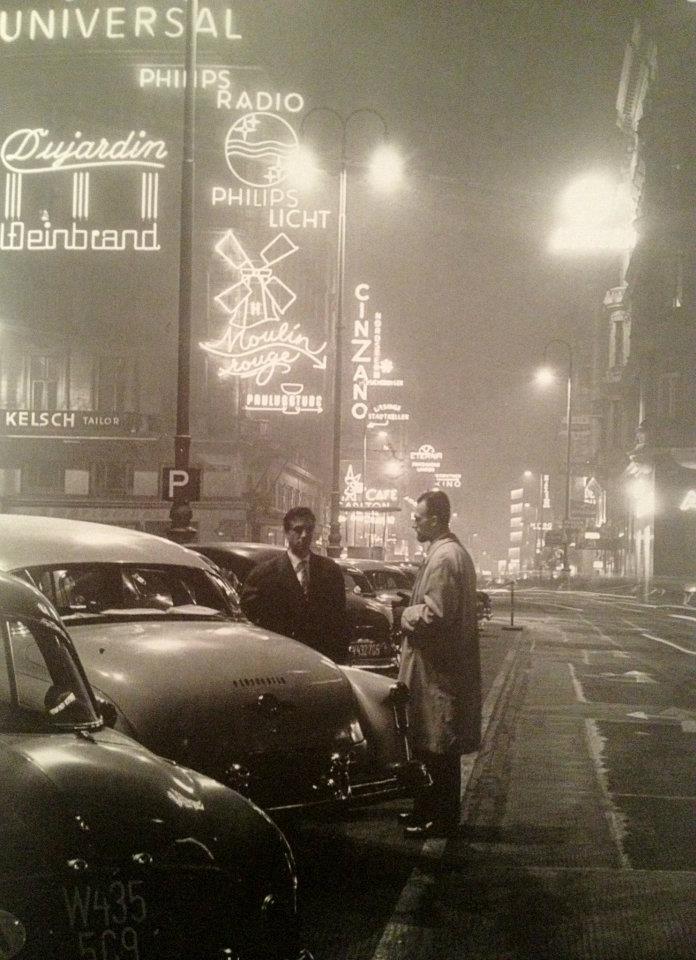
So many memories… I’ve shared a couple of them before, here and here, but there are so many it’s hard to choose from among them. I lived in Austria from February 1975 to December of 1976, and I’d go back in a heartbeat. So here are some of the more significant ones for me, in no particular chronological order.
Allerheiligen
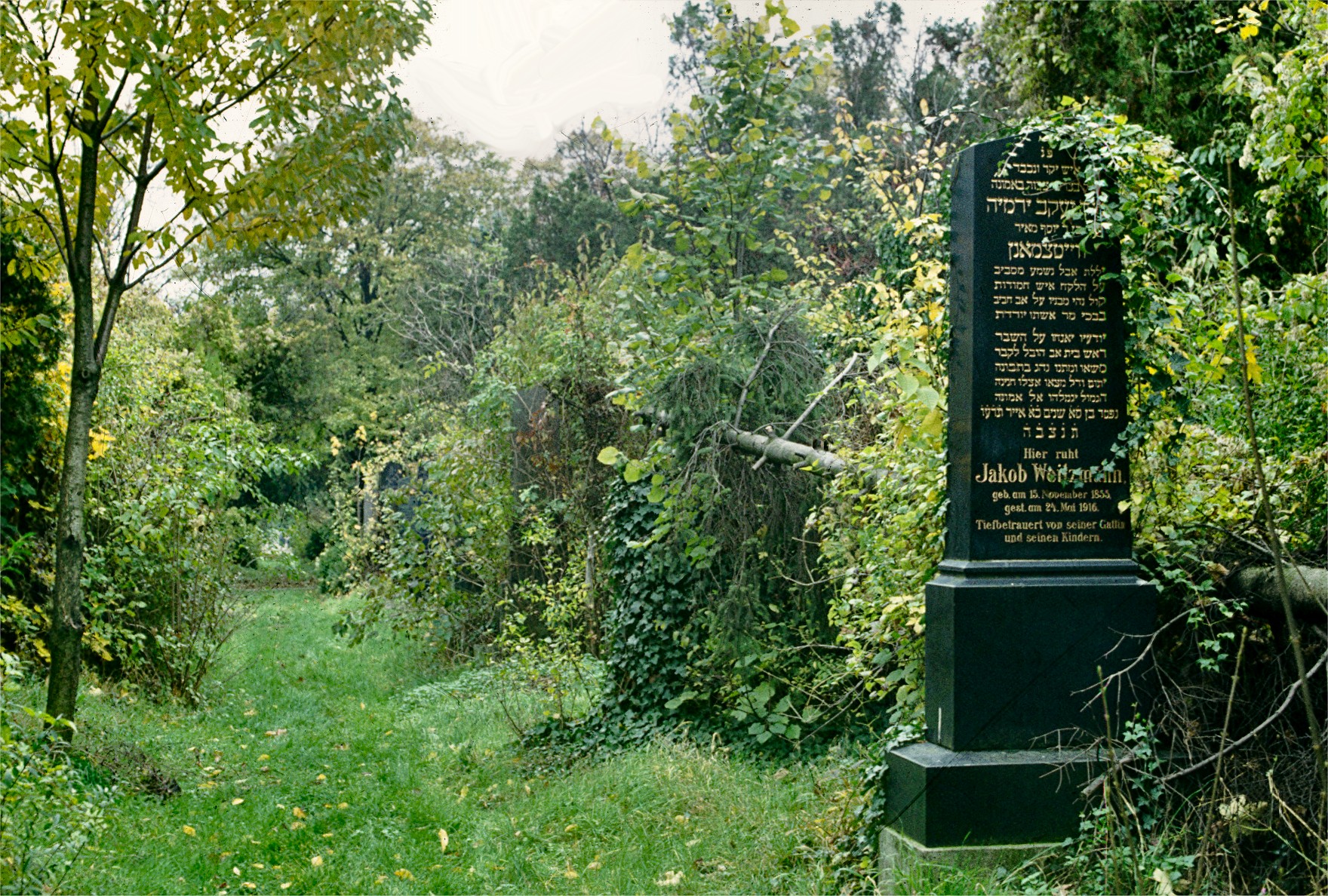
Hallowe’en in Austria is a holy day, not one of ghosts and goblins. The evening before November 1, All Hallows Day, people make a pilgrimage to the cemetery and light candles for the souls of the dead. This was taken in Vienna’s Zentralfriedhof (Central Cemetery) on October 31, 1976.
And the following morning:
I love Beethoven’s music more than any other, and I was honored to be able to honor his memory at so many different sites.
The Beethoven Monument in Vienna
Vienna, of course, is the home of many famous musicians:
The Strauss Memorial in Vienna’s City Park
Hot chestnuts for sale beneath the old Stadtbahn (City Elevated Train) tracks. A wonderful thing, these… I remember them at Christmas time on the streets of New York in the 50’s. 12 chestnuts for about 60¢ – the exchange rate was about 15 Austrian Schillings to the dollar at the time.
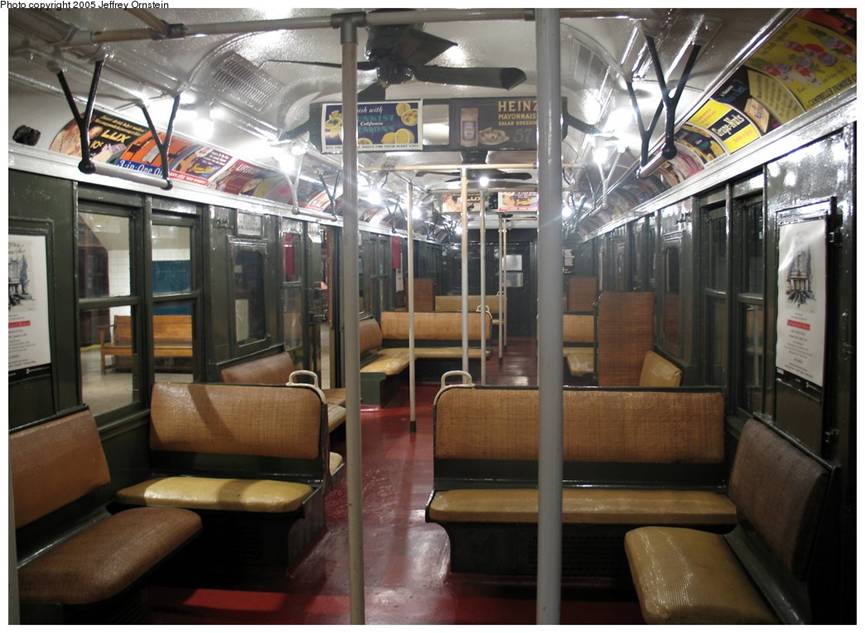
One of the old Stadtbahn trains.
Tichy Ice Cream parlor on Reumannplatz 13 in the 11th Bezirk
Still there, still famous. Here you get gelato, not American style ice cream, in a whole symphony of flavors.
I laughed hard the first time I saw a police beetle. I didn’t laugh at all the first time one of them pulled in front of me flashing a sign, “Bitte Folgen” (please follow) and I collected a speeding ticket.
Stefansdom – St. Stephen’s Cathedral
Sachertorte is the quintessential Austrian pastry. A sponge cake covered with apricot jam and chocolate, this cake is designed to be taken with schlagobers (whipped cream) and plenty of water. There are more Austrian pastries than you can shake a stick at, and you may like some of them more than this one – but it remains my favorite to this day.
I could go on. In fact, I will go on in another post. But now I want some Sachertorte, and I don’t have any. So I shall sit in the middle of the floor and cry.