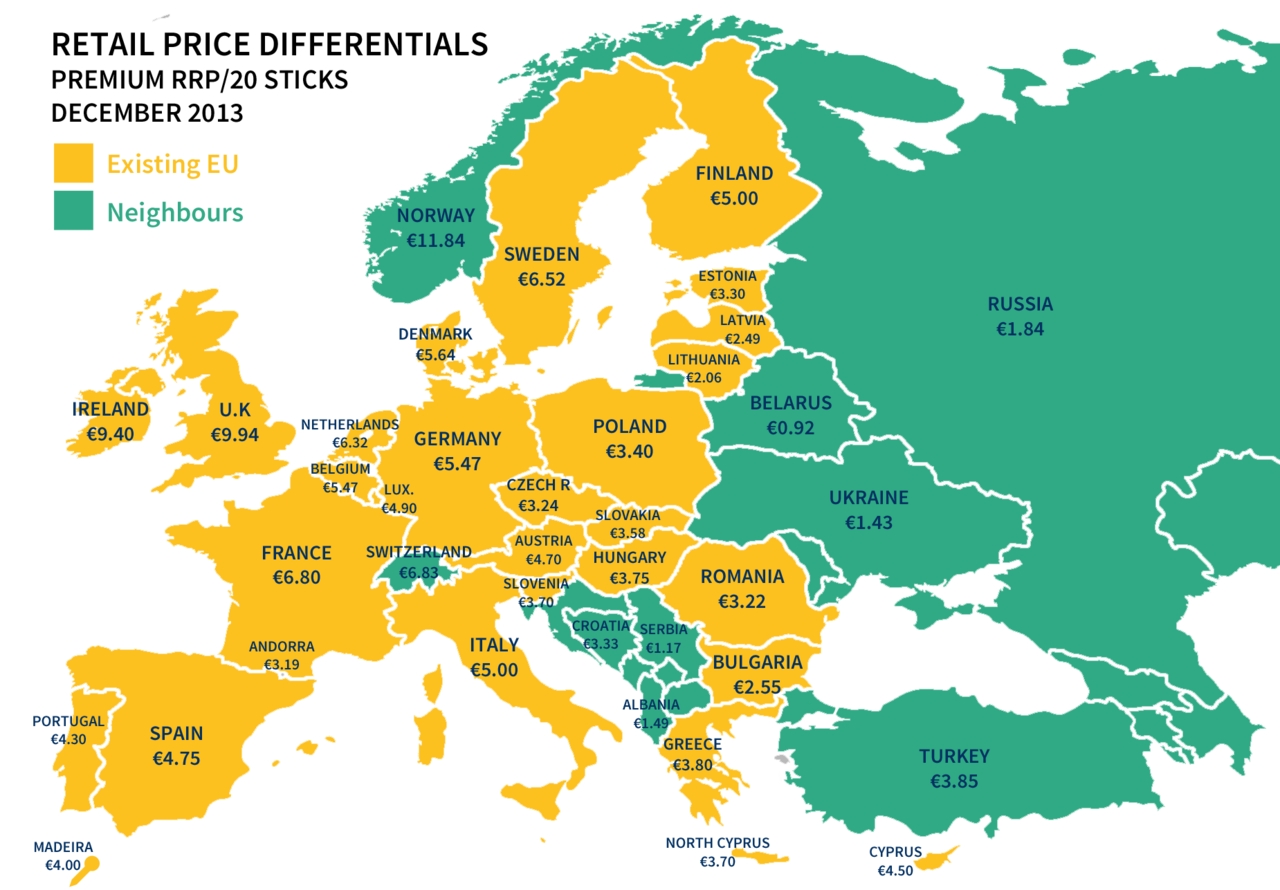
To my eternal discredit, I smoked heavily when I was a kid. I thought it was cool, and six years of it left lasting scars on my lungs. But when I started smoking, a pack of Luckies cost 33¢. Yes, that was more in 1965 than it is today, but let’s look at current prices in Europe and environs today (all prices are in Euro.)
For the United States, the following list will suffice (found at The Awl). Notice that some states appear on the same line if their prices were identical.
To help with the comparison, here’s a map as of 1/1/2014 showing state tax prices on tobacco:
If you want to know how much smoking has cost you or will continue to cost you in terms of raw dollars, you can use the American Cancer Society’s Smoking Cost Calculator.
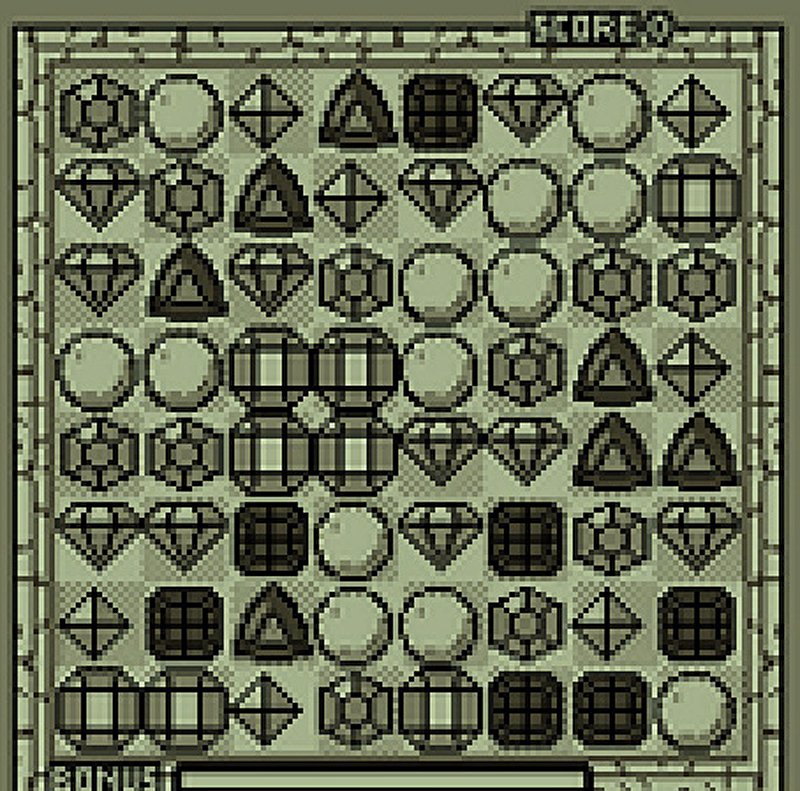
Back in the days of the PalmOS, I became enamored with a little time-waster called “Bejeweled.” Apparently I was late to the party, because PopCap had introduced the game long before the Palm became popular.
Since then, I’ve played both PC versions and online versions, and this last year they introduced “Bejeweled Blitz” for the Android platform. I decided to try it about 5 weeks ago.
Big mistake.
Today I looked at my stats, and added up the number of games I had played based on how many scores at various levels I had achieved. Turns out it was close to 1500. At a minute apiece, that’s around 25 hours of frantic gem-swapping.
Every choice has prices and benefits; it was amusing and fun, but I realized that I could throw away weeks of my life if I followed this game to its logical conclusion, and – as I did with Angry Birds – I decided it was time to delete it.
I’m not sure what makes this game so attractive, but the first thing I recognize about myself is that I have an addictive personality. If I get hooked on something, it’s very hard to quit. And PopCap (or EA, if you prefer) makes this game very hard to let go of. They employ multiple strategies to keep you playing.
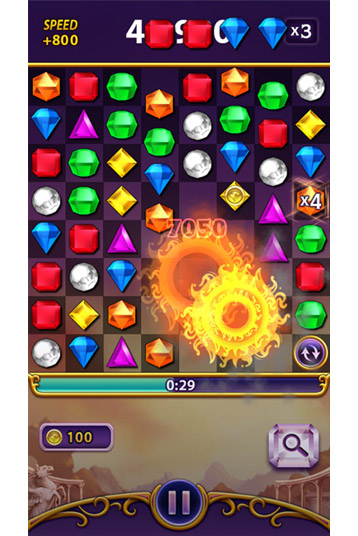
The basic play is addictive enough – find groups of 3, 4, or 5 jewels that match and slide them around to create a row. They disappear, and others take their place. Very similar to Tetris in that regard. But then things get more complicated. Matching more than one combination can result in gems that explode, doing damage to the surrounding area, or gems that take out two intersecting rows; matching 5 gems in a row will give you a special cube that will explode all gems of whatever color you swap with.
Exploding “fire gems”
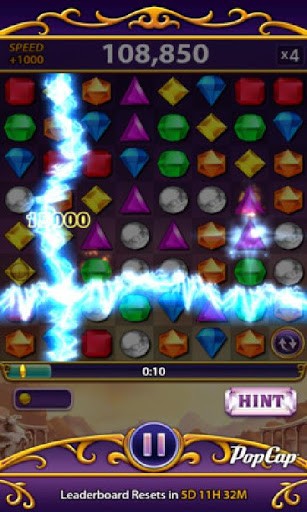
A super fire gem takes out intersecting rows
The “hypercube” taking out all purple gems.
As you play, you earn “coins” depending on the complexity of patterns matched and subsequent combinations that are unleashed by falling jewels. Of course, each “coin” is actually worth 100 coins, so your store increases more rapidly. For downloading the game, they start you out with 100,000 “free” coins. (That sounds like a lot, but as I mentioned below, it’s enough to activate the Phoenix Pyramid once.)
But as you play, you discover that you get awards for various point levels, from 25,000 all the way up to 500,000… and it’s really hard to achieve those higher levels without buying “boosts” – seen in the first image above. Each of those cost coins, and are good for 3 games only. But using them can be fun, because you can set off all sorts of additional explosions, earn point multipliers more quickly, and hope for a big finish with the “last hurrah,” when any bonuses or unused combinations left on the board explodes and gives you more points and more coins. If you swap gems fast enough, you can earn “blazing speed,” which doubles the reaction time of the game for 8 seconds.
But wait, there’s more.
Every now and then, the game offers you a “rare” (there’s the scarcity principle at work) special gem for a certain price:
The Phoenix Crystal, Cat’s Eye gem (which, for some strange reason, stopped appearing for me over the last two weeks), the Blazing Steed, the Moon Crystal, and the Kanga Ruby all have different effects, and cost between 15,000 and 75,000 coins to purchase – single game use only. But they can have some powerful effects in terms of score and coins earned, and in combination with other boosts, they can elevate your tally to serious levels – my all-time high was 642,550.
If that weren’t enough, there are more hooks for the competitive: (Sorry for the lousy screen caps, apparently these don’t save well on the Android)
Your “Stats” screen shows your all-time high score, and various star awards, depending on how many times you have achieved a certain score. My top three are maxed out. It also shows your rank – I made it to “emerald hunter,” which is only 37 out of a total 135 ranks!
If you’re not happy competing against yourself, they post a bogus “leader board” which gets reset every week or so – pitting you against non-existent players like “Zuma Frog” and “Cat Tut.” Most insidious of all, they encourage you to play with friends on Facebook, thus sharing the madness and – at the same time – harvesting all of your friends’ information. This is one option I declined, as I hate getting invitations to things like Farmville, Mafia Wars, and Candy Crush Saga.
Last, but definitely not least, you can buy coins for real cash – anywhere from $1.99 for 100,000, all the way to (Best Deal!) 9,300,000 for $99.99. Yes, folks, for the low, low price of only a single Benjamin you can buy enough coins to boost yourself to stardom. And of course, for EA games, that’s the whole point. They want to monetize this baby, and if you play but don’t pay, they can’t develop new stuff to keep your little fingers busy. That’s the American Way that Superman spent all those years defending.
If I wanted to achieve the rank of Ruby Regent and max out all my stars, I’d be playing this game until Kingdom Come (which, if certain Facebook posts are to be believed, is JUST AROUND THE CORNER!!!11!!)
But like I said, having wasted a day of my life (and probably a bit more, allowing for games that were not up to the 25,000 point cutoff), I decided that enough was enough. It was fun while it lasted, but I need to make sure that my time is spent doing more worthwhile things. As I’m starting a new job next week, my free time will be limited, and I want as much bang for my buck as I can get.
Spam is by its very nature deceptive. Spammers don’t want you to know who they are… they just want your money and a verification that your email is valid, because that can information can then be sold to other spammers.
Here’s an example:
To: (redacted)
From: “Morgan Coins” <elva@language.acmetoy.com>
Subject: Special Release of the Government Morgan Silver Dollars
Notice the first line: If you click that link to report the email as spam (which it most certainly is), you get taken to this address: http://language.acmetoy.com/(redacted)
Despite what they want you to think, this page has nothing to do with Comcast – it’s owned by some outfit in Germany (at least, that’s the official registration – they could be anywhere.) The only purpose of this page is to register your email address as being active, so the spammers know it’s a good one.
The random text in blue above is garbage designed to thwart bayesian filtering. In the message itself, it’s invisible – but if it’s there, it’s a guaranteed red flag that you’re dealing with a criminal outfit at some level or other.
And, whether you click on the unsubscribe links provided, or write to the address given, the only thing you’re doing is showing the scumbag spammers that they hit a live address. In my case, the unsubscribe link sends me to: http://language.acmetoy.com/?e=(my email address).
Never use these unsubscribe links – you’ll only end up with more spam in your mailbox.
The offer itself is trash. Notice that the promise is for coins from “uncirculated to fine.” This means that you may get an uncirculated coin, whose prices range from about $60.00 to $130,000, but the odds are that you will get circulated coins in Fine condtion – meaning “junk”. What you’re buying is bulk silver. A Morgan Dollar contains $16.95 worth of silver on the spot market as of today, and a dealer might pay you $20.00 for each coin. That’s a pretty crappy investment
The last time silver hit $50 an ounce, China was a poor, underdeveloped nation. Now, the Chinese are rich and using three times as much silver! Will this drive the price of silver back to $50 or even higher?
What utter nonsense. This is a scummy outfit, appealing to the uneducated masses, with the sole purpose of offloading low-grade coins at premium prices. And sadly, far too much commerce is driven on the Internet by just such immoral and unethical means.
Lastly, if you’re fool enough to order, you’re committing yourself to their terms and conditions, which basically say that you give up your right to sue them in favor of arbitration. Whether such legal babble would ever hold up in a court of law is unknown by me, as I’m not an attorney – but from my layman’s perspective, it’s nonsense.
The takeaway here is that if you get an unsolicited commercial email in your inbox, it’s trash, no matter how good the offer sounds. Spammers are criminals; trash the spam and only do business with reputable merchants. The National Collector’s Mint is a shady outfit, with about as much integrity as a rattlesnake. Stay far away from them, and any outfit that advertises by spamming.
In 1994, Donald Trump – that wonderful specimen of humanity – convinced the New Jersey Casino Reinvestment Development Authority to exercise eminent domain on his behalf to condemn the home of Vera Coking so he could build a limousine parking lot next to one of his casinos. Fortunately, level heads prevailed and the petition was rejected on the basis that this was not a “public purpose,” the reason for which eminent domain was established. The Institute for Justice defended Ms. Coking, and she returned to live in her long-time home in peace.
By the holy skull of Mogg’s grandmother, this kind of douchebaggery – wealthy people throwing their weight around by dint of money and power – has always incensed me, especially when it is done in such an insouciant and public way. Trump reminds me of Leona Helmsley, she who disdained the “little people,” and I’m mightily glad he lost this particular battle, just on general principles.
Last month, another David and Goliath situation quietly went to the large player, but not – as the Salt Lake Tribune implied – on Goliath’s terms. Back in 2002, Earl Holding was constructing the Grand America hotel and bought all the property on a block for that purpose – except the Flower Patch, who didn’t want to sell.
The Flower Patch
Aerial view showing the corner lot.
In December, the property owner finally accepted an offer to deed the property to the hotel, but on his terms.
Parrish, who sold business control of the Flower Patch chain of stores to a Florida company in 1999 but held onto the properties, confirmed the sale Monday. The Sandy resident and property manager said his commitment to keeping the historic Salt Lake building as a flower shop faded over the years. “Now it’s just a business situation,” he said.
Flower Patch chain owner Tom Gordon said that while ‘‘a great location,’’ the building is old, antiquated and ‘‘quite frankly, not worth remodeling for our purposes.’’
So the landscape changed, and it became a viable business decision to sell out; but it happened when the property owner decided the time was right, and not before. As a result, Holding had to reduce the size of the planned hotel by 125 rooms. And for as long as I lived in Salt Lake, I smiled to see that little flower store there. It reminded me of another couple of situations which – although fictitious – have burned their images indelibly into my mind.
The Little House “could not be sold for gold or silver.” (By Virginia Lee Burton)
Batteries Not Included.
The 1% owns so much and takes so much and gives so little (with some notable exceptions) that it’s nice to see the little guy win every now and then.
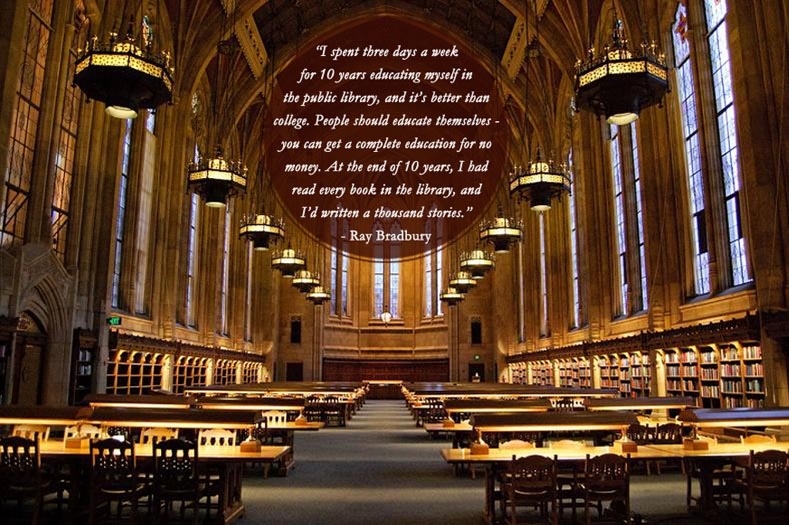
This quote by Ray Bradbury reminds me of the quote from “Good Will Hunting:”
“You dropped a 150 grand on an [] education you could have gotten for a dollar fifty in late charges at the public library.”
I have loved books and libraries since I was old enough to know what they were.
That’s me, on the right, with my good buddy Mickey.
In fact, in a somewhat meta twist, one of my favorite books as a child was Julia L. Sauer’s “Mike’s House,” a tale of a library and a very, very special book.
As I mentioned elsewhere, I learned to read largely through the works of Charles Schulz, and have been a voracious reader ever since. In with my own family, reading time was a regular activity, and would go on as long as I could keep from falling asleep, at which point I would keep reading – although what came out was never intelligible. The kids always got a laugh out of that – but they grew up loving books.
For more beautiful pictures of drool-worthy libraries and some great quotes, visit Buzzfeed.
And, as primitive as it was, the old Macintosh game “Missile Command” put the fear of God into me as those incoming warheads began to MIRV, and I saw that no matter how many you took out, your cities would still be reduced to smoking ash.
The effects of nuclear damage are horrifying. Eyewitness accounts, footage and images from Hiroshima and Nagasaki should have been enough to convince humanity that these weapons of mass destruction have no place anywhere on the planet, but unfortunately this was not the path we took. In fact, some people actually capitalized on the fun of using atomic bombs on your enemies.
Atom Bomber Toy, above and below.
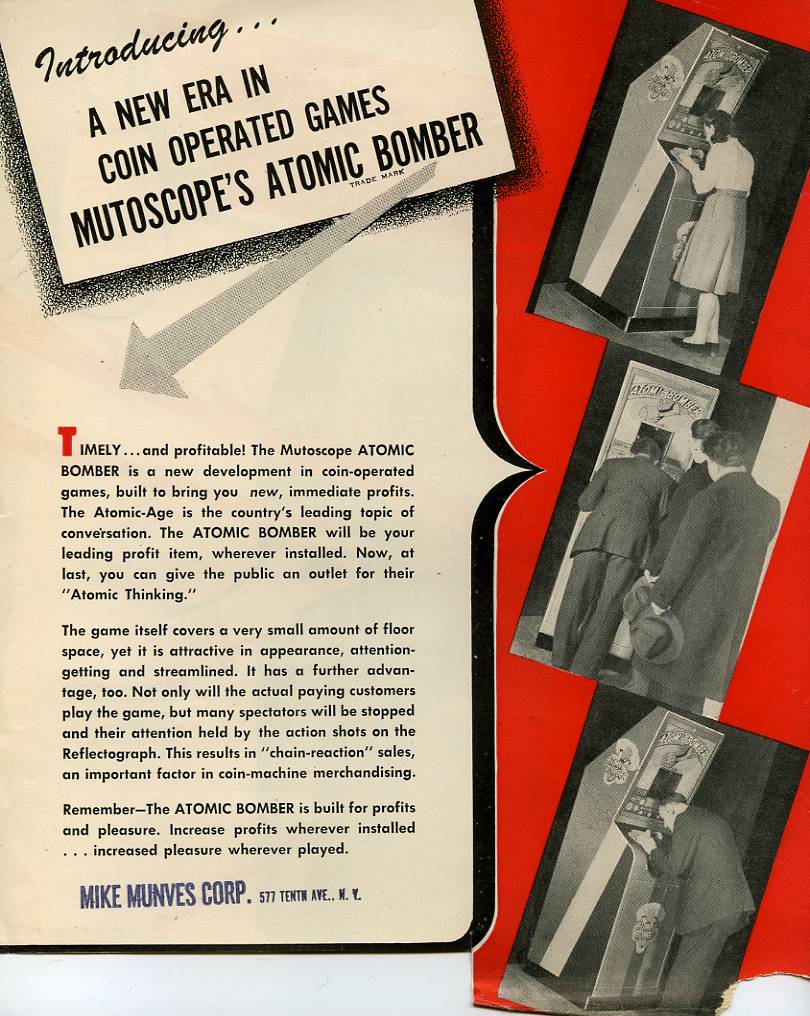
Then there was the next level: Mutoscope’s Atomic Bomber arcade game.
Remember, the “Atomic Bomber is built for profits and pleasure.” Never mind the charred ruins of two cities and hundreds of thousands of lives ruined or shattered.
What the hqiz is wrong with people? One would think we as a species would have learned from the past, but it’s chilling to remember that there are certain factions and certain governments who would gleefully launch nuclear attacks on their enemies if they only had viable technology: North Korea and Islamic terror groups come quickly to mind. And sadly, it’s only the threat of massive retaliation that has kept our nuclear arsenals locked up.
My voice is only a small one, but the more people who call for peace and the abolishment of such engines of horror, the sooner we will live in a world worthy of being called human. For the sake of us all, I pray that it may happen sooner than later.
I was led to this sad video by AmazonWatch via one of my friends, found on his blog “Chevron Shills.”
Because Marina Aguinda Lucitante was singing about Texaco, I had to ask him what the relationship between Chevron and Texaco was, and he kindly explained that Chevron purchased Texaco in 2000. He wrote to me,
“When they purchased Texaco’s assets, they also took on its liabilities. They were warned from the get-go that this would make them responsible for the catastrophe in Ecuador, but they didn’t care. So, although it was technically Texaco that destroyed the rain forest, Chevron still has plenty of blood on its hands, because its army of lawyers and its PR team have fought tooth and nail to prevent Chevron having to perform the kind of cleanup or make the type of reparations that could/would have prevented the many cancer deaths which have occurred over the last few decades.”
When we stick that nozzle in our car, we don’t think about the human carnage left in the wake of oil companies. It’s difficult, too, because our entire world runs on fossil fuels, despite small advances being made in various places. One can’t curl up in a cave and not be part of society. But spreading awareness and promoting alternate energy sources wherever possible can be done.
I now live in a small community whose power is provided by natural gas – still a non-renewable resource, but less polluting than coal. But when I lived in Salt Lake, I took full advantage of their Blue Skies program which allowed consumers to pay a small surcharge, guaranteeing that their energy would be purchased from wind power.
I purchased a Prius to keep my gasoline usage down, and although there are numerous analyses that show the net carbon footprint is not significantly less because of the costs and impact from manufacture and disposal of the battery technology, I still feel that over the 7 years that I’ve owned it, my gas consumption has been significantly less than it otherwise might have been.
While an eGallon is significantly cheaper than gasoline, even in the most expensive states, fully-electric vehicles still have issues, since that electricity has to come from largely fossil sources at the moment, but we can’t let that stop us from continuing to push for renewable and non-polluting energy sources.
Laser printers have come along way. These days you can buy one for almost nothing, and avoiding the manufacturer’s scam by having your cartridges refilled makes using them pretty cost-effective.
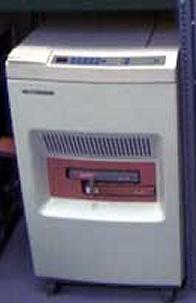
The first laser printer I ever saw was the size of a small web press, used by the State of Washington in 1980 to print its payroll checks. The next one I encountered had shrunk considerably:
This is actually the Xerox version of the Wang LPS-12 (or LIS-24) laser printer, which would manage 12 or 24 pages per minute. We had several of them in the Translation Department of the Church of Jesus Christ of Latter-day Saints, and they got heavy use because we were able to dive into the font files and character mapping tables and tweak the characters to customize Wang’s OIS system for 116 languages instead of the 16 supported ones. I recall loading these onto hand trucks and moving them from office to office occasionally, as we had one physical location that for security purposes could not be connected to the outside world. Toner was loaded in bulk from large gallon bottles, and could be supremely messy.
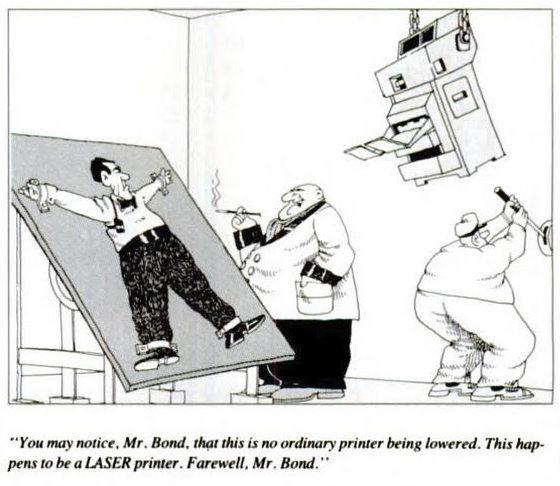
After decades of searching, the Internet finally disgorged this cartoon, seen in the November 15, 1988 issue of PC Magazine:
The same printer in its original incarnation was also used with our Xerox Star 8010 system and its successor, the 6085.
This system was the result of research at the Palo Alto Research Center (PARC), and had Xerox been as good at marketing as Steve Jobs, we might be using Xerox iMacs today. You can see the GUI elements, graphic capability and multilingual fonts that the Macintosh was so successful at popularizing, here being used years before the Macintosh hit the market.
Going even farther back, I was reminded of the first electronic calculator I laid hands on in 1968, the Wang 320SE. It had four nixie-tube terminals connected to a central processing unit, and I remember prominent instructions on each terminal never to do bad things like dividing by zero or setting up any trig function that resulted in an undefined result, because it would crash the CPU and take 3 hours to reboot, or some such nonsense.
Sheesh. My Droid may have more computing power than the room-sized Univac 1108 I learned to write Fortran code on in 1969.
Memories. They’re interesting to look back at, but I would never want to return to that level of technology.
Charlie Chaplin in New York, appearing with Douglas Fairbanks, Sr. during WWI. They were promoting war bonds for Third Liberty Loan. Photo taken in April, 1918 in front of the Sub-treasury building.
Another view.
Fairbanks addresses the crowd.
Some comments over at reddit are worth noting:
The respect. No policemen, no crowd control, everyone keeping a respectful distance.
The hats. Almost everyone was wearing hats. The wearing of hats was largely abandoned in the 1960s; some have hypothesized that the explosion of the automobile made wearing hats for protection from the elements less necessary.
The crowd is overwhelmingly men. Women just did not go out as much at the beginning of the 2oth Century. It was truly a man’s world.
The crowd is overwhelmingly white. That was our country in 1918.
An intriguing glimpse of a tiny slice of history that I had never seen before.





















 Playing in the World Game