K’minyan Tov

I have long loved and respected the work of Art Spiegelman, author of Maus and Maus II, two graphic novels which autobiographically recount the experiences of his father Vladek through World War II and the years previous.

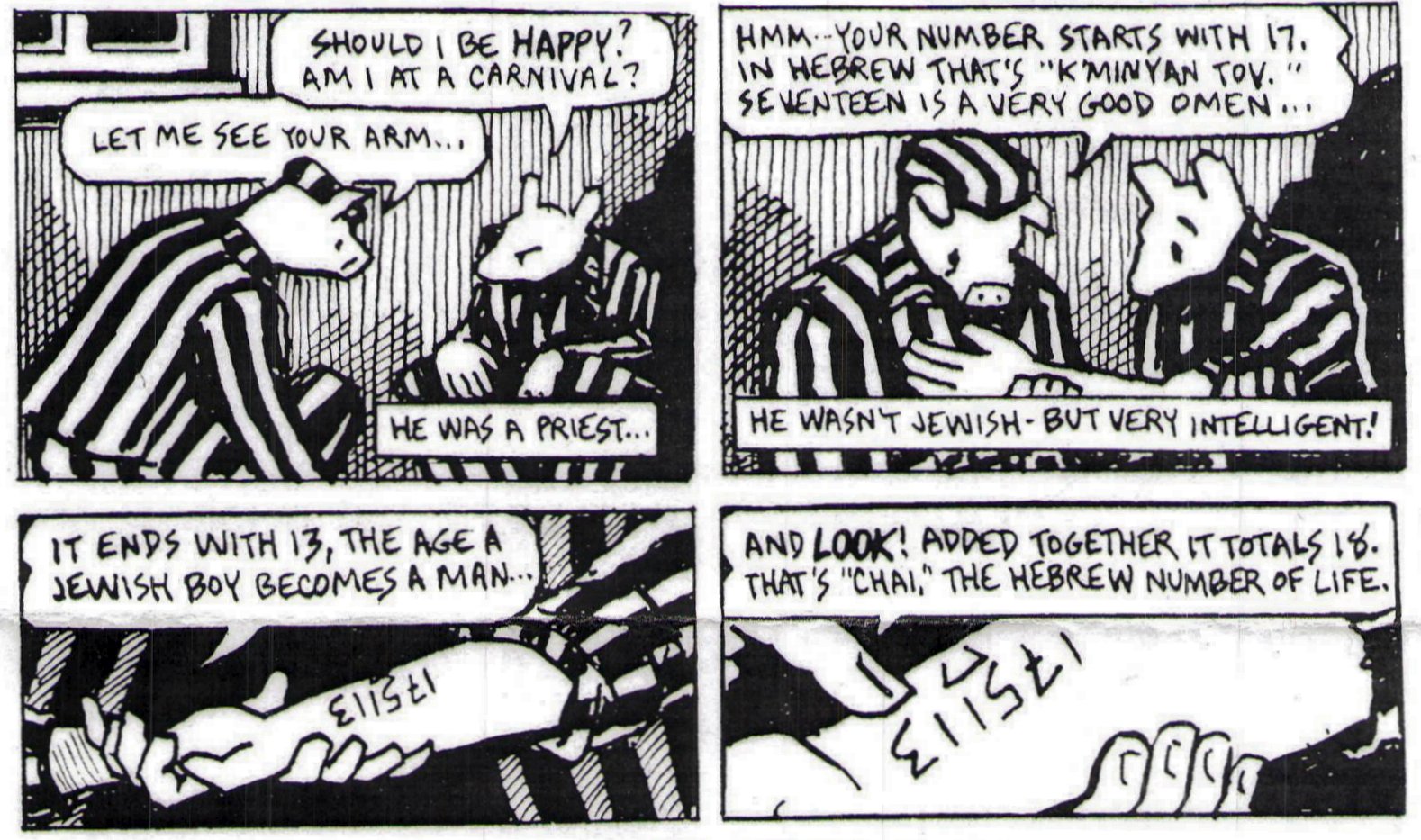
One thing in his account puzzled me, though – the exchange recounted in the panels below, just after Vladek arrives at Auschwitz.
Spiegelman

I had no idea why the priest said that 17 in Hebrew was “kminyan tov,” because seventeen is “shiv’a ‘asar.” The internet didn’t help, because every reference to “k’minyan tov” led back to Spiegelman’s work. I was stumped. It turns out I just didn’t know enough about Hebrew or kabbalistic customs.

After letting the matter rest for about five years, during which interval I began a study of modern Hebrew, I returned to it with a vengeance and did some more digging.

The Polish priest was learned in the ways of gematria, or the mystical assignment of numerical values to Hebrew letters, and divining meaning from how words add up; I first became aware of gematria when I read The Chosen by Chaim Potok.

I was coming at my puzzle all wrong, assuming that minyan was referring to the quorum of ten Jewish male adults required for certain religious obligations. The word itself also means “count,” with “k’minyan” meaning “like the count of.” That expression appears to be used almost exclusively in referring to values in gematria. Look at this post in a forum:

A week or two ago, a posting on the number of brakhot in shmoneh esrei suggested, IIRC, something like that the addition of birkat ha-minim in E”Y changed the 18 to 19. It appears, however that in E”Y there were originally 17 b’rakhot, gematria tov and the addition of birkat ha-minim made it 18, k’minyan chai.

This entire sentence is far over my head in terms of understanding the context, but to have found the expression in an external source was significant. It seems then that this phrase can be read “like the count of ____”, whatever number is being referred to.

Thus the priest reads Vladek’s number (175113) and notes that the first two numbers are 17 – with “טוב” (tov, meaning “good”) being the numbers 9+ 6+ 2 (each Hebrew letter is assigned a value corresponding to its position in the alphabet). Hence “tov” has the value 17; “k’minyan tov” can be interpreted in this case as “like the count of ‘good’.) This would be seen as a good omen. Another interpretation I found indicates that 17 would indicate the 10 men necessary for a minyan, plus seven more, making it a “good minyan” or a “strong prayer group.”  I can’t speak to the accuracy of this interpretation, but it’s interesting nonetheless – this was the first thing that occurred to me, and it didn’t make sense. Now it does. Sorta.

Vladek’s priest friend notices that 1+7+5+1+1+3 equal 18, and the Hebrew word for “life” (חי – chai) is composed of the numbers 10 + 8, or 18, the number referred to in the quote above, which could be read as “like the count of ‘life’.” And this was sufficient for Vladek to express the feeling that he had been given another life. Vladek escaped, and the priest was never seen again.

I don’t think I have the intellectual discipline to pursue this any farther, but my curiosity has been silenced. At least I understand the basic meaning of what Spiegelman was relating in this scene, and that will have to do.

The Old Wolf has spoken.

(For what it’s worth, “Old Wolf” in English gematria is 522, which has the same value as Truth, Birthday, Stephen, Russia, Muslim, Bill Gates, Twelve, Justice, Victor, Vincent, Rand Paul, Priest, Person, Nothing, Lotus, Hail Mary, Yahuwah, Street, Stealing, The Sun, Blessing, Elishone, Cnaan Aviv, Noahs Ark, Elohiym, Lee Vayle, Dustin, Democracy, Praises, Potato, Euro Bay, String, Taav Aaleph, Myth U, Ninety, Baptist, Crackpot, Company, Inside Job, Architect, God Of Buddha, Different, Cotton, Buddhist, The Eyes, Chin Woo, Diaper Dude, Project, Break The Ice, Manifest, Charlemagne, Helsinki, Mackenzie, Gram Of Fat, Oh My God, Gnostic, Archigonic, Samskarda, Tornado, Forecast’, Paternal, Ho Chi Minh, Natural, Black On Black, Dream Logic, Swedish, Sonnet, Mind Of God, Cortez, Paul Rand, Indeed Jobs, Shelter, My Garden, Get Hay At, Consider, King Of All, Vietnam C, All Is One, Veronica, Punish, Fulfilled, Sam Bowie, The Gilded Age, Whether, Def Leppard, Get A T Hay, Pat Crock, טרוטה Truth, Canaanites, Dependent, Lumpy, Fallout, Frighten, Happily, Sticky, Pell Mell, The Mayan, Idiocracy, Pitagora, and Got Milk. Make of that what you will.)

December 17, 1940

From /r/historyporn:

jId2CVX

“Children of Japan, Germany, and Italy meet in Tokyo to celebrate the signing of the Tripartite Alliance between the three nations, on December 17, 1940. Japanese education minister Kunihiko Hashida, center, holding crossed flags, and Mayor Tomejiro Okubo of Tokyo were among the sponsors.”

A relevant story from my own family history: My father was, in his day, a well-known character actor who began his career in radio. Italian was his first language, and his theatrical gift made him a superb dialectician. One day he was on a sound stage playing Mussolini in a radio play, when the actor playing Hitler became ill; Dad jumped in and assumed the rôle. By some odd quirk of fortune, the actor playing Hirohito also became unable to continue, and so my father ended up voicing all three parts. The director looked at him and exclaimed, “My God, you’re playing the whole Axis!”

The Old Wolf has spoken.

The Mission Inn at Riverside

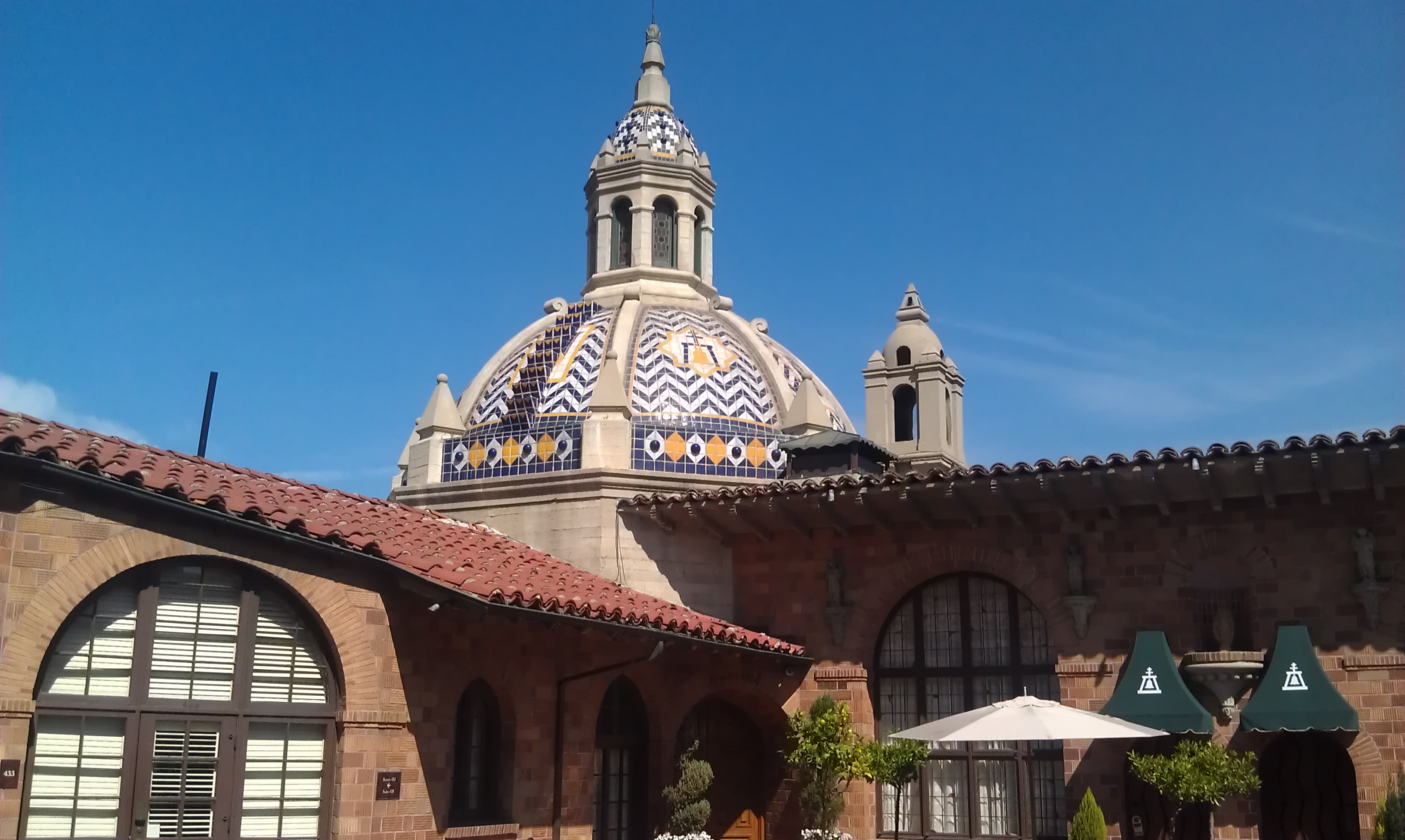
Just got back from a little junket to California to see an aunt who’s almost 100, and some other friends and relatives as well. One of the things we saw while we were in Riverside, where one of my cousins graciously put us up (and put up with us) for a few days was the Mission Inn, an amazing hotel which made me think of my earlier visits to the Hotel Del in Coronado.

This enterprise began as an adobe cottage called the “Glenwood Hotel,” built by civil engineer Christopher Columbus Miller in 1876, and like the Winchester Mystery House (but a lot more sanely) has just continued to grow. We only saw a fraction of it, but what I saw was impressive. There are multiple wings with multiple flavors – Spanish, Oriental, etc.

Here are a few photos:

IMAG3087

Special chair built for President Howard Taft for a conference. Taft’s portrait hangs in the background. He later is said to have remarked “I’m big,but I’m not that big.”

IMAG3088

The Steinway Centennial Grand Piano. This piano was crafted as the company’s gift to the USA for the 1876 Centennial celebration. During a national tour, it was somehow “misplaced” – how one misplaces a grand piano is beyond me – but was rediscovered to be the one and only when it was undergoing restoration in the 1980s. Exactly how and when it came to the Mission Inn is unknown, but at the time of its disappearance the hotel was still a simple adobe cottage.

IMAG3090

Herculean painting of the California Alps.

IMAG3091

Campanero, or bell wall, built in 1903 and modeled after the belfry at Mission San Gabriel. Stairs on the right used to lead to the rooftop gardens of the original adobe building, which was later demolished in 1948 to make room for a swimming pool.

IMAG3092

Another view of the campanero.

IMAG3093

Restored cannon

IMAG3095

The Nanjing bell, an imperial temple bell from the Manchu Temple in Nanjing, China. 3500 lbs, cast between 1875 and 1908. More information is readable on the plaque.

IMAG3096

The other side of the campanero.

IMAG3097

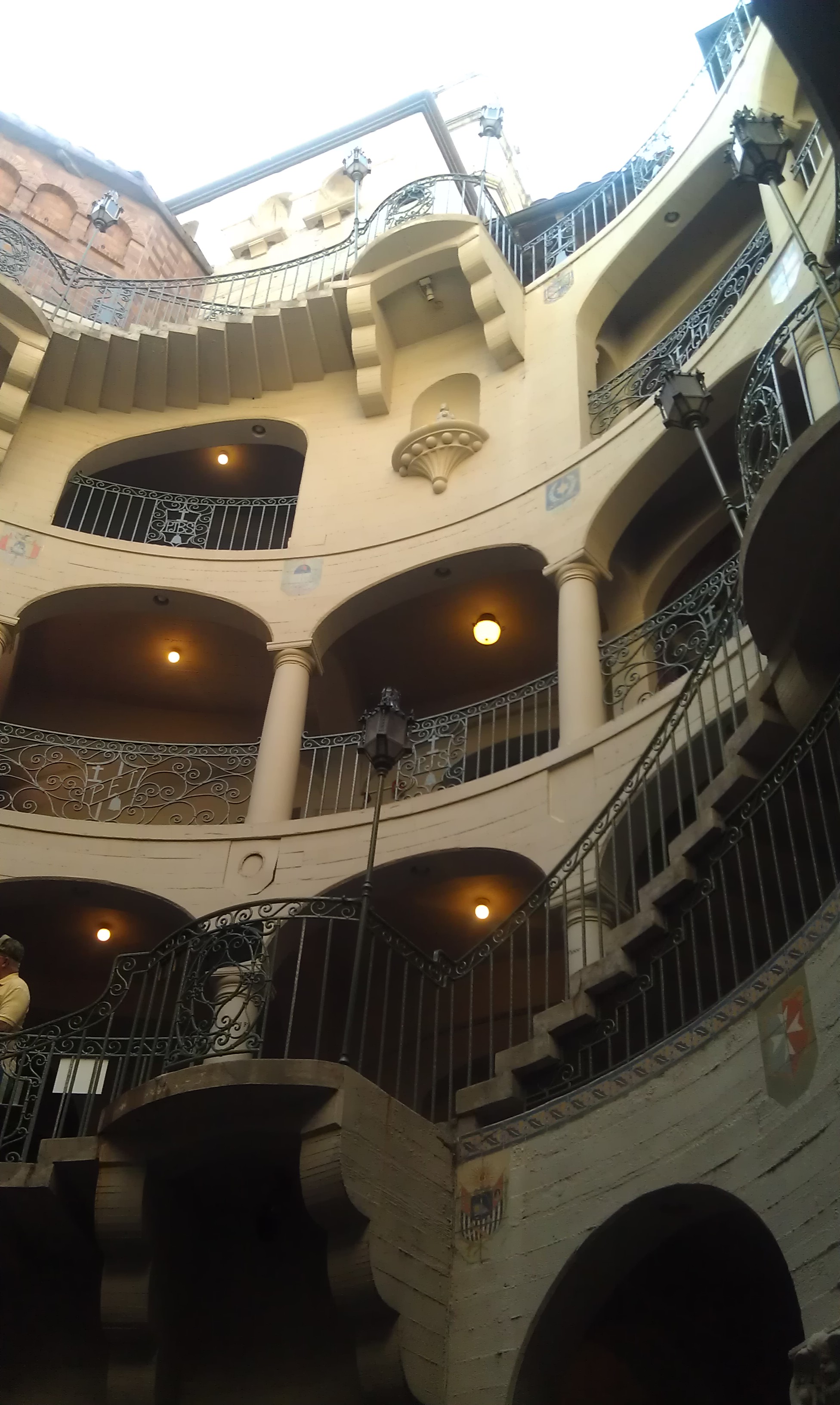
The internal rotunda. Normally accessible only by guided tour, we happened to be present when someone came out and we slipped in.

IMAG3098

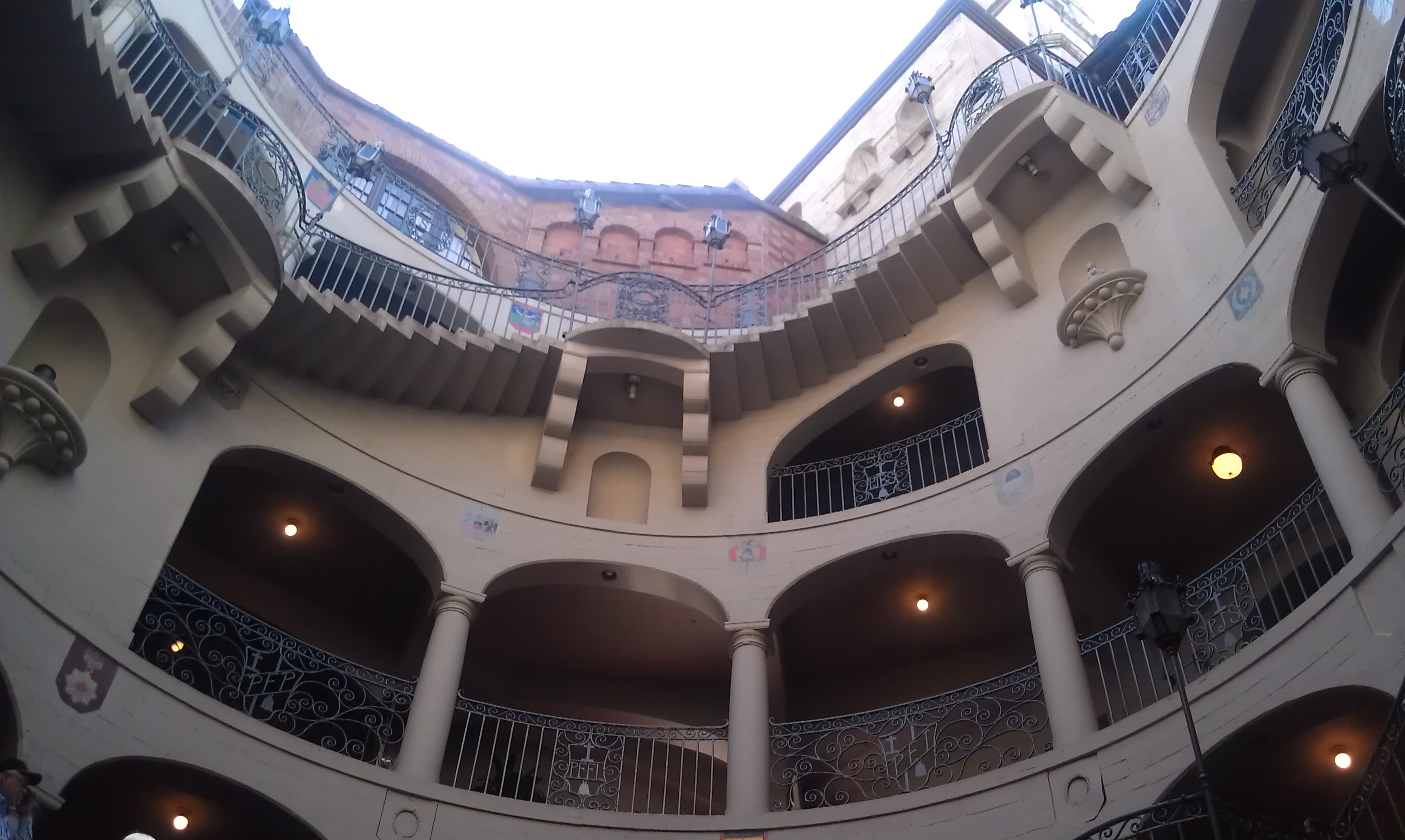
The rotunda, looking up. The stairs are structurally out of code, and are usable only by tours. There is a wonderful old elevator that ascends to each floor.

IMAG3099

Tiled fountain at the bottom of the rotunda.

IMAG3100

The goodwoman of the house, taking a photo of me as I take one of her.

IMAG3101

The sky.

IMAG3102

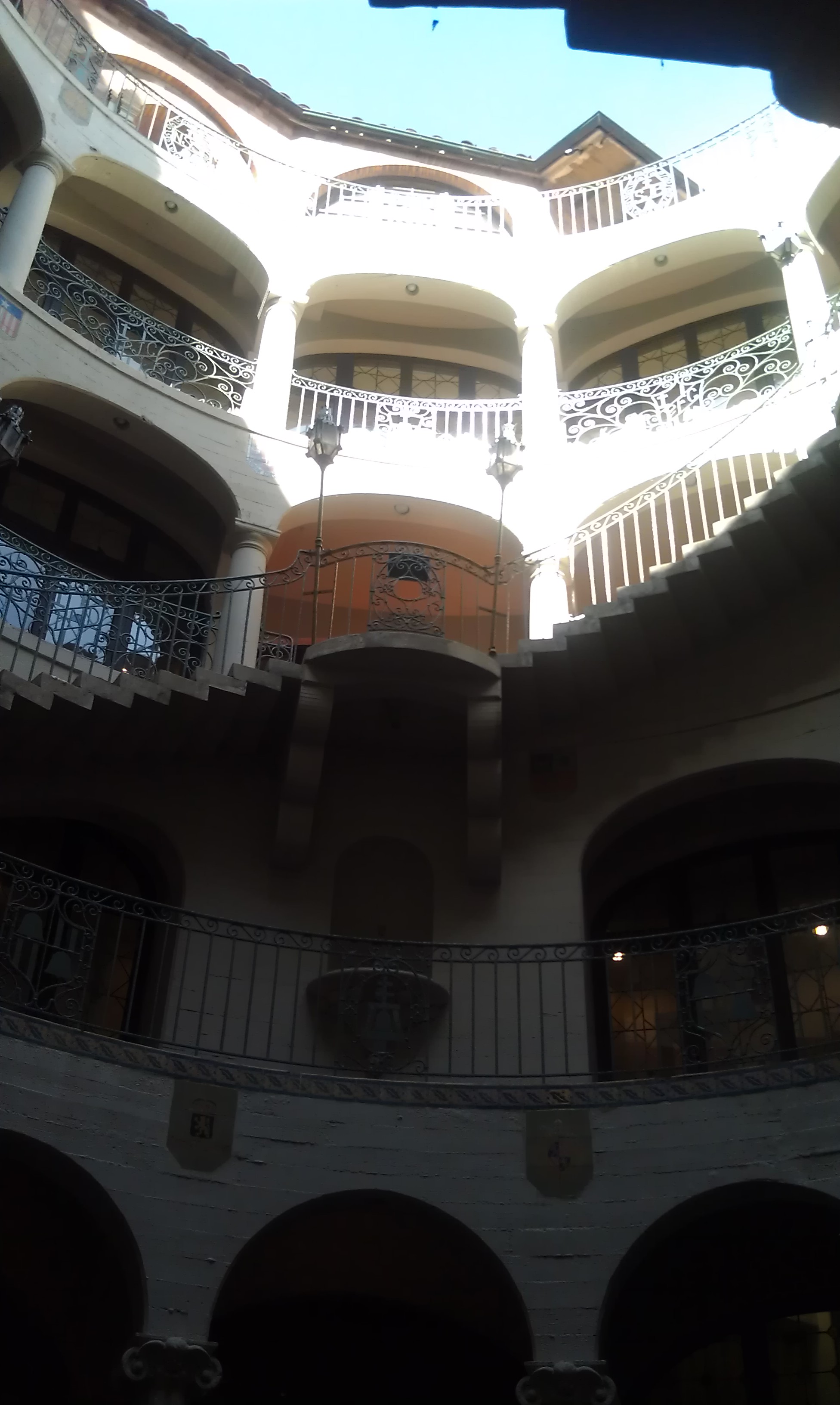
Another view of the rotunda.

IMAG3103

An iron spiral fire escape in the bowels of the hotel.

IMAG3104

Tiled dome visible from the top level of the rotunda.

IMAG3105

Another view

IMAG3106

This old building on the left is also part of the Inn’s property, but has yet to be restored.

There’s so much more… I’d love to stay there some time, if I could only win the lottery or something. In the meantime, it’s nice to just stroll the grounds and the lobby.

The Old Wolf has spoken.

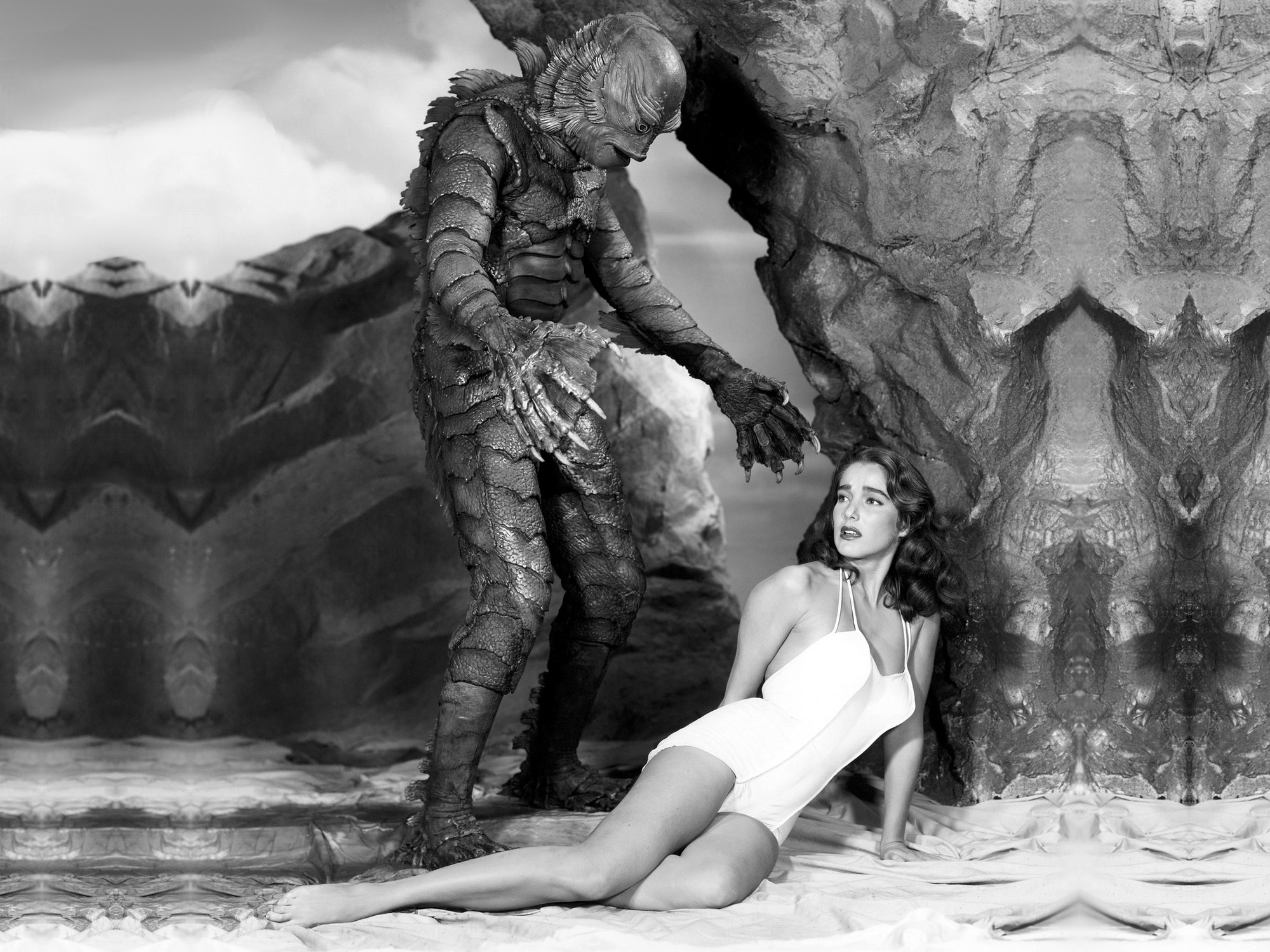
1954: Creature from the Black Lagoon

t2kIcF3


High-resolution production still. Notice the cloning to make the image wider. Trivia: redditor /u/Artikunu chimed in to say, “Fun fact: my great grandfather is the creator of the Creature From the Black Lagoon’s mask and costume. The mask was a treasured family heirloom, until one of my relatives sold it. It was worth around $75,000.”

I love photos like this. At one point I had a beautiful production still of Margaret Hamilton as the wicked witch of the west, autographed to me and procured for me by my father. Sadly, it was purloined about 25 years ago by one of the young men I used to serve as a Webelos den leader; I was never able to recover it. On the other hand, I have a number of great production stills of my dad in various rôles, so I’ve got that going for me, which is nice.

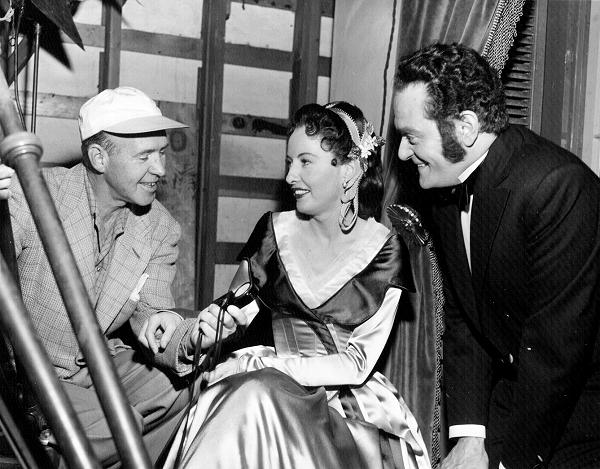
Light Test


Dad with Barbara Stanwyck and a lighting technician: “Man with a Cloak,” 1951.

The Old Wolf has spoken.

Sharing a wonderful blog: Bad Postcards

tumblr_mxq6rvREmE1qbyf2jo1_1280

EXTRATERRESTRIAL SPACESHIP

Actual photograph of a Flying Saucer taken June 16, 1963 near Albuquerque, New Mexico. Learn about people from other planets! Subscribe to: UFO INTERNATIONAL. Six issues $3.00. Single copy—50 cents. Published by: AMALGAMATED FLYING SAUCER CLUBS OF AMERICA, INC. (AFSCA)…Los Angeles, California.


Discovered this lovely website through Glaserei and had to share it. So many wonderful, awful postcards… a glimpse into America’s cultural past.

Click through for hundreds more bad postcards.

The Old Wolf has spoken.

The Cat’s-Meat Man

“So, as time went on, the Doctor got more and more animals; and the people who came to see him got less and less. Till at last he had no one left–except the Cat’s-meat-Man, who didn’t mind any kind of animals. But the Cat’s-meat Man wasn’t very rich and he only got sick once a year–at Christmas-time, when he used to give the Doctor sixpence for a bottle of medicine”

Hugh Lofting, The Story of Dr. Doolitle

Disclaimer

Technology, 50’s style

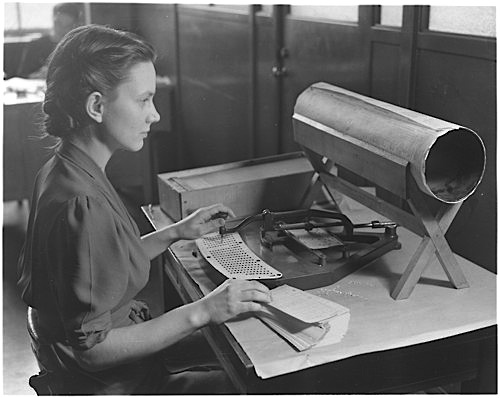
Woman operating a card puncher, ca. 1950

This is a card puncher, an integral part of the tabulation system used by the United States Census Bureau to compile the thousands of facts gathered by the Bureau. Holes are punched in the card according to a prearranged code transferring the facts from the census questionaire into statistics.

Found at the National Archives

If my experience as a NRFU enumerator for the 2010 census was any indication, they probably are still using a few of these in back rooms somewhere…

Disclaimer