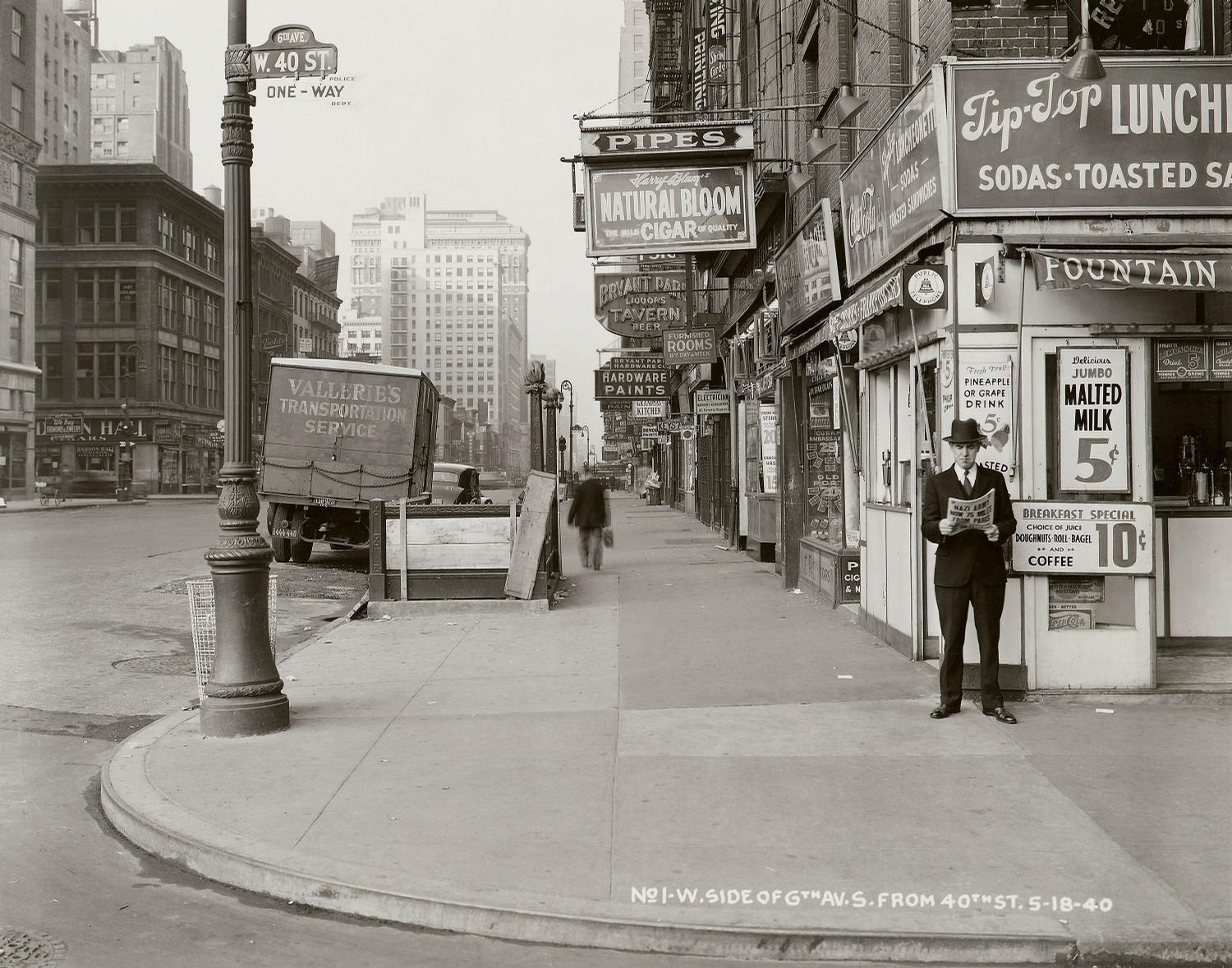
New York: May 18, 1940

pIMgxvB

An eeriliy deserted 6th Avenue, looking south from 40th street. The man’s headline reads ‘Nazi Army Now 75 Miles From Paris.’ The lack of traffic and people, combined with the breakfast special sign, leads one to believe this may have been taken in the early morning.

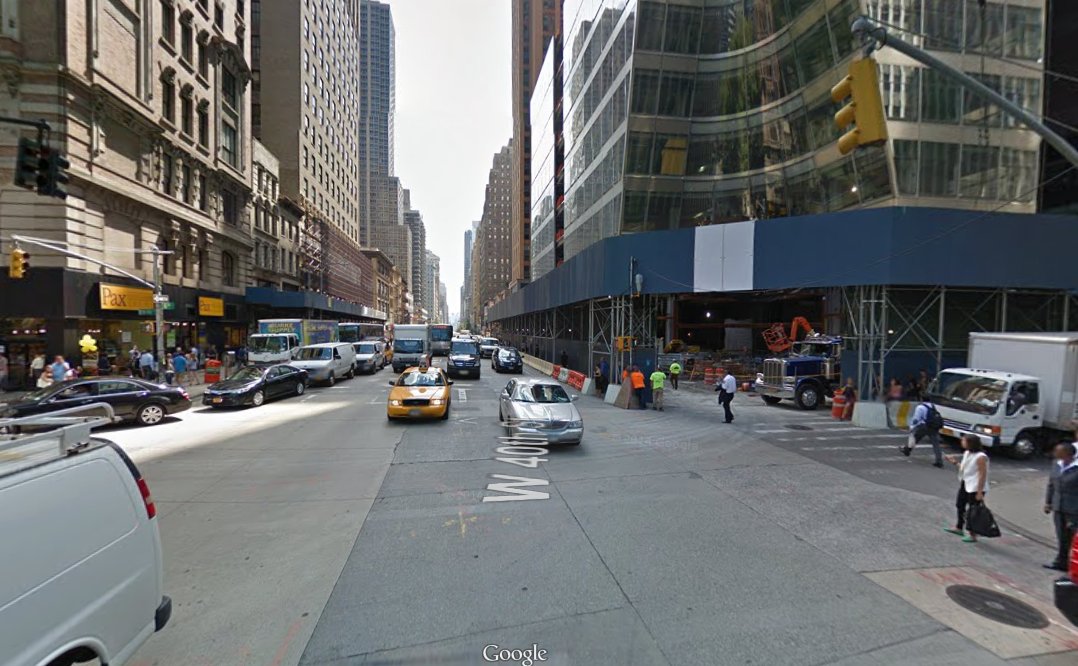
The same scene today:

40th

The times, they have done changed.

The Old Wolf has spoken.

51st and Lex: NYC, 1955.

mHdcXi5

Seen at Shorpy.

This is the New York I remember, the one I grew up in. Not too far from my home in that year, either. Notice the street light: no yellow. I remember sitting in my windowsill in 1955 or 1956, on nights when for some odd reason I wasn’t sleepiing, watching the staggered lights turn green or red all the way up Lexington Avenue (we were on 85th) – here’s my view, taken around the same era:

85th Street 3

The window to the right was the one I sat in, and I was able to see a couple of miles up the road.

I would pay dearly for a time machine and be able to go back to the City in those days. In many ways it was a lot more interesting than it is today.

The Old Wolf has spoken.

Slum Life in New York City

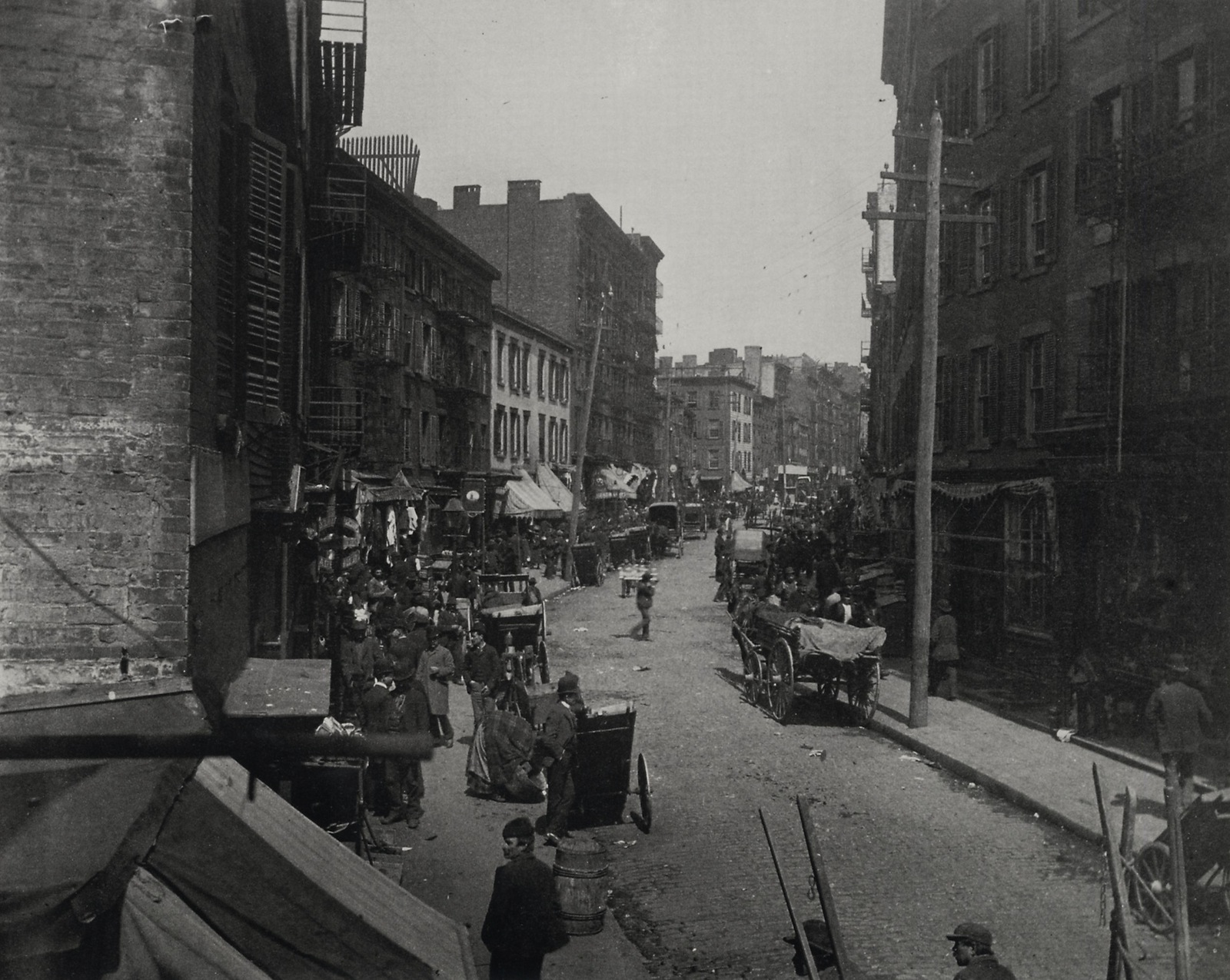
The collection of pictures found at io9 is extracted from the website I mentioned in this post, How the Other Half Lives – from a work by Jacob Riis.

py2dstujbxpvnxk0cnft

Mulberry Bend

ufznti2eh3k84uetgkxb

Lodgers in a crowded flat on Bayard Street. Rent: 5¢ per day.

It gives you a look at some of Riis’ work without having to dig through the online text, but I still recommend perusing the entire, impressive effort.

We have come far. We still have far to go.

The Old Wolf has spoken.


How the Other Half Lives

I was just made aware of a marvelous website, authentichistory.com. It’s not completely up-to-date, some of the image links are broken, but it’s got some amazing stuff to peruse.

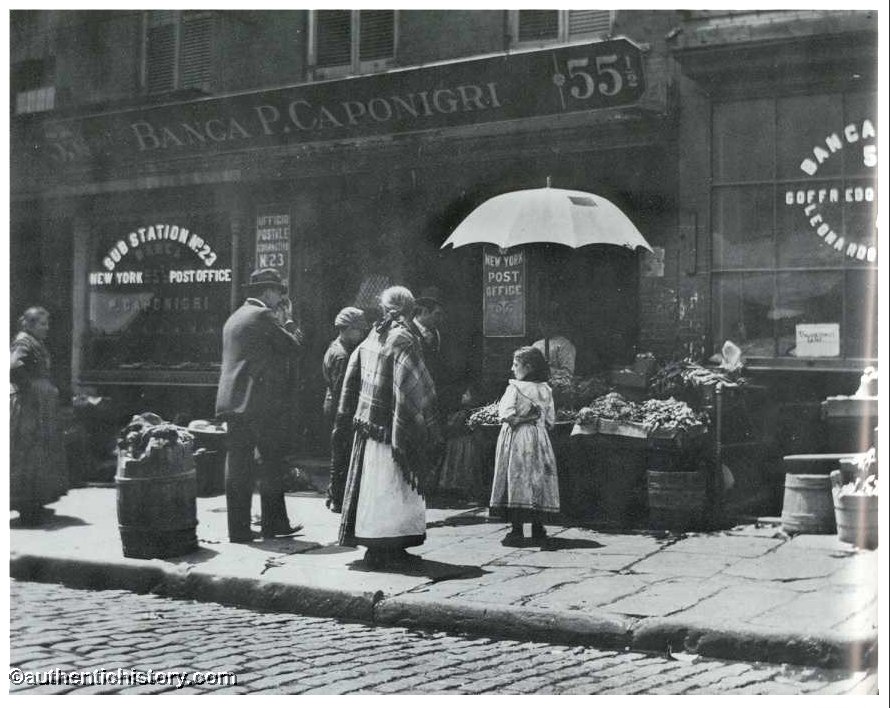
Veggies

This picture, entitled, “Vegetable Stand in The Bend” comes from a seminal work by Jacob Riis, How the Other Half Lives: Studies among the Tenements of New York published in 1890. Complete text and images are available here. I’m certain my New York colleagues will appreciate this; it describes conditions among the tenements of New York ten years before my grandparents arrived here from Italy, and conditions must have been largely the same when they came. It helps me make the history of my own family come just a little closer. The entire web site is a sinkhole for time, but I’m not sorry.

Note the bank behind the vegetable stand; in an article found in The New York Supplement in 1908, one can assume that the bank was at this point in time not long for the world. From Gateway to the Promised Land: Ethnic Cultures on New York’s Lower East Side By Mario Maffi, published in 1994. (Click through for the full text with references and much more intriguing New York history)

Italian banks (the Banca Termini, The Banca Caponigri, the Banca Barsotti, and many others on Mulberry Street) were a focal point for the community. In metropolitan New York alone, there were some 400 of them by 1900, all chartered, and perhaps many without charter. The rule for opening a bank was, ‘the more crowded the street on which the bank is, the better for the banker; better yet, the more crowded is the block where the bank has its habitat; best of all, the more crowded with paesani [townsmen] the tenement in which operates the banker.’ Often ‘attached to a saloon, grocery store, or cigar store – sometimes to a cobbler shop,’ or simply a corner in ‘the general merchandise store, where spaghetti and Italian cheese were on display,’ the bank provided important services to the neighborhood. It kept deposits, sent money home, functioned as an informal post office and travel agency, was a meeting place for friends and unemployed. The business transaction was a friendly affair between fellow countrymen and receipts were rarely used. But unscrupulous “bankers” were many, and not infrequently such “friendly affairs” ended tragically for the immigrant.

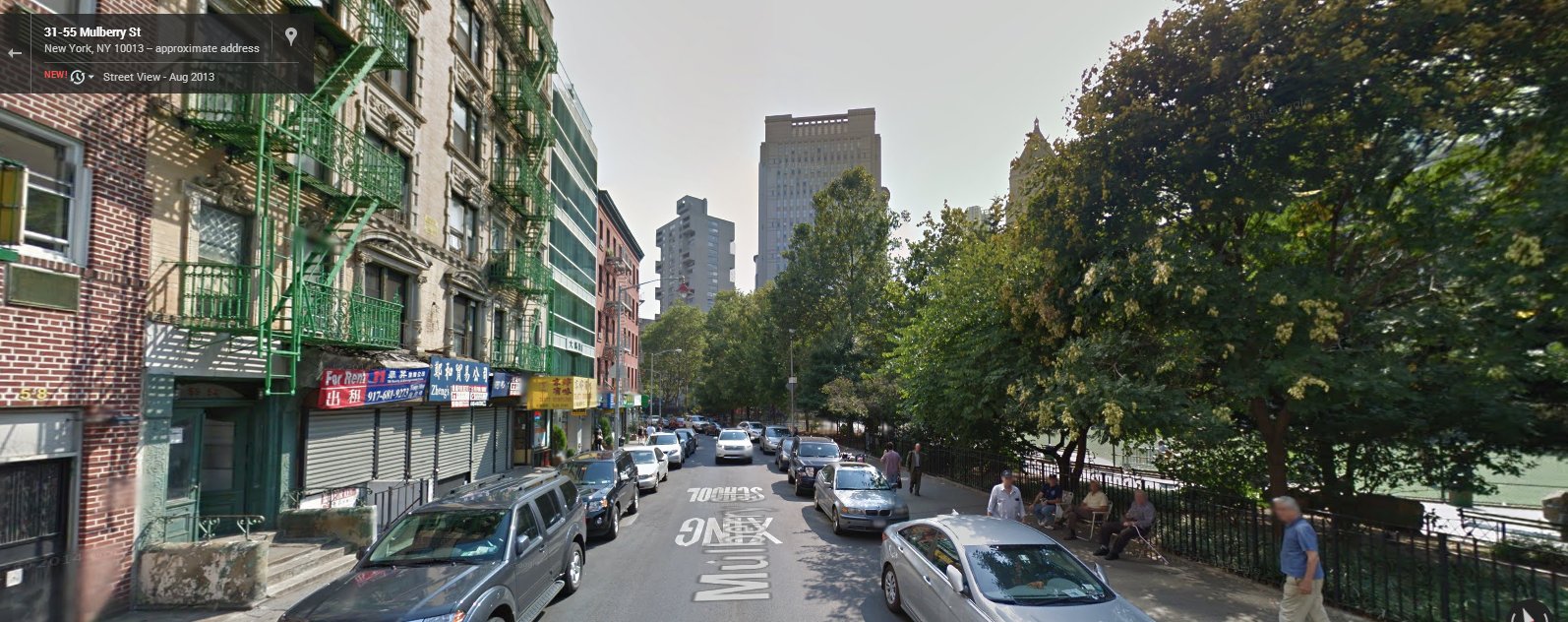
It is to be assumed from the address that Banca P. Caponigri was at 55½ Mulberry Street – that side of the block has now been replaced by a park.

Mulberry Street

The images in this treatise are haunting and unsettling. Despite all the things that are still wrong with our nation, it’s obvious that progress in raising the condition of our urban dwellers has made progress,with the obvious understanding that we still have far to go.

The Old Wolf has spoken.

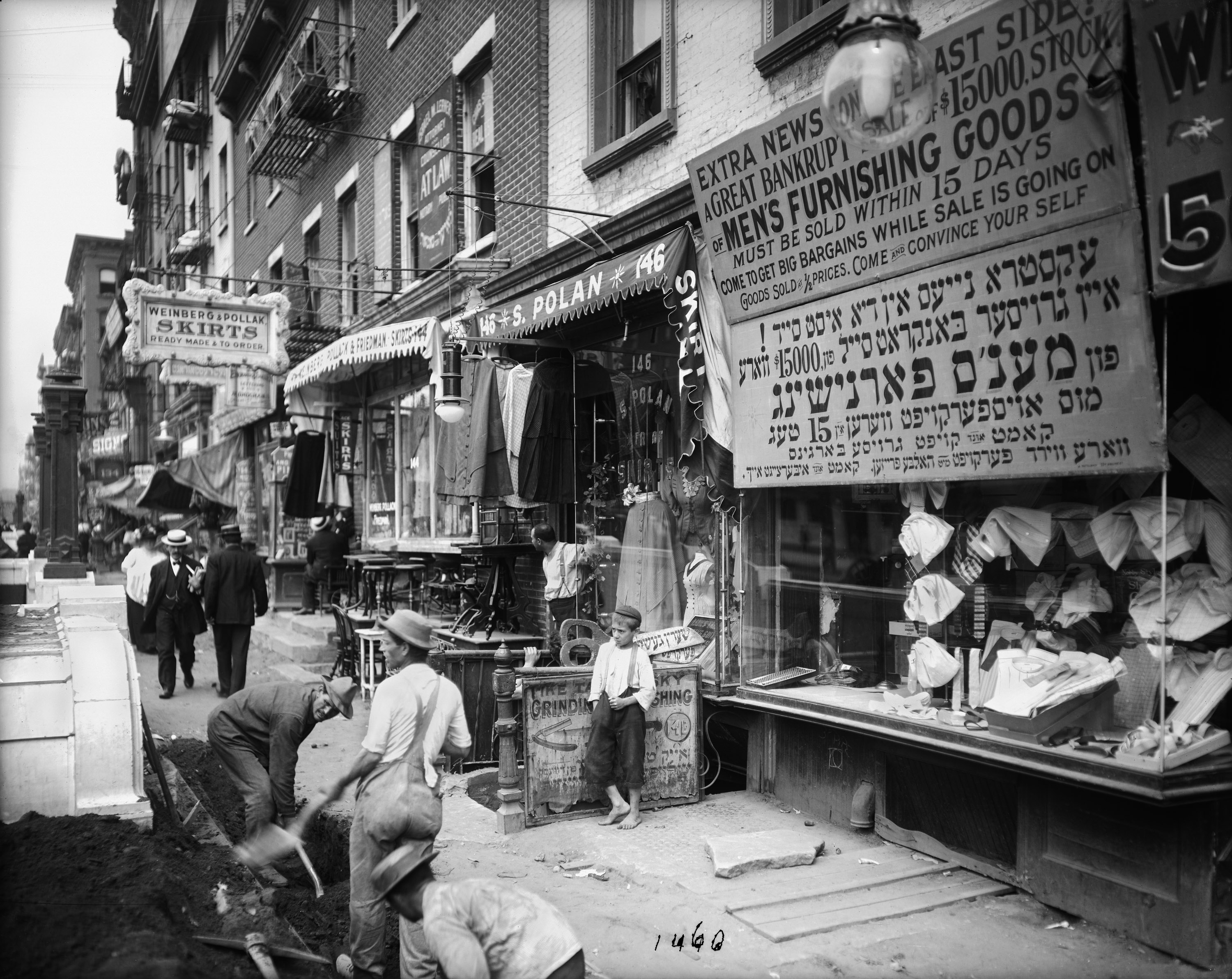
Ekstra News ain der East Side! (1908)

NYC History In Pictures

© AP Photo/New York City Municipal Archives, Department of Bridges/Plants & Structures, Eugene de Salignac. Spotted at Distractify.

I love this photo, titled “Workers dig along Delancey Street, 1908.” It was taken a year before my father was born, and reflects a New York of which I only experienced whispers as I was growing up there in the 50s and 60s. But there were still hints and shadows, so the picture calls to me.

I love the fact that the Yiddish of New York was so heavily influenced by English that the sign is almost a direct transliteration of the English text, with little bits of  German/Hebrew thrown in.

With all its incredible history, warts and all, I ❤ NY. I wish only that I could afford to live there in the style to which I have become accustomed (meaning, comfortable and safe.)

The Old Wolf has spoken.

New York, 1950s

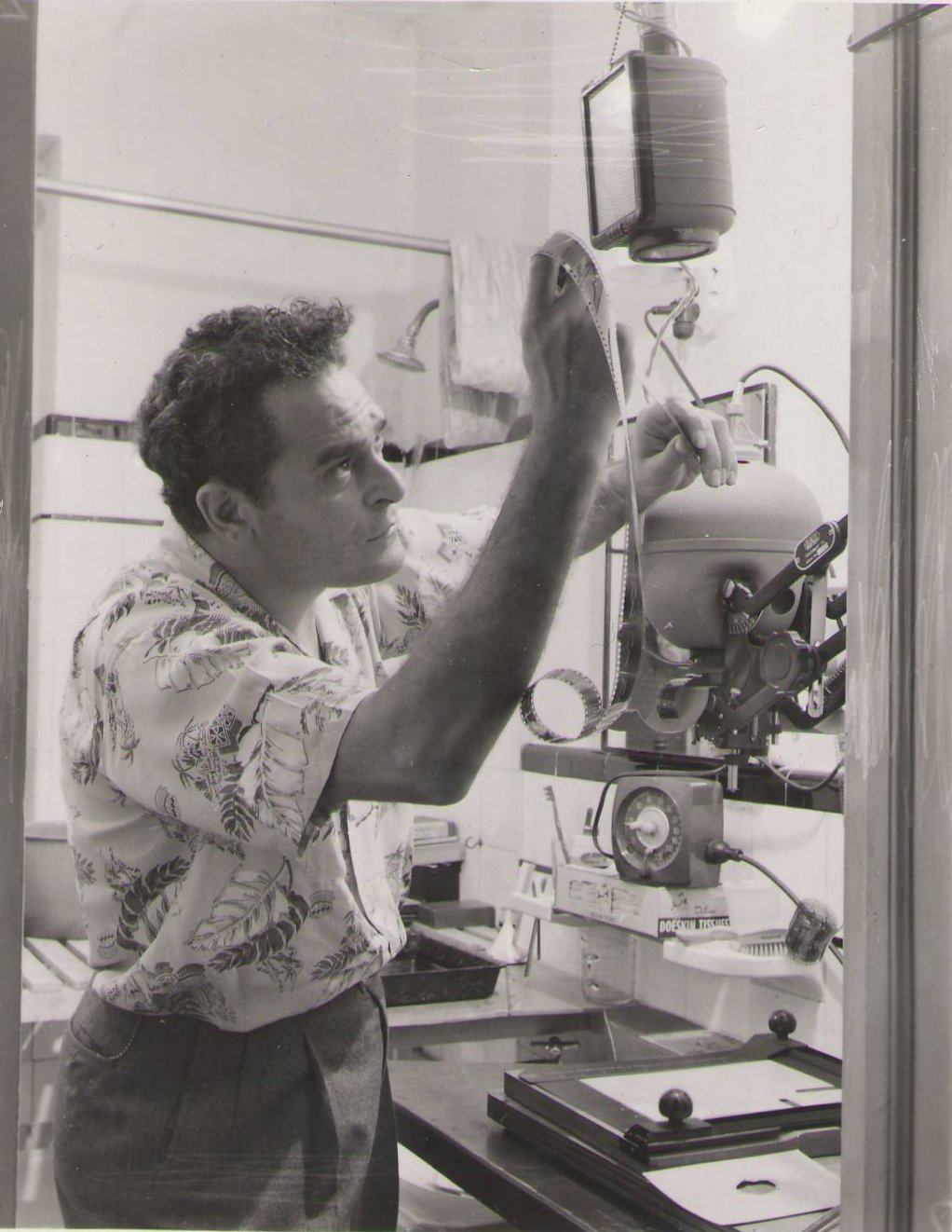
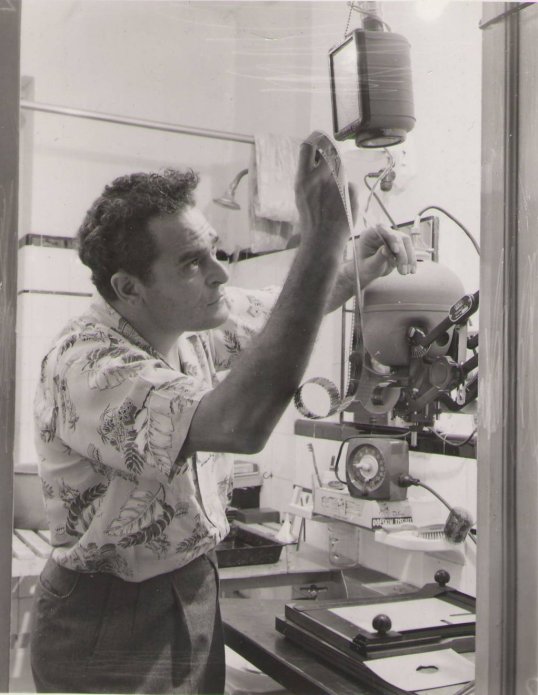
Some photos of New York City taken by my father, found while scanning his collection of negatives. This is the city I knew as a child. Dad was not a great photographer, but was very enthusiastic, and did his own developing and printing. These pictures were taken between 1950 and around 1959, based on what the cars look like. All black & white photography Copyright 1950-2014 Old Wolf Enterprises.

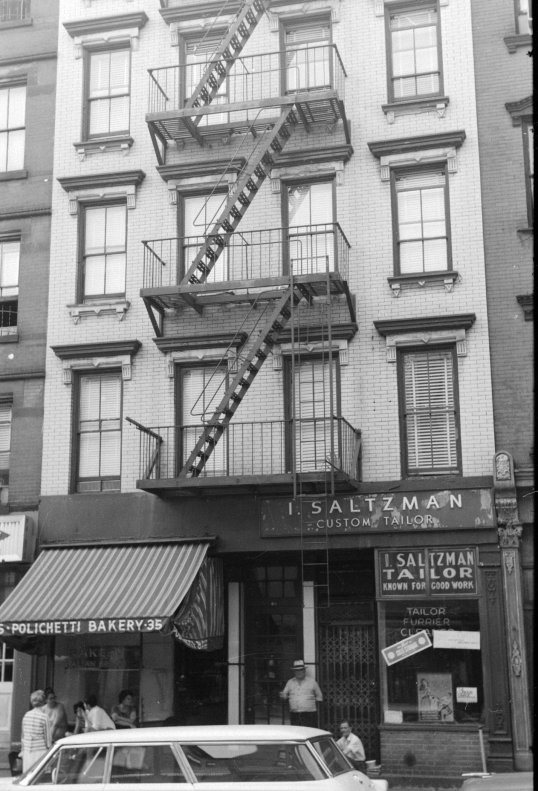
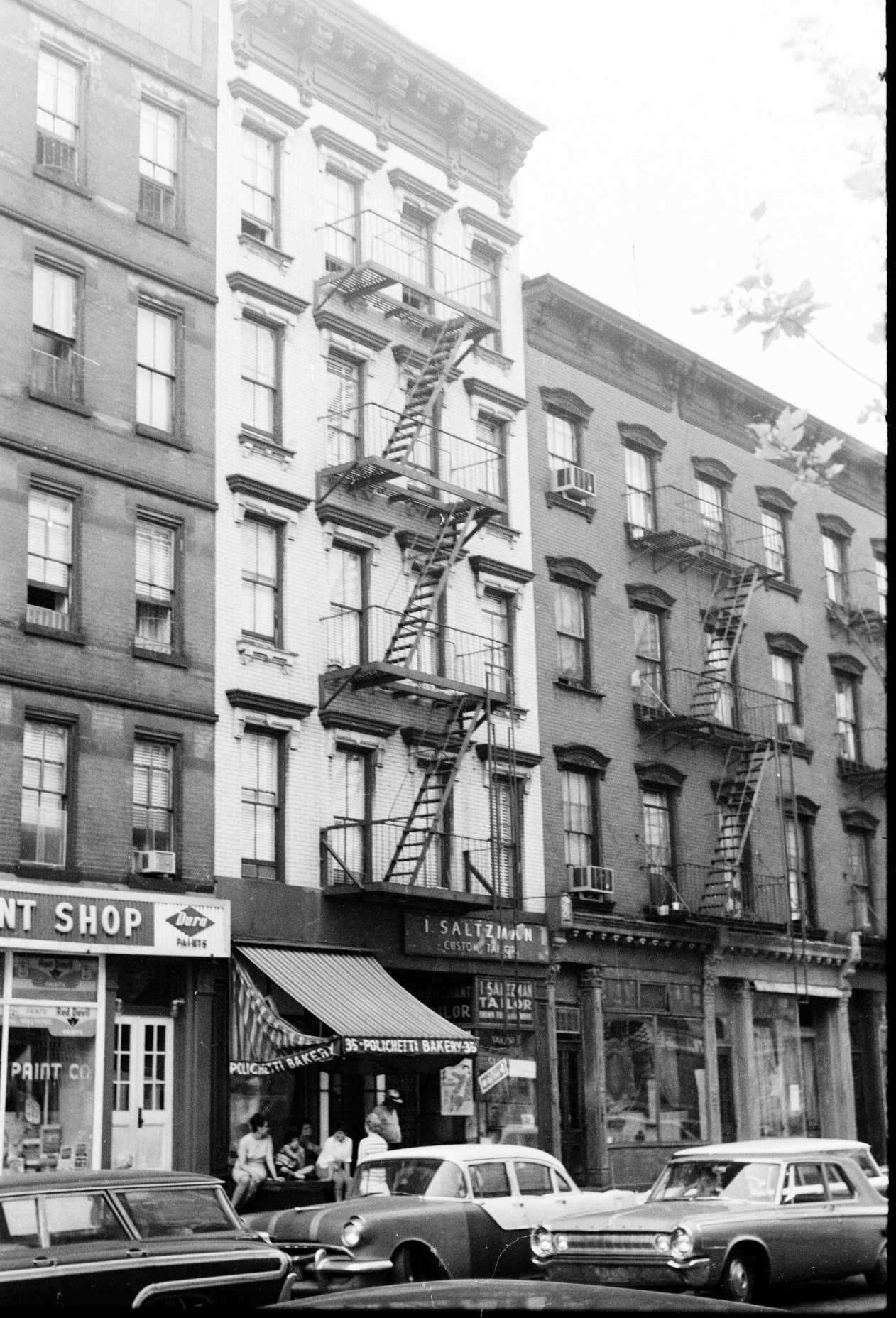
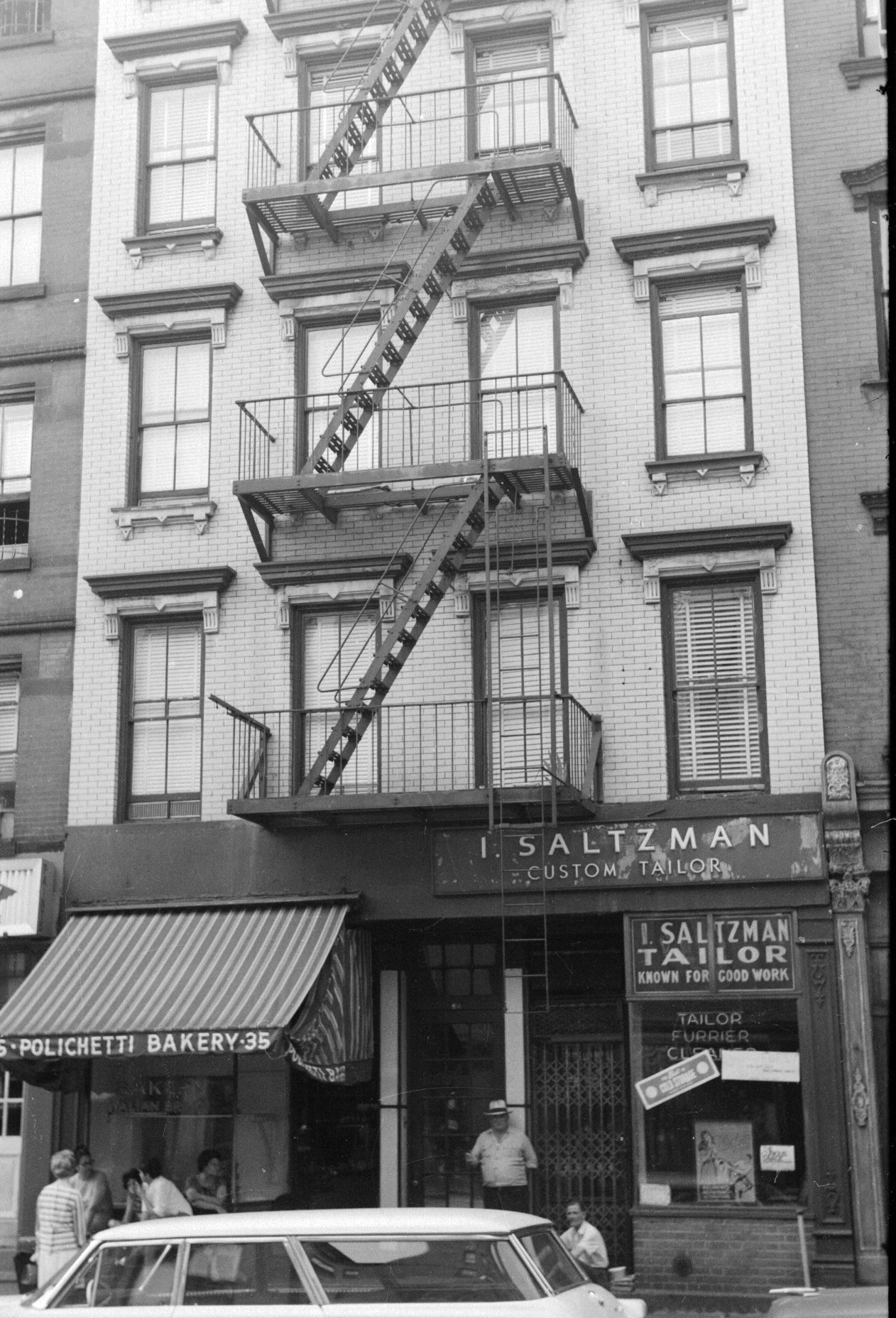
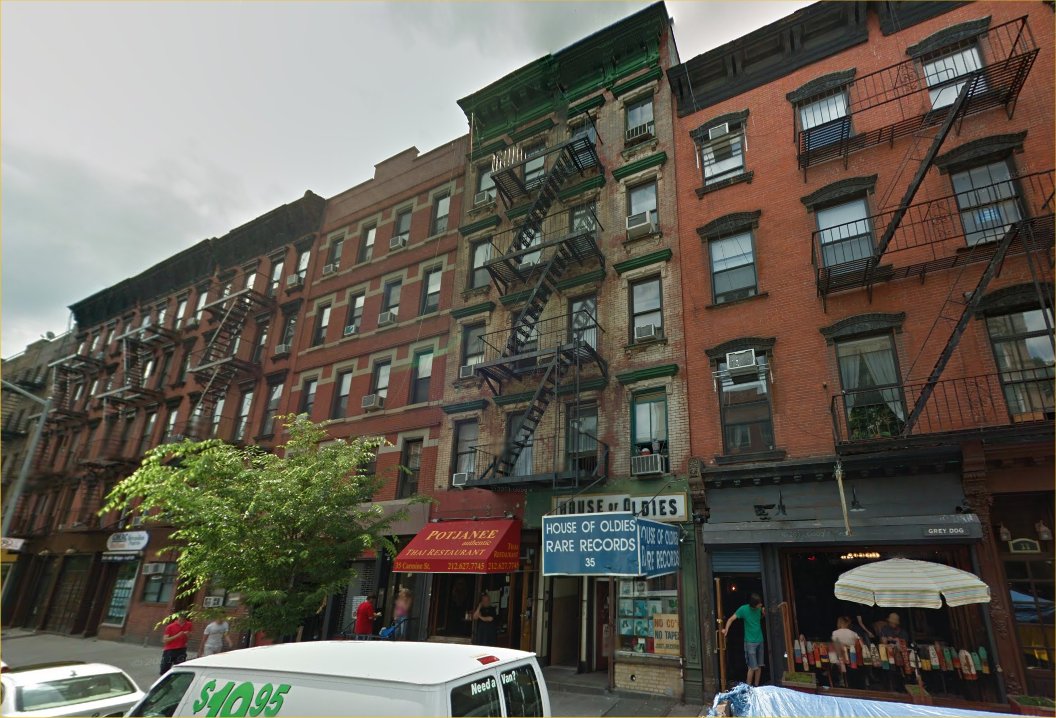
Below: two views of 35 Carmine Street.
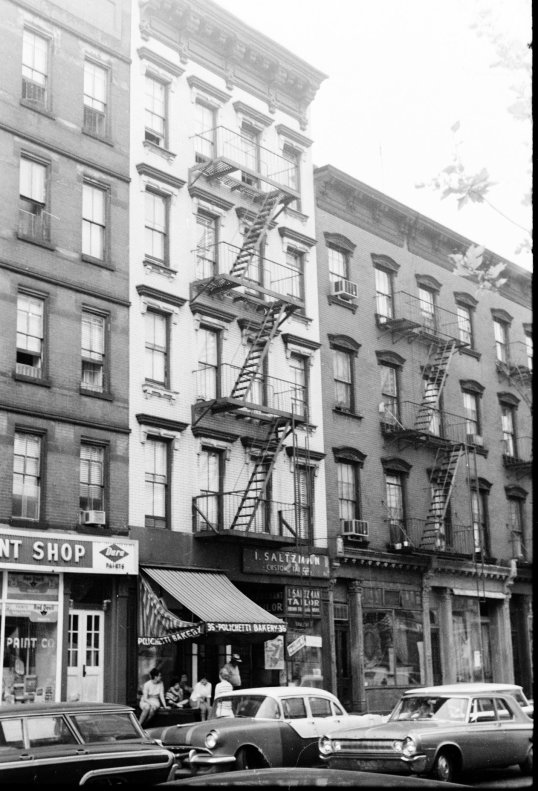
New York - Polichetti's Bakery

New York - Saltzman Tailor

History: No. 35 Carmine Street was constructed in 1877 by Bavarian-born brickmason and prolific tenement builder Peter Schaeffler, at a time when many of Greenwich Village‘s Federal and Greek Revival-style row houses were being replaced by tenements constructed to house the growing working-class and immigrant population. Featuring elements of the popular neo-Grec style in the design of the lintels, sills, and cornice, the building housed stores on the ground story and four families on each floor above. Built just prior to the 1879 tenement house law, the building had only two small square airshafts. Census data for 1880 shows that sixteen families resided at no. 35 Carmine Street, including three native-born families; first-generation immigrant families from Ireland (four), England (three), and Germany (one); and second-generation immigrant families from Ireland (two), England (one), Germany (one), and Scotland, via Canada (one). Residents were employed as a hatter, lawyer, watch case maker, bill collector and laundry worker, among other occupations. 1930 census records indicate that all fifteen families residing there were first-generation immigrant families from Italy. Residents held a variety of occupations, including bakery proprietor, cabinet maker, longshoreman, operator (men‘s clothing), and hat trimmer. By 1935, the number of apartments per floor had been reduced to two. City directories list the following commercial tenants: Experienced Hand Laundry (1950), A. Polichetti, baker, and Irving Saltzman, clothier (1959). The storefront had been occupied by a bakery in the early 1910s as well. In 1938 the western airshaft was enlarged and in 1939 architect Sidney Daub oversaw replacement of the existing storefronts; except for these changes, the building remains largely unchanged since its construction.  (Greenwich Village Historic District Extension II, Designation Report, June 22, 1910)
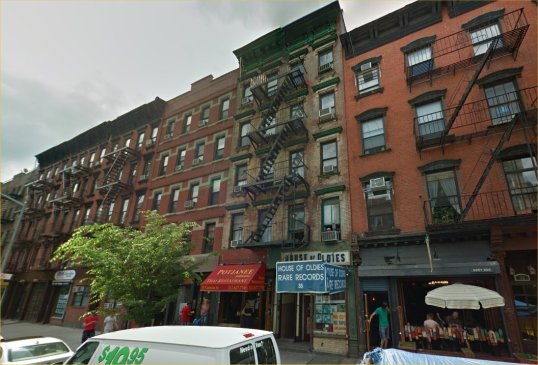
35 Carmine Street

35 Carmine Street as of June 2011, Google Street View
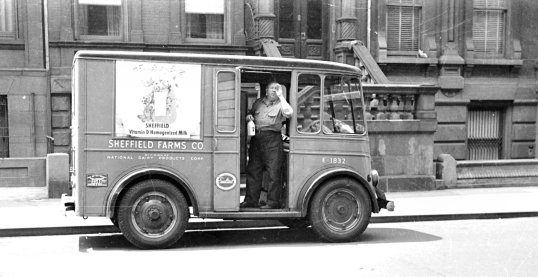
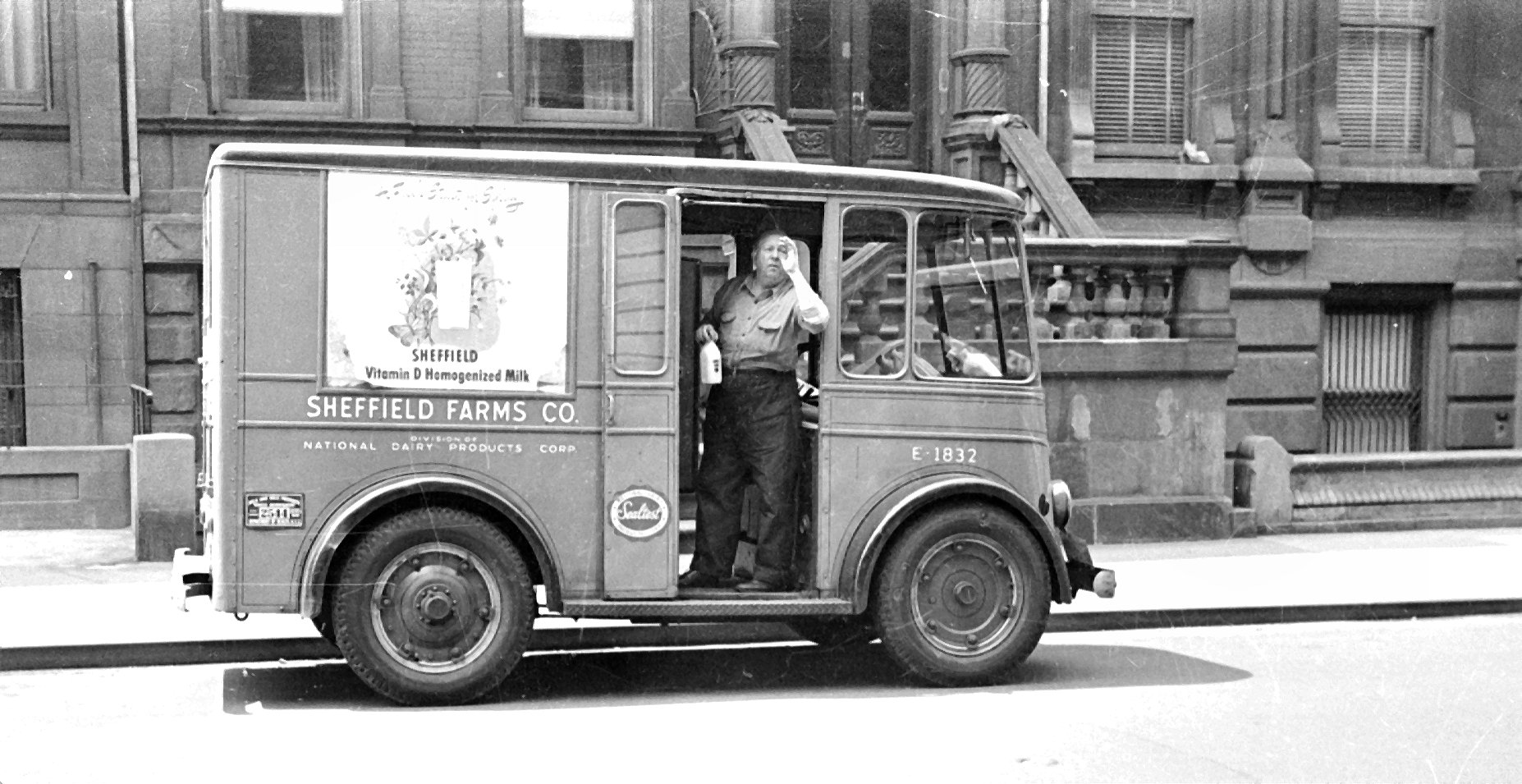
New York 1950 - Milkman

Milkman for Sheffield Farms Co. with typical New York brownstone in the background.
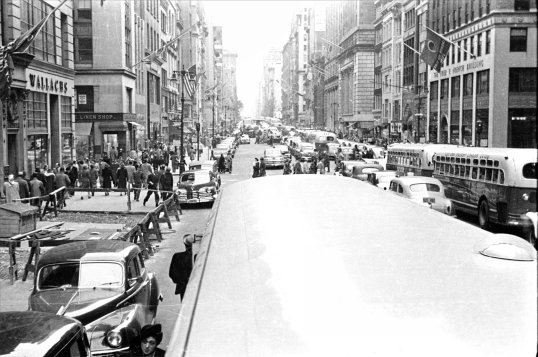
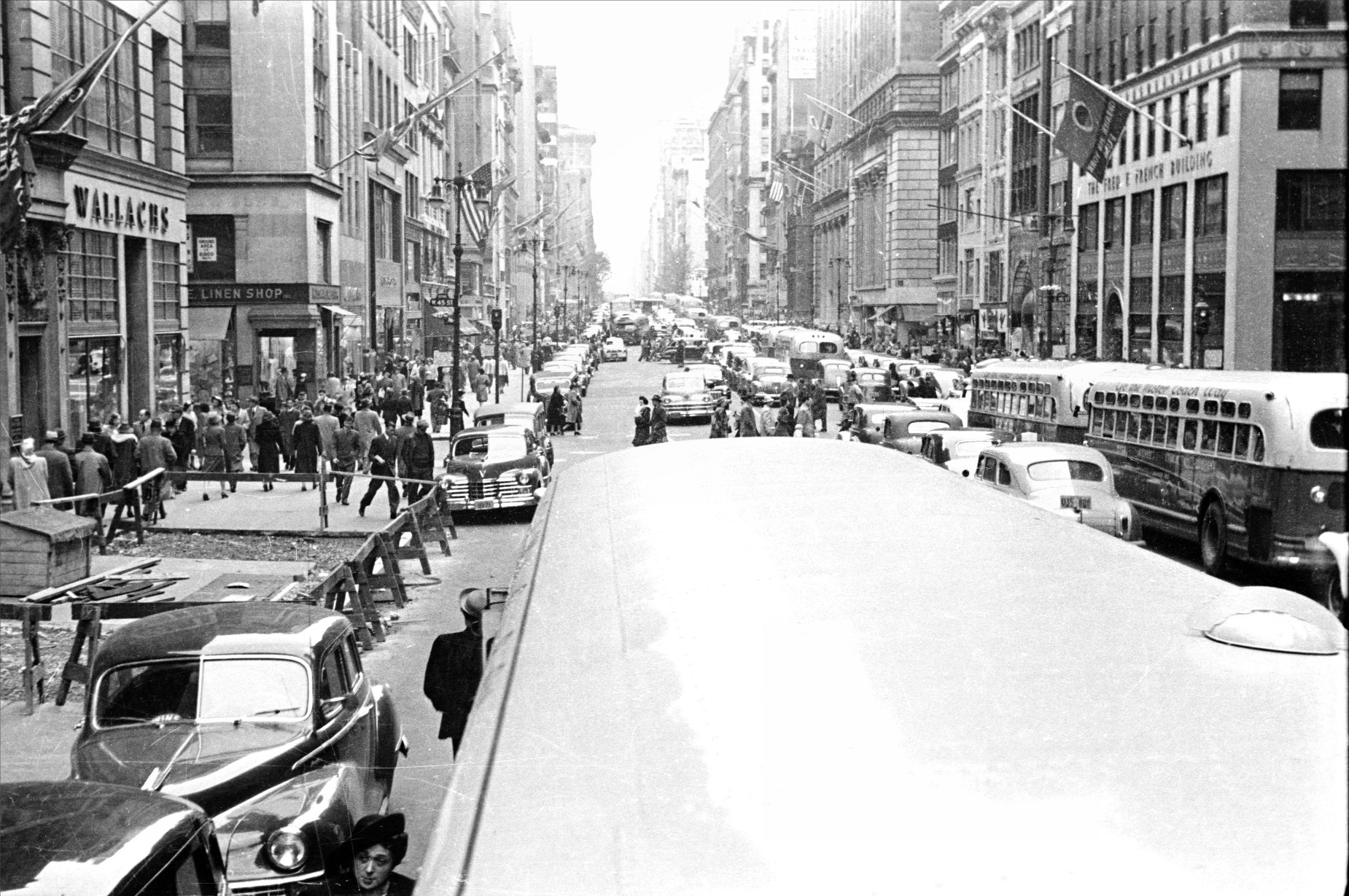
New York 1950 1

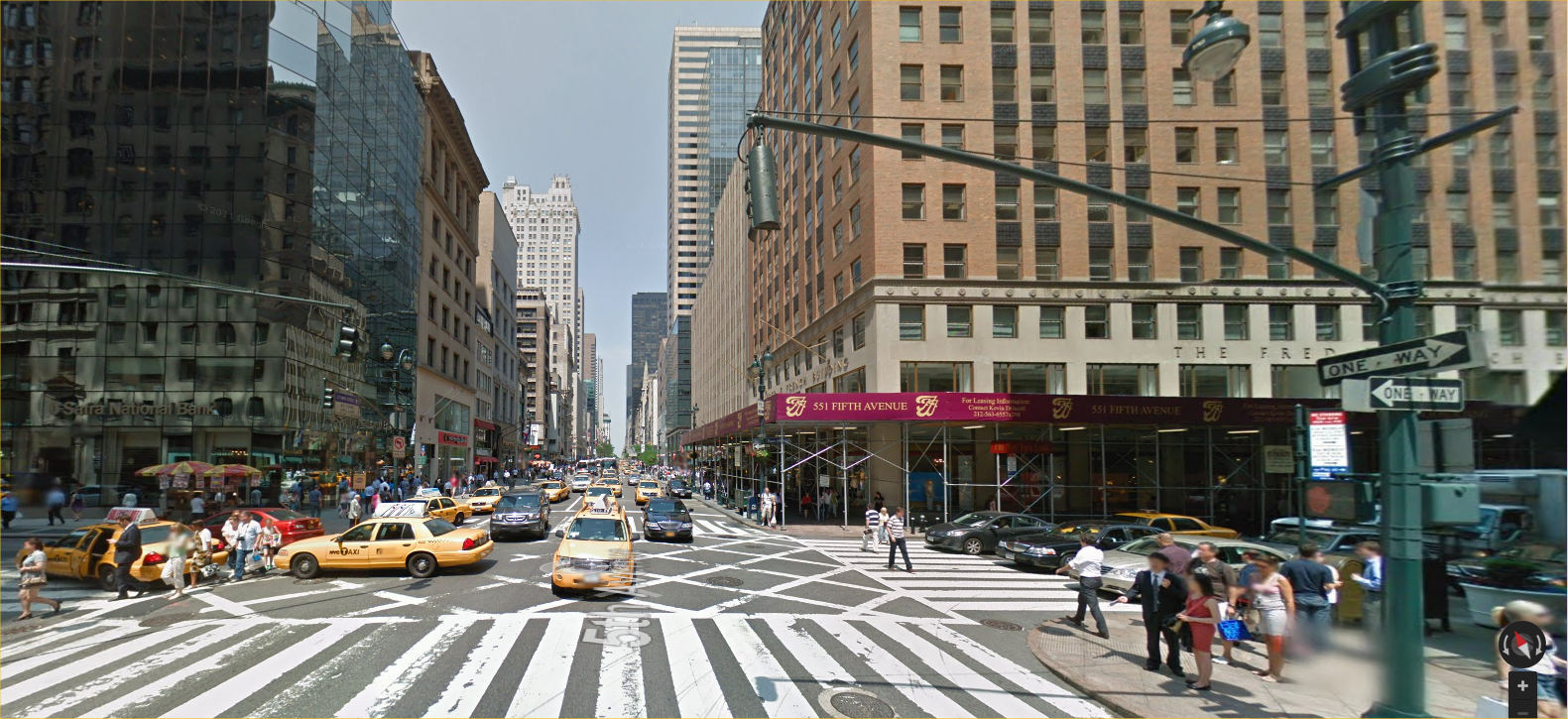
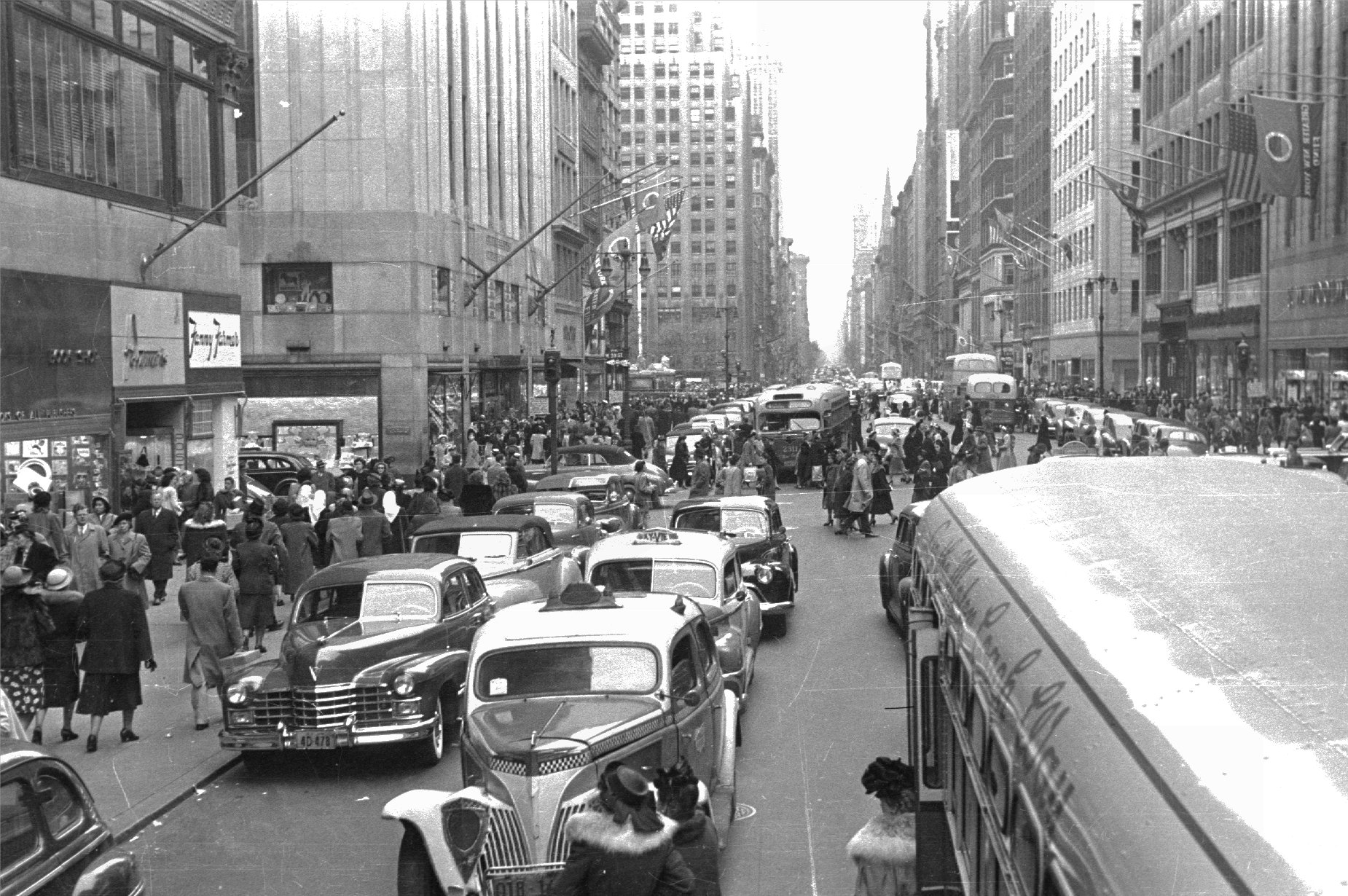
45th Street and 5th Avenue, looking north. The Fred F. French building on the northeast corner.
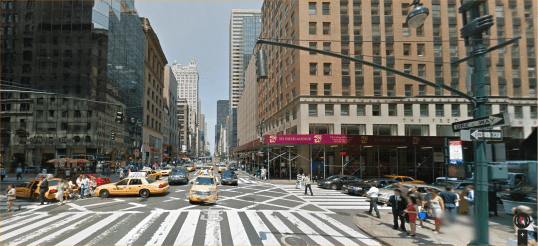
45th Street North

The same view as of June 2011, Google Street View
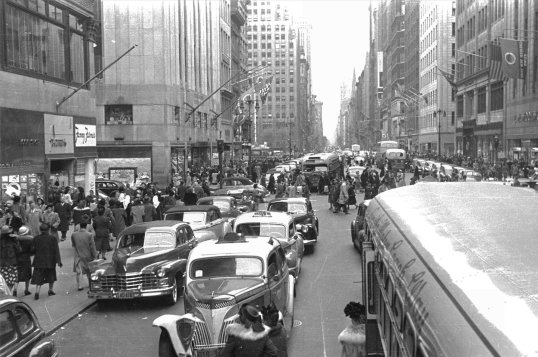
New York 1950 1a

5th Avenue and 39th Street, looking north. A New York Public Library lion is visible on the left.
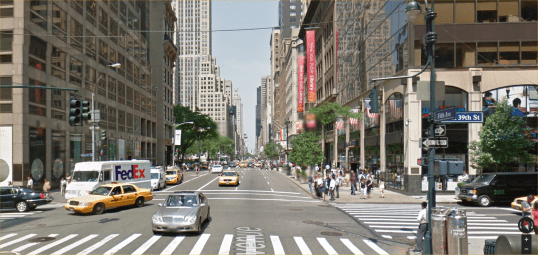
39th Street North

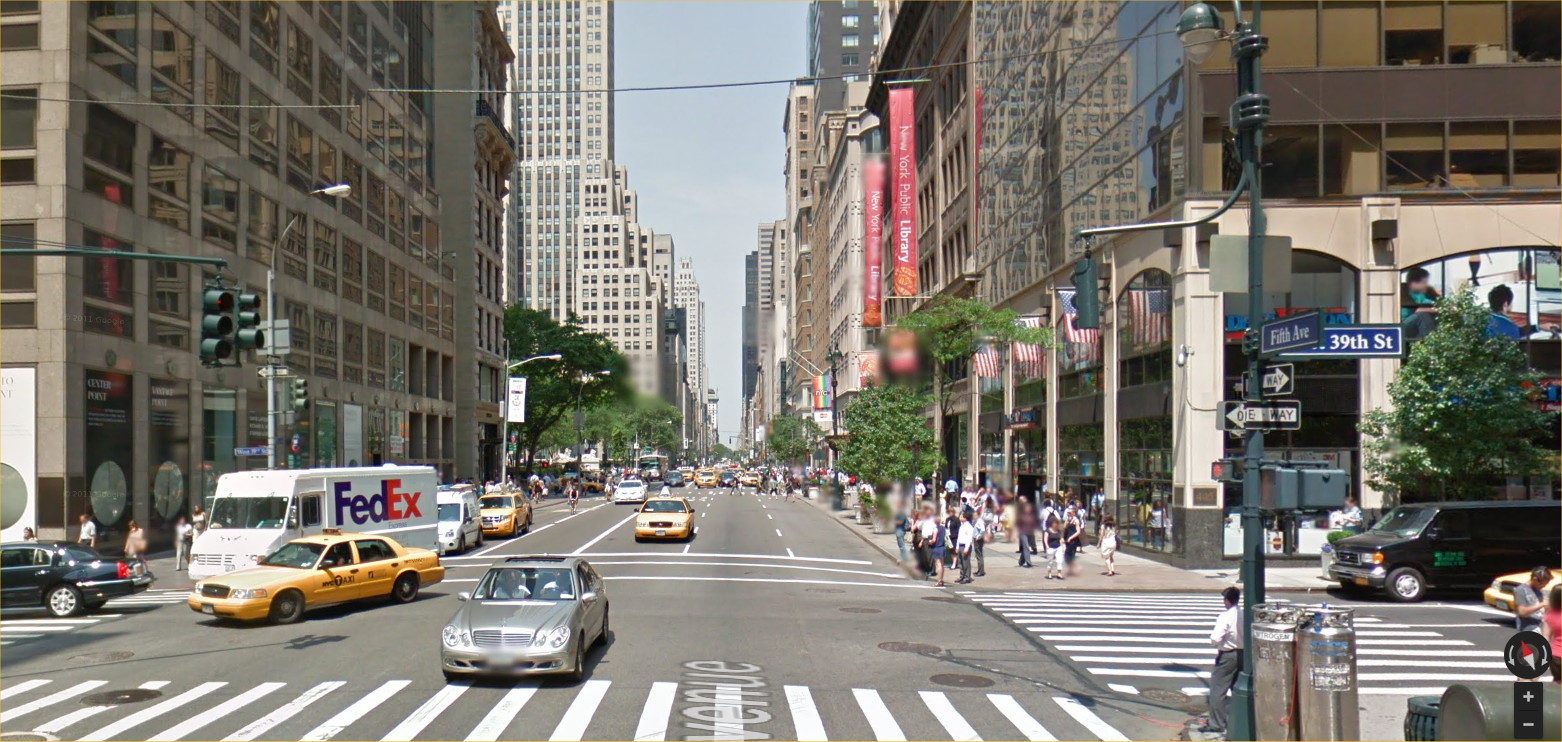
The same view as of June 2011, Google Street View
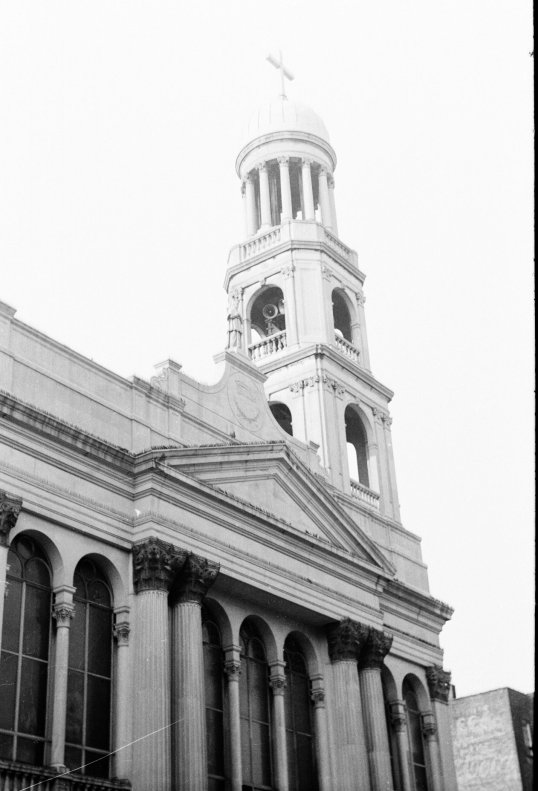
New York - Church

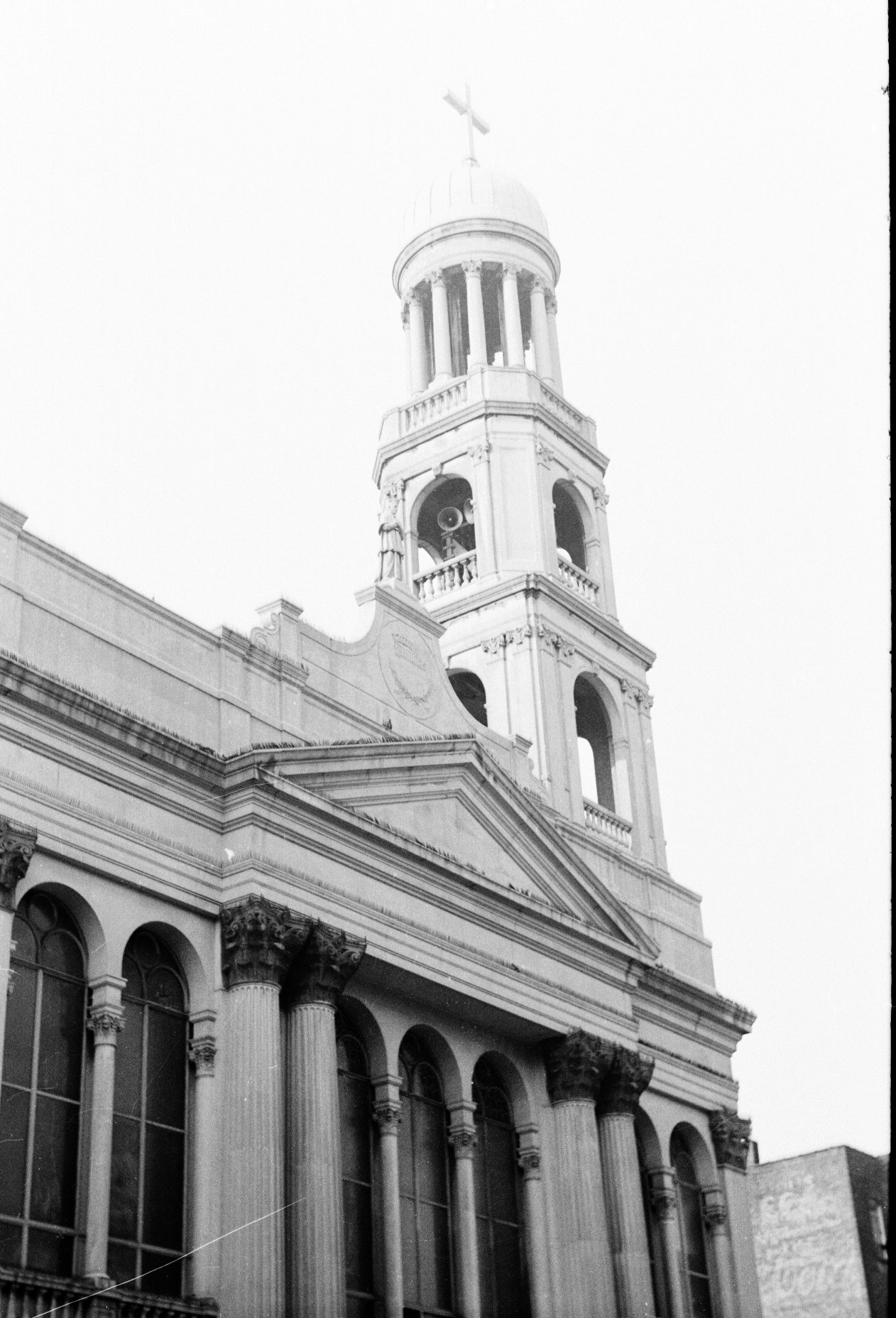
Our Lady of Pompeii, Carmine Street. This is my family’s parish; many blessed events have taken place here.
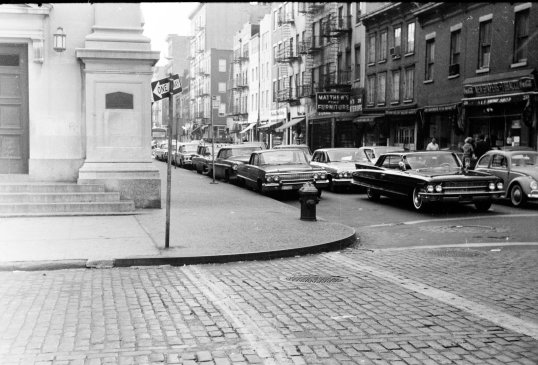
New York - Corner Scene\

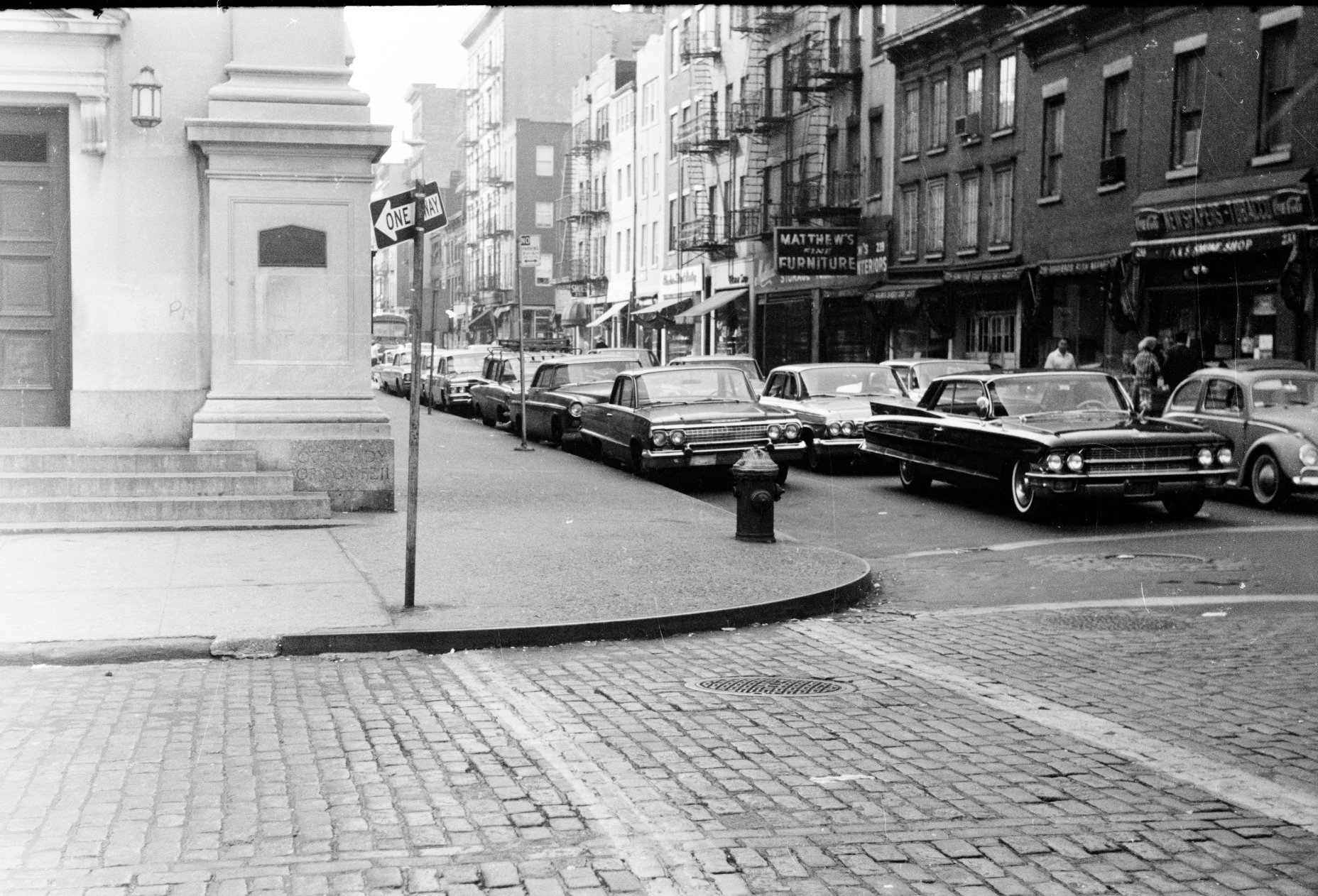
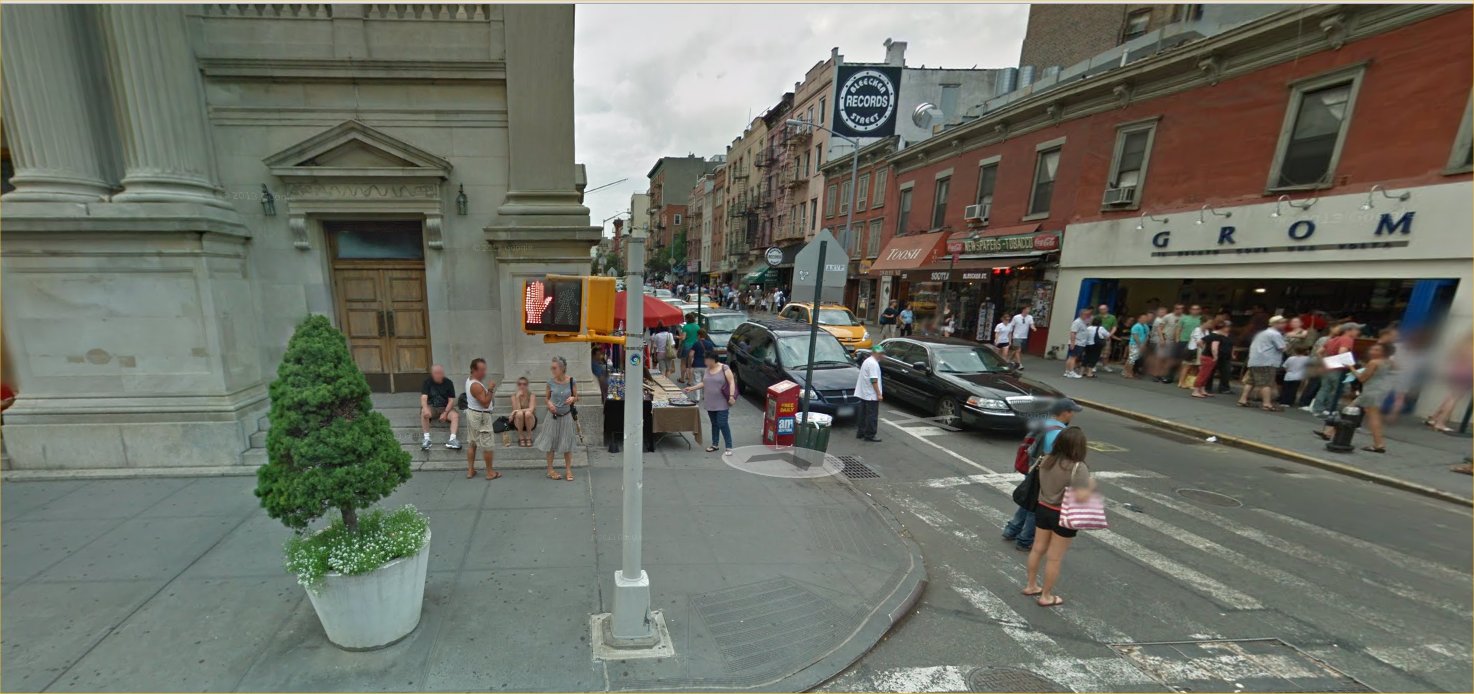
Our Lady of Pompeii church on the corner of Carmine and Bleecker Street, looking northwest.
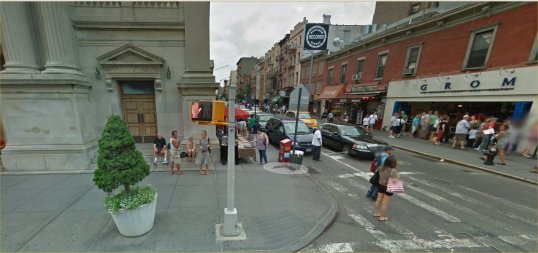
241 Bleecker Street

The same view as of 2014, Google Street View
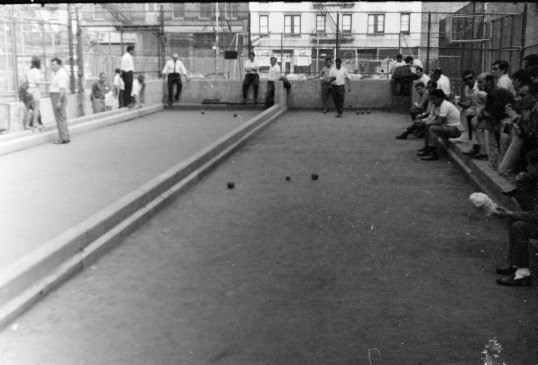
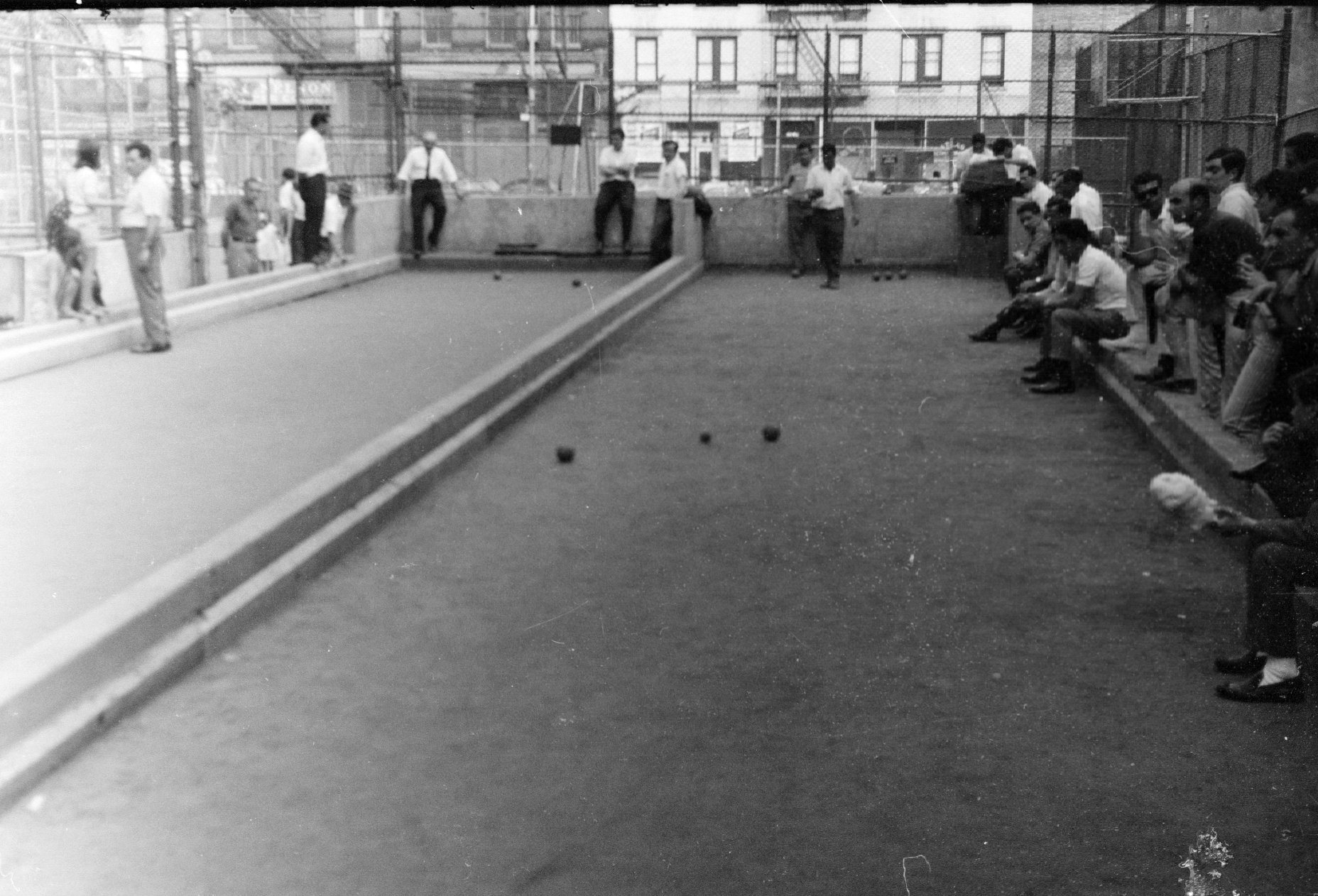
New York - Bocce Court

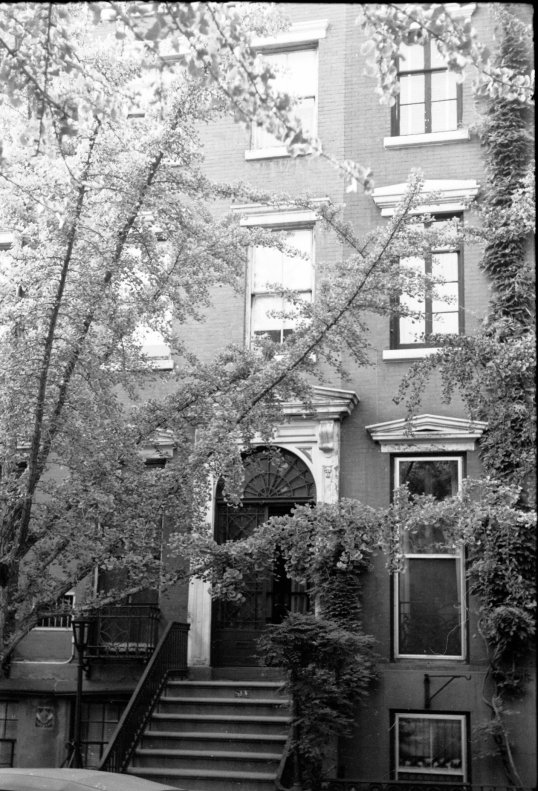
Common street scene in Greenwich Village – the bocce court
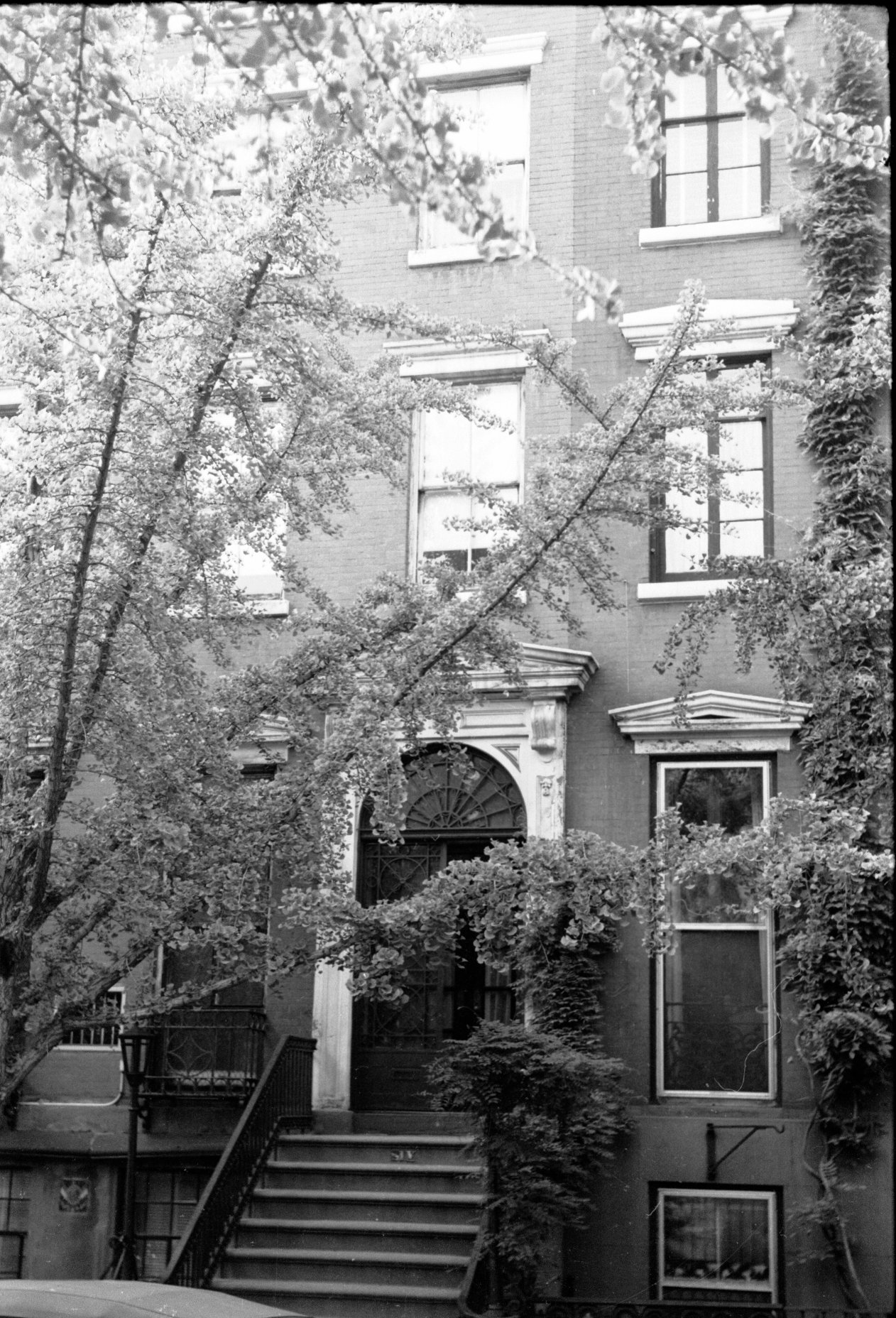
New York - Brownstone

New York Brownstone

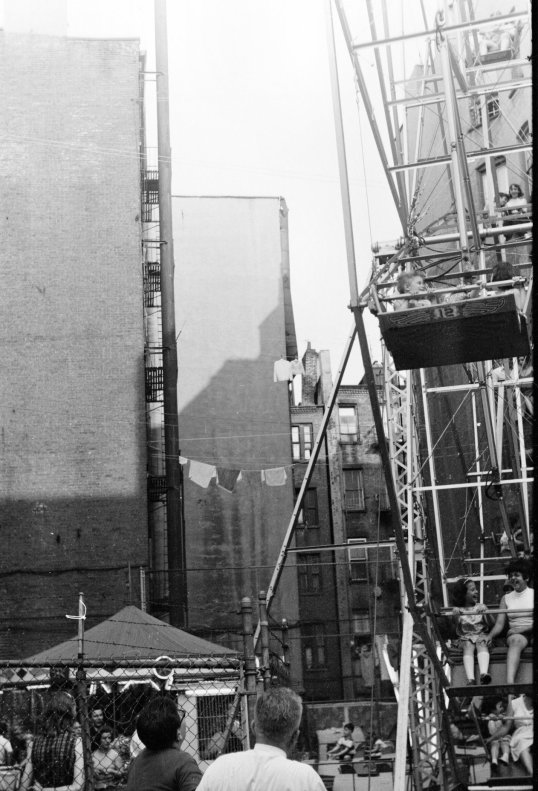
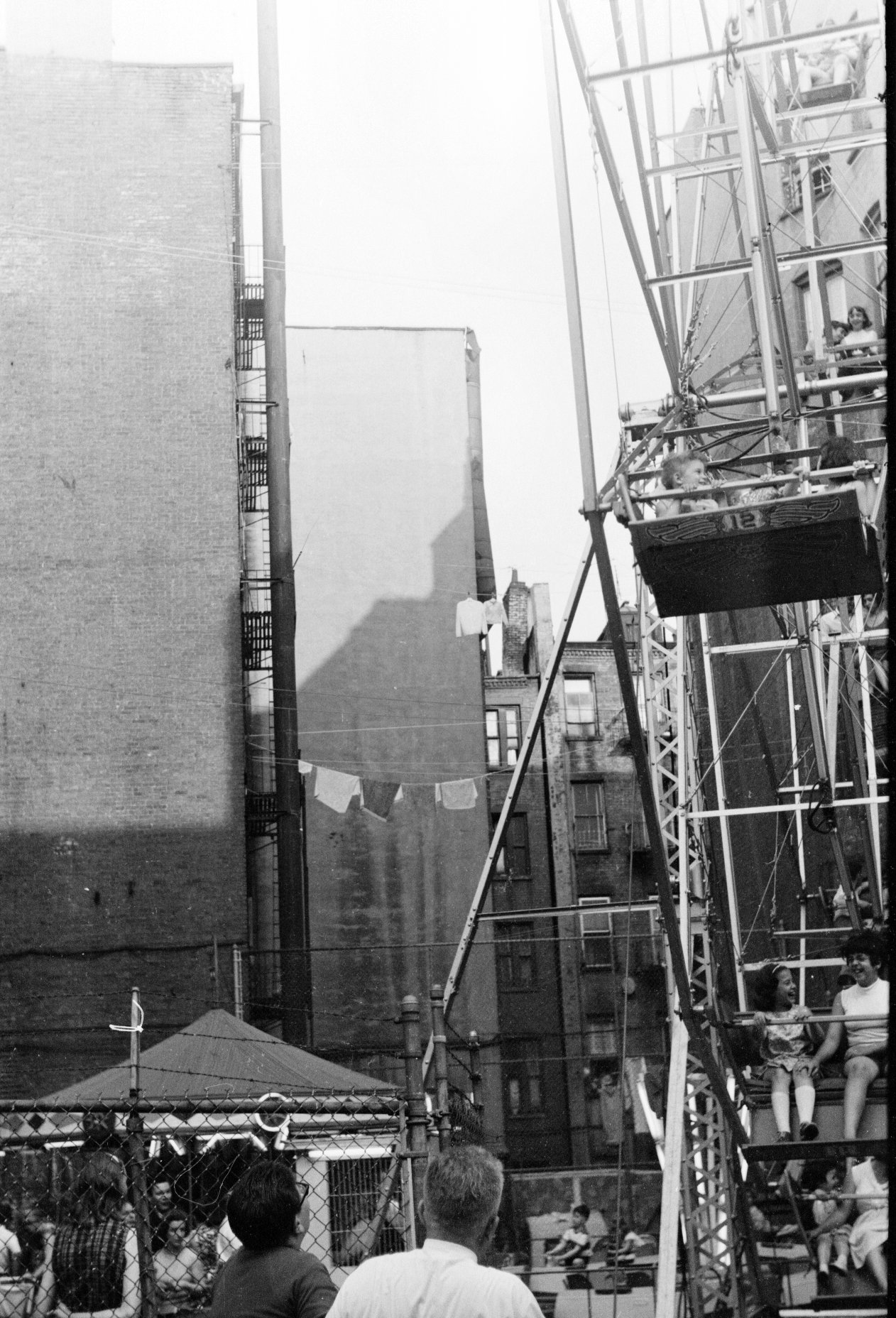
New York - Ferris Wheel


Local traveling carnival

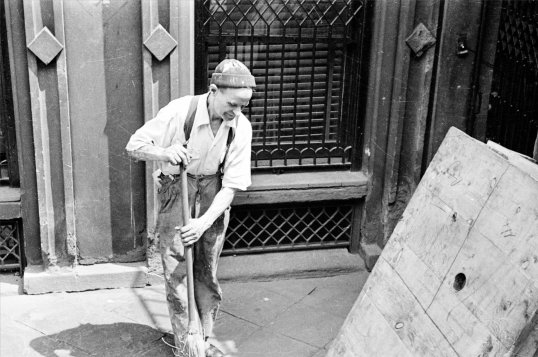
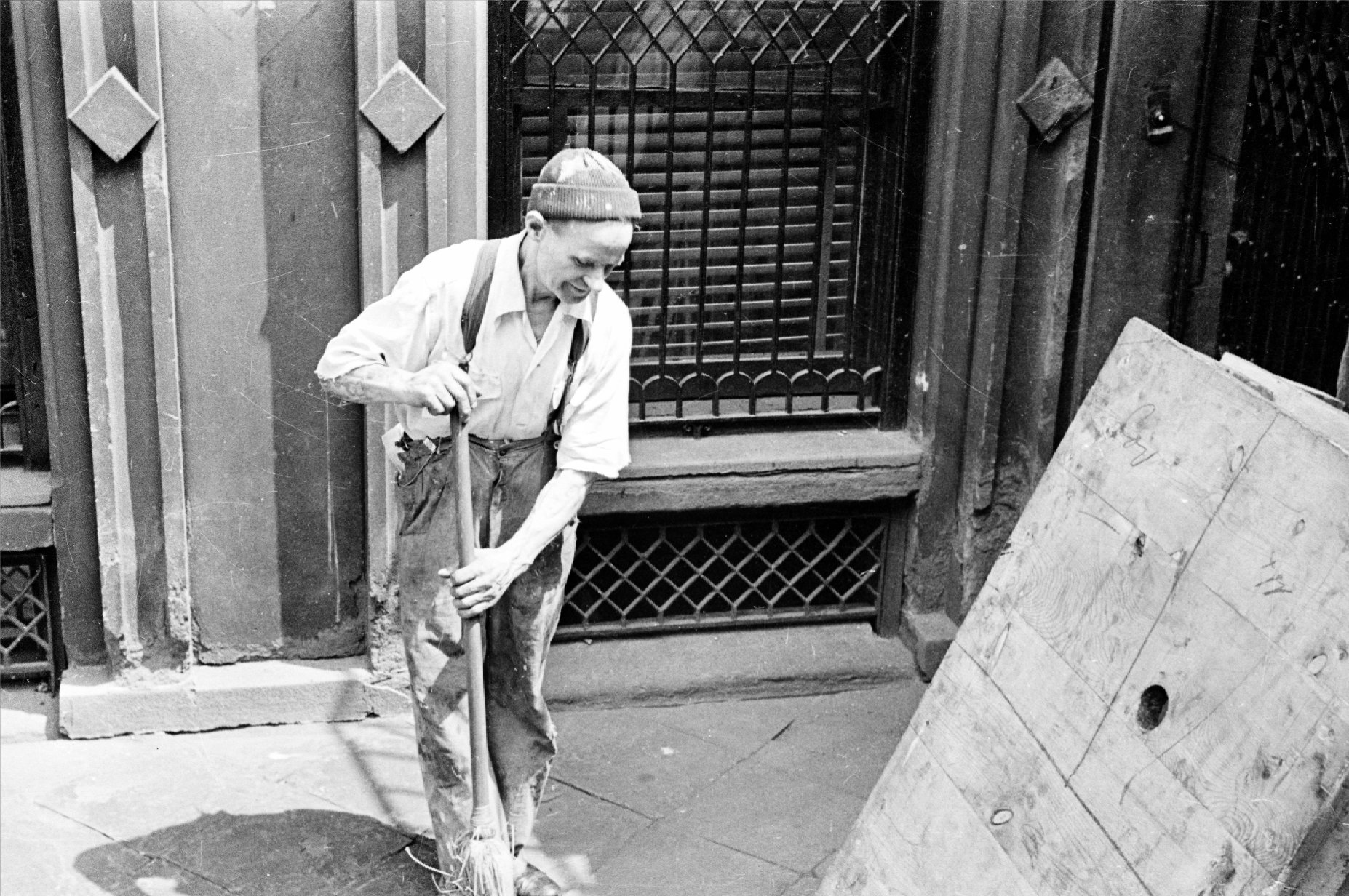
New York Sweeper 5


Janitor caring for a small courtyard.
Joe Darkroom


Dad in his “darkroom.”

The Old Wolf has spoken.
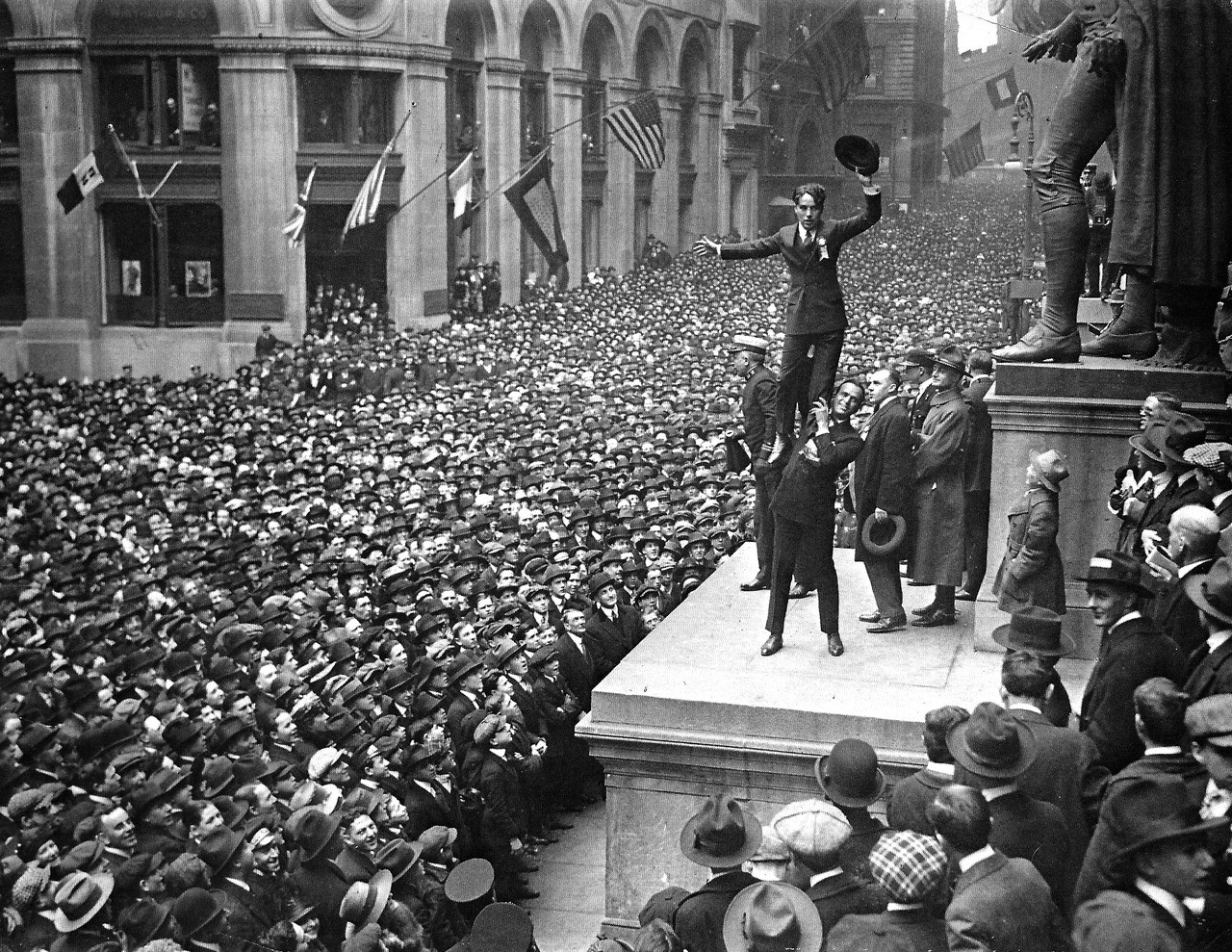
Chaplin in the air

sOfpVz3

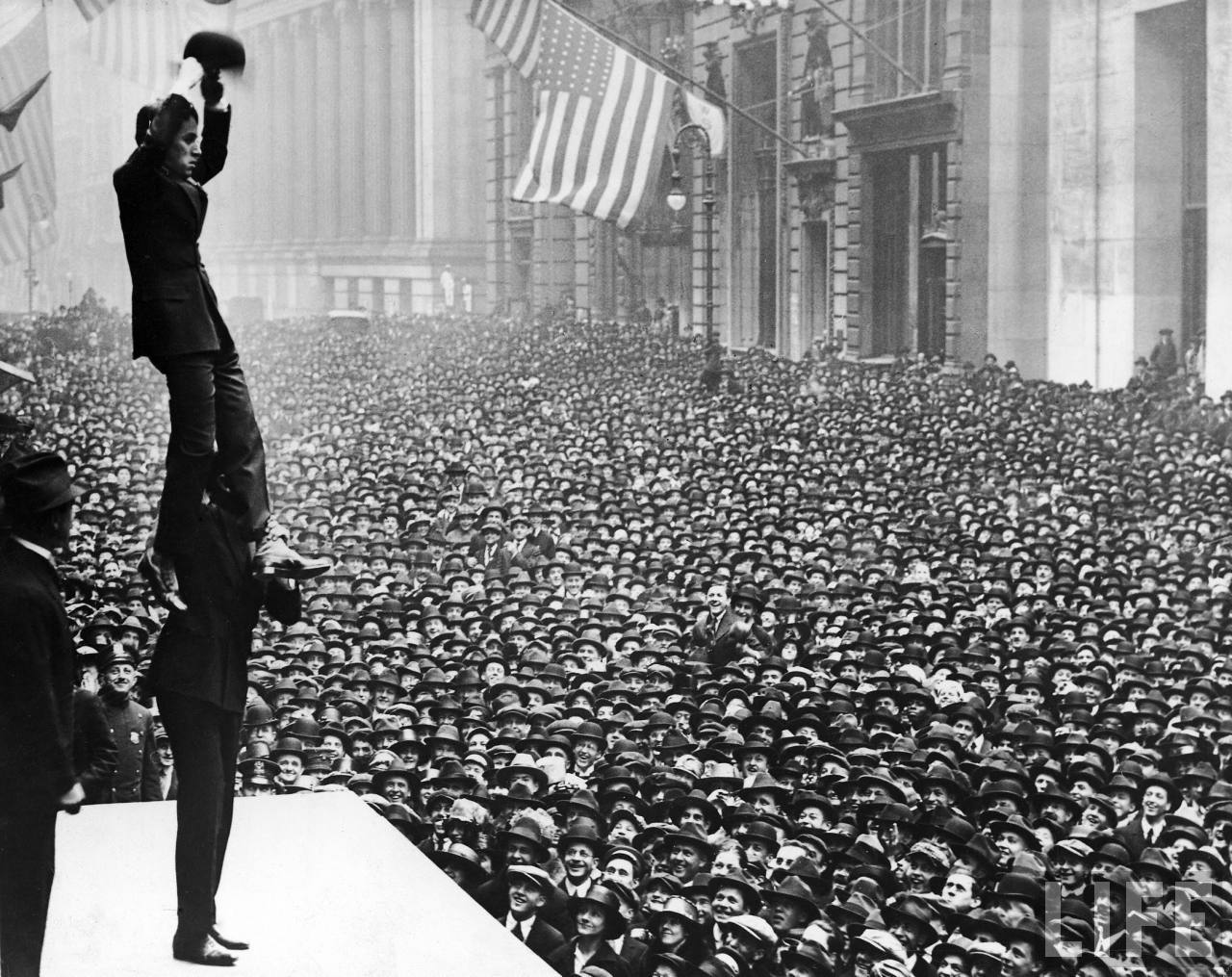
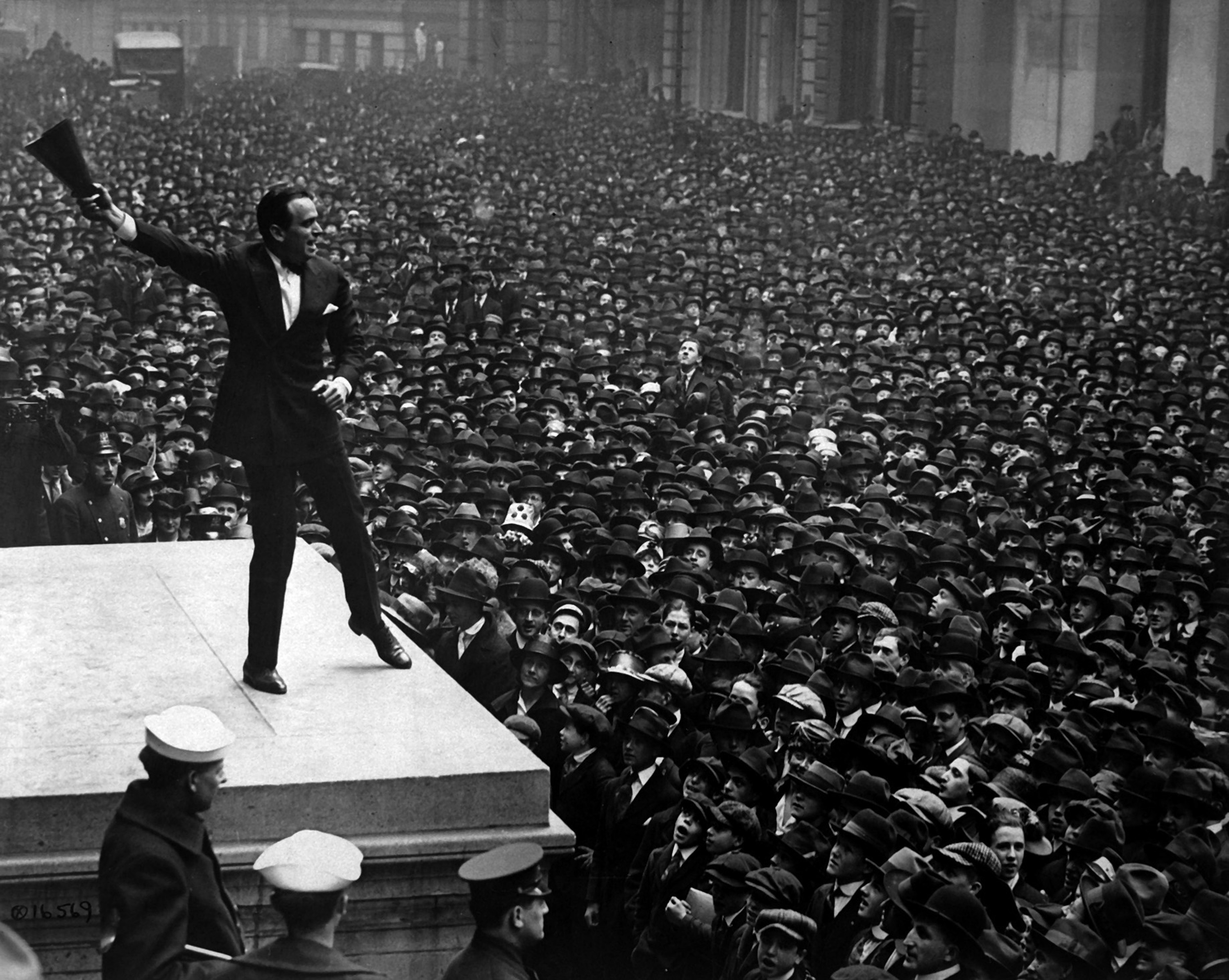
Charlie Chaplin in New York,  appearing with Douglas Fairbanks, Sr. during WWI. They were promoting war bonds for Third Liberty Loan. Photo taken in April, 1918 in front of the Sub-treasury building.

j4YyupW

Another view.

WAR & CONFLICT BOOK ERA:  WORLD WAR I/PATRIOTISM

Fairbanks addresses the crowd.

Some comments over at reddit are worth noting:

  • The respect. No policemen, no crowd control, everyone keeping a respectful distance.
  • The hats. Almost everyone was wearing hats. The wearing of hats was largely abandoned in the 1960s; some have hypothesized that the explosion of the automobile made wearing hats for protection from the elements less necessary.
  • The crowd is overwhelmingly men. Women just did not go out as much at the beginning of the 2oth Century. It was truly a man’s world.
  • The crowd is overwhelmingly white. That was our country in 1918.

An intriguing glimpse of a tiny slice of history that I had never seen before.

The Old Wolf has spoken.