Eating the Cowboy’s Best Friend

bW6RPb3

Original Caption: Women line up outside a butcher shop to buy meat in North Cheam, Surrey, England, on April 17, 1942 during World War II. (AP Photo)

World War II brought rationing and deprivations on both sides of the conflict, but horse meat was not rationed. An extract from the BBC website WW2 People’s War:

Strange things on the dinner table

Over-riding all these trifling discomforts was the non-stop foraging by the housewife to provide some variety in her family’s meals. I cannot recall ever being literally hungry, but the country had been reliant upon imports, which were now impossible because of the sea blockade. Everything was scrupulously rationed and we ate some strange things to supplement our diet.

Tea tablets were used to make the tea look stronger; babies’ dried milk or ‘National’ milk was added if it could be obtained; and saccharine was used as a sweetener. Some even resorted to using honey or jam. What a concoction – but we drank it. Bread was heavy and a dull grey colour, but it, too, was rationed – so we ate it.

Sweets were devised from a mixture of dried milk and peppermint essence with a little sugar or icing sugar if available. Grated carrots replaced fruit in a Christmas or birthday cake, while a substitute almond paste was made from ground rice or semolina mixed with a little icing sugar and almond essence. Dried egg powder was used as a raising agent, and this same dried egg could be reconstituted and fried, yielding a dull, yellow, rubbery-like apology for the light and fluffy real thing – but there was nothing else, so we ate it.

Bean pies and lentil rissoles provided protein to eke out our meagre meat ration, and the horse-meat shop, which previously had sold its products only for dogs, now bore a notice on some of its joints occasionally, ‘Fit for Human Consumption’. This horse-meat was not rationed, but it did have to be queued for and sure enough eventually it appeared on our table. It had to be cooked for a long time and even then it was still tough. Nevertheless, it did not get thrown out.

In complete contrast, one highlight for me was the coming of spam from America. It was an oasis in our desert of mediocrity; an elixir in our sea of austerity. It seems to me that it was meatier, juicier, and much tastier than it is now. (Tricks of memory again, no doubt.) We ate it in sandwiches; we ate it fried with chips; cold with salad; chopped in spam-and-egg pies, until, of course, it ceased to provide the variety we longed for, but I never tired of it.

Whale meat – completely inedible

The benefits of eating fish were widely proclaimed, but again it was very scarce. Fishing was a dangerous occupation in mine-laden waters and the pier was a prohibited area, so fresh fish was a novelty and a luxury.

The ultimate came, however, when the government hit on the bright idea of combining fish and meat and urged us to eat whale meat. Where, or how, the whales were caught and brought to England I do not know. There must be a limit to how much whale one ship can carry, and one whale alone would provide a lot of whale steaks, but newspapers and the wireless told us how to prepare and cook the stuff, and sure enough, in due course, it appeared in the shops. From there, inevitably, it found its way onto our table.

It had been soaked overnight, steam-cooked, and soaked again, then blanketed with a sauce, but still it tasted exactly what it sounds like – tough meat with a distinctly fishy flavour, ugh. Just this once the next-door’s cat ate it!

Yes, we laugh about it all now, yet after all these years I still cannot bear to see good food wasted or thrown away – but I think I could make an exception with whale meat.

We lived in Switzerland for about 6 months back in the 80s. In Boudry, a small suburb of Neuchâtel, there was a boucherie chevaline (horse butcher) just down the street. I wish I had gotten a picture of it, but you can see some lovely ones at the website of Boucherie chevaline de Préville in France.
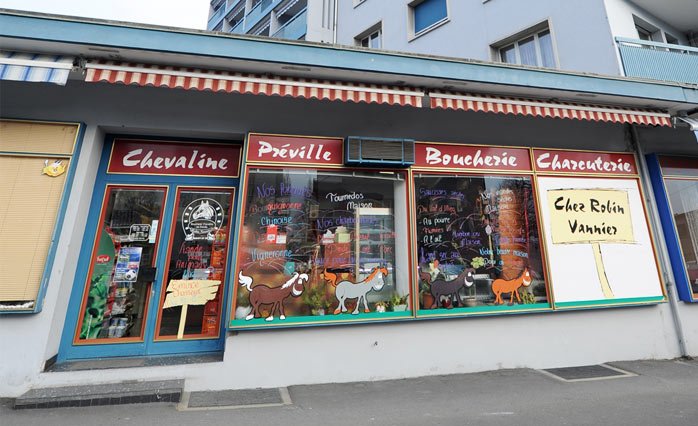
boucherie

My kids had some when we visited friends, and they enjoyed it, if I recall correctly what they said. I’ve had horsemeat, and find it sweeter and more savory than beef, but not as gamy as venison.

Here in the USA, horses were so much a part of our history – especially with regards to the colonization of the West – that eating them was virtually taboo, and in the eyes of many remains so today. From an article at Slate:

Why don’t Americans eat horse?

Because we love our beasts of burden. As with many food taboos, there’s no settled explanation for why most Americans are perfectly willing to eat cows, pigs, and chickens but turn their noses up at horse. Horse-eating, or hippophagy, became popular in Europe in the 19th century, when famines caused several governments to license horse butcheries. Today, horse meat is most widely available in France, Belgium, and Sweden, where it outsells mutton and lamb combined. While Americans have occasionally consumed their equine friends during times of scarcity, the practice just didn’t catch on. It may be that so many Americans forged intimate relationships with horses during our founding and expansion that eating the creature seemed morally wrong by the time of the nation’s major food shortages of the 20th century.

I noted with interest that many articles like this one that conjure up images of horror regarding the last hours of your daughter’s beloved Blossom are written by folks who would think nothing of trotting down to their local Piggly-Wiggly for a nice T-bone steak.

That said, there are articles that take the other side of the debate, such as this one at Philly Mag, or one at Business Insider which points out there’s really no good reason not to eat Blossom.

If horse meat ever shows up at my grocery store, I’ll probably buy it on occasion in the same way we stock up on lamb when it goes on sale. For me, meat is meat. Although the description in the extract above about whale meat is enough to put me off trying it, even absent the ecological considerations.

The Old Wolf has spoken.
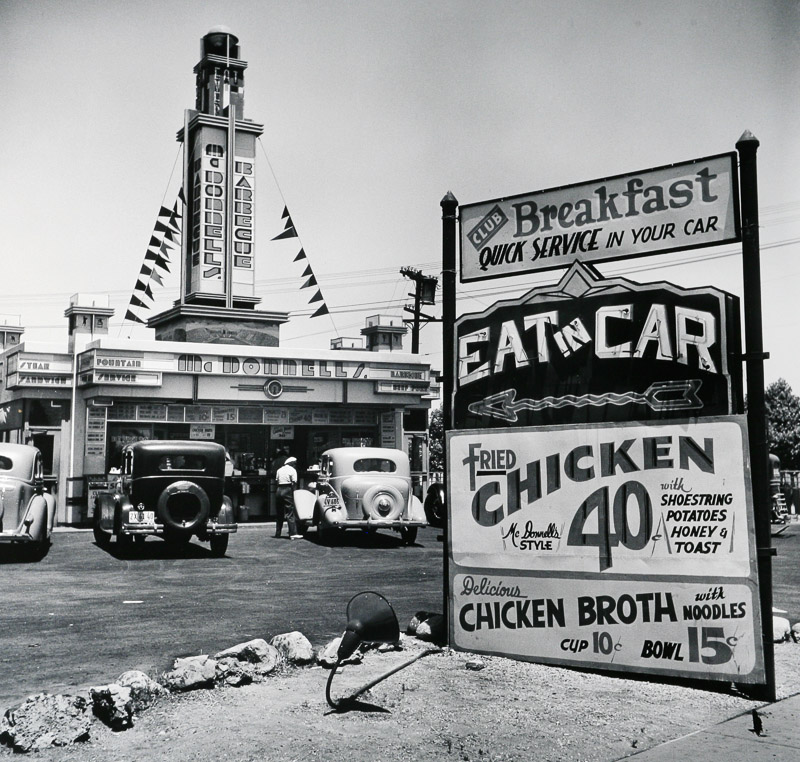
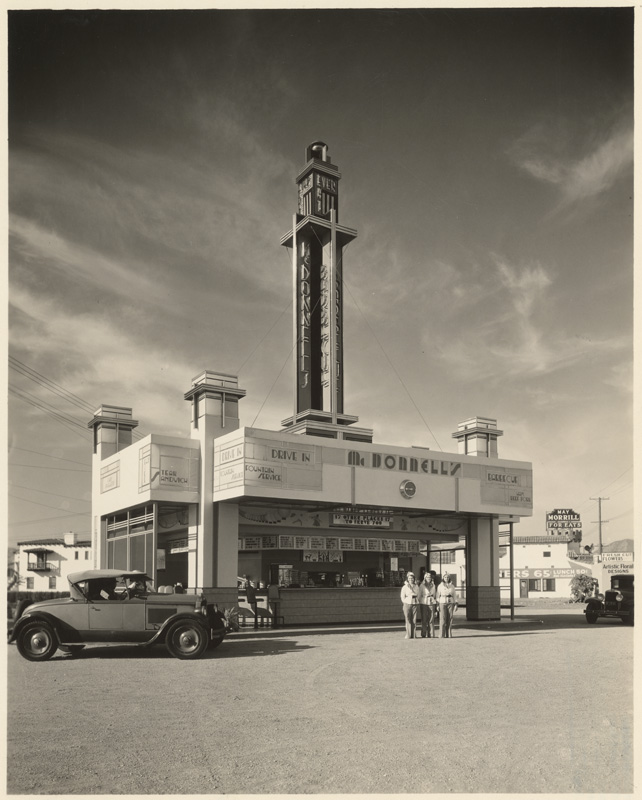
McDonnel’s Drive In, 1935

Not Mickey D’s, this was long before that concern was a gleam in Ray Kroc’s eye.

Had to make a few edits when I found some updated information about the first photo.

o9V5vtS

“Eat in Car” early drive-in at Beverly Boulevard and La Brea Avenue, Hollywood, California 1935. Photo by John Gutmann. The location looks a bit different than the two earlier photos below. This may have been after a remodel.

McDonnells-at-Beverly-and-La-Brea-31-32

McDonnel’s at night, circa 1931.

tumblr_mi1aumnezG1ronatdo1_1280

The staff waits for customers, 1931.

Here is a link to a current view o the location on Google Maps.

The Old Wolf has spoken.

Your Bank of America Account is Under Review. Right.

Well, since I don’t have one, that would be a Neat Trick. But here’s the email:


From: Bank Of America <dugginp@pitt.k12.nc.us>
Date:12/08/2014 1:39 PM (GMT-07:00)
To:
Subject: Your Bank Of America Account is under review

Your Bank Of America Account is under review

Bank Of America is reviewing some costumers account for possible Fraudulent & unpaid bills. The balance for your checking & saving account has reached reviewable level (uncharged & un-deducted billing).This information is accurate as of 5/12//2014 03:44:12 CST. You are required to, sign on and verify  your account informations.If you have questions, Bank Of America Online Customer Service is available 24 hours a day, 7 days a week. Sign on to send a secure email.    bankofamerica.com | Fraud Information Center

Suffice it to say this is a phishing email of the worst kind. The embedded “sign on” links take you to this link (obfuscated):

http://conwaycentralbaptist.org/blah-blah-blah/.safe.ssl-comfirmed-onlinebankingofamerica.com/index.html

In case you needed an additional hint, this is not a Bank of America website.

Conway Central Baptist Church will probably not be pleased that someone has infiltrated their servers and is using them to host phishing data; they have been informed.

But the website looks like this:

bank

They want all sorts of information from you, including “Father’s Maiden Name” and “Father’s Middles Name.” If those aren’t screaming red flags , I don’t know what would be.
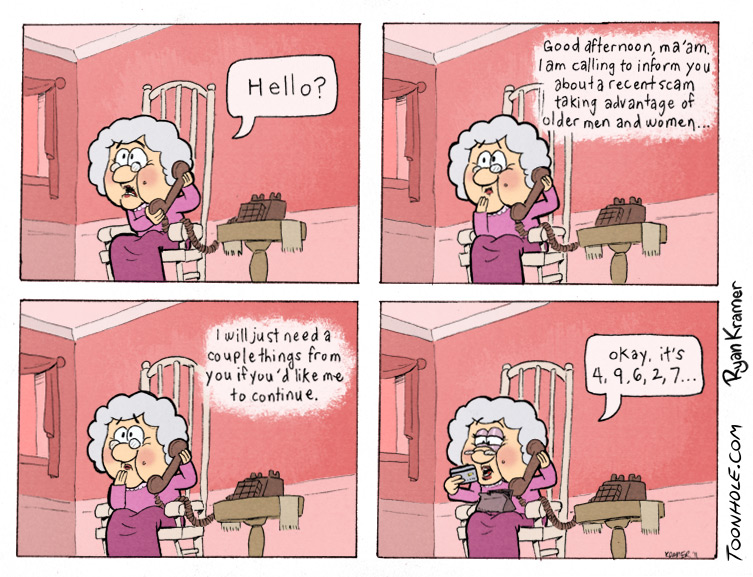
So many scumbags out there want your identity, your financial information, and your money, and they would sell their own mothers to get it.

Be careful out there.

The Old Wolf has spoken.

I love the people of Chamula. *Belch*

Now, aside from several trips to the barrios of Tijuana to help build houses for Project Mercy, I’ve never been south of the border. So I can’t say I know the people of Chamula, a small town in the Chiapan highlands in the South of Mexico, but their syncretic religion fascinates me, a blend of Catholic and Mayan beliefs.

But in an odd blend of the traditional and the modern, the Chamulans have a higher regard for Coca Cola™ than the Hawai’ians have for Spam™; to them, it’s a sacred libation.

san-juan-chamula-church-coke-mam-org-mx

Praying in San Juan Chamula church. Image courtesy of mam.org.mx, which now appears to be defunct. This picture would have been taken surreptitiously, as photography in town is difficult, and in the church entirely forbidden, a transgression which can get you ejected. It’s not lost on me that one of the bottles shown here is Pepsi, but you know, any port in a storm.

What follows is an extract from a blog post by Julieta Cárdenas at the College Hill Independent, who describes the relationship between Coke™ and the Chamulans far better than I ever could. Her entire post is worth a read.

Coke and Candles

In Chamula, Coke is everywhere. Not just in small businesses and eateries, but also places of worship. Within the ash-covered walls of the Church of San Juan, women wearing black llama-fur skirts kneel on floors flooded with pine needles. Men and women alike melt the bottoms of the candles and use the liquid wax as an adhesive to stick candles of different colors onto the floor, arranging intricate, abstract patterns. These patterns are complemented by the carefully arranged coke bottles that sit adjacent to them. I look aroundthere are many, many gallon bottles of Coke on the floor of this church. The aromatic warmth from the pine and smoke is contrasted by the cold-red plastic label of the bottles. All around me, people are using these branded, corporate soft-drink bottles for prayer.

Chamula is an autonomous town about 30 minutes by van from San Cristóbal de las Casas. The people there, of Mayan descent, gained their freedom from the Mexican government and Catholic Church by ejecting foreigners from their town in the 1970s. Chamula maintains its own leadership, police force, and prison system. It is independent to such an extent that it forbids people born elsewhere to live in it or join its culture: that is to say, it is endogamous.

I had come to Chamula because I had remembered the town from a previous visit when I was fourteen, and wanted to revisit and try to learn more about the culture than I had before. I had also wanted to get some pictures, but photography was forbidden inside the church, and  I had to ask permission before taking pictures of anyone. These rules, although reasonable, made me feel like an outsider in a town where, ironically, residents make a considerable profit from sales of artisan crafts to visitors. Although the small town is a site of tourism, as a non-resident of Chamula you cannot help but be constantly reminded that you are only a visitor.

It was peculiar to observe an exclusive community—stringent about upholding a boundary between the indigenous and the imported—also incorporate a first-world soft drink into their religious practices. Luckily our guide, a man from San Cristóbal who spoke English, Spanish, and Tzotzil—the Chamula Mayan dialect—offered an explanation.  After leaving the church, we headed to the home of a local woman, who demonstrated her weaving techniques on a handmade loom with homespun thread, and gave us homemade tortillas sprinkled with pumpkin powder and rolled into delicious cylinders. Standing in the path of a number of hens, and against a backdrop of finished textiles, our guide elaborated on the significance of Coke in religious terms. The people of Chamula believe in a syncretic religion—a hybrid of Mayan and Catholic beliefs—that mixes the iconography of the Saints with more ancient symbols like colored corn, which comes in red, yellow, black, and white varieties, each color bearing spiritual significance. This color symbolism manifeststhroughout the church, in candles made from animal fat or beeswax and most prominently in half-filled glasses of vibrantly colored beverages. Among these beverages are Pox (pronounced posh)—a white sugarcane-based liquor—various orange-flavored drinks, and, of course, Coca-Cola.

A Refreshed Perspective

30pcs-lot-vegetable-seeds-font-b-black-b-font-waxy-font-b-corn-b-font-seeds

Coke, distinctively dark brown, has become a representation of the black corn that is sacred to the people of Chamula and to many of Mayan decent. (Black candles are thought to get rid of envy. White is for the tortillas, an offering to the Gods. Yellow is for money, and red is for health.) Each color means something, and the specific placement of the candles on the floor represents different votive pleas to the Saints.

Coca-Cola has not only found its way into Chamula culture for its color. It serves a functional physical cathartic purpose as well—the gaseous qualities of Coke make it invaluablein the context of the preexisting religion; its carbonation has taken on spiritual significance.

When I was a kid, I was delighted to know that the Japanese Chinese consider belching after a meal to be a high compliment to the chef, and it is supposedly appropriate in India as well. But:

The Chamula people believe that burping is a purgative mechanism. It provides an outlet for the body and the soul, a release for the negative energy that affects a person in need of healing. (Emphasis most decidedly mine.)

Do you hear that? Do you hear that? Now, I’ll thank you very much if the rest of you would just kindly rise up out of my face about my sacred purging of negative energy.

The Old Wolf has belch spoken.

The Garbage Disposer in 1951

Having mentioned the Kiplinger Magazine in my previous post, I happened across this article in the same issue, and found it a fascinating look back to the year of my birth, six years after the end of World War II. An appliance most of us take for granted these days, and even consider when looking at a home to purchase, was at that time still a novelty. The article gives a look back through the chronoscope at what some people were thinking about this new-fangled device. From Changing Times, The Kiplinger Magazine, October 1951.

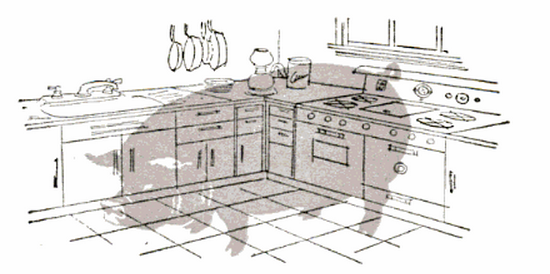
pig

PRIVATE PIG IN THE KITCHEN

Almost a million electric garbage disposers are now in use, and they are putting the garbage man out of a job

GARBAGE is a nasty word. When fed to hogs, it was an even nastier name: “swill” or “slops.” The delicate refer to it as “food wastes.” Whatever you call it, it’s a mess when the bottom drops from a soggy paper bag as you rush the stuff to the kitchen door.

You may never face that domestic crisis again. A revolution is going on that may make the garbage can as outmoded as the privy.

Its successor will he the electric garbage dis­poser, that mechanical pig that sits under the kitchen sink, gobbling up your garbage and washing it down with cold water.

If you have a disposer now, you know why housewives love it. It ends a lot of fuss and muss. It eliminates smells and drippings. It speeds getting meals and cleaning up afterward. It’s self-c1eaning, and stray dogs can’t knock it over. It puts flies, roaches, rats and mice on a starvation diet.

If you still stick to the garbage can routine, you’ll probably switch to a disposer sooner or later. This gadget is catching on fast all over the country. In the Los Angeles area alone, 10,000 units are installed monthly. Home build­ers feature them in new houses. A Midwestern city installed them all over town and fired its garbage collector. Last year sales were nearly double those of the year before.

The mechanical pig was almost 20 years old before it began to go to town. General Electric put its Disposall on the market in the early 30’s. But by the time World War II came, only about 100,000 disposers were in use – not many for a nation that buys over 3 million vacuum cleaners a year.

One reason for its slow start was its price­ – well over $100. Housewives were skeptical, too. Could it really chew up their garbage like the ads said? Would it last? Some city officials, fearing ground garbage would clog sewer mains and overburden treatment plants, outlawed disposers.

An answer to the durability question came from Edward J. Zimmer of Chicago’s Plumbing Testing Laboratory. He ran a disposer for a year, cramming in as much waste as a family of eight would have in 25 years. For seasoning he fed in big helpings of ashes, sand, granite, paving blocks, glass, nail, even a few iron fittings. After a year his disposer was still grind­ing away. It was a little slower, but it continued to grind well.

Time has furnished another answer. The earliest disposers have now been in use for 15 years. They still work well. Apparently they will last 20 years, as their makers claim.

The disposer is not a hazard to sewer systems. In Zimmer’s test, the disposer scoured out sewer lines instead of clogging them. Experiments at the University of Texas and e1sewhere proved a reasonably well-built sewer could carry off with ease whatever the disposer sent its way.

Meanwhile, health officers have jumped on the disposer bandwagon. They have long opposed feeding garbage to pigs, because that may lead to trichinosis in people who eat garbage-fed pork. Besides, garbage cans are feeding stations for disease-spreading flies. The disposer can end both threats to health.

Prize exhibit in the disposer showcase is the little Indiana city of Jasper (pop. 6,000). Garbage was a headache there. The city paid farmers to collect it. People complained about the service. It was hard to get bidders for the job. It cost the city $6,000 a year. If Jasper were to set up its own collection and disposal system, the bill would be $13,000.

The city’s engineer-mayor, Herbert Thyen, thought city-wide installation of disposers would make Jasper a garbage-free city and save money, too. The city council agreed. It got the state legislature to pass a law permitting Indiana cities to use home disposer garbage systems and to float a bond issue to pay for them.

But Jasper decided not to force a disposer on anyone who didn’t want one. So it passed up the bond issue idea in favor of asking each householder to buy a disposer for a bargain $75. Local banks made loans to those who needed time to pay. Soon 1,000 families-enough to set the plan going-signed up. The mayor estimates Jasper will save $13,000 a year on garbage collection, plus $6,000 it used to spend spraying garbage cans.

Some authorities question these savings.

Garbage is only 10% of a city’s refuse, they say. The other 90% must still he collected. Also, the extra flow from universal use of disposers would up the cost of sewage treatment by about 60 cents per person per year. Jasper’s new plant is bigger than what would have been needed for garbage-free sewage alone. Nevertheless, 156 cities are considering following Jasper’s lead.

In a few cities, you still can’t have a disposer because local ordinances forbid them. Some bans exist where sewage systems are inadequate, or so close to it that they can’t handle even a small additional load. Others are holdovers from the days when the effect of disposers on sewers was unknown.

But the price of the disposer plus the cost of installation is still the biggest hobble on the mechanical pig. The average unit sold last year cost $135. Some installations cost more than the disposer itself, up to $150. The average is $65. It adds up to an investment most families think about twice.

Even so, the industry is doing nicely. It’s not big time yet, but ifs on its way. In 1949, 175,000 disposers were installed. In 1950 the total was 300,000. At the first of this year 775,000 were in use, 87% of them having been installed in the last four years.

There’s more competition now, too. One manufacturer had almost all the prewar business. Today, 15 makers are in the field, including a healthy proportion of small outfits.

At 300,000 units a year, the disposer business is still in its infancy. When it hits a million a year, it will be grown up. How soon that day comes depends on how much steel can he spared from defense. Right now, shortages are in prospect. But when the million mark is reached, the garbage can will be on its way to the museum.


HOW TO RETIRE YOUR GARBAGE CAN

In the market for a garbage disposer? Follow these steps:

Consider your sewer system. If you use regular city-type sewers, you can probably use a disposer. They’ll work with septic tanks, too, if the tank is big enough. Minimum size is 500 gallons. Larger sizes arc recommended if you have more than two bedrooms. If you use a cesspool, better forget the whole thing.

Check local laws. Before you commit yourself, be sure your town permits disposers. There may be special installation requirements, too. Your dealer will know.

Measure your sink.. If the drain opening is 3 1/2 to 4 inches across, a disposer will fit. An adapter fits some disposers to larger openings. It is possible to enlarge small openings.

Get the Installation costs. It takes both au electrician and a plumber to do the job. It may run you 20% to 150% of the cost of the disposer itself. So find out what it will cost in your particular case.

Pick your disposer. There are just two types. In one, you open the top and put in garbage as it grinds. In the other, you fill the hopper, close the top, and then switch on the unit. With 15 makes on the market, there are price differences. So shop around.

Add up the costs. Price of the disposer plus installation is what you pay. Figure it will last 20 veers and cost about 5 cents a month to operate. Don’t forget you’ll still need trash collection for metal, glass, seafood shells, paper, rubber, large bones. But you may not need a pickup as often as before.

Treat It fairly. Follow directions on what to put in and what to keep out. Learn to tell, by the sound, when the grinding is done. Switch off promptly to save money.

In 1951, if your disposer cost $150 and you were socked $135.00 to install it, that would come to equivalent value today of about $2,600, definitely not chump change. But given some of the problems mentioned in the article, which were pretty endemic to society in those days, it’s easy to see why the idea caught on, especially as prices dropped.

Dave Berg Garbage Communists

From Mad’s Dave Berg Looks at the USA, illustrating another common theme in the 50s and 60s. Some of us are still looking for Bolsheviks under our beds at night…

Of course, as we were reliably told by Hefty, you don’t necessarily need a disposer to handle that problem:

Nowadays you can find a serviceable model at a home-improvement store for about $100.00 and install it yourself. There are more expensive models, of course, but the cheaper ones work well and usually last around 10 years.

But now, the pendulum is beginning to swing the other way. An interesting article over at Remodelista covers pros and cons and gives tips on composting for those who are able to do it. As for us, we are fortunate enough to live in an area that permits backyard hens, which means we put almost nothing down the disposal and virtually nothing compostable into the landfill, and it comes back to us in the form of eggs. (The girls are taking a break at the moment, but if they don’t get with it our garbage will come back to us in the form of chicken enchiladas, which puts me in mind of this cartoon by Adrian Raeside:

eggs

Some older homes can’t handle a disposal well, and this should be taken into consideration. We bought a home that was built in 1950, before disposals were a household word. The downstairs kitchen was added later, and the contractor didn’t provide a big enough rise-over-run ratio from the new plumbing to the sewer main, so the long run of pipe would fill up with sludge which had to be rooted out from time to time. New construction should never have that problem.

In the end, the less we put down the pipes the better. it’s convenient and the technology allows for it, but there are increased costs in terms of sewage treatment, and if one can recycle, compost, or reduce waste in any way, then that’s the best way to go if we’re wanting to reduce our impact on island earth.

The Old Wolf has spoken.

The Original “Glasses for the Lazy”

Edit: If you’re just chancing across this post, be sure to read the delightful comments below by Janet Warner Reid, the oldest daughter of Clarence Warner.

83682934

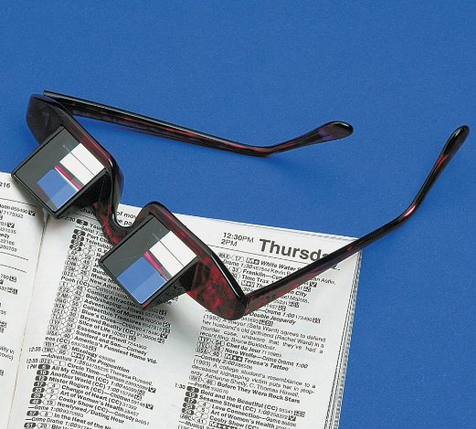
This image has been propagated all over the net by various content aggregators whom I will not mention here; I saw it in a collection of interesting tidbits shared with me by my good wife. At the New York Daily News I was able to find an attribution:

Caters News./ Published: 04/28/2014 12:58:23

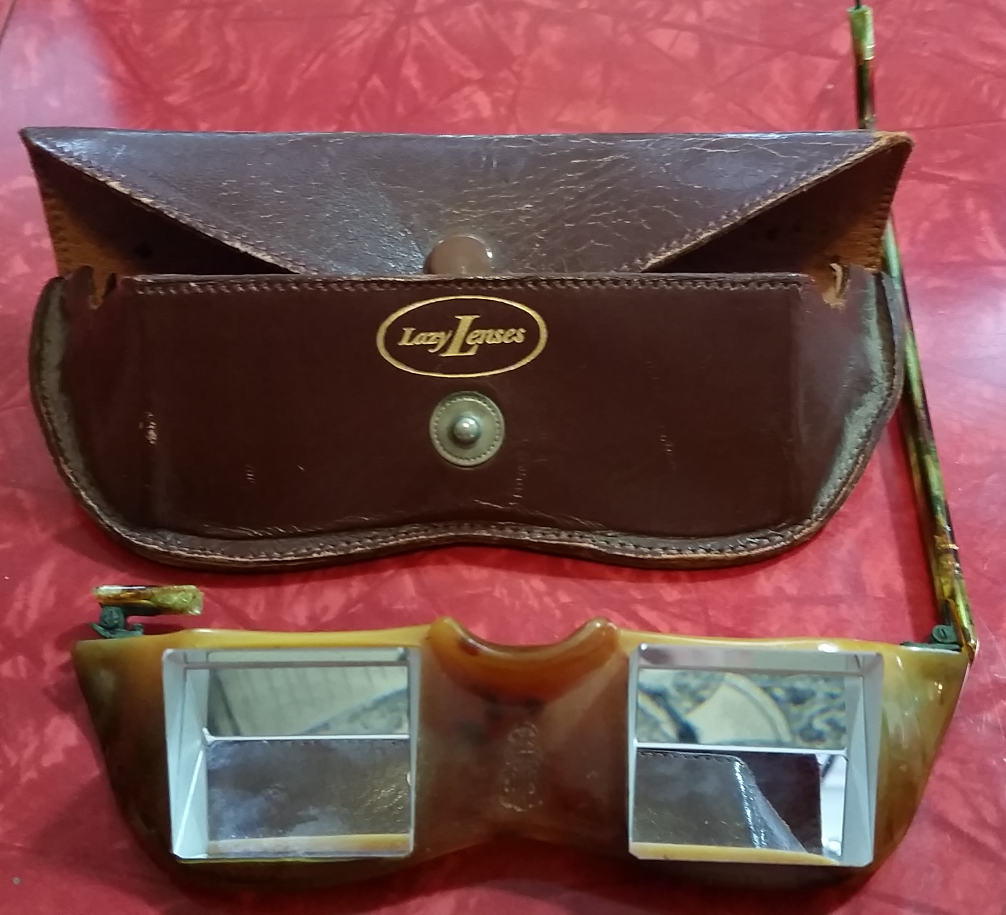
What intrigued me about this image is that I have a pair made in 1951 which I inherited from my dad. One temple is missing and the remaining hinge is corroded closed, but these are the real McCoy.

Lazy Lenses

Look closely between the lenses and you’ll see this logo:

Logo

Mark Cross is a premier luxury leather goods company, and still going strong. If you want a $2500.00 fine leather men’s travel bag about the size of a laptop case, they’re just the company for you. Armed with the brand, I was able to come up with this:

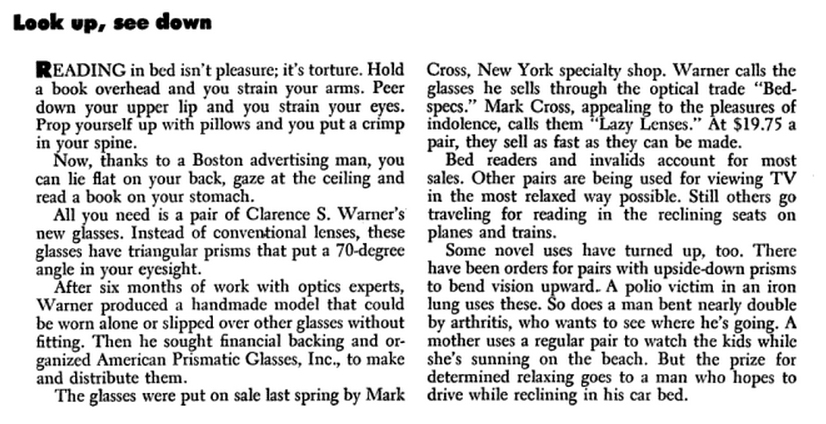
changing times

Changing Times, The Kiplinger Magazine, October 1951, Page 38. For what it’s worth, Kiplinger is still in business as well.

Naturally, if there’s a good idea, you can be sure someone in China will make it for cheap.

specs

This pair is called Bed Prism Spectacles, made by a Chinese outfit and for sale via Amazon.com for $13.05. Given that the original set by Clarence S. Warner sold in 1951 for $19.95, the equivalent of $182.00 today, I’d say that’s a pretty good deal. Of course, it’s hard to tell the quality of these new knockoffs (and there are many, many versions out there), but I know the ones sold by Mark Cross were top-drawer.

The idea is great, but there are some drawbacks. If you’re nearsighted like me and wear glasses, they don’t work all that well. Contacts would be an obvious answer, but then one would need reading glasses for close-up work if you’re farsighted as well. Like me.

But I’ve had these in my treasure collection since 1989 when dad passed away, and it’s nice to know I have a pair of the originals, made by a company that makes only the best.

The Old Wolf has spoken.

“I’d rather get a root canal than do [X].”

I remember hearing this phrase many times when I was growing up, and always wondered why it was held up as an example of something to be feared.

Ql27HPr

This recently-found cartoon backs me up.

Then I had one.

The procedure was not really that horrid from the “sitting in the chair” standpoint, because I couldn’t see what was going on, but I remember that it just took a long time. I think if I had seen this animation (the Internet didn’t exist back then), I might have had even more reservations about going. Ow ow ow…

KVbGBHi

Now, I already had a crown on the affected tooth, so the last bit wasn’t necessary, but I had no idea this process was so involved.

The biggest challenge was the fact that I ached for three months after I had it done. It was insane. I wondered if I was going to have to have the thing done again, but eventually the pain subsided.

And thinking about this whole thing brought up a whole raft of memories about dental work… and I had a lot of it done as a kid.

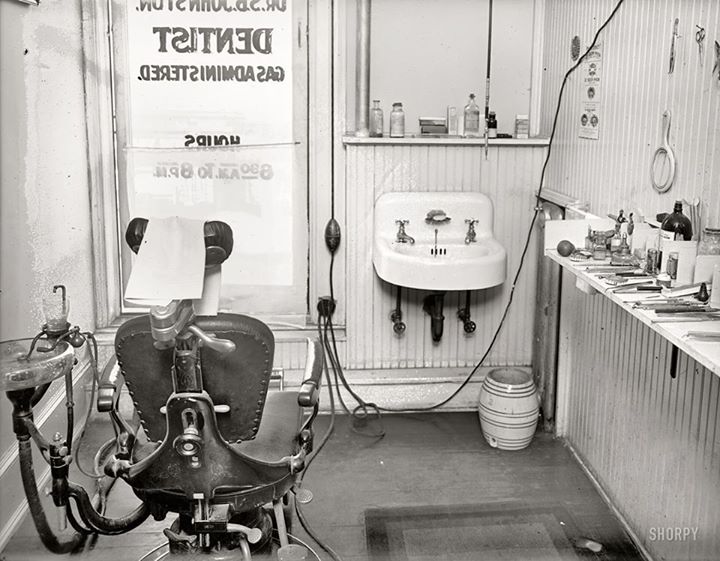
See, the thing of it was, I was terrified of needles. I started getting cavities in my teeth before I was 8, and had a lot of my baby teeth filled, and I refused to let the dentist give me anæsthetic… so I endured countless sessions in a setup that looked a lot like this:

1393014_10151952137530196_1463228318_n

Image found at aacd.com

This may be a bit older than the 50s, but the basic setup looked the same as the one Dr. Glick used on me. No high-speed drills here, just that belt-powered grinder, and despite the agony I still refused the Novocaine.

I found out how foolish I had been when I broke a tooth or lost a filling or something when I was at summer camp in Maine, sometime around 1963. They ferried me to a dentist in town, and I told him that I didn’t want anæsthesia. “Mhm,” the dentist responded. “Open.” And then the son of a bitch stuck me.

The blessed son of a bitch.  Sheesh. If only I had known. Dental work still isn’t fun, but a little pain up front is certainly worth a lot less torment for a couple of hours.

A few weeks ago I went to a local dentist for the repair of a broken tooth. I thought for sure I’d have to get a crown on it, because the entire inside surface of the tooth snapped off – but I was pleasantly surprised. A tiny bit of drilling, two applications of bonding, and I was as good as new – at least for this time. The whole thing took about 10 minutes. I mentioned to the dentist that the advances in dental technology were astonishing, and he said that not much had really changed in the tools, but the materials were where the miracles were taking place. I can’t help but agree, with the exception of the digital x-rays that they do these days.

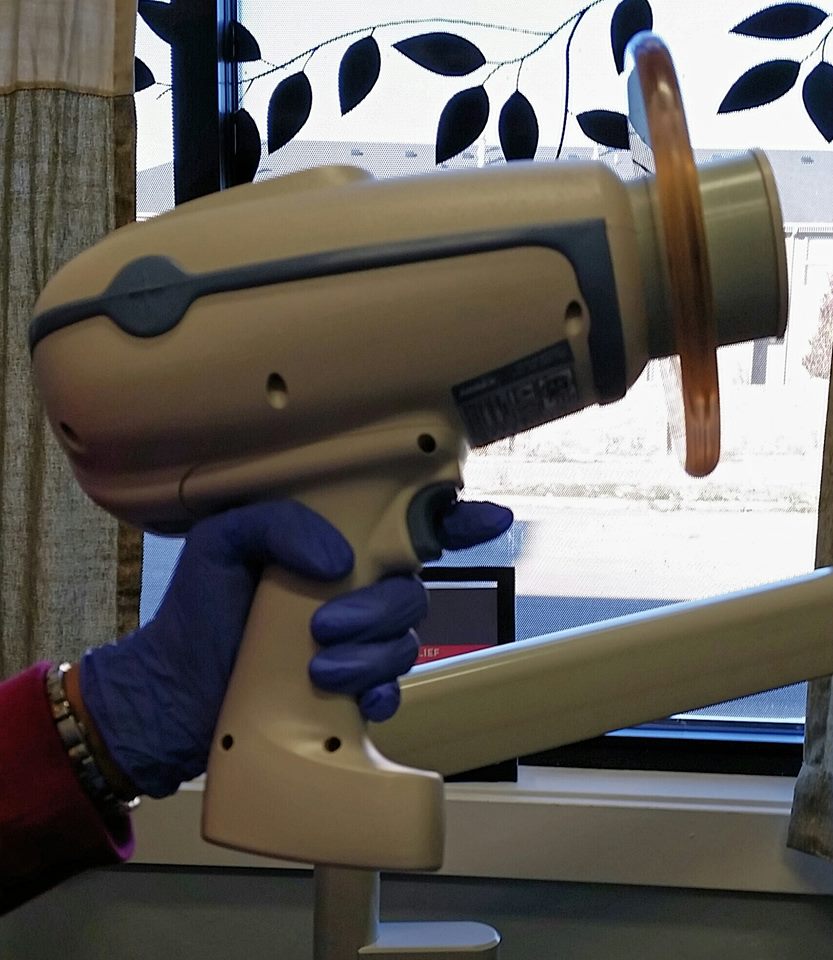
First they put me in this contraption that whirred all around my head and did a complete 360° scan, and then the technician put me in the chair and zapped me a couple of times with this baby:

zap

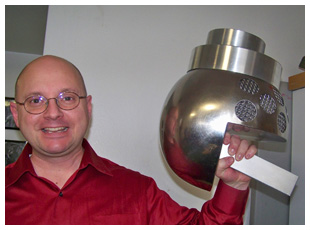
Handheld, she didn’t even have to leave the room. No developing time to speak of – all digital. I couldn’t help but be reminded of this:

plasgun1 basic1-schlock_7798

Howard Tayler, author of Schlock Mercenary, holding a replica of Sergeant Schlock’s plasma gun manufactured by Doc Nickel, who in his own right not only manufactures some really awesome paintball stuff but also draws The Whiteboard, a webcomic vaguely about paintball.

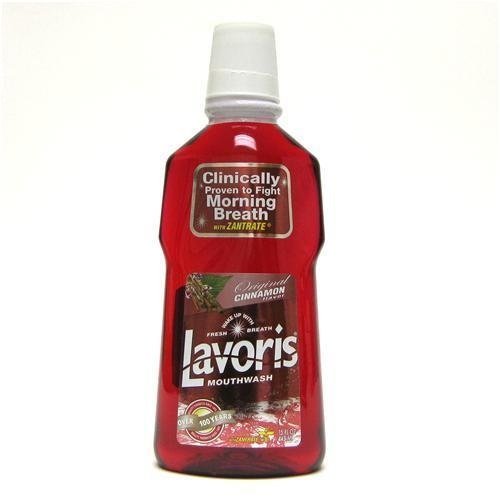
It’s funny, but with all the advances, I still miss the old rinse-and-spit routine so common in the old days; you can see the cup and spit bowl in the office picture above. It may not have been as hygienic, but I could get a lot cleaner than the spray/suction routine they use today. And, I got sprayed with Lavoris™, a cinnamon-flavored mouthwash that seems to have vanished from store shelves, only to be replaced by foul-tasting chemical ersatz copies which taste like camel piss.

Imagine my delight when I found out that this wonderful stuff is still available online:

41xt1bAtQoL

I scored some at Drugstore.com, it was a bit cheaper than Amazon’s offerings, and it was every bit as pleasant as I had remembered it. Now that’s cinnamon.

I’ve had a lot of dental work done in my life. Almost all my teeth are filled, and a number have been capped. I have all my wisdom teeth, and even they have been filled. I just have soft teeth, I guess. But I have all 32, and I’m grateful for the technology that has helped me preserve them. I still don’t like that accursed needle, but as I learned long, long ago, there are prices and benefits to that choice, and the benefits far outweigh the price.

And, I still hope I don’t ever have to have another root canal.

The Old Wolf has spoken.

Why you *never* click embedded links in your email

Scam

See that link to “Capital One” there in the body of the email? It will actually take you to an entirely different website that just looks like it’s from Capital One.

Scam2

Congratulations, you’ve just handed the key to your bank account and your email account to thieves, probably in Eastern Europe or Africa.

One would think people would understand this by now, but there are a lot of folks who use computers who really don’t get below the level of Lolcats or Pinterest, and they need to be protected. Phishing scams are still rampant because phishing scams are still profitable. Far too many people are duped by websites like the one above, and happily hand over their information to criminals either online or via telephone.

2012-02-24-ScamArtist

If you are just learning about computers, this is Rule Number One about emails:

NEVER CLICK ON EMBEDDED LINKS IN AN EMAIL – ALWAYS TYPE THE WEB ADDRESS DIRECTLY INTO YOUR URL BAR.

I can’t emphasize that enough.

Not only are you at risk of losing your money or your identity, but you could seriously damage your computer files, for example, if you carelessly open an attachment which contains evil software like Cryptolocker.

If you are computer-savvy and have loved ones who are not, or who might be vulnerable to this sort of thing, please educate them and watch over them.

Be careful out there.

The Old Wolf has spoken.