An Upvote for Upworthy

Two days ago I posted here about a couple of things at Upworthy’s website that bothered me, and made it an open letter because I couldn’t find any way to contact them on their website.

Today I received a comment from Luigi Montanez, Upworthy’s founding engineer. You can read it over at the original post, but I reproduce it here because it’s deserving of it’s own page.

Hi there, I work for Upworthy. Thanks for taking the time to write out this candid feedback. It’s immensely helpful for us to read.

1a) On the popups: Have you tried clicking the “Don’t show again.” links on them? Once clicked, they’re supposed to suppress those popups in the future. If they’re not working for you, that’s a bug we need to look into. Or if you didn’t notice them, we’ll work on improving their prominence.

1b) On the Facebook friends module: We actually don’t know who your friends are on Facebook. What you’re seeing is called an iframe; it’s a way for us to embed a little bit of the Facebook.com website into our webpage. It’s like a small window into Facebook.com that’s embedded on our page. Facebook never tells us who you are, or who your friends are. Here’s more info:

https://developers.facebook.com/docs/reference/plugins/like/

If we wanted that information, we’d need to ask you to opt-in using Facebook Connect, which we don’t do.

2) Yes, this is a major oversight on our part. Instructions for contacting us are on our About page, but they’re hard to find. Based on your feedback, I created a dedicated Contact page and linked to it in the footer throughout the site:

http://www.upworthy.com/contact

Again, thank you for this. If you have more feedback, please send it our way.

Lots of love,

Luigi
Founding Engineer, Upworthy

This made me sit down astonied.

  1. First of all, someone saw my post. This meant that Upworthy has a social media team or person that is actively scraping the Net for feedback and buzz about their company.
  2. Next, someone answered, meaning that someone cares. In any company in the 21st century, that’s a gold star right off the bat.
  3. Last, Luigi provided constructive suggestions and actually implemented one of my suggestions. I was gobsmacked.

Really, there’s only one possible response:

MorpheusUpvote

Well done, Upworthy.

The Old Wolf has spoken.

How Prices Hit Home, Part II

I previously posted about prices in 1978, and whilst cleaning out files I came across an article I had saved from my father’s archives. I present it here for comparison’s sake, and just because it’s interesting.

This was published in the Daily Compass on August 15, 1951, which itself cost 5¢ for each daily edition.

Prices Then and Now - 1939 and 1951


1939’s prices were, of course, depression-era; for your gratuitous enjoyment, a song from 1927 which was looking for any bright spots in an otherwise dismal economic climate:

The Old Wolf has spoken.

The Amazing Lyrebird

Incredible bird!

Now that you’ve had your laugh, please realize that the above clip was a parody by Waverly Films – the original clip from the BBC can be watched below.

Still an amazing bird, but Seinfeld is not part of its routine. You can read more about the Lyrebird at Wikipedia.

The Old Wolf has spoken.

An Open Letter to Upworthy

Note: Read the article, but read the comments below as well. Upworthy really stepped up to the plate on this one.

Dear guys and gals at Upworthy,

A lot of the things you post on your website are really interesting. However, two points I would like to bring to your attention:

1) Cool it with the popups asking me if I want to create an account.

popup\

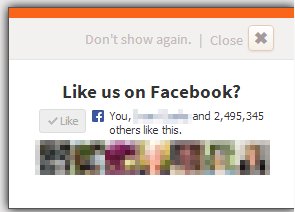
All up in my browser. This is ruddy annoying, and its only effect is to make me want to look elsewhere for my interesting news. As if that wasn’t bad enough, I get this before I can leave the page:

Popup2

It’s more Facebook’s fault than yours, but it irks me that you know who my friends are and who has liked your page, especially given my maxed-out privacy settings.

Don’t do this. It’s annoying and counterproductive.

2) I noticed that there’s absolutely no way to contact you with feedback, except a page on your Tumblr interface. And in order to leave a comment there, I have to subscribe and give you my email address. Screw whole bunches of that. Hence this open letter.

No love,

The Old Wolf

Hypocrisy unchained.

A recent comment added to my post, The Hotline:

Hi there, i read your blog occasionally and i own a similar one and i was just wondering if you get a lot of spam responses? If so how do you protect against it, any plugin or anything you can advise? I get so much lately it’s driving me crazy so any support is very much appreciated.

Sounds legit. Except for the fact that the trackback URL from the comment leads to a commercial website hawking name badges.

Spammers


Businesses that spam are the dregs of the earth, and don’t deserve your patronage.

The Old Wolf has spoken.

The Old Organ Sound

I previously wrote about theatre organs (also known as the Unit Orchestra); I love these instruments, and nowadays modern electronics have been pretty much able to replicate the sound (if not the charisma) of a massive wind-driven instrument.

In the early days of electronic organs, however, Hammond’s drawbar and tone-wheel instruments were king, much as Wang’s word processor, before the advent of Word Perfect, was the system to have in your office. Those days are a relic of the past, but if you’re an oldster and ever went out to the ball game, you’re sure to have heard the dulcet tones of a Hammond playing “Charge!”

In homage of these famous instruments, here’s a beautiful 1950’s Hammond B3 being played at American Music World in Chicago.

As a Dreingabe[1], here is Bernd Wurzenrainer playing the Ady Zehnpfennig version of “Apache” on a 1976 Böhm organ. Dr. Böhm’s organs differed from Hammond in that his tone generators employed subtractive synthesis (like Moog) rather than additive; the sound is crisper than the Hammond, but still has that rich, fluty tone that had appeal in those early days.

The Old Wolf has spoken.


[1] German for ‘freebie’.

It was good then; It’s needed more than ever now.

Over at Reddit, user /r/uppyday posted this picture, with the following description: “My 15 year old attempted suicide; after 3 months in hospital, she finally came home to find this on her board, written by her 13 year old sister.”

sd8KkOM

That’s poignant in the extreme, given the circumstances.

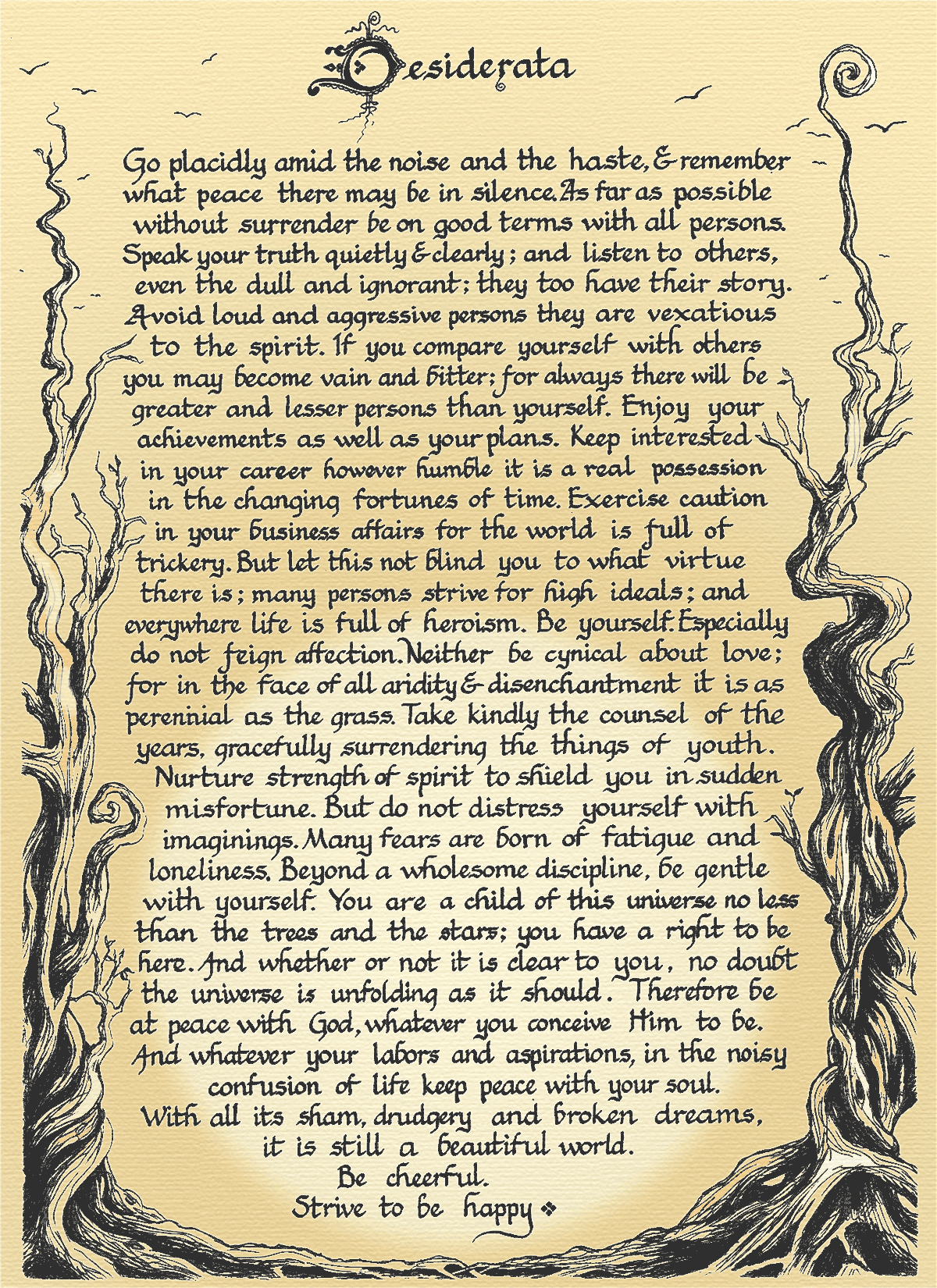
The oldsters among us will recognize these words as part of Max Ehrmann’s “Desiderata,” published in 1927. Written not long after the close of World War I, those words seem almost incongruous for what we today consider a much quieter age than the incredible social cacaphony in which we now dwell.

As a reminder for all of us to slow down and focus on the things that matter, I share “Desiderata” again here, for my benefit as much as anyone else’s.

desiderata

Text version:

“Go placidly amid the noise and haste, and remember what peace there may be in silence.
As far as possible without surrender be on good terms with all persons.
Speak your truth quietly and clearly; and listen to others, even the dull and the ignorant; they too have their story.”
Avoid loud and aggressive persons, they are vexations to the spirit.
If you compare yourself with others, you may become vain and bitter; for always there will be greater and lesser persons than yourself.
Enjoy your achievements as well as your plans.
Keep interested in your own career, however humble; it is a real possession in the changing fortunes of time.
Exercise caution in your business affairs; for the world is full of trickery.
But let this not blind you to what virtue there is; many persons strive for high ideals; and everywhere life is full of heroism.
Be yourself.
Especially, do not feign affection.
Neither be cynical about love; for in the face of all aridity and disenchantment it is as perennial as the grass.
Take kindly the counsel of the years, gracefully surrendering the things of youth.
Nurture strength of spirit to shield you in sudden misfortune.
But do not distress yourself with dark imaginings.
Many fears are born of fatigue and loneliness.
Beyond a wholesome discipline, be gentle with yourself.
You are a child of the universe, no less than the trees and the stars; you have a right to be here.
And whether or not it is clear to you, no doubt the universe is unfolding as it should.
Therefore be at peace with God, whatever you conceive Him to be, and whatever your labors and aspirations, in the noisy confusion of life keep peace with your soul.
With all its sham, drudgery, and broken dreams, it is still a beautiful world.
Be cheerful.
Strive to be happy.”

Ehrmann has spoken; the Old Wolf has nothing to add.