
This haunting picture made me think of Burgess Merideth in the Twilight Zone’s “Time Enough At Last.”
The Old Wolf has spoken.
This haunting picture made me think of Burgess Merideth in the Twilight Zone’s “Time Enough At Last.”
The Old Wolf has spoken.

Chaplin at the age of 27, in the same year my mother was born.
I grew up loving comics and cartoons, beginning with Peanuts and the New Yorker in the 50’s; I never grew out of them, and over the years have collected a number of “completes” from some of my favorite artists, including Bill Watterson’s “Calvin and Hobbes” and Gary Larson’s “Far Side”. I’d love to own the complete Peanuts collection, but the way it’s being released makes it fearfully expensive.
MAD Magazine’s Don Martin has a complete collection out there, but one notable star is missing: Dave Berg, longtime artist for Mad and author of the popular “Lighter Side of” series.
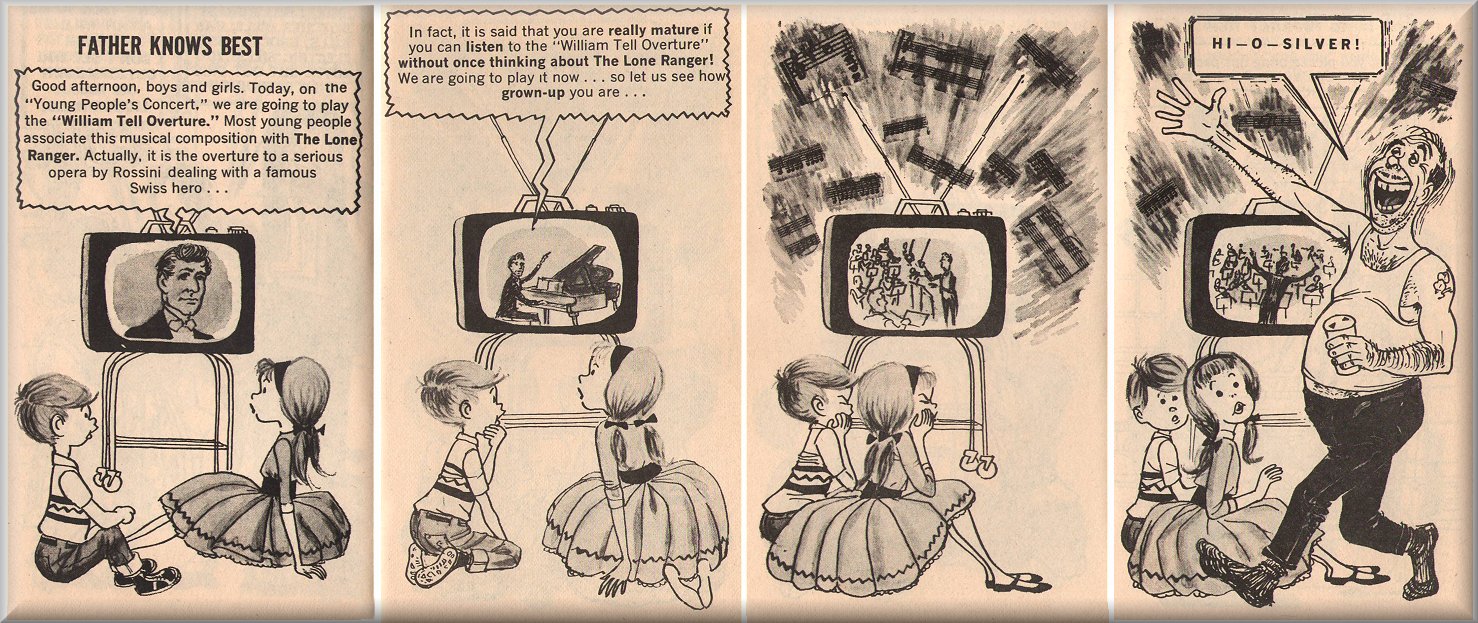
Mad published a number of Berg collections, but the vast body of his work has never been assembled in one place; I’d like to say that it’s time.
Some hope is on the horizon – it looks like Amazon has gotten wind of a new collection, slated for release some time near the end of 2013:

But I fear it will only be a selection of Dave’s work, chosen by a committee of folks who think this or that is worthy of inclusion. As a reader of Mad since the early 60’s, I’ve probably read most of what Berg published… and I want it all. Still, beggars can’t be choosy; I’ll most likely buy this collection since it’s available, and hope that someday someone else will think it worthwhile to put together a collection of the complete works of this master artist.
The Old Wolf has spoken.

That’s alright, cap’n; we always knew your cat was a whoopsie!
(Before anyone gets their nose bent out of shape, that’s my [modified] favorite line from “Stardust.”)
The Old Wolf has spoken.
An auto accident in Washington, DC in 1921. Colorized nicely by Redditor mygrapefruit.


Back in 2009, a Writer’s Block question asked, “What is your favorite commercial from your childhood?” Today, Paul Taylor, writer and artist of the amazing webcomic Wapsi Square, posted this video over at Facebook:
The cogs in my mind started whirring, and I thought I’d cross-post my response here, slightly updated.
The character was played by Jack Somack. From IMDB.com:
“Jack Somack acted in amateur productions for many years and didn’t break into professional acting until his fifties. In films, he is probably best known for his portrayal of the father of Alexander Portnoy (Richard Benjamin) in “Portnoy’s Complaint.” But probably his greatest claim to (rather dubious) fame was appearing in the notorious “spicy meatball” Alka-Seltzer commercial in the 1960s. This was really a “commercial within a commercial.” A film crew is trying to make a 10-second spot for a fictitious brand of meatballs. In it, Somack (who was Jewish) plays an actor playing a portly, mustachioed Italian sitting at a little table in front of a small oven. From his left, his ample, beaming “wife” places a plate of meatballs in front of him. Jack is supposed to eat one and say, “Mamma mia, that’s a spicy meat-a-ball!” but something keeps ruining the take. After a string of blown takes (and meatballs), Jack is reduced to a helpless, dyspeptic stupor. Cut to a scene of two Alka-Seltzer being dropped into a glass of water with the appropriate voiceover. Cut back to the meatball commercial, where the next take seems to be going perfectly, until the door of the oven falls open with a clang. “Okay,” says the director, “let’s break for lunch.” This commercial was pulled from the air after protests from Italian-American anti-defamation groups that the commercial promoted unflattering stereotypes of Italians.”
As an Italian-Amerian, I can tell you that the anti-defamation groups had their collective head up their collective culo – this is one of the funniest ads ever, and I’m very proud of my heritage. Then, as now, social outrage over insignificant issues was driven by soulless attorneys hungry for billable hours. An LJ friend posted a response to this question that invoked the Frito Bandito – there again, outraged Mexican anti-defamation groups, swimming against a public tide that found the character amusing – lobbied and agitated and sued until the character, voiced by Mel Blanc, was retired. A handful of disgruntled Chicanos and a hundred hungry attorneys caused a hqiz of a lot of trouble.
Rest in peace, Jack.
There was one ad for Hai Karate after-shave which I have not been able to find, that would rate as “First Runner-Up”. It showed people on an assembly line dropping the self defense instructions into the boxes with little kiai’s: “Hp! Hp! Hp!”. Wish I could locate that one again.
While I’m thinking of funny ads that bump up against the stereotyping issue, I always thought this one [Ancient Chinese Secret!] was a crackup:
But howcumzit the above commercial was found offensive, but this one [Mountain Dew] – another absolute great – is not?
On the same topic, Pepsi had another winner:
Tabasco’s “exploding mosquito” commercial certainly ranks high on my list of all-time greats:
And this one had me absolutely riveted (pun intended):
Click through for the story behind the Cog commercial.
Here’s a winner from TNT in Belgium (the sequel is pretty great as well):
The “Devolution” ad from Guinness was a lot of fun:
And if you’d like to see that film run backward (or forward, as the case may be), click here.
And lastly (I could go on for a long time, because there are some really wonderful ones), a PSA that truly has me in tears every time I watch it (dang; just happened again):
Always wear your seatbelt.
For better or worse, our world is built on commerce, and customers can’t find what they need if they don’t know a product exists. For the most part, sadly, advertising is obnoxious and intrusive. When Madison Avenue and other creative minds manage to come up with commercials that are not only informative but entertaining and/or moving, that’s advertising at it’s very best, and there needs to be more of it.
The Old Wolf has spoken.
This list appeared on a recent poll over at Reddit. Just one sampling, naturally, but I liked the results and thought I’d share them over here.
I’ve seen a number of these, but most of them look fascinating. I’ll be keeping my eye out.
The Old Wolf has spoken.
Dirty Medicine – The Ranbaxy drug debacle
TL;DR: If you use generic drugs, you may want to find out where they are from. If they’re from Ranbaxy or Dr. Reddy’s, both in India, find a different provider for your health’s sake.

In a conference call with a dozen company executives, one brushed aside … fears about the quality of the AIDS medicine Ranbaxy was supplying for Africa. “Who cares?” he said, … “It’s just blacks dying.”

This is shocking enough, but you ain’t seen nothing yet.
This recent article over at CNN Money raised all sorts of red flags for me this morning. It’s fairly long, but I read every word, and what I read left me shaken, not stirred. I would recommend reading it in its entirety.
I take two generic drugs provided to me via Welldyne RX, my company’s bulk drug provider, and I started doing some research. I discovered that one was made by Sun Pharmaceuticals, and the other by Dr. Reddy’s Laboratories, both based in India.
After having read the Ranbaxy article, and digging in to the various generic manufacturers of the drugs I take, it became clear that it’s not just the Russian Business Network selling counterfeit or low-quality drugs, but the legitimate pharmaceutical providers, each of whom has a byzantine network of providers and producers which make guaranteeing quality extremely difficult.

Here’s are the manufacturers I found at drugs.com for generic omeprazole 20mg, which I take for recurring GERD:
Looking at these manufacturers and their supply chains, it would be difficult to know whether any medication is actually made in the USA without further digging. Many, many paths lead to India, and given the mind-bending history of corruption, fraud, abuse, mismanagement and outright criminal skullduggery uncovered at Ranbaxy, I am very leery of any medications that come from over there, even in part. Ranbaxy is still in operation, controlled in large part by Japanese firm Daiichi Sankyo.
Some source articles:
For the Record, Sun Pharmaceuticals works out of India, but thus far seems free of complaints or black marks. But the entire landscape makes me nervous. Tomorrow I call WellDyne Rx to see if I can get my meds sourced from the USA.
The Old Wolf has Spoken.
Back in 1962, I remember reading this story, which first appeared in Amazing Adult Fantasy No. 9:
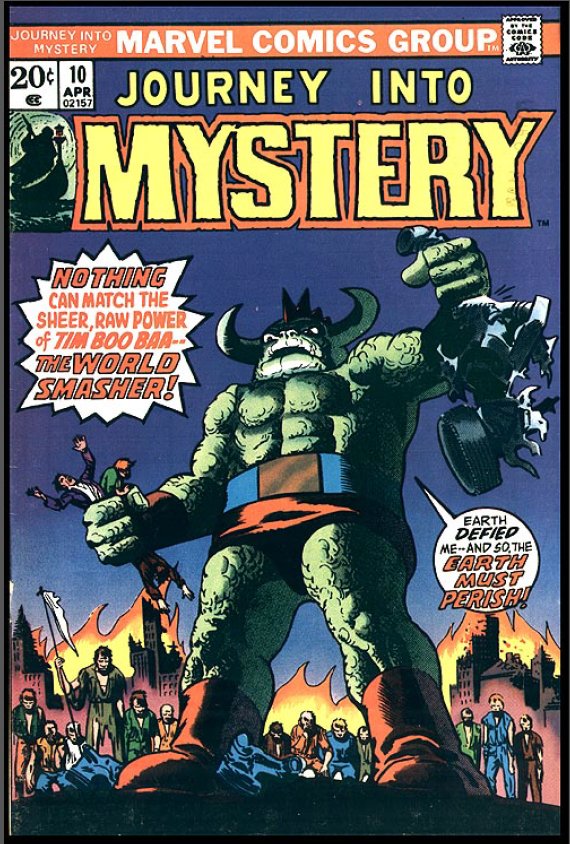
(Journey Into Mystery reprinted the story in April of 1974)

Even at the tender age of 11, I remember chuckling at the campiness of the story, but the resolution left an impression on my mind, because I never forgot it. The surprising conclusion to the story can be read in a 2MB PDF file here.)
Years later, I read a short story in one of my dad’s many vintage science fiction anthologies which I ultimately inherited; the story, by Martin Gardner, was entitled simply “Thang.” Written in 1949, it may have been the inspiration for Tim Boo Ba:
HE Earth had completed another turn about the sun, whirling slowly and silently as it always whirled. The East had experi- enced a record breaking crop of yellow rice and yellow chil- dren, larger stockpiles of weapons were accumulating in certain strategic centers, and the sages of the University of Chicago were uttering words of profound wisdom, when Thang reached down and picked up the Earth between his thumb and finger. Thang had been sleeping. When he finally awoke and blinked his six opulent eyes at the blinding light (for the light of our stars when viewed in their totality is no thing of dimness) he had become uncomfortably aware of an empty feeling near the pit of his stomach. How long he had been sleeping even he did not know exactly, for in the mind of Thang time is a term of no significance. Although the ways of Thang are beyond the ways of men, and the thoughts of Thang are scarcely conceivable by our thoughts; still——stating the matter roughly and in the language we know——the ways of Thang are this: When Thang is not asleep, Thang hungers. After blinking his opulent eyes (in a specific consecutive order which had long been his habit) and stretching forth a long arm to sweep aside the closer suns, Thang squinted into the deep. The riper planets were near the center and usually could be recognized by surface texture; but frequently Thang had to thump them with his middle finger. It was some time until he found a piece that suited him. He picked it up with his right hand and shook off most of the adhering salty moisture. Other fingers scaled away thin flakes of bluish ice that had caked on opposite sides. Finally, he dried the ball completely by rubbing it on his chest. He bit into it. It was soft and juicy, neither unpleasantly hot nor freezing to the tongue; and Thang, who always ate the entire planet, core and all, lay back contentedly, chewing slowly and permitting his thoughts to dwell idly on trivial matters, when suddenly he felt himself picked up by the back of the neck. He was jerked upward and backward by an arm of tremendous bulk (an arm covered with greyish hair and exuding a foul smell). Then he was lowered even more rapidly. He looked down in time to see an enormous mouth——red and gaping and watering around the edges——then the blackness closed over him with a slurp like a clap of thunder. For there are other gods than Thang.
So it goes in our day, and so it has always been. To quote from a book of scripture held dear by members of the Church of Jesus Christ of Latter-day Saints (often called the Mormons),
“We have learned by sad experience that it is the nature and disposition of almost all men, as soon as they get a little authority, as they suppose, they will immediately begin to exercise unrighteous dominion.” (Doctrine and Covenants 121:39)
Regardless of your particular spiritual walk, this statement has been true for as long as I have been able to observe humanity. Give a man or woman a little power (as they suppose,) and they will promptly begin to act like a feudal lord, safely ensconced in their own little fiefdom. Politicians do it. Bureaucrats do it. Bosses do it. Department managers do it. Teachers do it. School administrators do it. It’s everywhere. One autocratic gatekeeper can keep countless people from access to jobs, goods, services, assistance, visas, passports, approvals, authorizations, or whatever they happen to need. “That’s not how we run things here.” “We do things differently.” “I see no need to change.” “I don’t think so.”
We hear it every day, and in many places, it’s harder to remove a deeply-entrenched functionary or manager or director or senator or president than it is to remove inertia from matter.[1] Yet it boggles the mind – how quickly people lose sight of the fact that they and their organization are really just a small part of a larger whole – the sum total of humanity.
In the 16th Century, John Donne penned the famous lines,
No man is an island,
Entire of itself.
Each is a piece of the continent,
A part of the main.
If a clod be washed away by the sea,
Europe is the less.
As well as if a promontory were.
As well as if a manor of thine own
Or of thine friend’s were.
Each man’s death diminishes me,
For I am involved in mankind.
Therefore, send not to know
For whom the bell tolls,
It tolls for thee.
Donne understood that we are all interconnected, and that the success of one is the success of another; the failure of one affects all of humanity.
Centuries later, Martin Luther King wrote a clear and poignant summary in prose:
“We must all learn to live together as brothers or we will all perish together as fools. We are tied together in the single garment of destiny, caught in an inescapable network of mutuality. And whatever affects one directly affects all indirectly. For some strange reason I can never be what I ought to be until you are what you ought to be. This is the way God’s universe is made; this is the way it is structured.”
As Benjamin Franklin stated, “We must all hang together, or assuredly we shall all hang separately.”
If we do not wish to perish as fools, as King said, we must return to principles of decency and the common good. As one small voice crying in the darkness,
My voice is small “amid the noise and haste,” but I raise it anyway. We must get away from Me and Mine, and move back to We and Ours. Do this, and we as a species may yet reach the stars. Do it not, and our civilization is headed for implosion under the weight of social inequity, and then (as John Howard Griffin wrote), “we will all pay for not having cried for justice long ago.”
The Old Wolf has spoken.
[1] Thus far, only E.E. (“Doc”) Smith has managed that trick.

It’s true. No one can appreciate this more than those who have lost things, or those who have lost people. Many individuals lost their lives in Oklahoma today, and many families are grieving. Words like this are scant comfort for them, and only time will – hopefully – transform the bitterness of loss into the sweetness of memory.
Far more people kept their lives but lost everything they had, and their hardships are none the less – but I am sure there is much gratitude being felt by those who survived the ordeal, realizing that things can be replaced and that, in the end, nothing truly belongs to us. We can only preside over our goods for a short time, and then they pass into the hands of others.
My thoughts and prayers are with the good people of Oklahoma and other areas affected by these devastating storms. I have done what I could, and wish only that it could be more. If you want to help, one good place is the United Way of Oklahoma.
The Old Wolf has spoken.
 Playing in the World Game