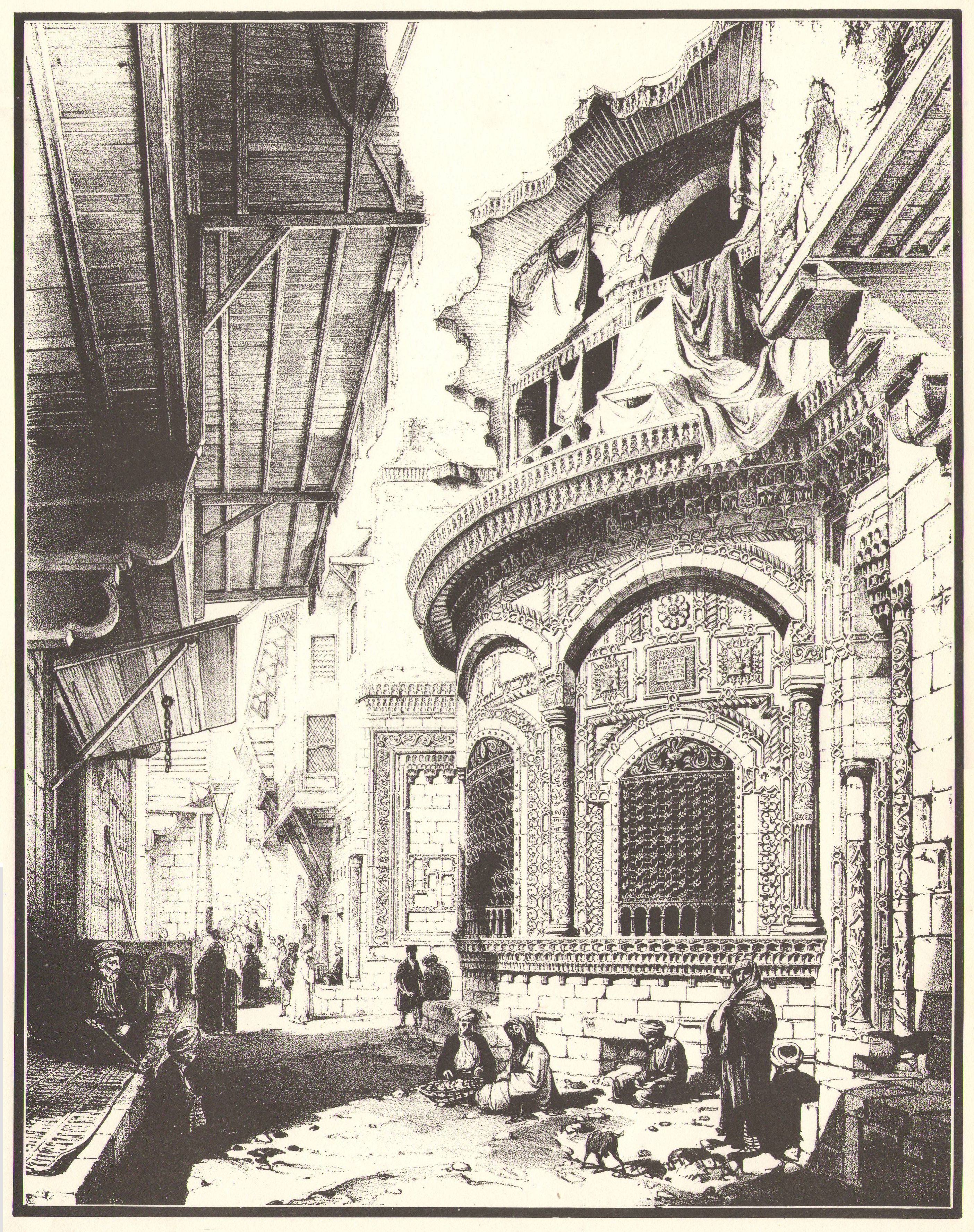
Six Views of Cairo – Robert Hay

The six lithographs below were published by the American University in Cairo Press in 1983. They were found among my mother’s possessions; she spent years in Egypt on various assignments from World War II to the 1970s.

Description

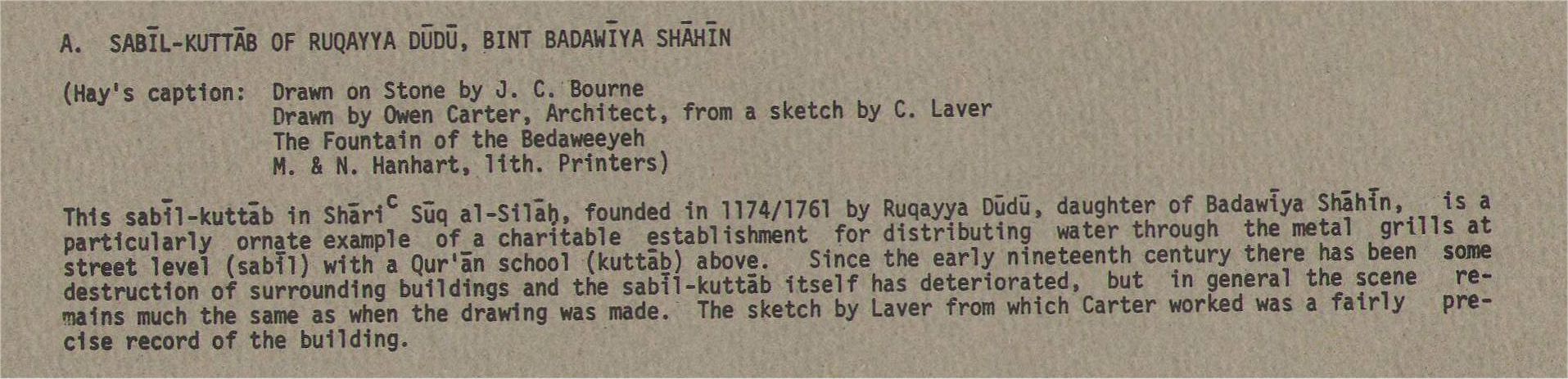
A - Sabil Kuttab

Description A

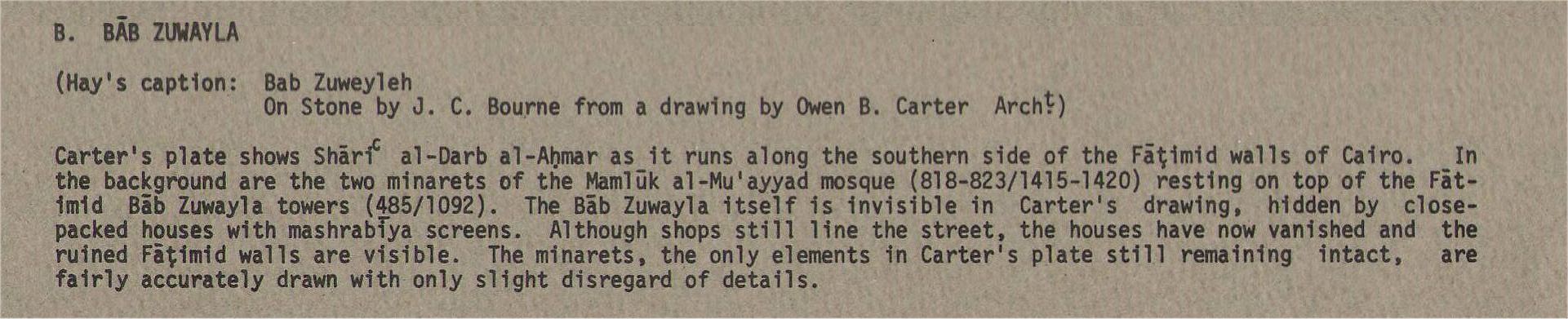
B - Bab Zuwayla

Description B

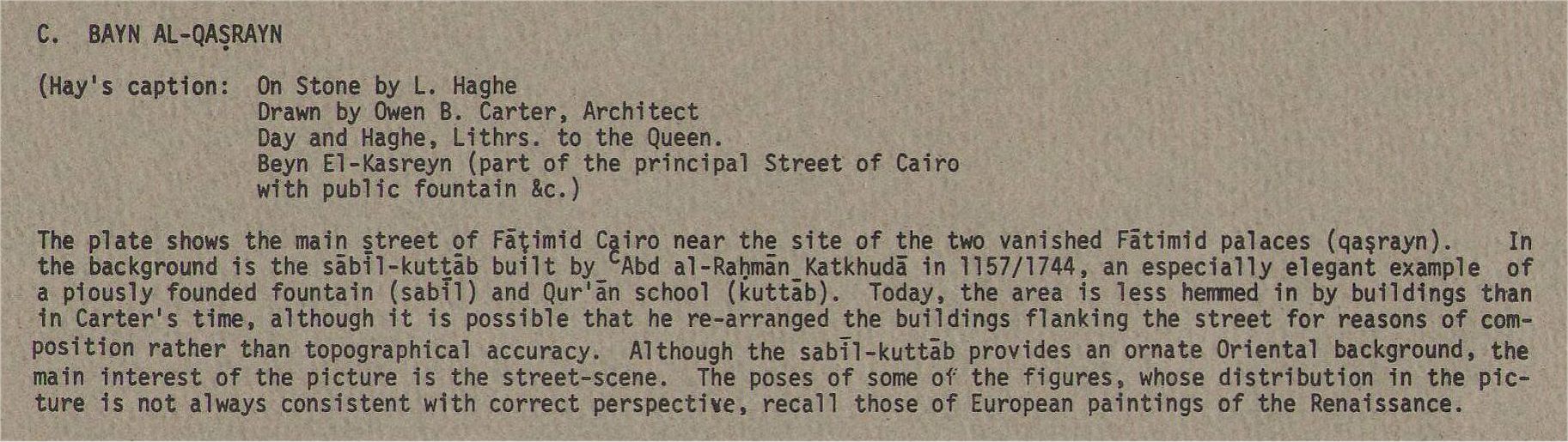
C - Bayn Al Qasrayn

Description C

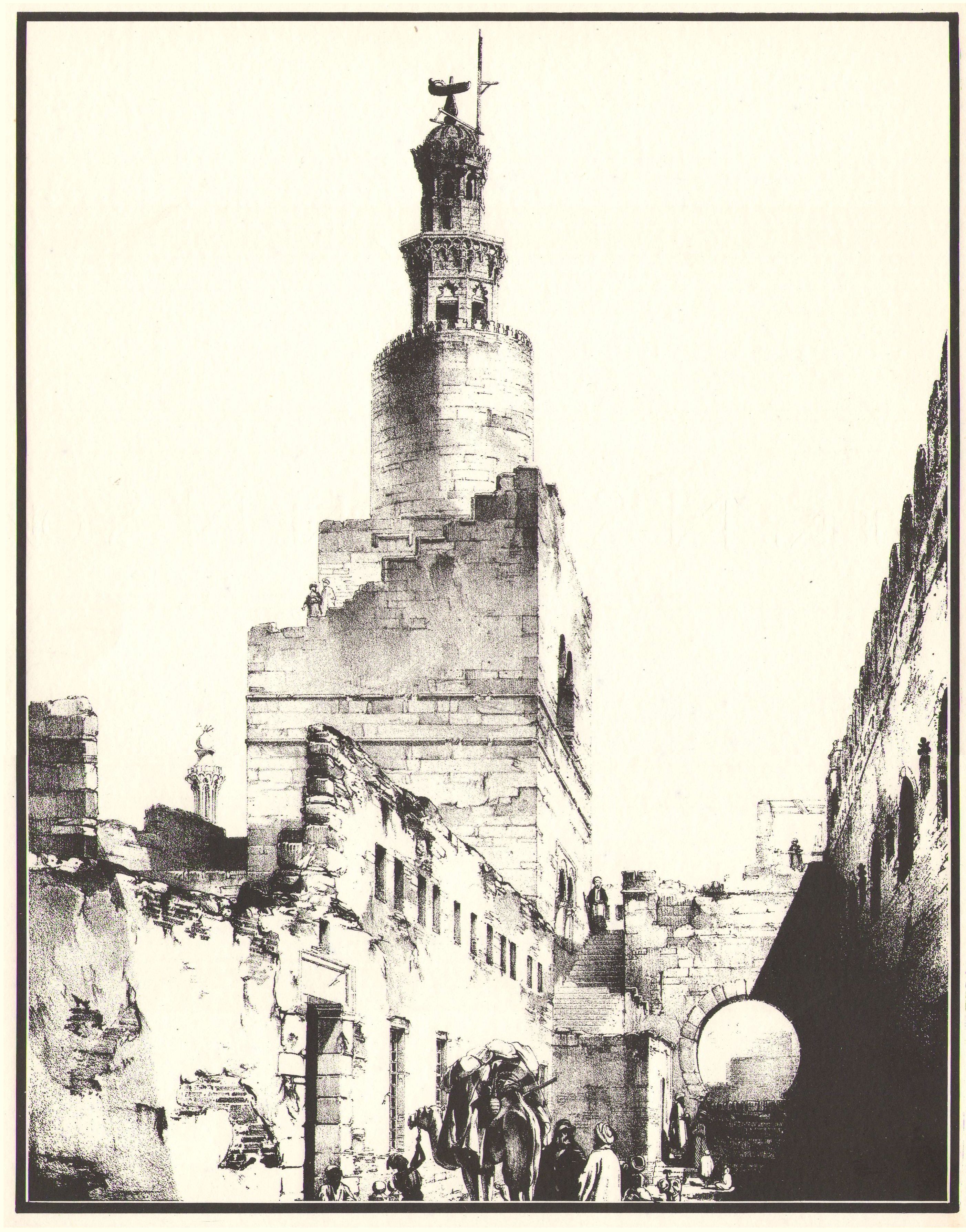
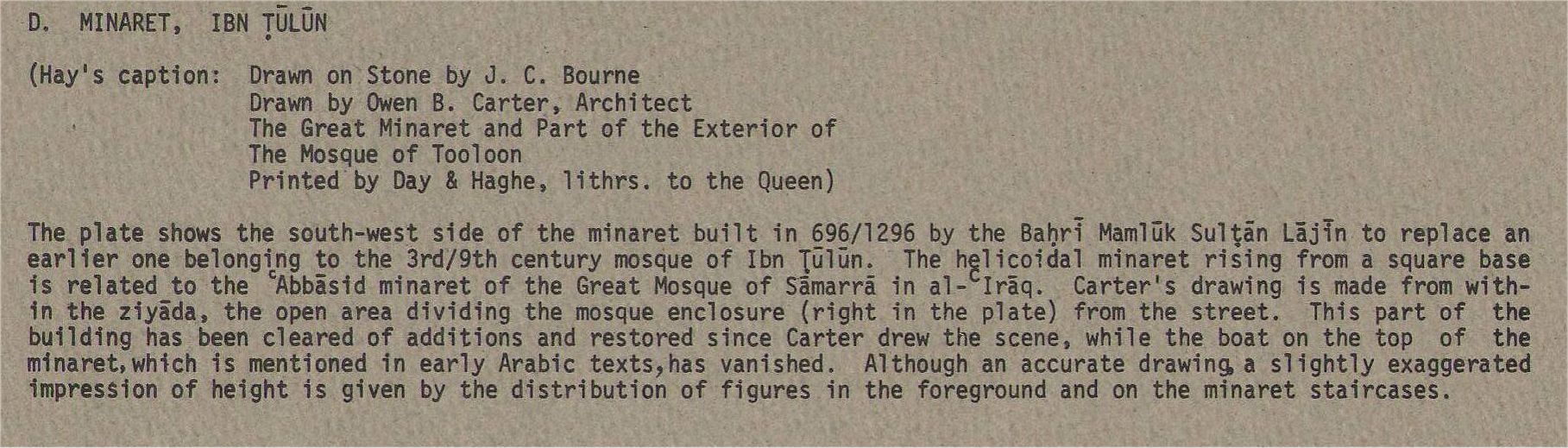
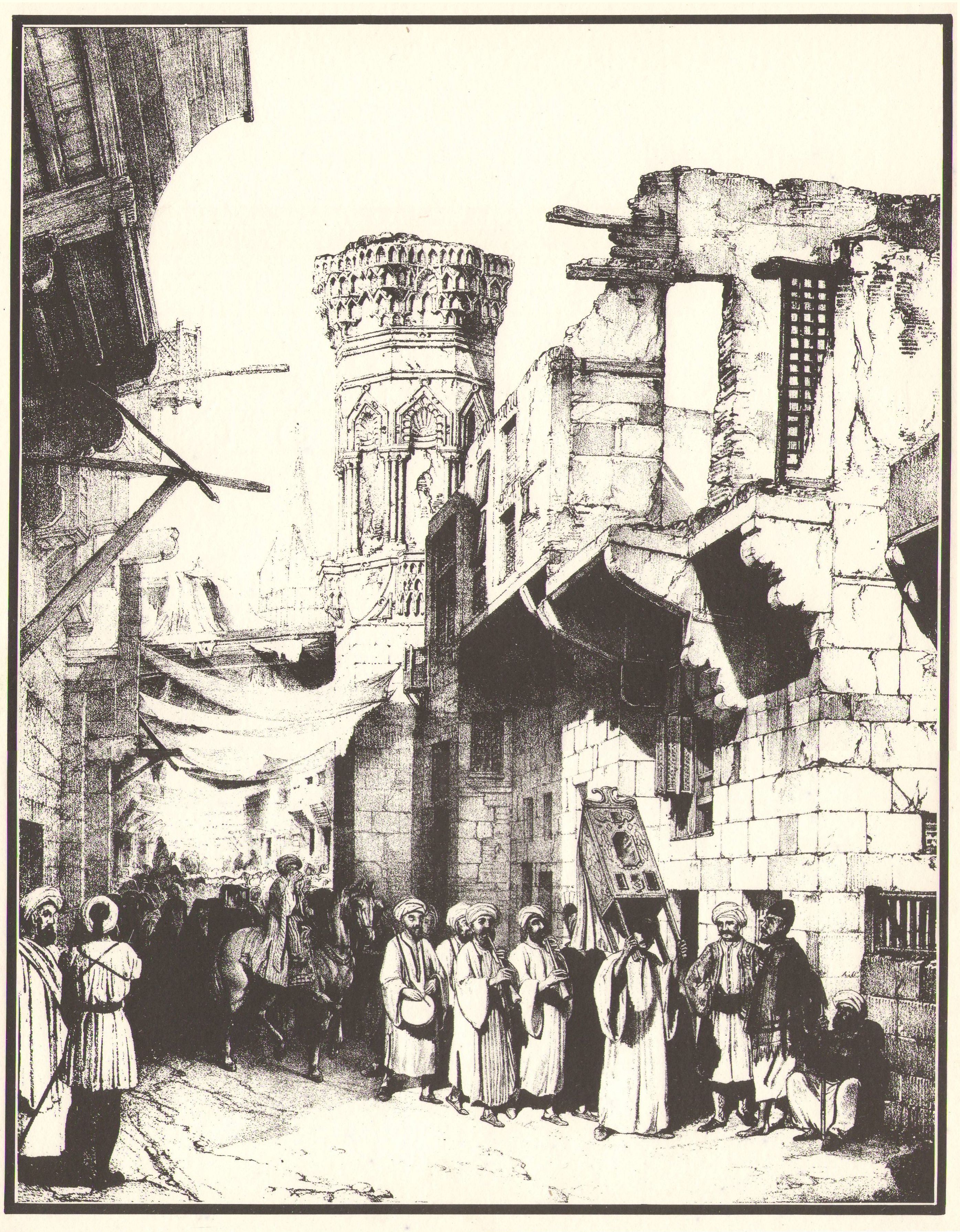
D - Minaret, Ibn Tulun

Description D

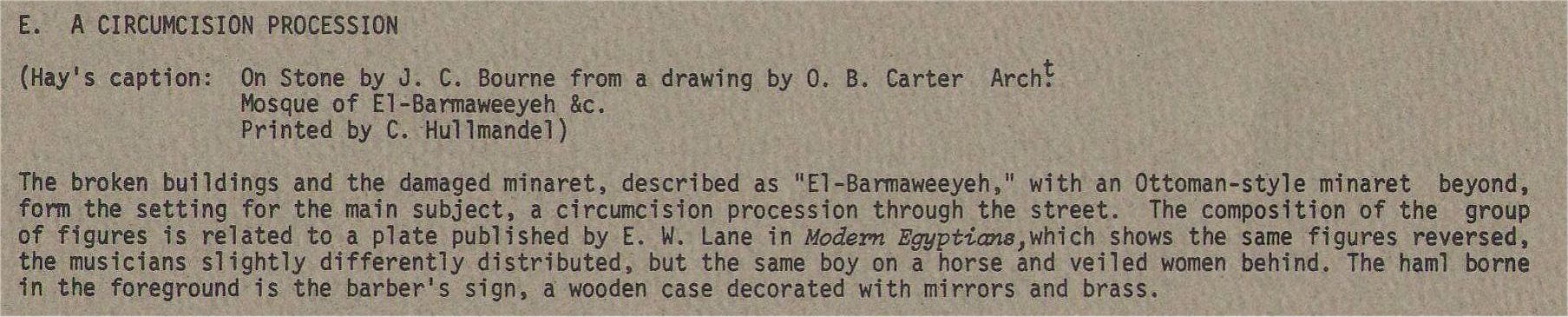
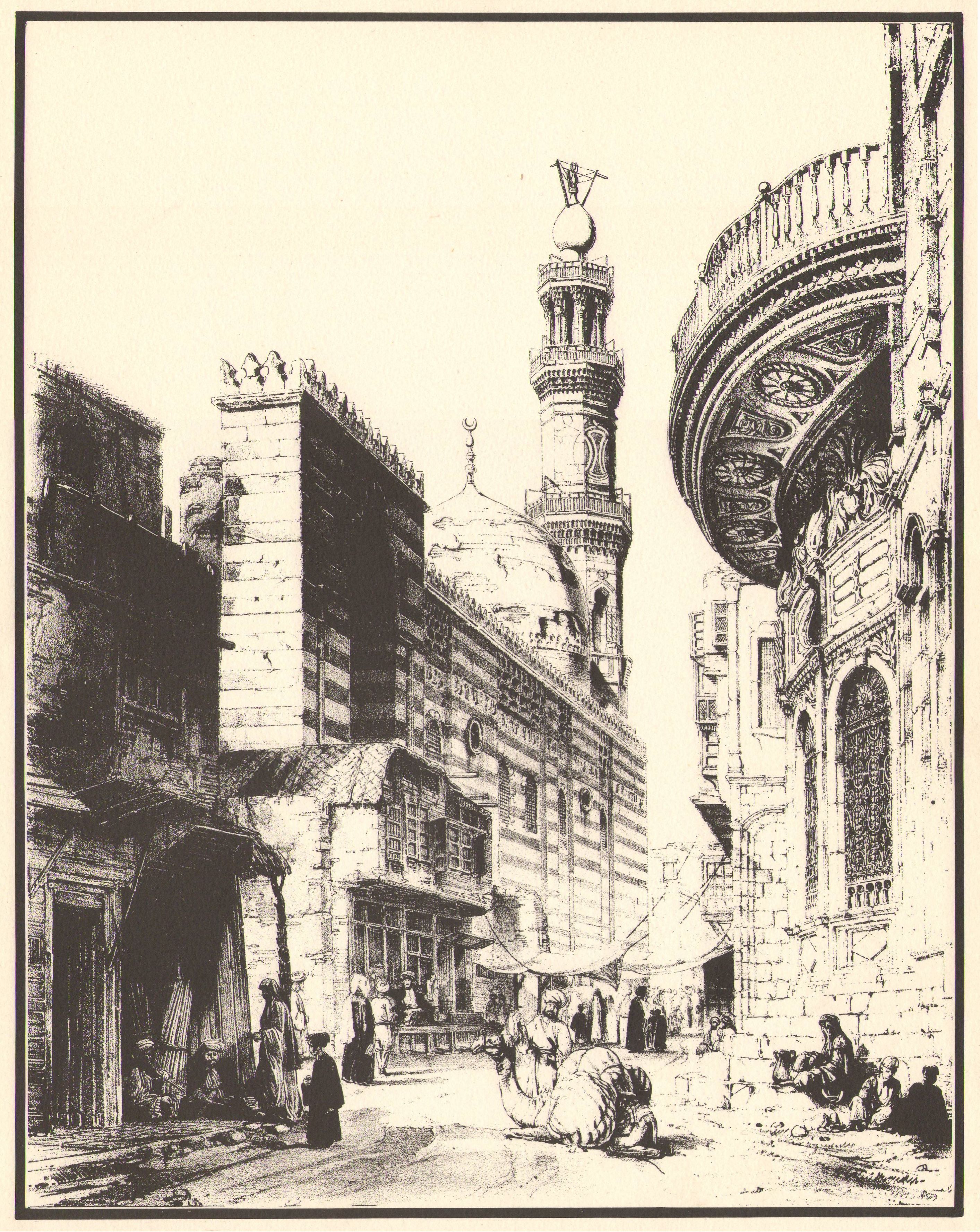
E - A Circumcision Procession

Description E

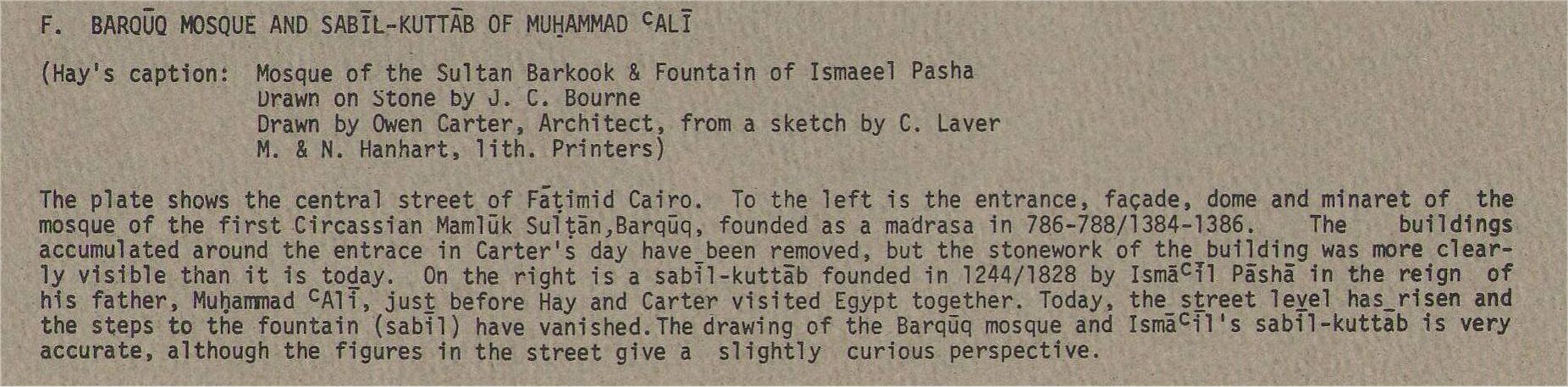
F - Barquq Mosque

Description F

What would be really interesting would be some contemporary street scenes from Cairo showing what these locales look like today.

The Old Wolf has spoken.

Keeping Welsh (and Bees) Alive.

Note: This article was originally published at FT.com (Financial Times). It is copyright. They have indicated that these articles can be shared with their “sharing tools,” and added, “Please don’t cut articles from FT.com and redistribute by email or post to the web.”

That would be fine, if they didn’t use that accursed “complete a survey to read this full article” ploy. Or make you register (i.e. give them your information) to read “3 free articles per month.” Both of these are scummy tactics which serve no purpose other than to drive people away from a website; to Pluto with that. So, FT, get rid of the surveys and the paywall and I’ll be happy to link people directly to your site. Until then, hard lines.


Wil Griffiths set up an organisation that aims to save the bees and his native tongue

Welsh beekeeper Wil Griffith

©Gareth Phillips

Wil Griffith: ‘When we started, other beekeepers thought we were racist’

Welsh has always lent itself to prose and poetry, to music and singing. But it has never been associated with scientific matters, and beekeeping is a science. If the language is to survive, it needs to expand into all aspects of everyday life.

I run the only Welsh-language beekeeping association in Wales. I set up Cymdeithas Gwenynwyr Cymraeg Ceredigion (the Ceredigion Welsh Beekeeping Association) at the end of the 1960s with two aims: survival of the bee and survival of the language.

Our Welsh beekeeping terms are not a pure translation of English terms because word-for-word translation is meaningless. For example, in a beehive, honey is stored in the very top of the hive, in the top box. The term in English is “super” — as in “superintendent”. It means “above”. But “above” would not be used that way in Welsh. The more usual Welsh word is “lloft” — meaning “upstairs”. So, in determining new terminology, we use everyday words that make sense to a Welsh ear. I wrote a book, Dyn Y Mel (The Honeyman) in which our Welsh terms are listed. In English, the term is “beekeeper” but, again, in Welsh, “dyn y mel” is more common.

I’m well over 80 now but I started beekeeping 60 years ago. At about that time modern hives were introduced. Before then, beekeepers had used closed straw skeps — but suddenly, for the first time, they were able to see what was taking place within the hive.

Modern terms were coined to reflect these changes, which flustered the older beekeepers. Very experienced beekeepers, who were first-language Welsh, were at a loss. The terminology involved was beyond them, particularly if it was in English.

Today our association has about 30 members and we even put on an annual show in a pub for our honey and mead. Finding enough bilingual judges is always a problem. As they are tasting, the judges must comment out loud in Welsh.

Beekeeping can be hazardous. A friend went to shift a hive late one evening and didn’t bother with protective clothing; a bee crawled into his ear. We tried to get it out but couldn’t. The only way was to drown it, and the only liquid we had to hand was a bottle of brown ale. So that was poured in and the bee floated out. But there’s no special term — in Welsh or English — for these beekeeping mishaps.

Our members do not have to speak Welsh — but we are true to our founding principles. At meetings, English speakers sit next to someone bilingual — most of us are — who will quietly translate for them. After a season or so, they have a good smattering of the language.

When we started other beekeepers thought we were racist. But what is wrong with studying in our native tongue? People would not be surprised if beekeeping associations in France or Germany discussed beekeeping in French or German. Why be surprised about Welsh?

The best way to keep a language alive is to place it at the centre of everyday life. In my county, Ceredigion, Welsh is a minority language. There has been a big fall in the number of native speakers in the past 30 years, and people are realising that we are in danger of losing one of the oldest languages in Europe.

Copyright The Financial Times Limited 2015

Cultural appropriation and Native American wisdom.

“The problem with quotes on the Internet is that their sources are extremely hard to verify.”
-Abraham Lincoln

And see, there are so many things out there like that where some bit of human wisdom or snippet of humor is attributed to somebody, or anybody, or George Carlin, or Mother Teresa, or Bill Cosby, or Rameumptom X. Analemma, or “Native American Philosophy.” Particularly in the latter case, it becomes more of an issue than a simple misattribution, because cultural appropriation can be more than insulting, it can actually be harmful to the original culture.

Disclaimer: I’m writing as a white man, a descendant of Italian and British immigrants. I claim no authority to speak for other cultures, but I’m sharing my own experiences and perceptions.

Here’s a good example:

indian

While it’s not entirely outside the realm of possibility, I’d bet a steak dinner at Wolfgang Puck’s CUT in Beverly Hills that no “Old Indian” ever said this. But somehow, slapping a few pictures of Native Americans or Teepees or such things on a list of ideas lends a certain cachet of traditionality and wisdom to an otherwise bland list of platitudes. And I feel as though they must seem dismissive of the native heritage, much of which is sacred and not designed for sharing with outsiders – particularly those who stole the land, shoved the natives into reservations, and used the native culture for attention, advertising, and financial gain.

What prompted these thoughts were just such a list which I found, and which I liked. They are good ideas, and worthy of consideration by any culture.

1. Each morning upon rising, and each evening before sleeping, give thanks for the life within you and for all life, for the good things the Creator has given you and for the opportunity to grow a little more each day. Consider your thoughts and actions of the past day and seek for the courage and strength to be a better person. Seek for the things that will benefit others (everyone).

2. Respect. Respect means “To feel or show honor or esteem for someone or something; to consider the well being of, or to treat someone or somethin with deference or courtesy”. Showing respect is a basic law of life.

3. Treat every person from the tiniest child to the oldest elder with respect at all times.

4. Special respect should be given to Elders, Parents, Teachers, and Community Leaders.

5. No person should be made to feel “put down” by you; avoid hurting other hearts as you would avoid a deadly poison.

6. Touch nothing that belongs to someone else (especially Sacred Objects) without permission, or an understanding between you.

7. Respect the privacy of every person, never intrude on a person’s quiet moment or personal space.

8. Never walk between people that are conversing.

9. Never interrupt people who are conversing.

10. Speak in a soft voice, especially when you are in the presence of Elders, strangers or others to whom special respect is due.

11. Do not speak unless invited to do so at gatherings where Elders are present (except to ask what is expected of you, should you be in doubt).

12. Never speak about others in a negative way, whether they are present or not.

13. Treat the earth and all of her aspects as your mother. Show deep respect for the mineral world, the plant world, and the animal world. Do nothing to pollute our Mother, rise up with wisdom to defend her.

14. Show deep respect for the beliefs and religion of others.

15. Listen with courtesy to what others say, even if you feel that what they are saying is worthless. Listen with your heart.

16. Respect the wisdom of the people in council. Once you give an idea to a council meeting it no longer belongs to you. It belongs to the people. Respect demands that you listen intently to the ideas of others in council and that you do not insist that your idea prevail. Indeed you should freely support the ideas of others if they are true and good, even if those ideas ideas are quite different from the ones you have contributed. The clash of ideas brings forth the Spark of Truth.

17. Once a council has decided something in unity, respect demands that no one speak secretly against what has been decided. If the council has made an error, that error will become apparent to everyone in its own time.

18. Be truthful at all times, and under all conditions.

19. Always treat your guests with honor and consideration. Give of your best food, your best blankets, the best part of your house, and your best service to your guests.

20. The hurt of one is the hurt of all, the honor of one is the honor of all.

21. Receive strangers and outsiders with a loving heart and as members of the human family.

22. All the races and tribes in the world are like the different colored flowers of one meadow. All are beautiful. As children of the Creator they must all be respected.

23. To serve others, to be of some use to family, community, nation, and the world is one of the main purposes for which human beings have been created. Do not fill yourself with your own affairs and forget your most important talks. True happiness comes only to those who dedicate their lives to the service of others.

24. Observe moderation and balance in all things.

25. Know those things that lead to your well-being, and those things that lead to your destruction.

26. Listen to and follow the guidance given to your heart. Expect guidance to come in many forms; in prayer, in dreams, in times of quiet solitude, and in the words and deeds of wise Elders and friends.

Now, whenever I see such a compilation, I ask myself where they really came from – and as I mentioned above, it’s often difficult to trace things of this nature back to an original source. But in this case, it appears that the list above is based in fact, although it was embellished somewhat.

The list below, found at the website of Greater Saskatoon Catholic Schools¹, was gathered at a conference held in Lethbridge, Alberta in December, 1982. Indian Elders, spiritual leaders, and professionals from across Canada offered these fundamental elements that they considered to be common among Canadian Indian philosophies. That seems to be about as authentic as one can get.

  • Wholeness. (Holistic thinking). All things are interrelated. Everything in the universe is part of a single whole. Everything is connected in some way to everything else. It is only possible to understand something if we understand how it is connected to everything else.
  • Change. Everything is in a state of constant change. One season falls upon the other. People are born, live, and die. All things change. There are two kinds of change: the coming together of things, and the coming apart of things. Both kinds of change are necessary and are always connected to each other.
  • Change occurs in cycles or patterns. They are not random or accidental. If we cannot see how a particular change is connected it usually means that our standpoint is affecting our perception.
    The physical world is real. The spiritual world is real. They are two aspects of one reality. There are separate laws which govern each. Breaking of a spiritual principle will affect the physical world and vice versa. A balanced life is one that honors both.
  • People are physical and spiritual beings.
  • People can acquire new gifts, but they must struggle to do so. The process of developing new personal qualities may be called “true learning”. There are four dimensions of “true learning”.
    A person learns in a whole and balanced manner when the mental, spiritual, physical and emotional dimensions are involved in the process.
  • The spiritual dimension of human development has four related capacities:
    • the capacity to have and respond to dreams, visions, ideals, spiritual teaching, goals, and theories;
    • the capacity to accept these as a reflection of our unknown or unrealized potential;
    • the capacity to express these using symbols in speech, art, or mathematics;
    • the capacity to use this symbolic expression towards action directed at making the possible a reality.
  • People must actively participate in the development of their own potential.
  • A person must decide to develop their own potential. The path will always be there for those who decide to travel it.
  • Any person who sets out on a journey of self-development will be aided. Guides, teachers, and protectors will assist the traveler. The only source of failure is a person’s own failure to follow the teachings.

Wisdom belongs to humanity, regardless of the source. If that wisdom is shared for the betterment of all, it seems entirely appropriate and legitimate. If it’s used for financial gain to the detriment of a minority culture, that’s when it becomes questionable.

The first list above may not be entirely authentic, but both consist of good thoughts which, if adopted by humanity as a whole, would lead to a much better world for everyone. Hence I feel comfortable sharing both of them.

The Old Wolf² has spoken.


¹ Lots of other good information at this link as well.

² It is not lost on me that the persona I have adopted for this blog and in other circles has a native/shamanistic aspect. No disrespect is intended to any culture; all I can say is that it resonates with me and encourages me to turn my efforts toward the betterment of humanity as a whole.
Am I Charlie? Or am I just paying lip service?

ch1057

“The Untouchables 2” – You mustn’t mock us!

In light of the recent tragedy in Paris at the offices of Charlie Hebdo, a discussion sprung up on Facebook when a friend of mine, in reference to this article at the Daily Beast, asked the question, “where does humour cross the line into something rather ugly, threatening and repellent?”

I commented as below:

In some ways, Charlie Hebdo is the Westboro Baptist Church of the literary world. It’s a partially flawed analogy because WBC produces nothing positive whatsoever except hatred and misery, while Charlie Hebdo satirizes many things that deserve satire. Are they offensive? Absolutely… but then so is South Park, which show is afraid to pillory nothing. Mad and Cracked back in the 60s and 70s were very similar [1]; the French outfit simply doesn’t have the same restraints on them as American television or magazines, so they’re free to add all the crude sexual [and religious and political and social] humor they want. It may be this “crossing of the line” that some people find so offensive rather than the actual satire itself.

Nonetheless, the same principles of free speech apply here:

1) You’re free to say and publish what you want, and the government can’t come after you for it.
2) You are *not* free from the consequences of your speech.

In this sense, I agree with the thesis of the article. Charlie can be pretty nasty; just look at the comments of Dutch cartoonist Bernard Holtrop (Willem):

“We have a lot of new friends, like the pope, Queen Elizabeth and (Russian President Vladimir) Putin. It really makes me laugh,” Bernard Holtrop, whose pen name is Willem, told the Dutch centre-left daily Volkskrant.

“Marine Le Pen is delighted when the Islamists start shooting all over the place,” said Willem, 73, a longtime Paris resident who also draws for the French leftist daily Liberation.

He added: “We vomit on all these people who suddenly say they are our friends.”

The authors and cartoonists who work at Charlie Hebdo are not necessarily nice people, but they know who they are and they know the risks they are taking by being deliberately offensive. Unfortunately, this week some of them paid the price for taking those risks. This is sad, and unconscionable, and they didn’t deserve to die… but in the grand scheme of things this was not totally surprising.

I remember buying some of the first editions of Charlie when I was living in Italy in 1970. There was a parallel publication in Italian called, interestingly, “Linus.” I now wish I still had them – they’d be worth quite a bit.

As part of the discussion, another member of our community indicated she could identify with Willem’s disgust, citing the world leaders who are marching in Paris while pursuing national policies of destruction and/or oppression. And that’s a valid debate. I replied,

It is another debate entirely, and one that needs to continue. There are many who see the outpouring of support for Charlie as a good thing, others see it as superficial lip-service. And certainly, In that crowd of thousands marching in Paris, you would find thousands of reasons for being there.

In this particular case, I see Willem’s reaction (and those of many, many others in the blogosphere) as a confirmation of the axiom that reality is perception. We see things not as they are, but as we are.

Charlie Hebdo in many ways crosses the boundaries of responsible journalism into the realm of “we’re going to be assholes  just because we can.” And while that aspect of satirical organs is repugnant to many, even those not the targets of their caustic commentary, it is and must remain protected – because if you shut them down, where does the censorship stop?

What happened in Paris is a tragedy of immense significance, and it has ignited a vigorous debate on the nature and aims of the Islamic extremist movement. In these attacks some have seen more than just revenge for offensive cartoons; journalists and analysts all over the world have chimed in suggesting that the true motive was to actually inflame hatred for Islam, making it easier for the terrorist groups to recruit the uneducated and the ideologically susceptible.

In the end, Charlie Hebdo is a pretty lowbrow publication, but I will defend to the death their right to be that way (as Voltaire’s biographer stated, although not Voltaire himself) – because if I don’t, it clears the pathway to the censorship of all writing, including my own, just because it happens to offend somebody, somewhere. And by the same token, I’m free to read it or not read it, and free to choose whether or not I will be offended.

So, yes. As Albert Uderzo so elegantly said by coming out of retirement:

asterix-jesuischarlie

“I’m Charlie too.”

The Old Wolf has spoken.


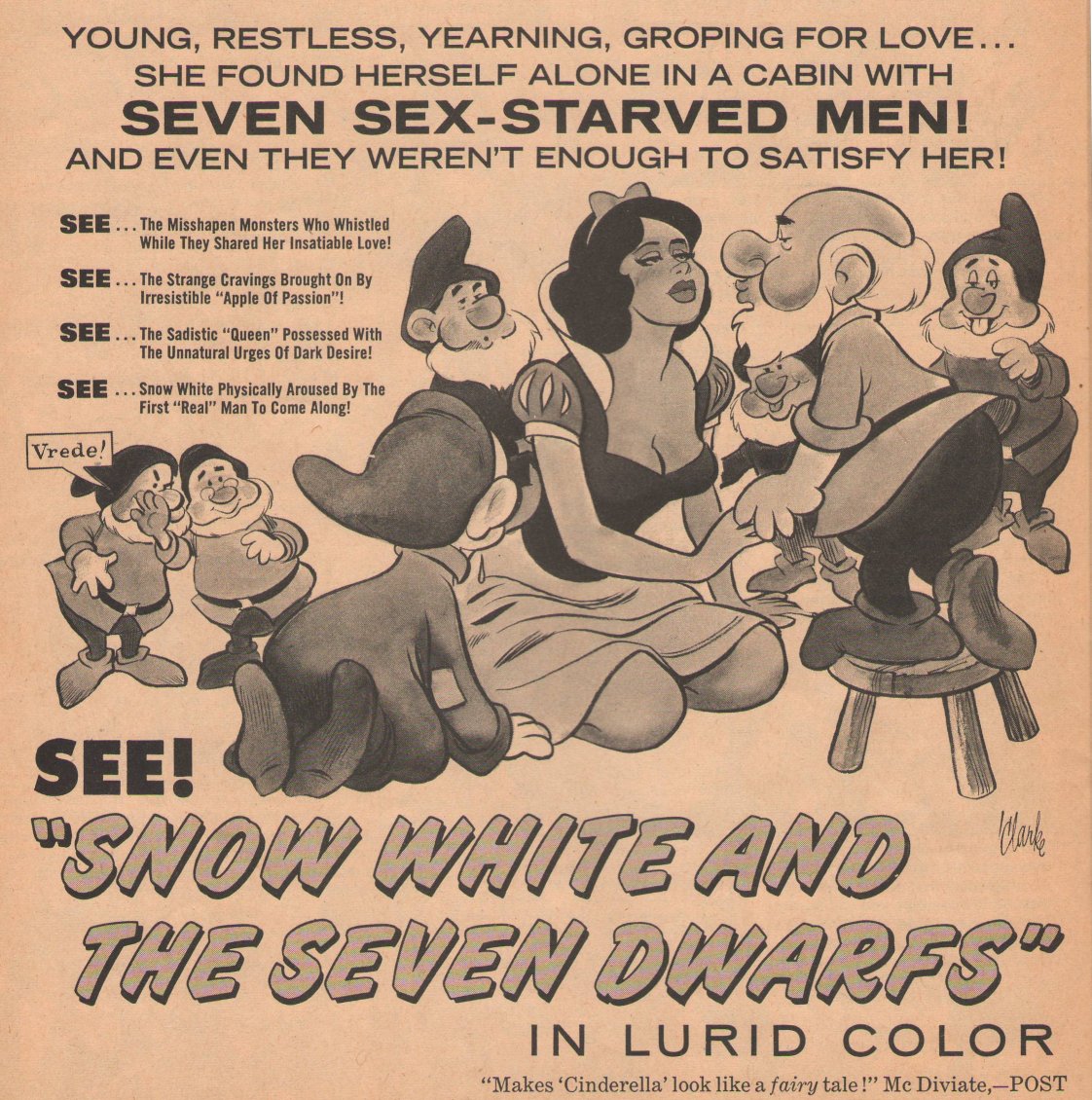
[1] Check out this tasteful ad for a revival of Disney’s Snow White from Mad’s December, 1970 issue:

snow

I love the people of Chamula. *Belch*

Now, aside from several trips to the barrios of Tijuana to help build houses for Project Mercy, I’ve never been south of the border. So I can’t say I know the people of Chamula, a small town in the Chiapan highlands in the South of Mexico, but their syncretic religion fascinates me, a blend of Catholic and Mayan beliefs.

But in an odd blend of the traditional and the modern, the Chamulans have a higher regard for Coca Cola™ than the Hawai’ians have for Spam™; to them, it’s a sacred libation.

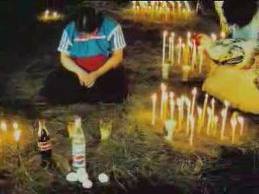
san-juan-chamula-church-coke-mam-org-mx

Praying in San Juan Chamula church. Image courtesy of mam.org.mx, which now appears to be defunct. This picture would have been taken surreptitiously, as photography in town is difficult, and in the church entirely forbidden, a transgression which can get you ejected. It’s not lost on me that one of the bottles shown here is Pepsi, but you know, any port in a storm.

What follows is an extract from a blog post by Julieta Cárdenas at the College Hill Independent, who describes the relationship between Coke™ and the Chamulans far better than I ever could. Her entire post is worth a read.

Coke and Candles

In Chamula, Coke is everywhere. Not just in small businesses and eateries, but also places of worship. Within the ash-covered walls of the Church of San Juan, women wearing black llama-fur skirts kneel on floors flooded with pine needles. Men and women alike melt the bottoms of the candles and use the liquid wax as an adhesive to stick candles of different colors onto the floor, arranging intricate, abstract patterns. These patterns are complemented by the carefully arranged coke bottles that sit adjacent to them. I look aroundthere are many, many gallon bottles of Coke on the floor of this church. The aromatic warmth from the pine and smoke is contrasted by the cold-red plastic label of the bottles. All around me, people are using these branded, corporate soft-drink bottles for prayer.

Chamula is an autonomous town about 30 minutes by van from San Cristóbal de las Casas. The people there, of Mayan descent, gained their freedom from the Mexican government and Catholic Church by ejecting foreigners from their town in the 1970s. Chamula maintains its own leadership, police force, and prison system. It is independent to such an extent that it forbids people born elsewhere to live in it or join its culture: that is to say, it is endogamous.

I had come to Chamula because I had remembered the town from a previous visit when I was fourteen, and wanted to revisit and try to learn more about the culture than I had before. I had also wanted to get some pictures, but photography was forbidden inside the church, and  I had to ask permission before taking pictures of anyone. These rules, although reasonable, made me feel like an outsider in a town where, ironically, residents make a considerable profit from sales of artisan crafts to visitors. Although the small town is a site of tourism, as a non-resident of Chamula you cannot help but be constantly reminded that you are only a visitor.

It was peculiar to observe an exclusive community—stringent about upholding a boundary between the indigenous and the imported—also incorporate a first-world soft drink into their religious practices. Luckily our guide, a man from San Cristóbal who spoke English, Spanish, and Tzotzil—the Chamula Mayan dialect—offered an explanation.  After leaving the church, we headed to the home of a local woman, who demonstrated her weaving techniques on a handmade loom with homespun thread, and gave us homemade tortillas sprinkled with pumpkin powder and rolled into delicious cylinders. Standing in the path of a number of hens, and against a backdrop of finished textiles, our guide elaborated on the significance of Coke in religious terms. The people of Chamula believe in a syncretic religion—a hybrid of Mayan and Catholic beliefs—that mixes the iconography of the Saints with more ancient symbols like colored corn, which comes in red, yellow, black, and white varieties, each color bearing spiritual significance. This color symbolism manifeststhroughout the church, in candles made from animal fat or beeswax and most prominently in half-filled glasses of vibrantly colored beverages. Among these beverages are Pox (pronounced posh)—a white sugarcane-based liquor—various orange-flavored drinks, and, of course, Coca-Cola.

A Refreshed Perspective

30pcs-lot-vegetable-seeds-font-b-black-b-font-waxy-font-b-corn-b-font-seeds

Coke, distinctively dark brown, has become a representation of the black corn that is sacred to the people of Chamula and to many of Mayan decent. (Black candles are thought to get rid of envy. White is for the tortillas, an offering to the Gods. Yellow is for money, and red is for health.) Each color means something, and the specific placement of the candles on the floor represents different votive pleas to the Saints.

Coca-Cola has not only found its way into Chamula culture for its color. It serves a functional physical cathartic purpose as well—the gaseous qualities of Coke make it invaluablein the context of the preexisting religion; its carbonation has taken on spiritual significance.

When I was a kid, I was delighted to know that the Japanese Chinese consider belching after a meal to be a high compliment to the chef, and it is supposedly appropriate in India as well. But:

The Chamula people believe that burping is a purgative mechanism. It provides an outlet for the body and the soul, a release for the negative energy that affects a person in need of healing. (Emphasis most decidedly mine.)

Do you hear that? Do you hear that? Now, I’ll thank you very much if the rest of you would just kindly rise up out of my face about my sacred purging of negative energy.

The Old Wolf has belch spoken.

After an Internship (courtesy of the reddit community)

reddit is a strange beast. Tailor your subreddits and settings carefully to avoid the dark side and the NSFW (not safe for work) stuff, and it can be a source of valuable information as well as good entertainment. If you like cats, paving your floor with pennies (don’t forget the sealer), using bananas for scale, and a host of mad references, you may find it a congenial place. But I digress.

Recently redditors began posting pictures of what it’s like after an internship at [company name.] I found these amusing – and revelatory – so I have collected them here for your reading pleasure.

2Mdmqu6

At Google

mEKsmTV

At Microsoft

2KKL0wq

At EA

Rz5VksX

At Apple

F85lYXa


At Comcast

RzWxO7Q

At reddit

And, of course, what it’s like after an internship at pretty much anywhere these days:

homeless person sleeping in cardboard box


The Old Wolf has spoken.

They, the builders of our nation.

The builders

Found at the Facebook page of The Old Map Gallery in Denver, Colorado.

An inspiring work from a daughter of a calligrapher for the United States Treasury Department. Louise E. Jefferson is a fascinating figure that was a key part of the Harlem Artist Guild, author and mapmaker. Here her map for the many peoples that made the nation in the 1940’s

Our nation was built on the back of so many people, I find it surprising that a very small group of people are claiming this country as “theirs” and doing all they can to keep others out. This map is intriguing and historically revealing.

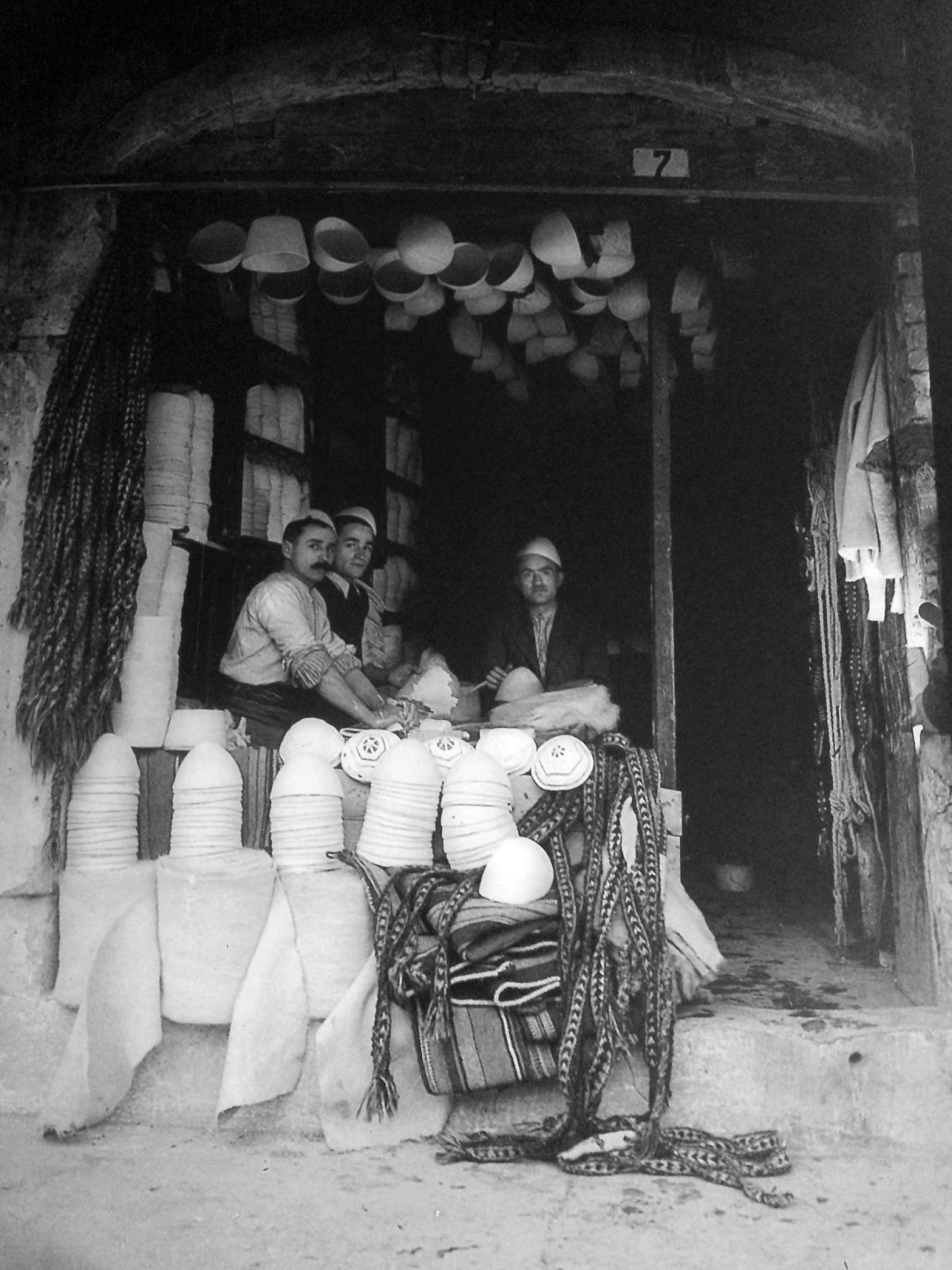
Albanian hatmakers in Shkodër, 1900-1920

Albanian Hatmakers

Hatmakers in Skhodër, Albania, 1900-1920. Photo by Kel or Pietro Marubi. Posted by /u/RMSEP at /r/historyporn.

Albania has a long, interesting and tortured history. I have a particular interest in the country, having visited there a number of times over the course of my career, and having gotten to know more than a few Albanians.

My interest in this small but intriguing Adriatic country was first piqued when I read “Albania, Alone Against the World,” an article in the October, 1980 issue of National Geographic. This was before the fall of the Iron Curtain (which, sadly, shows some signs of being raised again, given recent developments in Ukraine, but that’s another story) but Albania’s story seemed to stand out among that of other Communist countries – and at that time, North Korea was not as much in the news as it is today.

The article was written by Mehmet Biber, a Turkish photographer who was based in Istanbul, and is the product of his own visit and notes from that of a visit by Sami Kohen, another Istanbul resident. It contains some captivating photos of what life was like under the iron-fisted rule of Enver-Hoxha, the fiercely independent, brutal, and Stalinist leader of Albania from it’s liberation from the Nazis in 1944 until his death in 1985. From Wikipedia:

The 40-year period of Hoxha’s rule was politically characterized by the elimination of the opposition, prolific use of the death penalty or long prison terms of his political opponents and evictions from homes where their families lived and their internment in remote villages that were strictly controlled by police and the secret police (Sigurimi). His rule was also characterized by Stalinist methods to destroy his associates who threatened his own power.

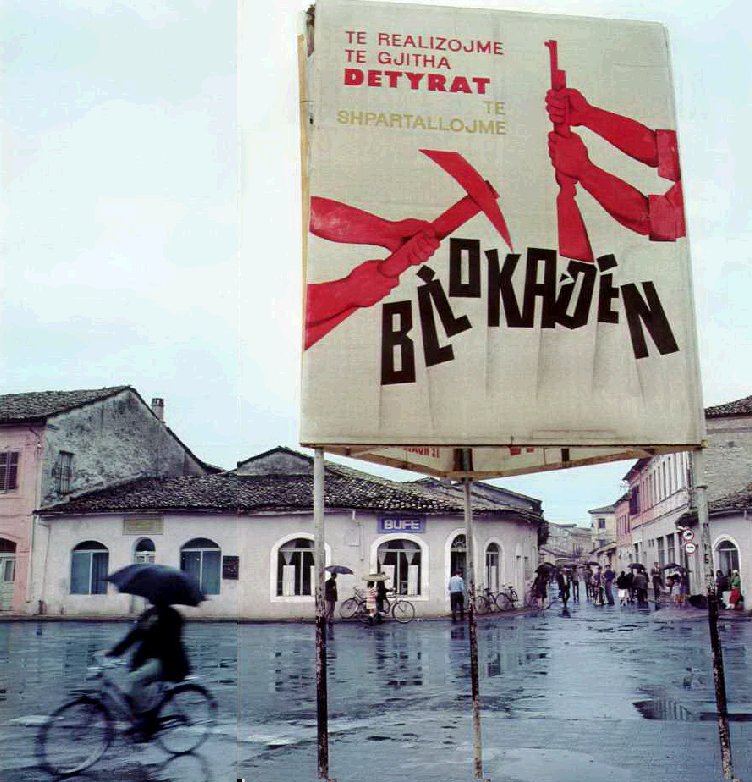
Shkoder

This photo from Biber’s article shows the town of Shkodër in 1980. The banner says, “Let us fulfill all our obligations and smash the blockade.” Of course, there was no blockade, and no interest in punishing or otherwise invading Albania, but Hoxha’s paranoia knew no bounds. He wasted his country’s resources on numberless bunkers, supposedly to protect the fantastic wealth and ideology of his impoverished nation from the evil hordes, both Communist and Capitalist, who would overrun Albania like wolves.

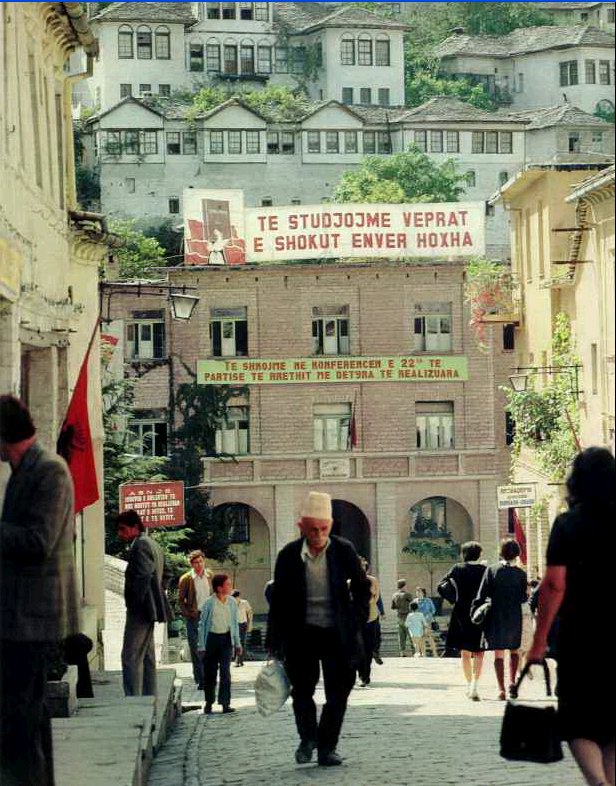
Hoxha

Gjirokastër, the hometown of Hoxha. The banner encourages residents to “Study the Works of Comrade Enver Hoxha.” Photo: Mehmet Biber

Then came the fall of communism, and Albania was subject to changes that shook the nation to the core. A country that had almost nothing in the way of free enterprise and commerce (centrally-planned economy) was instantaneously and disastrously changed into a market economy. On the upside, goods and services that had never been available were suddenly popping up like mushrooms; on the downside, corruption and crime exploded.

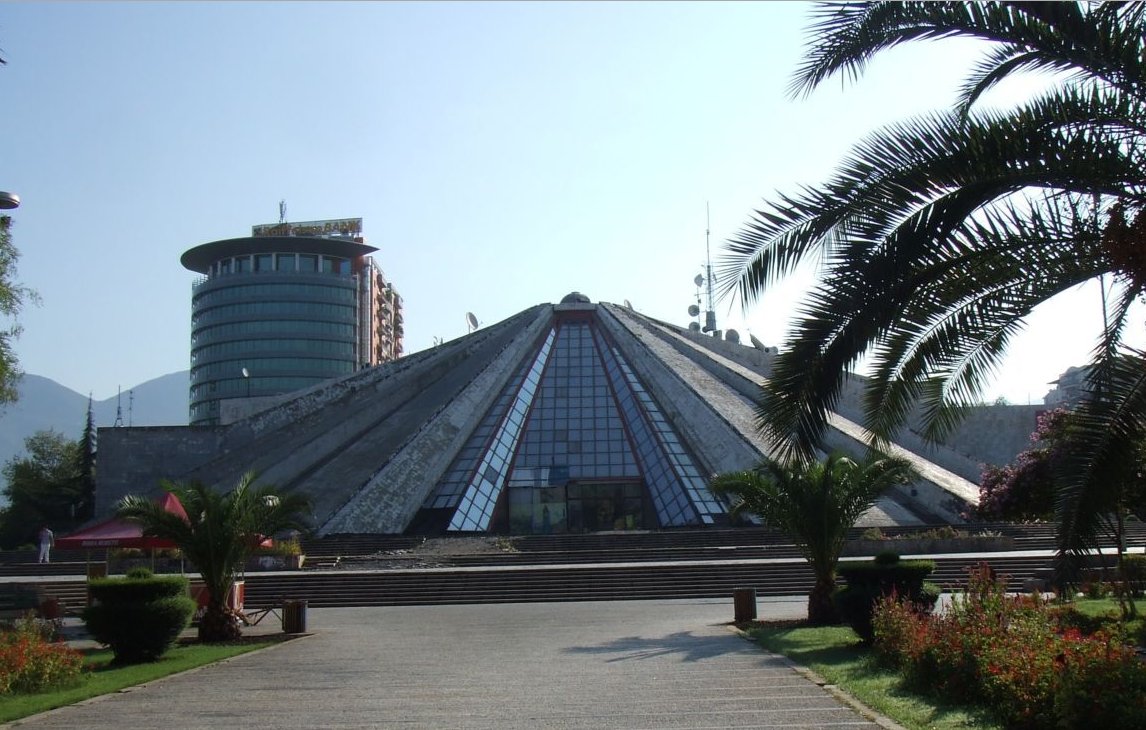
Private car ownership was reinstated and businesses re-established. However poor city lighting and road quality became major problems as mud, potholes, street floods, and dust became permanent features on the streets. However, all buildings and apartments were denationalized, second-hand buses introduced, and modern water, telephone, and electrical systems built during 1992–1996 which form the backbone of modern Tirana. Enver Hoxha’s Museum (Pyramid) was dismantled in 1991 and renamed in honor of persecuted activist Pjeter Arbnori. (Wikipedia:Albania)

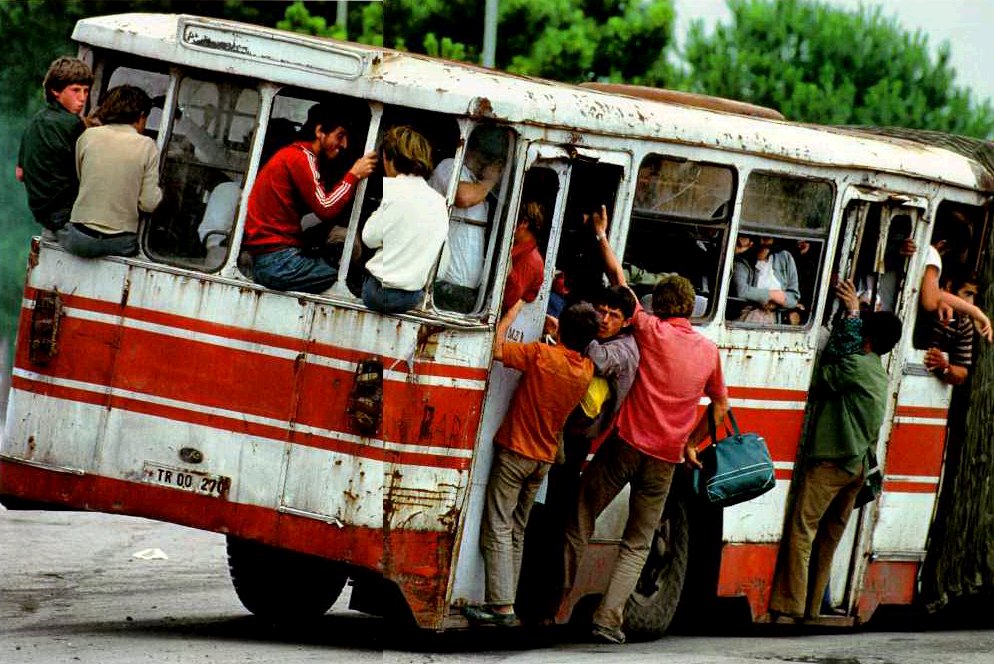
Bus

A bus in Tiranë, loaded almost past the breaking point, in 1992. Photo: Nicole Bengiveno, published in National Geographic, “Albania Opens the Door” by Dusko Doder, July 1992. This article gives a good overview of the change that hit Albania like a 16-ton weight.

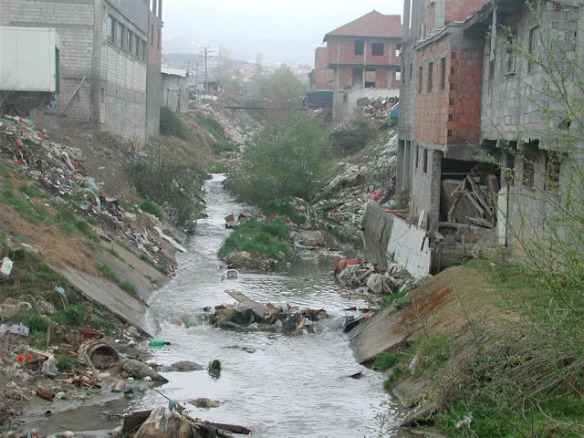
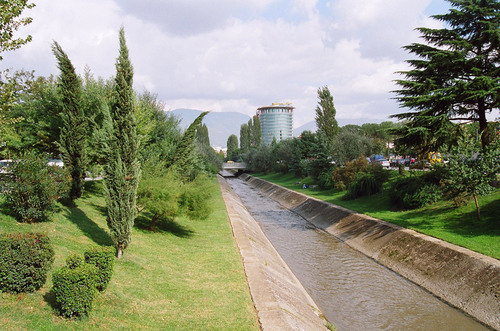
As I visited Albania over the course of several years from 1993 to 2000, I watched Tirana’s central park area and the banks of the Lena river (among others) become choked with illegal and dangerously-constructed buildings. People simply squatted on public land, built what they want in whatever way seemed good, and regulation was nowhere to be seen. Grease the palms of officials and police to look the other way, and presto, a new business was born. In 2000, efforts were made by Edi Rama, a former Tirana mayor, to demolish illegal buildings to return the area to its pre-1990 state, but public land continues to be under pressure from illegal construction, and there is no clear outlook or direction for Tirana’s future at the current time.

lana-river-before-restoration-12-04

Illegal construction on the Lana River in 2003

15172059

A similar scene, post-reconstruction

Devastatingly for much of the Albanian population, the financial shakeup of 1996-1997 included many Ponzi schemes, invested in by around 2/3 of the population; most of their investment was totally lost, and the resulting social upheaval was catastrophic. While things continue to improve slowly, it will take Albania generations to overcome residual problems in government and society.

Pyramid

The Pyramid of Tiranë, slated to be Hoxha’s mausoleum, then a museum, then a convention center, now a crumbling, defaced eyesore and the subject of debate – preserve or demolish?

I would love to be able to get back to Albania, which is now wide-open to tourism, although there are parts of the country where even the authorities don’t like to go, run by clans that would make the Hatfields and the McCoys look like the Sesame Street crowd. That said, the country has much to offer in the way of natural beauty and culture, and I wish them nothing but good as they shoulder their way into the future.

theth

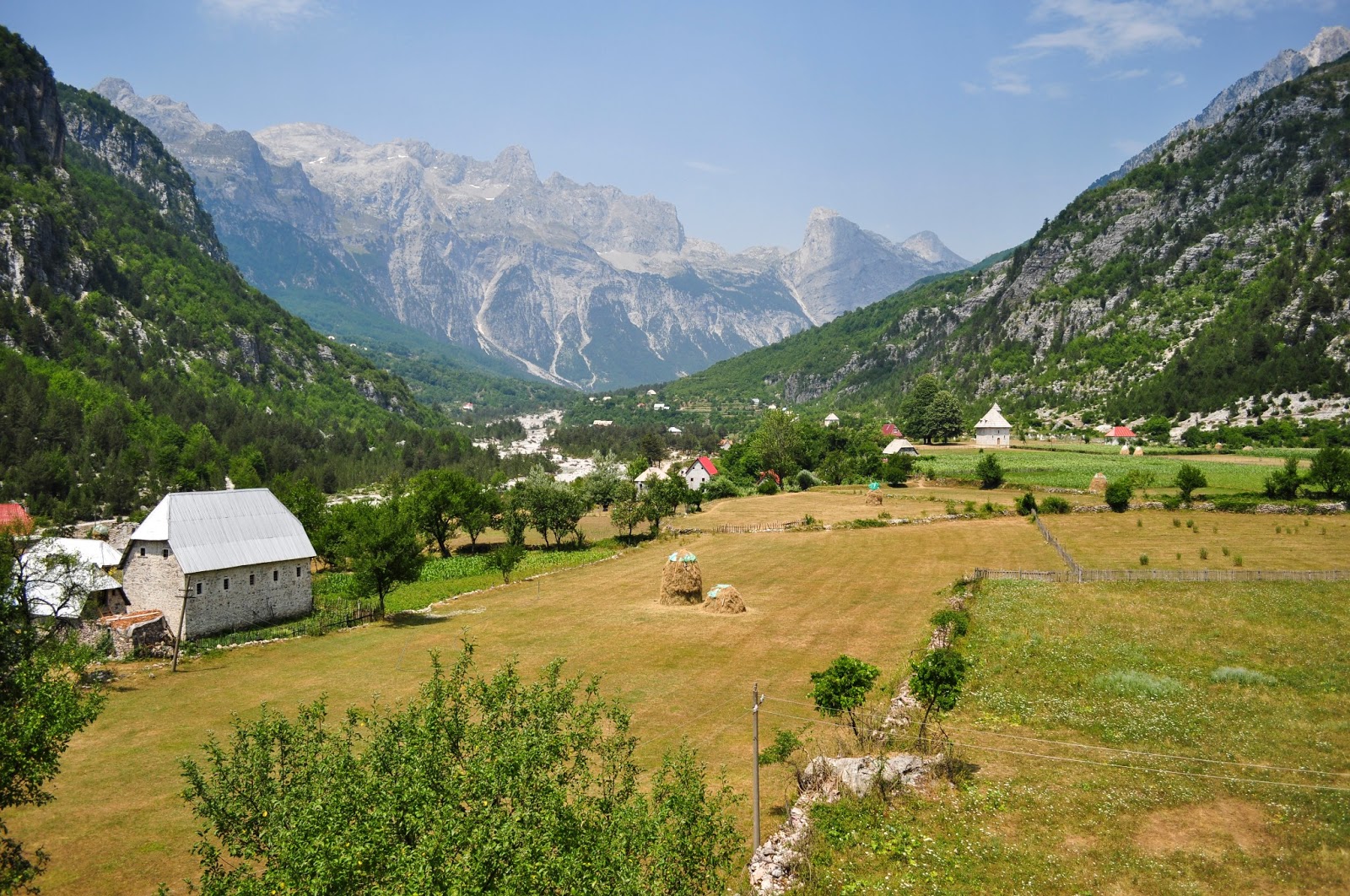
The beautiful town of Theth in Northern Albania – found at The Rom Rom.

The Old Wolf has spoken.


Tongan Television

Working in an international office can be an educational experience. For 22 years I associated with people from all over the world – in addition to Europeans, we had colleagues from many countries in Latin America and the Pacific – and every Monday we would gather for an inspirational meeting to get the week started off right. Often the designated speaker would present an aspect of their home culture, and I had a chance to learn some fascinating things over time.

a21_lot81_0-max

This is a “Tongan television.” Actually, it’s a neck-rest, or pillow of sorts; the first time I saw something like this was at the Natural History Museum’s Egyptian exhibit in New York – I was probably around six or seven, and I remember wondering, “how in the world do they sleep on those things?”

EGY00275-EM-1-2888_310x310

Later I learned that this particular type was typically used for supporting the head of mummified corpses, but the Tongan ones are most definitely used for sleeping or resting.

There’s no way I can convey the same feeling that I had as my colleague described the tradition of the family’s gathering together after dark, and listening to the patriarch tell stories. Stories of customs and traditions and legends, all designed to pass on to the next generation the family ways of honor and decency.

Sometimes, in Tongan society, a child would go their own way and fail to honor family traditions, getting in trouble or living dissipated lives. Of such children, it was often elegantly said that they “didn’t sleep close.”

The Old Wolf has spoken.

Frozen: The masterpiece, the controversies.

sisters

Well, after a long wait for Frozen to come to the local budget theater, we finally saw it last night. Heartwarming, uplifting, technically brilliant, visually appealing, musically stunning, I left the movie house with tears in my eyes and a song in my heart. Huge props to everyone who had a hand in the creation of this masterpiece – the Oscar was imminently deserved, and although the wait was painful, but now the itch has been scratched. As soon as it is available on DVD, it will take an honored place in my collection.

Unfortunately, there are some folks who are not at all pleased with the effort. Some think the Sámi culture was minimized and disrespected:

641

Supposedly the Sámi are “people of color,” and the representation of Kristoff on the right would have been more accurate, but just hop over to Google and search images for the Sámi people, and you’ll see for yourself that they’re a mixed bunch. Click through for a great article about the supposed “whitewash.” As for not including people of color, have a gander at this ballroom scene:

Ballroom

… and those are just the ones I could see at first glance.

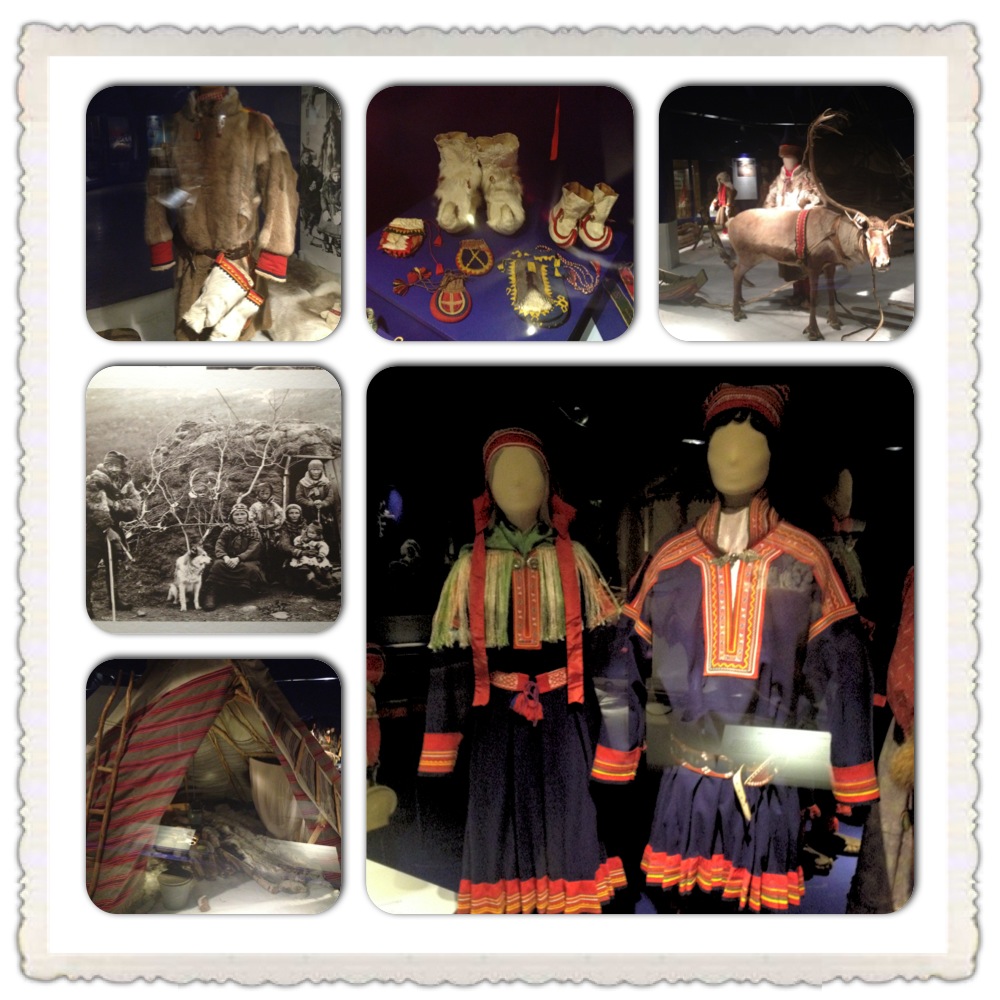
I first was introduced to the Sámi when I visited the Norwegian Folklore Museum in Oslo. Up until that time they had not been on my radar – there are so many cultures in the world it’s hard to become acquainted with all of them.

img_9723


Thanks to Globerider’s blog for the photo.

But they are a proud people with a distinct culture, language, and history, and I was pleased that the opening sequence of Frozen was an example of Joikthe traditional a capella chanting of the Sami people. Wikipedia notes that “Frode Fjellheim is a widely known joiker, known from Transjoik (earlier called Jazz Joik Ensemble). Fjellheim contributed the opening song to Disney’s holiday blockbuster Frozen, the yoik Eatnamen Vuelie (“Song of the Earth”).” If that’s not going right to the source, I don’t know what is.

Last are those who saw ulterior motives and messages in the film. I’m sorry to say that one of these is a member of my own community of faith. Having now seen the film myself, I can go on record as saying that I saw not a hint of “core message” dealing with the LGBT community, bestiality, or satanism. People with too much time on their hands can find virtually anything they look for anywhere, and reveal more about themselves than they do about the subject they are complaining about.

Nobody likes everything. Viggo Mortensen said “If you’re trying to please everyone, then you’re not going to make anything that is honestly yours, I don’t think, in the long run.” The adaptation of “The Snow Queen” that has now become “Frozen” is a unique product of its creators who gave their all to tell a beautiful story, and from where I sit the film is destined to take a high place of honor in the Disney repertoire.

The Old Wolf has spoken.