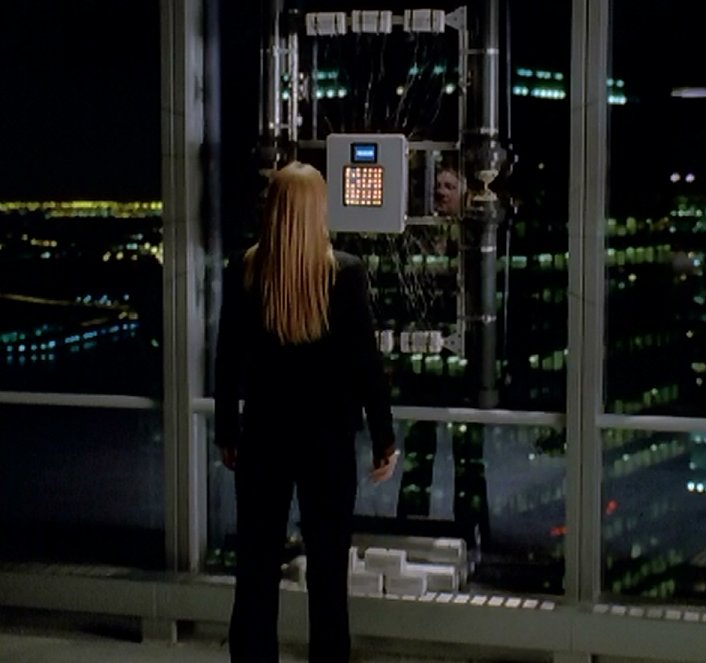
Improving the psychokinetic tester (Fringe humor)

HEC/35000/35091a.tif

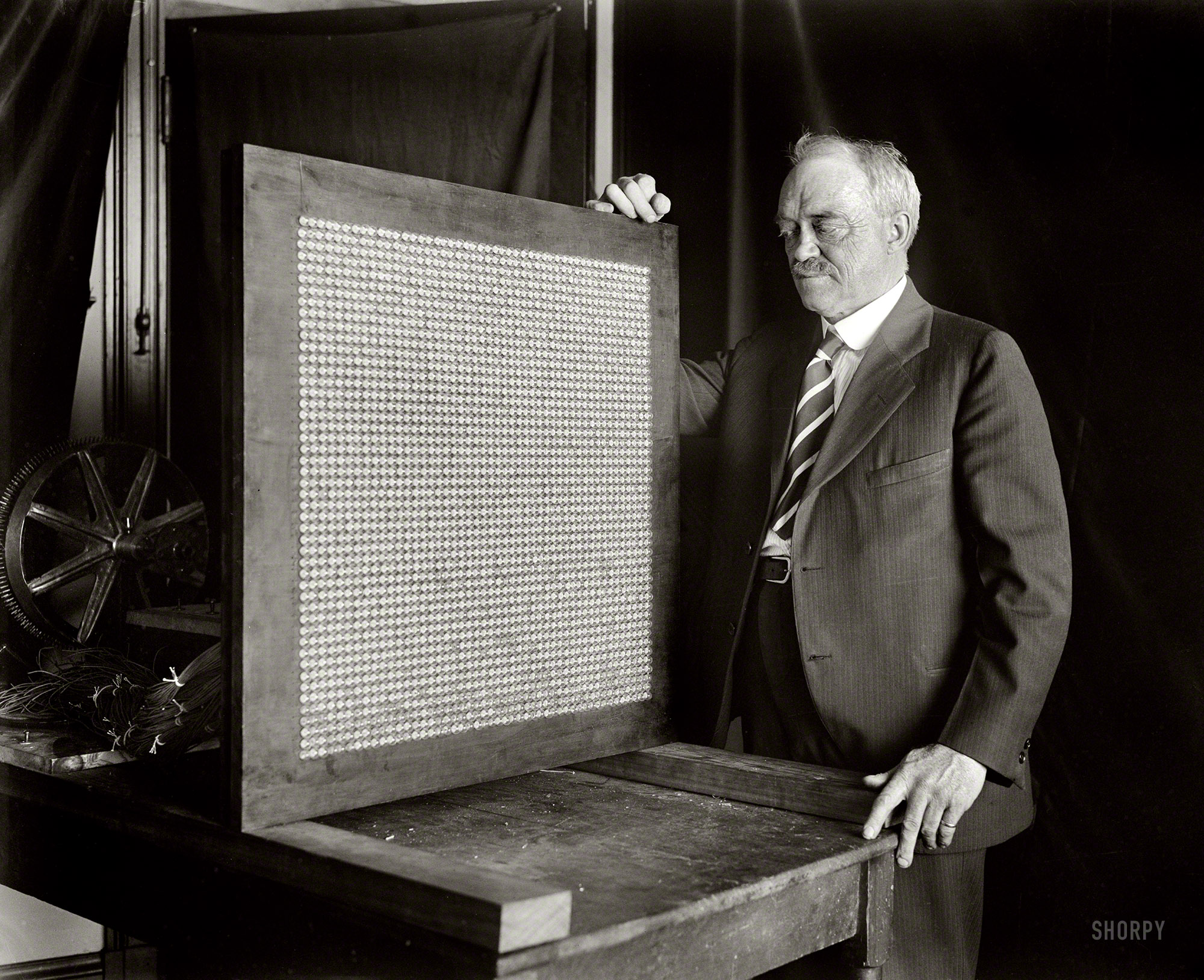
A rare picture of an elderly David Robert Jones[1], having improved upon the psychokinetic testing device for another evil plot.

By the silken breast of Mogg’s mother, I miss “Fringe.”

Olivia


Olivia Dunham uses her Cortexiphan-induced psychokinetic powers to defuse a biological bomb. Fringe, Season 1, Episode 14: “Ability”

In actuality, this 1928 photo, taken in Washington, DC is  Charles Francis Jenkins (1867-1934), pictured here with what might be considered an early flat-panel video display, its 48-pixel-square grid composed of small neon lamps. Found at Shorpy.


[1] From Universe 39

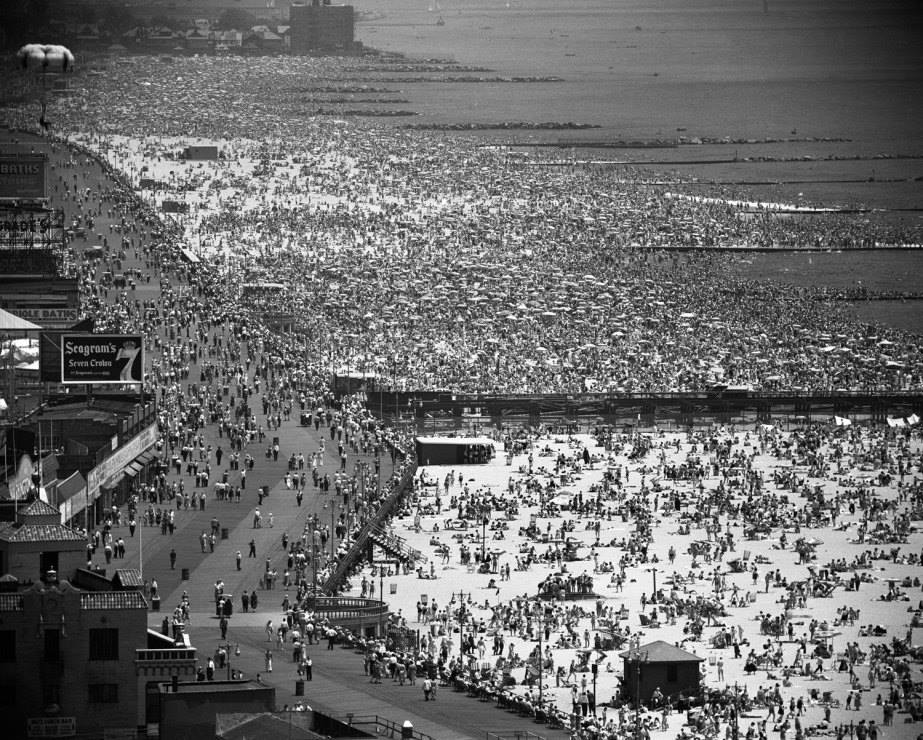
Coney Island, 1949

602366_612277405451774_1519350734_n

A view of the famous boardwalk and beaches shortly before I was born.

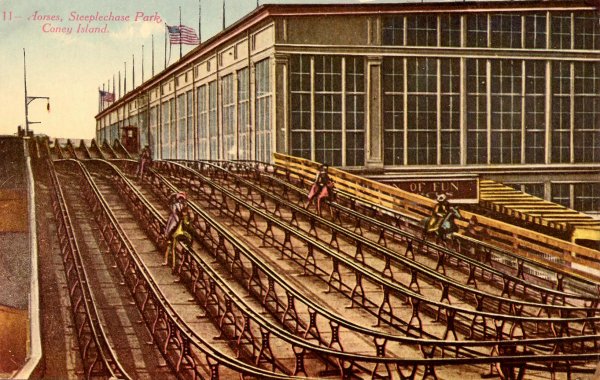
A few years later, I was able to ride this attraction:

stphorses

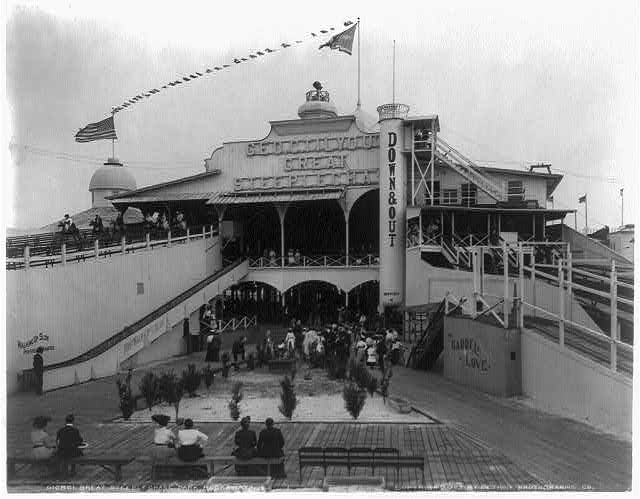
This was the Steeplechase, the main attraction of Steeplechase Park, which ceased operations in 1964. The entrance looked like this:

Steeplechase_Park_entry_LC-USZ62-80370

I remember it well. You sat on these metal horses, held on by only a bulky leather strap. Try building this today and you’d have 10,000 hungry lawyers looking for billable hours suing you for even thinking about it.

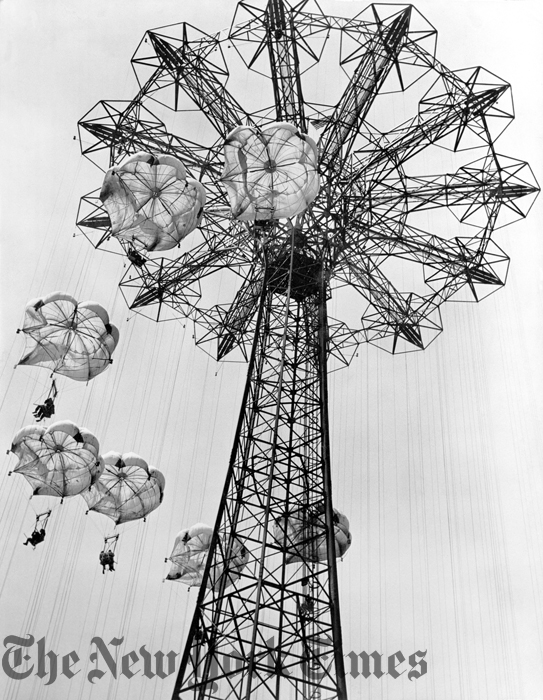
Steeplechase park was also the home of the famous Parachute Jump, originally built for the 1939 World’s Fair and later purchased and moved to the Coney Island area. I also remember riding this one. Despite some controversy over its actual decomission date, it appears that it closed in 1964 with the rest of Steeplechase Park.

NSAPBPL6_EXTR


The towers remains standing to this day.

Coney_Island_Parachute_Jump


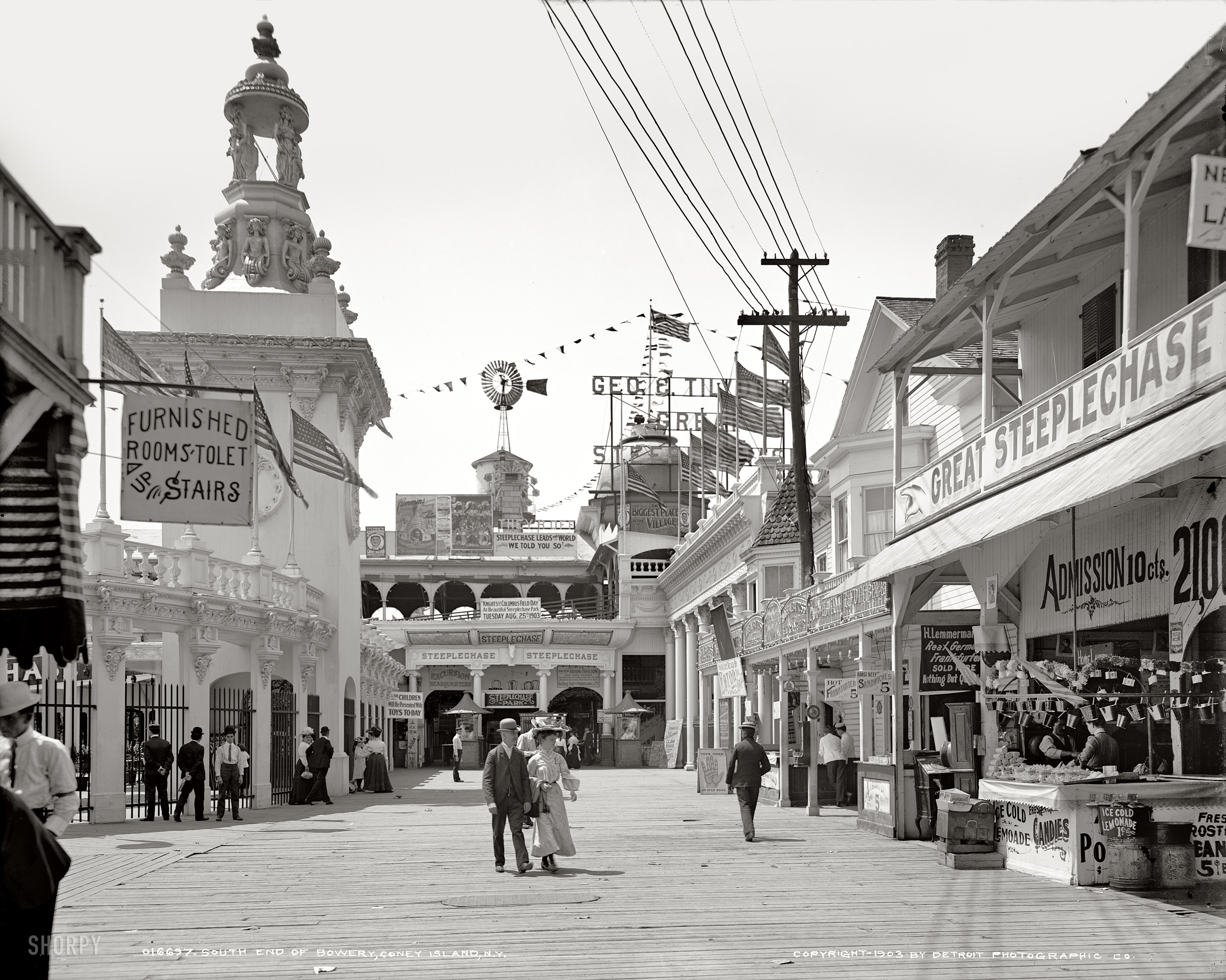
Steeplechase Park was an amazing experience. It looked even more attractive in 1903:

4a11109a


Found at Shorpy

The Old Wolf has spoken.

The VFX dilemma: It’s not easy being green

524777_10151442044973851_1648463615_n

If it weren’t for VFX (visual effects) people, that’s just what Avatar and Lord of the Rings would look like.

There’s a lot of buzz on the internet right now about Bill Westenhofer’s suddenly-interrupted Oscar speech for “The Life of Pi.” Many people are interpreting this as a deliberate sabotage or a snub of VFX workers, but everything I have read seems to indicate that all participants were briefed early on about how much time they would have (one minute) and what would happen if they went overtime (the music from “Jaws”, followed by a cutaway.) It would seem that Mr. Westenhofer was simply not aware of how quickly one minute passes, and instead of jumping straight to his message, he exulted in the moment – which is what Oscar wins are for anyway.

I can’t speak to reality, because I just don’t have enough information. By Occam’s Razor it would indicate more happenstance than malice was at work here. But the more important point is that the event brought the entire issue of VFX studios into the public eye, and that’s a good thing.

Longtime critic and commentator Drew McWeeny published an open letter to Hollywood yesterday, and if you’re a consumer of films, either from Hollywood or independent producers, you would do a lot worse than to read this article – and the following commentary, which is just as enlightening.

The executive summary? Major studios are inserting hard objects into every possible orifice of VFX companies, who in turn are inserting hard objects into every possible orifice of those who work for them. And that’s the polite version. But read the letter, and the commentary, and then branch out and do your own research.

url

None of this is new, of course. “The Wizard of Speed and Time,” while a delightful and entertaining film in its own right, is essentially a rant by Mike Jittlov about having hard objects inserted into every possible orifice by the movie studios of his own time… and things have only gotten worse. Now, instead of creative geniuses like Jittlov working on their own and being screwed, we have entire stables of very talented people being worked insane hours without compensation (either not being paid overtime, or not being paid at all beyond their base wages), having no benefits, being classified as independent contractors despite working full-time for their companies, having no representation, simply seeing their jobs eliminated as studios outsource their work to places like India, having their whereabouts monitored, and even being threatened with physical abuse if they don’t perform like gods. Two other good reads are at the VFX Soldier and io9.

Granted, this is the outrage du jour. Public fickleness being what it is, the tempest will calm and people will go back to their lives as soon as yesterday… but for those working in the industry, the intolerable conditions will continue. But it raises a question in my own mind: as a consumer, what’s my responsibility?

Many people are up in arms about genetically modified foods, and consumers right and left are declining to shop at places that sell GMO’s; many people refuse to buy coffee that isn’t Fair Trade; Apple felt the pressure of public outrage and stepped up their game with their Chinese suppliers; even humble quinoa has raised a few eyebrows after it was found that increasing Western demand has so raised prices that local producers can no longer afford their own product. People get mad about stuff, and they do things.

It’s long been known that (with a few notable exceptions in cases of truly ethical companies), the only way to influence an industry is to hit it where it really hurts – in the wallet. Hollywood studios are interested in only one thing – maximizing dollars for themselves, and minimizing dollars spent on other people. Those dollars, however, come from us. You and me. The lovers of Avatar, The Lord of the Rings, The Avengers, you name it. If it were not for these talented people (and the writers, of course, but that’s another essay), I would not have been able to laugh myself silly watching Hulk toss Loki around like a rag doll – best moment in the whole film, if you ask me – these films would be worth less than nothing without the VFX people behind the visual magic.

It’s a tough issue, because good movies are a large part of my entertainment, and a great way to escape the daily grind, or to forget about the douchebaggery and unfairness that pervades 21st-Century society. Giving up all movies until the VFX people have fair and effective representation would be one solution, but would have little effect unless enough people chose this route to cut revenues for Hollywood, and the chances of that are… well, “snowball in Hell” is what comes to mind.

At the very least, I can contribute to raising the awareness of people about the issue. This article is a tiny drop in the ocean, but it’s a lot of tiny drops coming together that create a flood. I can also be more judicious about what I watch and when, and continue to think about the issue from the consumer side. The people who are at the heart of more and more movies at least deserve that much consideration.

The Old Wolf has spoken.

Terror From the Year 5000: Not so terrifying after all

In 1959, when my cousins were visiting New York from their country home in Connecticut, something possessed them to go take in a double-feature horror show (either at Loew’s or the RKO theatre, I can’t recall which one.) Double-billed was The Spider and Terror from the Year 5,000.
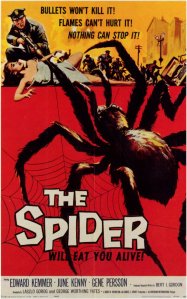
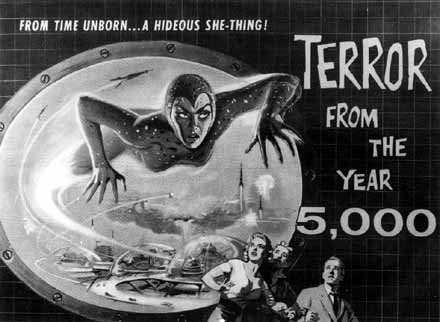
Bad idea.

My 8-year-old brain was scarred for decades. The Spider was bad enough, but The Terror had me pissing my pants any time I saw a closet door left ajar.

And not having TV or cable in later life, I missed the opportunity to poke fun at it on MST 3,000.

Until last year.

I found a copy of it at a vintage movie outlet online, and got my dear wife a copy of Don’t be Afraid of the Dark, the one that scared her to Nouakchott when she was young. They’ve been sitting on our shelves unopened, until the other night when the Goodwoman of the House was taking a nap, and I was working on a knitting project.

So I bit the bullet, and in it went.

Good idea.

Surprise! It’s not a bad film at all, as B-movies go. It had a plot, it had a message, and the effects were nowhere near as corny as some other things I’ve seen. And, over half a century later, not terribly scary.

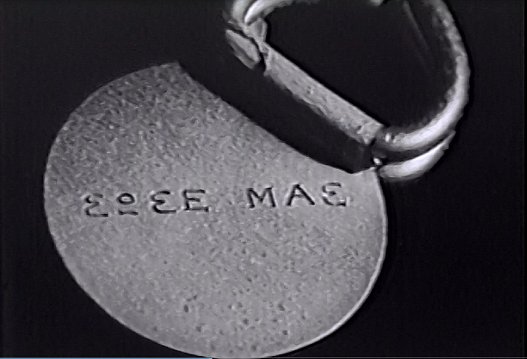
The basic plot: A scientist develops a time machine that has been sending small objects into the future, and bringing back “trade” items – which happen to be highly radioactive. He’s got a fiery young assistant who’s got the hots for his daughter, and a bad case of paranoia as well. The professor’s daughter arranges for a former colleague of her father to come down to the island where the experiments are taking place, and during a demonstration of the machine, a Phi Beta Kappa key is exchanged for a medallion which has “Save us” engraved on it – in Greek.

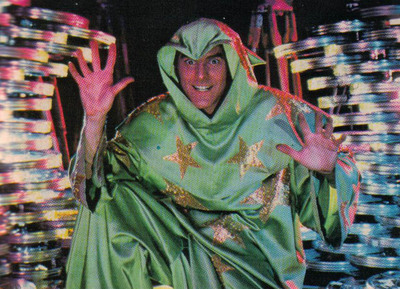
The professor decides the machine is too dangerous to use until more information can be gathered, but lover-boy (Victor) – who thinks he’s being sidelined – runs the machine at ever higher power until he brings back a lady from the 51st Century (seen above). She’s badly disfigured from the effects of radiation and seems to have hypnotic powers accentuated by shiny fingernails and the thousands of reflective bangles on her outfit, but other than that she’s largely unremarkable.

Victor’s about to get a surprise.

Earth of that year is dying of radiation poisoning, and this lady’s mission is to bring back someone with undamaged genes to inject new life into their dying society. Unfortunately, she’s not beneath killing anyone who gets in the way of her mission, including a caretaker and a nurse, whose face she steals (perhaps they had vintage movies in her day, and she had watched Silence of the Lambs).

The “Future Woman” wearing a stolen face (actually her own, that of the lovely and talented Salome Jens in her debut rôle.) [1]

At any rate, after much drama, Victor is killed in the lab trying to send the woman back to her time, and the unfortunate visitor is shot. In the end, the professor explains that they don’t need new genetic material, because the future is yet unwritten, and mankind has a chance to avoid atomic holocaust by acting more sensibly now.

Having seen it again, about the only major complaint I had about the film was the soundtrack, which incorporated a lot of musical interludes that sounded like they were lifted from Disney’s Pinocchio. The atmosphere of the movie was serious enough that the tinkle-tinkle passages seemed out of place. Other than that, I give it a thumbs up.

And, it’s nice to know that my horrific memories from the 50’s were nothing more than a child’s untutored perception.


[1]Salome Jens

Salome Jens has had a vigorous acting career, and in later years has played some very-recognizable characters (at least, recognizable by their makeup).
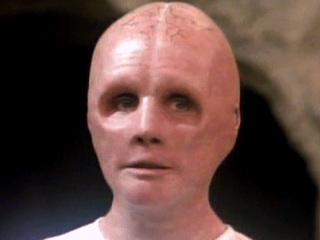
Star Trek TNG – “The Chase” – Humanoid Progenitor

Star Trek DS9 – The female shapeshifter and “ambassador” of the Founders.

Salome Jens and Gil Rogers in I Knock at the Door and Pictures in the Hallway, 2007.

The Old Wolf has spoken.
Disney Star Wars Fusion: 2008


With all they buzz about Disney’s acquisition of the Star Wars franchise and the announcement of 3 new films, I thought these figurines spotted here were of interest. Happy coincidence, prescience or insider knowledge? Who’s to say?

Goofy Binks

Darth Donald

Minnie Amidala

Mickey Skywalker

I know there are a lot of people sweating bullets about what Episode 7 could look like. They point to Santa Clause II and John Carter of Mars as examples of Disney efforts gone horribly wrong. But beauty, they say, is in the eye of the beholder. I happened to love John Carter; it was full of good action, good effects, and a great pair of Barsooms.

I understand why Jar-Jar Binks and Anakin (as a boy and a teen) annoyed people. I get that folks were offended by the ching-chong ling-long trade federation representatives, or “badabing badaboom” Watto. But seriously, I can overlook all of that and look at episodes 1 to 3 through a different lens. In many ways, they were great films, with heart-stopping effects and some real background.

You might have cast a Haley Joel Osment type with real acting skills as young Anakin and gotten more sympathy, but Jake Lloyd was a real kid, and who’s to say Anakin wasn’t just like that? Many people found Hayden Christensen’s Anakin as petulant and whiny, but the more I watch the shows, the more I see that those qualities were critical to the development of the Vader character and that Christensen pulled it off admirably. Anakin/Vader was every bit the center of the Star Wars saga, much as Snape was truly the tragic hero in the Potter world. The heroes go around swashbuckling, getting the girl and saving the universe, but there’s nothing like a tormented villain with a good heart to give real meat to a drama.

So my heart is at peace. I look forward to episodes 7 to 9 with anticipation; after all, what Disney pulls off couldn’t possibly be any worse than Jar-Jar or the Ewoks, and I’ve already forgiven George Lucas for those, just because the entire vision was so awesome. And Disney, in collaboration with Pixar, has pulled off some epic wins. The results could be (pun intended) stellar.

The Old Wolf has spoken.

Old Time Radio: Margaret Draper and The Brighter Day

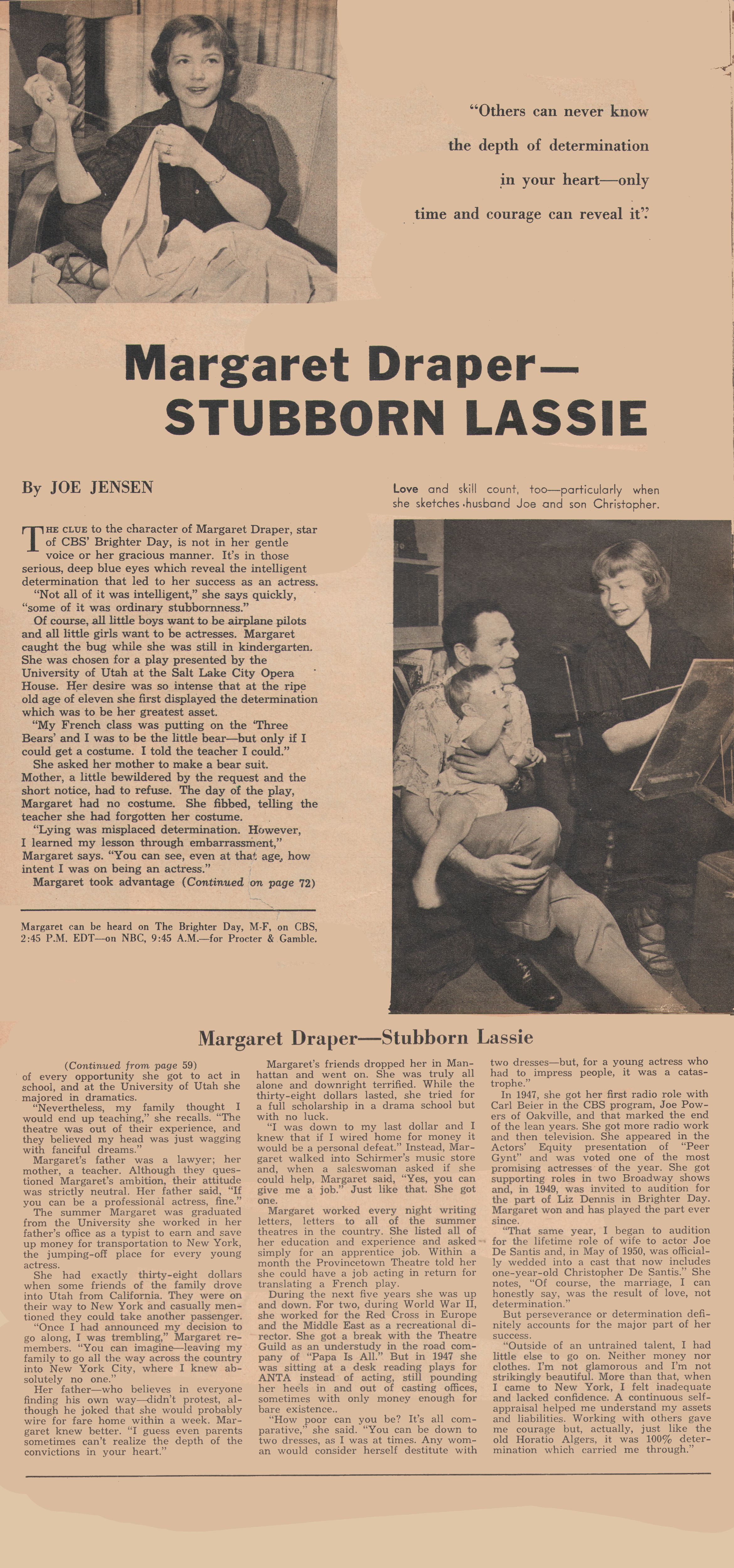
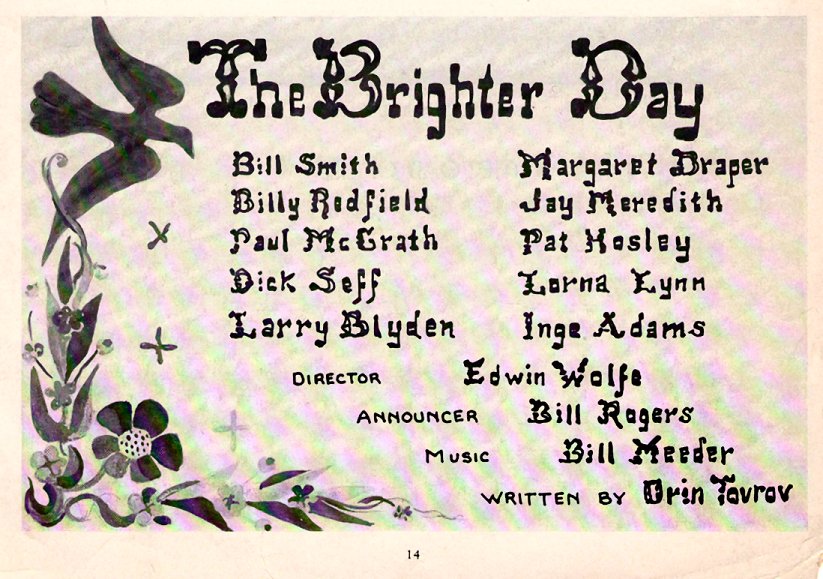
From 1948 to 1954, Margaret Draper played the part of Liz Dennis on The Brighter Day. It was one of her first significant breakout rôles, and led to a successful career in radio and later television, mostly in the advertising world.

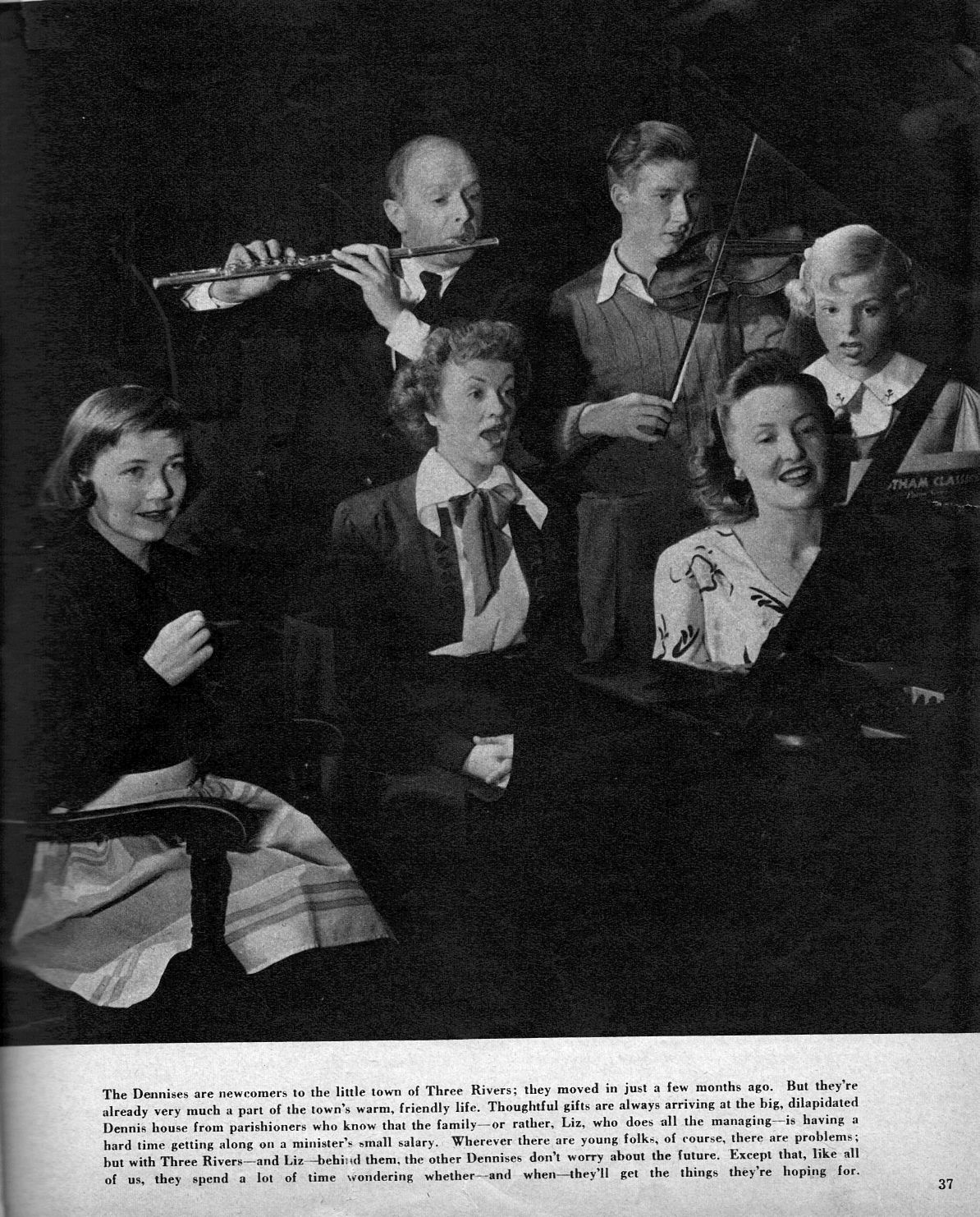
Radio-TV Mirror, May 1949 – Papa and Liz Dennis

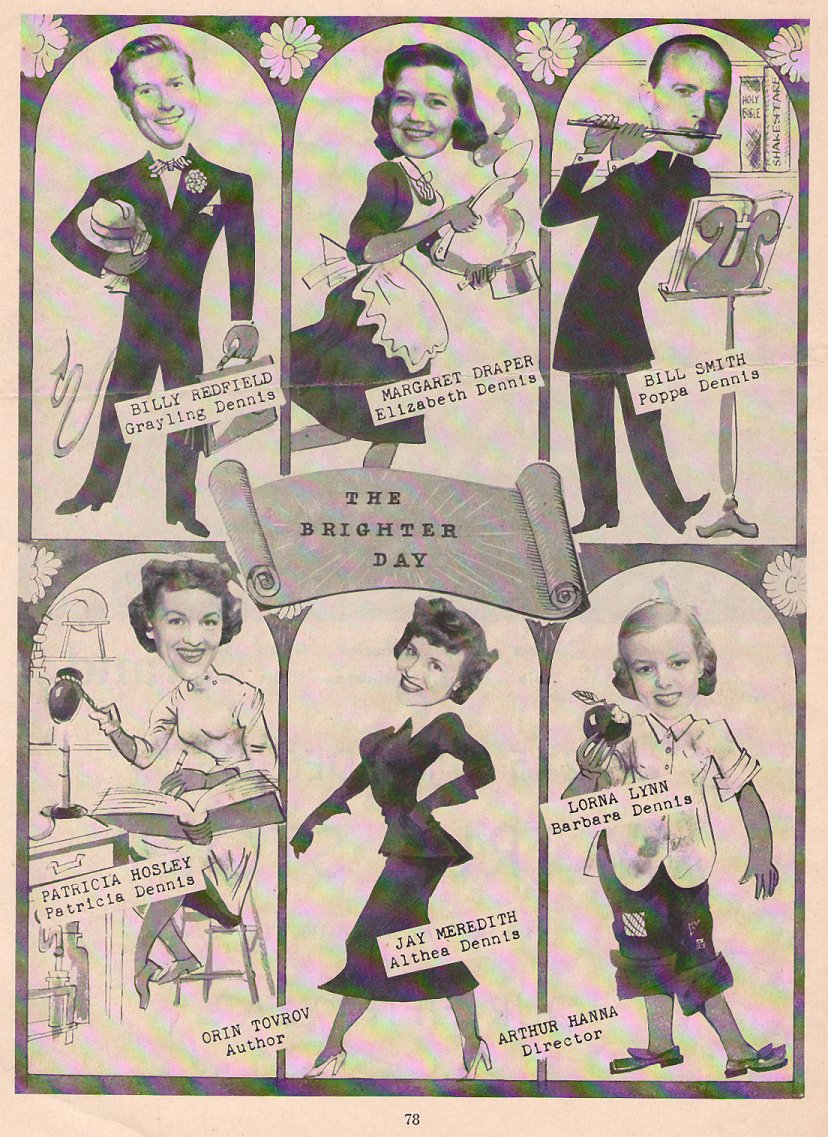
Radio-TV Mirror, May 1949 – The Cast of the Brighter Day

Radio-TV Mirror, June 1950

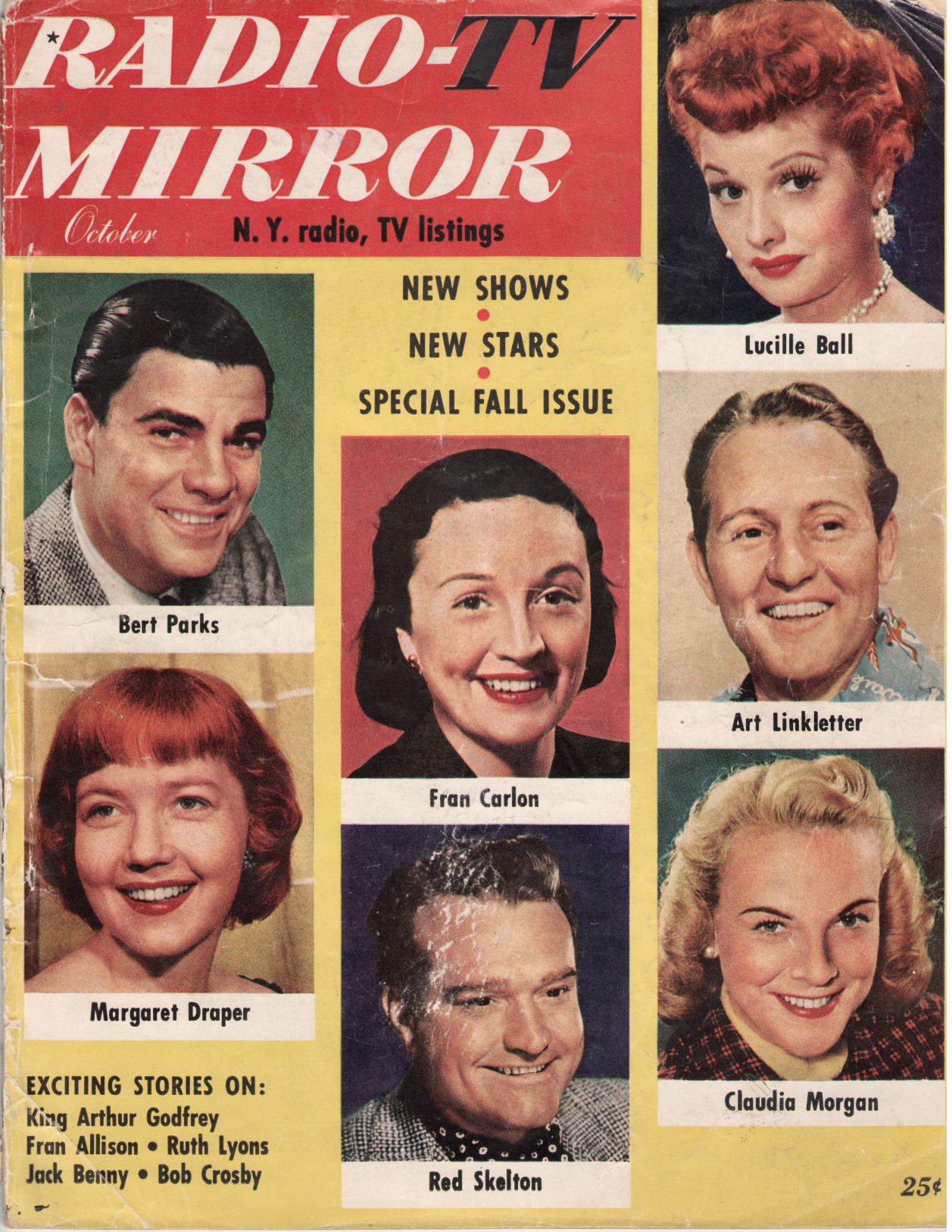
Radio-TV Mirror, October 1952

Radio-TV Mirror, October 1952

From Radio-TV Mirror, not certain which issue

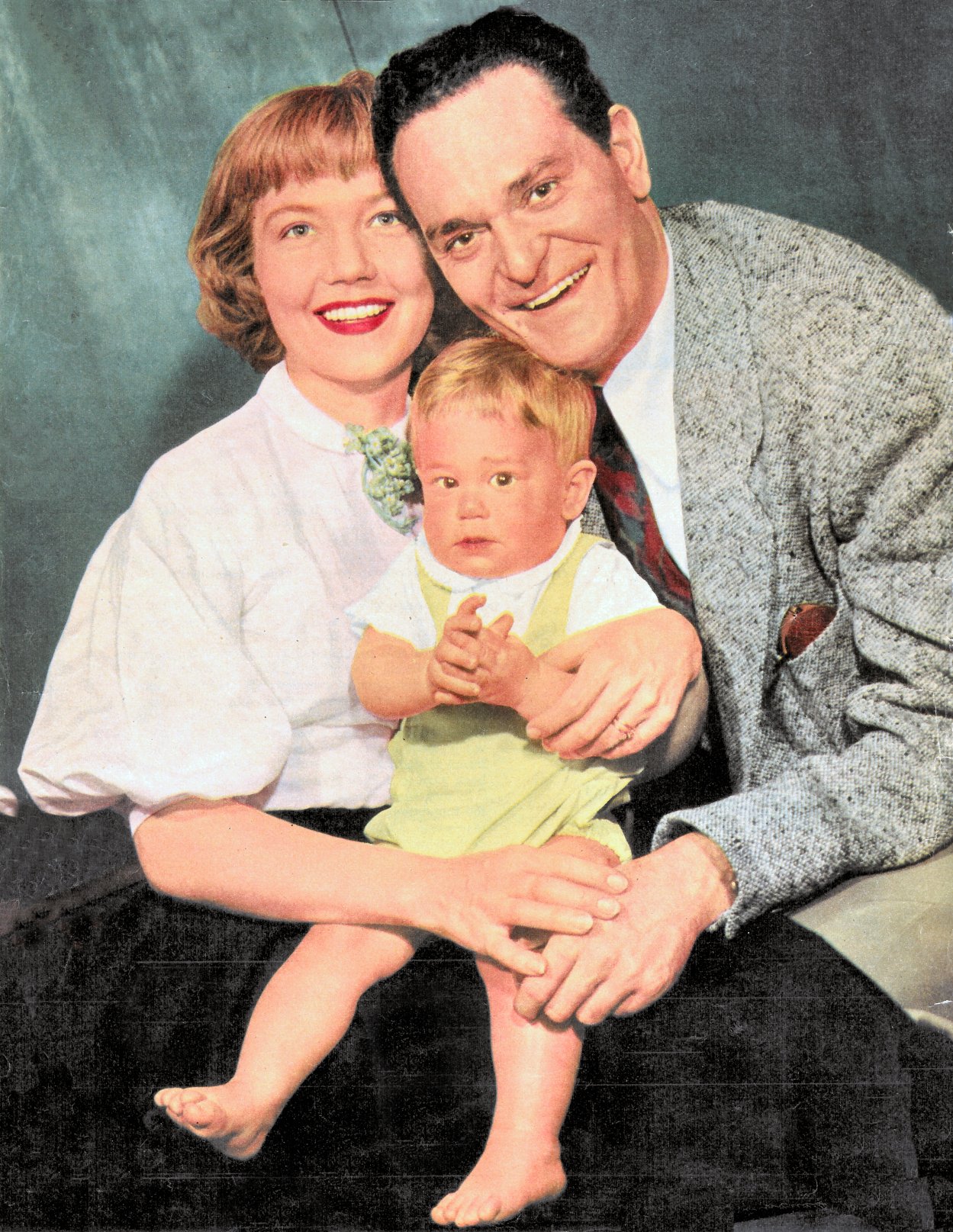
Margaret Draper, Joe DeSantis and their son

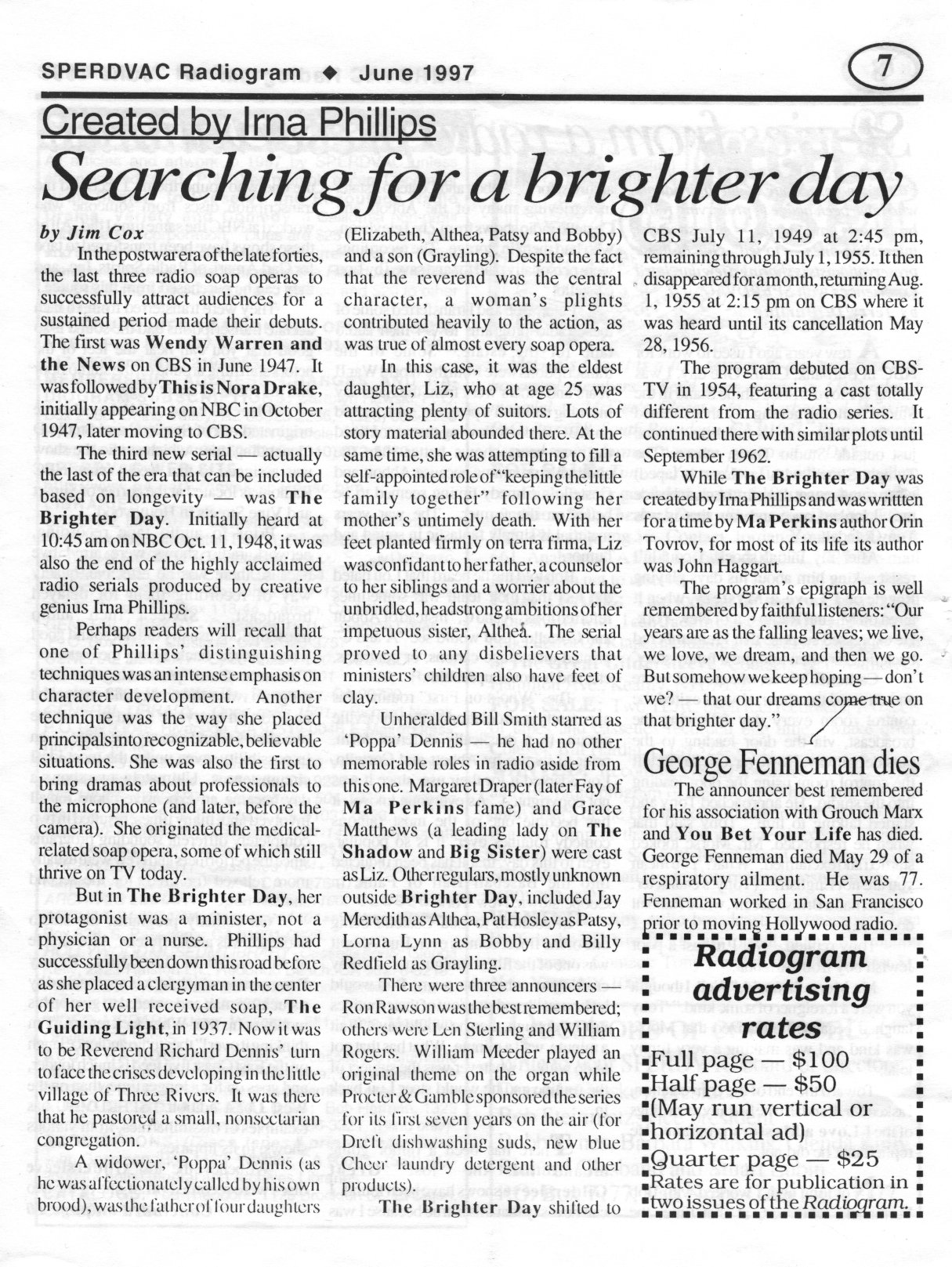
In 1999, the Friends of Old Time Radio convention featured a reunion of the Dennis girls, who with others put on a reader’s theatre featuring The Brighter Day, followed by a Q&A session.
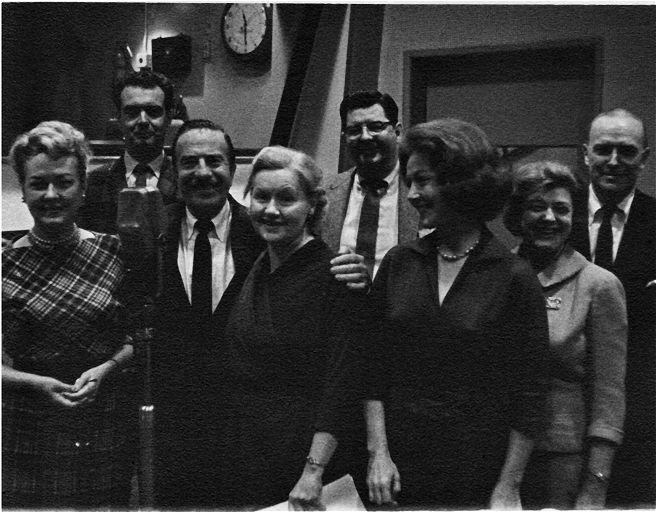
Cast

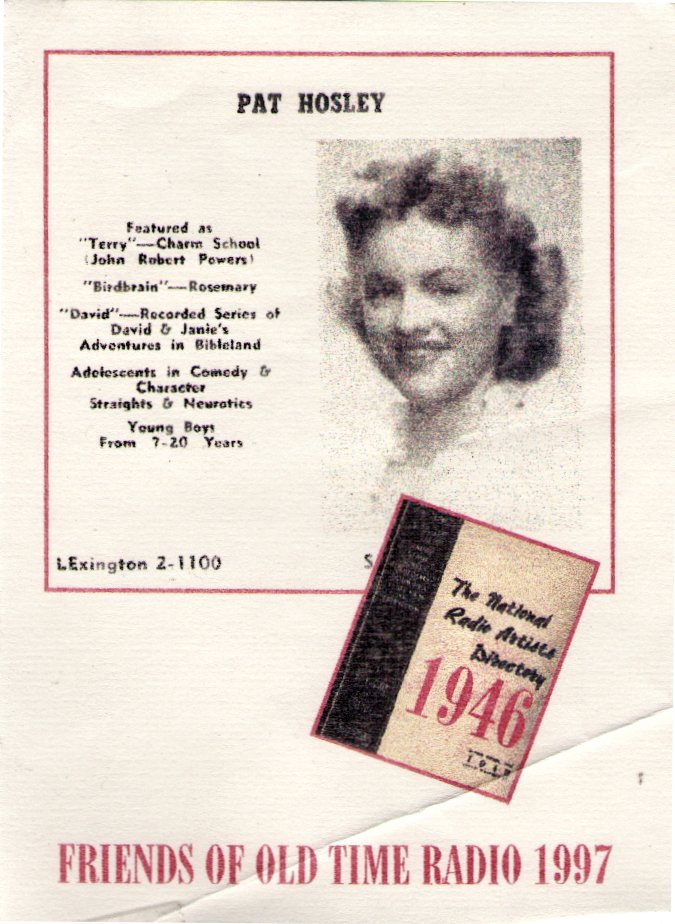
Patsy – Pat Hosley
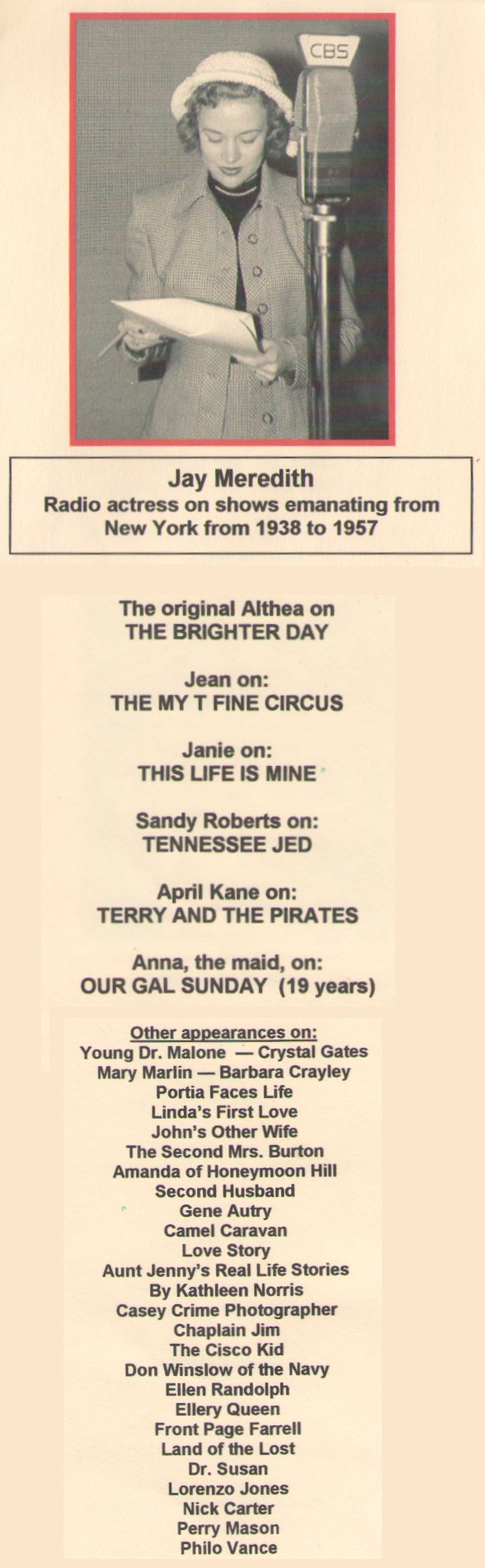
Althea – Jay Merideth
Liz – Margaret Draper
Papa – Leslie Pagan
Jerry – George Ansbrough
Narrator – Bill Owen

Sound Effects – Lynn Nadelle and Bart Curtis
Music – Ed Klute
Producer – David Segal
Director – Bill Nadell
Engineering – Bill Sudamack

You can listen to the original episode that this performance was based on.
The following two posters were displayed outside the convention room:

Pat Hosley

Jay Merideth

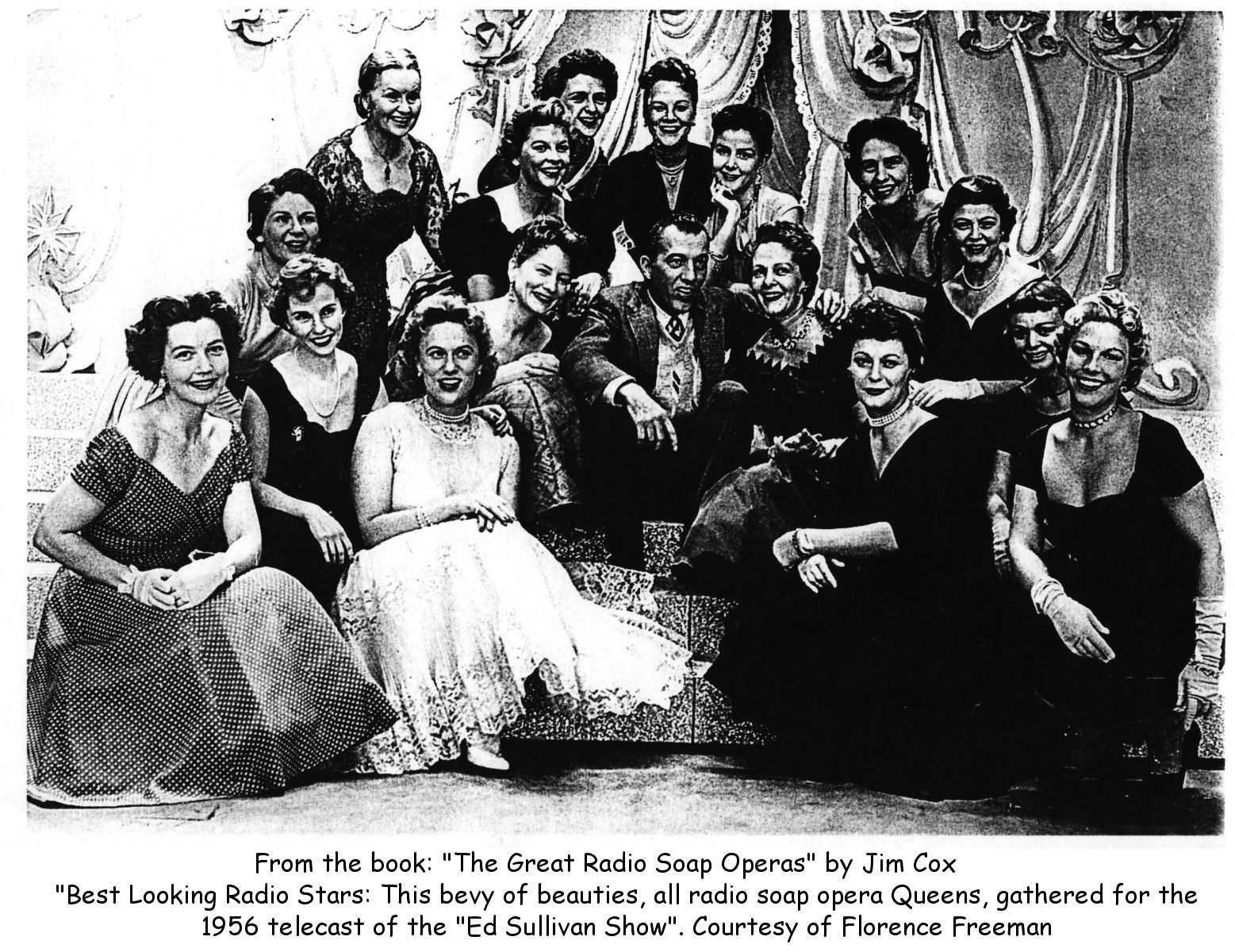
Radio stars at a “Ma Perkins” party. Brighter Day cast on the right.

Cast of The Brighter Day asks the audience to be kind.

A later photo of the Brighter Day cast, looks like around 1960.

Margaret Draper, front row, Left.

Trade magazine advert for Brighter Day

Trade magazine advert for Brighter Day

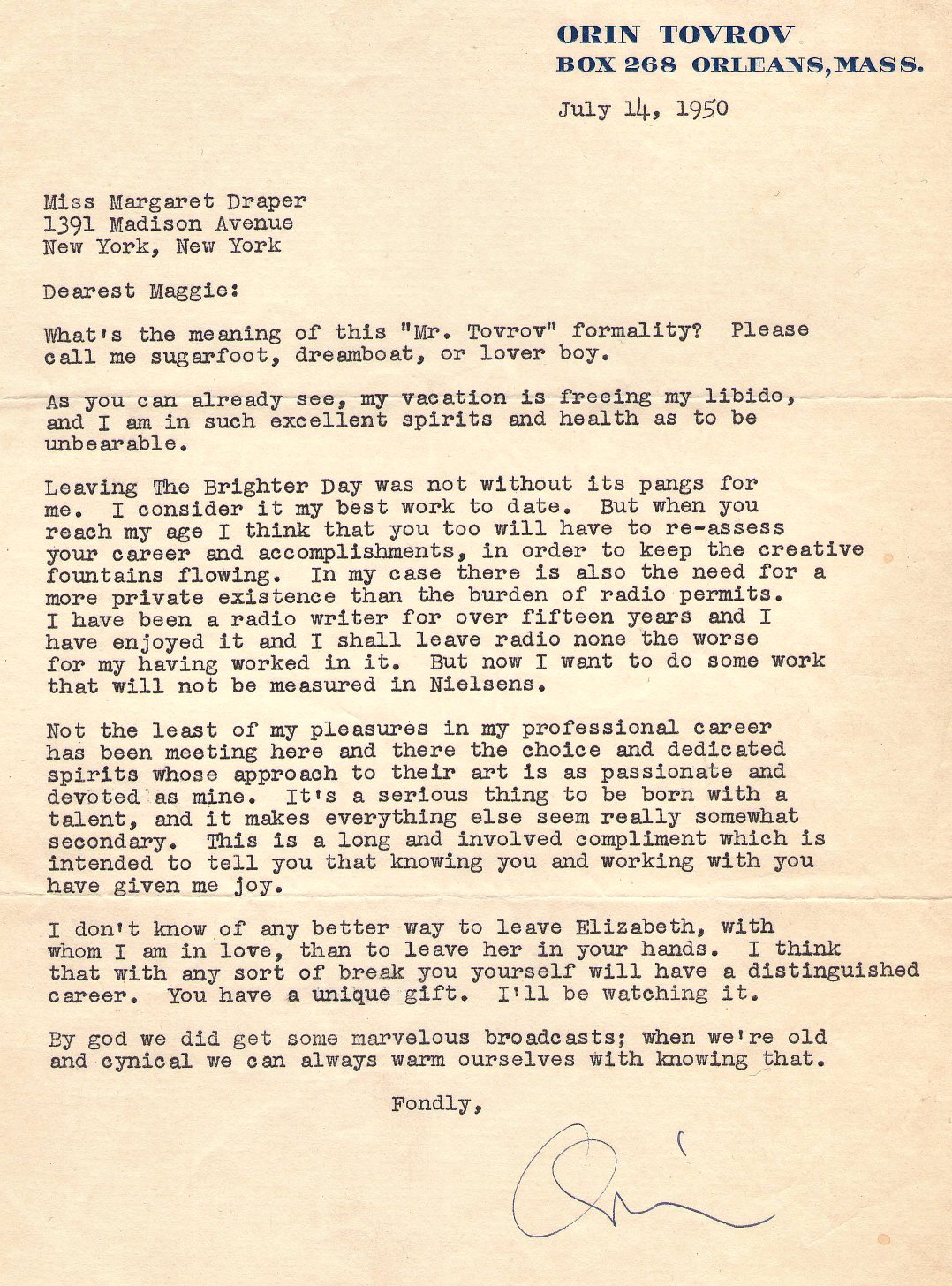
The writer of Brighter Day for many years, Orin Tovrov, had a special fondness for Margaret, and vice versa. Here’s a letter Orin wrote to Maggie on the occasion of his leaving Brighter Day in 1950:

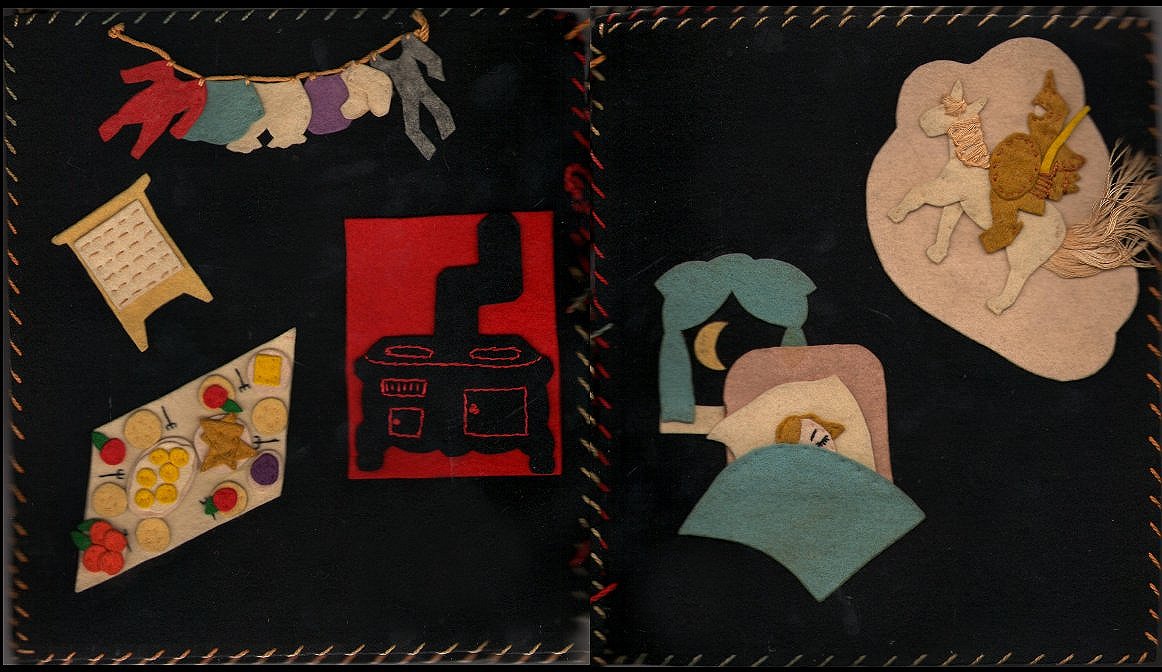
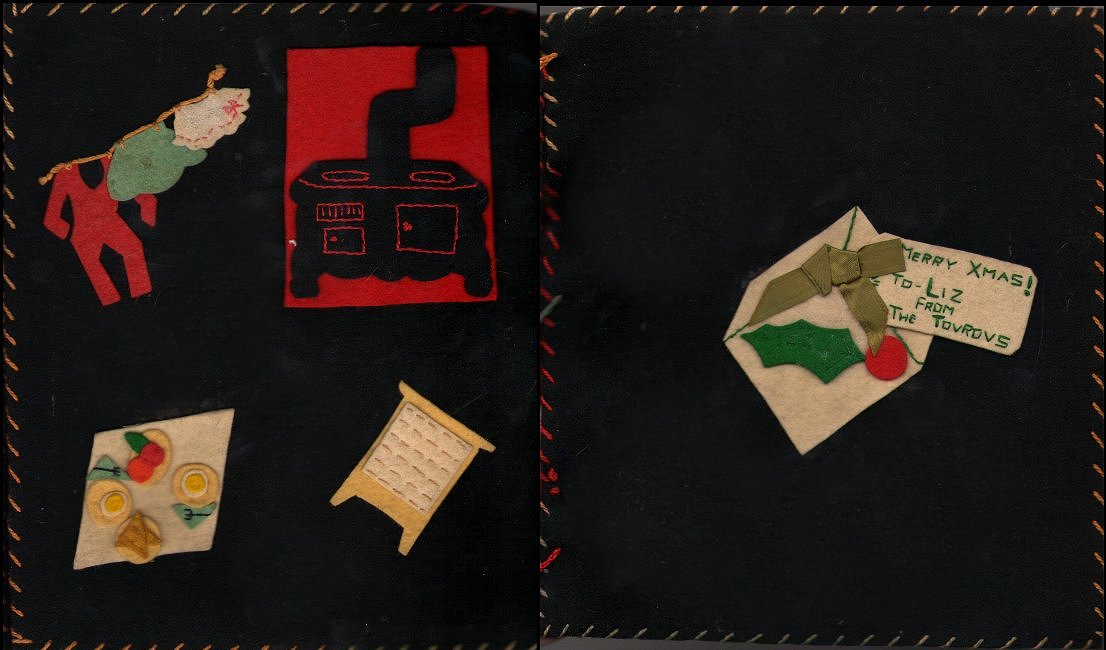
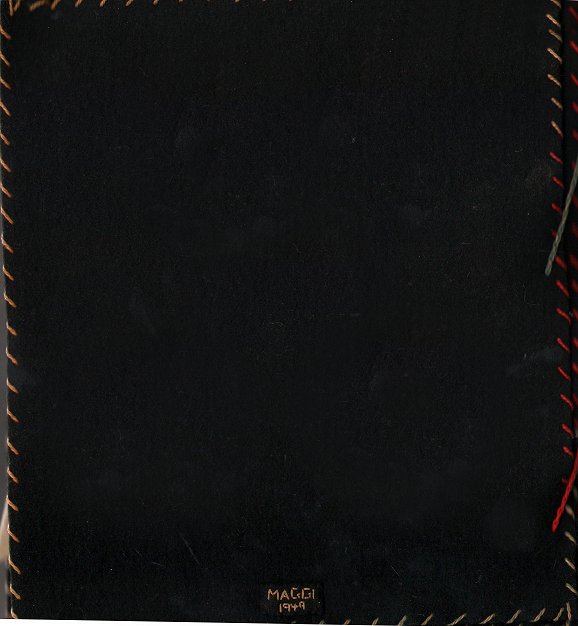
A very gracious letter. A further indication of the Tovrovs’ respect and appreciation for Margaret’s work as Liz Dennis is found in this beautiful felt book made for “Liz” at Christmas, 1949. It must have taken many hours to create. I loved this book as a child – I could look at it for hours, and it almost acted as a sort of “quiet book” if memory serves.

Front Cover

Attending Church (The missing piece is the Hymn Board; Daily Food and chores.

Liz dreams of her Knight in Shining Armor

Which one will it be?  Finally married! Notice the reference to older sister Marcia, who had married and left the family before the show began. She never appeared on-air.

More home life; Christmas label

Back Cover

More about The Brighter Day can be seen in the following Links:

Old Radio Times, 5 May 2006

The Brighter Day at Wikipedia

The Old Wolf has spoken.