Nighthawks: Art and Life.

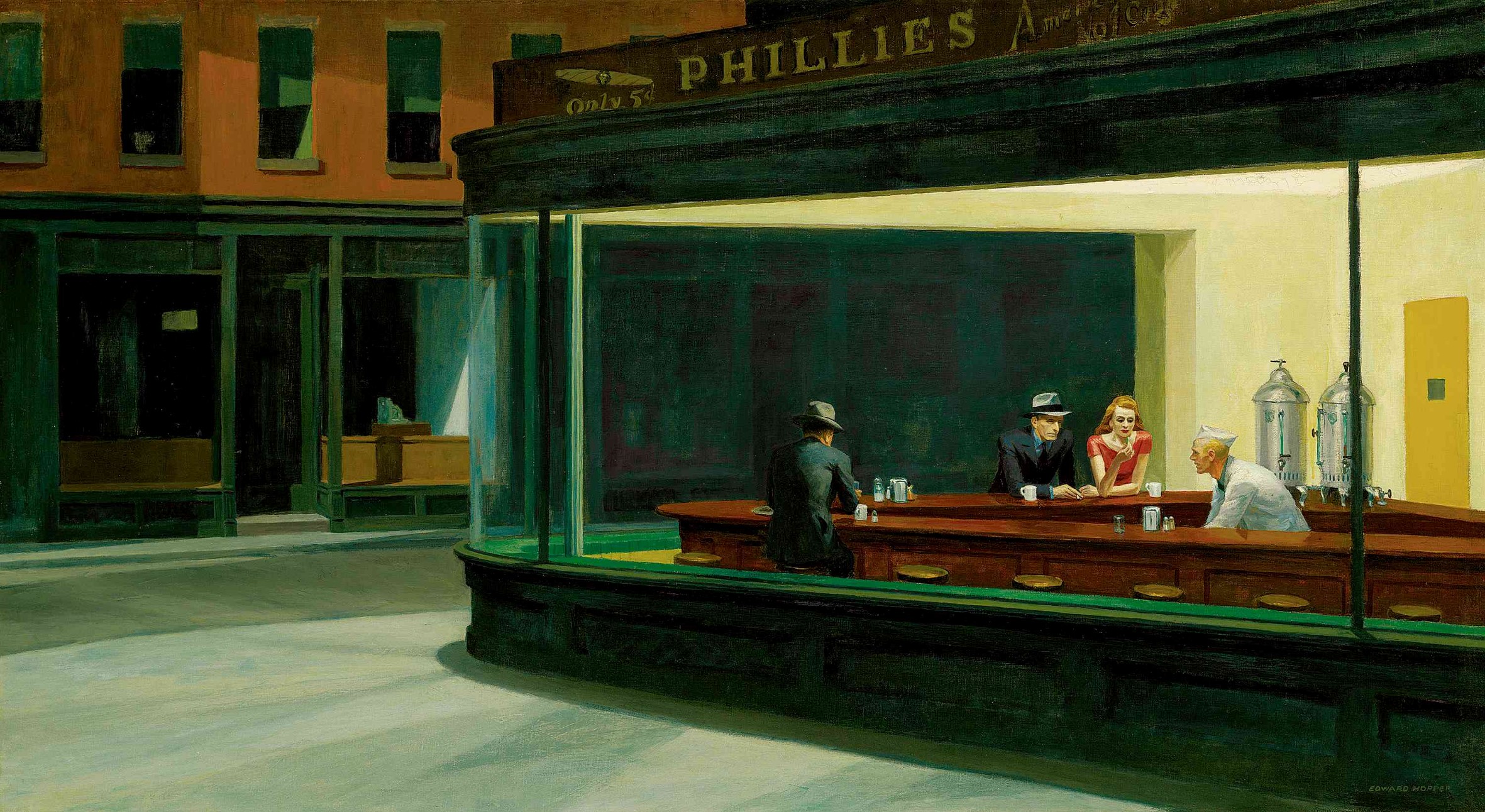
Edward_Hopper-Nighthawks-1942

The iconic Edward Hopper painting. Diners like this were common in New York as I was growing up. I’ve mentioned them before, but every now and then I’ll see something on the Internet that fans the fires of nostalgia once again.

FSA/8d28000/8d280008d28016a.tif

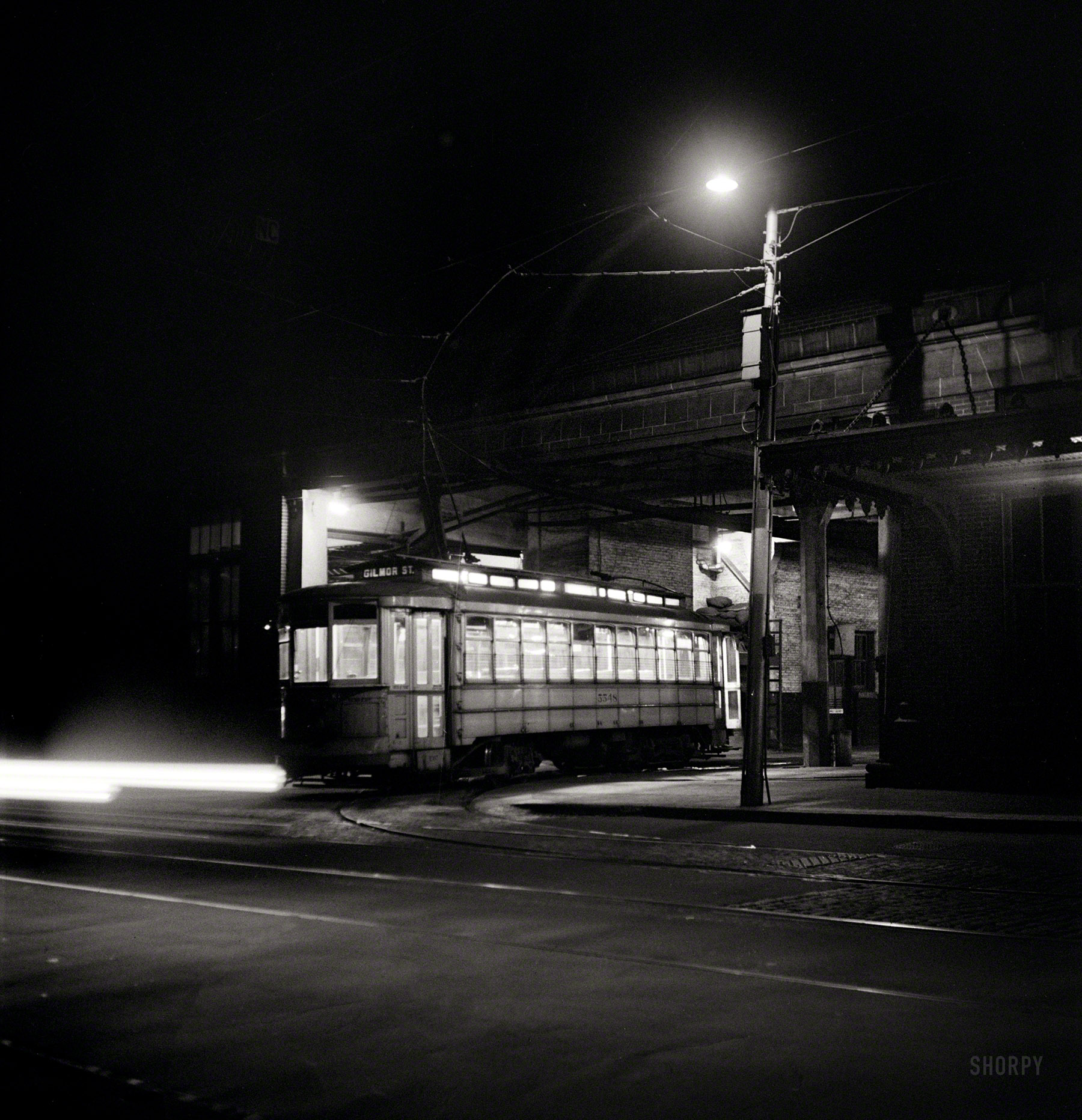
April 1943. “Baltimore, Maryland. Trolley leaving the terminal at night.” Photo by Marjory Collins for the Office of War Information. Found at Shorpy.

I love old photos like this – they help me connect to a world that was; so very close and yet otherwise untouchable.

The Old Wolf has spoken.

A Visit to Dr. Feelgood

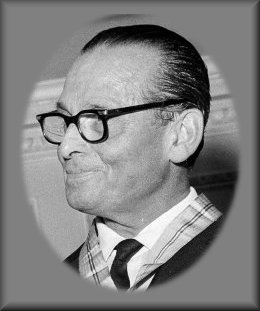
Doctor Max

A curious side effect of the 50th anniversary of President Kennedy’s assassination is a resurgence of interest (albeit a small resurgence) in New York’s infamous “Dr. Feelgood,” formally known as Dr. Max Jacobson. I grew up in New York in the 50s and 60s, and my mother was an actress there; I remember her speaking fondly of Dr. Max. In fact, his name was a household word around our home. She got me an appointment with him one time – I was probably around 16 – for Mogg only knows what reason, but I remember the experience vividly.

At the time I had no clue Max was so notorious, although an article which came out  some time before 1968 ² in a local publication had made reference to “Doctor A,” “Doctor B,” and “Doctor C” – it was some sort of investigative report on unconventional medical treatments, and I wish I could find it again, because there’s no question in anyone’s mind who ever visited him that “Doctor C” was Max. Scanning the Internet now, I was surprised to find that  a book was written about Max by by Richard A. Lertzman and William J. Birnes, whence the quote and patient list below were extracted. There seems to be no question that he was treating a large range of patients with methamphetamines, which is why they loved his treatments… he made them happy happy happy!  President Kennedy’s visits to and by Max are well-documented, and about the injections Kennedy said, “I don’t care if it’s horse piss. It works.” Among Max’s other clients were:

President Harry S. Truman, J. Edgar Hoover, Richard M. Nixon, Rod Serling, Jacqueline Kennedy, Spiro Agnew, Sir Winston Churchill, Cecil B. DeMille, Robert Goulet, Marlene Dietrich, Elizabeth Taylor, Doris Shapiro, Eddie Fisher, Truman Capote, Bette Davis, Eartha Kitt, Maurice Chevalier, Ludwig Bemelmans, Mike Nichols, Gertrude Lawrence, Burt Bacharach, Sheilah Graham, Margaret Leighton, Rita Moreno, Frank Sinatra, Tennessee Williams, Paul Lynde, Alan Jay Lerner, Howard Cosell, Mike Todd, Hermine Gingold,  Jose Ferrer, Anais Nin, Henry & June Miller, Andy Warhol, Yul Brynner, Arlene Francis, Johnny Mathis, Martin Gabel, Franchot Tone, Igor Goran, Rosemary Clooney, Nelson Rockefeller, Burgess Meredith, Ronny Graham, Roy Cohn, Marilyn Monroe, Josh Logan, Hedy LeMarr, Edward G. Robinson, Emilio Pucci, Billy Wilder, Leontyne Price, Senator Claude Pepper, Paul Robeson, Igor Stravinsky, Cary Grant, Peter Lawford, Bob Cummings, Van Cliburn, Tony Franciosa, Phyllis McGuire, Ellen Hanley, Sam “MoMo” Giancanna, Judith Campbell Exner, Mel Allen, Mickey Mantle, Marion Marlowe, Shelley Winters, Leonard Bernstein, Ingrid Bergman, Henry Morgan, Rosalind Russell, Marianne Anderson, Dr. Niels Bohr, Tony Curtis, Greta Stuckles, Mabel Mercer, Richard Burton, Andy Williams, Ambassador Eusebio Morales, George Kaufman, Mark Shaw, Pat Suzuki, Burton Lane, Alice Ghostley, Felice Orlandi (Alice Ghostley),  Rex Harrison, Eddie Albert, Maynard Ferguson,  Roscoe Lee Browne, Zero Mostel, Bob Richardson, Cicely Tyson, Maya Deren, Milton Blackstone, Elvis Presley, Chuck Spalding, Col. Tom Parker, Stavros Niachros, Gore Vidal, Lee Bouvier Radziwill, Prince Stash Radziwill, Vincent Alo (“Jimmy Blue Eyes”), Katherine Dunham, Peter Lorre, Judy Garland, Franco Zefferelli, Gypsy Rose Lee (Rose Havoc), Otto Preminger, Anthony Quinn, Rebekah Harkness, Edie Sedgewick, Roddy McDowell, Patrick O’Neil, Kurt Braun, Leonard Silman, John Hancock (director), Kay Thompson, Bob Fosse, John Murray Anderson, Hugh Martin, Arnold Saint-Subber, Louis Nizer, Sharon Tate, Barbara Harris, Christopher Plummer, Thelonious Monk, Jim Thompson, Florence Eldridge, Frederic March, Harry Belafonte, Stavros Niarchos, Brigid Berlin, Arthur Laurents, Leo Lerman, Maria Callas, Albert Dekker, Brian Jones (Rolling Stones), Andrew Oldham (Rolling Stones Manager), Ruth Yorck, John LaTouche, Don and Phil Everly (Everly Brothers), Louis Jourdan, Jason Wingreen, Mike Nichols, Pablo Casals, Ayn Rand, and Montgomery Clift

Max seemed pleasant and inoffensive, coming across as the absent-minded professor type, and I recall his office well, a jumble of odds and ends, jars of orange solutions with glowing colored stones being “irradiated” with ultraviolet light, and a hodgepodge of other things. Max examined me, drew up a syringe full of I don’t think I want to know, and injected me RIGHT UNDER THE FLIPPING BREASTBONE with a needle that looked big enough to terrify Big Jake. I don’t think I fainted, and in reality the needle was probably a small subq, but I had never had an injection there and it rattled me considerable.  I don’t remember going out singing, as some of his patients seemed to do – maybe I got the low-octane stuff. But I’ll never forget it, and I’m tickled that I had an encounter with one of New York’s more infamous characters.

There was another set of stories that got told frequently at home, and I’m not sure if they are related to Dr. Max or not. In my mind, however, they were – so I’m going to relate them here anyway. I was put in mind of these stories by a delightful article over at “Oh God, my Wife is German” where the author talks about his wife’s love of “King of the Thorns.” Unless I’m totally off the mark, Max had a nurse at one point who was Teutonic in origin, and whose English was often flavored with Germanisms. The three instances I recall hearing the most often are:

  • “I’m sorry, you can’t see the doctor right now – he’s right in the middle of somebody very important!”
  • “Now this may hurt a bit, but don’t worry, you won’t last long!”
  • Patient: “Nurse, I need a vase.”  [1] Nurse: “Ja, and how big is your bouquet?”

The Old Wolf has spoken.


Footnotes:

[1] For the uninitiated, “vase” was hospital parlance for those portable urinals for bedridden patients.

[2] A subsequent search in 2017 turned up the article in question, from New York magazine and actually published on February 8, 1971.
The Czar of the Tenderloin

When I was little, my mother used to sing bits and snatches of songs to me  that she remembered from her own childhood. One that always stuck in my mind was “The Czar of the Tenderloin,” which she told me she often heard sung by her uncle, Leo Marshall.

Frances, Lucille, Bill & Vic Rogers with Leo Marshall

Leo Marshall, center in rear, with his wife Lucile Rogers Marshall (right front) and her siblings Frances, William, and Victor, December 1970

Years later, at the 80th birthday party of my grandmother Frances, (Leo’s sister-in-law), he sang it for the assembled family one last time. It was two years before his death, and the rendition was hesitant and shaky, but all the more lovely for his still being able to remember as much as he did.

As I grew older, I often wondered about the origins of the song, and if there were any more of it than the little bits Mother sang.

And then came the Internet, the modern-day Areopagus (Acts 17:21). As the body of the world’s knowledge is slowly but surely gathered and preserved online, not everything happens at once. For years I searched and scraped the web, but always came up poor… until today.

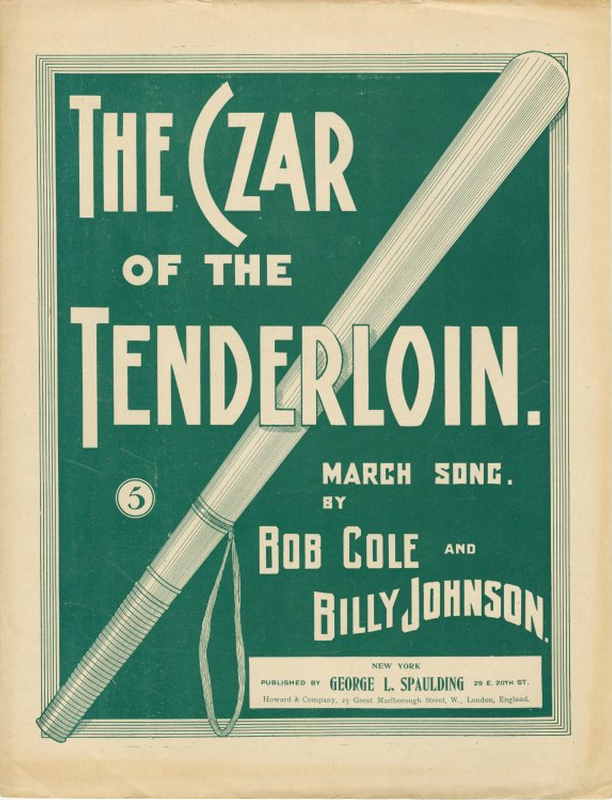
Czar1

Notice the nightstick on the cover.

Czar2 Czar3 Czar4 Czar5

The Lyrics

America has a President and England has a Queen,
While Germany’s great Emperor sits ruling all serene,
The Indians have their medicine man, Bavaria a king,
But none of these high diplomats are quite the proper thing.

For in gay New York where the gay Bohemians dwell,
There’s a Colony called the Tenderloin, though why I cannot tell,
A certain man controls the place with no regard for coin,
The Czar, the Czar, the Czar of the Tenderloin.

Chorus:

The Czar of the Tenderloin,
With great propriety, seeks notoriety,
But the girls all shun the society
Of the Czar of the Tenderloin.

Each evening through the Tenderloin the Czar will gayly prance,
With whiskers well divided just to give the wind a chance,
His bodyguard behind him scouting for a finish fight,
Arresting everything that’s left because it isn’t right.

Piano legs must now be clothed with care,
And he’s ordered all the trees cut down because their limbs were bare,
He’s going to build a little church which everyone must join,
The Czar, the Czar, the Czar of the Tenderloin.

Chorus

His hobby is arresting shoes whenever they are tight,
He also nabs electric lights when when they go out at night,
The sun came out one morning and he ordered its arrest,
The moon was full, he pulled it in and claimed it was a pest.

One day on the Tenderloin, a maiden changed her mind,
Now the Czar thought that was naughty so the girl was quickly “fined.”
He arrested a cook for beating an egg, now don’t that take the coin,
The Czar, the Czar, the Czar of the Tenderloin.

Chorus

This 1897 song by Bob Cole and Billy Johnson is based on the life and times of Alexander S. “Clubber” Williams, a notoriously corrupt but effective police inspector who ruled over New York’s Tenderloin district with an iron fist and a wooden club. At the end of his career he was reputed to have said that he never clubbed anyone who didn’t deserve it. The name of that part of town, the northwest corner of which is now Times Square, came from William’s statement that “I’ve been having chuck steak ever since I’ve been on the force, and now I’m going to have a bit of tenderloin,” said because of the lucrative business of protection payments from legitimate and illegitimate businesses alike. Prior to Williams’ reign, the district was known as “Satan’s Circus.” San Francisco also has a Tenderloin district, and the term has come to be synonymous with a seedy, ill-reputed or red-light district of town.

Tenderloin

Manhattan’s historical districts, the Tenderloin indicated by a star.

220556155046

Emile Berliner’s Gramophone 78 rpm record. “The Czar of the Tenderloin,” sung by Will F. Denny. Recorded July 14, 1897

With thanks to Tim Gracyk, you can hear Will F. Denny singing an abridged version of the song at YouTube, but I can still hear Uncle Leo singing it as clearly as though it were yesterday.

The Old Wolf has spoken.

Night Pharmacy, 1921

28982u

Washington, D.C., circa 1921. “People’s Drug Store, Seventh & K, night.” With a lurid display of “trusses and rubber goods.” National Photo Co.

Pharma Noir, Found at Shorpy

I recall that trusses and other things were big sellers in pharmacies in the 50s and 60s when I was growing up in New York. What’s with that? Were more people suffering from herniæ back then, or was it the fad of the times, like all the weight-loss nostrums are today? Interesting at any rate. Oh, and the Dr. Scholl’s corn pads and things, too.

The Old Wolf has spoken.

Naples, 1900

sIAs78t

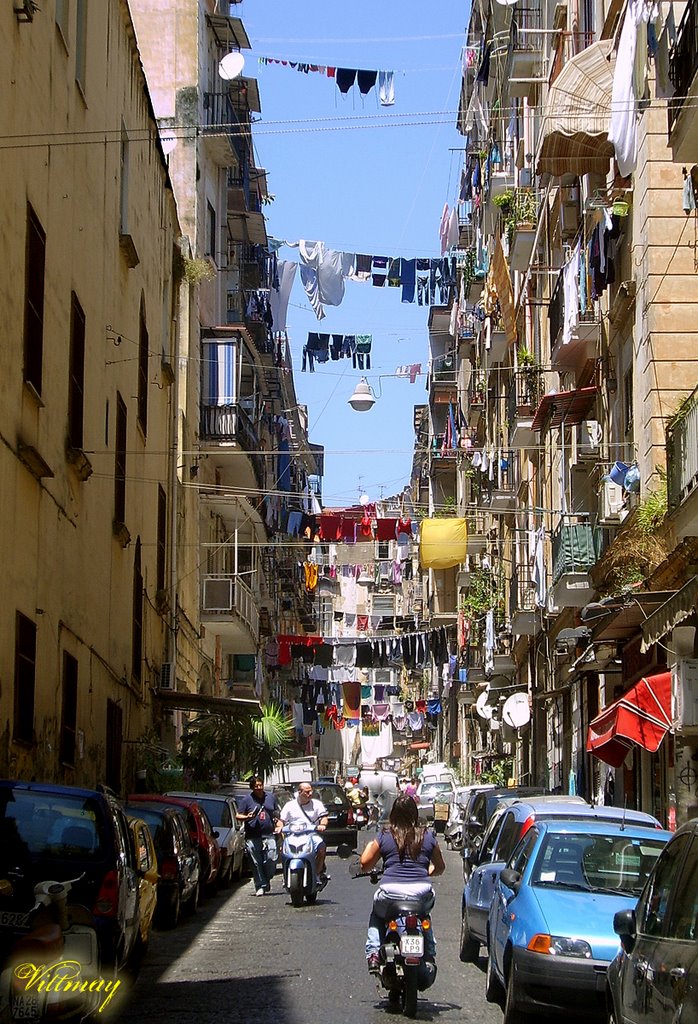
A photo of Naples in 1900, showing one of the countless “vicoli” (alleys) where hundreds of thousands of people live, work, and play.

24426518


Aside from modern cars, scooters, and mopeds, very little has changed. It is in these alleys that one finds the “bassi” or ground-floor apartments which are ubiquitous and characteristic of Naples life.

See Naples and Die. If appreciating a rich and colorful culture is of interest, you could do worse than putting Napoli on your itinerary.

The Old Wolf has spoken.

Laus Deo

h7CArlV

As part of the repair of the Washington Monument after earthquake damage, workers verify the correct position of the aluminum “capstone” that tops the monument. At the time of its creation, Aluminum was the most precious metal available because of the difficulty of smelting it from bauxite. Estimates vary as to its valuation, but it would have been as precious as silver and perhaps much more so.

027272pv

The underside of the cap, showing lightning rod conductors and a trap door.

Trap Exterior

Exterior view of the trap door during repairs. What this exists for I am uncertain, unless to allow access for repair of the lightning rods which are placed atop the monument.

Binczewski-9511.fig.5.large

In 1984, to commemorate the 100th anniversary of its casting, a full-size replica was cast and exhibited at Tiffany’s.

The cap has four sides, each one exhibiting an inscription in cursive writing:

North face West face South face East face
Joint Commission
at
Setting of CapstoneChester A. Arthur
W. W. Corcoran, Chairman
M. E. Bell
Edward Clark
John Newton

Act of August 2, 1876

Corner Stone Laid on Bed of Foundation
July 4, 1848

First Stone at Height of 152 feet laid
August 7, 1880

Capstone set
December 6, 1884

Chief Engineer and Architect,
Thos. Lincoln Casey,
Colonel, Corps of EngineersAssistants:
George W. Davis,
Captain, 14th Infantry
Bernard R. Green,
Civil EngineerMaster Mechanic
P. H. McLaughlin
Laus Deo

The expression “Laus Deo” means “praise be to God.”

The reason for this inscription has been and continues to be debated by religious and secular scholars, as well as readers of Dan Brown’s The Lost Symbol, which was an intriguing book despite being short on fact and long on artistic license . Since the founders aren’t around to ask, the true answer to its meaning will probably lie forever shrouded in uncertainty. But it’s interesting to know that the cap is there, even though very few people on earth have ever seen it directly.

Click through for more history about the cap.

The Old Wolf has spoken.

The Last Shell Station

city-landscapes


Shell built eight of these eye-catching stations; this is the only one which survived, and it has been lovingly restored in Winston-Salem, North Carolina, for the enjoyment of tourists and history buffs alike. A writeup can be found at Roadside America.

Shell


Google Street View image of the Shell Station at E. Sprague Street and Peachtree Street.

The Old Wolf has spoken.

Sausages, Laws, and Quotations

Wolfsburg, VW Autowerk, Metzgerei

Sausage Production for the VW Cafeteria, Wolfsburg, 25 January 1973. Found at /r/historyporn

Otto von Bismarck once said, “Whoever loves the law and sausages should never watch either being made.” Wait, no he didn’t. The original quote is “Laws, like sausages, cease to inspire respect in proportion as we know how they are made,” and is attributed to John Godfrey Saxe, University Chronicle. University of Michigan (27 March 1869) 
Everett Dirksen probably never said “A billion here, a billion there, and pretty soon it adds up to real money.”
Bill Cosby never wrote the “I’m 73 and I’m Tired” article. He even wrote a rebuttal on his website.
Winston Churchill is reputed to have said, “You make a living by what you get; you make a life by what you give.” According to The Churchill Centre And Museum at the War Rooms London, what Churchill actually said in Scotland, 1908, is:
“What is the use of living, if it be not to strive for noble causes and to make this muddled world a better place for those who will live in it after we are gone? How else can we put ourselves in harmonious relation with the great verities and consolations of the infinite and the eternal? And I avow my faith that we are marching towards better days. Humanity will not be cast down. We are going on swinging bravely forward along the grand high road and already behind the distant mountains is the promise of the sun.”
And that’s a much better quote, really, than the original.
“There’s no such thing as a free lunch” is often attributed to economist Milton Friedman, who used it as the title of a 1975 book. However, sci-fi buffs will recognize TANSTAAFL (“There ain’t no such thing as a free lunch”) from Heinlein’s 1966 novel, “The Moon Is a Harsh Mistress,” and a still earlier occurrence appears  in the title of a 1949 book by Pierre Dos Utt, “Tanstaafl: A Plan for a New Economic World Order.” [1]
Most of us will remember the party game called “Telephone” or “Chinese Whispers,” depending on which part of the world you live in. People sit in a circle and the first person whispers a message into the ear of the next person. Repetition is not allowed, and the second person must pass the message on. The result is usually incomprehensible or hilarious – “I love Marty Blotz” can come out the other end as “Boiled aardvark kidneys are tasty.”

It used to be that the power of the press belonged to the person that owned one. (There’s another quote for which it’s difficult to pin down the original source, or if it was even said.) With the internet being available to much of the world’s population, anyone can publish anything with or without attribution, which is why so many things get forwarded, re-forwarded, massaged, edited, re-worked, and falsely attributed these days. One of my friends is struggling with countering their 9-year-old’s assertion that “if you see it on the internet, it has to be true,” and in my experience there are reams of adults who apparently believe the same thing, based on the kinds of things I see on Facebook or my inbox.

James Sullivan wrote at Finding Dulcinea, in an article entitled “Misquotes: Searching for Authenticity Online:”

The Internet is fertile ground for the proliferation of misquotes. Pithy quotes find their way into Facebook profiles and Twitter posts, where they multiply across the Web unencumbered by citations and original context. With online sharing an elaborate, electronic game of telephone, genuine quotes get warped in the retelling, leaving end-readers with misquoted material void of context. Surprisingly, the media is often just as guilty as the average Web user.

I highly recommend this article if you care about  your sources – the end of the article gives some excellent ways of verifying whether a quote has been properly attributed or not.

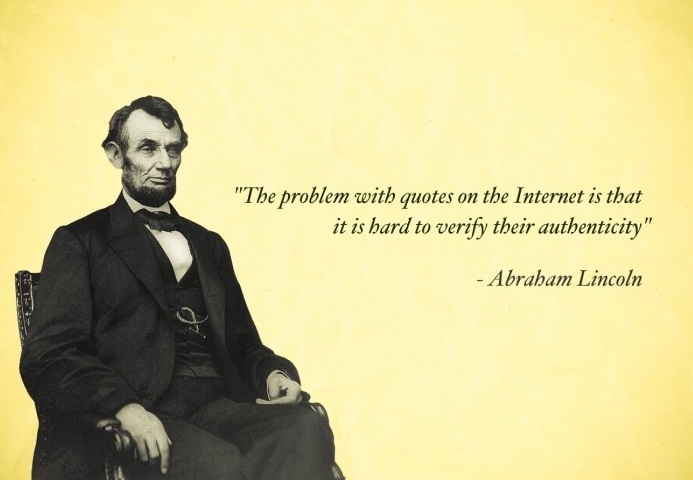
Even if you care, it’s possible to make mistakes – as a famous statesman once pointed out,

Lincoln-Internet-Quotes


The Old Wolf has spoken (and you can quote me on that.)


[1] New York Times, “Quote… Misquote

Neuschwanstein Castle, 1900

An old Photochrom of Neuschwanstein in Füssen, Germany.

iB3pikk

These were “colorized images produced from black-and-white photographic negatives via the direct photographic transfer of a negative onto lithographic printing plates. The process is a photographic variant of chromolithography, a broader term that refers to color lithography in general.” (Wikipedia)

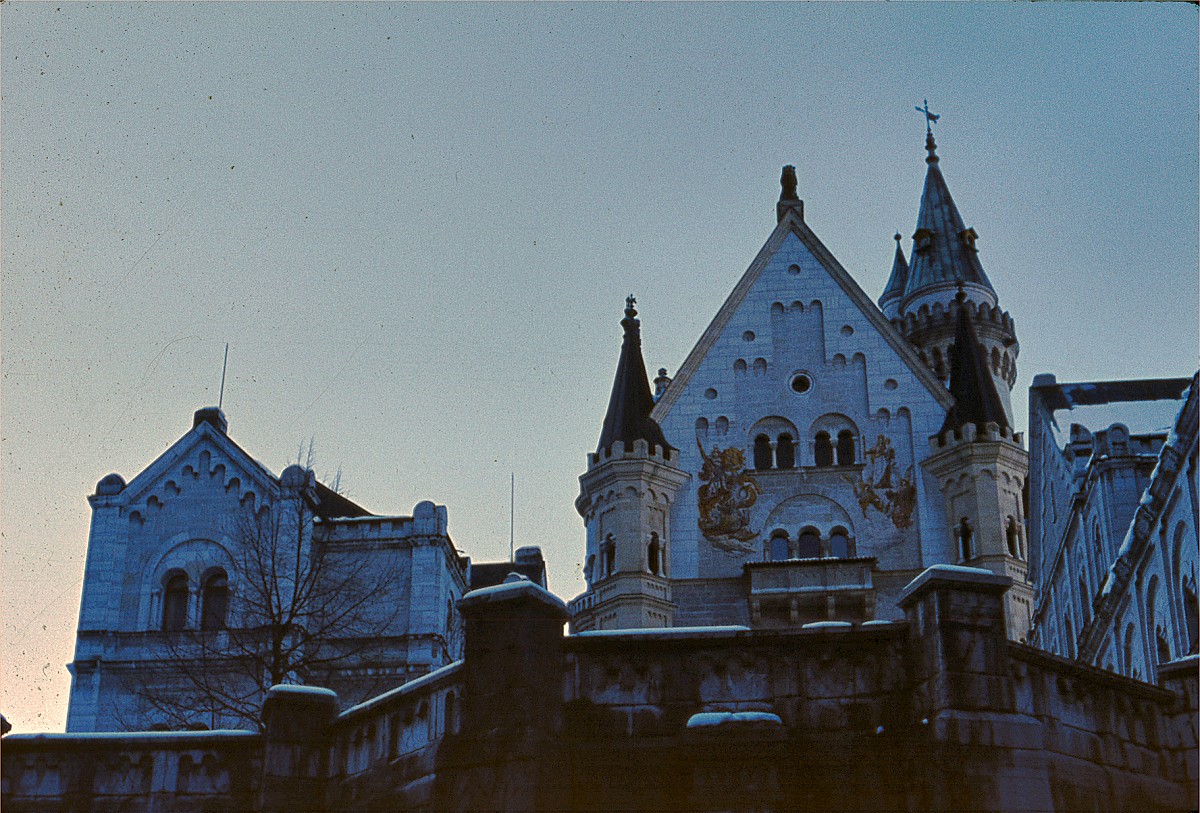
Below are a few shots I took from my visit to Neuschwanstein in 1976 – it was winter, and gray, so the colors are not spectacular, and my camera was basically hqiz, but I recall how wonderful it was to visit the “original fairy tale castle” that inspired Disney’s simulacrum.

Füssen - Schloß Neuschwanstein 2

Fussen - Neuschwanstein 2

Fussen from Neuschwanstein 2

Füssen from Neuschwanstein

Fussen - Neuschwanstein view

Füssen - Schloß Neuschwanstein in the mist - Cropped

Castle in the Mist

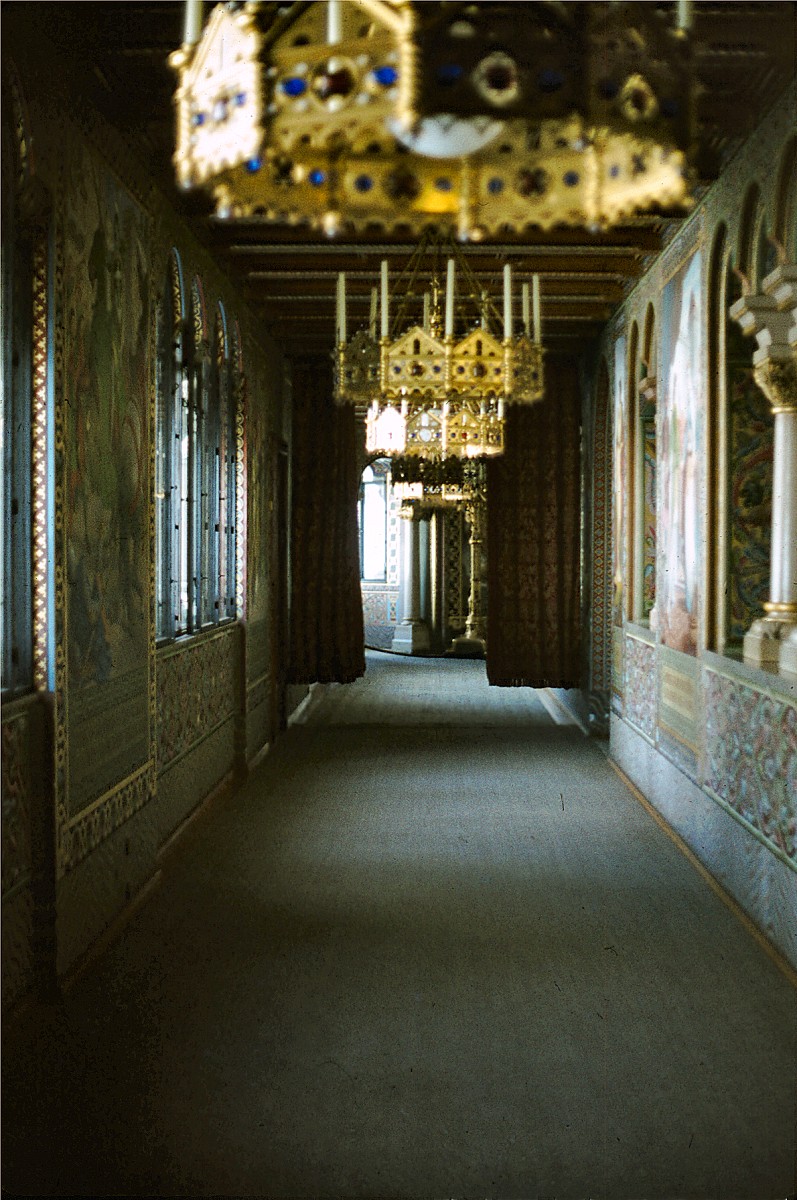
Fussen - Neuschwanstein interior

An interior hallway

I would pay large money to be able to explore the entire castle, turrets and all – most of those areas are off limits to tourists.

The Old Wolf has spoken.