The Carousel of Progress

NOTE: This entry is a trip down memory lane, but be warned: At the end it gets political. As a result, I’ve disabled comments for this post. If you disagree with anything here, the Web is open – write your own blog. I have nothing against respectful dialog, but the Internet being what it is, I have no time for trolls.

progress

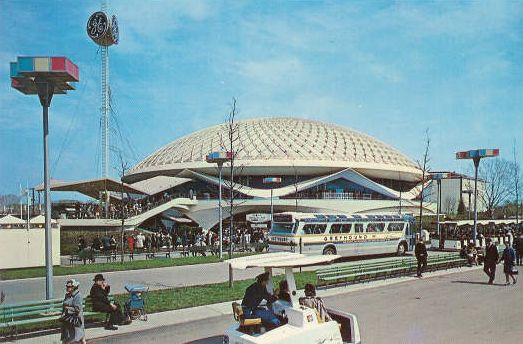
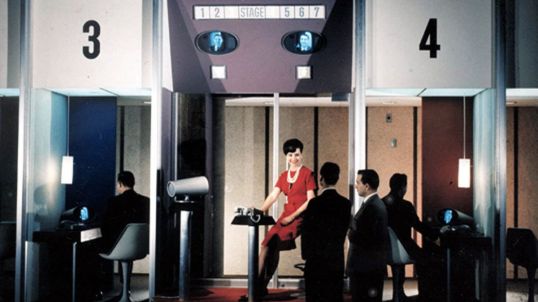
I first encountered this lovely exhibit when I attended the New York World’s Fair in 1965. Of all the presentations at the Expo (aside from the food – Belgian waffles, mmm) – along with the Picturephone demonstration, this is the one that stuck in my mind.

http-mashable.comwp-contentuploads201404picturephones

After the fair closed, the ride was moved to Disneyland, where I experienced it again, and thereafter found a home in Disney World in Florida, which we visited just last week. It was lovely to reminisce.

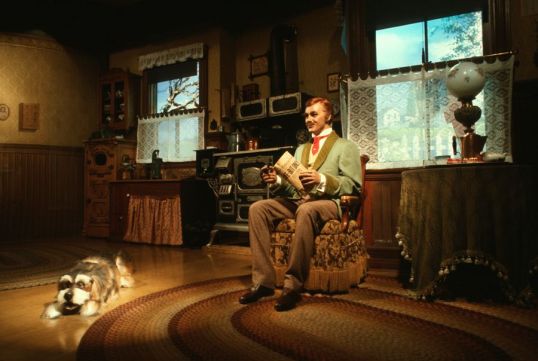
Carousel 1

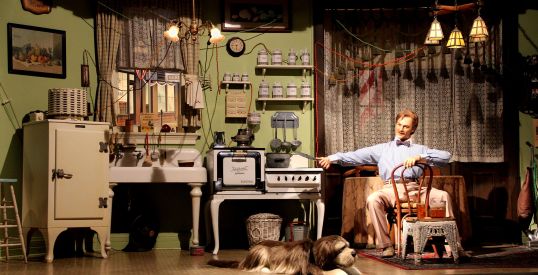
The 1900s. Life couldn’t be better with all the modern conveniences like gas lamps… and soon they’re supposed to have electric lights in the house!

As with anything, the ride did get a few updates over the years:

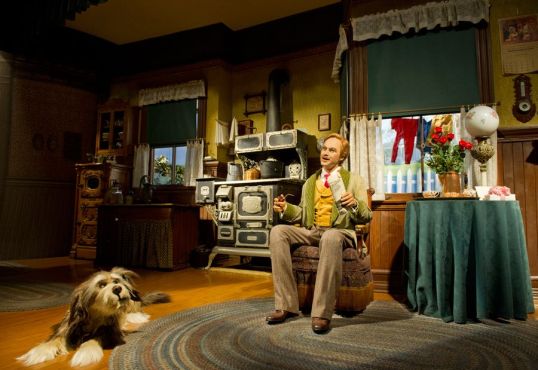
Carousel 2

Notice in this version it’s Valentine’s Day – and the model has had a bit of an update as well.

Carousel 3

The 1920’s. Electricity and gas are everywhere, and life couldn’t possibly be better. Happy 4th of July!

Carousel4

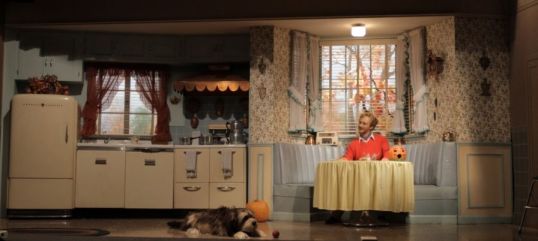
Hallowe’en in the 1940’s – this looks a lot like kitchens that I grew up with in the 50s.

Carousel 6

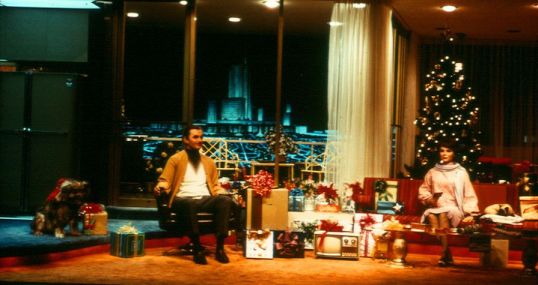
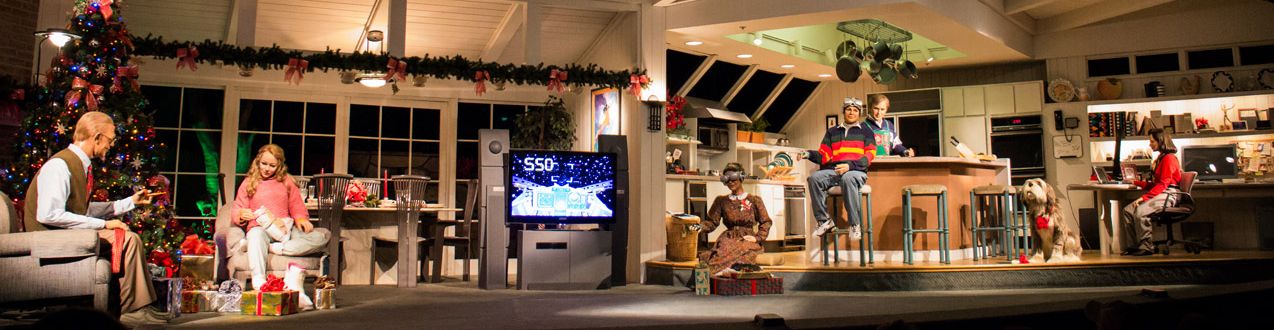
Christmas in the 1960s – this tableau has now been supplanted by a 21st-Century version – in the back is a view of Disney’s model city of the future, part of the original idea behind EPCOT (Experimental Planned Community of Tomorrow). Which, unfortunately, because our nation has been focused on flinging its precious human and material resources into unwinnable and futile conflict, has yet to become a reality – despite that dream.

Carousel 5

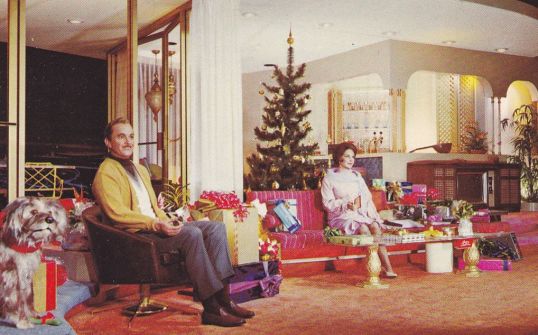
Another view of the 1960s.

Carousel 7

The 21st Century – (click for a larger view). Most of what you see here is now real, including much better graphics on Virtual Reality devices.

Carousel 8

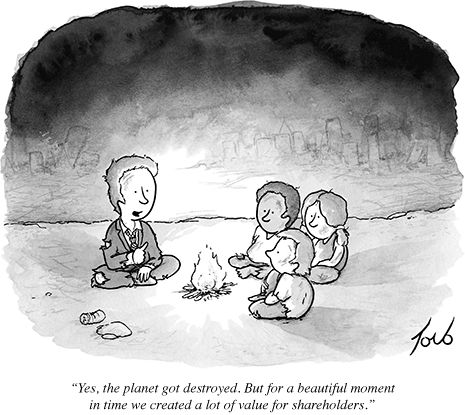
If our 45th president and the climate-change deniers have their way, it might be necessary to replace the last tableau with one like this.

There’s a great, big, beautiful tomorrow
Shining at the end of every day
There’s a great, big, beautiful tomorrow
And tomorrow’s just a dream away

Man has a dream and that’s the start
He follows his dream with mind and heart
And when it becomes a reality
It’s a dream come true for you and me

The only dream of our current “leaders” seems to be to violate the planet, exterminate the poor and the different, and add to the bottom line of the wealthy. I do not support this, I will not support this, I will not be silent – or I will never be able to look my children and grandchildren in the eye with honor.

Resist
The Old Wolf has spoken.

Images of the Middle East – Félix Bonfils

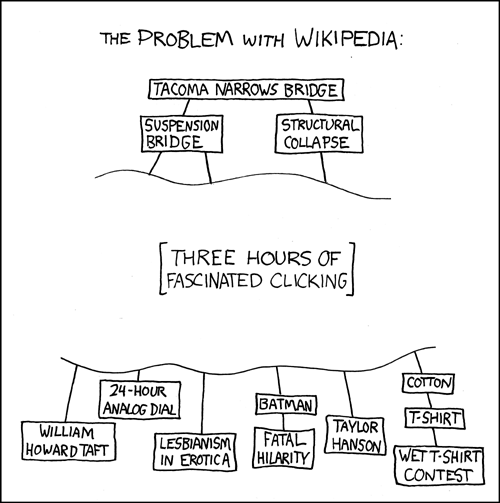
In the process of researching something else (this is how it usually works, and don’t even mention TVTropes)…

the_problem_with_wikipedia

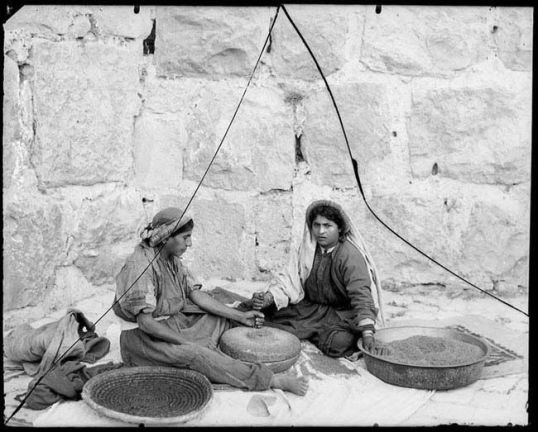
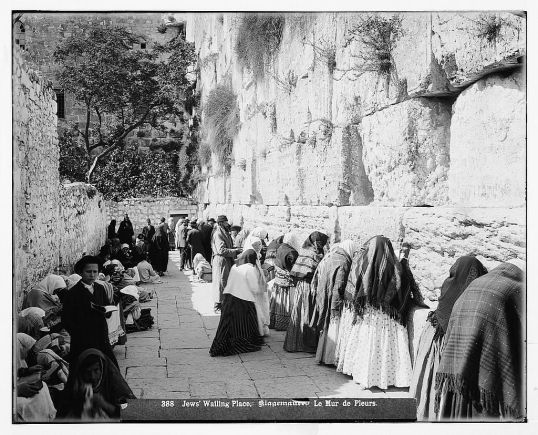
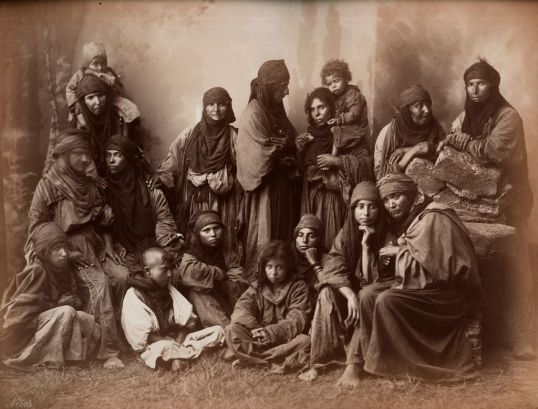
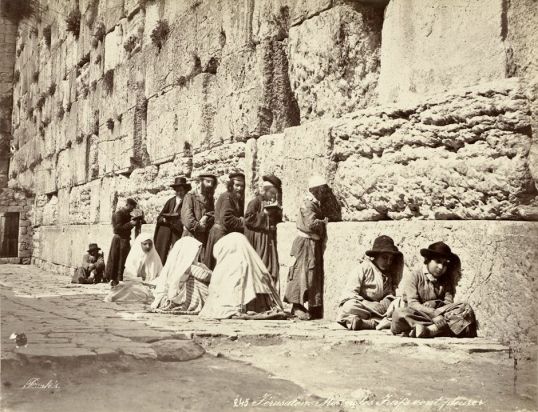
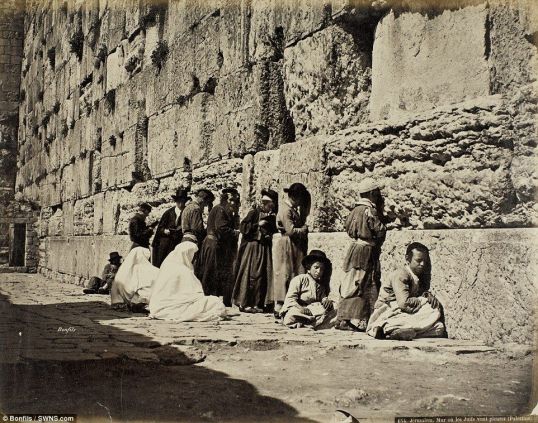
… I encountered this lovely group of photos by Félix Bonfils, a French photographer who was active in the Middle East in the 1800s. They are available in many places on the Internet, but I found them captivating and felt like they were worth a share.

image6

Street vendors

image4

Western Wall of the Temple, or the Wailing Wall

image5

Group of Bedouin women

image3

Western Wall

image2

Western Wall

It looks as though some of these images may have been staged, others appear more or less candid – but they capture beautifully the feel of an age gone by.

To see more of Bonfils’ work, just do a Google image search for Felix Bonfils.

The Old Wolf has spoken.

“Indian Counting” – Een, teen, tether, fether, fip!

OK, caveat here: it’s may not be Native American counting, but that’s how it was presented to me by my math teacher (Mr. Sommerville, go ndéanai Dia trócaire air) in high school, around 1967. On the other hand, maybe it is.

The entire schema as he presented it was:

Een, teen, tether, fether, fip,
Satra, latra, co, tethery, dick,
Eendick, teendick, tetherdick, fetherdick, bump,
Eenbump, teenbump, tetherbump, fetherbump, didick!

Being testosterone-soaked boys, everyone laughed at hearing the word “dick” used as a number, and then life went on. I had heard it once, and remembered fragments of it forever.

Then came the Internet, where almost everything arcane has a tendency to show up if you wait long enough. I would search occasionally, and over time, bits and pieces appeared; now there is a full-blown Wikipedia article entitled “Yan tan tethera,” and the real story becomes quite complicated.

Over at Wovember Words, the matter is treated thusly (the whole page is worth a read):

The only reference we could find anywhere confirming connections between the counting words of Native Americans with those used in the North of England is in a musical written in 1957, called The Music Man. There is a scene in this play where the wife of the Mayor exclaims “I will now count to twenty in the Indian tongue! Een teen tuther featherfip!” Is this line in the play responsible for the idea that Native American peoples were using these old counting words with their Gaelic origins, or does it reflect that through the dark mechanisms of Imperialism the counting words were imposed onto Native American culture by the time the play was written?

Lincolnshire Shepherds counted:
Yan, tan, tethera, pethera, pinp,
Sethera, lethera, hovera, covera, di,
Yen-a-dik, tan-a-dick, tethera-dik, pethera-dik, bumfit,
Yan-a-bumfit, tan-a-bumfit, tuthera-bumfit, pethera-bumfit, figgit.

At the same time, around 1890, Native Americans were also using:
Een, teen, thuther, futher, fipps,
Suther, luther, uther, duther, dix,
Een-dix, teen-dix, tuther-dix, futher-dix, bumpit,
Anny-bumpit, tanny-bumpit, tuther-bumpit, futher-bumpit, giggit, Anny-gigit.

If you listen to the soundtrack of the movie version of “The Music Man” carefully, there’s a bit more:

Eulalie begins: Een teen tuther feather fip!
The chorus chants: Sakey, Lakey, Corey Ippy Gip (This may not be 100% accurate as these words do not appear in the screenplay)
Eulalie continues: Eendik Teendik Tetherdik Fethertik … (she is interrupted by a firecracker)

So we can see that it’s entirely possible that these counters, very similar to the Brythonic counting systems – too close to be coincidental – may have been transmitted very early by some oral channel to Native Americans, and that by folklore tradition a knowledge of these counters worked their way down cultural pathways to be included in the play and movie.

Language and its history are curious things, with enough puzzles and questions for lifetimes of study – even the whimsical bits.

The Old Wolf has spoken.

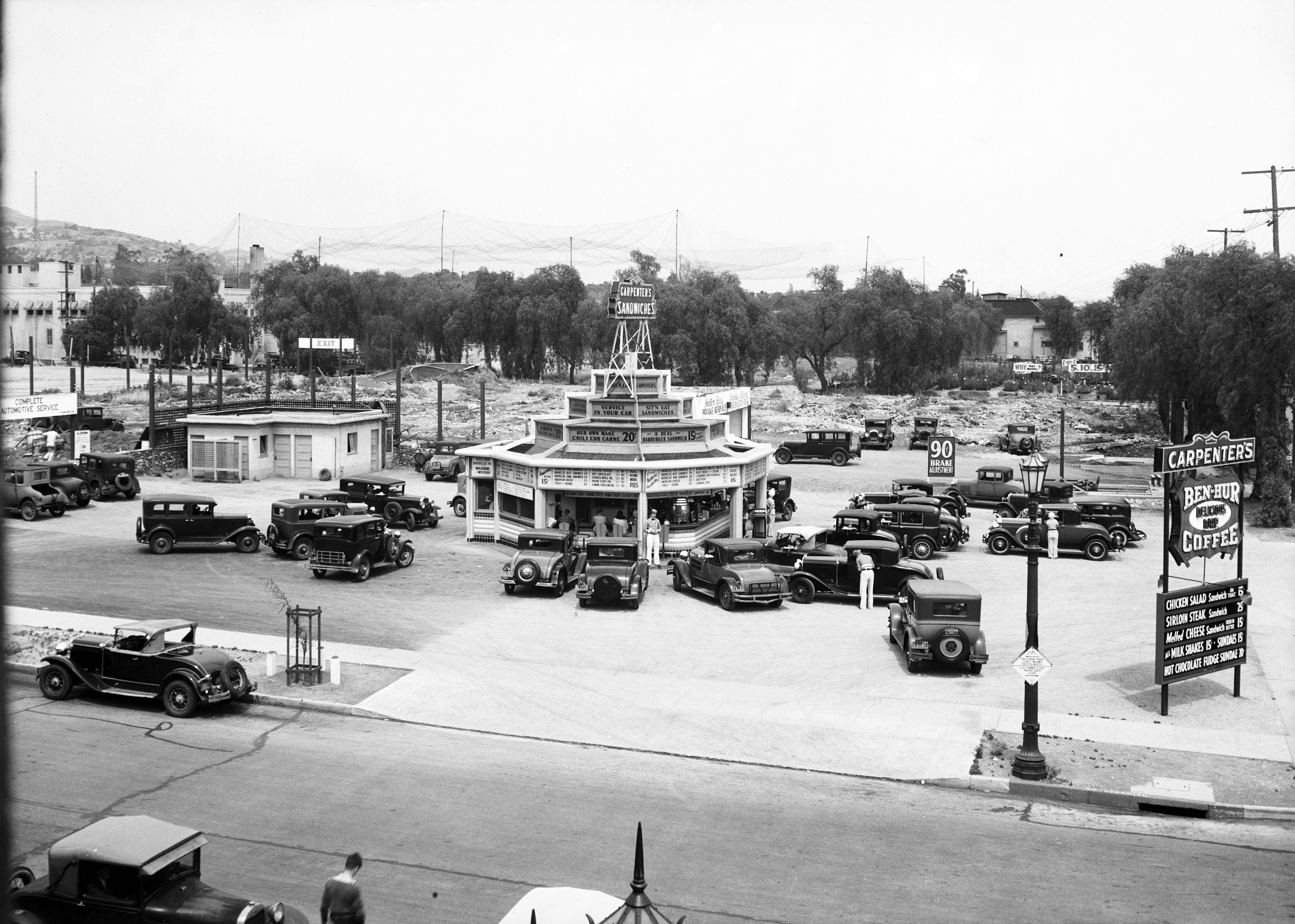
Carpenter’s Sandwiches, 1932

West Sunset Boulevard & Vine Street, Los Angeles, California.

(Click image for full-size version. Just look at those prices…)
Carpenter's Drive In

A wonderful memory of early Los Angeles – before my time, certainly, but along the same lines as some other unusual LA restaurants that I do remember.

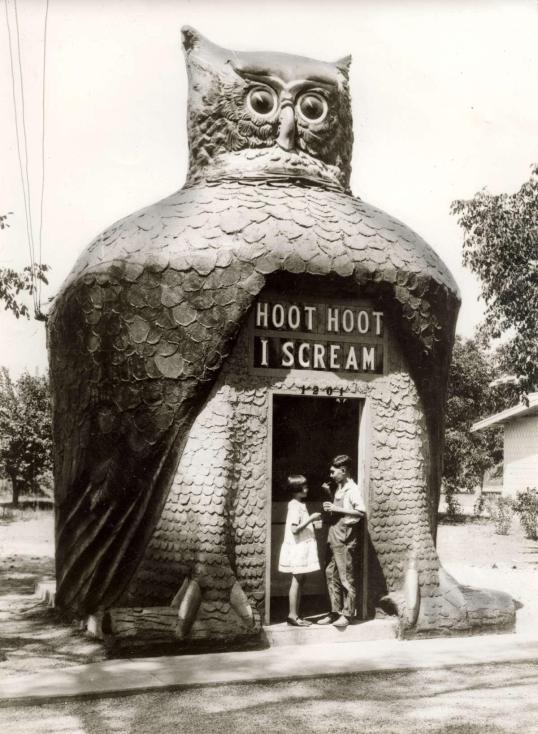
Hoot-Hoot-Ice-Cream

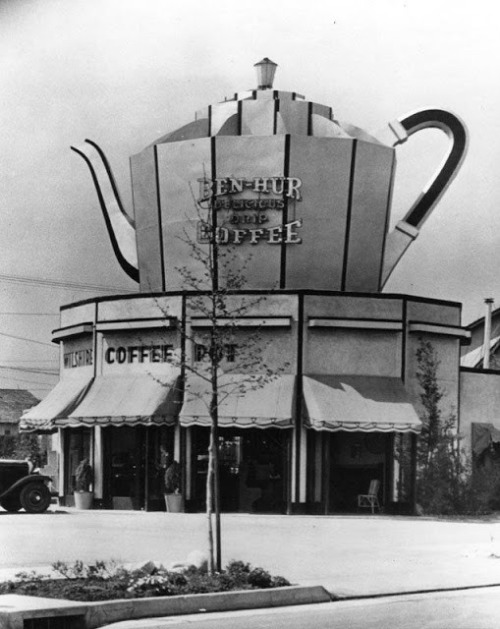
I’ve mentioned Hoot Hoot I Scream before; another great collection of ephemera from Los Angeles can be found at Shelter From the Storm, including the coffee pot restaurant seen below.

Coffee Pot Restaurant

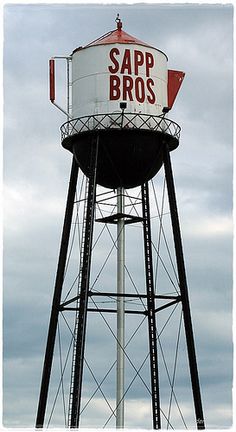
Most of these unusual eateries are gone, replaced by restaurants whose gimmick is found inside rather than outside. As for me, I miss places like this. I still grin when I drive along the freeway on a road trip and see a huge Sapp Bros. water tank decked out to look like a coffee pot.

Sapp

The Old Wolf has spoken.

The Trading Stamp Era

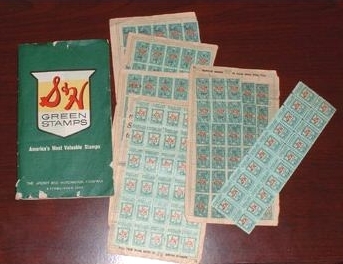
In a previous entry about things gone but not forgotten (by me and my generation, anyway,) I mentioned S&H green stamps.

696b993

Trading stamps were incentives given out by grocery stores and gas stations in the same way as stores do with coupons, reward-cards, and other come-ons today. You’d collect the stamps, paste them in books, and then take your books to a redemption center somewhere and exchange them for consumer goods.

images

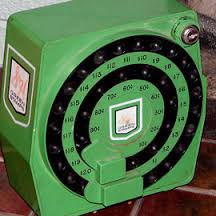
Based on the amount of your purchase, the checker would dial up the amount you spent on a machine like the one above, and the thing would dispense stamps in 1, 10, and the coveted 50 variety. The last one was great because you could fill up an entire page in the book with just one lick.

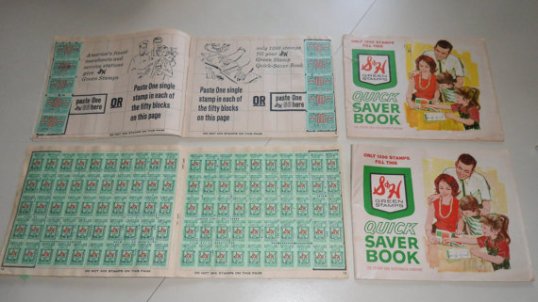
SandHStamps

Depending on the area of the country you lived in, there were different varieties of stamps available. The ones I recall in addition to the S&H Green Stamps were:

original

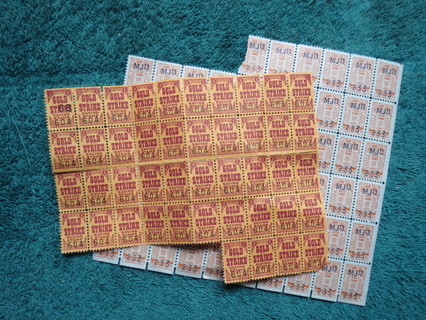
Gold strike stamps

1969-Gold-Strike-Stamps-Catalog-23

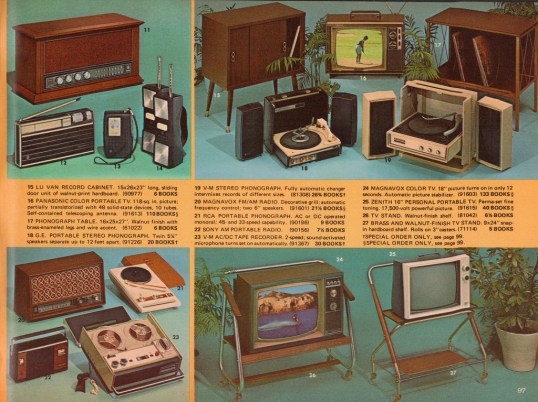
Page from a Gold Strike Stamp Catalog. This was not cheap slum; the premiums had significant value if you were willing to collect enough books.

10aa496562010fdbf1dc5c68897e8469

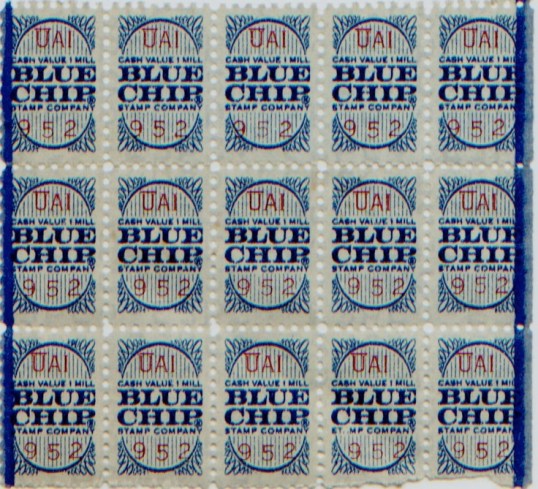
Blue Chip Stamps. If you’re curious about that “cash value one mill” (equivalent to 1/10 ¢) thing, have a gander at this article over at Mental Floss.

1967-blue-chip-stamps-coupons

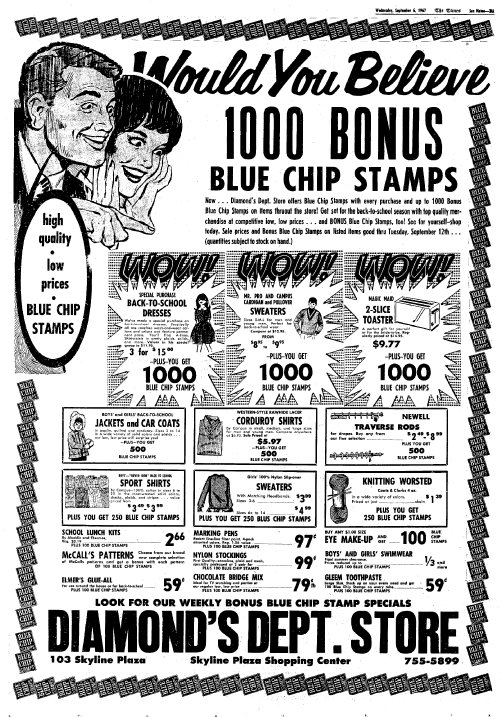
Blue Chip Promotional Ad

lot-of-s-h-green-stamps-plaid-stamps-top-value-stamps-books-c4f216e1c8003cc8c30b62640a2f31d3

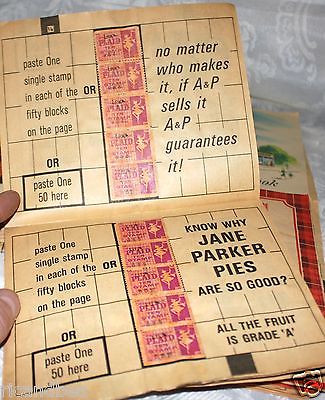
Plaid Stamps, particular to A&P.

8208plaida

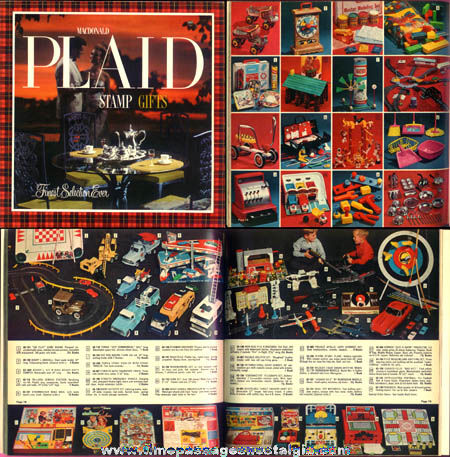
Pages from a Plaid Stamp catalog.

I remember helping my mother gather and lick and apply these things and looked forward to her regular trips to the grocery store. I can’t recall what, if anything, she ever redeemed her books for, but the memory of the collecting is very clear. While the craze faded shortly after, I’m glad I was able to live through this interesting bit of cultural history.

The Old Wolf has spoken.

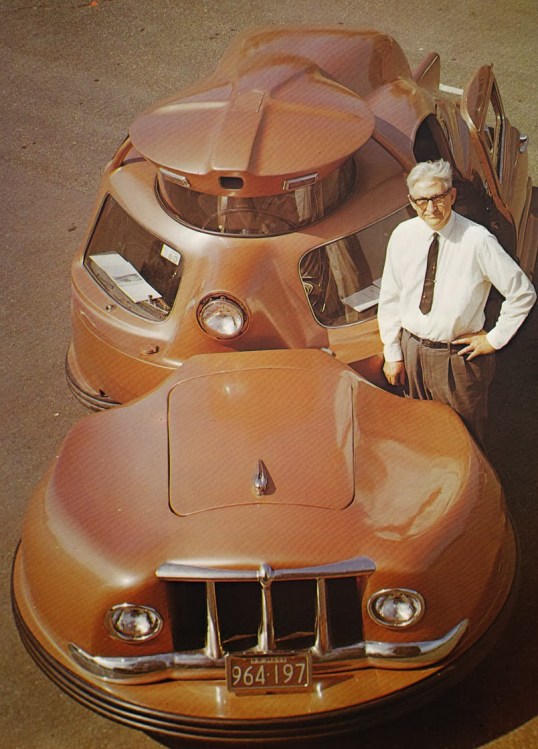
Sir Vival: The future that never was

Reblogged from a post at lafinlarry.net by Pepelaputr. I had never heard of this wonderful bit of bizzarrity, and thought it should get wider exposure.

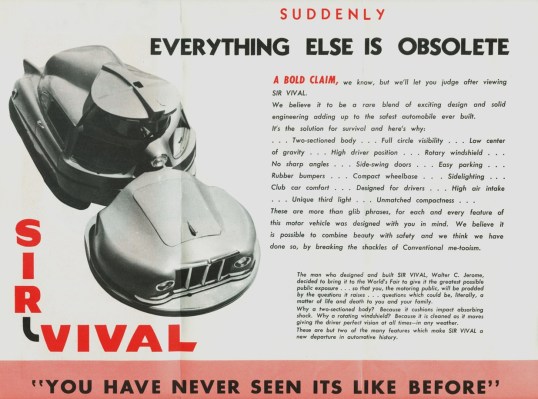
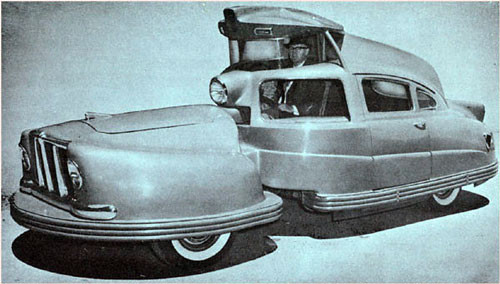
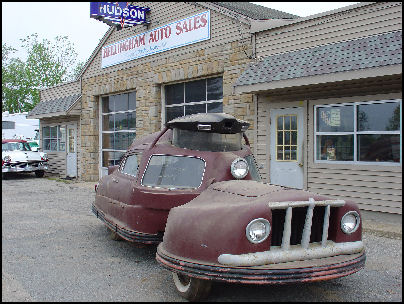
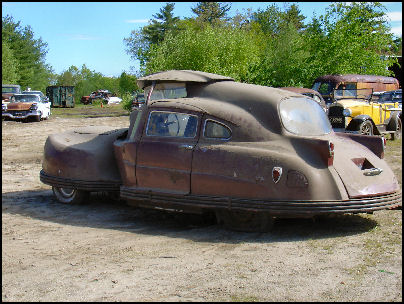
tumblr_n1mvaus3DF1qzk2apo1_1280tumblr_n1mvaus3DF1qzk2apo2_1280W.C. Jerome’s %27Safety Car%27 1958_3

Walter C. Jerome of Worcester, Massachusetts was a man possessed by a mission to make the world’s safest car. In the end, he failed to advance auto safety but Jerome’s segmented sedan might easily qualify as the world’s strangest car.

Primarily concerned with head-on collisions, Jones split his car in two, hoping the front section would absorb collisions, leaving the passenger cabin untouched. Using a heavily modified 1948Hudson sedan as a rear section, he built a raised turret to provide the driver with maximum viability, a goal he furthered with a 360 degree wrap-around screen that constantly rotated past built-in squeegees to wipe it clean.

Wrap-around rubber bumpers protected the Sir Vival’s bodywork from errant motorists in slow speed collisions but they were just one of Jerome’s innovations. The Sir Vival was years ahead with seat belts, a padded interior, and built-in roll bars.

Auto safety has two parts: passive safety concerns passenger protection once a collision occurs, and active safety, or a car’s ability to avoid accidents due to handling and braking qualities. Like most Americans, Jerome focused only on passive safety, ignoring the fact that his car’s awkward separation into dual modules necessitated atrocious handling.

The Sir Vival appeared on magazine covers. Jerome had fancy two-color sales brochures printed that extolled its virtues. But its fifteen minutes in the spotlight quickly elapsed and it sunk without a trace. Amazingly, the eccentric Sir Vival turned out to be a survivor after all. A little the worse for wear, it remains in the care of Bellingham Auto Sales in Bellingham, Massachusetts.

Sir-Vival-1Sir-Vival-2

The world is so full of a number of things…

The Old Wolf has spoken.

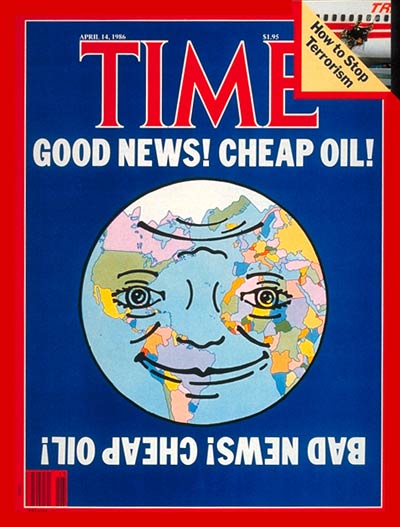
Good News! Cheap Oil! Bad News! Cheap Oil!

Cheap Oil

This cover of Time appeard on April 14, 1996. The lead article started off,

The epic oil plunge of the 1980s started out slowly and a bit remotely. To most people, it was just a downward-sloping diagram on the financial page, an abstract reminder of the mysterious world of desert oil wells, filthy-rich Arabs and the irritating antics of OPEC. But suddenly oil’s new situation is hitting home with the wallop of a 42-gal. oil barrel dropped on the front porch. Last week consumers, businessmen and traders around the world watched in awe as the price of crude dipped below $10 per bbl. for the first time in almost a decade. Oil, which as recently… [subscribe to read full article]

Interestingly enough, the same article by Stephen Koepp (which you can read in full) appeared on 24 June, 2001:

The epic oil plunge of the 1980s started out slowly and a bit remotely. To most people, it was just a downward-sloping diagram on the financial page, an abstract reminder of the mysterious world of desert oil wells, filthy-rich Arabs and the irritating antics of OPEC. But suddenly oil’s new situation is hitting home with the wallop of a 42-gal. oil barrel dropped on the front porch. Last week consumers, businessmen and traders around the world watched in awe as the price of crude dipped below $10 per bbl. for the first time in almost a decade. Oil, which as recently as January was selling for $26 per bbl., was on a breathtaking–and dangerous–ride down a slippery slope.

Not being a subscriber to Time, I’d be interested to know if the oil price mentioned was changed to reflect the current situation, or if the article was sheer copypasta.

At any rate, tracking the historical price of oil online is fraught with difficulty. One chart from Mactrotrends (click through for the interesting interactive version) shows oil dropping at its lowest recent point to $16.28 per barrel in 1998 – I remember that around that time, the price of gas on the street dropped below $1.00 for the first time in ages.
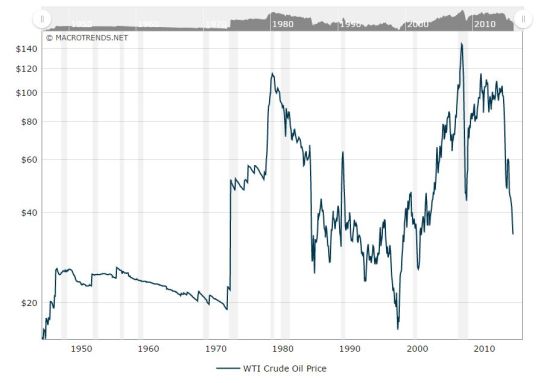
oil prices

The problem with a lot of charts on the web is that they show prices adjusted for inflation rather than the price actually paid:
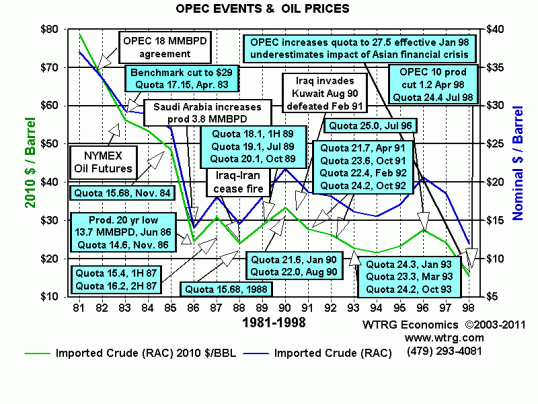
Opec

This article, from whicht the chart above was gathered, mentions crude oil prices plummeting to below $10.00 per barrel, but that doesn’t agree with the previous data from Macrotrends, unless one looks at the “Nominal” price rather than the price in 2010 dollars.

Interesting to note are the actual prices on the street for gasoline over time.
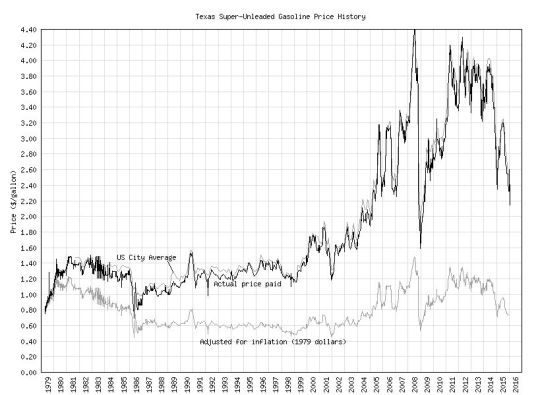
Texas Gas

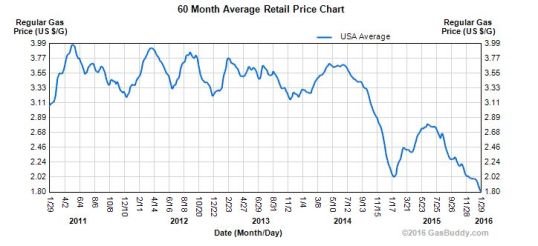
This chart of Texas prices shows gas dipping below $1.00 for almost a full year in 1995-1996, but the trend now is decidedly downward, and even this chart is out of date – as of January 29, 2016, gas is selling for $1.39 in the Dallas/Fort Worth area. Given what oil prices are doing lately, we are marching amazingly close to that $1.00 boundary, and I will be interested to see what the next few months bring. The 5-year chart from GasBuddy shown below gives you an idea of the trend:
Buddy

Yesterday I paid $1.75 in Lewiston, Maine, at BJ’s (a shopping club like Costco), but I noticed that many places were pushing that price anyway.

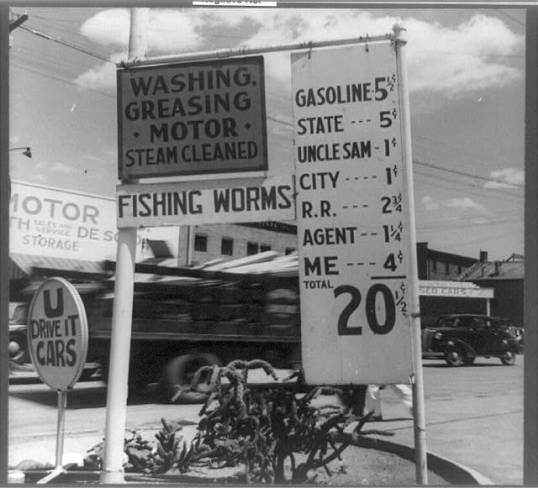
What’s of interest to me is that gas station owners (while they appreciate lower prices of wholesale stock because it does translate into higher profits, haven’t seen a major improvement in their bottom line as a result of fuel sales in over half a century:
Gas1955

Notice that the 20¢ price of gas leaves only 4¢ profit for the station owner in 1955, whereas CBS Money Watch (worth reading) reported in 2014:

“…you should know that after all the ups and downs in a year, gas stations do not make much money from selling gasoline. After credit card fees and other operating costs, net profit for gasoline sales averages 3 cents a gallon, according the National Association of Convenience Stores.”

That means that profit margins on gasoline sales have remained historically paper-thin.
Jack at Shell Station with Dog

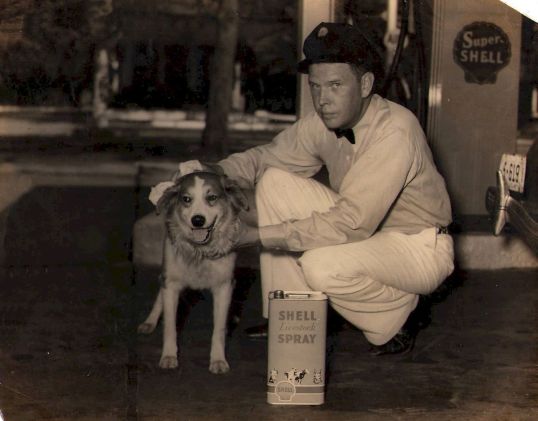
My wife’s father at his Shell station in the 50s. He could have been selling gas at these prices.

As of January 2016, taxes in Maine look like this:

State Excise Tax: 30¢
Other Taxes and Fees: .01¢
Total State Taxes and Fees: 30.01¢
Federal Excise Taxes: 18.40¢
Grand total: 48.41¢

Factor in wholesale costs and other operating costs and fees, and it’s easy to see why a gas station that depended solely on fuel sales would be out of business in a week, much like movie theaters depending on concession sales to stay afloat.

Oil prices dropping again. and only the good Lord knows when the trend will reverse itself. Still, in the changing production landscape which differs from that of 1996 with fracking and oil shale and all sorts of other sources going on, there are winners and losers – this New York Times article outlines the current situation in terms that can be understood by someone other than the late John Nash. The Times predicts that prices are not likely to rise any time soon.

Naturally, for travelers and for those who heat their homes with oil (like me,) this is a boon. If you want to take a cross-country trip, the time is definitely now. On the other hand, the loss to the losers may ultimately be significant enough that drastic measures will be take to raise prices, which will once again curtail supply.

What’s clear to me is that as a nation we need to wean ourselves off dependence on oil, both domestic and foreign. (This is said realizing that for the foreseeable future, oil cannot be completely replaced in our economy.) Trends are encouraging, with efficient electric and self-driving vehicles on the visible horizon, as well as a growing green-energy sector. This is not even factoring in the impact of oil-combustion emissions on global climate change. Anything that can be done to swap as many kilowatts of electricity as possible from oil (and coal) to renewable sources will be a good thing.

The Old Wolf has spoken.

WindPower

Wind power? I’m a big fan.
Amhaeng-eosa: The Secret Shopper of the 16th Century

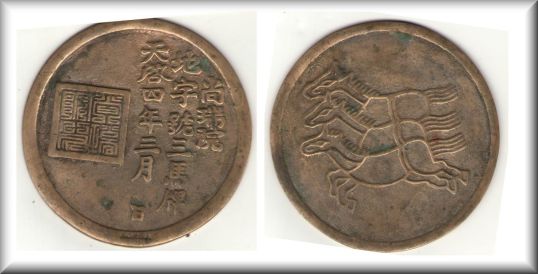
Around about the time my wife was 11 years old, her mother acquired a set of what she referred to as “brass coasters.” There were five of them, but over the course of years since 1967, and through many moves, all but one was lost.

coin

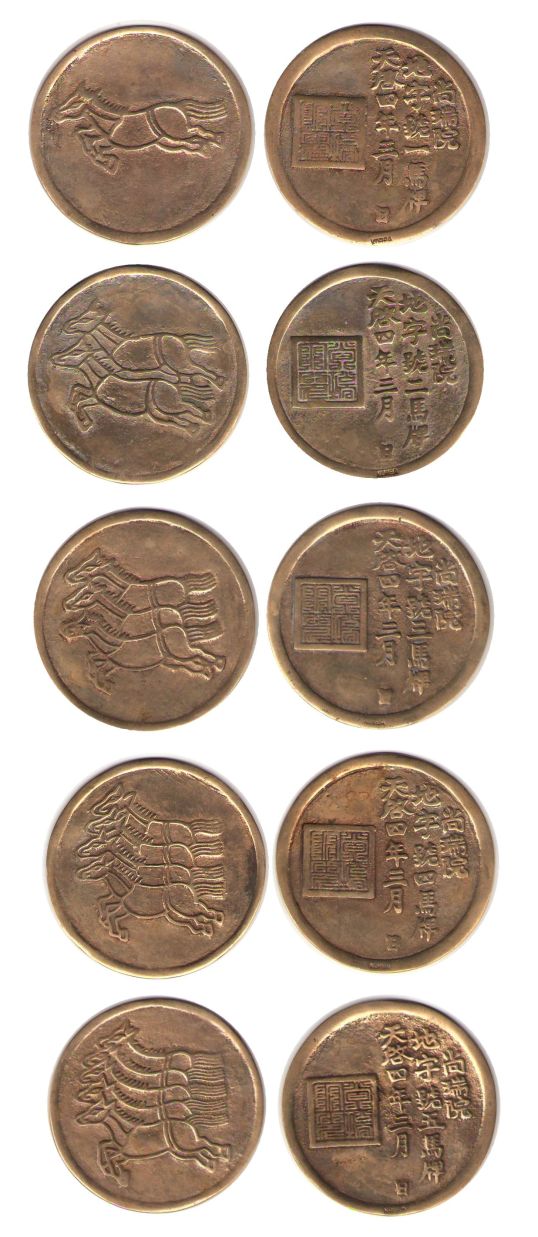
Each coaster had a different number of horses, from one to five. My wife told me that she’d really love to have the complete set again, and so I put it out there to my Facebook community, and as fortune would have it, one of my long-time friends – and one intimately acquainted with Korea – recognized it. He wrote to me:

“It’s called a Map’ae (馬牌); it was issued to undercover government inspectors during Korea’s Yi Dynasty. [Note: the Jeoseon dynasty was founded by Yi Seonggye]. These secret inspectors were charged with roaming the countryside to ferret out corrupt officials. The number of horses imprinted on the Map’ae equaled the number of horses the inspector was authorized to commandeer from state stables located throughout the country. A 5-horse inspector was a powerful man and could pronounce death sentences on high provincial officials (high government officials in the central government had to be tried by a specially convened tribunal).”

With this, I was able to find out that in English these are called “Horse Warrants,” and through a wonderful bit of synchronic serendipity, I located a single set for sale on eBay:

Map'ae

My wife was, as can be expected, surprised and delighted that I had been able to find something that for her had great sentimental value, and indeed, so quickly.

A bit of research gave me a lot more information about these curiosities. From Wikipedia:

The secret royal inspector, or Amhaeng-eosa (암행어사, 暗行御史, Ombudsman) was a temporary position unique to Joseon Dynasty, in which an undercover official directly appointed by the king was sent to local provinces to monitor government officials and look after the populace while traveling incognito. Unlike regular inspectors whose activities under Office of Inspector General were official and public, the appointment and activities of secret royal inspectors were kept strictly secret throughout the mission.
My friend outlined for me the structure of the script on the back:

The Chinese characters read, from right to left, the name of the ministry to which the secret inspectors were attached; the top two characters of the second column are the name of the holder, followed by the character for name. The next three characters specify that the medallion is a three horse medallion. The final column indicate that the medallion was struck in March of 1623 (note that the Koreans used the Ming reign date to designate the year–a common practice in Yi Dynasty Korea) To the far left, of course, is the royal seal.

Position Description

The royal inspectors were sent out with letters of appointment (bongseo, 봉서), a description of their destination and mission (samok, 사목), and “horse requisition tablet” called mapae(마패), which they used to requisite horses and men from a local station run by the central government. The would carry out their inspection in secret, and then reveal themselves with bongseo or map’ae and perform an audit, the results of which were reported back to the king.

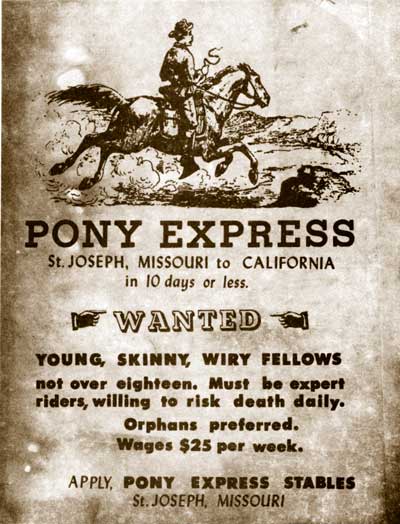
This was an extremely dangerous job, with – according to some historians – a survival rate of only around 30%. They often fell victim to assassins sent by corrupt officials, bandits, or wild animals – and they had to pay their own expenses before being reimbursed by the king. Young men were generally selected, along the lines of the apocryphal advertisement for the Pony Express: “Orphans preferred.”

How-you-recruit-a-horseman

Originals of these Map’ei are worth thousands of dollars and clearly belong in museums, but I’m pleased that through a happy confluence of circumstances I was able to restore one of my wife’s early memories, and learn an intriguing tidbit about Korean history at the same time.

The Old Wolf has spoken.

Whistleberries and hounds, a pair!

If you’ve ever heard that hollered by an overworked server to a harried cook at your local greasy spoon, you might have just ordered a pair of franks with baked beans.

beans-and-franks

Welcome to my stream of consciousness morning.

A recent article at the Sydney Morning Herald provided a fascinating insight into coded language used by healthcare professionals, flight attendants, butchers, and others. (For example, COPD can not only stand for Chronic Obstructive Pulmonary Disease, but also “Chronic Old Person’s Disease.”) The article is a fascinating read.

That led me to think of diner slang, a subject lovingly researched by John Clarke, the husband of a dear friend of mine whom I knew for over 60 years and who recently left this world (far too soon, I might add.) I’m not sure where his research is at the moment, but I know John has dedicated a good bit of time to exploring the ins and outs of this fine art of colorful communication.

I reproduce below, entirely without permission and acknowledging copyright ©2003 by John Clarke, a diner slang quiz which appeared in the Spring 2003 edition of Gastronomica, the Journal of Food and Culture, but which deserves much wider appreciation. Answers below: Don’t peek!

America’s original quick-bite places – the main-street soda fountain, the corner lunchionette, and the roadside diner – shared a special, often secret, culture of language. During the Golden Age of slinging slang from 1925 to 1945, waitstaff and kitchen workers communicated in colorful shorthand.

How good is your slang? See if you can match the twelve sassy term in Column A with the classic American home-style desserts in Column B.

Bonus Question: “Give me Eve with the roof on, a crow slab covered in spla, maiden and tar, plus a stretch with frost and sissy sticks!” What’s being ordered?

1. Ant Paste A. Apple pie
2. Bellyache B. Chocolate pudding
3. Chinese wedding cake C. Custard pie
4. Gold fish D. Cruller
5. House boat E. Banana Split
6. Matrimony knot F. Fudge
7. Magoo G. Bowl of strawberry gelatin
8. Ploughed field H. Ice cream sundae
9. Shivering Liz in the hay I. Sliced peaches
10. Slab of sin J. Rice pudding
11. Snow White on a stick K. Turnover
12. Windbag L. Vanilla ice cream cone

Answers:

1-B, 2-H. 3-J, 4-I, 5-E, 6-D, 7-C, 8-F. 9-G, 10-A, 11-L, 12-K

Bonus Question: Apple pie with a top crust, chocolate pie covered with whipped cream, cherry pie and a mug of coffee, and a large Coke™ with crushed ice and two straws!

Thanks to the wonders of the Internet which rarely forgets, here’s a list of diner slang assembled by Dave Hutchins over at Discuss Cooking – the list has been alphabetized and edited a bit for clarity:

A blond with sand: Coffee with cream and sugar
An MD: Dr Pepper
A spot with a twist: Cup of tea with lemon
Adam & Eve on a raft: Two poached eggs on toast
And cinnamon: Dropped in a bowl of milk
Angel: Sandwich man
Baled hay: Shredded wheat
Balloon juice: Seltzer or soda water
Belch water: Alka Seltzer
Billiard: Buttermilk
Bird seed: Breakfast
Black and white: Chocolate soda with vanilla ice cream
Blood hounds in the hay: Hot dogs and sauerkraut
Blow out patches: Pancakes
Blue plate special: a dish of meat, potato, vegetable also daily special
Boiled leaves: Tea
Bossy in a bowl: Beef stew
Bow Wow, Ground hog: A hot dog
Bowl of Red: Chili con carne
Break it and shake it: Add egg to a drink
Breath: Onion
Bridge Party: Four of any thing (from the bridge game)
Bubble dancer: Dish washer
Bullets or whistleberries: Baked beans (because of supposed flatulence)
Burn one: Fry a hamburger
Burn one, take it through the garden: Hamburger with lettuce tomato, onion
Burn the British: Toasted English muffin
Cackle fruit: Eggs
Canned cow: Evaporated milk
Chopper: Table knife
CJ: Boston Cream cheese and Jelly
Cowboy or western: A western omelet or sandwich
Cow paste, Skid grease, Axle grease: Butter
Creep: Draft beer
Crowd: Three of any thing (as in, “Two is company three is a crowd”)
Customer will take a chance: Hash
Dead eye: Poached eggs
Dough well done with cow: Buttered toast
Drag one through Georgia: Cola with Chocolate syrup
Draw one in the dark: A Black coffee
Draw one or a cup of mud: Cup of coffee
Eighty Six: The kitchen is out of the item ordered
Fifty-five: A glass of root beer
Flop two fry:  Two eggs any style
Frenchman’s delight: Pea soup
Frog sticks: French Fries
Fry two, let the sun shine: 2 eggs with unbroken yolks
GAC: Grilled American cheese sandwich
Gallery: Booth
Go for a walk or on wheels: it’s to go
Grave yard stew: Milk toast buttered toast sprinkled with sugar
Gravel train: Sugar bowl
Hail: Ice
Hemorrhage: Ketchup
High and dry: A plain sandwich with nothing on it
Hockey Puck: A hamburger well done
Hold the hail: No ice
Hot top: Hot Chocolate
Hug one or squeeze one: Orange juice
In the alley: Served as a side dish
Jack Benny: Cheese with bacon )Named after Jack Benny)
Java or Joe: Cup of coffee
Keep off the grass: No Lettuce
Lady Bug: Fountain man
Life preserver: Doughnut
Light House: Ketchup bottle
Looseners: Prunes
Lumber: tooth pick
Machine oil: Syrup
Mike & Ike or the twins: salt & pepper shakers
Million on a platter: Plate of baked beans
Mississippi mud or yellow paint: Mustard
Moo juice, Baby juice, Sweet Alice: Milk
Mystery in the alley: Side order of hash
No cow: without milk
Noah’s boy on bread: Ham sandwich
Noah’s son: Slice of ham (Noah’s second son)
One from the Alps: A Swiss cheese sandwich
Paint it Red: Put ketchup on it
Pair of drawers: two cups of coffee
Pin a rose on it: Add Onion to a order
Put out the lights and cry: Liver and onions
Rabbit food: Lettuce
Radio: Tuna salad sandwich
Sea Dust: Salt
Shake one in the hay: Strawberry milk shake
Shingle with a shimmy and a shake: Buttered toast with jam or jelly
Shoot from the south: Coca Cola™
Smear: Margarine
Soup Jockey: Waitress
Stack or short stack: Order of pancakes
Sun kiss or oh gee: Orange juice
Sweep the kitchen: Hash
Throw it in the mud: Add Chocolate syrup
Two cows, make them cry: two hamburgers with onion
Vermont: Maple syrup
Warts: Olives
Wax: American cheese
Whisky down: rye toast
Whisky: Rye bread
White cow: Vanilla milk shake
Wind mill, Adams ale, city juice, dog soup: A glass of water
Yum yum or sand: Sugar
Zeppelin: Sausage

I got a big kick out of “Put out the lights and cry” – I’m a big fan of liver and onions, but apparently many others are not.

These terms can be very regional and original, so there were likely to be many terms for the same item around the country. A more comprehensive list should be forthcoming when I have the time.

In the meantime, wreck two and make them cry.

The Old Wolf has spoken.