Even the best cartoonists repeat now and then.

I grew up on Peanuts™. I learned how to read with the first Peanuts book that appeared in 1952, and read them voraciously as other volumes were published. Over time my collection was sold or given away (heresy!), and when I came to my senses decades later I began collecting them again.

peanuts-1952

The challenge with the original books was that Schulz was very selective about what he allowed to be anthologized, and many of his strips vanished from the public consciousness. Happily, later arrangements with Schulz and his estate allowed the entire collection to be republished either by Fantagraphics (beautiful but very expensive) or online at GoComics (colorized but free.)

I’ve thoroughly enjoyed the GoComics edition, and read it faithfully and daily. But recently I came across a strip that rang a loud bell:

peanuts-bread-and-budder-sandwich-1

I remembered this strip clearly, but something about it seemed “off.” When I finally had some time to do a deep search of the internet, I was able to find the one I remembered:

peanuts-bread-and-budder-sandwich-1

Same gag, re-drawn, slightly different punchline. According to comments at the GoComics site, there may also be a strip where Linus tells Lucy that if you cut a PB&J sandwich, all the flavor runs out.

Why the re-do? Could be any number of reasons. Maybe Schulz liked this punchline better and wanted to see it published. Charles M. Schulz created a total of 17,897 Peanuts strips; maybe he just forgot he had done this one and the idea stuck in his head, so he “re-created” it. Maybe he was stuck for an idea on a given day. Whatever the case, if this is the only true duplication of a gag that he ever did, that’s a prodigious feat.

Other cartoonists repeat occasionally (and not just re-runs for vacations or filler.) I’ve seen one or two examples, but most of them keep coming up with fresh ideas (or in the case of some comic strips, not-so-fresh ideas) for years or even decades. Schulz was undeniably one of the masters of the genre, and an inspiration for countless cartoonists who followed.

The Old Wolf has spoken.
Two lessons from bees

1) The Unwise Bee

liahonlp-nfo-o-72d
Elder James E. Talmage

Sometimes I find myself under obligations of work requiring quiet and seclusion such as neither my comfortable office nor the cozy study at home insures. My favorite retreat is an upper room in the tower of a large building, well removed from the noise and confusion of the city streets. The room is somewhat difficult of access and relatively secure against human intrusion. Therein I have spent many peaceful and busy hours with books and pen.

I am not always without visitors, however, especially in summertime; for when I sit with windows open, flying insects occasionally find entrance and share the place with me. These self-invited guests are not unwelcome. Many a time I have laid down the pen and, forgetful of my theme, have watched with interest the activities of these winged visitants, with an afterthought that the time so spent had not been wasted, for is it not true that even a butterfly, a beetle, or a bee may be a bearer of lessons to the receptive student?

A wild bee from the neighboring hills once flew into the room, and at intervals during an hour or more I caught the pleasing hum of its flight. The little creature realized that it was a prisoner, yet all its efforts to find the exit through the partly opened casement failed. When ready to close up the room and leave, I threw the window wide and tried at first to guide and then to drive the bee to liberty and safety, knowing well that if left in the room it would die as other insects there entrapped had perished in the dry atmosphere of the enclosure. The more I tried to drive it out, the more determinedly did it oppose and resist my efforts. Its erstwhile peaceful hum developed into an angry roar; its darting flight became hostile and threatening.

Then it caught me off my guard and stung my hand—the hand that would have guided it to freedom. At last it alighted on a pendant attached to the ceiling, beyond my reach of help or injury. The sharp pain of its unkind sting aroused in me rather pity than anger. I knew the inevitable penalty of its mistaken opposition and defiance, and I had to leave the creature to its fate. Three days later I returned to the room and found the dried, lifeless body of the bee on the writing table. It had paid for its stubbornness with its life.

To the bee’s shortsightedness and selfish misunderstanding I was a foe, a persistent persecutor, a mortal enemy bent on its destruction; while in truth I was its friend, offering it ransom of the life it had put in forfeit through its own error, striving to redeem it, in spite of itself, from the prison house of death and restore it to the outer air of liberty.

Are we so much wiser than the bee that no analogy lies between its unwise course and our lives? We are prone to contend, sometimes with vehemence and anger, against the adversity which after all may be the manifestation of superior wisdom and loving care, directed against our temporary comfort for our permanent blessing. In the tribulations and sufferings of mortality there is a divine ministry which only the godless soul can wholly fail to discern. To many the loss of wealth has been a boon, a providential means of leading or driving them from the confines of selfish indulgence to the sunshine and the open, where boundless opportunity waits on effort. Disappointment, sorrow, and affliction may be the expression of an all-wise Father’s kindness.

Consider the lesson of the unwise bee!

“Trust in the Lord with all thine heart; and lean not unto thine own understanding. In all thy ways acknowledge him, and he shall direct thy paths” (Prov. 3:5–6).

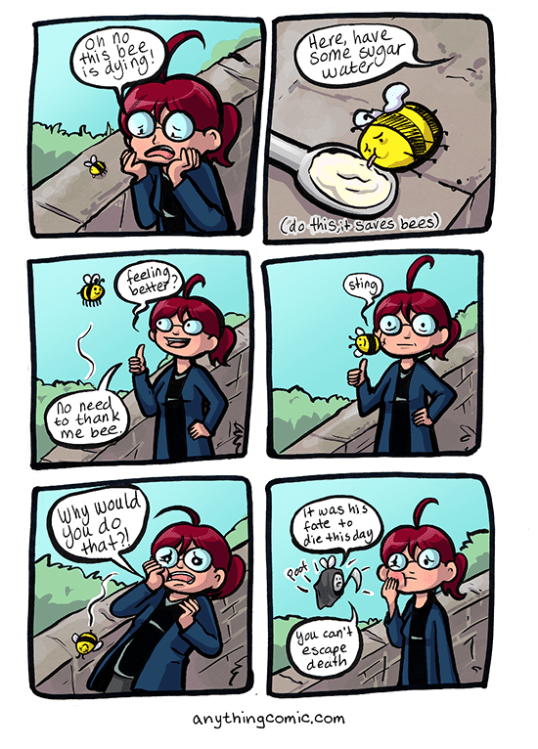
2) You can’t escape death

9856663b2ugch.png

Visit anythingcomic.com, and someone please think of the bees!

The Old Wolf has spoken.

“Indian Counting” – Een, teen, tether, fether, fip!

OK, caveat here: it’s may not be Native American counting, but that’s how it was presented to me by my math teacher (Mr. Sommerville, go ndéanai Dia trócaire air) in high school, around 1967. On the other hand, maybe it is.

The entire schema as he presented it was:

Een, teen, tether, fether, fip,
Satra, latra, co, tethery, dick,
Eendick, teendick, tetherdick, fetherdick, bump,
Eenbump, teenbump, tetherbump, fetherbump, didick!

Being testosterone-soaked boys, everyone laughed at hearing the word “dick” used as a number, and then life went on. I had heard it once, and remembered fragments of it forever.

Then came the Internet, where almost everything arcane has a tendency to show up if you wait long enough. I would search occasionally, and over time, bits and pieces appeared; now there is a full-blown Wikipedia article entitled “Yan tan tethera,” and the real story becomes quite complicated.

Over at Wovember Words, the matter is treated thusly (the whole page is worth a read):

The only reference we could find anywhere confirming connections between the counting words of Native Americans with those used in the North of England is in a musical written in 1957, called The Music Man. There is a scene in this play where the wife of the Mayor exclaims “I will now count to twenty in the Indian tongue! Een teen tuther featherfip!” Is this line in the play responsible for the idea that Native American peoples were using these old counting words with their Gaelic origins, or does it reflect that through the dark mechanisms of Imperialism the counting words were imposed onto Native American culture by the time the play was written?

Lincolnshire Shepherds counted:
Yan, tan, tethera, pethera, pinp,
Sethera, lethera, hovera, covera, di,
Yen-a-dik, tan-a-dick, tethera-dik, pethera-dik, bumfit,
Yan-a-bumfit, tan-a-bumfit, tuthera-bumfit, pethera-bumfit, figgit.

At the same time, around 1890, Native Americans were also using:
Een, teen, thuther, futher, fipps,
Suther, luther, uther, duther, dix,
Een-dix, teen-dix, tuther-dix, futher-dix, bumpit,
Anny-bumpit, tanny-bumpit, tuther-bumpit, futher-bumpit, giggit, Anny-gigit.

If you listen to the soundtrack of the movie version of “The Music Man” carefully, there’s a bit more:

Eulalie begins: Een teen tuther feather fip!
The chorus chants: Sakey, Lakey, Corey Ippy Gip (This may not be 100% accurate as these words do not appear in the screenplay)
Eulalie continues: Eendik Teendik Tetherdik Fethertik … (she is interrupted by a firecracker)

So we can see that it’s entirely possible that these counters, very similar to the Brythonic counting systems – too close to be coincidental – may have been transmitted very early by some oral channel to Native Americans, and that by folklore tradition a knowledge of these counters worked their way down cultural pathways to be included in the play and movie.

Language and its history are curious things, with enough puzzles and questions for lifetimes of study – even the whimsical bits.

The Old Wolf has spoken.

Coin collecting – nobody makes money but the dealers.

I learned this lesson the hard way as a kid, as I sank endless amounts of allowance and paychecks and tips into a coin collection and various and sundry offerings from the Franklin Mint, touted as “brilliant investments” and “guaranteed to be coveted”. Yes, some of the things I gathered were very pretty, but 50 years later when it came time to divest myself of the items for this reason and that, I found out that most of the stuff was worth: melt value. That’s just the sad reality of the collecting world.

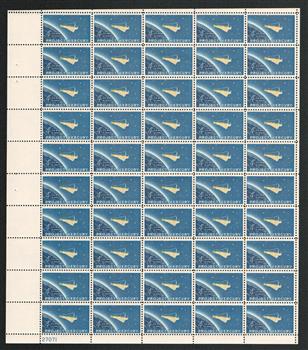
The same holds true for stamps: the mint sheets of things like the Mercury mission

301748

Face value: $4.00. Dealer price today: $18.40. Hardly a brilliant investment over time, and that’s for a mint sheet. Certainly not what my father envisioned as he gathered sheets like this which I ended up inheriting. Individual cancelled stamps collected from envelopes will fetch you… well, kindling, really. With the exception of a few very rare beauties, stamp collecting is a hobby for amateurs (in the original sense, meaning “those who love”) rather than investors.

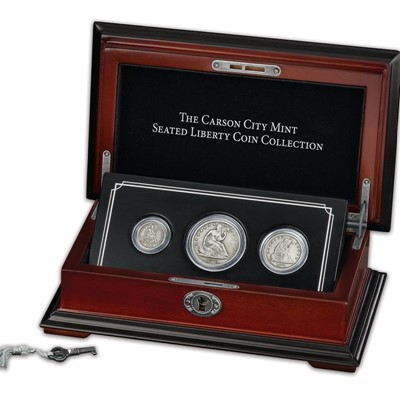
Not that dealers out there are not still trying to flummox the unwise and the uninformed. Look at this beautiful collection of Liberty Seated coins from PCS stamps and coins, offered for only two payments of $295.00:

5cd6ba31-248f-4733-ad48-84a5cd678138_400_0

Yes, it’s very attractive. Here’s the potential breakdown of value, taken from the PCGS website – you can be sure that the coins you get will be the commonest (hence cheapest) varieties out there, and all in “Very Good” condition, or between grade 8 and 10.

1877 CC Liberty Seated Half Dollar – grade 8 – $59.00
1876 CC Liberty Seated Quarter – Grade 8 – $60.00
1876 CC Liberty Seated Dime – Grade 8 – $29.00

Total $148.00

That pretty little case probably costs about 30.00 or less from a dealer in China – so for a premium of $400.00 you can have someone put together a set of coins that you could own for 1/3 the price. Even 50 years down the road, don’t expect your investment to appreciate anywhere near that much.

Old US coinage can be beautiful, and top specimens command insane prices from the wealthy bidders who buy them at auction – but if you want to make money from collecting coins… become a dealer.

The Old Wolf has spoken.
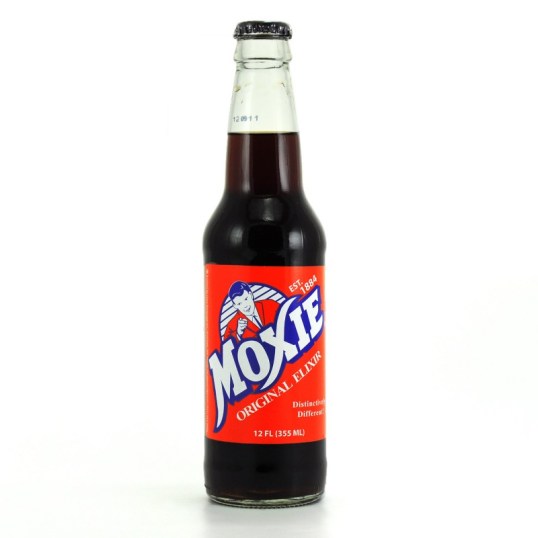
Try Moxie, they said.

12993457_10154069984323851_5847876238616611056_n

My first introduction to Moxie came as I read Stuart Little in the 1950s. Stuart, on his journey to find his lost love Margalo, stopped at a gas station and asked about something to drink.

“Have you any sarsaparilla in your store?” asked Stuart. “I’ve got a ruinous thirst.”
“Certainly,” said the storekeeper. “Gallons of it. Sarsaparilla, root beer, birch beer, ginger ale, Moxie, lemon soda, Coca Cola, Pepsi Cola, Dipsi Cola, Pipsi Cola, Popsi Cola, and raspberry cream tonic. Anything you want.”

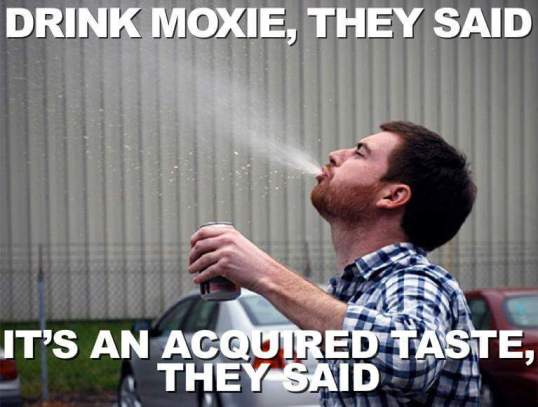
At the time I had no idea what Moxie was, but was delighted to find out later that it was a real thing, unlike the Dipsi, Pipsi, and Popsi colas mentioned. And yes, it’s definitely an acquired taste. It’s reminiscent of root beer or sarsparilla, but the dominant flavoring is gentian root, which brings a bitterness to the drink not found in other soft drinks (unless you’re fond of Campari soda, not usually found outside of Italy.) God forbid anyone should make a soda version of Fernet-Branca!

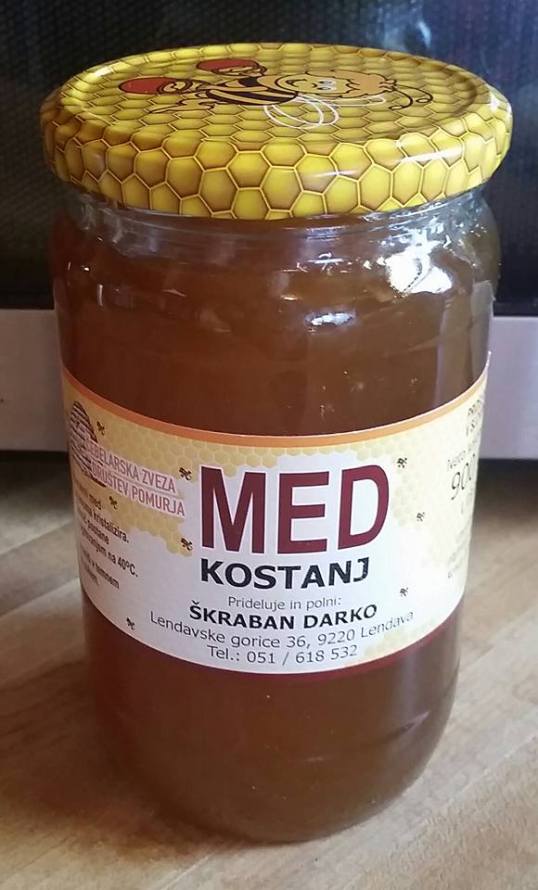
But Moxie is different, and refreshing. The bitterness doesn’t bother me, in fact it makes the concoction more satisfying on a hot day than something that’s just overly sugary. I may like it for the same reason I like chestnut honey, which I discovered on a trip to Slovenia – wonderfully full-bodied, with that same distinctive bitterness which offsets the sweetness nicely.

12310536_10153707717073851_893816737081154231_n

Originating around 1876 as a patent medicine called “Moxie Nerve Food,” Moxie is closely associated with the state of Maine and was designated the official soft drink of Maine on May 10, 2005. Its creator, Dr. Augustin Thompson, was born in Union, Maine. (Extracted from Wikipedia)

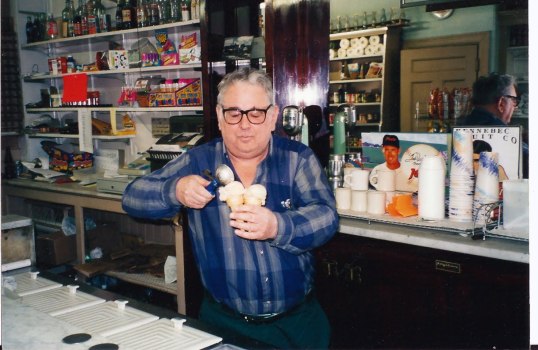
For the longest time, Frank Anicetti ran the Moxie Museum in Lisbon, Maine; this year saw the closure of the store, which was at the heart of Maine’s annual Moxie Festival since 1913.

FrankAnicetti

Frank Anicetti serves up Moxie ice cream

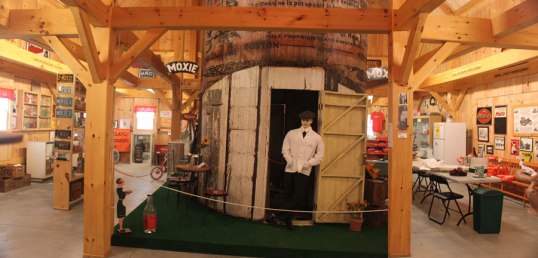
But even though the Kennebec Fruit Company store is gone, Moxie will stay close to the hearts and stomachs of Mainahs; there’s still the Matthews Museum in Union, which has an entire wing devoted to Moxie.

MoxieExhibit

The Moxie Wing at the Matthews Museum in Union, Maine

MOXIE-010000_1.jpg

Now in the interest of full disclosure, I’m still a Pepper, and always have been. In my years sojourning in Europe, I discovered that Europeans – while they find Coke and Pepsi palatable – generally look upon Root Beer and Dr Pepper as tasting like medicine. With that in mind, I suspect Moxie wouldn’t find much of a market in Vienna or Ljubljana… in fact, it might be just enough to turn even our best European friends into a torch-and-pitchfork waving mob.

But such is life. The poor souls probably wouldn’t appreciate nattō either. They have my sympathy. For the moment, I’m happy to be in Maine, where Moxie is readily available.

The Old Wolf has spoken.
The Trading Stamp Era

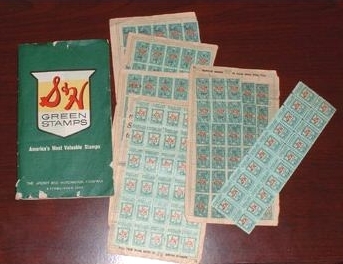
In a previous entry about things gone but not forgotten (by me and my generation, anyway,) I mentioned S&H green stamps.

696b993

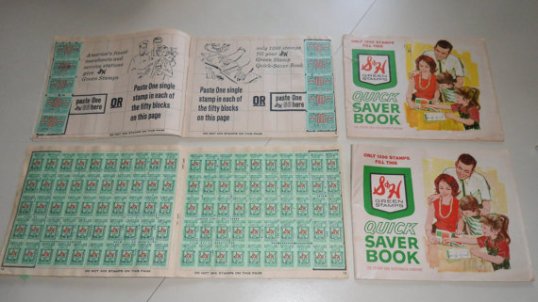
Trading stamps were incentives given out by grocery stores and gas stations in the same way as stores do with coupons, reward-cards, and other come-ons today. You’d collect the stamps, paste them in books, and then take your books to a redemption center somewhere and exchange them for consumer goods.

images

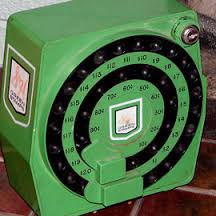
Based on the amount of your purchase, the checker would dial up the amount you spent on a machine like the one above, and the thing would dispense stamps in 1, 10, and the coveted 50 variety. The last one was great because you could fill up an entire page in the book with just one lick.

SandHStamps

Depending on the area of the country you lived in, there were different varieties of stamps available. The ones I recall in addition to the S&H Green Stamps were:

original

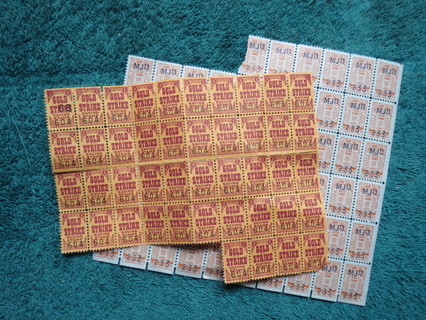
Gold strike stamps

1969-Gold-Strike-Stamps-Catalog-23

Page from a Gold Strike Stamp Catalog. This was not cheap slum; the premiums had significant value if you were willing to collect enough books.

10aa496562010fdbf1dc5c68897e8469

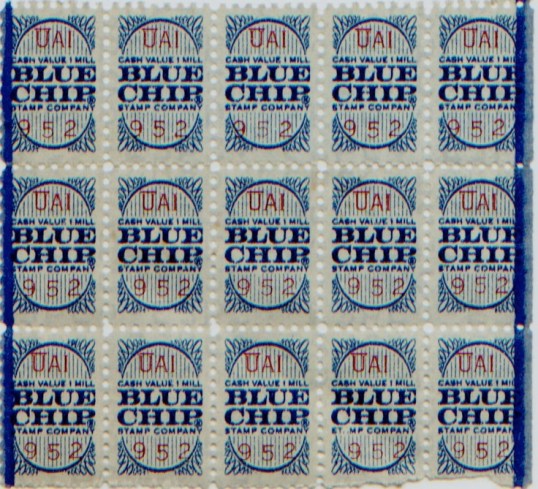
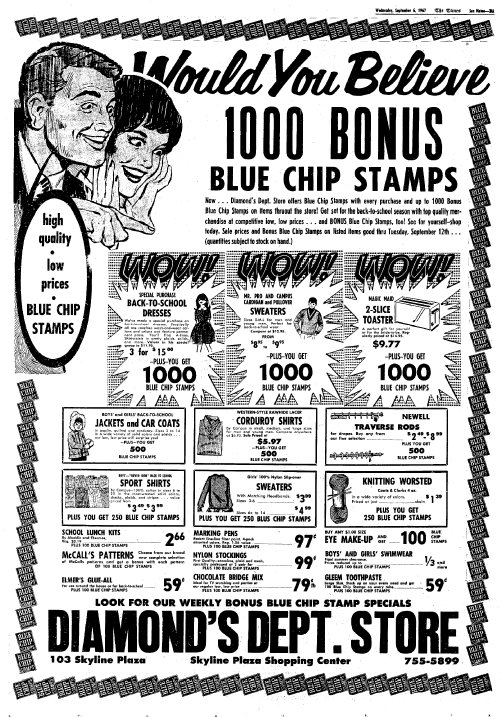
Blue Chip Stamps. If you’re curious about that “cash value one mill” (equivalent to 1/10 ¢) thing, have a gander at this article over at Mental Floss.

1967-blue-chip-stamps-coupons

Blue Chip Promotional Ad

lot-of-s-h-green-stamps-plaid-stamps-top-value-stamps-books-c4f216e1c8003cc8c30b62640a2f31d3

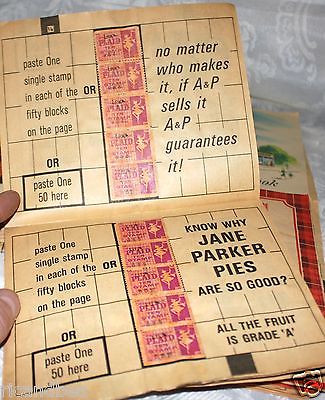
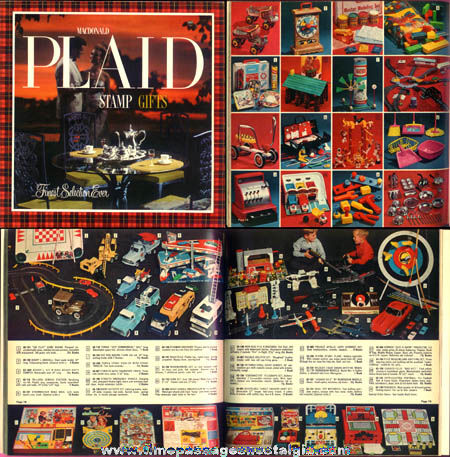
Plaid Stamps, particular to A&P.

8208plaida

Pages from a Plaid Stamp catalog.

I remember helping my mother gather and lick and apply these things and looked forward to her regular trips to the grocery store. I can’t recall what, if anything, she ever redeemed her books for, but the memory of the collecting is very clear. While the craze faded shortly after, I’m glad I was able to live through this interesting bit of cultural history.

The Old Wolf has spoken.
Celebrity Names (The original kind)

Cross posted From Livejournal

What’s in a name? Apparently, a lot when it comes to fame and fortune. Stage names are a longstanding tradition, and there are a number of reasons for adopting one. Fear of being perceived as too ethnic, Guild rules that state no two members may have the same name, anonymity, shock appeal… all play a rôle in determining the choice of your monicker.

From the Huffington Post, here are 44 celebrities and their real names. Some are well known, others came as quite a surprise to me. Listed here so you don’t have to page through their slide show, with concomitant advertisements, along with some gratuitous commentary by my own self, in blue.


Alicia Keys: Alicia Augello Cook
Ben Kingsley: Krishna Pandit Bhanji
(Now that’s an awesome name. I think he should have kept it.)
Bruce Willis: Walter Willis
Carmen Electra: Tara Leigh Patrick
Catherine Deneuve: Catherine Dorleac
To Anglophones, any French name sounds sexy. Perhaps there’s something in French that prompted the choice…
Charlie Sheen: Carlos Irwin Estevez
Chevy Chase: Cornelius Crane Chase
Christie Brinkley: Christie Lee Hudson
Christopher Walken: Ronald Walken
I like his choice.
Chuck Norris: Carlos Ray Norris
No disrespect intended, but “Carlos Norris Jokes” just doesn’t have the same ring to it.
Dakota Fanning: Hannah Fanning
Demi Moore: Demetria Gene Guyne
Diane Keaton: Diane Hall
Elton John: Reginald Kenneth Dwight
Elvis Costello: Declan Patrick MacManus
Etta James: Jamesetta Hawkins
Fred Astaire: Frederick Austerlitz
Helen Mirren: Ilyena Vasilievna Mironov
Jack Black: Thomas Jacob Black
Jamie Foxx: Eric Marlon Bishop
Joan Rivers: Joan Alexandra Molinsky
Joaquin Phoenix: Joaquin Rafael Bottom
Julie Andrews: Julia Elizabeth Wells
Katy Perry: Katheryn Elizabeth Hudson
Lana Del Rey: Elizabeth Grant
Larry King: Lawrence Harvey Zeiger
Marilyn Monroe: Norma Jean Mortenson
Meg Ryan: Margaret Hyra
Mel Brooks: Melvin Kaminsky
Michael Caine: Maurice Joseph Micklewhite
Miley Cyrus: Destiny Hope Cyrus
Natalie Portman: Natalie Hershlag
Nicolas Cage: Nicholas Kim Coppola
Olivia Wilde: Olivia Jane Cockburn
That’s pronounced “Coburn,” in case you were wondering.
Pat Benatar: Patricia Mae Andrzejewski
Yes. Thank you so very much. I can pronounce Eyjafjallajökull, but those Polish names give me fits.
Portia De Rossi: Amanda Lee Rogers
Spike Lee: Shelton Jackson Lee
Steven Tyler: Steven Victor Tallarico
Tina Fey: Elizabeth Stamatina Fey
Tina Turner: Anna Mae Bullock
Tom Cruise: Thomas Cruise Mapother IV
A cool name doesn’t make him any less strange.
Vin Diesel: Mark Vincent
Whoopi Goldberg: Caryn Elaine Johnson
Woody Allen: Allen Stewart Konigsberg


In the end analysis, it’s a shame that so many talented stars change their handles because of undercurrents of racism, but until the world becomes a more tolerant place, it will probably continue to happen.

Edit: I forgot to provide the link to the Wiki article on Stage Names, which gives many more examples and various reasons for the changes.

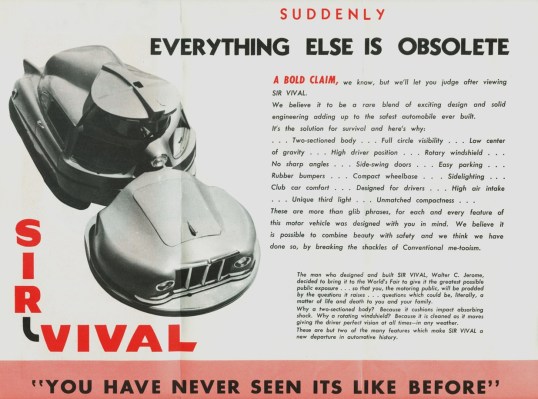
Sir Vival: The future that never was

Reblogged from a post at lafinlarry.net by Pepelaputr. I had never heard of this wonderful bit of bizzarrity, and thought it should get wider exposure.

tumblr_n1mvaus3DF1qzk2apo1_1280tumblr_n1mvaus3DF1qzk2apo2_1280W.C. Jerome’s %27Safety Car%27 1958_3

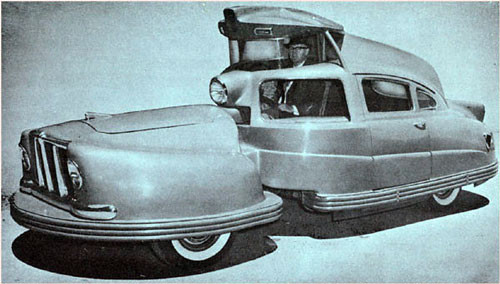
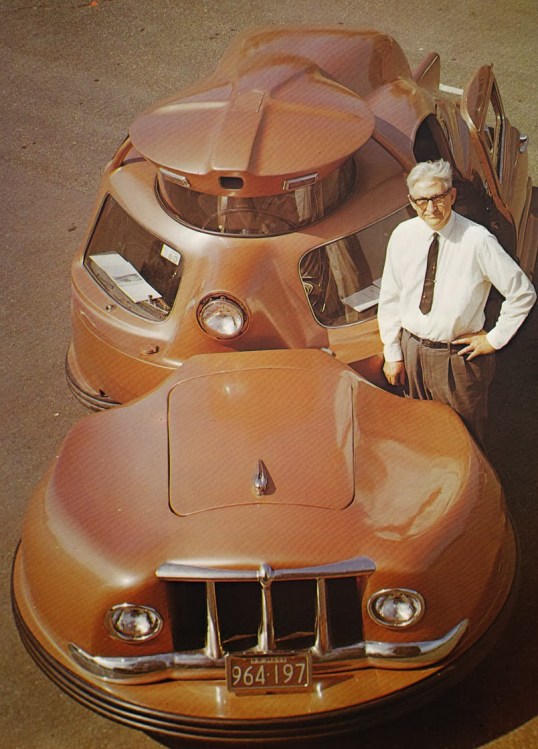
Walter C. Jerome of Worcester, Massachusetts was a man possessed by a mission to make the world’s safest car. In the end, he failed to advance auto safety but Jerome’s segmented sedan might easily qualify as the world’s strangest car.

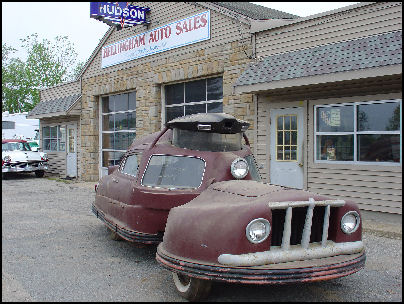
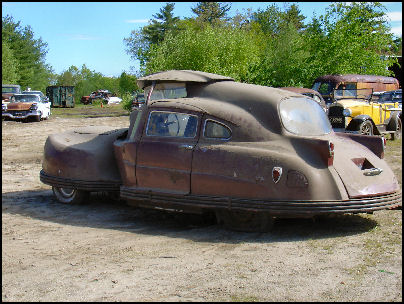
Primarily concerned with head-on collisions, Jones split his car in two, hoping the front section would absorb collisions, leaving the passenger cabin untouched. Using a heavily modified 1948Hudson sedan as a rear section, he built a raised turret to provide the driver with maximum viability, a goal he furthered with a 360 degree wrap-around screen that constantly rotated past built-in squeegees to wipe it clean.

Wrap-around rubber bumpers protected the Sir Vival’s bodywork from errant motorists in slow speed collisions but they were just one of Jerome’s innovations. The Sir Vival was years ahead with seat belts, a padded interior, and built-in roll bars.

Auto safety has two parts: passive safety concerns passenger protection once a collision occurs, and active safety, or a car’s ability to avoid accidents due to handling and braking qualities. Like most Americans, Jerome focused only on passive safety, ignoring the fact that his car’s awkward separation into dual modules necessitated atrocious handling.

The Sir Vival appeared on magazine covers. Jerome had fancy two-color sales brochures printed that extolled its virtues. But its fifteen minutes in the spotlight quickly elapsed and it sunk without a trace. Amazingly, the eccentric Sir Vival turned out to be a survivor after all. A little the worse for wear, it remains in the care of Bellingham Auto Sales in Bellingham, Massachusetts.

Sir-Vival-1Sir-Vival-2

The world is so full of a number of things…

The Old Wolf has spoken.
If the shoe fits…

Vicks Inhaler

When I was a kid, I remember encountering one of these at the home of an older relative. Being naturally curious, I unscrewed the thing and smelled it.

Eeyagh! Hideous! I didn’t even bother asking what it was for, I just considered it anathema and forgot all about it until years later when, as an adult, I discovered how useful they are for unplugging a stuffy nose.

The event was brought sharply into renewed focus in my memory when, about 8 years ago, my oldest granddaughter who was, at the time, 3 years old, picked one up off my nightstand, unscrewed it, and gave it a smell. Her response cracked me up, and I remember it to this day and have told the story many times; indeed, it has become somewhat of a watchword in our family, as you shall see.

What she, at that tender age, said was: “Ew! That’s for old!”

Indeed it is, sweetheart, but I do hope you come to appreciate its value when you have grandchildren of your own.

One day this last year, my wife’s youngest daughter, who was 25 at the time, accompanied me to the dollar store to pick out some candy for a daddy-daughter movie date that we were planning. We each picked out a couple of our favorites, and one of mine was this:

Good-&-Plenty-Box-Small

Naturally, I hated these as a kid as well, preferring things like Bazooka™ bubble gum, Nik-L-Nips™, Jujubes™, and Chunky™ candy bars. Licorice was for *old* people. Gah.

You can imagine my delight when our sweet girl saw my choice, wrinkled up her nose, and said,

“Ew! That’s for old!”

And so it is. But while I’m not excited about the aches and pains that come along with becoming a senior citizen, I have long been appreciative of the sentiment, “Never resent growing old. It is a gift denied to many.”

True enough, and if it brings with it appreciation of things like Good & Plenty™ and Vicks inhalers, then that’s just icing on the cake.

The Old Wolf has spoken.
The Internet Doesn’t Have Everything Yet

I have written before about things I’ve lost over time, seen in a magazine or a book or elsewhere, and my efforts to re-locate them. As time goes on, more and more material gets uploaded to the Internet, but despite some successes, there are many lacunes.

I remember a great advertisement that appeared at the end of the 90s or thereabouts – it was, if I’m not mistaken, for the Sony Nightshot video camera, and showed – taken in infrared light – a cat and a dog surprised in a compromising position on the couch. The caption was something like “You’ll be surprised at what you can discover when you come home unexpectedly.”

I know that ad existed, because I can see it in my mind’s eye as plainly as could be desired, but thus far I have found no hint of it in the course of as many searches as I know how to do. It appears to have vanished without a trace. Now that may be the result of an unfortunate urban legend which sprung up around the time of the Nightshot’s introduction, specifically that you could see through clothing with it – but I’m surprised I can’t locate this particular ad copy, because it was funny.

I guess some things are either lost forever, or I’ll just have to keep waiting until someone finds it.

The Old Wolf has spoken.