A shout-out to Weird Al Yankovic – Word Crimes

I make misteaks when I’m writing. But I try not to make big ones, and I do my best to correct them when they occasionally crop up.

ten artist chirtmas list 5

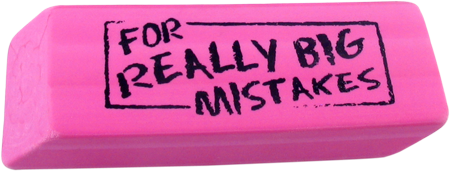
These gigantic erasers have been around since I was a kid in the 50s; fortunately I have never needed one that big. Whilst typing, I can’t ever seem to spell “friend” right the first time; it’s just a quirk, I suppose.

That said, I am always gobsmacked when I see people confusing loose and lose, or their/there/they’re, or its/it’s. Maddening. I tend to be a descriptive linguist rather than a proscriptive one, knowing that languages flow like the mighty Mississippi river over time, and that usage is king – but there’s a difference between colloquialisms and ignorantisms (that last is a neologism.)

Now comes Weird Al, with his second music video in a stream of 8, released one each day. I’ve always loved his work, and this one immediately rose to the top of my favorites list because of the subject matter, near and dear to the heart of a linguist.

I’ll let Al speak for himself.

And now the Old Wolf has done spoke.

K’minyan Tov

I have long loved and respected the work of Art Spiegelman, author of Maus and Maus II, two graphic novels which autobiographically recount the experiences of his father Vladek through World War II and the years previous.

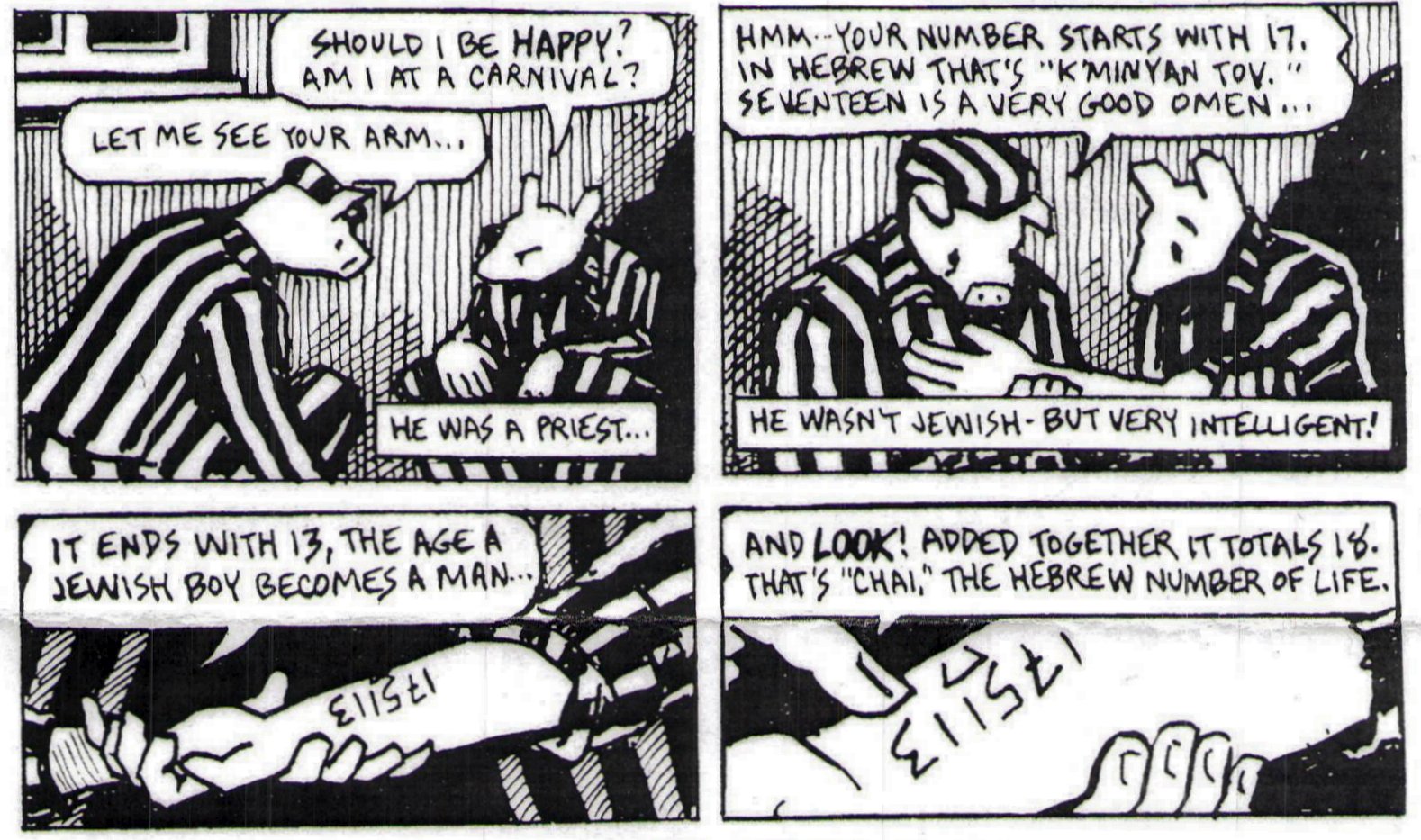
One thing in his account puzzled me, though – the exchange recounted in the panels below, just after Vladek arrives at Auschwitz.

Spiegelman

I had no idea why the priest said that 17 in Hebrew was “kminyan tov,” because seventeen is “shiv’a ‘asar.” The internet didn’t help, because every reference to “k’minyan tov” led back to Spiegelman’s work. I was stumped. It turns out I just didn’t know enough about Hebrew or kabbalistic customs.

After letting the matter rest for about five years, during which interval I began a study of modern Hebrew, I returned to it with a vengeance and did some more digging.

The Polish priest was learned in the ways of gematria, or the mystical assignment of numerical values to Hebrew letters, and divining meaning from how words add up; I first became aware of gematria when I read The Chosen by Chaim Potok.

I was coming at my puzzle all wrong, assuming that minyan was referring to the quorum of ten Jewish male adults required for certain religious obligations. The word itself also means “count,” with “k’minyan” meaning “like the count of.” That expression appears to be used almost exclusively in referring to values in gematria. Look at this post in a forum:

A week or two ago, a posting on the number of brakhot in shmoneh esrei suggested, IIRC, something like that the addition of birkat ha-minim in E”Y changed the 18 to 19. It appears, however that in E”Y there were originally 17 b’rakhot, gematria tov and the addition of birkat ha-minim made it 18, k’minyan chai.

This entire sentence is far over my head in terms of understanding the context, but to have found the expression in an external source was significant. It seems then that this phrase can be read “like the count of ____”, whatever number is being referred to.

Thus the priest reads Vladek’s number (175113) and notes that the first two numbers are 17 – with “טוב” (tov, meaning “good”) being the numbers 9+ 6+ 2 (each Hebrew letter is assigned a value corresponding to its position in the alphabet). Hence “tov” has the value 17; “k’minyan tov” can be interpreted in this case as “like the count of ‘good’.) This would be seen as a good omen. Another interpretation I found indicates that 17 would indicate the 10 men necessary for a minyan, plus seven more, making it a “good minyan” or a “strong prayer group.”  I can’t speak to the accuracy of this interpretation, but it’s interesting nonetheless – this was the first thing that occurred to me, and it didn’t make sense. Now it does. Sorta.

Vladek’s priest friend notices that 1+7+5+1+1+3 equal 18, and the Hebrew word for “life” (חי – chai) is composed of the numbers 10 + 8, or 18, the number referred to in the quote above, which could be read as “like the count of ‘life’.” And this was sufficient for Vladek to express the feeling that he had been given another life. Vladek escaped, and the priest was never seen again.

I don’t think I have the intellectual discipline to pursue this any farther, but my curiosity has been silenced. At least I understand the basic meaning of what Spiegelman was relating in this scene, and that will have to do.

The Old Wolf has spoken.

(For what it’s worth, “Old Wolf” in English gematria is 522, which has the same value as Truth, Birthday, Stephen, Russia, Muslim, Bill Gates, Twelve, Justice, Victor, Vincent, Rand Paul, Priest, Person, Nothing, Lotus, Hail Mary, Yahuwah, Street, Stealing, The Sun, Blessing, Elishone, Cnaan Aviv, Noahs Ark, Elohiym, Lee Vayle, Dustin, Democracy, Praises, Potato, Euro Bay, String, Taav Aaleph, Myth U, Ninety, Baptist, Crackpot, Company, Inside Job, Architect, God Of Buddha, Different, Cotton, Buddhist, The Eyes, Chin Woo, Diaper Dude, Project, Break The Ice, Manifest, Charlemagne, Helsinki, Mackenzie, Gram Of Fat, Oh My God, Gnostic, Archigonic, Samskarda, Tornado, Forecast’, Paternal, Ho Chi Minh, Natural, Black On Black, Dream Logic, Swedish, Sonnet, Mind Of God, Cortez, Paul Rand, Indeed Jobs, Shelter, My Garden, Get Hay At, Consider, King Of All, Vietnam C, All Is One, Veronica, Punish, Fulfilled, Sam Bowie, The Gilded Age, Whether, Def Leppard, Get A T Hay, Pat Crock, טרוטה Truth, Canaanites, Dependent, Lumpy, Fallout, Frighten, Happily, Sticky, Pell Mell, The Mayan, Idiocracy, Pitagora, and Got Milk. Make of that what you will.)
There’s bad translation, and then there’s this.

Battery

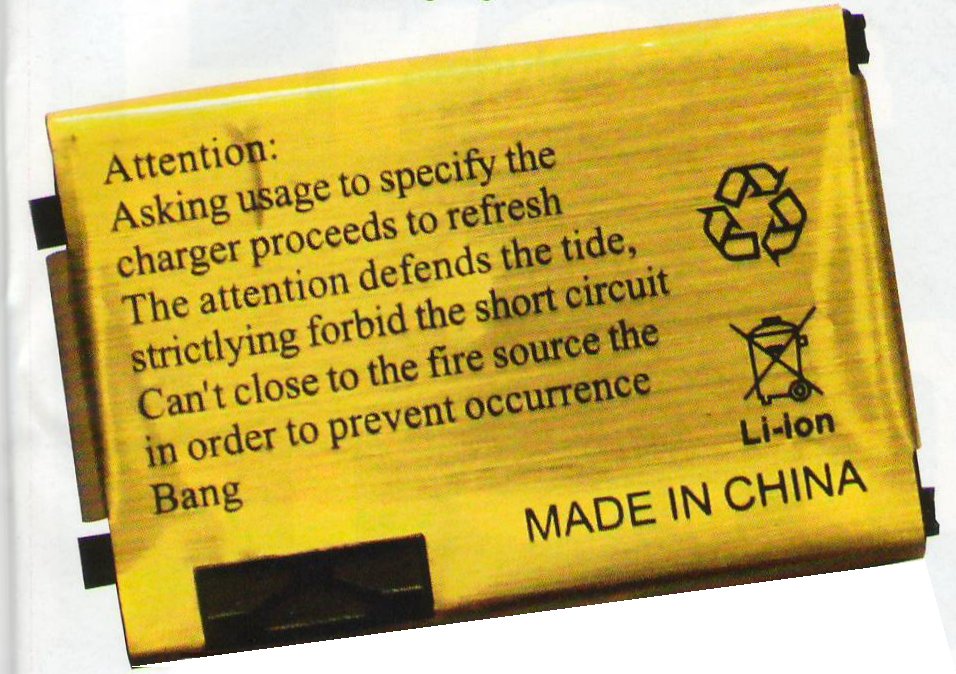
Found this abomination at the “Selling It” section of the May 2014 Consumer Reports. Engrish.com is full of such things, but this example is so egregious I felt as though it deserved its own shout-out.

The accompanying text said,

“Bang Indeed. The buyer who inserted this battery in his new “pay as you go” phone needn’t have worried about the warnings. “Sure enough,” he writes, “the phone did not work.”

I’ve talked about products made in China before, but it’s also worth remembering that the appetite for cheap Chinese goods is not driven by the Chinese exporters and manufacturers, but rather by American importers who buy their junk, exerting such downward price pressure on their suppliers that the quality goes from the toilet into the septic tank. It’s difficult to walk through Wal-Mart or Dollar Tree, to name two examples, without finding “Made in China” stamped on the goods. While getting American families up to living wage standards would help, it would take a miracle to break people of the habit of buying cheap trash just to save a dime. Frankly, I don’t have an answer, but I know that the current situation is doing nobody any good, except for those who manufacture and sell this type of garbage, balancing their bankbook on the backs of low-wage workers and low-wage consumers.

The Old Wolf has spoken.

The Many Origins of the English Language

Stumbled across an amazing interactive chart showing the various influences which affected the development of the English language over time, and felt it was worth sharing.

English


The picture above is a static capture of the cumulative results; if you want to explore in more detail, have a look at Lexicon Valley. The author, Philip Durin, writes,

The elephant in the room, however, is how Latin and French dominate the picture in just about every period. Even the Anglo-Saxons borrowed from Latin (e.g. fork, street,wine), and ever since the Norman Conquest English has been borrowing hugely from French and Latin—quite often taking the same word partly from each of these languages, especially in the medieval period. Words like government, pay, science, orwar (from French), or action, general, person, and use (French and/or Latin) have become an indispensable part of English. Even among the 1000 most frequently used words in modern English, not far short of 50 percent have come into the language from French or Latin. Numbers do not always tell us everything, though: the total of loanwords from early Scandinavian is relatively low, but the language of the Vikings has left some of the most intimate traces in the vocabulary of English, with words likeleg, skin, sky, and even they, their, and them.

This is an intriguing overview, and now I’m anxious to get a copy of his book, Borrowed Words.

The Old Wolf has spoken.

The defense and the illustration of the English Language.

Not 1549, but 2014.

I previously wrote two articles, here and here, about the efforts of France (and Québec, since we’re on the subject) to keep their language unspotted. Many Gallic purists will point at the magna carta of La Pléiade, “Défense et illustration de la langue française,” as reason enough to fight against the encroachment of other, less worthy tongues into the only true language; in view of the recent flap over English as the language of America the Beautiful, really nothing more than a tempest in a teapot promulgated by the intellectually challenged and those devoid of any sense of humanism, I present here a dictionary of terms which must be avoided and their acceptable English alternatives.

The Xenophobe’s Dictionary List of Words for Folks who Don’t Like Outlanders.

Ketchup (from k’ē chap, Chinese for “tomato sauce”): Tomato paste with vinegar and onions and other stuff what makes it a vegetable for school lunches.

Kangaroo (from Australian aboriginal): Big Jumping Rat that makes fine eating.

Cola (from West African languages (Temne kola, Mandinka kolo): That brown drink what goes good with rum.

Coca-Cola (From from Quechua cuca and “cola” above): Something from that liberal-ass un-American company what right-thinking ‘Murcans won’t touch with a 10-foot pole. Even “Big K” has better stuff.

Jukebox (possibly from Wolof and Bambara dzug through Gullah + box): Record-player thingy what you put quarters in.

Candy (from Arabic قندي qandī, sugared): Dayum, you mean mah lemon-heads wuz invented by the A-rabs? Sumbitch, I’ll just have to switch to chawin’ terbacky. Say, Clem, gimme a chaw.

Tobacco (From Taino, a Caribbean language. Said to refer either to a roll of tobacco leaves or to the tabago, a kind of Y-shaped pipe for sniffing tobacco smoke also known as snuff, with the leaves themselves being referred to as cohiba): Stuff you roll up and stick in your mouth and then set on fire. [1]

…..

Well, you get the idea. In fact, purging our English language of all foreign influence would be an exercise in futility, for even Old English was liberally infused with Latin as the result of a 400-year Roman occupation, as well as being a combination of dialects prevalent in the area, including the languages of the Celts, the Angles, the Saxons, and the Jutes. There is no “pure English,” and if you tried to take away all the foreign influences our language has not only survived but reveled in over two thousand years, we’d be reduced to speaking in grunts and belches. Oh wait, a lot of people haven’t got much farther than that anyway.

The Old Wolf has spoken.


[1] Thanx and a tip of the hat [2] to Bob Newhart
[2] Thanx and a tip of the hat to Bill Holman

America: Beautiful in any language

I recently posted about my experience watching two of my friends become American citizens. Now comes the Superbowl with its spate of commercials, one of which has generated some sentiment that absolutely should not exist in this country.

It’s a simple concept. People of various nationalities singing “America the Beautiful” in their own language. But for sheer ignorance, have a look at some of the Twitter comments recently posted about this commercial:

  • The Coca-Cola Co. Should apologize for the ridiculous #SuperBowl commercial #AmericaTheBeautiful should ONLY be in one language #English
  • Heres List Of ALL #Coke Products-BOYCOTT! Our Language Is #English Not Turkish! http://www.coca-colacompany.com/brands/all/ #SuperBowl #Broncos #SeaHawks #sports
  • Really glad I drink @Pepsi and not @CocaCola because that commercial was just AWFUL next time #ENGLISH please! #SB48 #SuperBowl
  • If you want to come to this country fine we welcome you BUT your going to sing America The Beautiful in #ENGLISH & drink #PEPSI #SUPERBOWL
  • I don’t think a commercial that sings in other than #English is a good idea #SuperBowl am not gonna buy ur product anymore
  • WTF?  @CocaCola has America the Beautiful being sung in different languages in a #SuperBowl commercial? We speak ENGLISH here, IDIOTS.”

The xenophobia and ignorant racist vitriol being spewed out onto the Internet breaks my heart. Yet these people seem to have no problem driving down Via Verde Avenue in their Prius to go eat Pizza with their Swedish girlfriend… the intellectual and spiritual disconnect is very difficult for me to get my head around.

Some statistics would probably not be amiss here. The 2010 census reports:

Americans 308,745,538 100.0 %
White 223,553,265 72.4 %
African American 38,929,319 12.6 %
Asian American 14,674,252 4.8 %
Native Americans or Alaska Native 2,932,248 0.9 %
Native Hawaiian or other Pacific Islander 540,013 0.2 %
Some other race 19,107,368 6.2 %
Two or more races 9,009,073 2.9 %

Of that total, 16.4% are of hispanic or latino ancestry. That’s close to two out of every 10. Moreover, have a look at the 15 largest ancestries of these oh-s0-proud Americans:

531px-Census-2000-Data-Top-US-Ancestries

It wouldn’t be surprising if the real names of some of these uneducated and small-spirited bloggers were Jorgensen, DeSalvo, O’Shaunessy, Kang, or Graumann. If they’re taking pride in being called Jones, they may well have forgotten their Welsh ancestry.

Kris Kristofferson has Swedish ancestry. The Governator is from Austria. Rocky Marciano was Italian. Bruce Willis was born in Idar-Oberstein, West Germany. Walter Cronkite had Dutch ancestry. Robert Zemeckis had Lithuanian ancestors. Gene Simmons was born in Israel. My own grandparents came from Tuscany and Calabria. America the beautiful, the open, the welcoming, the free – it has always been and will always be a melting pot of cultures, races, languages and ideologies. We must never forget the words of Emma Lazarus:

flat,550x550,075,f

Not like the brazen giant of Greek fame,
With conquering limbs astride from land to land;
Here at our sea-washed, sunset gates shall stand
A mighty woman with a torch, whose flame
Is the imprisoned lightning, and her name
Mother of Exiles. From her beacon-hand
Glows world-wide welcome; her mild eyes command
The air-bridged harbor that twin cities frame.
“Keep, ancient lands, your storied pomp!” cries she
With silent lips. “Give me your tired, your poor,
Your huddled masses yearning to breathe free,
The wretched refuse of your teeming shore.
Send these, the homeless, tempest-tost to me,
I lift my lamp beside the golden door!”

“The New Colossus,” 1883

As our nation grows in population and we deal with issues of unemployment and the social well-being of our citizens, the issue of immigration must of necessity be dealt with in a rational and humane way, giving priority to those who enter our country through legal and approved channels – but we must never become a nation where ugly and brutal nationalism is allowed to become a vehicle for the demonization of any race, creed or culture. Our national language is English, and those immigrants who have been most successful are the ones who have assimilated rapidly, learned the language and the culture of their adopted home, and mainstreamed themselves and their children. But remembering and honoring their cultural heritage is also a big part of who they are, and how they interact with and contribute to the nation.

If you’re going to insist on English only, you must by rights exclude yourself from ever eating at Acquerello in San Francisco (in fact, you must refer to it as Saint Francis, and no one will know what the hqiz you are talking about) or Piccolo Angolo in New York; you are prohibited from ever driving a Porsche or a Mercedes-Benz; you may never refer to a shiatsu massage or a reiki treatment; you can’t drink vodka; taboo is taboo; you can never again use ketchup; and heaven help you if you want to eat fondue.

For the love of whatever you hold sacred, fight racism, exclusionism, nationalism and xenophobia with every fiber of your being. Every American citizen in this country is entitled to the same respect and status – remember, in the end, – with the exception of Native Americans who were here long before the Mayflower – we all got here on a boat one way or another.

The Old Wolf has spoken.

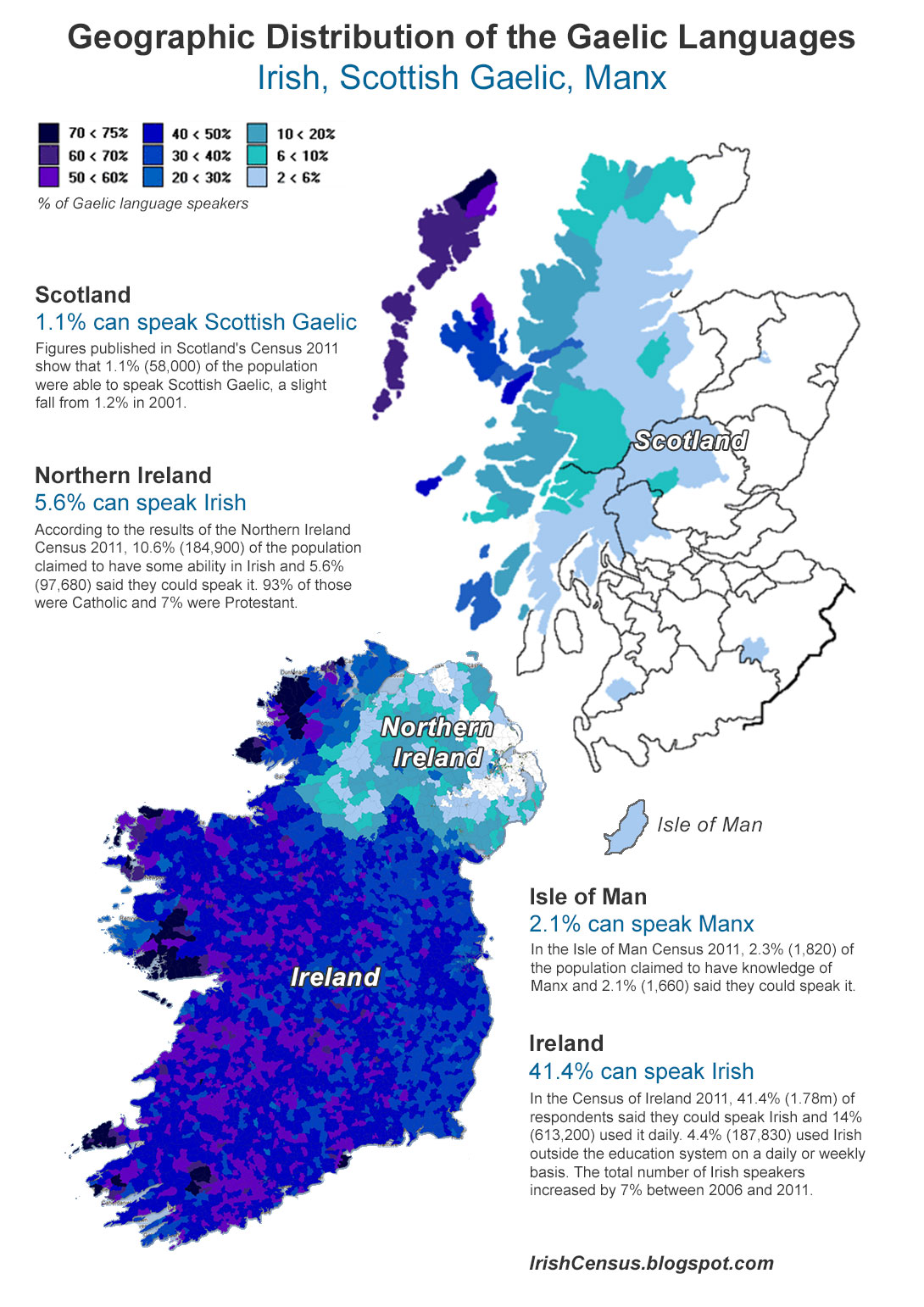
Not Dead Yet – The Celtic languages hold on for dear life.

tumblr_mzpoqw9gmI1rasnq9o1_1280

From Maps on the Web:

A brief history of the Gaelic languages: Middle Irish spread into Scotland and the Isle of Man about 1000 years ago and has since developed into Scottish Gaelic, Manx and Modern Irish, though all are somewhat mutually intelligible (like Spanish and Catalan).

In the Republic of Ireland, Irish is a compulsory subject for 14 year’s of education up until college/university. While 41% of Irish people ticked Yesto the question Can you speak Irish? on the 2011 census, the reality is that only 4.4% use it outside the education system on a regular basis. This 41% figure is a reflection of Irish people’s aspirations for the language rather than ability. I would guess that no more than 10% of the population could actually hold a conversation in Irish, if even.

The situation in Scotland is worrying as they don’t have the huge popular and political backing like Irish does. And Manx died out as a native language 40 years ago but it’s seeing a recent revival with Manx-medium education.

Although the map states that 41% of Irish people surveyed claim they can speak Irish, the number of those who speak it fluently and daily is much smaller, with most of that 41% remembering not more than “cúpla focail” (a few words) of the torment they were required to endure in secondary school. But there is still a fierce pride around the language in some circles, even among the diaspora, which is true of the other Gaelic languages as well – witness the ongoing “Deireadh Seachtaine Gaeilge” (Irish Weekend) held yearly in San Francisco, and the ongoing work by Foras na Gaeilge, among others.

Even Cornish, which died “officially” in 1676 with the death of Chesten Marchant, has witnessed a revival, and Agan Tavas exists as a support organization for language learners; Breton continues to live, and its percentage of pupils in bilingual education has been growing. albeit slowly.

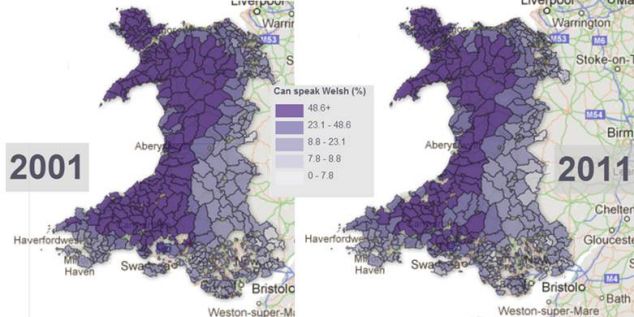
The map above does not address Welsh, (a Brythonic cousin to the Goidelic family) which has historically maintained the strongest foothold within the English-speaking world, but even this bastion of individuality is weakening somewhat:

article-2270638-17404A3B000005DC-387_634x317

The above map shows the changing percentage of those who claim to speak Welsh over the period of 10 years.

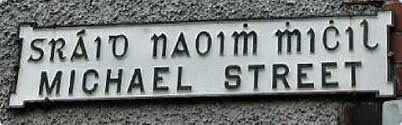
Throughout the Celtic world, street signs are one of the places where local languages are most visible:

url

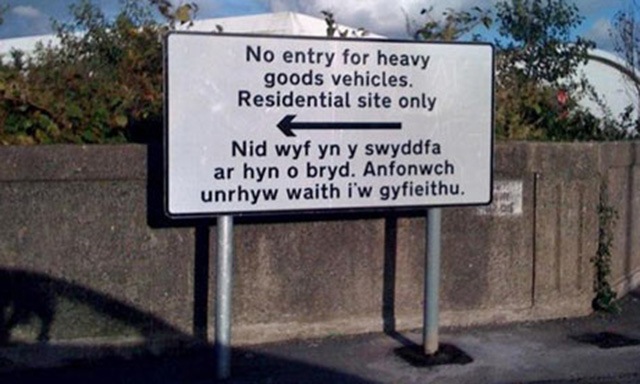
And naturally, if you want to place a new sign, you need the text translated. But woe to the government worker who orders a sign without knowing what the hqiz they are doing:

welsh-sign

The Welsh text on the sign above reads, “I am not in the office at the moment. Please send any work to be translated.” This was obviously an auto-response by a translator on vacation, but the ragskull handling the matter spoke no Welsh, and assumed that this was the desired translation. Oops.

Languages and dialects die almost every day. The Celtic family continues to struggle, particularly given the onslaught of English, indisputably the most popular international language. But the pride of Celtic language speakers will ensure that the death of these beautiful and historically rich tongues will not come until a day far in the future.

Tá an Sean-Faolchú labharta.

In Praise of the Crossword

100 years ago this weekend, Arthur Wynne invented the crossword puzzle, as celebrated in today’s Google Doodle (you can still play with it), an interactive puzzle which took me 28 minutes and 36 seconds to solve.

Crossword1

I’ve been a crossword fan since about 1965. As I mentioned in a previous post about newspaper comics, when I was a sophomore at an eastern prep school, I would get up early in the morning and run across the town square to the coffee shop where I would start the day with a cup of coffee and the Waterbury Republican (25¢ total); the funnies would be read, along with any interesting news of the day. Another regular in the coffee shop was my U.S. History teacher, George Houghton.

Houghton

Bless his memory; his entertaining teaching methods made the study of what was then a painfully dull subject endurable, giving out “a diamond!” and “a zero!” with the same good nature, and encouraging all his students to give the best possible recitations. Not immune to the occasional slip of the tongue himself, he once told us that after the infamous Boxer Rebellion, the U.S. provided funds for the execution of Chinese students… everyone got a great laugh out of that one, including the good professor.

He was also a crossword fan, and morning after morning I would work through the puzzles in the local paper as I sat next to him at the counter, where he generously provided me with an out-of-class education that has stood the test of time. I say with no small sense of satisfaction that I later graduated to working the New York Times crossword puzzle… in pen. As I traveled extensively overseas from 1992 to 2001, the daily crossword in the International Herald Tribune helped me pass the time on many a long transatlantic flight. And I know of no better way to entertainingly broaden one’s vocabulary than to become a crossword fan; I will never forget that an ‘ara’ is a species of macaw.

Life moved on and became busy, and with the advent of the Internet as my source of news, and the gradual decline of newspapers, my crosswording days diminished – but not my enjoyment of the pastime. My thanks to Google for reminding me that this is a very pleasant diversion for an inveterate logophile.

And if you’re curious about the solution to the Google doodle, click through for a completed puzzle.

The Old Wolf has spoken.

The Snows of Yester[insert noun here].

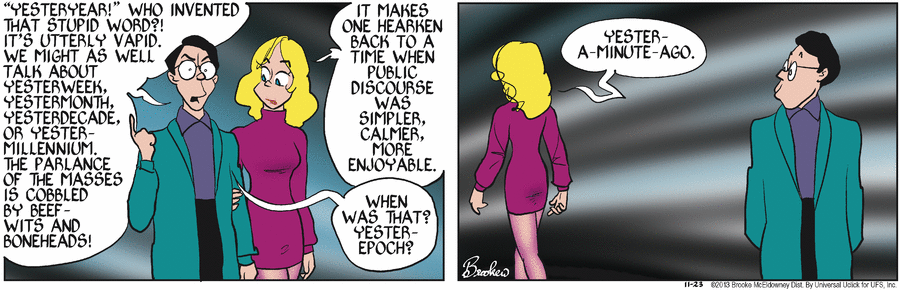
Today’s 9 Chickweed Lane, one of my must-read daily comic strips, got me thinking a bit about the prefix “yester.” It would have been hard for a linguist not to, having had it shoved into my face like this.

cw131123

I mean, who really thinks about the real meaning of the bits and pieces that our words are made up of? I know I’m not the only one, but we’re in a vanishing minority, that much I can say. One of my favorite courses during my undergraduate studies was an entire class which dealt with Latin and Greek roots, prefixes, and suffixes. No other class expanded my vocabulary more.

Did you know “cordial” comes from the root cord-, card- meaning “heart?” You can certainly see it in “cardiologist” and “misericordia.”

How about “translate” and “transfer?” They’re the same word, with the prefix “trans-” (across) and the word “to carry” (ferro, ferre, tuli, latus). Just different parts of speech were used in the root.

Or “attic“? Did you know that the lumber room upstairs was directly related to Athens, Greece?

Some folks might find this BORing, but not I – it fascinates me. So what about “yester-“? Where did it come from?

The Online Etymology Dictionary says it’s from Proto-Indo-European *ghes, which can mean “the other day,” either backward or forward. Compare modern German’s gestern (“yesterday”), but Gothic gistradagis (“tomorrow”). Interestingly enough, “yesteryear” is a back-formation coined in 1870 by Dante Gabriel Rossetti from yester(day) + year to translate French antan (from Vulgar Latin *anteannum “the year before”) in a refrain by François Villon: Mais ou sont les neiges d’antan? which Rossetti rendered “But where are the snows of yesteryear?”

Although yesteryear was not created until 1870, a predominantly Scottish “yestreen” (last evening or last night) was in use from 1773. According to one Scrabble dictionary, the following words use the prefix:

  • Yesternight
  • Yesteryear
  • Yesterday
  • Yestereve
  • Yestern (an adjective pertaining to the previous day or night)

And, as Mr. McEldowney has pointed out, the prefix could legally be attached to just about any time period. Unless you don’t want to be lumped together with the beefwits and boneheads.

The Old Wolf has spoken.

 PS: Even if you don’t happen to be a comment reader, drop down and read the derivative poem by Sharon Neeman, below. It’s moving and beautiful.