Facebook Scams

I’ve mentioned Facebook “like-farming” before, but I just noticed a new scam pop up today, trying to take advantage of both Christmas and Disneyland.

Disneyland Scam


This picture is spreading like wildfire on Facebook, because people don’t notice that “Dιѕneyland” is spelled with a Turkish “dotless i”, and leads to a newly-created page, not the page run by the Disney company.

Be careful out there. Almost all things of this nature on Facebook are scams – there are a few real promotions by authentic companies, but they are few and far between. Don’t just “like” everything and anything that promises free goodies – do your research first, and don’t give the scammers a chance to make money from your gullibility.

Karma will repay these scum-sucking bottom-feeders.

The Old Wolf has spoken.

Why “Black Friday” is a truckload of camel ejecta

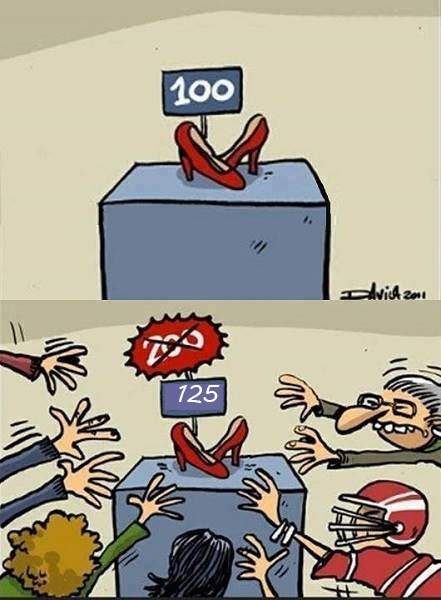
I’ve always known it. With the exception of a few scarce loss-leaders on the front table at Staples, or the one or two flat-screen TV’s listed at a ridiculously low price at WalMart, the things people are disembowelling each other for could be had for the same price at other, much more peaceful, seasons.

An article in the Wall Street Journal talks about the dirty secret of “Black Friday” discounts:

The common assumption is that retailers stock up on goods and then mark down the ones that don’t sell, taking a hit to their profits. But that isn’t typically how it plays out. Instead, big retailers work backward with their suppliers to set starting prices that, after all the markdowns, will yield the profit margins they want. The red cardigan sweater with the ruffled neck on sale for more than 40% off at $39.99 was never meant to sell at its $68 starting price. It was designed with the discount built in.

Why this is not common knowledge by now is beyond me, other than the fact that most people get their educations from slanted news media and the National Enquirer.

The Week gives some more information in an article entitled Black Friday ads: 4 sneaky pricing tricks — and how to spot them  The summary:

  • They mislead us on original prices (“Original Prices” are grossly inflated.)
  • They push derivative products (The wares they’re selling often aren’t the cream of the crop. These models are, unsurprisingly, unreliable and shoddy. Derivative products often have fewer features than comparable sets as well.)
  • They repeat deals from last year (90 percent of Black Friday ads from 2012 contained at least one of the exact same items selling at the exact same price as in 2011.)
  • They use rebates (Shoppers often forget to submit rebates — which is exactly why retailers love them.)

Each of these points comes with advice on how to beat the retailer at his own game, or at least make sure you’re not falling for the scams.

If you need a visual summary, I found this one over at reddit, courtesy of /u/guyinnova

CLUyh7x


Do yourselves a favor. Stay home on Black Thursday and Black Friday, shop on December 4th (or at other less-stressful times), and do your homework. You’ll save both money, stress, and possibly life and limb.

The Old Wolf has spoken.

SEO Scammers – and they’re *still* in business

Edit: It appears that this company later did business as “findyoursearch.com,” which now redirects to “qualitysiteprofessionals.com,” also an SEO outfit. I can’t speak to what this company does, but just be careful.

In March of 2011, I posted this over at my Livejournal. I happened to come across the relevant website again as a result of another search, and finding that the “company” is still in business, I thought it best to put another heads-up out there. More exposure means more forewarned consumers.

liar-350x273

———————

Several years ago I had a very unpleasant experience with an outfit called USA SEO Pros while working on increasing exposure for my online business. Subsequently I found a writeup, which I attach below, verbatim – it’s no longer coming up on Google, so I’m not sure who the author is. However, it’s spot-on – just about fact for fact a mirror of my own experience.

I’m posting this because there are still people out there being taken advantage of. If even one person reads this and saves their money, it will have been worth the effort.


SEO Scams and Snake Oil Salesmen

Author Unknown1

A friend of mine in the Real Estate business came to me a few months ago to ask for some advice on SEO. I went out to lunch and gave her some pointers, then got back to being busy and simply forgot to ask her how it was going. On Saturday she called me asking if I could help out with her desktop machine, as it had become badly virally infected. While working on that, I asked her how the her site was doing.

“Oh, I hired a company to do that for me” was the reply. Then she turned round and handed me a manila folder with some documents in it. “Here’s what they did for me”.

I pulled out the first document. It started off with screen-shots of submissions to the major search engines – Google, Yahoo, MSN & Alexa?… ok, not a great start, but I continued through this document… there were submissions to directories. Ok, let’s take a look at those… hmm, never heard of the majority of them, and quite a few aren’t even in English , this looks like a default directory submission from some tool…

Ok, next document. It’s the invoice for $1750, with “no refunds, no cancellations” typed on it. I ask if she has a contract, or even an email outlining their work, the reply was negative. From the sounds of it, she was cold called, and promised the earth, or #1 rankings in G, Y & M for local Real Estate terms, which amounts for the same thing. The salesperson obviously did a good job, because she gave them her credit card details and sat back. Well, she didn’t quite sit back, she kept calling them to see why she wasn’t #1 yet, and their response was “It’s organic, give it a little more time”.

The next document was a copy of the code on the website, but it looked a little strange, so I went to her site and looked at the code. They didn’t match. This was puzzling, had they only given her recommendations and not implemented them? Then I noticed the URL at the top of the page… it was for a different site.

Yes, a different site. So I asked her if she owned that domain? “No, they did that” was the reply. I reviewed the code. The title tag contained her name, and her name alone, none of the keywords that they were going to magically get her to the #1 spot for, just her name. The same was true of the H1 tag. (Note: this new site doesn’t even rank in the top 50 for her name).

Content on the site was terrible, with keywords stuffed, more strong tags than you could shake multiple sticks at, poor look & feel, all on an extremely long home page. The sub-pages were even worse. In order to save time, given that theirs is obviously a volume business, they had scraped content using the title of the page. Yes, this could potentially work for unique terms, but when you sell Real Estate in a place with a name like Sterling, you may want to check the results…

171034_original

What else did I notice in the code? Well, the most interesting thing was a nice big ad on the page for USA SEO Pro’s, which wasn’t the name of the company that she had hired. Since I can’t imagine that they’d altruistically put a link and an ad on for a competitor, it must be the same company (in fact the testimonials on their website refer to the initials of the company that she hired, so they are the one and same company), but why didn’t they use their own name? A quick search for usaseopros reveals why…

171303_original

Now, wherever they have a negative listing, such as on the Real Estate Blog, or on Ripoff Report, you can see that they’re actively going into those sites and responding to the criticism. Of course, the responses that show up are from ’satisfied customers’ and ‘proud employees’ both of which, based on my experiences with my friend’s site, are false. NoteThis is important. Many disreputable companies follow this practice to try to minimize the impact of negative feedback from dissatisfied companies.

So where does this leave my friend? She paid $1750 with no contract, and no defined deliverables. They ‘did some work’ and ‘delivered some documents’. The site they’ve ‘worked’ on doesn’t belong to her, they can take it down at will, there’s no guarantee that they’ll transfer the domain to her if she asks them to (which is what I’ve asked her to do, despite the fact that it shows not one incoming link, I guess those Lithuanian directories really take time to register). As for their #1 ranking promises, all verbal, nothing in writing. What can she do? Most likely not much, except warn others about her experience, and take this as lessons for the future.

  1. If something sounds too good to be true… it is
  2. Get everything in writing
  3. If you know someone with experience in that particular industry, drop them a quick note to get their opinion, and find out what questions you need to ask.

I’ve told her that I’ll give her a hand when I can, and that in the meantime she should read and learn from real SEOs who have experience in the Real Estate market, not scammers.
End of Quoted Article


My own experience was quite similar. These people created about 15 different websites and loaded them with scraped data without editing a single bit of content. As a result, my fine business (selling MSM, or Methyl-Sulfonyl-Methane, a nutritional supplement that provides elemental sulfur) was pointing to sites advertising “MSM: Men who have sex with men”.

What was even more scary – in order to allow them to work on my website, I provided them with my FTP password. As a result, someone at their extremely disreputable organization loaded my site with links to the vilest of pornography, as well as Javascript malware exploits which are still being flagged by AVG in some of my backup files.

The very bottom line was that my $1,500.00 bought me absolutely no increase in business, and interminable headaches getting my website cleaned up.

This all went down before I became educated about the worthlessness of keyword-stuffing and doorway pages in general, but be alert – these people are still out there. They still have an active website. If anyone from this sleazeball outfit calls you, hang up at once – but be extra careful, because like all liars and thieves, they may be hiding their name behind a shell outfit.

Some good advice for avoiding bad SEO companies and what to do instead can be found at Portent.com

The Old Wolf has spoken.


[1] If you out there see this, please leave a comment here, and I’ll give you full attribution.

Weight Loss Lies, Redux (for the jillionth time)

We’ve all seen the spam. Weight loss, sexual enhancers, body part enlargers… it’s a never-ending stream. Spam is so cheap to send out and requires such a small percentage of turnover relative to how much is blasted out that it will always be profitable for goons and drones and paid affiliates to engage in this shady enterprise.

But it always surprises me when hqiz like this goes mainstream.

If you’re not convinced yet, let me show you one that showed up in my email this morning.

Lies

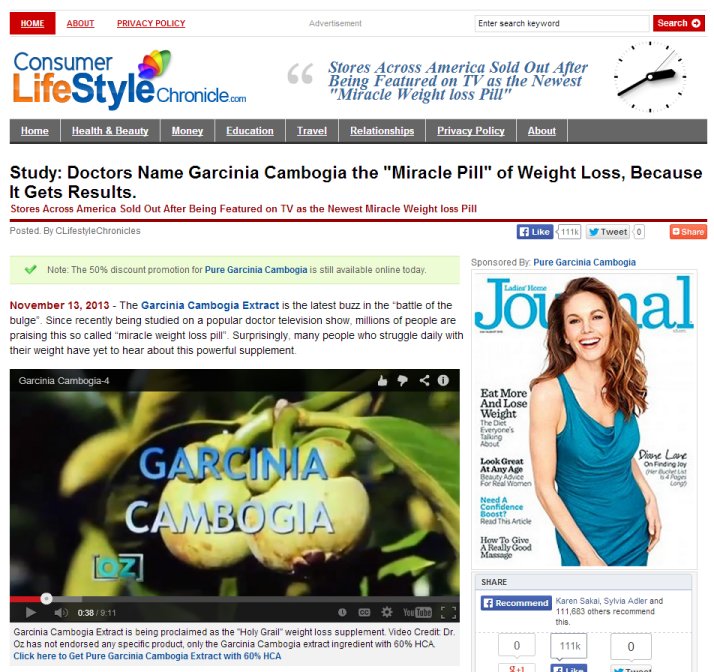
Wow! Wouldn’t you like results that amazing? Wow! Based on the images, the happy lady in those pictures up there has lost at least 30 pounds, and likely more – all in the brief space of 30 days.

Never mind that healthy weight loss takes place at the rate of 1 to 2 pounds per week… whatever this weight loss secret is, I gotta get me some of that! And Dr. Oz is happy to hawk it, right alongside last year’s green coffee extract, or the confusum combobulosum he was hawking before that.

At least the ad above didn’t use the “one weird old trick” line, even though that’s still being used everywhere. But it’s still 100% pure, unadulterated camel ejecta. Snake Oil. Garbage.

What is it? Well, let’s dig a bit.

Doing the “show source” dance from my email client, we find that this ad will direct you to

http://rincomplex.com/UQWbhbuS/ObXtnsJa_ApdXupIv/r-MjIwZTAxOWMhYzZw
OTBwOTRwNzMhZmRiMjchNDIyIXBhZDAxfGNvbSFydHB1cmVnYW5pYWNwYz
EwNThjbWRmcmohZHRidDdkZCEw/X9iBg

Ain’t that a mouthful? These dynamically-generated URL’s are one of the first clues that a particular website is illicit, shady, or otherwise disreputable. What’s more, if you reverse-hack the URL to just “rincomplex.com”, you find a placeholder website full of dummy text and randomly-scraped news articles. They might as well have filled it with lorem ipsum.

But never mind that… I toddled over to the website and found this:

Garcinia

Ok, so this “miracle product” is garcinia cambogia. Along with the typical shameless infomercial/show by Oz, the Great and Powerful. But pay no attention to the little man behind that screen, folks – if you plunk down your money in the hopes of losing weight fast, fast, fast, you’re going to be disappointed.  But before we get into the substance itself, let’s look at how insistent and immoral the marketing practice is.

If you scroll down the page above and express interest, you’ll need to provide your contact information in full – information which will be immediately sold on to other scam companies by this disreputable marketing outfit. If you try to leave the page by using your “back” button or closing your browser, you’ll get this:

confirm

Wow, 60% discount. Maybe I’d better stick around. But both options (expressing interest or trying to leave) take you to the same “special discount” page anyway. Now, notice that you got promised a 60% discount plus free shipping, but the page below says it’s “Over 30%”. But on top of that, I’ve mentioned it before – any website that employs this tactic to try to get you to buy is immediately flagged as both spammy and scammy in my book, and the fact that they’re still doing it shows me that it’s effective. Please, don’t fall victim to these snake-oil vendors.

Image1

So, depending on how gullible you are, you’ll spend between $148.00 and $48.00 for some herbs of questionable effectiveness (more about that later) and spurious quality.

If you’re still not convinced, you get another popup:

Image2

Image3

Now it’s a BOGO offer – buy one, get one free. But you’re still spending that 48.00, which was the minimum purchase level on the previous screen.

Nah, I think I’ll pass… but WAIT! WAIT! WAIT! We don’t have your money yet, and by all that’s holy we want some of it.
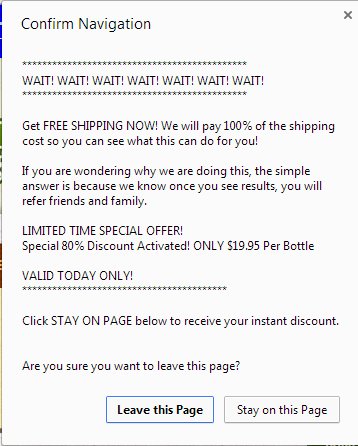
Image4

So now you’re up to an 80% discount…

Image5

Just give us your information, send us a double sawbuck, and we’ll consider ourselves winners (and you a loser.) But really, who could turn down such an amazing offer, with free shipping no less?

Some people can, but there’s one final hook for them:
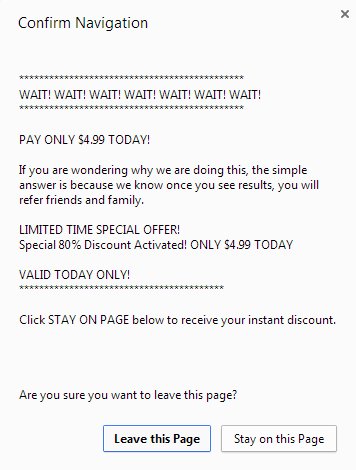
Image6

Only fi’dollars. Just a fin. That’s hardly nuttin’, mister. So if you click “Stay on this page,” you get their rock-bottom offer:

Image6a

Click on this to claim your offer, and see what you’ve won!

Image7a

So you greedily fill out the form, thinking you’ve sure pulled one over on these boobs… but you’ve failed to notice that tiny, tiny print up there that says “terms apply.” What in the world could those terms be?

Image8

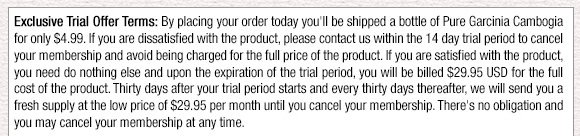
So if you read the fine print down there at the bottom of the page, you discover that you need to call them within 14 days to get that $4.99 price. If you don’t, they’ll gleefully charge your credit card for $29.95, ten bucks more than their previous offer, and you find yourself enrolled in an “autoship” program whereby they’ll send you a new bottle every 30 days, for the low low price of only $29.95.

Great Mogg’s tufted ears, folks – why in the name of all that’s holy would you do business with a checkered-suit operation like this? They get you coming, they get you going, and if they get their hooks into you, they’ll never let go.

So before we sign off for today, let’s have a quick look at this garcinia cambogia and see what it’s really all about.

If you look up garcinia at WebMD, you find that it’s marketed under various names:

Acide Hydroxycitrique, AHC, Brindal Berry, Brindle Berry, Cambogia gummi-guta, Garcinia Cambogi, Garcinia cambogia, Garcinia gummi-guta, Garcinia quaesita, Gorikapuli, Hydroxycitrate, Hydroxycitric Acid, HCA, Kankusta, Malabar Tamarind, Mangostana cambogia, Tamarinier de Malabar, Vrikshamla.

As well as this insightful description:

Garcinia is a plant. The fruit rind is used to make medicine. Don’t confuse garcinia with Garcinia hanburyi (gamboge resin).
How does it work?
Developing research suggests that garcinia might prevent fat storage and control appetite;
however, whether these effects occur in humans is unclear.

But as I have mentioned before, a single scientific study or even some preliminary research is enough to get the media to latch on to those results and get some advertising clicks out of it – and if that starts to happen, the marketeers come from the voodvork out.

Click a little further into WebMD and you find the User Ratings page for the product – reviews which look a whole lot different from the shill-written reviews on the marketing pages:

  • Been taking it for 3 weeks. Have not lost one pound. Have been sleeping more soundly, though. Biggest problem is that my whole body has started to ache. And my joints hurt. I thought at first it was because of my workouts, which I had increased- but I stopped for a week and the pain is still there. I just read on another website that is you are taking stati. Drugs for high cholesterol – which I do – it can exacerbate the negative effects of those drugs and cause muscle degeneration and joint pain. Guess I will be stopping this supplement.
  • Didn’t lose any weight, often had GI upset
  • I have been using this product for one week. Yes it suppresses your appetite but I have had a migraine for the entire week. Stopped taking it…..no headache. Not worth it.

Check the reviews yourself. Oh, and side effects?

  • Garcinia is POSSIBLY SAFE for most people when used for 12 weeks or less. Long-term safety is unknown. Garcinia can cause nausea, digestive tract discomfort, and headache.
  • Special Precautions & Warnings:
  • Pregnancy and breast-feeding: Not enough is known about the use of garcinia during pregnancy and breast-feeding. Stay on the safe side and avoid use.

“Possibly safe?” Wow, that means it might not hurt me. The bottom line is that sufficient scientific research on this and most other herbal supplements is woefully inadequate – randomized, double-blind, placebo-based studies over decades are usually required to give a clear picture of how safe and effective any substance is to take into your body.

But the salespeople don’t want you to know that, and they pay people like Dr. Oz big bucks to hawk these products, which nets them millions of dollars from poor yutzes like you and me, if we’re foolish enough to pay attention to their pestilential marketing campaigns.

One last point: be careful not to assume that I’m saying all natural remedies are worthless or dangerous. That’s not the case. But the vast majority of the things you see hawked on the internet or on these infomercial-style media advertisements are there for only one reason – to get your money based on false promises and false hope. If you’re interested in releasing weight, my recommendations can be found here – scroll to the bottom of the page and find the section entitled “So if you’re interested in releasing weight, what can you do?

If you’re wanting to be lighter and thinner, the odds are you can be – but as I’ve said before and often and don’t care who hears it: there’s no magic bullet. Save your money.

The Old Wolf has spoken.


Oh, and who’s sending this garbage email out?

Pure Garcinia Cambogia
530 Lake Avenue #501 (Appears to be the Pasadena Rug Mart)
Pasadena, CA 91101

and their spam affiliate,

“Multispecialty Medical Groups”
1231 Northern Lights Blvd, #569 (A post office box at a UPS Store)
Anchorage, AK 99503

Charles Ponzi – Boston, 1920

Ponzi

Charles Ponzi, after whom the infamous “Ponzi Scheme” was named, was about as unscrupulous a con-man as ever was born. The man must have come into the world with larceny in his heart, because he never gave up his ways or showed any sort of remorse for his chosen means of livelihood.

The lesson to be learned from studying Mr. Ponzi’s sorry history is that if a deal looks too good to be true, it most certainly is. Sadly, many people have not learned this lesson, and con-men and swindlers continue to operate both locally and across international borders (especially with the advent of the internet); P.T. Barnum’s assertion that “there’s a sucker born every minute” is all too true. The authorities do what they can, but especially in the case of international swindlers, such as advance-fee scammers from Nigeria and elsewhere, there is little that can be done.

If you haven’t been to the Sweepstakes Fraud Factsheet yet, you might just want to have a look. Protect your loved ones, especially the elderly and vulnerable.

The Old Wolf has spoken.

“European Trade Register” – Avoid this Scam

UPDATE: The Dutch police are aware of these scammers. See this post for a letter from the Dutch police secretariat, a way to report correspondence, and their advice (send no money, do nothing).

Business owners beware – the “European Trade Register” scam is still operating. Why these bottom-feeders have not been shut down by the relevant (i.e. Dutch) authorities is beyond me.

Here’s the email I received today (identical to one I got about 4 years ago):


To: My Business
From: “Marta Low” <info@plumzz.com>
Subject: Business Registration Update 2014

Ladies and Gentlemen.

In order to have your company inserted in the registry of World Businesses
for 2013/2014 edition, please print, complete and submit the attached
form (PDF file) to the following address:

European Trade Register
P.O. BOX 3079
3502 GB, Utrecht
The Netherlands

email: register@etr2013.net
fax: +31 20 524-8107

Updating is free of charge!


Pay attention to that “Updating is free of charge” up there – notice it’s repeated in bold on the PDF application form they send you.

form

What they’re counting on is that many people won’t read that itty-bitty fine print down there, which says (emphasis is mine)

The signing of this document represents the acceptance of the following conditions and the conditions stated in “the terms and conditions for insertion” on web page: http://www.european-traderegister.com.
The signing is legally binding and gives you the right of an insertion in the online database of the european trade register which can be accessed via the internet, and a cd rom with european businesses is granted, all in accordance with the contract conditions stated in “the terms and conditions for insertion” on web page: http://www.european-traderegister.com. The validation time of the contract is three years and starts on the eighth day after signing the contract. The insertion is granted after signing and receiving this document by the service provider. I hereby order a subscription with service provider eu business services ltd “european trade register”. I will have an insertion into its database for three years. The price per year is euro 990. The subscription will be automatically extended every year for another year, unless specific written notice is received by the service provider or the subscriber two months before the expiration of the subscription. Your data will be recorded. The place of jurisdiction in any dispute arising is the service provider’s address. The agreement between the service provider and the subscriber is governed by the conditions stated in “the terms and conditions for insertion” on web page: http://www.european-traderegister.com

So, if you thought you were getting a free entry in a European business database, which is what they want you to think, you will be surprised when you’re invoiced for €990 and have legally obligated yourself to pay it. And, if you’re not careful, your entry will be automatically updated every year (at the reasonable rate of €990) unless you notify them in writing.

If you happen to fall for this, these things will happen:

  1. The company will ignore any attempts to contact them
  2. If you simply refuse to pay, you will begin to get aggressive and threatening communications from a “global debt collection company,” Waldberg & Hirsch. That firm does not exist – it’s just the same drones trying to frighten you into paying. They will demand payment in full for the agreed-to three years, but will settle for one year’s payment if you’re foolish enough to send it.

The solution:

  1. Just ignore them. They can’t sue you, because they are running a scam, they know it, and they don’t want to attract legal attention to themselves. Never pay these gong-farmers a cent; ultimately they’ll go away.
  2. Throw away any solicitations you receive from
Column A
Europe
European
World
Global
Column B
Company
Trade
Business
Column C
Directory
Register
Registry
List

Again, I’m not sure why the Dutch authorities have not come down on these scum-suckers like 16 tons of Gouda – hopefully at some point they will be shut down.

In the meantime, be careful out there.

The Old Wolf has spoken.


Life Insurance: Spam ‘n’ Scam

The Internet is a perfect place to steal people’s money legally. All you have to do is write something, post it, and the equivalent population of Belgium will take it as gospel truth. There’s a lot responsible for this phenomenon, but lack of education appears to be the primary culprit.

GlobeScam.jpgq

This appeared in my mailbox last night, typical of the kind of UCE (junk mail) that Comcast’s filters allow to slip through.

Warning: NEVER buy life insurance from Globe Life, this is not an endorsement!

I could smell the rotting fish almost before I opened my malibox this morning. Red flags:

  1. The fact that they’re spamming at all. Ethical companies don’t spam.
  2. The “marketer” or affiliate being paid to send out this putrescence is “Future Modern Logistic” which has no internet presence and a UPS Store PO Box for a mailing address
  3. The bait-and-switch tactic using a huge headline plus an asterisk[*] followed by lots of small print is immediately suspect.
  4. A quick search of “Globe Life Insurance” brings up page after page of consumer complaints.
  5. Using shills to promote the company, even if the writer couldn’t get a “C” on a third-grade composition. Have a look at this “endorsement” I found at nationwide-insurance.org – the website is a black-hat SEO spamdexing site which provides no useful content but rather spurious data and backlinks to other sites in an effort to boost their search ratings:

“Globe Life Insurance Scam-Our Honest Review

There are some insurance companies that do scam except is the globe life insurance scam legit? Globe life insurance corporation is a great company who offers a great insurance policy. When we are asked if we think they are one of the insurance scams our answer is no. They have great insurance deals and if you seem up insurance reviews you will notice their reviews are great. Plus you can go online and get free insurance quotes for life and health insurance. When you get an insurance quote make sure you select the right semester life insurance. Also they supply event insurance in case you want to connect to two. We also have a protective life insurance company scam you might want to check out”

Bad punctuation, horrid grammar, and it goes on for about 8 more paragraphs of the same kind of liquid dung. I mean, who in the name of Mogg’s holy grandmother would consider doing business with a company that descends to this kind of tactic? Perhaps the kind of people who believe the “Cash4Gold” infomercials…

The Internet is a huge place, and I don’t anticipate that a small voice like mine, crying in the wilderness, will have a large impact. But if one single person reads this and as a result, refrains from doing business with Globe Life or another disreputable company of the same caliber, it will have been worth the time.

The Old Wolf has spoken.


*Like this. By reading this blog post you are legally obligating yourself to send $50,000 per year to the blogger in perpetuity, and to eat nattō three times a day without complaining about how slimy it is.

The “Gifting” Ponzi Scheme

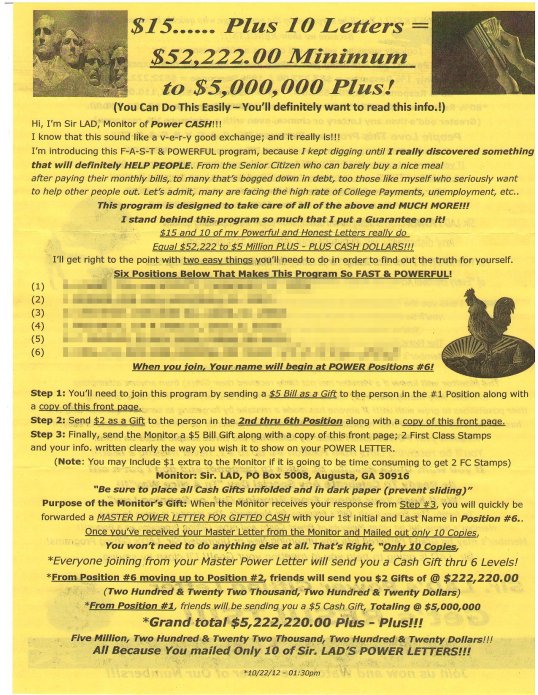
Somehow the previous owners of my home got themselves on a sucker list and regularly get mail from people trying to recruit them into various disreputable money-making schemes. I present one here for your edification.

(Links to full-resolution images are included below each picture.)

Image

Full resolution

(I’ve redacted the names of people on the list, because unlike “Sir Lad,” the owner and operator of this Ponzi scheme, they are victims whether they know it or not.)

Image0001

Full resolution

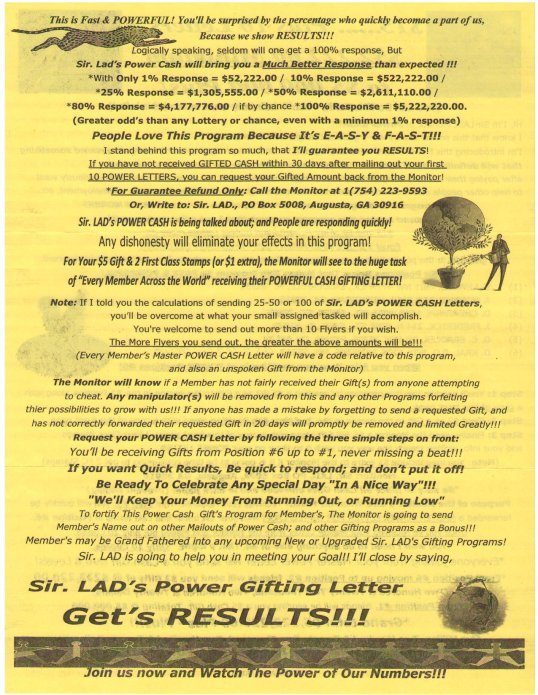
There’s not much to say about scams of this nature other than do the math, and you’ll see that any such program is unsustainable and depends on a constant influx of new victims and an unsupportable number of people at the bottom. Once again, the success of Sir Lad – the person at the top – is predicated on the failure of thousands of people at the bottom. It’s interesting to note that he has added an additional layer of profit to this scheme – even though he’s no longer on the list of “gift recipients,” as the “monitor” he skims $5.00 or $6.00 from every victim. Notice how the wording of the letter targets the elderly and people in economic distress, those who can least afford to lose what precious resources they have.

I have taken a sample section from an excellent educational website entitled Cash Gifting Watchdog – I recommend this as a must-read for people who want to protect themselves and their loved ones from losing their money to disreputable con-men.


Why do cash gifting programs eventually fail?

If members fail at marketing the programs to an ever-widening base of new members, then the pool of money being “gifted” among the existing members will dry up.

Cash gifting clubs promote themselves at invitation only gatherings similar to Tupperware parties, except that no product is being sold.

All those invited are there because an existing member of the program thinks they have money available to participate and will risk giving it to a complete stranger for the chance to have several complete strangers the same amount of money to them, multiplying their money (again, it’s never called an “investment”).

The “presenters” at cash gifting program gatherings give chalkboard or Power Point presentations which invariably end up with an image of a pyramid, showing how each member will make his or her way from the base to the top, where they will get the big payoff.

The money contributed by an incoming member goes to the top of the pyramid immediately, while the penniless member sits at the base of the pyramid until enough other members join to completely pay off the member at the top and move everyone else up a notch. Once a member is paid off, he or she is free to move on, but for a club to keep working, the money given to that member will have to be replaced from somewhere.

If, for example, the promised payout of a cash gifting club is $20,000, and the gift required is $2,500, only eight new members must be recruited to pay off one old member.

But what happens when a club reaches 100 members? If each of them is to get the full $20,000, for a total of $2,000,000, then 800 people must join. If each of them is to be paid, 6,400 must join. With each new level, the numbers grow more unrealistic.

For this example club, with its relatively low gifting and payout levels of $2,500 and $20,000, to continue for only two cycles after it gets its 100th member, 51,200 members must join.

Many clubs count on their paid off members to keep returning. Even if they all do, it is mathematically impossible for a cash gifting club to survive without an exponentially increasing membership base.

When the pool of new members dries up, so do the cash gifts, and any members who joined too late are out of luck – not to mention money.


Please be alert and aware. Programs like this are doomed to failure for all but those who begin them or happen to be the fortunate one or two at the very top of a new scheme. They are also dishonest, mean, and illegal in the extreme, but skirt the law by various means and tactics and thus are very hard to shut down.

Protect yourselves and your loved ones, particularly the elderly who are the most susceptible to such cons [1]

The Old Wolf has spoken.

Notes
[1] This is a bilingual pun, if you happen to speak French.

Hawking snake oil to the elderly

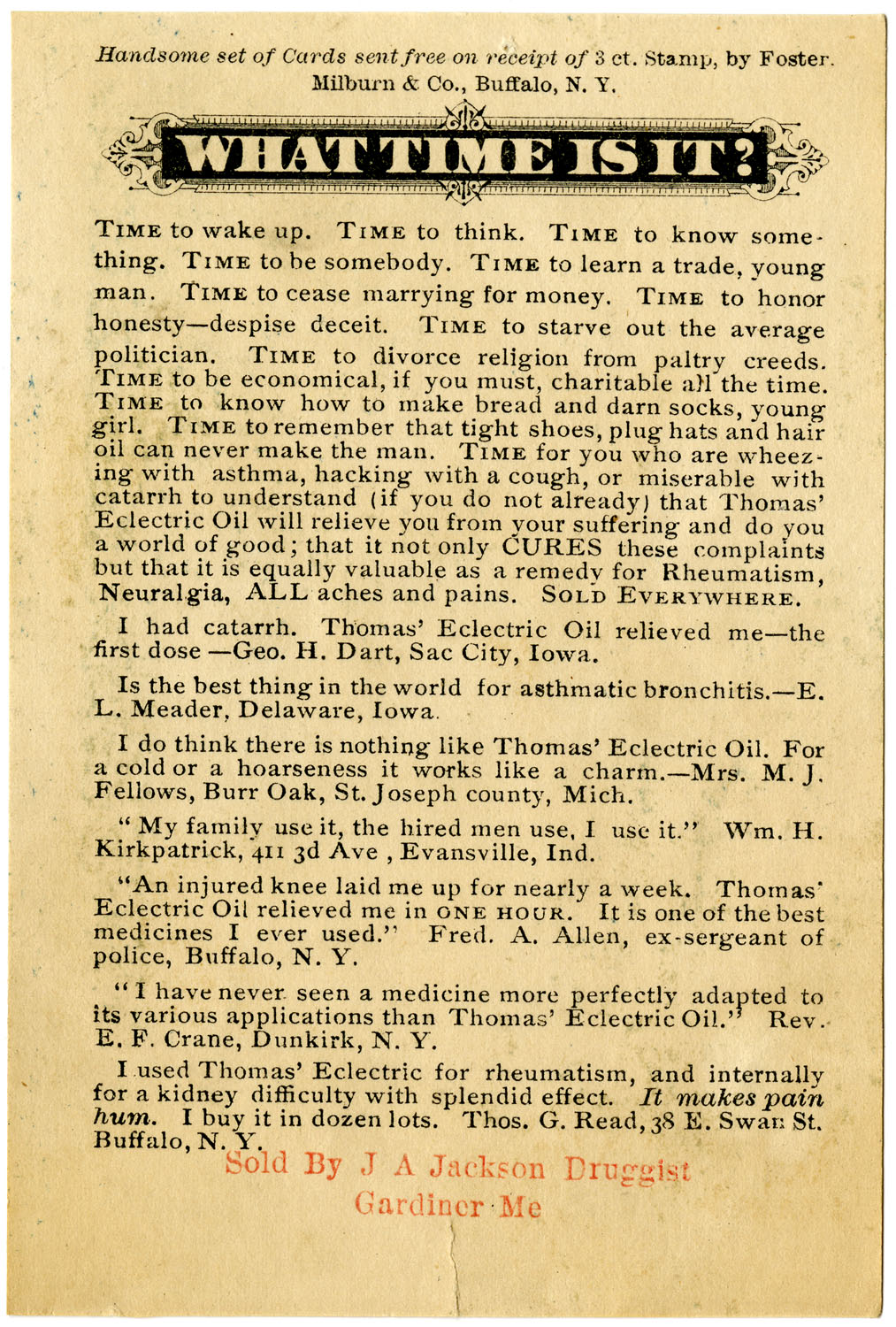
I still get mail addressed to my mother on occasion; she left this world last year at the age of 94. But she was getting ads like this regularly for about 15 years before she finally caught the bus, and as time went on (before we took over her financial affairs) she ordered lots of products, either on her own or at the insistence of skilled but sleazy telephone salesmen. As a result, she ended up on every sucker list out there.

If you have older loved ones, please make sure they throw solicitations like this into the trash, even if they come from places as respectable as the Mayo Clinic – they’re not above drumming up business in the elder sector, and there are thousands of others who are looking for a chance to separate mentally-diminished but resource-wealthy seniors from their incomes, savings, and pensions.

The letter above is pure crap. The company makes a glaring mention of the FDA and implies that said agency has endorsed their product. This is a load of hqiz: the actual FDA letter is here, and if you read it you’ll see that the agency is clearly saying that evidence for effectiveness of phosphatidylserene as a memory-enhancer is feeble at best, although the product is Generally Recognized as Safe (GRAS) based on the information provided to the FDA by the company involved, with the additional disclaimer that the FDA has not done its own research. They went on to say, “FDA continues to believe that the science provides very limited and preliminary evidence sufficient for qualified health claims about phosphatidylserine and reduced risk of these conditions.FDA continues to believe that the science provides very limited and preliminary evidence sufficient for qualified health claims about phosphatidylserine and reduced risk of these conditions“.

Now don’t get me wrong; I’m a long-time proponent of optimal nutrition and there is a lot of science out there about vitamins, minerals, antioxidants, and other co-factors that do benefit health. What I object to is outlandish claims and weasel words from companies looking to make a quick buck from the unsuspecting and uneducated, and there are far too many of those out there.

If you’re looking for things to help your loved ones, be sure to do your due diligence. Research as much as you can on the product involved, and make sure you’re not buying smoke and mirrors, which is what 90% of the stuff being marketed out there really is.

The Old Wolf has Spoken.