The confusing world of Chinese drop-shipping

I start by saying I have no understanding whatever of how this works. But here’s what happened with my last online order from a company called “buletboard.”¹

I wish I had bought these directly from Amazon, I could have gotten an instant refund, because these things are:

So poorly designed that there’s hardly an American car that the device will clip to. I barely got it to stay on my Rav4, and then the phone essentially blocks my view of the road. The device does not take phone cases into consideration, the phone barely fits in the clips, and getting the phone into the holder is close to impossible. Shame on me for buying from China once again.

The product was ordered on August 16, and arrived today, September 10th. But the most interesting thing was the emails I kept getting from the company about “The status of your parcel has been updated.”

  • Belfast,bt170wg,United Kingdom,The shipment has been processed in the parcel center of origin.
  • The shipment has left the sorting center.
  • Lincoln,LN4 3SD,United Kingdom,The shipment is in transit in United Kingdom.
  • The shipment arrived at the customs of United Kingdom.
  • The shipment is being inspected at the customs of United Kingdom.
  • The shipment has been shipped to United States.
  • The shipment arrived at the customs of United States.
  • The shipment is declared at the customs clearance of United States.
  • Departed Shipping Partner Facility in the United States.
  • Transit: New Orleans,70139,United States,The shipment is in transit in the country of United States. (four days after the parcel arrived.)

When the package arrived, it had several labels, one on top of the other. The first one was in Chinese, and included my name, address, the product description, and a bunch of barcodes.

The second label indicated that it was shipped from “Online Seller, 2700 Center DR, Dupont, WA 98327.

This is far, far from the East coast where I would have expected the package to arrive, if it were indeed being shipped from Belfast, and being processed through customs in the UK. It’s also an Amazon fulfillment center.

The second, final label indicated that the sender was:

DEBRAG HABOUSHS
3511 VICTORY BLVD
STATEN ISLAND NY 10314

A self-storage office? This makes no sense at all. I mean, I can see the package being sent from Washington on the West Coast if the item were shipped from China, to a distribution point in the East, since we live in Maine. But a self-storage office, and with such a phony-sounding name?

One thing is clear: the chain of emails sent to me by “buletboard” was 100% bogus, since the product obviously came directly from China. Combine that with the poor quality of the product I received and essentially wasted my money on, should be a glaring drudge siren flashing in my eyes to remind me never to buy anything from a Chinese vendor again.

The Old Wolf has sadly spoken.

Footnotes

¹ Most of these Chinese companies must use random name generators for their popup companies which are here today and gone tomorrow, re-appearing somewhere else with a new name after the first one is shut down for shady dealings.
If you’ve ever worked retail

Barking, unreasonable, terrible managers. Mind-clenching Corporate stupidity. Unpredictable schedules. Lazy or arrogant or brown-nosing co-workers. And, of course, the ubiquitous customers: arrogant, entitled, insouciant, demeaning, demanding, illogical customers… with the occasional gem of a human being hidden in the regular flow. All these are things that the average retail worker has to put up with on a daily basis.
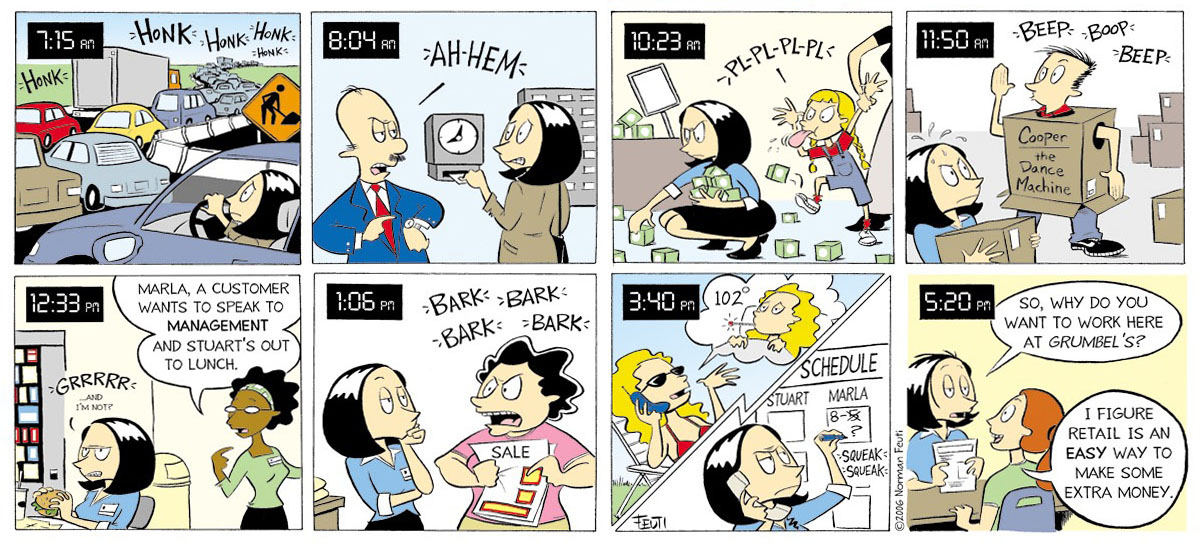
The worst and most outrage-generating stories can be found at Not Always Right, but there’s one place a retail worker should go – if you haven’t already – to smile, cringe, laugh, and find kindred spirits: Retail, by Norm Feuti.

Retail, Strip One, by Norm Feuti, January 1, 2006.

Anyone who has ever worked in retail or still does owes it to themselves to be familiar with this lovely, long-running comic strip. It sadly came to an end after 14 years when the artist wanted to move on to a different career in illustrating children’s books, but the entire thing is available online as an archive. I greedily devoured every one, because it so perfectly captures every aspect of the retail experience, from managers, to co-workers, to the most horrible customers… all of which have to be dealt with in a day’s work if you’re interested in keeping your job.

But it’s not just about the horrors; along the way you will get to know and fall in love with a delightful cast of characters who grow, and learn, and survive the journey. Of course there are the ones you love to hate, but that only adds Tabasco sauce to the chimichanga, as it were.

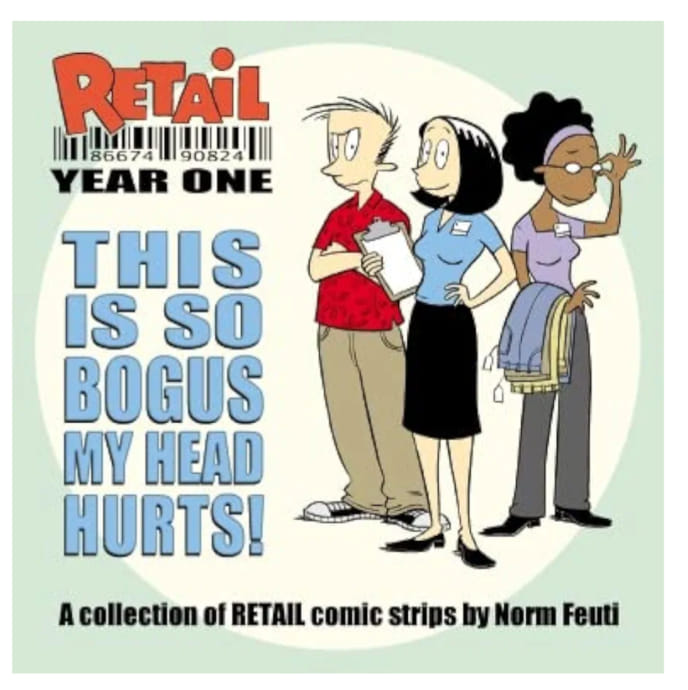
Only the first year was captured in hard copy, but if Norm were ever to think about publishing the other 13 years in dead-tree edition, I would be first in line to buy them.

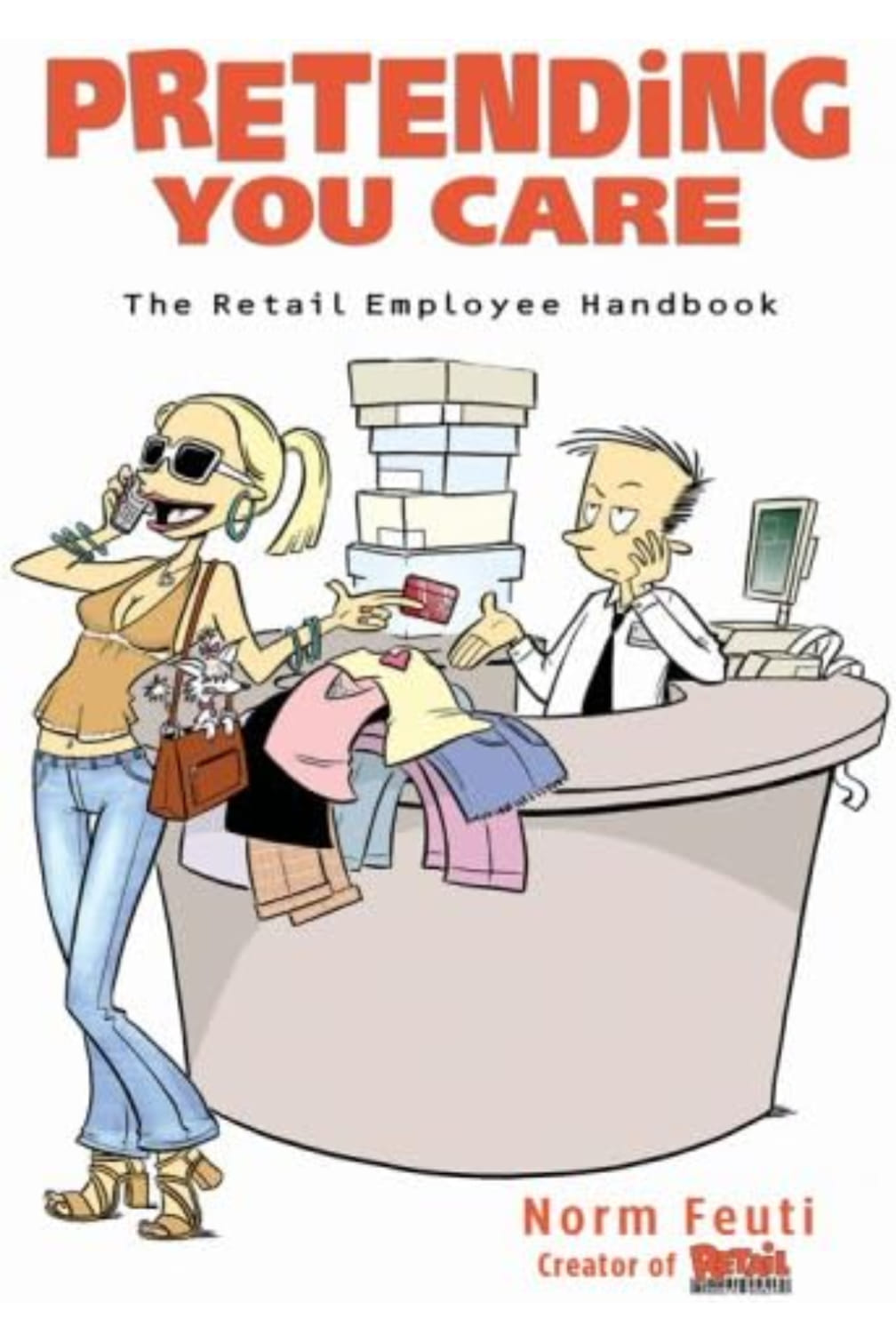
There was also a companion volume, “Pretending you Care,” which included many strips from year one along with wonderful expositions about what it’s like to work in the retail world.

Both are available on Amazon, but neither one is cheap, sadly – I was fortunate to score a copy of each through AbeBooks, my go-to source for difficult-to-find books, at much more affordable prices. They occupy honored places on my bookshelf.

While I never actually worked a retail floor, I did work in pizza shops for 3 years, and spent 6 months in a customer-service chair for a software company – essentially the same as retail work without the face-to-face interactions with customers. It was, to be very honest, the most soul-sucking job I ever did in my entire career, and would never again repeat the experience even if I had to. Thank Ṣiva H. Viṣṇu for retirement.

That said, I undertand. And I have always done my best to be a bit extra kind and appreciative to those people on the floor or behind the register who serve my needs, who endure the daily horror, and who long for nothing more than the end of their shift.

To all retail or customer-service workers out there, thank you.

The Old Wolf has spoken.

The challenges of selling stuff online

I have written before about dealing with scammers on Craigslist, but this vehicle – as well as Facebook Marketplace or local swap/sell groups – is still an effective way to generate some cash for items that one no longer needs.

But above and beyond scams, which seem to surface with just about every ad placed thanks to bots run by the bad guys, there are always challenges to deal with. The series below by Kevin McShane at kevincomics.com is illustrative of some of the things one has to deal with on a regular basis.

The first one (being ghosted) is by far the most common. Hey, if you’re not really interested, why did you ask in the first place? How much energy does it take to just send a courteous message to the seller saying “Thanks for the info, but I’ve changed my mind” or something like that? I cannot tell you how much I appreciate the people who have the decency to do this.

The second one is infuriating. Sometimes it’s all I can do to refrain from sending back (in all caps) “JUST READ THE @#$% POST, YOU BLISTERING SIMPLETON!”

Despite putting in all my posts something like “No holds, no deliveries” I will invariably have someone express interest and then say “Can you deliver to Augusta?” Lazy wanker. Instead of unloading a semi-full of obscene imprecations at them, the Goodwoman of the House suggested replying, “Sure, for an extra $100.00.” That might just get the message across as well.

Then there are the folks who will say, “I want this but I won’t get paid until Friday, can you hold it for me?” I’ve been stung far too often by this, because Friday comes and either they ghost me (#1 above) or come back with “Hey I changed my mind.” In the meantime, I could have sold it three times over and by now the other buyers have moved on. So I don’t do that any longer. If you want me to hold something, you can pay me with PayPal or one of the other cash apps, and then I’ll hold it until Friday.

The kind of person who is too lazy to bargain is always a burr under my saddle. Just sending a message saying “bottom dollar price” or “what’s the lowest you’ll take” or “will you take less” is a dick move. No, I’m not going to put in your work for you, dipweeds. Make me an offer and I’ll either accept it or counter. And if I counter and you don’t move at all, I’m not likely to sell it to you. This is how dickering works. If you don’t do this, you’re more interested in “winning” than in getting an item for a good price.

[When we sold our first home in 1980, my first wife and I listed it for a very fair price given the work we had put in to improve it. We had a guy come in and say outright, “I’m the kind of guy who is used to getting what I want” and offering us $500 less on a $49,000 home. (I know, I know, prices today are insane, but at that time it was a good deal on an 800 ft² home.) Clearly it wasn’t about the money, it was about winning, and if he hadn’t said that I might have been just fine with a bit of wiggle room. We took the offer because we were in a difficult situation, but I wish I had been able to tell him to shove his offer where the sun doesn’t shine; pay our asking price or buy something else. The smug grin on his face still raises my blood pressure when I think of it 40 years later. Up yours, Monty.]

As for the last one, I’m not your therapist, buddy. Leave the story out and just cut to the chase. Can you pick it up today or not?

Like I said, online selling can be very productive, but dealing with idiots definitely raises the blood pressure. It makes me have even more respect for retail workers, who doubtless have to put up with similar nonsense many times every day.

The Old Wolf has spoken.

The many faces of Dr Pepper

Updates: (January 6, 2025) Time marches on, and since this post was originally written and then updated, many more clones of Dr Pepper have come and gone. The photo below is by no means comprehensive, although it does represent a good chunk of the local brands that have been seen across time.

I touched upon brand imitation in a previous post, but a recent image posted on Facebook by an acquaintance of mine made me want to revisit one such example in detail.

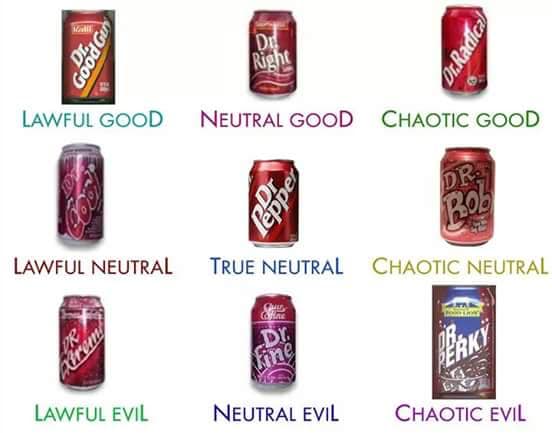
72 Dr Pepper clones

While Wikipedia relates many details about the brand and its history, apparently the original owners failed to trademark the “Dr.” part of its name, and as a result there are almost more doctors in grocery stores than you can find at an AMA convention.

Hannaford’s version of Dr Pepper. Not bad, actually, and half as expensive as the real thing. Sadly, the diet version has recently disappeared from shelves in the 12-pack form, and can only be found in 2-liter bottles. Hannaford was both obscure and uninformative when I pressed local management and national customer service as to reasons why.

Update: As a result of this jiggery-pokery, this Sam’s Club brand has become our household go-to, less than half the price of the real thing at our local WalMart. Ironically, Sam’s Club doesn’t carry this in bulk.

When we had a home in Florida for two years in 2023 and 2024, the Publix across the street jacked prices up during that time to the point where a 12-pack was within pennies of $10.00.

If WalMart ever decides to discontinue their brand, I shall sit in the middle of the floor and cry.

I have found two fairly complete lists of Dr Pepper clones out there.

I never dreamed that there could be so many.

The origins of Dr Pepper are fraught with rumors; what is known is that the formula was originated by pharmacist Charles Alderton of Brooklyn, NY in Morrison’s Old Corner Drug Store in Waco, Texas. The Dr Pepper FAQ reports that “Dr Pepper is a unique blend of 23 flavors.” Prune juice, despite popular opinion, is not one of them. There is a suggestion that Alderton wanted to come up with a soda that had the smell of walking into an old soda shop. Its formula is as closely guarded as that of CocaCola™.

Whether these alignments are based on the names or on one person’s assessment of the relative accuracy of the flavor, I have not been able to determine, but I thought it was funny at any rate.

As for who owns Dr Pepper, that is also a tale of the ages. It’s now marketed by the Dr Pepper Snapple Group, a business unit of the conglomerate Keurig Dr Pepper. (You can see Dr Pepper on the far left in the image at this post – it was at that time still a part of Cadbury Schweppes.)

But regardless of who owns it, or who distributes it (sometimes it’s the local Coke distributor, sometimes it’s the Pepsi people), as long as it continues to be available in some form or other I’ll be happy. (And I will buy the real thing if I can find it on sale.)

The Old Wolf has spoken.

What’s in a Logo?

Companies spend large money developing a logo that speaks to the world. They are an integral part of brand recognition – who in the world doesn’t recognize the Coca Cola logo, even if they don’t speak English or use Roman script?

Who in the world doesn’t see the “golden arches” and immediately know that McDonald’s is close by?

08-mcdonalds-logo.w1200.h630

These logos and these brands are worth millions if not billions of dollars, and they are ferociously protected and actively marketed around the world.

Some logos, however, are more than eye-catching; they’re supremely clever, some from equally powerful companies and some from local enterprises.

amazon

Amazon, of course, ships everything from A to Z and a lot of stuff in between. The arrow, in addition, looks very much like a smile, suggesting how pleased you’ll be with your order. Just don’t talk to the people who work there – they’re not terribly happy with their job conditions.

Baskin Robbins

Baskin-Robbins prides itself on its 31 flavors (seen above in the logo) but not on their value as health food. Duh. John Robbins, son of founder and owner, left the empire for more wholesome pastures, and encouraged his father to step away from the inevitable when he got him to live a healthier lifestyle after the father had been diagnosed with diabetes, high blood pressure and heart disease. Years before, partner Burt Baskin had died from a heart attack.

Anyone who grew up with black-and-white televisions and saw color for the first time probably saw the NBC “proud as a peacock” logo:

Today’s stylized logo retains the peacock, even if you have to look for a bit to find it:

CBS

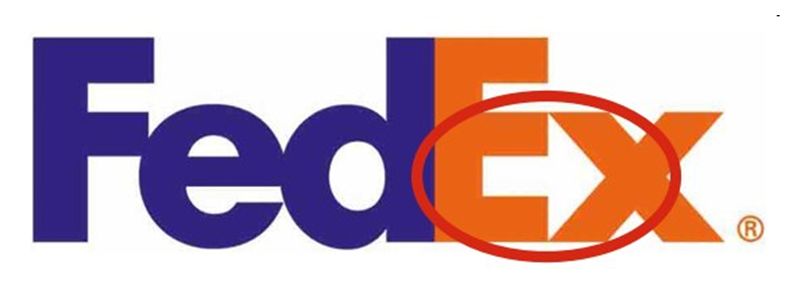
One of the cleverest logo inclusions is the one FedEx (or their designer) came up with. They want you to know that your package is on the way, and so that little subliminal arrow helps you understand that they move stuff, and quickly.

FedEx1

Never seen that arrow? Here it is:

FedEx2

Spartan golf clubs are represented by a man with a powerful swing – but if you look at the entire picture in a different light, you see a Spartan warrior in profile with his iconic helmet.

Spartan

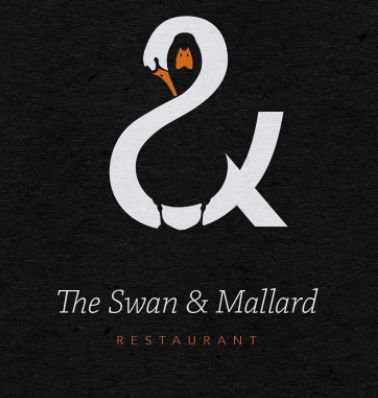
This is one of the most delightful recent designs I’ve seen, with a very creative use of positive and negative space – the swan, the mallard, and the ampersand (&) all combined into a very pleasing and evocative image. Artwork was created by John Randall.

Swan and Mallard

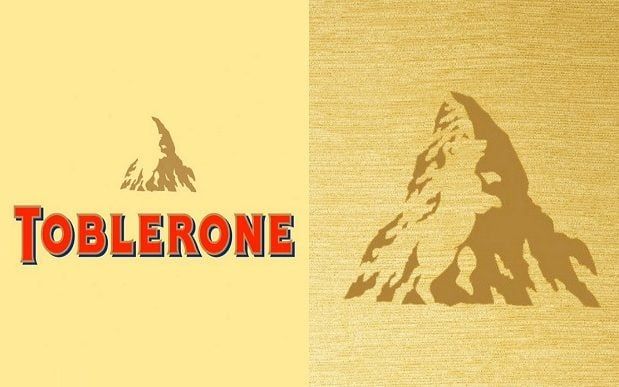
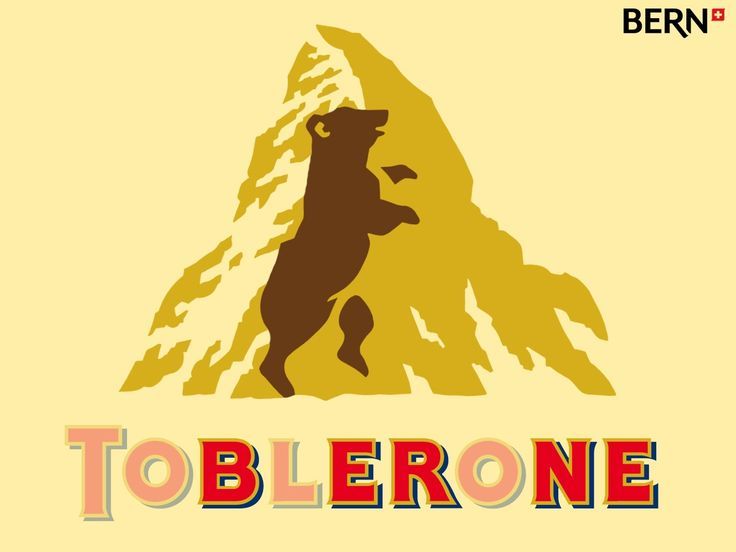
Ever look closely at the Toblerone logo? Seen the bear in that mountain? Berne, Switzerland, is notable for its bears, icon of the city.

Toblerone2

But wait, there’s more!

Toblerone

Yes, the home city of Toblerone is also found in the name.

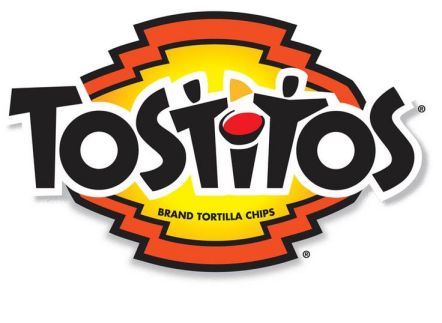
Then there’s the Tostitos logo. Look closely and you’ll see two folks sitting at a table with salsa, sharing a tortilla chip.

Tostitos

Le Tour de France logo clearly represents a person on a bicycle, with one wheel yellow, probably evoking the yellow jersey that the winner gets to wear. Unless he’s outed for massive doping, but that’s another story.

Tour de France

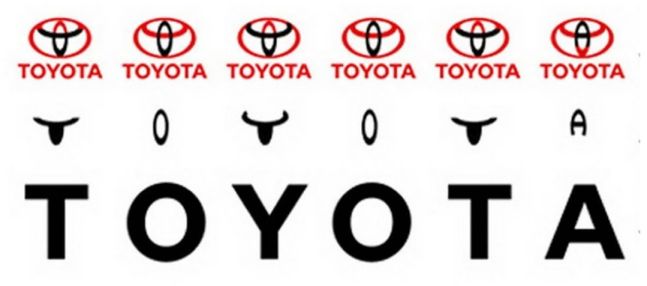
The official Toyota explanation of their logo is as follows:

In 1990, Toyota debuted the three overlapping Ellipses logo on American vehicles. The Toyota Ellipses symbolize the unification of the hearts of our customers and the heart of Toyota products. The background space represents Toyota’s technological advancement and the boundless opportunities ahead.

But whether or not they intended it, the image has an additional fillip of intrigue:

Toyota

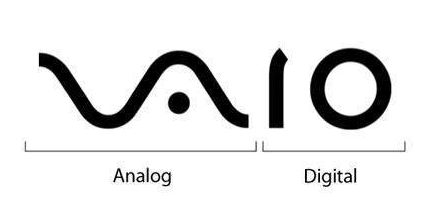
One of my earliest PC-type computers was a Vaio – and their logo is a brilliant blending of the analog computers of the past (represented by the sine wave seen on an oscilloscope ( and the digital computers of today, represented by the “1” and “0” of binary bits.

Vaio

Yoga Australia managed to work the shape of their homeland into the image of a young lady in a yoga pose – Oi oi oi, mates!
Yoga Australia

Lastly – and there are many others that I haven’t touched on in this post, but these were some of my favorites – is the logo for Hitachi, which I have written about in detail.

Hitachi was once one of the most well-known brands in electronics; for more about this fascinating logo, click through.

Naturally, there is the other end of the scale – logos which are awful for any number of reasons.

original

This one just hurts to look at because of the clashing colors.

Many of the ones which have been called out can’t be shared here, as I try to keep this blog on a family-friendly plane – but if you’re interested, just do an image search on “the world’s worst logos” and you’ll see what I mean.

Logos, like domain names, can contribute to the success or failure of an enterprise, which is why companies are willing to spend significant amounts having their logos designed. If the stars align, a logo can be a tremendous and memorable success.

The Old Wolf has spoken.

Work Smarter, Not Harder

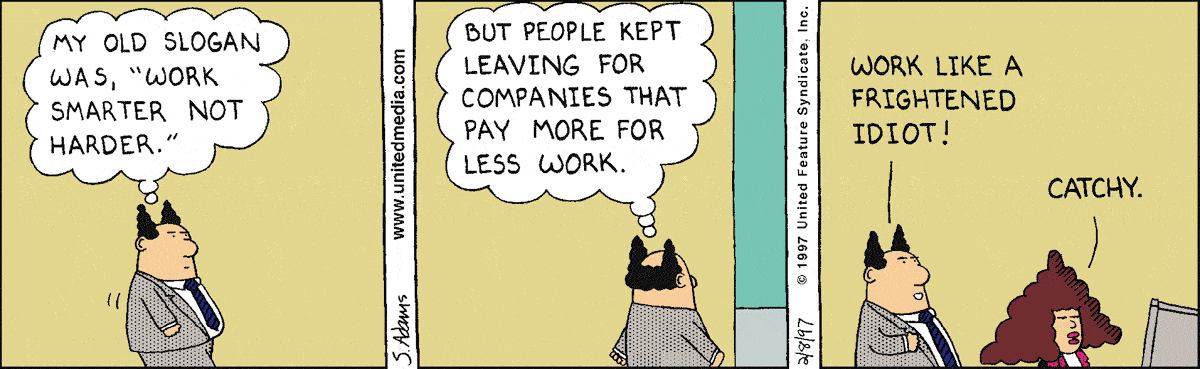
Scott Adams has poked fun at this bit of business triteness that workers have probably come to enjoy hearing about as much as a dentist’s drill being scraped across a whiteboard.

dt970208dhc0

This morning I began to wonder if the originator of this phrase was known. As it turns out, he is.

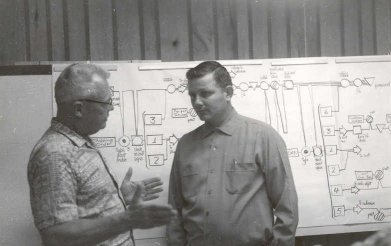
Allan H. Mogensen (1901-1989), known as Mogy, was an American industrial engineer and authority in the field of work simplification and office management. He is noted for popularizing flowcharts in the 1930s, and is remembered as “father of work simplification” (Wikipedia)

mogy and bsgjr2

Allan Mogensen (left) with Ben S Graham, Jr. at an early 1960s conference. Graham was is the son of Benjamin S. Graham, Sr., an American organizational theorist. Image: Ben Graham Corp.

People like Mogensen deserve to be recognized for improving efficiency, safety, and ergonomics in the workplace… no matter how much we may cringe at hearing their slogans – especially when they’re mis-applied by incompetent managers.

NoBoss.jpg

The Old Wolf has spoken.


The Trading Stamp Era

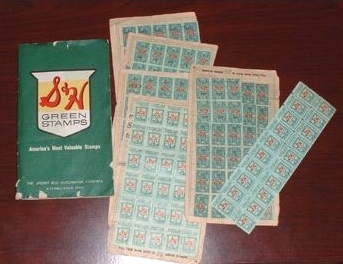
In a previous entry about things gone but not forgotten (by me and my generation, anyway,) I mentioned S&H green stamps.

696b993

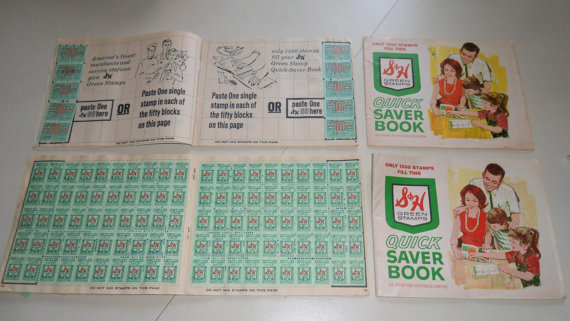
Trading stamps were incentives given out by grocery stores and gas stations in the same way as stores do with coupons, reward-cards, and other come-ons today. You’d collect the stamps, paste them in books, and then take your books to a redemption center somewhere and exchange them for consumer goods.

images

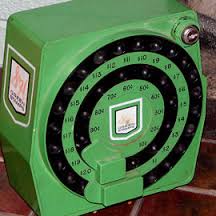
Based on the amount of your purchase, the checker would dial up the amount you spent on a machine like the one above, and the thing would dispense stamps in 1, 10, and the coveted 50 variety. The last one was great because you could fill up an entire page in the book with just one lick.

SandHStamps

Depending on the area of the country you lived in, there were different varieties of stamps available. The ones I recall in addition to the S&H Green Stamps were:

original

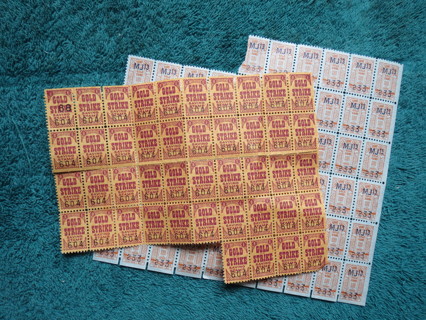
Gold strike stamps

1969-Gold-Strike-Stamps-Catalog-23

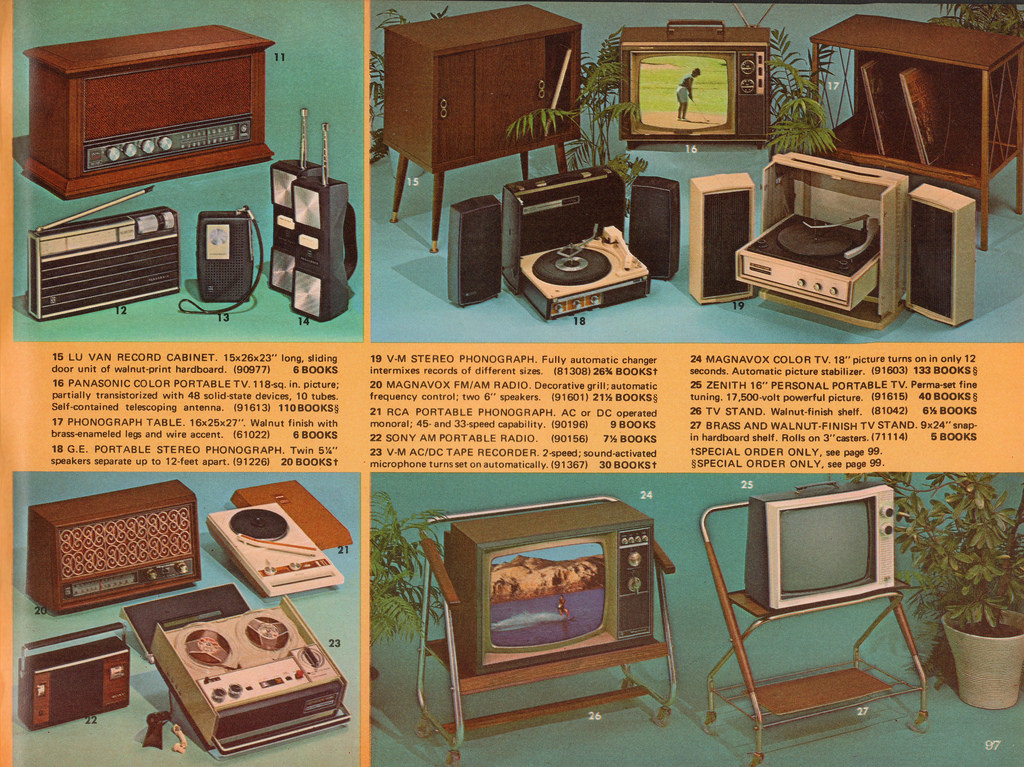
Page from a Gold Strike Stamp Catalog. This was not cheap slum; the premiums had significant value if you were willing to collect enough books.

10aa496562010fdbf1dc5c68897e8469

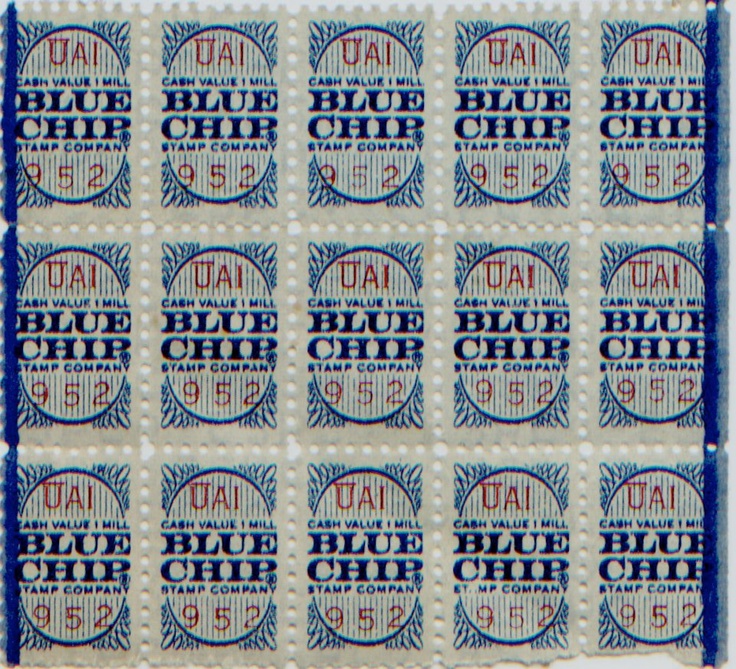
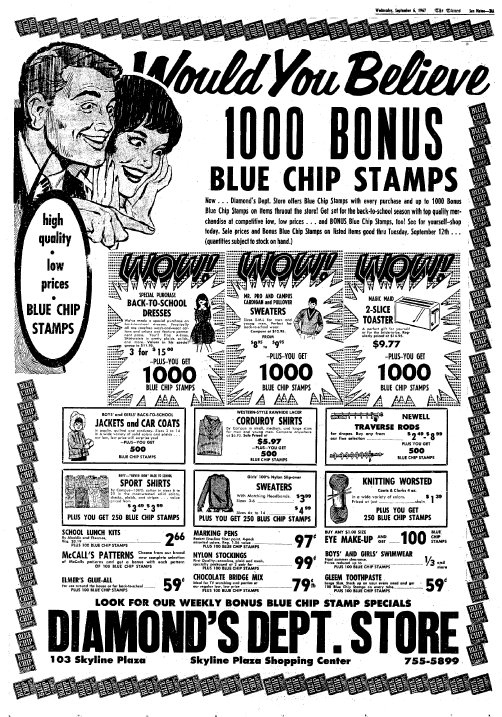
Blue Chip Stamps. If you’re curious about that “cash value one mill” (equivalent to 1/10 ¢) thing, have a gander at this article over at Mental Floss.

1967-blue-chip-stamps-coupons

Blue Chip Promotional Ad

lot-of-s-h-green-stamps-plaid-stamps-top-value-stamps-books-c4f216e1c8003cc8c30b62640a2f31d3

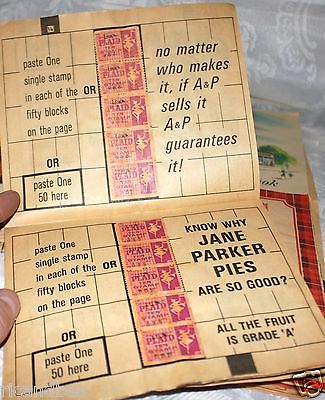
Plaid Stamps, particular to A&P.

8208plaida

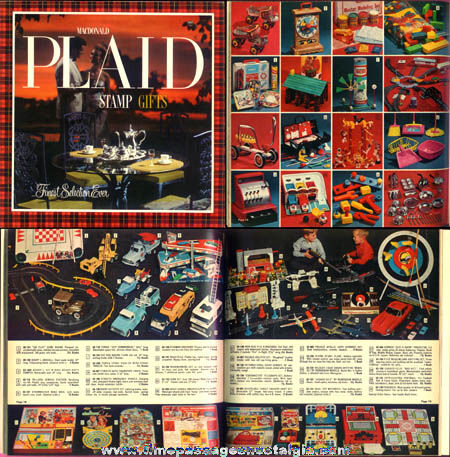
Pages from a Plaid Stamp catalog.

I remember helping my mother gather and lick and apply these things and looked forward to her regular trips to the grocery store. I can’t recall what, if anything, she ever redeemed her books for, but the memory of the collecting is very clear. While the craze faded shortly after, I’m glad I was able to live through this interesting bit of cultural history.

The Old Wolf has spoken.

Did you know the Post Office sells your information?

mail.jpg

I wish I had known this long ago. I would never have put in forwarding requests. It’s mean, it’s ignorant, and from a moral standpoint it’s downright reprehensible – but it’s legal, and they do it gleefully to get gain.

After our recent move to the wilds of Utah to the east coast, I put in three forwarding requests – one for our personal mail, and two for businesses. Little did I know that this would cause me no end of trouble, as that information was instantly transmitted to marketing agencies and basically anyone who has two coppers to rub together, and immediately began receiving junk mail and having my new information appear on automatically scraped websites.

Here’s the Forbes article I found – a bit dated, but still valid – that opened my eyes to this dirty little secret.

Whenever you fill out a change of address form with the United States Postal Service, the USPS adds your new details into a database of 160 million previous address changes over the past four years. The USPS has deals with data brokers to sell this data to anyone who pays, provided they have your old address. That means data firms cannot buy the address of Leroy Jones in Cincinnati, but can obtain his new address if they know where he used to live, which they usually do anyway.

This is, in a word, filthy. The PO’s responsibility is to get my mail from here to there, and that’s where their responsibility ends. To take people’s personal info and sell it to data brokers is nothing short of criminal, and it shouldn’t be permitted.

So this time, when we move from our temporary apartment to the home that we will – it is to be hoped – shortly be purchasing, I will not be relying on the PO to forward my mail. In plenty of time, I hope to inform our critical correspondents of our new address individually, and let the junk mail  get returned to sender.

There is supposedly a loophole, although I don’t know if I trust the Post Office as far as I could throw a grand piano:

There is, however, a loophole that keeps data brokers from accessing your updated address. When you fill out the online form to change an address, you can indicate a temporary change that provides six months of forwarding that can then be extended for another six months.  That information, unlike the changes marked as permanent, is not included in the master list sold to data brokers.

Time will tell.

The Old Wolf has spoken.

Domain Registraton Scam – Bad Actors from China

Be careful out there. I just got this email the other day, and while it looked dodgy from the outset, I thought I’d follow it down the rabbit hole to see where it went.

Dear sir or madam,

We are a registrar for domain names authorized by Chinese government. Today, we received an application from Daoc International ltd applying to register [domain] as their brand name and some top-level domain names(.CN .HK etc). After our initail checking, We found the main body of domain names is same as yours.

We are handling the application and we need to confirm whether or not you authorize them to register them? Let me know your positon ASAP so as to solve it promptly. Looking forward to your reply.

Best regards,
Elvin Lee
Tel:+86-551- 6349 1191
Fax:+86-551- 6349 1192
Address:No.413,Changjiang Road,Hefei City,Anhui Province

OK. So I simply responded and said, “These domains are not authorized, thank you.”

Next up:

Notice: regarding this case, we did not receive any of your reply until now. Concerning the mentioned brand name please confirm whether you need to register by yourselves? If need, please let us know in time, we can send an application form to you. If you think the registration of that company or the use of the brand name will not bring any negative effect to your company, i suggest you can give up the brand name, then we will accept that company application unconditionally. Further questions please contact me in time.

Followed the same day by this:

Notice: hi, i am Elvin Lee. We had discussed the case about disputing your company’s brand name. You have never registered the brand name, the dispute period will come soon. If your company does not register the brand name, we will start aforesaid company registration within 2 workdays. That company will become the legal owner of the brand name in the world. We had notified you, so we are not responsible for any dispute question about your intellectual property right and trademark after they succeed in registration. If you have any questions, pls contact us within 2 workdays.

Basically telling me I’ll lose worldwide rights to my domain name if I don’t quickly take action, or alternatively, I should abandon my own domain so that they can legally register it with other companies.

Lastly, today:

Thanks for your confirmation. As soon as receiving the application of that company, we checked and found [domain] is your company’s using name. We are concerned that your name might be affected negatively by their applications, this is why we informed you. Following brand name and domain names are applied by that company:
Brand name:
[domain]
Domain names:
[domain].asia
[domain].cn
[domain].com.cn
[domain].com.hk
[domain].com.tw
[domain].hk
[domain].in
[domain].net.cn
[domain].org.cn
[domain].tw
[domain].co.in

You know that the domain names registration is open in the world, that company also has the right to apply for the available domain names. You only have the preferential rights to register them.

At present, we haven’t passed their application, we need your opinion. If your company consider these names of importance to your company’s business or interest, i suggest that your company register these names first so as to avoid confusion or speculation. Of course, If you don’t think their application will affect your company in the future, you can give up these names so that we can finish registering for them. Please give me your company’s decision as soon as possible.
Uh, no. While I have no doubt that there are many good and honest Chinese businesses, this is not one of them – in fact, falls under the rubric of “morals of a honey badger.”
Above and beyond the standard advice, “Never deal with spammers,” I’d add that you be extraordinarily careful when unsolicited business proposals come from China – in other words, be doubly vigilant.
The Old Wolf has spoken.

Poland House Antiques – A recommendation, with a caveat.

20151205_153905

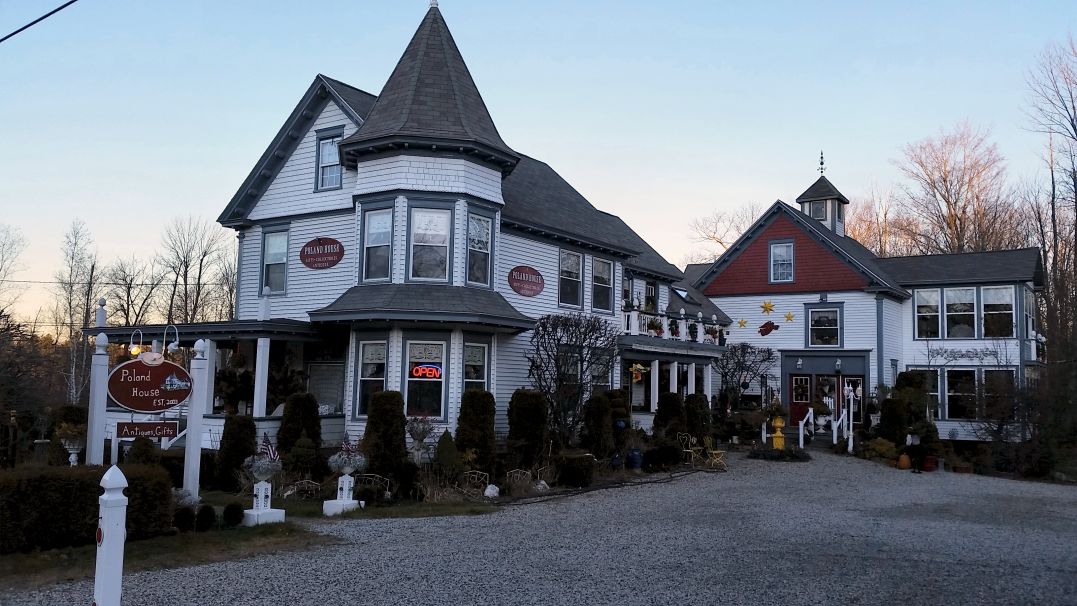
Driving back from visiting the Shaker Christmas Fair at Sabbathday Lake in Maine today, we decided to stop in at the Poland House at 338 Main Street in Poland.

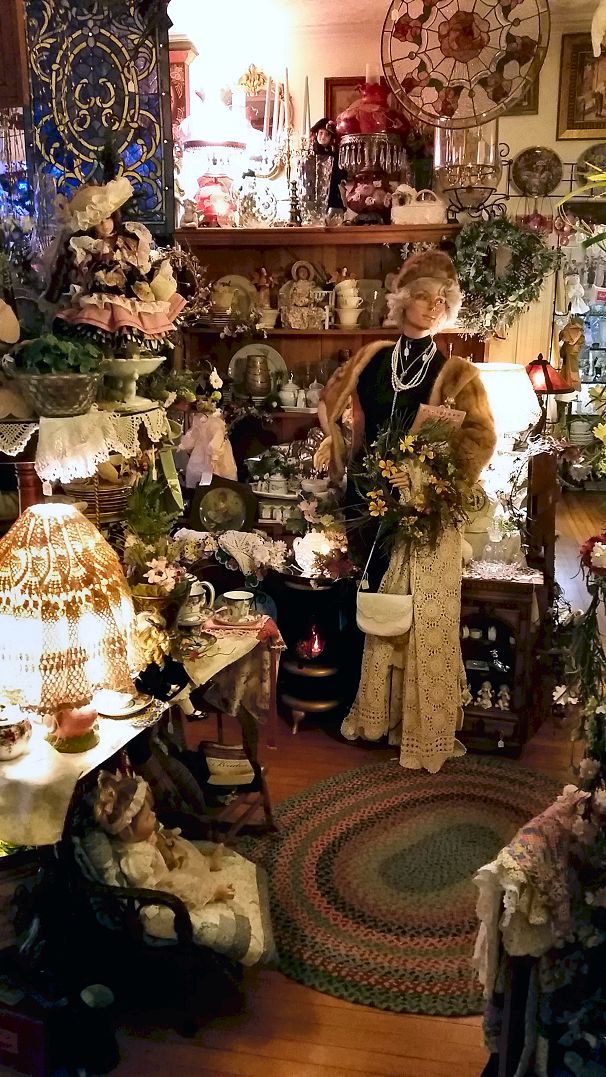
My senses were overwhelmed. I have never been in a more crammed, crowded, and fascinating panoply of home decor both old and new. Every single nook and cranny in that old home was stuffed to overflowing with things to look at and covet – one example below, which doesn’t do the place justice:

20151205_153335

I loved so many things, and wished I were richer than Crœsus so I could decorate my own home with some of these treasures.

20151205_153438

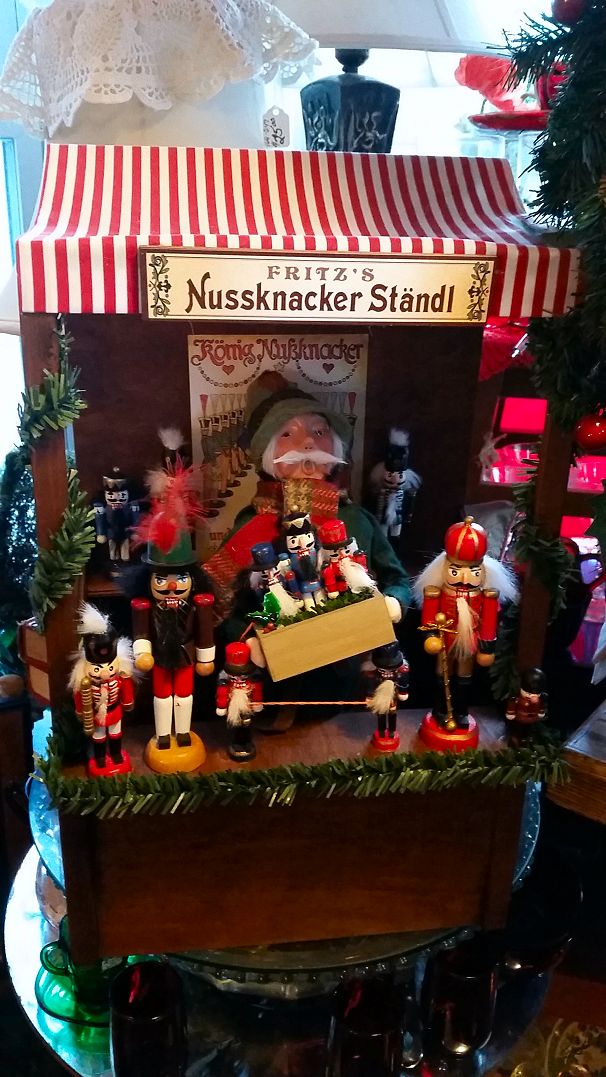
An adorable mini-nutcracker stand.

But beware: my enjoyment of the atmosphere was soured like vinegar added to milk – read below the review I posted at Yelp:

I was totally gobsmacked by the incredible selection of stuff (we came at Christmas time, the atmosphere was mind-blowing.) Much of it was new, but there were a lot of really, really cool antiques. As I was leaving I asked the proprietor if this was how it looked after the Christmas season, and he said, no, he takes it all down by himself and replaces it with the antique stuff.

Then he saw my phone out and asked, “You weren’t taking pictures, were you?” I said, “Yes, isn’t that all right?” He replied, “No. People who come in and take pictures without asking are beyond me.”

Fine, dingaling. You may think that owning a half-million-dollar house stuffed to the gills with millions of dollars worth of inventory makes you better than everyone else, but here’s a couple of tips:

  1. If you don’t want people taking pictures, post a sign on your door to that effect.
  2. If someone happens to be taking pictures, you could ask them politely not to – something like “I appreciate your coming in, but I’d prefer you not take pictures.”
  3. Don’t make people feel like an idiot. I was taking photos to show everyone what an amazing place you run. Instead, you get one measly star for being a turdcasket.

So if you like lots of amazing knickknacks and decorative stuff, by all means shop here. The prices are not too outrageous, some of them seemed quite reasonable. But be warned – the proprietor doesn’t give a rat’s south-40 for his clientele.

It’s clearly not just me: have a gander at this review left by another Yelper, Marie H, on September 7th:

Well I didn’t get very far although the shop looks interesting. I chose to take a bike ride and stopped there to look around. The guy was outside and never said hello, just” you’re not going to carry much with that!” Eying my bike. Against my better judgment I walked in the entryway and started looking. He said ” can’t be too healthy doing that on a day like this. ( he could use some pedaling). The atmosphere really felt hostile to me so I left. He said ” that it?”
Will never go in there again

Every moment is a choice, and every choice has prices and benefits. Treat people well, and they’ll come flocking to your door. Treat them like dirt, and they’ll never come back.

The Old Wolf has spoken.