These people don’t give up. Despite my sending them the vilest possible insults in Chinese, along with demands that they cease and desist, I get one of their spam messages almost every week.
From: “Kevin” <cijiajiajiaixoauio33@msn.com>
To: Everybody in the whole flipping world
Subject: [SPAM] Photo Retouching Services – Photo Cut Out
Hi,
We are one of the best digital images retouching team located in China. We provide all kinds of image editing solutions to different companies all over the world.
We Specialize in:
. Cut out/masking, clipping path, deep etching, transparent background
. Beauty retouching, skin retouching, face retouching, body retouching
. Colour correction, black and white, light and shadows etc.
. Dust cleaning, spot cleaning
. Fashion/Beauty Image Retouching
. Restoration and repair old images
. Product image Retouching
. Jewellery image Retouching
. Real estate image Retouching
. Vector Conversion
. Wedding & Event Album Design.
. Portrait image Retouching
We Offer Best Quality; Best Service and the Most Competitive prices.
Every day we process and manipulate large volumes of images from U.S.A and Europe. So you will be in good hands when it comes to quality, service and the most competitive prices.
Waiting for your images for the free trial so that you can judge our quality of work yourself.
We are waiting for your reply.
Thanks & Regards,
Kevin
Kanucssa Imaging Professionals
Contact: <redacted>
Just remember:
Rule #1: Spammers/Scammers Lie. Rule #2: If a spammer seems to be telling the truth, see Rule #1.
On May 6th, the government released the National Climate Assessment, 1250 pages long and authored by over 250 people.
What kinds of people? Government-paid alarmists and corrupt scientists, right? A secret cabal of people who are raising a false alarm to discredit… well, you’ve heard all the counter-arguments, not one of which is worth the powder to blow it to Hell with.
Let’s look at some of what went in to this report: [1]
Users and stakeholders were engaged from the very beginning. Everybody could contribute: NGOs, farmer, industry, Native American nations. Many thousands of people consider this as their personal report and have embraced it.
The team included former Bush White House officials with climate science expertise who also functioned as lead authors.
There were reps from the petroleum and mining industries, economists, agronomists, fisheries experts, and city planners. There were experts that dealt first-hand with the aftermaths of Katrina and Sandy and the droughts and fires and power shortages and the spread of disease in the West.
Notice of every meeting was pre-published in the Federal Register, and anyone, any citizen or group at all, was welcomed to come and comment.
There was a several-month open review, during which anyone was welcomed to raise concerns or criticisms, and comments were abundant.
The report was reviewed by the National Academy of Sciences, which is firmly non-partisan.
Comments from all of these sources were incorporated to make the report better.
There was a public, traceable account for every key finding, so that anyone can look back and see how the finding was arrived at, what the studies were that it was based on, and, it is even possible to follow the account back to the original data for those studies.
The conclusions in the report represent a consensus of all of the authors and advisors. The final vote to approve was unanimous.
The report is a product of not just NASA, but a consortium of 13 federal agencies called the US Global Change Research Program. NASA contributed substantially, but so did others, including NOAA/Department of Commerce, the Department of Energy, Department of the Interior, the Environmental Protection Agency, Department of Transportation, Health and Human Services, the Smithsonian, USAID, the Department of Agriculture, the National Science Foundation, the Department of Defense, and the Department of State. It was a combined effort of many, many people from both private and public sectors.
With all of these sources, with all of this transparency, with the wide diversity of contributors and opportunities for public input – not a restricted subset, but anyone could give input, I trust the results of this report implicitly. The results are incontrovertible. This is not just Al Gore grandstanding for political gain (although I think “An Inconvenient Truth” was right on the money, regardless of its underlying motivation) – this is science. And it works.
The Gallup Poll revealed that 1 in 4 Americans doubt the veracity of climate change. However, what the public thinks of established fact is irrelevant. Some people have such an overwhelming need to be right that they ignore indisputable facts. [2] But in the end, this opposition, despite how well-funded it is and for whatever reason, will fade. There may still be over 400 people in the world who believe the earth is flat, but what they believe changes nothing.
If you have any questions, visit the website. Explore it. Understand it. And do what you can to hold back the tide, even if the trend may be irreversible.
The Old Wolf has spoken.
[1] Source: A well-placed official who contributed heavily to the work involved, whom I trust implicitly.
[2] A story from a redditor, /u/RamsesThePigeon:
The year I was in third grade was one of the best and worst of my entire educational experience, and both of those extremes were because of the teacher I had. She was beloved by most of her students – the female ones especially – but had a habit of being passive-aggressive and saccharine towards more difficult pupils. She’d find (or invent) reasons to ignore difficult questions, offer vague threats about impending punishments, or make small efforts to turn classmates against one another. She was not an especially likeable educator, and she became a truly reprehensible one when she insisted that Jupiter was bigger than the sun.
At first, it seemed like a misunderstanding. Our class had just entered into an astronomy unit, and one of our activities was to construct a scale model of the solar system. The reference image we used came from a picture book, and in it, the sun had been reduced in size. The teacher had not noticed this fact, and was therefore operating under the mistaken assumption that Jupiter was our largest celestial neighbor.
Well, I knew better, and I tried to correct her. She replied to me with a tone of aloof dismissal, stating quite clearly that I was wrong. “That’s okay, though,” she said. “After all, you’re in school to learn new things.” Then she smiled sweetly, and I returned to my seat feeling thoroughly confused and frustrated. In the weeks that followed, I engaged in an all-out war against my teacher’s pseudo-science. My father, having heard everything from me, sent me to school with one of his college textbooks, hoping to turn the tide of the battle. My teacher refused to even look at it. “Class,” she said, rolling her eyes, “who can tell Max what the biggest object in the solar system is?”
My face was burning with anger and shame as every other student shouted “JUPITER!”
Things only escalated from there. I refused to back down, despite having been labeled as the class dunce. Each time the topic came up, I tried to offer my evidence… and each time, I was steadfastly opposed by everyone within earshot. Finally, after over a month of torment, our astronomy unit culminated in a field trip to the local planetarium. The show was a breathtaking adventure through our galaxy and the universe beyond, and it left me feeling infinitesimally small… yet strangely empowered. As the lights came up, our guide to the cosmos asked if there were any questions.
“Which is bigger,” I shouted, jumping to my feet, “Jupiter or the sun?!” My entire class sighed in frustration, my teacher barked at me to sit down, and the astronomer looked thoroughly confused.
“The sun, of course,” he scoffed.
A hush fell over the room. After a moment of utter silence, a girl named Melissa spoke up in a condescending tone. “Well, sir, we have a chart that says Jupiter is bigger.” The astronomer looked at her. He looked at my teacher. Then he looked at me with an expression of sympathy.
“Little girl,” he said, returning his attention to Melissa, “if you look at the picture again, you’ll see that the sun is being shown at a fraction of its actual size. Otherwise, it wouldn’t fit on the page.” His gaze moved to his next victim, who had slumped down in her chair so as to be almost as small as her students. “Your teacher should have told you that.”
Upon returning to our classroom, all the students crowded around our reference book. Sure enough, a tiny block of text explained that the sun had been scaled down in the illustration. I declared my triumph, having finally been vindicated. Nobody apologized, my teacher found new reasons to punish me, and I was treated with no small amount of scorn, but I didn’t care. From that day forward, I knew to never be afraid of asking questions, nor of standing up for facts in favor of fiction.
From that day forward – at least until it was taken away – I proudly wore my homemade dunce cap with a smug grin.
This was a teacher. Someone who should have known this bit of close-to-home science knowledge as surely as she knew 2 gozinta 4 two times. But somehow she was ignorant of this fact and clung to it tenaciously, at the expense of humiliating a dissenting student and indoctrinating an entire class with a blatant falsehood.
I recently came across a fascinating article entitled “The Reykjavik Confessions: The mystery of why six people admitted roles in two murders – when they couldn’t remember anything about the crimes.” One of my facebook friends described this piece thusly:
“If you like Nordic noir, it doesn’t come much more Nordic or more noir than this. But it turns out to be a story of what interrogations can do to people, and why they may end up admitting to crimes they never committed.”
This article resonated strongly with me, due to two experiences in the days of my youth. I still think of them with discomfort.
When I first moved out West from the East Coast, I stayed with my grandmother before starting university. My family knew I was interested in collecting coins; at some point a keychain which featured a Morgan dollar went missing from an aunt’s house and I was immediately accused of having taken it. The pressure from family members was so intense that I, at the tender and callow age of 19 actually began to wonder if I had committed a crime and suppressed the memory. Despite my sincere protestations, my grandmother used every possible emotional club in her arsenal, and she had heavy weaponry, to get me to confess to having taken this trinket. Naturally, I knew nothing about it. Some time later, the item in question turned up in the pocket of a nail apron used by my uncle (who by this time had passed away.) My aunt was profuse in her apologies, but my grandmother never even mentioned it again, going to her grave with the idea that I was still somehow guilty of a crime that had never been committed; nary the hint of acknowledgement or apology.
The second tale involved my work for a restaurant several years later. I was working for a concern run by a partnership of two gentlemen (term used very loosely, mind you.) Despite being in a management position I was never entrusted with any financial responsibility or authority, but at some point it was announced that some money had gone missing from a safe in the restaurant (and at no time was I ever privy to the combination thereof.) I was told that everyone on the staff was being asked to take a lie detector test at the local police station. Despite the fact that this was a blatant lie, as I found out later – I was the only one who ever had to go down – I remember the experience with such distaste that it has remained with me forever after. I was “interviewed” by a lieutenant of the local police force; I’m tempted to mention his name because he was an asshole, but he’s dead now and de mortuis nil nisi bonum and all that.
I got asked all sorts of embarrassing, probing questions, many of which had nothing to do with the event they were investigating. There is no more unsettling feeling than to sit and be told that you’re a criminal, and that they know you’re a criminal, and that they’re going to find the truth no matter what it takes… when you know for certain that you are innocent and uninvolved. At the end of the procedure, Lieutenant Douchebag told me that my results were “highly deceptive,” and I went away wondering if I was going to be thrown in the clink for something I had neither done nor even ever considered. But I got a small taste of what it must be like to be interrogated in this way; I cannot imagine the emotional distress felt by the people in the above-mentioned article. A lot of them were clearly petty criminals, but they didn’t deserve to have their lives scarred and/or ruined for something they never did.
The lie detector can be considered a modern variant of the old technique of trial by ordeal. A suspected witch was thrown into a raging river on the premise that if she floated she was harnessing demonic powers.
The takeaway for me is that it is far too easy to put people in a situation where they feel vulnerable and powerless, and hammer away at them until they begin to doubt things they know for certain and accept things that they know nothing about. I suspect that with training, one could inoculate oneself against such techniques to a certain extent, but really, what’s the payoff for the average person who will not find themselves in such a position? Whatever the case, it’s disturbing.
The Rev. David Buck sits next to the Jesus the Homeless statue that was installed in front of his church, St. Alban’s Episcopal, in Davidson, N.C.
This statue of a homeless Jesus disturbed many in Davidson, N.C. Read the whole story at NPR. My favorite quote:
“One woman from the neighborhood actually called police the first time she drove by,” says David Boraks, editor of DavidsonNews.net. “She thought it was an actual homeless person.”
That’s right. Somebody called the cops on Jesus.
But Jesus was homeless. “And Jesus saith unto him, The foxes have holes, and the birds of the air have nests; but the Son of man hath not where to lay his head.” (Matt. 8:20, KJV)
And many, many others – far too many in my own country – also have not where to lay their heads, and the problem continues to get worse, and it’s a difficult issue. A recent article by KSL, Utah’s dominant news source, investigated the seemingly ubiquitous panhandlers with cardboard signs. Their findings were unsettling: many supposed “homeless” were not.
For Utahns, this becomes an even thornier question when their own scriptures speak so powerfully about sharing what we have with the poor:
And also, ye yourselves will succor those that stand in need of your succor; ye will administer of your substance unto him that standeth in need; and ye will not suffer that the beggar putteth up his petition to you in vain, and turn him out to perish. Perhaps thou shalt say: The man has brought upon himself his misery; therefore I will stay my hand, and will not give unto him of my food, nor impart unto him of my substance that he may not suffer, for his punishments are just—
But I say unto you, O man, whosoever doeth this the same hath great cause to repent; and except he repenteth of that which he hath done he perisheth forever, and hath no interest in the kingdom of God. For behold, are we not all beggars? Do we not all depend upon the same Being, even God, for all the substance which we have, for both food and raiment, and for gold, and for silver, and for all the riches which we have of every kind? – Book of Mormon, Mosiah 4:16-19
I’ve been approached by many panhandlers. Sometimes I’ve given, and too generously for my own budget; other times, I have not – and have always felt badly that I couldn’t help. But I know that along the way, I’ve been stung by con-men and scammers, and they can be so very aggressive, and at the same time so very convincing. It’s very hard to separate the wheat from the chaff. Unfortunately, unlike modern online games, people don’t have little bars floating over their heads to show how much health they have left. You have to trust, and that’s not always easy; Frank Crane has been attributed as saying, “You may be deceived if you trust too much, but you will live in torment if you don’t trust enough.”
For the day-to-day encounters, there’s no easy answer. For myself, I give when I can. When I can’t, I try to keep in mind that “I give not because I have not, but if I had I would give.” But even that is cold comfort, because for so many, the need is real. Read up on 7 Myths About the Homeless that have been debunked. It’s not at all clear-cut.
As a society, we tend to filter out the homeless; the above video illustrates the problem in a very moving way.
For me, the issue strikes very close to home. One of my children has been living rough for almost half her life. I want nothing more for her than to have a stable, peaceful existence where she can provide for herself and have enough. I can’t just take her in – it’s not as simple as that. And I’m not in the financial position to be able to support her externally except on occasion. It is a serious dilemma.
There are valid ways of helping the homeless. Giving money directly is generally discouraged, simply because there is no guarantee that panhandlers will spend it in ways that increase the quality of their lives. But it’s important to remember that the availability of social services is not equal for all; single white females who are not drug addicts or otherwise handicapped find the social net is full of holes.
I’m not a sociologist, or a wealthy philanthropist (much to my chagrin.) I have no sweeping, long-term answers. But I see the problem and wish that I could do more. From where I sit, spending a hell of a lot less on fruitless and interminable military campaigns and instead redirecting those resources to raising the standard of living of our own people would be a good place to start.
Edit: Ten years after I wrote this, the landscape has changed considerably. For some reason Adams has made a hard shift to the right, and outed himself as an unrepentant racist, which resulted in his strip being dropped by newspapers all over the country and even his online outlet gave him the boot. This is sad, but there it is. But I still find humor and painful reality in his past strips, although in the ten years since I wrote this, his comics seemed to lack the wit and cleverness of the earlier decades.
If you’ve worked in an office, you probably know Dilbert like you know your significant other. If, by the vagaries of chance, you do not… what are you waiting for?
On April 16, 1989, Scott Adams published the first Dilbert cartoon. Four days ago, the 25th anniversary of Adams’ amazing strip passed, with nary a hiatus or a break. Each episode resonates with someone in the business world, and amazingly, the well shows no sign of running dry, as the corporate world continues to be full of pointy-haired bosses, egomaniacal CEO’s, and maddening co-workers.
Don’t you just want to slap this guy? Haven’t we all know someone equally self-absorbed, clueless and abusive during our careers? How people like this ever get hired, and then manage to keep their jobs, is a total mystery to me – except the model has not gotten stale at all:
Adam Scott as Ted Hendricks in “The Secret Life of Walter Mitty.”
Adams 25-year journey is full of wonders: good advice for dealing with abusive bosses and clueless co-workers, but also, if you read between the lines, a scathing commentary about the state of affairs in corporate America as well as pointers for those who want to be good bosses and good employees. Adams follows up and expands on his philosophies over at the Dilbert Blog.
One of the most succinct analyses of what’s wrong with business today, and what could be right, is found in Adams’ book The Dilbert Principle; he calles it OA5 (Out at Five). I quote it here without permission and hope I don’t get sued by one of his army of lawyers:
New Company model: OA5
The key to good management is knowing what’s fundamental to success and what’s not.
Companies with effective employees and good products usually do well.
That might seem like a blinding flash of the obvious, but look around your company and see how many activities are at least one level removed from something that improves either the effectiveness of the people or the quality of the product. When I refer to product, I mean the entire product experience from the customer’s perspective including the delivery, image and channel.
Any activity that is one level removed from your people or your product will ultimately fail or have little benefit. It won’t seem like that when you’re doing it, but it is a consistent pattern.
It’s hard to define what I mean by being “one level removed” but you know it when you see it. Examples help:
If you are writing code for a new software release, that’s fundamental, because you’re improving the product. But if you’re creating a policy about writing then you’re one level removed.
If you’re testing a better way to assemble a product, that’s fundamental. But if you’re working on a task force to develop a suggestion system then you’re one level removed.
If you’re talking to a customer, that’s fundamental. If you’re talking about customers you’re probably one level removed.
If you’re involved in anything in the list below, you’re one level removed from the fundamentals of your company and you will not be missed if you are abducted by aliens.
Not fundamental
Quality Faire
Process Improvement Team
Recognition committee
Employee satisfaction survey
Suggestion system
ISO 9000
Standards
Policy improvement
Reorganization
Budget process
Writing vision statements
Writing mission statements
Writing an “approved equipment list”
These “one off” activities are irresistible. You can make a convincing argument for all of them. You couldn’t run a company, for example, without a budget process. I’m not suggesting you try. But I think you can focus more of your energy on the fundamentals (people and product) by following a simple rule for all the “one off” activities.
Rule for “one off” activities: consistency. Resist the urge to tinker. It’s always tempting to “improve ” the organization structure, or to rewrite the company policy to address a new situation, or to create committees to improve company morale. Individually, all those things seem to make sense. But experience shows that you generally end up with something that is no more effective than what you started with.
For example, companies tinker endlessly with the formula for employee compensation. Rarely does this result in happiness and more productive employees. The employees redirect their energies toward griping and preparing resumes, the managers redirect their energies toward explaining and justifying the new system.
The rule of consistency would direct you toward keeping your current compensation plan- warts and all- unless it is a true abomination. The company that focuses on fundamentals will generate enough income to make any compensation plan seem adequate.
The best example of a fruitless, “one off” activity that seems like a good idea is the reorganization. Have you seen an internal company reorganization that dramatically improved either the effectiveness of the employees or the quality of the product?
Sometimes there are indirect benefits because reorganization is a good excuse for weeding out the ninnies, but that hardly justifies the disruption. The rule of consistency would say it’s best to keep the organization as it is, unless there’s a fundamental shift in the business. Add or subtract people as needed, but leave the framework alone. Let the employees spend time on something besides reordering business cards.
Many of the ” one off” activities start taking care of themselves if you’re doing a good job with your people and your products. A Company with a good product rarely needs a Mission Statement. Effective employees will suggest improvements without being on a quality team. Nobody will miss the Employee recognition Committee if the managers are effective and routinely recognize good performance. The budget process will suddenly look very simple if you’re making money (by focussing on your products).
As far as consistency goes, I would make an exception for changes that are radical enough for “reengineering” a process. It is the fiddling I object to, not elimination or major streamlining.
Out at Five
I developed a conceptual model for a perfect company. The primary objective of this company is to make employees as effective as possible. The best products usually come from the most effective employees, so employee effectiveness is the most fundamental of the fundamentals.
The goal of the hypothetical company is to get the best work out of the employees and make sure they leave work by five o’ clock. Finishing by five o’clock is so central to everything that follows that I named the company OA5 (Out at five) to reinforce the point. If you let his part of the concept slip, the rest of it falls apart.
The goal of OA5 is to guarantee that the employee who leaves at 5 PM has done a full share of work and everybody realizes it. For that to happen an OA5 company has to do things differently than an ordinary company.
Companies use a lot of energy trying to increase the employee satisfaction. That’s nice of them, but let’s face it-work sucks. If people liked work they’d do it for free. The reason we have to pay people to work is that work is inherently unpleasant compared to the alternatives. At OA5 we recognize that the best way to make employees satisfied about their work is to help them get away from it as much as possible.
An OA5 company isn’t willing to settle for less productivity from the employees, just less time. The underlying assumptions for OA5 are:
Happy employees are more productive and creative than unhappy ones.
There’s a limit to how much happiness you can get while you’re at work. Big gains in happiness can only be made by spending more time away from work.
The average person is only mentally productive a few hors a day no matter how many hours are “worked”.
People know how to compress their activities to fit a reduced time. Doing so increases both their energy and their interests. The payoff is direct and personal –they go home early.
A Company can’t do much to stimulate happiness and creativity, but it can do a lot to kill them. The trick for the company is to stay out of the way. When companies try to encourage creativity it’s like a bear dancing with an ant. Sooner or later the ant will realize it’s a bad idea, although the bear might not.
Staying out of the way
Most people are creative by nature and happy by default. It doesn’t seem that way because modern management is designed to squash those impulses. An OA5 is designed to stay out of the way and let the good things happen. Here’s how:
Let the employees dress any way they want, decorate their work places any way they want, format memos any way they want. Nobody has demonstrated that these areas have any impact on productivity. But when you “manage” those things you send a clear signal that conformity is valued above either efficiency or creativity. It’s better to get out of the way and reinforce the message that you expect people to focus on what’s important.
Eliminate any artificial “creativity” processes in the company, such as the Employee Suggestion Plan or Quality Teams. Creativity comes naturally when you’ve done everything else right. If you have a good e-mail system, a stable organization chart, and an unstressed workplace the good ideas w2ill get to the right people without any help. The main thing is to let people know that creativity is okay and get out of the way.
What does an OA5 manager do?
“Staying out of the way” isn’t much of a job description for a manger. So if you want to be a manager in an OA5 company you’ll need to do actual work too. Here are the most useful activities I can think of for the manager:
Eliminate the assholes. Nothing can drain the life force out of your employees as much as a few sadistic assholes who seem to exist for the sole purpose of making life hard for others.
Make sure your employees are learning something every day. Ideally they should lean things that directly help on the job, but learning anything at all should be encouraged. The more you know, the more connections form in your brain and the easier every task becomes. Learning creates job satisfaction and supports a person’s ego and energy level. As an OA5 manager you need to make sure every person is learning something every day. Here are some ways :
Support requests for training even when not directly job related.
Share your own knowledge freely and ask others to do the same, ideally in small digestible chunks.
Make trade magazines and newspapers available
If the budget allows, try to keep employees in current computers and software. Make Internet connections available.
Support experimentation sometimes even when you know it’s doomed (if the cost is low).
Make teaching a part of everybody’s job description. Reward employees who do a good job of communicating useful information to co-workers.
Collectively all these little things create an environment that supports curiosity and learning. Imagine a job when after you’ve screwed up your boss says, “What did you learn?” instead of “What the hell were you thinking?”
Teach employees how to be efficient. Lead by example, but also continuously reinforce the following behavior in others:
Do creative work in the morning and do routine, brainless work in the afternoon. For example, staff meetings should be held in the afternoon (if at all). This can have a huge impact on people’s actual and perceived effectiveness.
Keep meetings short. Get to the point and get on. Make it clear that brevity and clarity is prized. The reward for brevity is the ability to leave at 5 o’clock with a clear conscience. Every company says that brevity is good but only an OA5 company rewards it directly.
Blow off low priority activities and make it clear why. Don’t be sucked into an activity because it’s the polite thing to do. If it’s a “one off” activity, say no. Say why you’re saying no. Be direct.
Respectfully interrupt people who talk too long without getting to the point. At first it will seem rude. Eventually it gives everybody permission to do the same, and that’s a tradeoff that can be appreciated. Remember, there’s a reward-you get out at five.
Be efficient in little things. For example, rather than some Byzantine process for doling out office supplies, add $25 a month to each employee’s paycheck as a “supply stipend” and let employees buy whatever they need from their local store. If they spend less, they keep the difference.
If you create an internal memo with a typo, just line it out and send it. Never reprint it. Better yet, stick with e-mail.
A culture of efficiency starts with the everyday things that you can directly control: clothes, meeting lengths, conversations with co-workers and the like. The way you approach these everyday activities establishes the culture that will drive your fundamental activities.
What message does a company send when it huddles its managers together for several days to produce a Mission statement that sounds something like this:
“We design integrated world-class solutions on a worldwide basis”
Answer: it sends a message that the manager’s can’t write can’t think and can’t identify priorities.
Managers are obsessed with the big picture. They look for the big picture in Vision Statements and Mission statements and Quality programs. I think the big picture is hidden in the details. It is in the clothes, the office supplies, the causal comments and the coffee. I’m all for working for the big picture, if you know where to find it.
Finally- and this is the last time I’m going to say it- we’re all idiots and we’re going to make mistakes. That’s not necessarily bad. I have a saying ” Creativity is allowing yourself to make mistakes. Art is knowing which ones to keep.”
Keep your people fresh, happy and efficient. Set a target and get out of their way. Let art happen. Some times idiots can accomplish wonderful things.
Along with all the smiles and groans and winces and good entertainment, I’ve learned a lot from Adams and Dilbert along the way. Congratulations to Scott for a tremendous run, and I’m looking forward to the next 25 years, or as long as Adams feels motivated to keep Dilbert coming.
I have received over the last year or so around a dozen fraudulent checks from Nigerian Craigslist scammers, about whom I have posted previously. I received an email today which illustrates one method by which they get people in the USA to act as their stooges.
—————————
From: Andrew JoycelynJoycxuelfaynAncudrew@outlook.com
To: Me
A US based organization is looking for Mail Associates. This position requires no special knowledge besides entry-level computer skills and physical ability to work with correspondence and dispatches.
Perfectly fitting for stay-at-home moms, retirees and business owners who reside in the personal office during the day.
The work pressure is around five hours every day.
Duties:
– Accepting of correspondence and dispatches – Checking whether the contents match the description – Submitting photos – Sending shipments to clients – Submitting of simple reports via our website
Prerequisites:
– A postal address anywhere in the United States – Can work take responsibility – A personal car to deliver mail to the nearest USPS locations – Physical ability to lift up to 25 lbs
This is a permanent job with a compensation of up to $2,000 net per month.
Should you become interested in this job offer, kindly reply to this email, and we will contact you at our earliest convenience.
——————–
Whatever kind of “work” these drones are offering, you can be certain it’s not legitimate. In addition to printing and mailing fraudulent checks, criminals also use people like this to forward illicit items or stolen property. My suspicion is that anyone who applies will also be taken advantage of monetarily in some way.
Have you been asked to receive packages at your home or business and mail them to someone else? Postal Inspectors advise: Don’t do it!
Criminals who conduct reshipping scams recruit victims through a variation of one of these scenarios:
Work-at-Home Scams
Criminals often post phony job announcements at Internet career sites, offering positions such as “merchandising manager,” “package processing assistant,” or a similar title. Job duties generally include receiving packages and mailing them to a foreign address on behalf of a client. The websites may look legitimate, and they may offer to send you postage-paid mailing labels.
The real story? The offers come from criminals who buy merchandise with stolen credit cards and need help smuggling the goods out of the country. Even the mailing labels are phony. And you are committing a felony when you help out these criminals.
What should you do if you’ve been tricked into
one of these scams?
Don’t accept packages at your address for people you don’t know.
Stop all communication with operators who try to solicit your help in reshipping items.
If you already have merchandise from such an offer, don’t mail it.
Keep all correspondence (e-mails, faxes, etc.) related to these scams.
Contact Postal Inspectors at 1-877-876-2455. They’ll help you return stolen items back to the proper owners.
Also be aware of “Sweetheart Scams” and “Charity Scams” out lined in the same PDF document.
Stay away from such spurious offers; you’re dealing with the worst kind of soulless criminal, and will only stand to lose money and a whole lot more.
Newser, one of my favorite aggregators, recently published a summary of an article by Stephen Peter Rosen at Wall Street Journal entitled
We Need to Sell Young People on War
Even though the body of the article is behind a paywall, if Newser’s summary is any indication this entire premise is pure kack. Never forget that Congress and the President make war, but it’s our soldiers who fight them; to the latter, honor and respect – to the former, my disdain. If every congressperson who voted to waste noble American blood and resources on futile and inhumane causes were given a weapon and shipped to the front lines, the votes would quickly be different. As Chaucer spake, moste witerliche:
“Up roos tho oon of thise olde wise, and with his hand made contenaunce that men sholde holden hem stille and yeven hym audience. “Lordynges,” quod he, “ther is ful many a man that crieth ‘Werre! Werre!’ that woot ful litel what werre amounteth. Werre at his bigynnyng hath so greet an entryng and so large, that every wight may entre whan hym liketh, and lightly fynde werre; but certes, what ende that shal therof bifalle, it is nat light to knowe. For soothly, whan that werre is ones bigonne, ther is ful many a child unborn of his mooder that shal sterve yong by cause of thilke werre, or elles lyve in sorwe and dye in wrecchednesse. And therfore, er that any werre bigynne, men moste have greet conseil and greet deliberacion.”
For those not comfortable with Middle English, this is what Chaucer wrote:
“And up rose an old man, and with his hand he made signs that men should be silent and listen to him. “My lords,” he said, there is many a man who cries ‘War! War!’ who knows little of what war means. War, at its beginning, has such a great and large commencement that any poor yutz [my translation] can jump in and find war; but it is certain that it is not easy to say what the end will bring. For of a truth, when that war has once begun, there is many an unborn child who shall die young because of this war, or else live in sorrow and die in wretchedness. And therefore, before any war begins, men must have great counsel and deliberation.”
The only reason war is justified – in my poor and simple view, is to “support our lands, and our houses, and our wives, and our children, that we might preserve them from the hands of our enemies; and also that we might preserve our rights and our privileges, and our liberty.” [1] Insane conflicts in Iraq and Afghanistan, waged to preserve what we consider to be our oil, our power, and our influence do not now fall under this head, and never shall.
Take note: I believe in a strong defense against all enemies foreign and domestic. I do not believe in disbanding the military. But I do believe that a vast percentage of our nation’s resources are being squandered on inhuman and inhumane causes. Have a look at the OMB’s chart showing the president’s 2014 recommendations for discretionary spending:
With so many people in this country out of work, with so many children going to bed hungry every night, with so many roads and bridges crumbling to the point of catastrophe, with funding for education and science being cut year by year, a military budget that size is unconscionable and obscene. This is not building a world that works for everyone, but a travesty of global proportions.
With apologies to Bobby Darin, the people here *still* don’t want a war.
The Old Wolf has spoken.
—————-
[1] Paraphrased from The Book of Mormon, Alma 43:9
Originally spotted this at /r/historyporn, but the original source is from Shorpy. Some interesting comments from both sites:
Commenter jsmakbkr mentioned, “On the left in the blazer is William “Cat” Anderson, the Ellington band’s trumpet player renowned for being able to hit the high notes.”
Shorpy commenter Evado recognized the church just barely visible in the upper-right of the photo.
redditor 170lbsApe provided a street view of the lot they were playing on here.
This is an ad for the Astor from the 1956 The Negro Travelers’ Green Book, according to Vonderbees.
William Lafferty posted: “The hotel’s ad in the 1956 Green Book puts it at “US 1 and US 23 North” in Jacksonville. The street address appears to have been 1111 Cleveland.”
Shorpy user Lady Ashmire had an interesting insight:
I’m now suddenly struck with the thought that many old motel signs I’ve seen that seem to advertise COLOR TV excessively prominently (though no doubt that was a nice amenity when it first appeared) may have been advertising color of a different sort a few years previously and were simply saving money on the cost of sign alterations.
Not sure if this is the case or not – most of these signs seem to be custom-crafted to advertise RCA:
But it’s an interesting thought just the same.
I’ve posted about the phenomenon of segregated facilities several times before. It makes my head throb every time I think about this unhappy period of American history.
My cubicle neighbor (at the job we just both got laid off from yesterday, but that’s another story) showed me a couple of emails he had gotten in his Gmail account – each sported the header “Notice to Appear in Court.” I told him they were probably scam threat letters and hoping to extort money.
I got one myself today, and decided to explore it a little further.
—————-
From: “Notice to Appear in Court” <customerssupport231@kaiserarbitrationlawyers.com>
To: <redacted>
Subject: Notice to appear in court SN8157
Notice to appear in court,
Hereby you are notified that you have been scheduled to appear for your hearing that will take place in the court of Detroit in April 03, 2014 at 11:30 am.You are kindly asked to prepare and bring the documents relating to the case to court on the specified date.The copy of the court notice is attached to this letter. Please, read it thoroughly.
Note: The case may be heard by the judge in your absence if you do not come.Yours very truly,
SAMPSON Hays
Clerk of court
—————————–
Attached was a file called “Notice_to_Appear_TY4769.zip”
Unpack this zip folder and you find a file called “Court Notice.exe”. That file lasted less than one second on my desktop, as Microsoft Security Essentials immediately quarantined it. The .exe file contained a Trojan Downloader named Win32/Kuluoz.D, which Microsoft describes as follows:
Win32/Kuluozis a trojan that tries to steal passwords that are stored in certain applications and sensitive files from your PC. This trojan could also download other malware to your PC, like other variants of Win32/Kuluoz and Win32/Sirefef, and variants of rogue security software likeWin32/FakeSysdef and Win32/Winwebsec. This threat tries to hack your email accounts and file transfer programs.
In other words, really nasty stuff.
This is a perfect example of why you should do the following things on your computer to practice safe computing:
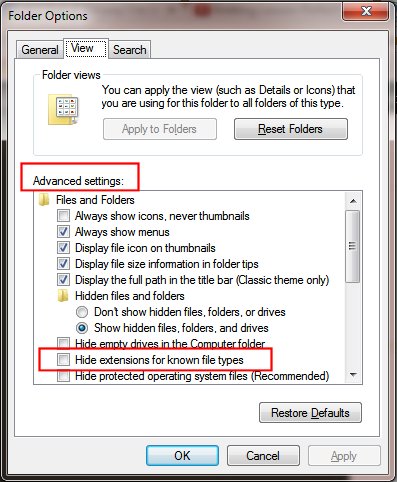
1. Always display file extensions. This option is turned off by default by Microsoft on its newer operating systems, which in my opinion is a dangerous and foolhardy idea. This means that instead of seeing “Notice_to_Appear_TY4769.zip” and “Court Notice.exe”, you would only see “Notice_to_Appear_TY4769” and “Court Notice.” To fix this, follow the procedure below for your operating system:
To show or hide file name extensions (Windows 7)
Open Folder Options by clicking the Start button , clicking Control Panel, clicking Appearance and Personalization, and then clicking Folder Options.
Click the View tab, and then, under Advanced settings, do one of the following:
To show file name extensions, clear the Hide extensions for known file types check box, and then click OK.
To hide file name extensions, select the Hide extensions for known file types check box, and then click OK.
To show or hide file name extensions (Windows 8)
Open Windows Explorer and go to “View” and then click the Options button > Change folder and search options
Scroll to “Hide extensions for file types is known”
Uncheck it and click OK.
To show or hide file name extensions (Windows XP)
Double Click on My Computer.
Click on Tools > Folder Options… in the menus.
Click on the View tab.
Remove the check from Hide extensions for known file types.
Click the OK button.
2) Make sure you have robust malware detection software installed. AVG Free, Microsoft Security Essentials, and Kaspersky are all good options. The first two are free, the third reasonably priced and somewhat more robust than the other two.
3) ☞ NEVER ☜ open attachments from unknown senders, especially a file that contains “.exe” anywhere in its name.
(Did I make that emphatic enough? I’d make it blink if I could.)
A lot of folks are savvy enough to spot this as a scam in an instant, but this particular email is official-looking enough to scare a lot of vulnerable computer users; the scammers don’t care if you actually appear anywhere – they just want you to open that never-to-be-sufficiently-damned attachment. If you are technically savvy and you have loved ones, either elderly or otherwise vulnerable, watch out for them. Educate them. You don’t want them becoming victims of scams or nefarious behavior like botnets.
This has been an Old Wolf public service announcement.
“That’s the problem with drinking, I thought, as I poured myself a drink. If something bad happens you drink in an attempt to forget; if something good happens you drink in order to celebrate; and if nothing happens you drink to make something happen.”
– What are you doing there?
– I’m drinking.
– Why are you drinking?
– To forget.
– To forget what?
– To forget that I’m ashamed.
– Ashamed of what?
– Ashamed of drinking!
Antoine de Saint-Exupéry, The Little Prince
❦
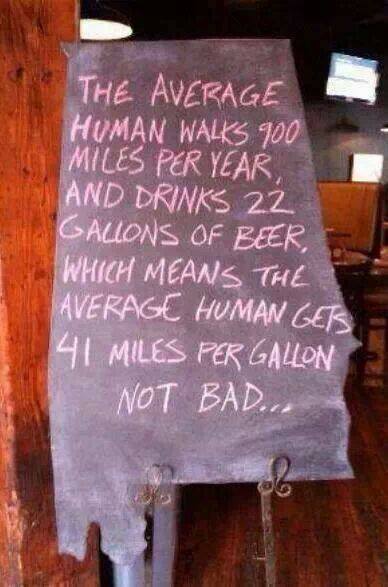
I’m a drinker with a writing problem. I only drink on two occasions—when I’m thirsty and when I’m not.
After celebrating a bit too enthusiastically, a gentleman staggered out of a bar and began weaving down the street toward home. Ahead of him two nuns approached, and being solicitous of his impaired condition, discreetly parted to let him walk between them.
In a moment the fellow stopped, scratched his head, and said to himself, “Now how did she do that?”
❦
AN ABERDEEN PROVERB.
“Dinna spend money on drink, but aye keep a corkscrew.”
❦
A friend who’s in liquor production,
Has a still of astounding construction,
The alcohol boils,
Through old magnet coils,
He says that it’s proof by induction.
❦
David Letterman’s Top Ten Least Popular Alcoholic Beverages
=========================================
10. Really, Really, Really, Really Old Milwaukee
9. D Train Scotch
8. Amaretto Di Gotti
7. Orville Redenbacher’s Butter Flavored Vodka
6. McBourbon
5. Dinty Moore’s Pork N’ Booze
4. Ernest, Julio, Tom and Roseanne Gallo
3. Dr. Scholl’s Medicated Tequila
2. Seagrams 7, Mets 0
1. Chivas Regis
❦
“There’a a phrase, “the elephant in the living room”, which purports to describe what it’s like to live with a drug addict, an alcoholic, an abuser. People outside such relationships will sometimes ask, “How could you let such a business go on for so many years? Didn’t you see the elephant in the living room?” And it’s so hard for anyone living in a more normal situation to understand the answer that comes closest to the truth; “I’m sorry, but it was there when I moved in. I didn’t know it was an elephant; I thought it was part of the furniture.” There comes an aha-moment for some folks – the lucky ones – when they suddenly recognize the difference.”
― Stephen King
❦
I’ve been mostly teetotal all my life, and fully so since 1969. My Italian relatives would give me a little wine cut with water at dinner, because that’s what was done. When I got really sick at home, mother would make me a toddy with milk, honey, and a half-jigger of brandy. I feel just great, mommy! And one time – once only – in college, I got falling-down drunk at a party up the canyon, and the next morning had the mother of all five-alarm hangovers, one which made the following seem like a romp in the park on a spring day:
Dixon was alive again. Consciousness was upon him before he could get out of the way; not for him the slow, gracious wandering from the halls of sleep, but a summary, forcible ejection. He lay sprawled, too wicked to move, spewed up like a broken spider-crab on the tarry shingle of the morning. The light did him harm, but not as much as looking at things did; he resolved, having done it once, never to move his eyeballs again. A dusty thudding in his head made the scene before him beat like a pulse. His mouth had been used as a latrine by some small creature of the night, and then as its mausoleum. During the night, too, he’d somehow been on a cross-country run and then been expertly beaten up by secret police. He felt bad.
From Kingsley Amis, Lucky Jim.
It was at that point that I decided that alcohol was not my preferred vehicle for having a good time. Bill Cosby dealt with that particular subject expertly here:
Now in some ways, this is a pity. There are some lovely wines and liqueurs out there – I remember fondly some Lambruscos and Irish coffees and some of Uncle Carlo’s home-made wine and those aforementioned hot-toddies, to name a few. It’s a shame that synthehol isn’t a thing. On the other hand, there are some truly hellish concoctions out there as well.
History has shown how well prohibition worked – for good or ill, alcohol will always be a part of human society – but for all the humor and enjoyment humans can find in responsible drinking, the social costs of alcohol abuse are staggering. Despite unflagging efforts by organizations such as MADD, penalties for impaired driving in this country are a joke – killing while drunk behind the wheel is often punished with a slap on the wrist, while repeat offenders manage to avoid serious consequences again and again. This must stop; if we are to consider ourselves a civilized species, the social right to a “good time” ends where people and property are negatively impacted.
I got sober. I stopped killing myself with alcohol. I began to think: ‘Wait a minute – if I can stop doing this, what are the possibilities?’ And slowly it dawned on me that it was maybe worth the risk. Craig Ferguson











 , clicking