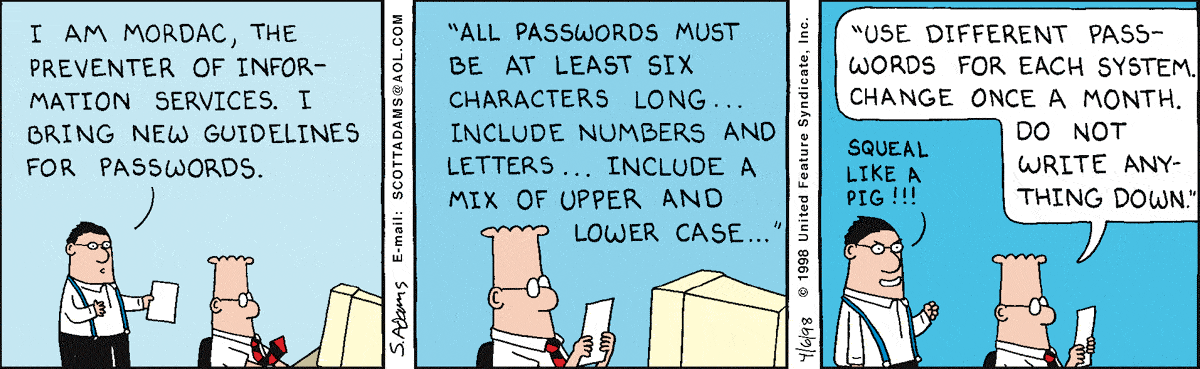
Passwords: Squeal like a pig!

Passwords are the bane of computer users  and IT administrators, and – for the most part – an open, beckoning door to hackers, scammers, and Russian Viagra spammers.

But until someone comes up with something more practical and secure, we need them.

Sure, people are trying. Fingerprint scanning, retinal scanning, all sorts of biometric stuff is either on the market or in development, but thus far there seem to be either financial barriers or security questions around many of these.

So we continue to use passwords.

I’ve written about strong passwords and stronger passwords; for myself, I do my best to make my passwords as strong as possible, but I have dozens of them, and that makes them hard to remember.

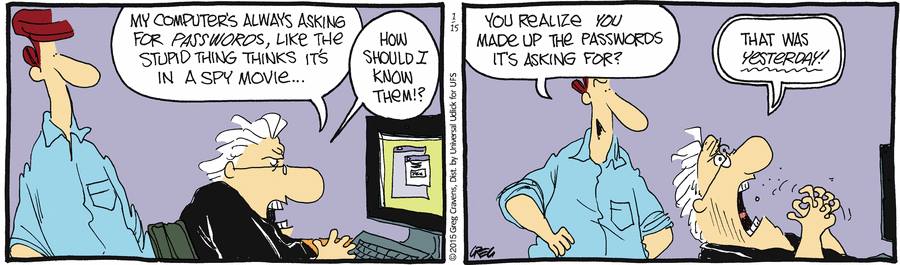
A cartoon posted by an IT colleague of mine just today points out the difficulty, especially as we grow older:
10868106_10152623985991179_8450016556394107360_n

Buckets

As Friedrich Althoff  (not Konrad Adenauer) said, “Was gebe ich auf mein dummes Geschwätz von gestern?” (What do I care about the stupid hqiz I said yesterday?”)

Now, some sysadmins take joy in making things as hard as possible for their user base:
dt980406dhc0

Dilbert

Having spent years in IT, Mordac is hands-down my favorite Dilbert character. Parenthetically, Mordac’s appearance has changed over the years, but I like this iteration the best because he reminds me of one of my old IT colleagues, who was paradoxically one of the nicest guys I’ve ever met.

On the other hand, it drives me nuts when webmasters limit their passwords; given the nature of hacking attempts, to deliberately block users from including spaces or special characters in their passwords is inviting more incursions, and whenever I encounter a site like this it makes me want to reach through my modem and slap someone to Nouakchott and back.

So how does one remember a laundry list of passwords without putting sticky notes on your CPU? Well, there are certain encryption programs and lockers out there that allow you to keep these things written down, using one (very complex) master password to access the file, which is my preferred method. Another one is using mnemonics such as Tt*hiwwUR (sing “Twinkle, twinkle, little star”…) but it’s tough to come up with a whole grundle of these.

Whatever the case, you owe it to yourself to use strong passwords wherever your identity or your data is at risk. The recent massive hack at Sony is a perfect example of why (even though this may have been an inside job, which would render any company vulnerable.)

The Old Wolf has spoken.

The 2.6 million dollar watch

For a number of years I was involved in a marketing enterprise, and my sponsor enjoyed wearing a diamond-studded Rolex that he picked up for about half-price, a mere $125,000. I always wondered how much sense it made to wear that much money around on your wrist, but whatever floats his boat.

Then I discovered this:

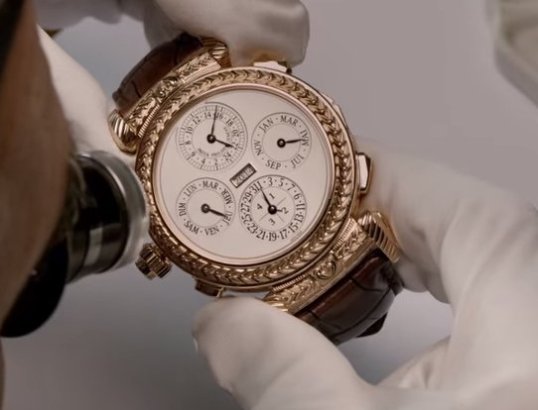
This video describes the design and manufacture of the Patek Philippe 5175R Grandmaster Chime Watch, which sells for $2.6 million… if the president of the firm thinks you’re worthy to own one. To celebrate the 175th anniversary of the firm, only seven were made, six of them to be sold to a very exclusive number of long-time collectors, the seventh to be displayed at the Patek Philippe Museum in Geneva.

Patek2

Now, Patek Phillippe is the zenith of the summit of the pinnacle of the watchmaking world to start with. They don’t let anything but perfection out of their factory doors. But this particular watch would make Jacquet-Droz blush with embarrassment and want to crawl into a hole for having produced such crude workmanship, and he was a world-class craftsman and a genius.

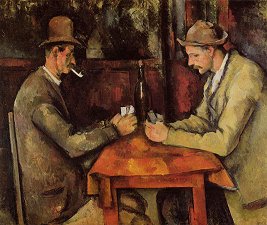
When I read the title of the video, I thought to myself, “why in the world would someone create, let alone buy, such an expensive watch? Well, the buyers will have their own reasons. But as for the creation… this is not merely a timepiece, this is art. People pay much more than a paltry 2.6 million for coveted artwork; remember that someone paid an estimated $259 million for Cezanne’s The Card Players.

Cezanne

Watch the video. You’ll see that this piece is lovingly crafted in the most excruciating detail by craftspeople who could rightfully be called national treasures. Designers, machine workers, watchmakers, artists, metallurgists, you name it – the skill and precision and absolutely insane devotion to a perfect product are visible here.

Movement

The movement before assembly

I’ll never be fortunate enough to hold a piece of art like this, and I’m not likely to see one in a museum either, so watching the video will have to suffice for me.

Patek 3

The Reverse Side

But from where I sit, this miracle of design and labor is worth every penny that the company charges for it.

Now, this whole adventure raises a few questions. Recently, redditor /u/mattertater calculated an estimate in raw dollars for how much it would take to end world hunger if every citizen of first-world countries contributed the same amount annually. (Thread with commentary)

With an approximate first-world population of 906,715,020 people, or 12.45% of the global population, the UN estimate of $30 billion annually works out to roughly $33.08 per year, or about 9¢ a day. For comparison’s sake, note that the US military, with an annual estimated budget of $640 billion, could come up with that amount all by itself by trimming 5% of its annual spending.

These are just some interesting raw numbers. It is understood that the problem of world hunger is much more than throwing dollars at it, involving as it does so many factors such as distribution chains, administration, corruption, agriculture, warfare, and countless others. But it’s intriguing to wonder if given the pressing problems of the world, owning a watch that costs this much money really makes sense. Still, on a much smaller scale, 8 people were willing to pony up $999.99 for the “I am Rich” app at the Apple Store before it was pulled down… and all it does is display a glowing, red gem which the rest of the world can’t have. Veblen goods have their appeal, usually for reasons of vanity.

The world is so full of a number of things…

The Old Wolf has spoken.

The driverless car: 60 years on, and still on the drawing board.

In a story published in 1953 entitled “Nobody Here But…”, the Good Doctor Asimov wrote,

“We were especially interested in the automobile angle. Suppose you had a little thinking machine on the dashboard, hooked to the engine and battery and equipped with photoelectric eyes. It could choose an ideal course, avoid cars, stop at red lights, pick the optimum speed for the terrain. Everybody could sit in the back seat and automobile accidents would vanish.”
They promised us flying cars, too,
2069214.grid-4x2
but this idea looks like it’s going to happen a lot sooner.
google-s-driverless-car-is-now-safer-than-the-average-driver-a52115750a
The Google driverless car is a reality. Watch Steve Mahan, a blind individual, get taken to Taco Bell. These cars have now driven over 500,000 miles without a serious accident when the car itself was in control. While the technology is not yet perfect, it does not need to be; as long as the driverless car reduces accidents – in other words, if it’s better than human drivers – there is no reason why industry, including the insurance companies should not get on board. It will save lives, and reduce insurance costs dramatically.
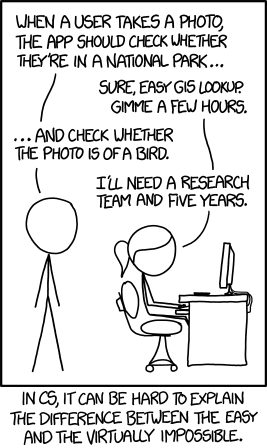
That’s not to say that the technology is easy to develop:
tasks
Google’s engineers are dealing with problems like this increased by an order of magnitude. But based on results, they are doing it.
Right now, the technology costs about $75,000 to $85,000 per vehicle, more than the car itself. But I fully expect that my grandchildren will be able to make full use of this technology, long before flying cars are ever – if ever – practical. And the Good Doctor Asimov would be proud.
The Old Wolf has spoken.
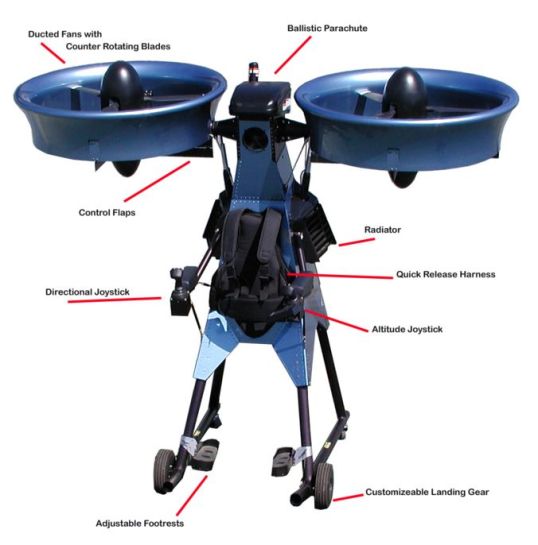
What ever happened to the Skyhopper? It was actually called the SoloTrek.

Edit 1/22/2016: The thing I was looking for was not called the Skyhopper, but rather the SoloTrek. My memory was the problem. Apparently the company that was trying to develop it abandoned the project. I am surprised I was not able to find an image of it with multiple searches until today.

Trek

As a result, the entire article below is now moot, but I’m leaving it up as a monument to my faulty memory.


The Internet remembers everything. Everything. Even things that people desperately want it to forget. as witnessed in the Streisand Effect.

So if I go hunting for something I remember seeing years ago, I expect it to be there, in some way, shape, or form… even if only as a relic, an artifact.

And when I can’t find it, I find it… disturbing, to say the least.

The dream of the one-man helicopter has never been fully realized, although a lot of people have spent a lot of money on the idea. I remember years ago one outfit was working on one. There were pictures, videos of the thing being tested in tethered mode, solicitations for investment, the works – all very professional.

It may have failed. It may have been a ponzi scheme. Anything could have happened. But there should be some remnant of its existence on the net, but… nothing.

I’ve searched for skyhopper, one-man helicopters, personal helicopters, two-fan hovercraft, and fifty other permutations.

Blank.

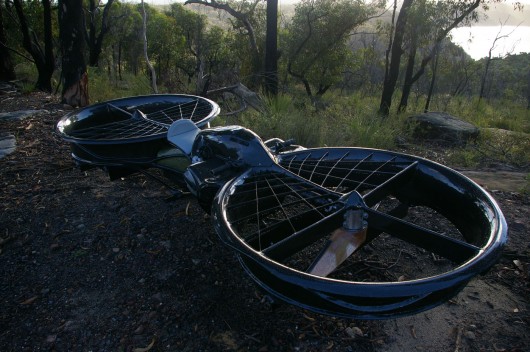
I remember it used two of these things:

hoverbike-9

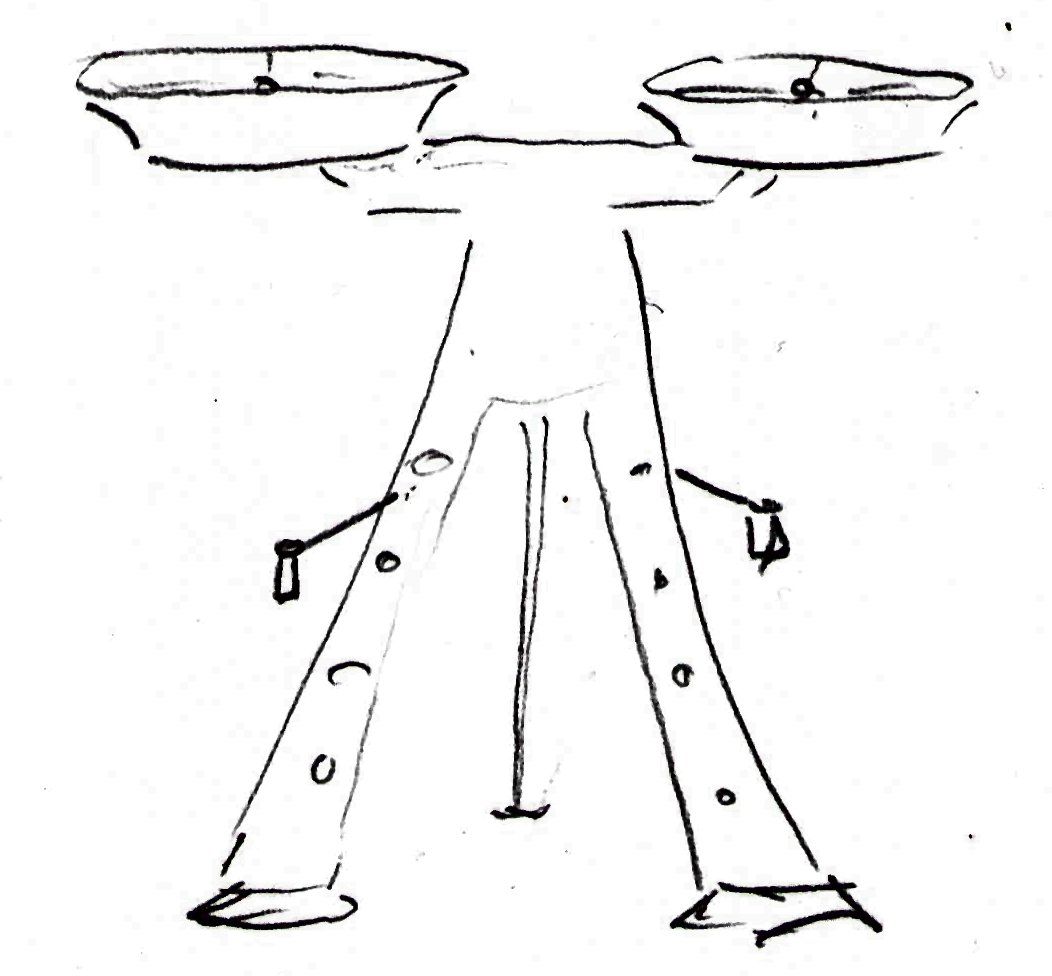
… attached to a sort of one-man tripod. Now I can’t draw worth hqiz, but the basic idea was this:

Skyhopper

Edit: I couldn’t remember the name, but my memory of the basic structure was fairly accurate.

The pilot would stand on the two platforms, hold on to the controllers, and off he’d go.

I’m almost 100% certain the thing was called the “skyhopper,” but that term has now been co-opted by something from the Star Wars universe. It’s as if any reference to this invention has been carefully and deliberately scrubbed from the internet.

That makes no sense at all… even failed inventions leave traces. And I know that i’m not experiencing a false memory – I was intrigued by the pictures and the concept when I first saw it, and followed it closely until it became clear that no further progress was being made.

Now, I put no stock in conspiracy theories[1], but the absence of any reference to this thing goes against everything I have come to understand about the persistence of information on the internet. It’s just strange.

The Old Wolf has spoken.


[1] What’s really happening, of course, is that the Air Force saw this idea, classified it, killed the inventor, scrubbed all references from the internet, and is now developing the idea secretly at Area 51, aided by the Erich von Däniken foundation.

Old_Wolf_Thpt

Don’t you think the customer knows his/her own address?

Yarg snarl yarg.

I run an online business. People pay me via PayPal, or use that service as a credit-card broker.

Every now and then, I get a popup like this when shipping:

ScrewPayPal.

And then you can’t go forward or override the popup until you use the “suggested” address. Notice that the only difference is that the customer entered “Hot Springs,” and the Post Office (xchxxxchhxttt paTOO!) demands “Hot Springs National Park.”

For the love of Mogg’s holy grandfather, don’t you think the customer knows his own address? Is the Post Office so stupid that even with a correct ZIP Code, they’ll be unable to deliver the parcel because their database happens to have a slightly different name for the locality?

It’s fine to provide this information, but they need a button that says “Use Address As Provided” so that the seller doesn’t have to take the time to go in and manually change the address.

The Old Wolf has ranted.

Old_Wolf_Curse


The Chalk Mark

You’ve probably heard the story in various incarnations. An old Navy chief, an engineer, an auto mechanic – you name it – he’s called in to diagnose a problem with some sort of engine or device. He puts a chalk mark on the machine showing where to make the repair, and sends a bill for $10,000, most of which was for knowing where to put the mark.

I always thought this was an urban legend, it appears that there may be some truth in it, if an article at the Smithsonian is to be believed; obviously no source is above scrutiny, but I know that the Smithsonian does its best to be accurate, factual, and scientific in its reporting, hence I thought it was worth sharing.

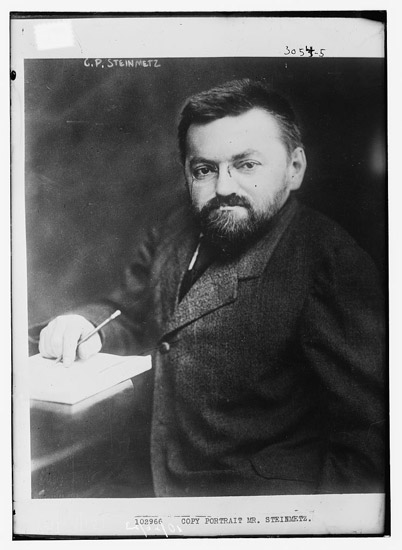
Steinmetz

Charles Proteus Steinmetz circa 1915 – Wikipedia

From the Smithsonian Article:

Before long, the greatest scientific minds of the time were traveling to Schenectady to meet with the prolific “little giant”; anecdotal tales of these meetings are still told in engineering classes today. One appeared on the letters page of Life magazine in 1965, after the magazine had printed a story on Steinmetz. Jack B. Scott wrote in to tell of his father’s encounter with the Wizard of Schenectady at Henry Ford’s River Rouge plant in Dearborn, Michigan.

Ford, whose electrical engineers couldn’t solve some problems they were having with a gigantic generator, called Steinmetz in to the plant. Upon arriving, Steinmetz rejected all assistance and asked only for a notebook, pencil and cot. According to Scott, Steinmetz listened to the generator and scribbled computations on the notepad for two straight days and nights. On the second night, he asked for a ladder, climbed up the generator and made a chalk mark on its side. Then he told Ford’s skeptical engineers to remove a plate at the mark and replace sixteen windings from the field coil. They did, and the generator performed to perfection.

Henry Ford was thrilled until he got an invoice from General Electric in the amount of $10,000. Ford acknowledged Steinmetz’s success but balked at the figure. He asked for an itemized bill.

Steinmetz, Scott wrote, responded personally to Ford’s request with the following:

Making chalk mark on generator    $1.

Knowing where to make mark         $9,999.

Ford paid the bill.

The story fits well with what is known about Steinmetz, a mercurial genius of engineering. Unless we can get the plans for Professor Waxman’s time machine, there’s no way of verifying the story, but this iteration of it has a ring of truth.

The Old Wolf has spoken.

Notice to Appear in Court (Scam/Malware)

bigstock-Malicious-malware-warning-mess-41722204-1024x819

(Thanks to Techsrus for the image)

My cubicle neighbor (at the job we just both got laid off from yesterday, but that’s another story) showed me a couple of emails he had gotten in his Gmail account – each sported the header “Notice to Appear in Court.”  I told him they were probably scam threat letters and hoping to extort money.

I got one myself today, and decided to explore it a little further.

—————-

From: “Notice to Appear in Court” <customerssupport231@kaiserarbitrationlawyers.com>
To: <redacted>

Subject: Notice to appear in court SN8157

Notice to appear in court,

Hereby you are notified that you have been scheduled to appear for your hearing that will take place in the court of Detroit in April 03, 2014 at 11:30 am.You are kindly asked to prepare and bring the documents relating to the case to court on the specified date.The copy of the court notice is attached to this letter. Please, read it thoroughly.
Note: The case may be heard by the judge in your absence if you do not come.Yours very truly,
SAMPSON Hays
Clerk of court
—————————–
Attached was a file called “Notice_to_Appear_TY4769.zip”
Unpack this zip folder and you find a file called “Court Notice.exe”. That file lasted less than one second on my desktop, as Microsoft Security Essentials immediately quarantined it. The .exe file contained a Trojan Downloader named Win32/Kuluoz.D, which Microsoft describes as follows:
Win32/Kuluoz is a trojan that tries to steal passwords that are stored in certain applications and sensitive files from your PC. This trojan could also download other malware to your PC, like other variants of Win32/Kuluoz and Win32/Sirefef, and variants of rogue security software likeWin32/FakeSysdef and Win32/Winwebsec. This threat tries to hack your email accounts and file transfer programs.
In other words, really nasty stuff.
This is a perfect example of why you should do the following things on your computer to practice safe computing:

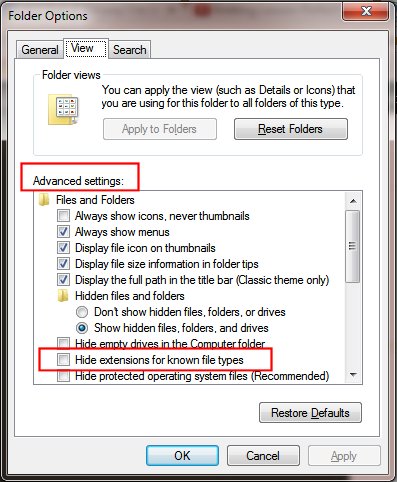
1. Always display file extensions. This option is turned off by default by Microsoft on its newer operating systems, which in my opinion is a dangerous and foolhardy idea. This means that instead of seeing “Notice_to_Appear_TY4769.zip” and “Court Notice.exe”, you would only see “Notice_to_Appear_TY4769” and “Court Notice.” To fix this, follow the procedure below for your operating system:

To show or hide file name extensions (Windows 7)

  1. Open Folder Options by clicking the Start button Picture of the Start button, clicking Control Panel, clicking Appearance and Personalization, and then clicking Folder Options.

  2. Click the View tab, and then, under Advanced settings, do one of the following:

    • To show file name extensions, clear the Hide extensions for known file types check box, and then click OK.

    • To hide file name extensions, select the Hide extensions for known file types check box, and then click OK.

Example

To show or hide file name extensions (Windows 8)

  • Open Windows Explorer and go to “View” and then click the Options button > Change folder and search options
  • Scroll to “Hide extensions for file types is known”
  • Uncheck it and click OK.

To show or hide file name extensions (Windows XP)

  • Double Click on My Computer.
  • Click on Tools > Folder Options… in the menus.
  • Click on the View tab.
  • Remove the check from Hide extensions for known file types.
  • Click the OK button.

2) Make sure you have robust malware detection software installed. AVG Free, Microsoft Security Essentials, and Kaspersky are all good options. The first two are free, the third reasonably priced and somewhat more robust than the other two.

3) ☞ NEVER ☜ open attachments from unknown senders, especially a file that contains “.exe” anywhere in its name.

(Did I make that emphatic enough? I’d make it blink if I could.)

A lot of folks are savvy enough to spot this as a scam in an instant, but this particular email is official-looking enough to scare a lot of vulnerable computer users; the scammers don’t care if you actually appear anywhere – they just want you to open that never-to-be-sufficiently-damned attachment. If you are technically savvy and you have loved ones, either elderly or otherwise vulnerable, watch out for them. Educate them. You don’t want them becoming victims of scams or nefarious behavior like botnets.

This has been an Old Wolf public service announcement.

The pendulum has swung

Scott Adams is funny. Dilbert is funny. For whatever reason you choose to come up with, Adams has his finger squarely on the pulse of the business world, and wastes no time lampooning anything and everything that frustrated corporate workers already know represents the pinnacle of stupidity.

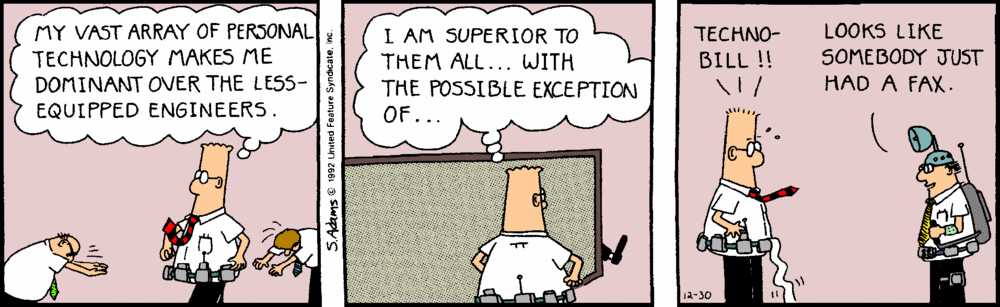
20 years ago, status was determined by how much personal technology you had available.

28816.strip.zoom

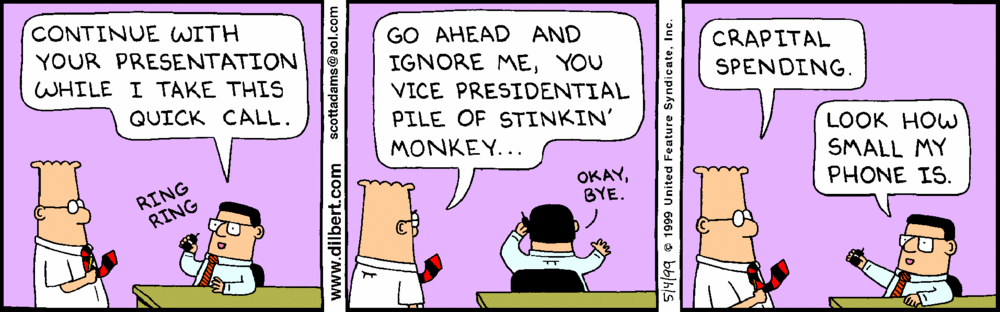
15 years ago, the technology was on the road to hyper-miniaturization, and the smaller your phone, the more prestige you had (which gave you the right to treat underlings like dog squeeze.)

7068.strip.zoom

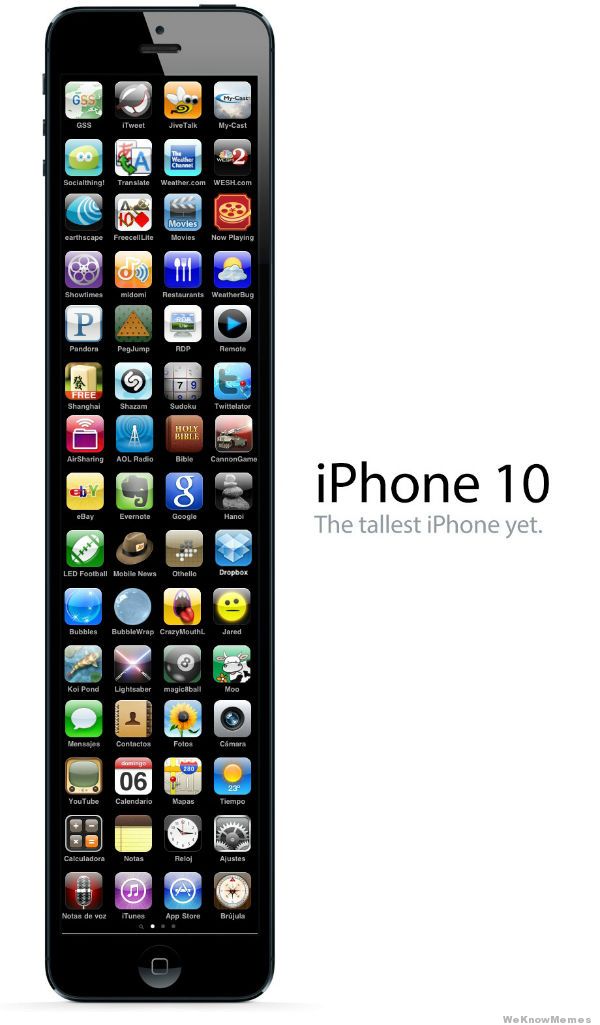
Now that smartphones have begun morphing into pads, tablets, and phablets (what an abominable word!) the prestige tide has now turned.

214942.strip.zoom

Whether that’s a good thing or not remains to be seen.

iphone-10-the-tallest-iphone-yet

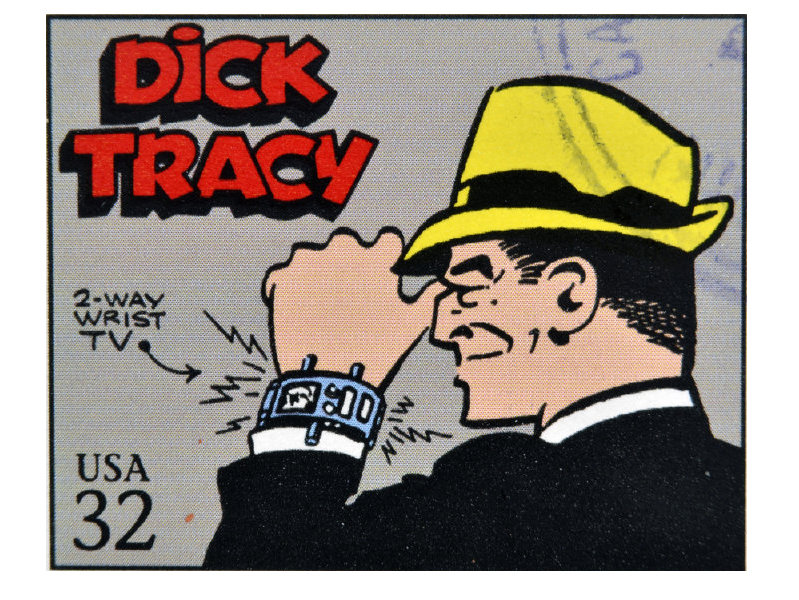
At this point, I’m pretty jazzed about the Pebble. This seems like an awesomely useful sidekick to a smartphone… at least until the pendulum swings back the other way again, and everything fits on your one wrist-mounted device anyway.

tvwatch_fullsize_story1

Chester Gould had the right idea half a century ago.

The Old Wolf has spoken.

James Gurney: The Soy Bean

Soy Painting

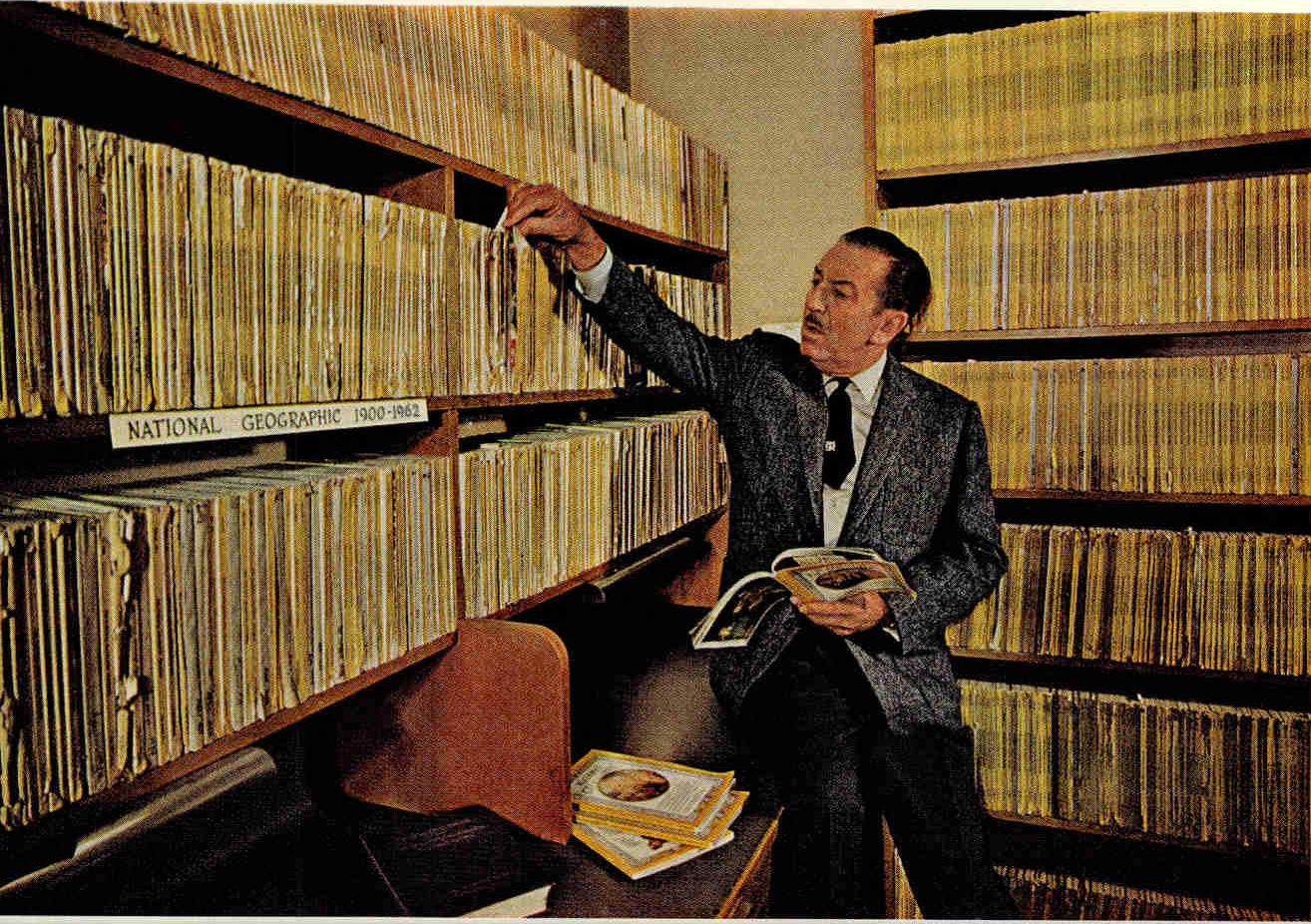
This lovely painting by James Gurney appeared in the July, 1987 edition of the National Geographic, long one of my favorite magazines since early childhood. I’ve had multiple collections of hard copy editions, gathered over the years and then given away when moving (they’re heavy!) and then gathered again. I recently scored a complete set on DVD that included everything up through the 90’s – it still runs on my XP virtual machine – so I was able to get rid of all but the few special editions I wanted to keep.

backissues

Gurney managed to get dozens of things based on soy into his painting; about the only thing I haven’t spotted is nattōThe photo of the painting came with the following caption:

Invisible ingredient in countless products, the soybean plays an amazingly pervasive role in everyday life. Artist James Gurney included more than 60 soybean-related products in this painting, done in the style of Norman Rockwell. He not only called on neighbors and friends for models, but also portrayed himself and his wife emerging from the store, startled by a skateboarding boy carrying a cone of tofu “ice cream”; the boy’s shorts-like the tablecloth-bear a bean-pod motif.

The bags the couple carry, the store-window and sidewalk displays are replete with items that have a soybean connection

Cardboard, glues, and animal and human foods are commonplace soybean products. The sidewalk customer’s caulking, paint, wallpaper, gasoline, and the muffin he buys all owe a debt to soy-as does the bicycle tire.

The beer sign reflects the use of soy meal in the brewing process. The fire extinguisher uses soy protein in its foam. And pre-1981 National Geographics were printed on soy-lecithin-lubricated presses. The car symbolizes an experimental one built with soybean plastic by Henry Ford. The artist’s final tribute: He used soy-based paint.

There’s a lot of conflicting information out there regarding the health benefits or detriments of soy; it’s hard to know who’s right at this point in time, but I’ll keep enjoying my tofu and other fermented soy products.

In the meantime, I thought I’d share this delightful and intriguing work of art.

The Old Wolf has spoken.